×

Botswana🇧🇼 | landmarksMatsieng FootprintsSandstone footprints, ancestor legend, Kgatleng bushveld, rough access road | things to do and best time to go

Explore Savuti ChannelExplore Gweta

Backpacking in Matsieng Footprints
👍 Recommendedunique site ranked #6
By Johan Kruseman 🇳🇱 | Updated October 22, 2026

The footprints are in Botswana, in the Kgatleng District, and have no connection to the royal village of Matsieng in Lesotho beyond the name of the ancestor they are tied to. The site lies northeast of Gaborone, close to Mochudi, on a low sandstone outcrop in dry bushveld. Visit for the prints themselves: dozens of hollows pressed into flat rock, human and animal, some crisp, some worn nearly smooth. The setting is quiet and the visit is short, often under an hour. Skip it if you want dramatic scenery or interpretive displays, because there are few of either. Access is the main hurdle, as the last stretch is rough and signage is thin. Unlike Tsodilo Hills, where painted panels cover cliff faces in the far northwest, Matsieng is a single carved rock surface.

Discover everything you want to know in the 📖 Botswana Travel Guide.
Best time to go: April - November
Daily cost: US$62
Duration: 1 day
Distance: 12 kilometers
Total ascent: 300 meters


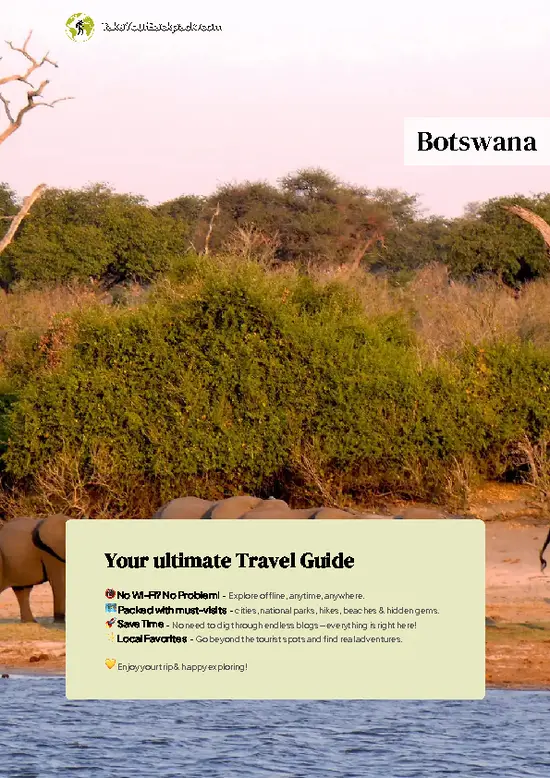
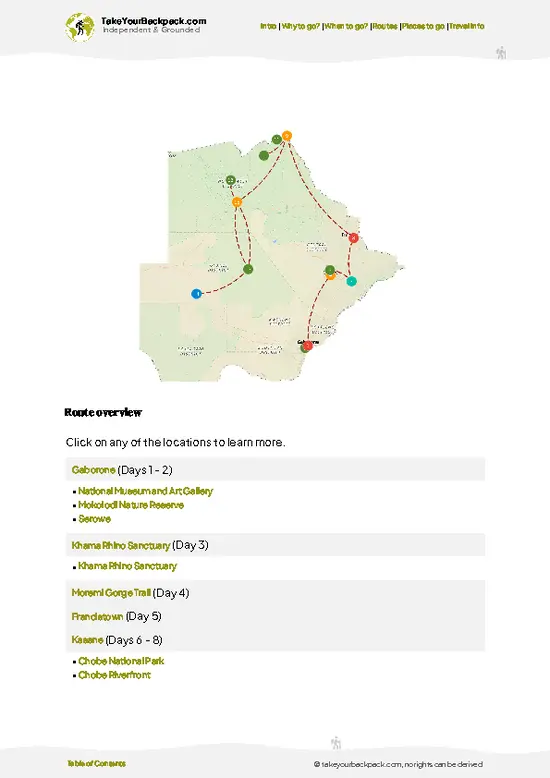
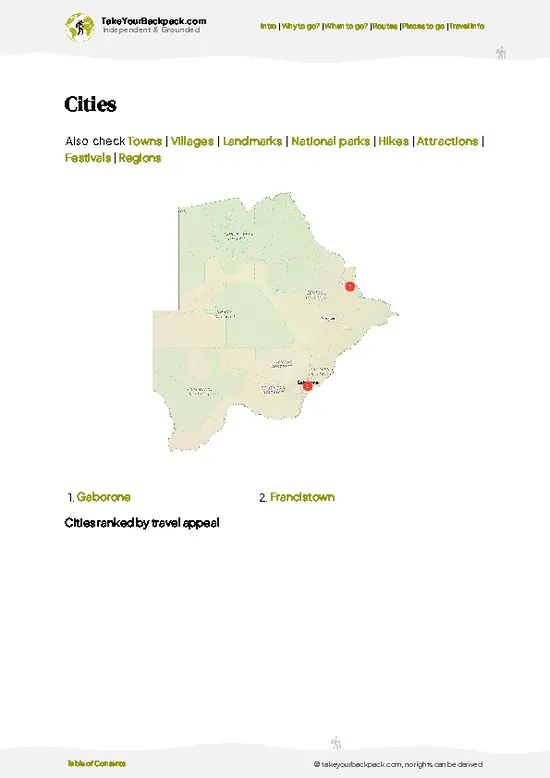
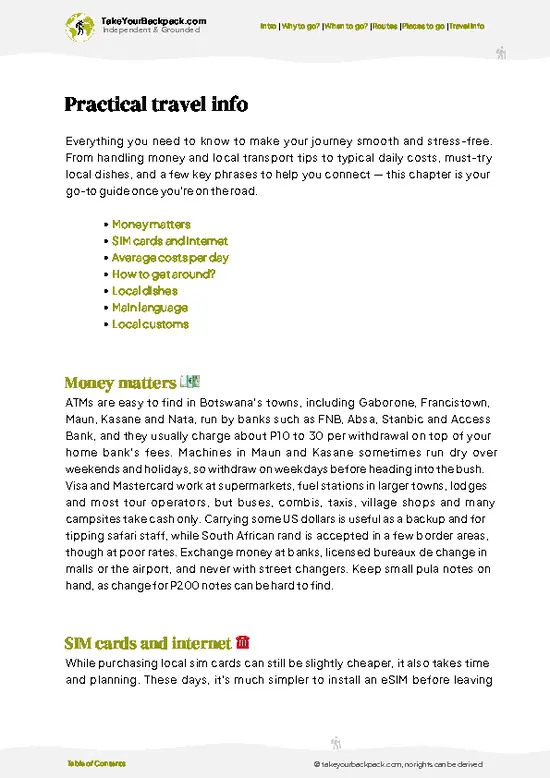
example page 0 from our offline Travel Guide for Botswana
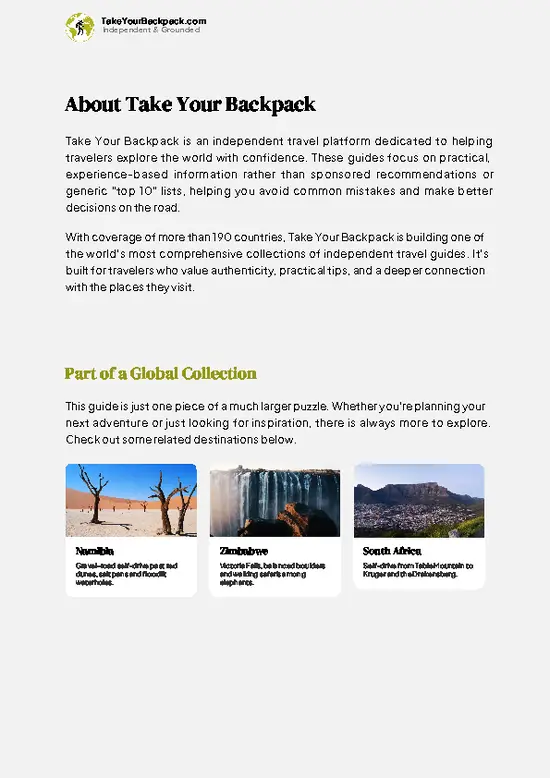
example page 1 from our offline Travel Guide for Botswana
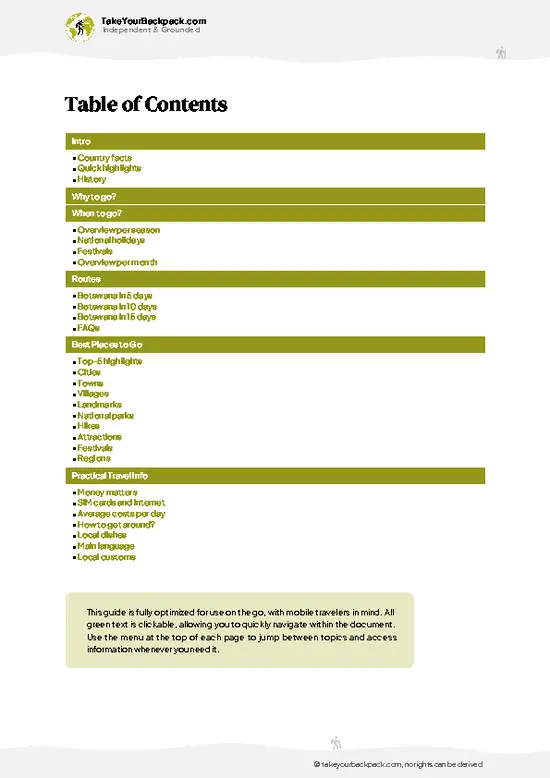
example page 2 from our offline Travel Guide for Botswana
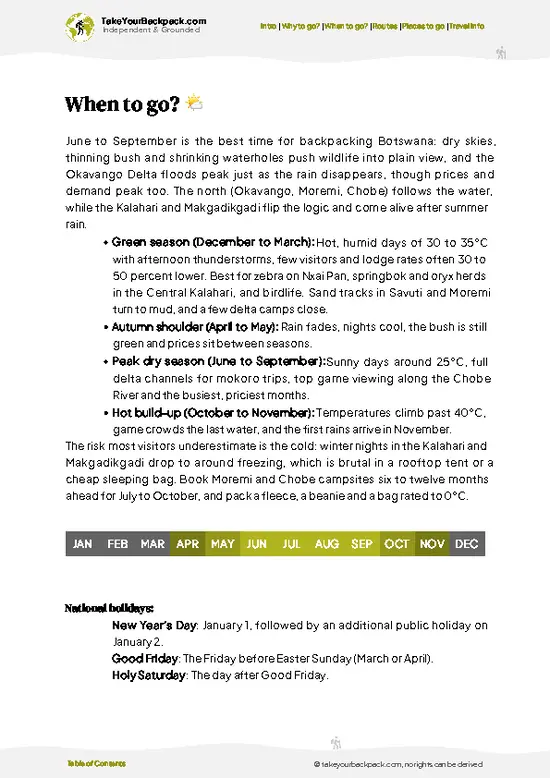
example page 3 from our offline Travel Guide for Botswana
example page 4 from our offline Travel Guide for Botswana
example page 5 from our offline Travel Guide for Botswana
example page 6 from our offline Travel Guide for Botswana
example page 7 from our offline Travel Guide for Botswana
Loading the map 🌍
CLICK TO FILTER
cities
towns
villages
landmarks
national parks
hikes
attractions
festivals
regions
SHOW COUNTRY’S BESTSHOW ALL

✨ Why go?
Ranked #6 unique site in Botswana
The unique appeal for travelers

Matsieng Footprints is one of the few places in southern Africa where a creation story is printed straight into stone. Local belief says the ancestor Matsieng climbed out of a hole in this rock, followed by people and animals, and walked off leaving his tracks. Whatever the carvers intended, standing over a human foot-shape pressed into sandstone beside a leopard print is memorable, and you can do it with no crowd at all. For a backpacker the real draw is that it feels like a place few people reach, yet it is easy to fold into a loop through the Kgatleng District from Gaborone, alongside the Phuthadikobo Museum in Mochudi, which explains the Bakgatla people who look after the story. Bring your own water and shade, since the outcrop is open ground. A guide on site can point out prints you would walk past otherwise.

💡 HighlightsTop highlights of Matsieng Footprints

  1. The Matsieng footprints: the main attraction, a scatter of roughly fifty to sixty hollows in a sandstone slab. The pattern of tracks leading across the rock is why people make the trip.
  2. The human prints: several large foot-shaped impressions, said to be the ancestor’s, noticeably bigger than an average adult foot and set in a striding line.
  3. The animal tracks: shapes read as elephant, lion, leopard and other creatures, which makes it clear why the legend has animals coming out of the rock alongside people.
  4. The emergence hole: a pit in the rock identified in the story as the place Matsieng came out of the earth. It sometimes holds water, which feeds the local rain-related beliefs.
  5. The surrounding bushveld: flat acacia scrub with the outcrop rising only slightly out of it. Walk around the edge for
… read more 👉
  1. The Matsieng footprints: the main attraction, a scatter of roughly fifty to sixty hollows in a sandstone slab. The pattern of tracks leading across the rock is why people make the trip.
  2. The human prints: several large foot-shaped impressions, said to be the ancestor’s, noticeably bigger than an average adult foot and set in a striding line.
  3. The animal tracks: shapes read as elephant, lion, leopard and other creatures, which makes it clear why the legend has animals coming out of the rock alongside people.
  4. The emergence hole: a pit in the rock identified in the story as the place Matsieng came out of the earth. It sometimes holds water, which feeds the local rain-related beliefs.
  5. The surrounding bushveld: flat acacia scrub with the outcrop rising only slightly out of it. Walk around the edge for a sense of why this spot was picked, and look for birds in the thornveld.
  6. Phuthadikobo Museum, Mochudi: set on the hill below the Bakgatla capital’s old council area, it covers local history and gives the footprints a cultural frame. Allow an hour.
  7. Mochudi village: the nearest town, with a long-established Bakgatla center, a traditional meeting ground and ordinary shops for supplies before the rough road.
Matsieng Footprints charges only a small site fee, and walking the bushveld around the outcrop costs nothing extra.
Spotted a mistake or missing something? Contact us.

Things to do near Matsieng Footprints

Ratings based on Tripadvisor reviews. When you book through this link, you support our work at no extra cost to you.

🌤️ When to go?Weather, crowds, and seasonal trade-offs

  • May to August (cool dry season): Days run 22 to 27°C (72 to 81°F) and nights drop to 3 to 8°C (37 to 46°F), so the rock-walking at Matsieng is comfortable. Daylight is shortest, roughly 10.5 to 11 hours. This is the busiest stretch, though crowds on site stay small.
  • September to October (hot, dry): Highs climb to 32 to 38°C (90 to 100°F). Shade is scarce on the open rock, so go early. Dust and haze build, and accommodation prices in Gaborone stay steady.
  • November to March (rainy season): Afternoon storms arrive with 30 to 35°C (86 to 95°F) heat and about 13 to 14 hours of daylight. The surrounding sandy tracks can turn boggy, and the grass turns green. Rooms are often cheaper.
  • April: Rains fade, temperatures ease to 25 to 29°C (77 to 84°F), and the landscape is still green.
Aim for May or June, … read more 👉
  • May to August (cool dry season): Days run 22 to 27°C (72 to 81°F) and nights drop to 3 to 8°C (37 to 46°F), so the rock-walking at Matsieng is comfortable. Daylight is shortest, roughly 10.5 to 11 hours. This is the busiest stretch, though crowds on site stay small.
  • September to October (hot, dry): Highs climb to 32 to 38°C (90 to 100°F). Shade is scarce on the open rock, so go early. Dust and haze build, and accommodation prices in Gaborone stay steady.
  • November to March (rainy season): Afternoon storms arrive with 30 to 35°C (86 to 95°F) heat and about 13 to 14 hours of daylight. The surrounding sandy tracks can turn boggy, and the grass turns green. Rooms are often cheaper.
  • April: Rains fade, temperatures ease to 25 to 29°C (77 to 84°F), and the landscape is still green.
Aim for May or June, and arrive when the guide opens the gate in the morning.


source: climatestotravel.comJANJanuary: fair for travelingFEBFebruary: fair for travelingMARMarch: fair for travelingAPRApril: good for travelingMAYMay: excellent for travelingJUNJune: excellent for travelingJULJuly: excellent for travelingAUGAugust: excellent for travelingSEPSeptember: highly recommended for travelingOCTOctober: highly recommended for travelingNOVNovember: good for travelingDECDecember: fair for traveling
botswana-unique-site-matsieng-footprints
© Google |

✈️ The backpacker research shortcutBotswana Travel Guide

An offline-friendly backpacking guide with optimized travel routes, ranked highlights, transport advice, and the best areas to stay.
example page 0 from our offline Travel Guide for Botswana
example page 1 from our offline Travel Guide for Botswana
example page 2 from our offline Travel Guide for Botswana
example page 3 from our offline Travel Guide for Botswana
example page 4 from our offline Travel Guide for Botswana
example page 5 from our offline Travel Guide for Botswana
example page 6 from our offline Travel Guide for Botswana
example page 7 from our offline Travel Guide for Botswana
The digital guide (172 pages) contains:
✅ 38 highlights, ranked by travel appeal
✅ Optimized 5, 10 & 15-day travel routes
✅ Cities, national parks, landmarks, beaches
✅ How to get around
✅ Offline-friendly for travel without Wi-Fi
👉 Click to see all 30+ guide features

📅 Plan smarter in minutes, not weeks
✅ Month by month travel advice
✅ Festivals & national holidays
✅ Budget expectations

🗺️ Go to the right places, skip the overrated ones
✅ Honest pros & cons of destinations
✅ Top hikes, parks & viewpoints
✅ Lesser-known places most travelers miss
✅ Clear “worth it vs skip it” guidance

🛏️ Travel smoothly without rookie mistakes
✅ Best areas to stay
✅ Transport systems explained simply
✅ Common scams & safety advice
✅ SIM cards, money & practical tips

🌍 Understand the country, not just visit it
✅ Culture & traditions
✅ 52 Essential phrases & customs
✅ Festivals worth planning around
✅ Traveler-friendly historical context
✅ Insights that make places more meaningful

📱 Built for real travel conditions
✅ Fully downloadable PDF
✅ Works completely offline
✅ Optimized for phone use
✅ Useful in remote areas & buses
✅ Everything in one place
Stop searching, start planning
Get instant access to your full guide. 30‑day money-back guarantee.
+ Add another guide for just

By proceeding you agree to our terms.
Sent to your inbox immediately after payment • 100% Secure Checkout
Best Backpacking Travel Advisor 2025 tourism awardBest Backpacking
Travel Advisor
2025
What others say about Take Your Backpack Guides:
⭐⭐⭐⭐⭐
Fantastic, amazing amount of information!
⭐⭐⭐⭐⭐
My goodness this is amazing, it's what I've been looking for hats off too you!
⭐⭐⭐⭐⭐
I think this is absolutely BRILLIANT
⭐⭐⭐⭐
Very complete and informative. It's still missing places, but I gotta to commend you
⭐⭐⭐⭐⭐
This is truly amazing, thank you, can't wait to explore it with my kids!
⭐⭐⭐⭐⭐
Awesome resource, thank you!
⭐⭐⭐⭐⭐
This is amazing! Can't wait to explore the ones I haven't seen
⭐⭐⭐⭐
I love this! Well done, great idea.
⭐⭐⭐⭐⭐
Thanks for taking the time to make this gem!
⭐⭐⭐⭐⭐
This might be the best website I've ever seen.
⭐⭐⭐⭐⭐
Congratulations, and thank you so much for your work; it's incredibly valuable.
⭐⭐⭐⭐
In all seriousness I think you did a great job pointing out the important spots
⭐⭐⭐⭐⭐
10/10 very good
⭐⭐⭐⭐⭐
As someone who's only just starting to visit regularly this is awesome, thank you.
⭐⭐⭐⭐
Thank you very much! I'm going to visit my dad, it's going to be very useful!
⭐⭐⭐⭐⭐
This is really cool! We'll be travelling for the first time and this definitely come in handy.
⭐⭐⭐⭐⭐
You are now our minister of culture, congratulations 👨‍💼
⭐⭐⭐⭐⭐
Just wanted to tell you that this is a pearl! Going to follow your recommendations.
⭐⭐⭐⭐⭐
This is so cool. I'll definitely be using the resource for my travels soon.
⭐⭐⭐⭐⭐
This is very impressive! Good work.
⭐⭐⭐⭐⭐
This is an amazing and informative site. Very well done!

🛏️ Where to stay?Best areas and accommodation options

Gaborone is the practical base for Matsieng Footprints, roughly 1 hour 45 minutes to 2 hours by road to the northeast, and a day trip from the capital is the standard way to see the site. Backpacker options cluster in a few areas.

The central Gaborone area around the Main Mall and the Central Business District puts you near combis, shared minibuses, and the main bus rank, which helps if you rely on public transport to reach Mochudi or Molepolong. Streets are quiet at night but walking after dark is best avoided, so use taxis.

The Phakalane and Gaborone North side suits travelers with a car, … read more 👉
Gaborone is the practical base for Matsieng Footprints, roughly 1 hour 45 minutes to 2 hours by road to the northeast, and a day trip from the capital is the standard way to see the site. Backpacker options cluster in a few areas.

The central Gaborone area around the Main Mall and the Central Business District puts you near combis, shared minibuses, and the main bus rank, which helps if you rely on public transport to reach Mochudi or Molepolong. Streets are quiet at night but walking after dark is best avoided, so use taxis.

The Phakalane and Gaborone North side suits travelers with a car, as it sits on the road toward Mochudi and the Pilane region. It has guesthouses and self-catering rooms, with fewer social spaces.

The Block 8 and Broadhurst neighborhoods are residential, with cheaper guesthouses and shops for self-catering. Fellow guests are often volunteers, students, and overlanders, which makes it easy to split car hire fuel costs for the Matsieng trip.

Dorms are limited across Botswana, so book ahead in the May to August peak. Expect US$20 to 45 for a basic bed or simple private room.

👛 Costs (as of 22 October 2026)Travel costs and budget guide for Matsieng Footprints

Matsieng Footprints costs a backpacker about US$62 a day when visited from Gaborone with a rented car shared between travelers. Entry is modest, and the real expense is getting to the site.
CategoryBudget RangeLocal Reality
Entry feeUS$2 to 8Charged at the gate, paid in pula, with a lower rate for residents and citizens.
Accommodation (high season)US$20 to 35Basic guesthouse or simple private room in Gaborone. Low season runs about US$15 to 30.
TransportUS$15 to 30Shared car hire costs roughly US$50 to 90 a day plus fuel. Splitting it between two or three people helps, as the last stretch is a sandy track.
FoodUS$8 to 15Takeaway meals and supermarket stock in Gaborone. Nothing is sold at the site, so bring lunch.
Water and snacksUS$2 to 4Carry 2 to 3 liters per person, since there is no shade or
… read more 👉
Matsieng Footprints costs a backpacker about US$62 a day when visited from Gaborone with a rented car shared between travelers. Entry is modest, and the real expense is getting to the site.
CategoryBudget RangeLocal Reality
Entry feeUS$2 to 8Charged at the gate, paid in pula, with a lower rate for residents and citizens.
Accommodation (high season)US$20 to 35Basic guesthouse or simple private room in Gaborone. Low season runs about US$15 to 30.
TransportUS$15 to 30Shared car hire costs roughly US$50 to 90 a day plus fuel. Splitting it between two or three people helps, as the last stretch is a sandy track.
FoodUS$8 to 15Takeaway meals and supermarket stock in Gaborone. Nothing is sold at the site, so bring lunch.
Water and snacksUS$2 to 4Carry 2 to 3 liters per person, since there is no shade or shop on the rocks.
Guide tipUS$2 to 4Optional, but guides explain the Matsieng legend and the local stories.
Total Daily BudgetUS$62Excludes souvenirs and extra stops.
⚠️ Prices can change and everyone travels differently, so take this as a rough guide. Hope it helps you plan your adventure!

🛡️ SafetyTraveler Safety Guide

The Matsieng Footprints offers a straightforward yet invigorating hike through Botswana’s rugged beauty. Expect varied terrain—some sections are rocky and uneven, so sturdy footwear is a must. The trail is well-marked, but keep your eyes peeled for the occasional turn; navigation is generally easy, yet a map or GPS can be your best friend.

Weather can shift quickly. Mornings may start cool, but the sun can blaze by midday. Carry enough water and wear layers to adapt. Wildlife encounters are rare but possible; if you spot a creature, keep your distance and respect its space.

Timing is key—early mornings or late afternoons are ideal for both cooler temps and fewer crowds. Embrace the challenge of the trail, and when you reach that viewpoint, the sense of accomplishment will wash over you like a refreshing breeze.

FAQFrequently asked questions about Matsieng Footprints

Matsieng Footprints is a set of roughly 50 to 60 depressions in a flat sandstone outcrop near Mochudi, believed to resemble human and animal tracks. Local Tswana tradition links them to Matsieng, a legendary first king who emerged from the earth. The site sits about 1 hour 45 minutes to 2 hours northeast of Gaborone, and the entry fee is small, around US$2 to 8.
Plan on 45 minutes to 1.5 hours at Matsieng Footprints itself, since the rock outcrop is small and a guide can cover it quickly. Including the drive from Gaborone, a half day is enough, or a full day if you add the Phuthadikobo Museum in Mochudi. Start early to avoid midday heat above 35°C (95°F) in summer.
Matsieng Footprints is reached by driving from Gaborone north on the A1 to Mochudi, then following signs along a gravel and sandy track for the last stretch, a trip of roughly 1 hour 45 minutes to 2 hours. Combis run from Gaborone to Mochudi for a few dollars, but you then need a taxi or lift for the last kilometers. A hired car, ideally a high-clearance one, is the easiest option, at around US$50 to 90 a day.
⚠️ Things can change over time, so always validate details locally before you go.

More places to explore across Botswana

Matsieng Footprints isn’t the only highlight in Botswana. Explore all what Botswana has to offer.
Country photo of Botswana

We 💚 feedbackSumming up the experience

Matsieng Footprints suits people who like quiet sites with a story more than spectacle: history readers, rock-art fans and anyone driving a loop out of Gaborone who has a spare half day. I would bring a hat, plenty of water and a willingness to listen to the guide, and skip it in the hottest part of the day.

✍️ Help improve this page!
The information on this page is based on in-depth research, insights shared by experienced travelers, and feedback from the local travel community in Botswana. While every effort is made to keep the information accurate and current, conditions can change — so if you spot anything incorrect or outdated, please get in touch.


🙋‍♂️ Give feedback

👋 Meet the founderWho’s Behind Take Your Backpack?

Johan, backpacker and founder of TakeYourBackpackHi, I’m Johan (Netherlands 🇳🇱), the creator of TakeYourBackpack. Over the past 3 decades, I’ve backpacked through 90+ countries across six continents, gaining extensive experience with independent travel, long-term trips, and overland routes.

This site is built on a combination of firsthand travel experience and carefully curated insights from other backpackers. Many guides are based on places I’ve personally visited, while others bring together tips, observations, and practical advice shared by trusted travelers I’ve met along the way.

The goal is to provide realistic, experience-driven guidance — not generic itineraries — so you can explore destinations with better context, clearer expectations, and more confidence.