×

Botswana🇧🇼 | attractionsKubu Island Cultural and Stargazing Campsancient baobabs, granite outcrop, salt pan horizon, night sky views | things to do and best time to go

Explore Gcwihaba CavesExplore Mokolodi Nature Reserve Wildlife Experiences

Backpacking in Kubu Island Cultural and Stargazing Camps
👍 Recommendedattraction ranked #6
By Johan Kruseman 🇳🇱 | Updated May 15, 2026

Let’s get this out of the way: if you’re coming to Kubu Island Cultural and Stargazing Camps just for that iconic, salt-flat sunset photo—don’t bother. The real magic here isn’t the Instagram glow; it’s the eerie, ancient silence that seeps into your bones, the fossilized baobabs that have seen more centuries than most countries, and the feeling that you’ve stepped onto another planet. Kubu Island sits marooned in the Makgadikgadi salt pans, deep in Botswana’s wild heart, far from the safari crowds and luxury lodges. For backpackers, it’s a double-edged sword: getting here is a mission (think: 4x4 only, no public transport, and you’ll pay for the privilege), but the payoff is raw, unfiltered solitude and a night sky so dense with stars it almost feels fake. There’s no Wi-Fi, no showers, and no curated “cultural experience”—just you, the rocks, and the ghosts of ancient civilizations. Compared to Chobe or the Okavango, Kubu is rougher, lonelier, and far less forgiving, but if you crave mythic landscapes and real adventure, this is the Botswana you’ll remember.

Discover everything you want to know in the 📖 Botswana Travel Guide.


Get your Botswana guide
58 ranked highlights, routes & tips, works offline (257 pages)
Loading the map 🌍
CLICK TO FILTER
cities
towns
villages
landmarks
national parks
hikes
attractions
festivals
regions
SHOW COUNTRY’S BESTSHOW ALL

✨ Why go?
Ranked #6 attraction in Botswana
Reasons people choose to visit here

Kubu Island Cultural and Stargazing Camps in Botswana isn’t your typical postcard-perfect stop. Yes, it draws crowds, especially during peak season, and the costs can feel steep if you’re used to scrappy bush camping. But here’s the real deal: this spot is a raw, unfiltered slice of Botswana’s soul. The island itself is a stark, ancient granite outcrop rising from the salt pans—an iconic landmark that’s been a spiritual refuge for the BaSarwa people for centuries. You’re not just looking at a pretty landscape; you’re stepping into a living history book where culture and nature collide.

The stargazing here isn’t just about pretty constellations; it’s a blackout-dark sky that punches through the usual light pollution, revealing the Milky Way in a way that feels almost sacred. For backpackers, … read more 👉
Kubu Island Cultural and Stargazing Camps in Botswana isn’t your typical postcard-perfect stop. Yes, it draws crowds, especially during peak season, and the costs can feel steep if you’re used to scrappy bush camping. But here’s the real deal: this spot is a raw, unfiltered slice of Botswana’s soul. The island itself is a stark, ancient granite outcrop rising from the salt pans—an iconic landmark that’s been a spiritual refuge for the BaSarwa people for centuries. You’re not just looking at a pretty landscape; you’re stepping into a living history book where culture and nature collide.

The stargazing here isn’t just about pretty constellations; it’s a blackout-dark sky that punches through the usual light pollution, revealing the Milky Way in a way that feels almost sacred. For backpackers, it’s a milestone—a moment to pause, reflect, and reset before plunging deeper into Botswana’s wild heart. The effort to get here, often involving bumpy rides and some serious planning, pays off with an experience that’s both humbling and electrifying. This isn’t a tourist trap; it’s a rite of passage for anyone serious about connecting with Africa’s raw beauty and ancient rhythms.
Want to include Kubu Island Cultural and Stargazing Camps in your Botswana route?
Create a personalized Botswana itinerary that includes Kubu Island Cultural and Stargazing Camps and the places that fit your trip — based on your travel style, budget, and available time. Get your route in seconds.

Generate my trip

💡 HighlightsEssential experiences to have while visiting Kubu Island Cultural and Stargazing Camps

1. Walking Among the Baobabs
Forget the Instagram drone shots—standing under these ancient, elephantine baobabs is a different animal entirely. Some of these trees are over a thousand years old, their trunks gnarled and split like the knuckles of a prizefighter. You don’t just look at them; you feel them. The silence is so thick it’s almost physical, broken only by the crunch of salt under your boots. This isn’t a curated photo op. It’s a brush with deep time, and it’ll recalibrate your sense of scale—both literal and existential.


2. Stargazing That Redefines “Dark Sky”
You think you’ve seen stars? Not like this. Kubu Island sits in the Makgadikgadi salt pans, miles from any light pollution. The Milky Way doesn’t just appear—it explodes overhead, so bright you can read by it. Forget apps … read more 👉
1. Walking Among the Baobabs
Forget the Instagram drone shots—standing under these ancient, elephantine baobabs is a different animal entirely. Some of these trees are over a thousand years old, their trunks gnarled and split like the knuckles of a prizefighter. You don’t just look at them; you feel them. The silence is so thick it’s almost physical, broken only by the crunch of salt under your boots. This isn’t a curated photo op. It’s a brush with deep time, and it’ll recalibrate your sense of scale—both literal and existential.


2. Stargazing That Redefines “Dark Sky”
You think you’ve seen stars? Not like this. Kubu Island sits in the Makgadikgadi salt pans, miles from any light pollution. The Milky Way doesn’t just appear—it explodes overhead, so bright you can read by it. Forget apps and telescopes; you’ll want to just lie back and let the universe punch you in the chest. The air is so dry and clear that even seasoned astronomers get giddy. This is the kind of night sky that makes you believe in ancient myths, or at least wish you’d paid more attention in science class.


3. The Salt Pan Sunrise (and Sunset)
Here’s the honest truth: you’ll share sunrise with a few other hardy souls, not a crowd of influencers. The salt pans turn into a mirror, reflecting the sky in a way that makes you question which way is up. The colors aren’t pastel—they’re electric. Orange, pink, and purple slash across the horizon, and the temperature swings from bone-chilling to toasty in minutes. It’s not comfortable, but it’s unforgettable for all the right reasons. Bring a jacket and your sense of awe.


4. Walking the Ancient Stone Circles
Kubu Island isn’t just a geological oddity; it’s a sacred site for the local Bakalanga people. Scattered across the granite outcrops are mysterious stone cairns and circles, some dating back centuries. There’s no interpretive signage, no velvet ropes—just you, the rocks, and the wind. You’re walking through a living archaeological site, and the sense of mystery is palpable. It’s a rare chance to feel the weight of human history without the filter of modern tourism.


5. The Sound of Absolute Silence
This isn’t poetic exaggeration. The Makgadikgadi pans are so vast and empty that you can hear your own heartbeat. No traffic, no generators, no hum of civilization. Just wind, the occasional bird, and your own thoughts. It’s disorienting at first—then addictive. If you’ve ever wanted to know what real solitude feels like, this is the place. It’s not for everyone, but if you crave a reset, nothing else compares.
Spotted a mistake or missing something? Contact us.
🌤️ When to go?Choosing the right time of year


  • Weather: The dry season from May to October is prime for visiting Kubu Island. Expect clear skies perfect for stargazing, with almost zero rain. The wet season, November to April, brings unpredictable showers and muddy access roads, which can kill your vibe and your plans.

  • Temperature: Daytime temps in the dry months hover around 25-30°C (77-86°F), comfortable for exploring. Nights plunge to 5-10°C (41-50°F), so pack layers. Wet season days can be hotter, 30-35°C (86-95°F), but humidity spikes, making it sticky and less pleasant.

  • Daylight Hours: From May to August, you get about 10-11 hours of daylight, enough to soak in the landscape without rushing. September and October stretch daylight to 12-13 hours, giving you more time to wander before nightfall.

  • Crowds: The dry season draws
read more 👉

  • Weather: The dry season from May to October is prime for visiting Kubu Island. Expect clear skies perfect for stargazing, with almost zero rain. The wet season, November to April, brings unpredictable showers and muddy access roads, which can kill your vibe and your plans.

  • Temperature: Daytime temps in the dry months hover around 25-30°C (77-86°F), comfortable for exploring. Nights plunge to 5-10°C (41-50°F), so pack layers. Wet season days can be hotter, 30-35°C (86-95°F), but humidity spikes, making it sticky and less pleasant.

  • Daylight Hours: From May to August, you get about 10-11 hours of daylight, enough to soak in the landscape without rushing. September and October stretch daylight to 12-13 hours, giving you more time to wander before nightfall.

  • Crowds: The dry season draws more visitors, especially July and August, so expect a handful of fellow stargazers but nothing overwhelming. The wet season sees almost no tourists, offering solitude if you’re ready to brave the mud and bugs.

  • Seasonal Activities: Dry months are best for game viewing and clear night skies. Wet season transforms the area with lush greenery and migratory birds, but wildlife can be harder to spot, and stargazing is often spoiled by clouds.

  • Price Fluctuations: Expect peak-season rates from June to August, sometimes 20-30% higher. The off-peak wet season offers discounts and more flexible bookings but comes with the trade-offs of weather and accessibility.


Pro-tip: Aim for late May or early October to snag the sweet spot—fewer crowds, decent weather, and better prices—plus those jaw-dropping night skies that make Kubu Island legendary.


source: climatestotravel.comJANJanuary: fair for travelingFEBFebruary: fair for travelingMARMarch: fair for travelingAPRApril: fair for travelingMAYMay: highly recommended for travelingJUNJune: excellent for travelingJULJuly: excellent for travelingAUGAugust: excellent for travelingSEPSeptember: highly recommended for travelingOCTOctober: highly recommended for travelingNOVNovember: fair for travelingDECDecember: fair for traveling
when-to-go

✈️ The backpacker research shortcutBotswana Travel Guide

An offline-friendly backpacking guide with optimized travel routes, ranked highlights, transport advice, and the best areas to stay.
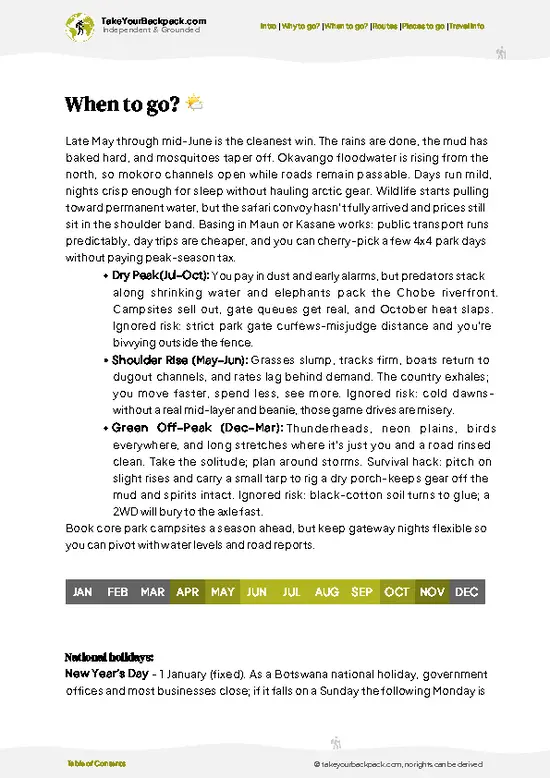
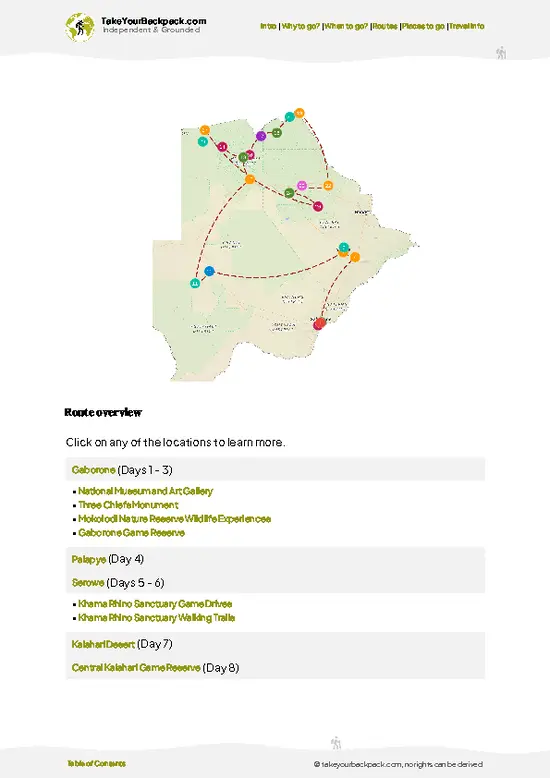
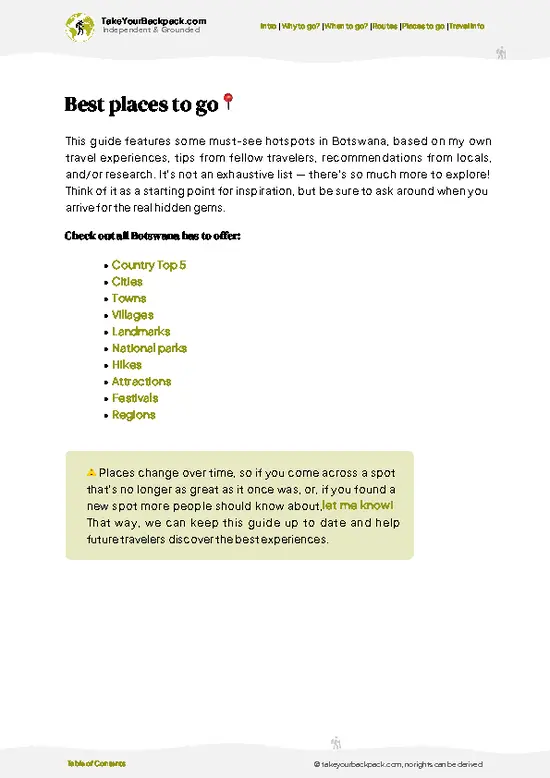
example page 0 from our offline Travel Guide for Botswana
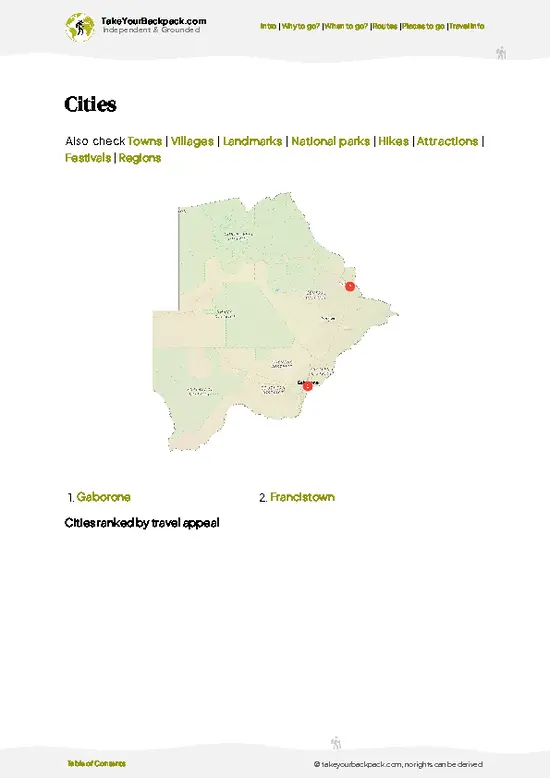
example page 1 from our offline Travel Guide for Botswana
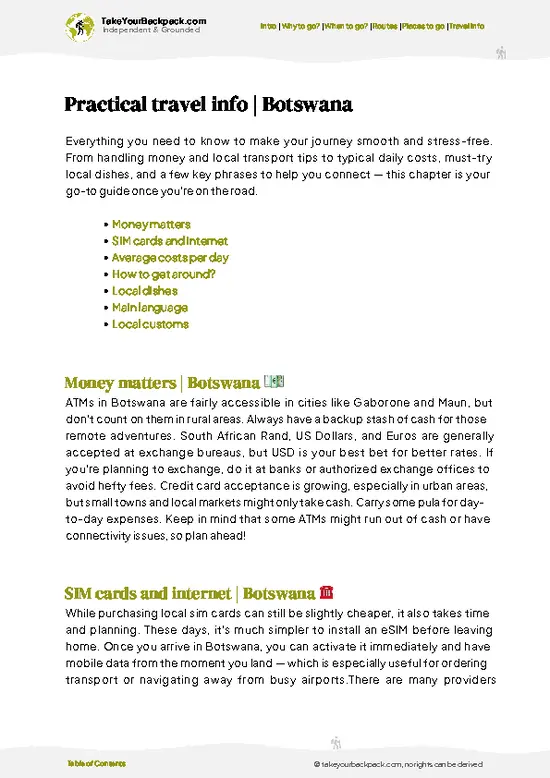
example page 2 from our offline Travel Guide for Botswana
example page 3 from our offline Travel Guide for Botswana
example page 4 from our offline Travel Guide for Botswana
example page 5 from our offline Travel Guide for Botswana
example page 6 from our offline Travel Guide for Botswana
example page 7 from our offline Travel Guide for Botswana
The digital guide (257 pages) contains:
58 highlights, ranked by travel appeal
Optimized 5, 10 & 15-day travel routes
Cities, national parks, landmarks, beaches
How to get around
Offline-friendly for travel without Wi-Fi
👉 Click to see all 30+ guide features

📅 Plan smarter in minutes, not weeks
Month by month travel advice
Festivals & national holidays
Budget expectations

🗺️ Go to the right places, skip the overrated ones
Honest pros & cons of destinations
Top hikes, parks & viewpoints
Lesser-known places most travelers miss
Clear “worth it vs skip it” guidance

🛏️ Travel smoothly without rookie mistakes
Best areas to stay
Transport systems explained simply
Common scams & safety advice
SIM cards, money & practical tips

🌍 Understand the country, not just visit it
Culture & traditions
52 Essential phrases & customs
Festivals worth planning around
Traveler-friendly historical context
Insights that make places more meaningful

📱 Built for real travel conditions
Fully downloadable PDF
Works completely offline
Optimized for phone use
Useful in remote areas & buses
Everything in one place
Save weeks of stressful planning
Get instant access to your full guide. 30‑day money-back guarantee.


By proceeding you agree to our terms.
Sent to your inbox immediately after payment • 100% Secure Checkout
Best Backpacking Travel Advisor 2025 tourism awardBest Backpacking
Travel Advisor
2025
What others say about Take Your Backpack Guides:
⭐⭐⭐⭐⭐
Fantastic, amazing amount of information!
⭐⭐⭐⭐⭐
My goodness this is amazing, it's what I've been looking for hats off too you!
⭐⭐⭐⭐⭐
I think this is absolutely BRILLIANT
⭐⭐⭐⭐
Very complete and informative. It's still missing places, but I gotta to commend you
⭐⭐⭐⭐⭐
This is truly amazing, thank you, can't wait to explore it with my kids!
⭐⭐⭐⭐⭐
Awesome resource, thank you!
⭐⭐⭐⭐⭐
This is amazing! Can't wait to explore the ones I haven't seen
⭐⭐⭐⭐
I love this! Well done, great idea.
⭐⭐⭐⭐⭐
Thanks for taking the time to make this gem!
⭐⭐⭐⭐⭐
This might be the best website I've ever seen.
⭐⭐⭐⭐⭐
Congratulations, and thank you so much for your work; it's incredibly valuable.
⭐⭐⭐⭐
In all seriousness I think you did a great job pointing out the important spots
⭐⭐⭐⭐⭐
10/10 very good
⭐⭐⭐⭐⭐
As someone who's only just starting to visit regularly this is awesome, thank you.
⭐⭐⭐⭐
Thank you very much! I'm going to visit my dad, it's going to be very useful!
⭐⭐⭐⭐⭐
This is really cool! We'll be travelling for the first time and this definitely come in handy.
⭐⭐⭐⭐⭐
You are now our minister of culture, congratulations 👨‍💼
⭐⭐⭐⭐⭐
Just wanted to tell you that this is a pearl! Going to follow your recommendations.
⭐⭐⭐⭐⭐
This is so cool. I'll definitely be using the resource for my travels soon.
⭐⭐⭐⭐⭐
This is very impressive! Good work.
⭐⭐⭐⭐⭐
This is an amazing and informative site. Very well done!

🛏️ Where to stay?Where staying makes the most sense

If you’re heading to Kubu Island Cultural and Stargazing Camps, brace yourself: this isn’t your typical backpacker hotspot with bustling hostels and nightlife. The reality? It’s remote, quiet, and yes, a bit pricey to get there. The crowds are minimal because it’s not a place you stumble upon by accident. But that’s exactly why it’s worth it.

The best places to stay are not on the island itself—there’s no infrastructure for that—but in the surrounding areas, mainly near the village of Rakops and the edge of the Makgadikgadi Pans. Rakops is your go-to base camp. It’s safe, low-key, and has a handful … read more 👉
If you’re heading to Kubu Island Cultural and Stargazing Camps, brace yourself: this isn’t your typical backpacker hotspot with bustling hostels and nightlife. The reality? It’s remote, quiet, and yes, a bit pricey to get there. The crowds are minimal because it’s not a place you stumble upon by accident. But that’s exactly why it’s worth it.

The best places to stay are not on the island itself—there’s no infrastructure for that—but in the surrounding areas, mainly near the village of Rakops and the edge of the Makgadikgadi Pans. Rakops is your go-to base camp. It’s safe, low-key, and has a handful of guesthouses and campsites that attract solo travelers and budget adventurers who want to soak in Botswana’s raw landscape without the safari price tag. You’ll find a social vibe here, mostly from other travelers who’ve heard the same call: “Get off the beaten path.”

Staying near the Makgadikgadi Pans offers a different flavor—wide-open spaces, endless sky, and a chance to connect with nature in a way that’s hard to replicate anywhere else. It’s not about luxury; it’s about the experience. The nights here are legendary for stargazing, and the silence is profound. If you want to meet others, campgrounds near the pans provide communal fire pits and shared meals, making it easy to swap stories under the Milky Way.

So, skip the hype of “luxury” lodges on the island. Instead, settle into Rakops or the pans’ edge for safety, social connection, and the kind of authenticity that makes the journey unforgettable.

👛 Costs (as of 8 March 2026)How expensive it really is

As of 2025-2027, the entrance fee to Kubu Island is P40.00 for citizens, P60.00 for SADC nationals, and P100.00 for international visitors. Camping fees per person per night are P80.00 for citizens, P150.00 for SADC nationals, and P200.00 for international visitors. Additional costs include a tourism levy of P10.00 per person per night, a guided walk around the island at P80.00 per person, and stargazing at P80.00 per person. Tent rentals are available at P250.00 per day, which includes two mattresses and solar lamps. Children aged 0-5 camp for free, those aged 6-14 pay half price, and those 15 and older pay the full price. Please note that these fees are subject to change, and it's advisable to check the official website for the most current information.

source: kubuisland.com
⚠️ Prices can change and everyone travels differently, so take this as a rough guide. Hope it helps you plan your adventure!

Other Botswanan attractions near Kubu Island Cultural and Stargazing Camps

Explore more nearby:


💡 Not sure where to go next?
Create a personalized itinerary for Botswana including Kubu Island Cultural and Stargazing Camps and the places that fit your trip.

Generate my itinerary

👉 Discover all attractions

Or checkout all Botswana has to offer (think cities, towns, villages, national parks, hikes, beaches, festivals)
Country photo of Botswana

We 💚 feedbackIs it worth it?

Kubu Island isn’t your typical postcard-perfect getaway—expect some crowds, especially around peak season, and yes, the costs lean toward the premium side. But here’s the kicker: once the sun dips and the tourists thin out, the sky explodes into a cosmic show that no city light pollution can touch. The vibe is quietly electric, a mix of ancient granite and endless stars that somehow resets your sense of time. Just don’t come expecting luxury resorts; this is raw, rugged, and utterly real. It’s worth every gritty, starry second.

✍️ Help improve this page!
The information on this page is based on in-depth research, insights shared by experienced travelers, and feedback from the local travel community in Botswana. While every effort is made to keep the information accurate and current, conditions can change — so if you spot anything incorrect or outdated, please get in touch.


🙋‍♂️ Give feedback

👋 Meet the founderWho’s Behind Take Your Backpack?

Johan, backpacker and founder of TakeYourBackpackHi, I’m Johan (Netherlands 🇳🇱), the creator of TakeYourBackpack. Over the past decade, I’ve backpacked through 80+ countries across six continents, gaining extensive experience with independent travel, long-term trips, and overland routes.

This site is built on a combination of firsthand travel experience and carefully curated insights from other backpackers. Many guides are based on places I’ve personally visited, while others bring together tips, observations, and practical advice shared by trusted travelers I’ve met along the way.

The goal is to provide realistic, experience-driven guidance — not generic itineraries — so you can explore destinations with better context, clearer expectations, and more confidence.

Get full Botswana guide •
Instant download • 58 highlights • Full Offline guide