
×

Brazil🇧🇷 | regionsIlha do MarajóWater buffalo ranches, mangrove channels, Belém ferry, river-mouth beaches | things to do and best time to go

Explore Ilha GrandeExplore Ilha do Mel

Backpacking in Ilha do Marajó
👍 Recommendedregion ranked #6
By Johan Kruseman 🇳🇱 | Updated October 19, 2026

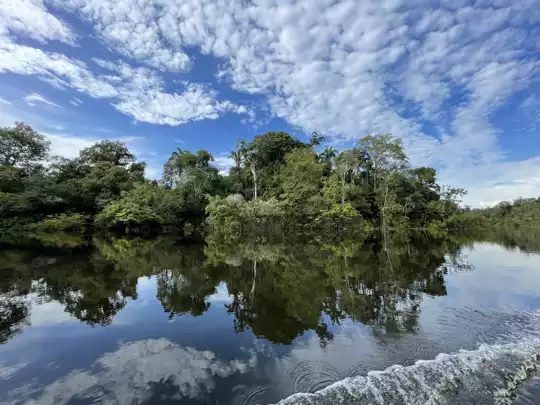
Marajó is roughly the size of Switzerland, and it is the largest island in the world that sits between river and sea, so you cross a river mouth, not an ocean, to reach it. It lies in the north of Brazil, in Pará state, where the Amazon meets the Atlantic. I took the ferry from Belém to Camará and a bus on to Salvaterra, and a water buffalo calmly blocked the road for ten minutes while everyone shrugged. That is Marajó: buffalo outnumber the patience of your schedule. The beaches near Soure and Salvaterra are muddy-river beaches, not postcard sand, so skip them as a swim goal and go for the mangroves, the ranches and the cheese. Distances are long and roads are thin, so experienced travelers pick one or two bases instead of hopping around. Book the boat from Belém ahead on weekends, since the faster ones fill.

Discover everything you want to know in the 📖 Brazil Travel Guide.


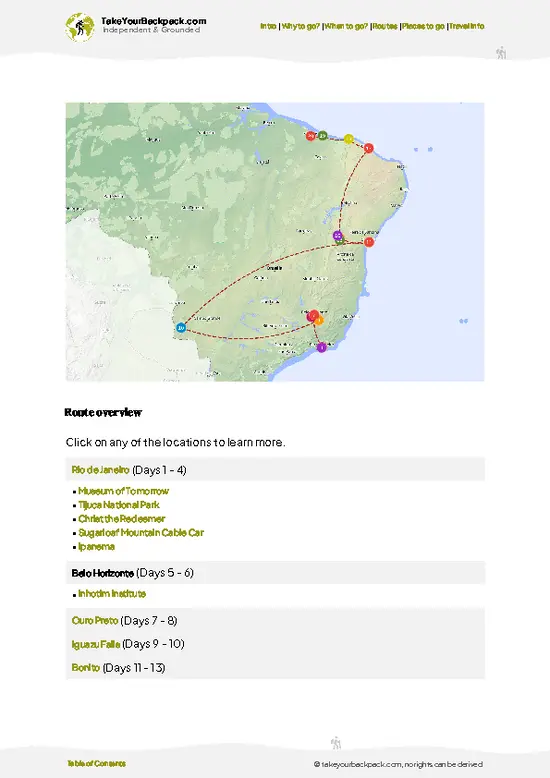
example page 0 from our offline Travel Guide for Brazil
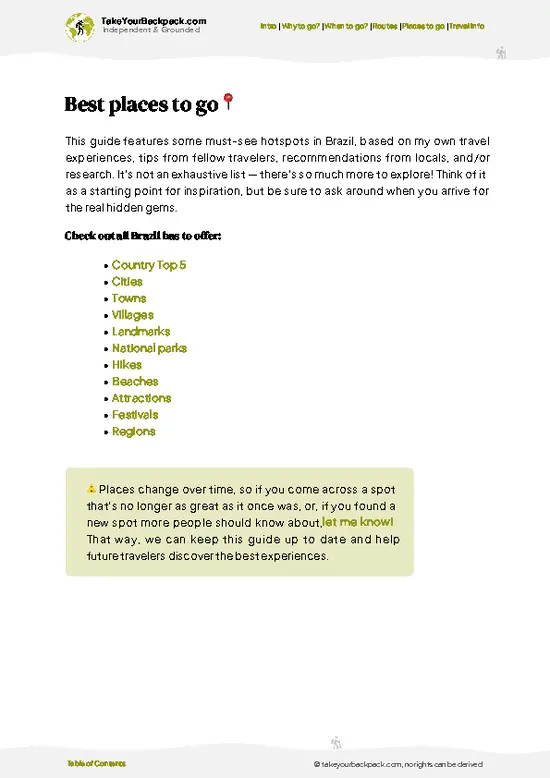
example page 1 from our offline Travel Guide for Brazil
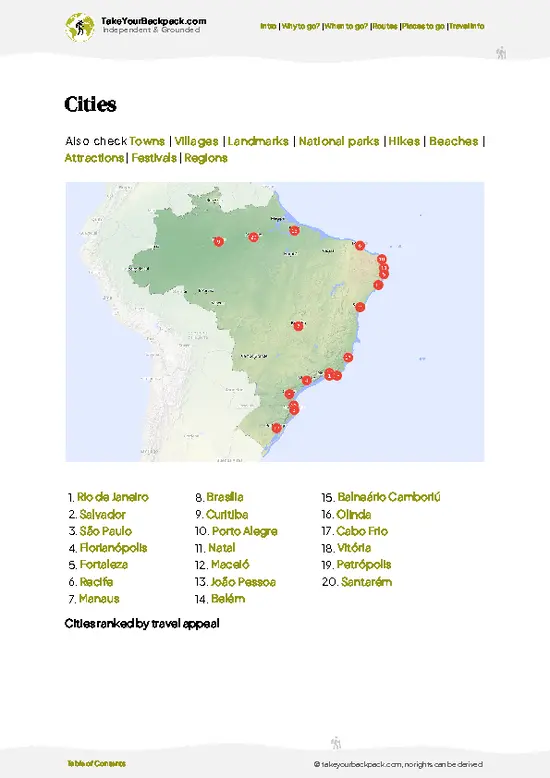
example page 2 from our offline Travel Guide for Brazil
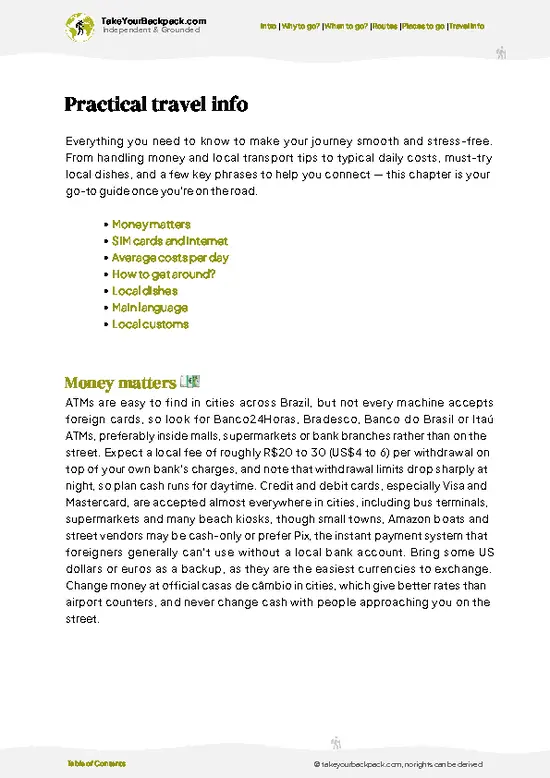
example page 3 from our offline Travel Guide for Brazil
example page 4 from our offline Travel Guide for Brazil
example page 5 from our offline Travel Guide for Brazil
example page 6 from our offline Travel Guide for Brazil
example page 7 from our offline Travel Guide for Brazil
Loading the map 🌍
CLICK TO FILTER
cities
towns
villages
landmarks
national parks
hikes
beaches
attractions
festivals
regions
SHOW COUNTRY’S BESTSHOW ALL

✨ Why go?
Ranked #6 region in Brazil
Reasons people choose to visit here

Ilha do Marajó rewards backpackers who want an Amazon-delta landscape without a jungle expedition. Flat floodplain, mangrove, savanna and river beach sit within a short ride of each other, so you can base yourself in Soure or Salvaterra and see all of it without repacking. The island is also a real working place. Buffalo are ranched here by the thousands, and you can ride one, eat buffalo steak and taste the local queijo do Marajó at the source. Policemen in Soure patrol on buffalo-back, which tells you how normal the animal is. Add the island’s Marajoara pottery tradition and the Joanes ruins and old Jesuit church, and you get culture and nature on one slow loop. Transport is simple: boats, a few buses, motorbike taxis and rented bikes, so you can go at your own pace and stay unhurried.

💡 HighlightsDon't-miss highlights and experiences

  1. Soure: the island’s main town on the Atlantic side, where police patrol on water buffalo, and the waterfront market sells fresh crab and cheese.
  2. Praia do Pesqueiro: a wide, flat beach near Soure with beach shacks serving grilled fish and crab; the tide runs far out, so plan your swim around it.
  3. Praia de Araruna: a quieter beach reached by the same road from Soure, backed by mangrove and dunes, with little more than a few stalls.
  4. Cachoeira do Arari: an inland town on the lake-dotted plains, home to the Museu do Marajó, founded by Padre Giovanni Gallo and run by the Pará state culture department since 2019, with local history, sacred art and Marajoara ceramics.
  5. Fazenda São Jerônimo: a working buffalo ranch near Soure where you can ride a buffalo, tour the property and see how the herd shapes island
… read more 👉
  1. Soure: the island’s main town on the Atlantic side, where police patrol on water buffalo, and the waterfront market sells fresh crab and cheese.
  2. Praia do Pesqueiro: a wide, flat beach near Soure with beach shacks serving grilled fish and crab; the tide runs far out, so plan your swim around it.
  3. Praia de Araruna: a quieter beach reached by the same road from Soure, backed by mangrove and dunes, with little more than a few stalls.
  4. Cachoeira do Arari: an inland town on the lake-dotted plains, home to the Museu do Marajó, founded by Padre Giovanni Gallo and run by the Pará state culture department since 2019, with local history, sacred art and Marajoara ceramics.
  5. Fazenda São Jerônimo: a working buffalo ranch near Soure where you can ride a buffalo, tour the property and see how the herd shapes island life. Book through a Soure guesthouse.
  6. Salvaterra: the town where the ferry from Belém lands, with the broad Praia Grande, the Joanes ruins of a Jesuit church, and a handful of quiet guesthouses.
  7. Joanes: a small fishing village with the ruins of a 17th-century Jesuit church, a calm beach and almost no crowds.
  8. Ponta de Pedras: a river town on the southeastern shore with a working port, local fishermen and traditional boat building. Few visitors stop here.
  9. Mangrove canoe trips near Soure: paddle through the channels at high tide for scarlet ibis, herons and crab collectors at work.
  10. Camará: a tiny community close to Salvaterra where fishermen still haul in their nets by hand, with a simple beach and quiet evenings.
Ponta de Pedras, with its working docks and boatyards, is the place most visitors never see.
Spotted a mistake or missing something? Contact us.

⌛️ 5 daysHow to make the most of Ilha do Marajó

Day 1: Soure: Start in Soure, the stop not to skip. The boat from Belém lands near Salvaterra, and a short ferry or road link brings you across, so arrive early and drop your bag. The grid of streets is easy by bicycle or mototaxi, and the buffalo police tell you immediately where you are.
Day 2: Praia do Pesqueiro: Spend this day on the coast, since tides dictate the beach and the few shared transfers run on local timing. Eat fried fish in a thatched shack and walk the flats at low tide. Ride out and back instead of moving bases.
Day 3: Fazenda São Jerônimo: Buffalo country is the island’s identity, so book a ranch visit with a ride and a lunch. Keep it near Soure so no long road leg eats the day. Add the mangrove trail in the late afternoon if energy allows.
Day 4: Joanes and Salvaterra: Cross … read more 👉
Day 1: Soure: Start in Soure, the stop not to skip. The boat from Belém lands near Salvaterra, and a short ferry or road link brings you across, so arrive early and drop your bag. The grid of streets is easy by bicycle or mototaxi, and the buffalo police tell you immediately where you are.
Day 2: Praia do Pesqueiro: Spend this day on the coast, since tides dictate the beach and the few shared transfers run on local timing. Eat fried fish in a thatched shack and walk the flats at low tide. Ride out and back instead of moving bases.
Day 3: Fazenda São Jerônimo: Buffalo country is the island’s identity, so book a ranch visit with a ride and a lunch. Keep it near Soure so no long road leg eats the day. Add the mangrove trail in the late afternoon if energy allows.
Day 4: Joanes and Salvaterra: Cross to the Salvaterra side, where the ruined Jesuit church at Joanes gives the island’s colonial layer. Sleep here, because boats back to Belém leave from this side.
Day 5: Detour to Cachoeira do Arari: If you have a flexible return, add the interior town and its pottery museum. It adds depth without changing your ferry plan, as long as you start early.
My pick for the day that justifies the trip is Day 3, riding across the flooded savanna at the ranch.

🌤️ When to go?Choosing the right time of year

The dry months from roughly July to December are the easiest window for Ilha do Marajó, with the least rain and the most reliable dirt roads and beach days.
  • Rainy Season (January to June): Heavy downpours peak March to May, and large parts of the island's eastern plains flood. Temperatures stay around 23 to 32°C (73 to 90°F). Roads turn to mud, but buffalo herds and birdlife concentrate on the water, and lodging is cheaper.
  • Dry Season (July to December): Rain is light, days are 25 to 34°C (77 to 93°F), and flooded fields recede. Beaches such as Joanes and Pesqueiro are at their best, and prices climb in July and December.
  • Daylight: Near the equator, days run about 12 hours year-round, so planning around seasons matters more than sunrise.
  • Festivals: July school holidays bring Brazilian families,
… read more 👉
The dry months from roughly July to December are the easiest window for Ilha do Marajó, with the least rain and the most reliable dirt roads and beach days.
  • Rainy Season (January to June): Heavy downpours peak March to May, and large parts of the island's eastern plains flood. Temperatures stay around 23 to 32°C (73 to 90°F). Roads turn to mud, but buffalo herds and birdlife concentrate on the water, and lodging is cheaper.
  • Dry Season (July to December): Rain is light, days are 25 to 34°C (77 to 93°F), and flooded fields recede. Beaches such as Joanes and Pesqueiro are at their best, and prices climb in July and December.
  • Daylight: Near the equator, days run about 12 hours year-round, so planning around seasons matters more than sunrise.
  • Festivals: July school holidays bring Brazilian families, so book ahead.
Aim for August to October if you want dry roads without the July crowds.


source: climatestotravel.comJANJanuary: fair for travelingFEBFebruary: fair for travelingMARMarch: fair for travelingAPRApril: fair for travelingMAYMay: fair for travelingJUNJune: good for travelingJULJuly: highly recommended for travelingAUGAugust: excellent for travelingSEPSeptember: excellent for travelingOCTOctober: highly recommended for travelingNOVNovember: highly recommended for travelingDECDecember: highly recommended for traveling
when-to-go

✈️ The backpacker research shortcutBrazil Travel Guide

An offline-friendly backpacking guide with optimized travel routes, ranked highlights, transport advice, and the best areas to stay.
example page 0 from our offline Travel Guide for Brazil
example page 1 from our offline Travel Guide for Brazil
example page 2 from our offline Travel Guide for Brazil
example page 3 from our offline Travel Guide for Brazil
example page 4 from our offline Travel Guide for Brazil
example page 5 from our offline Travel Guide for Brazil
example page 6 from our offline Travel Guide for Brazil
example page 7 from our offline Travel Guide for Brazil
The digital guide (410 pages) contains:
✅ 146 highlights, ranked by travel appeal
✅ Optimized 14, 21 & 30-day travel routes
✅ Cities, national parks, landmarks, beaches
✅ How to get around
✅ Offline-friendly for travel without Wi-Fi
👉 Click to see all 30+ guide features

📅 Plan smarter in minutes, not weeks
✅ Month by month travel advice
✅ Festivals & national holidays
✅ Budget expectations

🗺️ Go to the right places, skip the overrated ones
✅ Honest pros & cons of destinations
✅ Top hikes, parks & viewpoints
✅ Lesser-known places most travelers miss
✅ Clear “worth it vs skip it” guidance

🛏️ Travel smoothly without rookie mistakes
✅ Best areas to stay
✅ Transport systems explained simply
✅ Common scams & safety advice
✅ SIM cards, money & practical tips

🌍 Understand the country, not just visit it
✅ Culture & traditions
✅ 52 Essential phrases & customs
✅ Festivals worth planning around
✅ Traveler-friendly historical context
✅ Insights that make places more meaningful

📱 Built for real travel conditions
✅ Fully downloadable PDF
✅ Works completely offline
✅ Optimized for phone use
✅ Useful in remote areas & buses
✅ Everything in one place
Stop searching, start planning
Get instant access to your full guide. 30‑day money-back guarantee.
+ Add another guide for just

By proceeding you agree to our terms.
Sent to your inbox immediately after payment • 100% Secure Checkout
Best Backpacking Travel Advisor 2025 tourism awardBest Backpacking
Travel Advisor
2025
What others say about Take Your Backpack Guides:
⭐⭐⭐⭐⭐
Fantastic, amazing amount of information!
⭐⭐⭐⭐⭐
My goodness this is amazing, it's what I've been looking for hats off too you!
⭐⭐⭐⭐⭐
I think this is absolutely BRILLIANT
⭐⭐⭐⭐
Very complete and informative. It's still missing places, but I gotta to commend you
⭐⭐⭐⭐⭐
This is truly amazing, thank you, can't wait to explore it with my kids!
⭐⭐⭐⭐⭐
Awesome resource, thank you!
⭐⭐⭐⭐⭐
This is amazing! Can't wait to explore the ones I haven't seen
⭐⭐⭐⭐
I love this! Well done, great idea.
⭐⭐⭐⭐⭐
Thanks for taking the time to make this gem!
⭐⭐⭐⭐⭐
This might be the best website I've ever seen.
⭐⭐⭐⭐⭐
Congratulations, and thank you so much for your work; it's incredibly valuable.
⭐⭐⭐⭐
In all seriousness I think you did a great job pointing out the important spots
⭐⭐⭐⭐⭐
10/10 very good
⭐⭐⭐⭐⭐
As someone who's only just starting to visit regularly this is awesome, thank you.
⭐⭐⭐⭐
Thank you very much! I'm going to visit my dad, it's going to be very useful!
⭐⭐⭐⭐⭐
This is really cool! We'll be travelling for the first time and this definitely come in handy.
⭐⭐⭐⭐⭐
You are now our minister of culture, congratulations 👨‍💼
⭐⭐⭐⭐⭐
Just wanted to tell you that this is a pearl! Going to follow your recommendations.
⭐⭐⭐⭐⭐
This is so cool. I'll definitely be using the resource for my travels soon.
⭐⭐⭐⭐⭐
This is very impressive! Good work.
⭐⭐⭐⭐⭐
This is an amazing and informative site. Very well done!

🛏️ Where to stay?Best areas to stay in Brazil

Soure is the best base on Ilha do Marajó for most backpackers, with guesthouses clustered around a flat, walkable grid and beds typically US$15 to 40 a night. It is the island's biggest town, so you get restaurants, a market, ATMs and the easiest access to Barra Velha and Pesqueiro beaches by bike or mototaxi. Evenings are social in a low-key way, with people drinking at plazas and meeting other travelers over river-view dinners.
Salvaterra suits you better if you want to sleep closer to the sea. Its seafront strip is calmer, with simple pousadas around US$20 to 45 and a short ride to Joanes, a … read more 👉
Soure is the best base on Ilha do Marajó for most backpackers, with guesthouses clustered around a flat, walkable grid and beds typically US$15 to 40 a night. It is the island's biggest town, so you get restaurants, a market, ATMs and the easiest access to Barra Velha and Pesqueiro beaches by bike or mototaxi. Evenings are social in a low-key way, with people drinking at plazas and meeting other travelers over river-view dinners.
Salvaterra suits you better if you want to sleep closer to the sea. Its seafront strip is calmer, with simple pousadas around US$20 to 45 and a short ride to Joanes, a small beach village with old Portuguese ruins and quiet waterfront stays. It is a good fit for couples and solo travelers who want sunsets without noise.
Both are safe by Brazilian standards, with sparse crime and plenty of locals out at night. For ranch life, a night at a fazenda in the interior costs more, around US$50 to 100 with meals, and gets you close to buffalo herds and horse rides. Book ahead for July and December.

🚌 Getting aroundTransportation options and practical tips

Soure and Salvaterra are small enough to cover on foot in a few minutes, but walking stops making sense once you head for beaches, ranches or the interior, which sit 5 to 15 km (3 to 9 miles) away. Most backpackers reach the island by ferry from Belém and then rely on mototaxis, bikes and arranged transfers. It works, but schedules shift with tides and weather, so build slack in.
  • Ferry from Belém: Boats to Camará (for Salvaterra) or to Soure take roughly 3 to 4 hours and cost about US$10 to 20 for passengers. Tickets sell out on weekends and holidays, so buy early, and choose the daytime sailing so you see the river approach.
  • Mototaxi: The main local transport, at about US$2 to 6 per short ride. Settle the price before getting on. Skip it for long beach runs in the rain, when the sand tracks
… read more 👉
Soure and Salvaterra are small enough to cover on foot in a few minutes, but walking stops making sense once you head for beaches, ranches or the interior, which sit 5 to 15 km (3 to 9 miles) away. Most backpackers reach the island by ferry from Belém and then rely on mototaxis, bikes and arranged transfers. It works, but schedules shift with tides and weather, so build slack in.
  • Ferry from Belém: Boats to Camará (for Salvaterra) or to Soure take roughly 3 to 4 hours and cost about US$10 to 20 for passengers. Tickets sell out on weekends and holidays, so buy early, and choose the daytime sailing so you see the river approach.
  • Mototaxi: The main local transport, at about US$2 to 6 per short ride. Settle the price before getting on. Skip it for long beach runs in the rain, when the sand tracks turn slick.
  • Bicycle: Soure is flat and bikes rent for about US$4 to 8 a day. Buffalo are used for police patrols here, which tells you how common wheel-free travel is. Bikes are the smartest way to reach Barra Velha and Pesqueiro beaches in dry months, and a poor idea after heavy rain.
  • Van or shared transfer: Between Salvaterra, Joanes and Soure, vans and set transfers run about US$3 to 10 per person. They are not frequent, so ask your guesthouse to arrange them instead of waiting by the road.
  • Small boat or ferry crossing: The Rio Paracauari crossing between Salvaterra and Soure takes under 30 minutes and costs a few dollars. Check the last departure, since it ends earlier than you expect.
Do not bring a car over on the ferry. Space is limited, roads are rough and everything you need is reachable by mototaxi or bike. Fix your return ferry before you leave the pier, because that is the ticket that sells out first.

🍲 FoodEating & Drinking in Ilha do Marajó

Marajó is buffalo country, and that shapes the menu. Order filé de búfalo, grilled thick and smoky, or queijo do Marajó, a mild, creamy buffalo cheese that appears at breakfast with coffee and tapioca. Buffalo milk also turns up in sweets and ice cream.
River food is the other pillar. Try peixe frito with farinha, camarão, and caldeirada stews fragrant with chicory and tucupi. Nearby, açaí is served thick and savory-sweet, often alongside fried fish, not with granola as in the south. Look for tacacá in the evening, a hot, tongue-tingling soup with jambu leaves.
Eat at casual family-run restaurants and the municipal market in Soure, where lunches run about US$5 to 12. At the beach, barracas serve fish, cold beer and fruit juices such as cupuaçu and bacuri. Portions are generous, so sharing is … read more 👉
Marajó is buffalo country, and that shapes the menu. Order filé de búfalo, grilled thick and smoky, or queijo do Marajó, a mild, creamy buffalo cheese that appears at breakfast with coffee and tapioca. Buffalo milk also turns up in sweets and ice cream.
River food is the other pillar. Try peixe frito with farinha, camarão, and caldeirada stews fragrant with chicory and tucupi. Nearby, açaí is served thick and savory-sweet, often alongside fried fish, not with granola as in the south. Look for tacacá in the evening, a hot, tongue-tingling soup with jambu leaves.
Eat at casual family-run restaurants and the municipal market in Soure, where lunches run about US$5 to 12. At the beach, barracas serve fish, cold beer and fruit juices such as cupuaçu and bacuri. Portions are generous, so sharing is normal.
Food service is unhurried, and the kitchen may cook everything fresh to order. Pay in reais, keep small bills for mototaxis and market stalls, and ask for the price of fish by weight before ordering.

FAQTraveler FAQ

Three to four days is a good fit for Ilha do Marajó. That gives you one day for Soure and its buffalo ranches, one for Barra Velha and Pesqueiro beaches, and one for Salvaterra and Joanes. Add a night if you want a fazenda stay, and allow 3 to 4 hours each way on the ferry from Belém.
On Ilha do Marajó, you can move around by mototaxi, bicycle and shared vans. Mototaxis cost about US$2 to 6 per short ride, and rental bikes run roughly US$4 to 8 a day, which is ideal in Soure and on dry-season beach routes. The ferry from Belém takes about 3 to 4 hours and costs around US$10 to 20.
Ilha do Marajó is known for its water buffalo, which roam ranches and even serve for police patrols in Soure. It is also known for buffalo cheese, river-delta beaches such as Pesqueiro and Joanes, and pre-Columbian Marajoara ceramics. It is one of the largest river islands in the world, sitting at the mouth of the Amazon.
⚠️ Things can change over time, so always validate details locally before you go.

Other Brazilian regions near Ilha do Marajó

Explore more nearby:

  • Alagoas—Tidal reef pools, palm-lined lagoon beaches, São Francisco canyon, Baroque river towns| 1729 km away
  • Atol das Rocas—Algae-ring atoll, lemon shark pools, seabird colonies, turtle nesting| 1783 km away
  • Fernando de Noronha—Turtle bays, cliff lookouts, capped visitor numbers, marine park| 1932 km away

💡 Not sure where to go next?
Create a personalized itinerary for Brazil including Ilha do Marajó and the places that fit your trip.

Generate my itinerary

👉 Discover all regions

Or checkout all Brazil has to offer (think cities, towns, villages, national parks, hikes, beaches, festivals)
Country photo of Brazil

We 💚 feedbackKey takeaways before you go

Ilha do Marajó suits slow travelers who like animals, river light and local food more than polished beaches. It is not for anyone chasing clear water or fast itineraries. I would pick one base, rent a bike, and keep a spare day for ferry delays.

✈️ When did I visit Brazil?
Call it good timing or luck, but I was able to celebrate Carnaval in Rio de Janeiro in February 2022, after a round trip in the north and east coast.

✍️ Help improve this page!
The information on this page is based on my own backpacking experience in Brazil, supplemented with up-to-date research and feedback from other travelers. Travel details can change, so if you notice anything outdated or incomplete, feel free to let me know.


🙋‍♂️ Give feedback

👋 Meet the founderWho’s Behind Take Your Backpack?

Johan, backpacker and founder of TakeYourBackpackHi, I’m Johan (Netherlands 🇳🇱), the creator of TakeYourBackpack. Over the past 3 decades, I’ve backpacked through 90+ countries across six continents, gaining extensive experience with independent travel, long-term trips, and overland routes.

This site is built on a combination of firsthand travel experience and carefully curated insights from other backpackers. Many guides are based on places I’ve personally visited, while others bring together tips, observations, and practical advice shared by trusted travelers I’ve met along the way.

The goal is to provide realistic, experience-driven guidance — not generic itineraries — so you can explore destinations with better context, clearer expectations, and more confidence.