v2.webp)


- The 1259 fresco cycle — These wall paintings are the whole reason people come: unusually vivid, well-preserved medieval frescoes dated to 1259 that push Byzantine art toward realism. Faces have personality, colors still glow, and you can actually read emotion in scenes that are usually flat in contemporary work.
- Donor portraits (Sebastocrator Kaloyan and Desislava) — Real people show up in medieval art here. The portraits of the patrons are strikingly individual and include inscriptions, giving you a rare, human connection to who paid for the church and why.
- Narrative Biblical scenes — Look for tightly composed episodes from Christ’s life and the Last Judgment rendered with surprising detail: expressions, gestures and small narrative touches that pull you into the stories rather than just
- The 1259 fresco cycle — These wall paintings are the whole reason people come: unusually vivid, well-preserved medieval frescoes dated to 1259 that push Byzantine art toward realism. Faces have personality, colors still glow, and you can actually read emotion in scenes that are usually flat in contemporary work.
- Donor portraits (Sebastocrator Kaloyan and Desislava) — Real people show up in medieval art here. The portraits of the patrons are strikingly individual and include inscriptions, giving you a rare, human connection to who paid for the church and why.
- Narrative Biblical scenes — Look for tightly composed episodes from Christ’s life and the Last Judgment rendered with surprising detail: expressions, gestures and small narrative touches that pull you into the stories rather than just illustrating them.
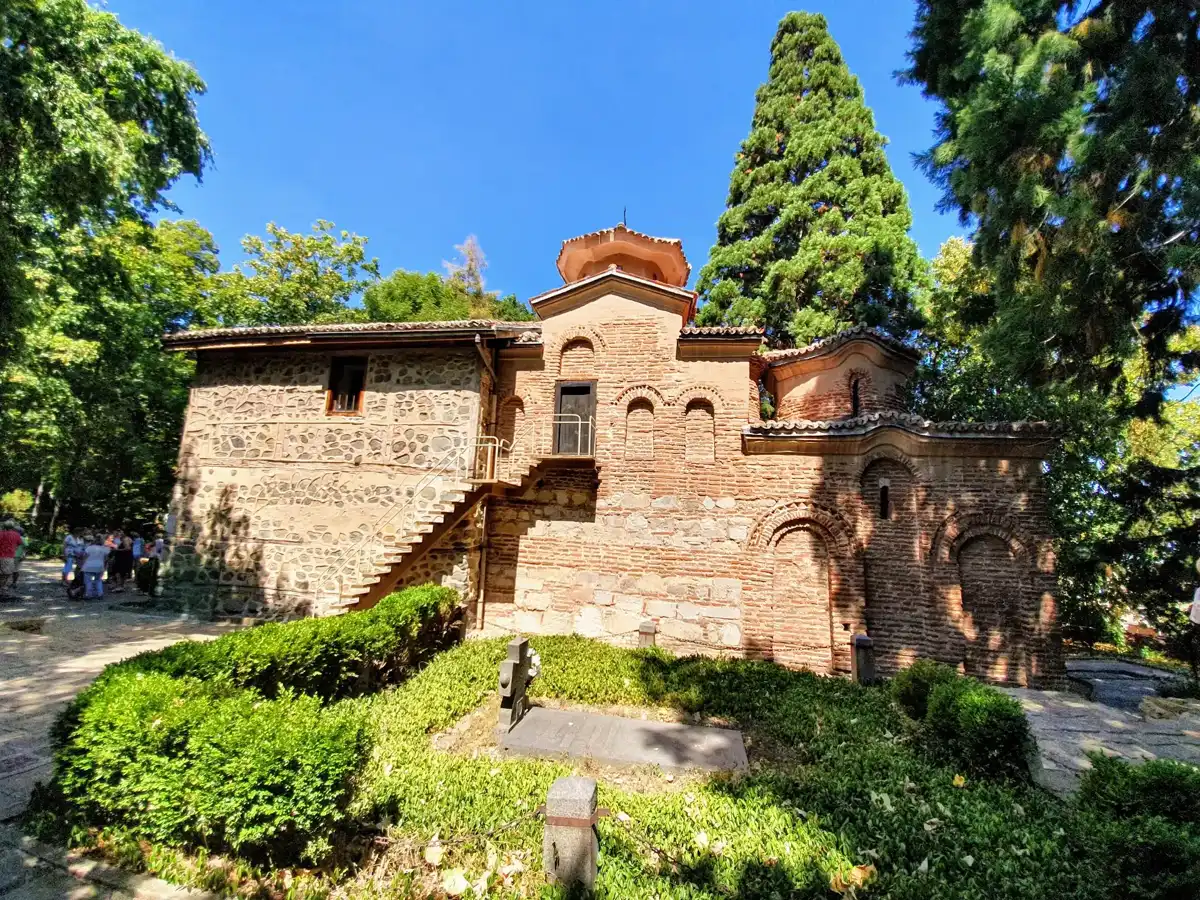
- Layered architecture — three building phases — The site is a compact timeline: a small original medieval nave, the 13th-century two-story addition that houses the famous frescoes, and later 19th-century additions. It’s a neat, readable example of how a sacred place evolved over centuries.
- Intimate interior and close viewing — The chapel is small, so you get up close to the paintings in a way you don’t at huge cathedrals. That scale makes details—brushwork, facial lines, tiny narrative elements—actually visible and memorable.
- Setting on Vitosha’s slopes — Boyana sits at the foot of Vitosha Mountain, a short, pleasant walk from the city edge. The hill, the pine air and the view back toward Sofia turn a museum visit into a mini hike and give the site a relaxed, outdoor vibe.
- UNESCO status and cultural importance — As a World Heritage site it’s recognized for changing the course of Eastern European art. Visiting feels like seeing a pivot point in medieval visual culture — small, but historically huge.
Spotted a mistake or missing something? Contact us.

Rila Monastery and Boyana Church Full-Day Tour

Private Day Trip to Boyana Church and Rila Monastery

Half Day Tour around Sofia and the mountains with Thermal Spa

Rila Monastery and Boyana Church Shuttle Tour

Small Group Tour to Rila Monastery and Boyana Church

Rila Monastery and Boiana church private tour

From Sofia: Rila monastery & Boyana church and free pick up
Full-Day Sofia Tour

Luxury Day Trip to Boyana Church and Rila Monastery

 Best Backpacking
.jpg) Hi, I’m Johan (Netherlands 🇳🇱), the creator of TakeYourBackpack. Over the past 3 decades, I’ve backpacked through 90+ countries across six continents, gaining extensive experience with independent travel, long-term trips, and overland routes.
Hi, I’m Johan (Netherlands 🇳🇱), the creator of TakeYourBackpack. Over the past 3 decades, I’ve backpacked through 90+ countries across six continents, gaining extensive experience with independent travel, long-term trips, and overland routes.