×

Bulgaria🇧🇬 | attractionsNational Museum of History of PlovdivUrban exhibits, Ottoman-era artifacts, city development | things to do and best time to go

Explore National Historical MuseumExplore Bachkovo Monastery

Backpacking in National Museum of History of Plovdiv
👍 Recommendedattraction ranked #8
By Johan Kruseman 🇳🇱 | Updated September 4, 2026

Here’s what nobody tells you until it’s too late: the National Museum of History of Plovdiv is one of the rare big-name museums in Bulgaria where you can actually get lost in the exhibits—mentally, not physically—without being elbowed by tour groups every five minutes. You’ll find it in the heart of Plovdiv, Bulgaria’s second city, perched on the edge of the Old Town’s cobbled maze. For backpackers, this isn’t just another box to tick. Yes, the museum covers the full sweep of Bulgarian history, from Thracian gold to Communist kitsch, but the real punch comes from how close you get to the artifacts—no glass fortresses or velvet ropes everywhere. The downside? It’s not the cheapest ticket in town, and the English signage can be hit-or-miss, so you’ll need to work for your ‘aha’ moments. But compared to Sofia’s blockbuster museums, Plovdiv’s version feels more personal, less sanitized, and—if you’re willing to dig—a lot more rewarding.

Discover everything you want to know in the 📖 Bulgaria Travel Guide.


Get your Bulgaria guide
93 ranked highlights, routes & tips, works offline (355 pages)
Loading the map 🌍
CLICK TO FILTER
cities
towns
villages
landmarks
national parks
hikes
beaches
attractions
festivals
regions
SHOW COUNTRY’S BESTSHOW ALL

✨ Why go?
Ranked #8 attraction in Bulgaria
What makes this attraction worth visiting

The National Museum of History of Plovdiv isn’t just another stop on Bulgaria’s tourist map—it’s a heavyweight in the country’s cultural ring. Sure, it doesn’t have the flash of Sofia’s landmarks or the seaside allure of the Black Sea coast, but that’s exactly why it’s a must for backpackers who want to dig deeper. This museum packs a punch with its sprawling collection that spans millennia, from Thracian treasures to Ottoman relics, offering a raw, unfiltered look at Bulgaria’s layered past. It’s not a quick photo op; it demands time and curiosity, rewarding you with context that turns Bulgaria from a place on the map into a living story.

Crowds? Yes, they gather here, especially in peak season, but the space is large enough to avoid feeling suffocated. The entry fee is modest, a steal for … read more 👉
The National Museum of History of Plovdiv isn’t just another stop on Bulgaria’s tourist map—it’s a heavyweight in the country’s cultural ring. Sure, it doesn’t have the flash of Sofia’s landmarks or the seaside allure of the Black Sea coast, but that’s exactly why it’s a must for backpackers who want to dig deeper. This museum packs a punch with its sprawling collection that spans millennia, from Thracian treasures to Ottoman relics, offering a raw, unfiltered look at Bulgaria’s layered past. It’s not a quick photo op; it demands time and curiosity, rewarding you with context that turns Bulgaria from a place on the map into a living story.

Crowds? Yes, they gather here, especially in peak season, but the space is large enough to avoid feeling suffocated. The entry fee is modest, a steal for the depth of insight you get—think of it as an investment in understanding a country that’s often overshadowed by its neighbors. For backpackers trekking the Balkan route, this museum is a milestone that grounds your journey in history and culture, making the rest of Bulgaria’s landscapes and cities resonate on a whole new level. Skip it, and you miss the backbone of Bulgaria’s identity.
Want to include National Museum of History of Plovdiv in your Bulgaria route?
Create a personalized Bulgaria itinerary that includes National Museum of History of Plovdiv and the places that fit your trip — based on your travel style, budget, and available time. Get your route in seconds.

Generate my trip

💡 HighlightsTop highlights of National Museum of History of Plovdiv

The Revival-Era House Exhibits
Forget sterile glass cases. The museum’s crown jewel is its collection of actual 19th-century Plovdiv homes, each one a time capsule of Bulgaria’s National Revival. You don’t just look at old furniture—you walk through creaking wooden floors, duck under painted ceilings, and feel the weight of history in the air. The Klianti House, for example, is a riot of color and detail, with frescoes that make you wonder why modern living rooms are so boring. This is immersive history, not a slideshow.


The Weaponry and Revolutionaries Hall
This isn’t your average “here’s a sword, here’s a musket” display. The museum’s arsenal is paired with the stories of the rebels who actually used them. You’ll see the battered rifles and homemade pistols that fueled Bulgaria’s fight … read more 👉
The Revival-Era House Exhibits
Forget sterile glass cases. The museum’s crown jewel is its collection of actual 19th-century Plovdiv homes, each one a time capsule of Bulgaria’s National Revival. You don’t just look at old furniture—you walk through creaking wooden floors, duck under painted ceilings, and feel the weight of history in the air. The Klianti House, for example, is a riot of color and detail, with frescoes that make you wonder why modern living rooms are so boring. This is immersive history, not a slideshow.


The Weaponry and Revolutionaries Hall
This isn’t your average “here’s a sword, here’s a musket” display. The museum’s arsenal is paired with the stories of the rebels who actually used them. You’ll see the battered rifles and homemade pistols that fueled Bulgaria’s fight for independence, plus personal effects—letters, uniforms, even a revolutionary’s pocket watch. It’s gritty, personal, and a reminder that freedom isn’t won by hashtags.


The Plovdiv Through the Ages Gallery
If you want a crash course in why Plovdiv is more than a pretty backdrop, this is it. The gallery walks you through the city’s wild ride from Thracian outpost to Ottoman stronghold to modern cultural hub. Expect ancient coins, Roman mosaics, and a few surprises (like a medieval chess set that looks suspiciously like it’s missing pieces—because it is). The real magic? You start to see the city’s layers everywhere you walk outside.


The Temporary Exhibitions
Here’s where the museum shakes off the dust. These rotating shows are where you’ll catch everything from contemporary Bulgarian art to quirky deep-dives into local subcultures. Sometimes it’s a photography exhibit, sometimes it’s a collection of Communist-era propaganda. The point: you never know what you’ll get, but it’s always a sharp contrast to the permanent collection. If you’re lucky, you’ll stumble into something that makes you rethink what “history” even means.


The Courtyard and Outdoor Artifacts
Don’t skip the outside. The museum’s courtyard is a quiet pocket of Plovdiv, dotted with stone sarcophagi, ancient columns, and weathered statues. It’s the kind of place where you can sit, breathe, and realize you’re surrounded by relics that outlasted empires. No crowds, no selfie sticks—just you and a thousand years of stories in the sun.


The Museum Shop (Yes, Really)
Most museum shops are a graveyard of overpriced mugs and plastic knights. This one actually gets it right. You’ll find locally made crafts, books you won’t see on Amazon, and the occasional oddball artifact replica. It’s a rare spot where you can pick up something with actual character, not just a logo. If you want a souvenir that doesn’t scream “tourist,” this is your hunting ground.
Spotted a mistake or missing something? Contact us.

Things to do around National Museum of History of Plovdiv

Ratings based on Tripadvisor reviews. When you book through this link, you support our work at no extra cost to you.

🌤️ When to go?Choosing the right time of year


  • Weather: Plovdiv’s climate swings from chilly winters to hot summers. From November through March, expect cold days around 0°C to 5°C (32°F to 41°F), often damp and gray. April to June offers mild, pleasant weather with highs between 15°C and 25°C (59°F to 77°F), perfect for wandering without sweating buckets. July and August can scorch you with temps hitting 30°C to 35°C (86°F to 95°F), making indoor museum time a smart retreat.

  • Daylight Hours: In winter months like December and January, daylight shrinks to about 8 hours, limiting your exploration window. Come late spring and summer, from May through August, you get up to 15 hours of light—ideal for combining museum visits with outdoor strolls through Plovdiv’s Old Town.

  • Crowds: The museum sees a spike in visitors during summer (June
read more 👉

  • Weather: Plovdiv’s climate swings from chilly winters to hot summers. From November through March, expect cold days around 0°C to 5°C (32°F to 41°F), often damp and gray. April to June offers mild, pleasant weather with highs between 15°C and 25°C (59°F to 77°F), perfect for wandering without sweating buckets. July and August can scorch you with temps hitting 30°C to 35°C (86°F to 95°F), making indoor museum time a smart retreat.

  • Daylight Hours: In winter months like December and January, daylight shrinks to about 8 hours, limiting your exploration window. Come late spring and summer, from May through August, you get up to 15 hours of light—ideal for combining museum visits with outdoor strolls through Plovdiv’s Old Town.

  • Crowds: The museum sees a spike in visitors during summer (June to August) and Bulgarian holidays, which can dilute the experience with noise and lines. Shoulder seasons—April, May, and September—offer a quieter, more intimate vibe, letting you soak in exhibits without elbowing through crowds.

  • Seasonal Activities: Spring and early autumn bring cultural festivals in Plovdiv that can enrich your visit with local music and art, but they also mean busier streets. Winter months are quieter but less lively, so if you want the city’s pulse alongside the museum, avoid December and January.

  • Price Fluctuations: Entry fees to the museum remain stable year-round, but accommodation and transport costs spike in summer and during major festivals. Booking in shoulder seasons like March or October can save you serious cash without sacrificing the experience.


Pro-tip: Aim for late spring or early autumn to dodge the heat, crowds, and inflated prices—this is when Plovdiv’s history feels most alive and accessible.


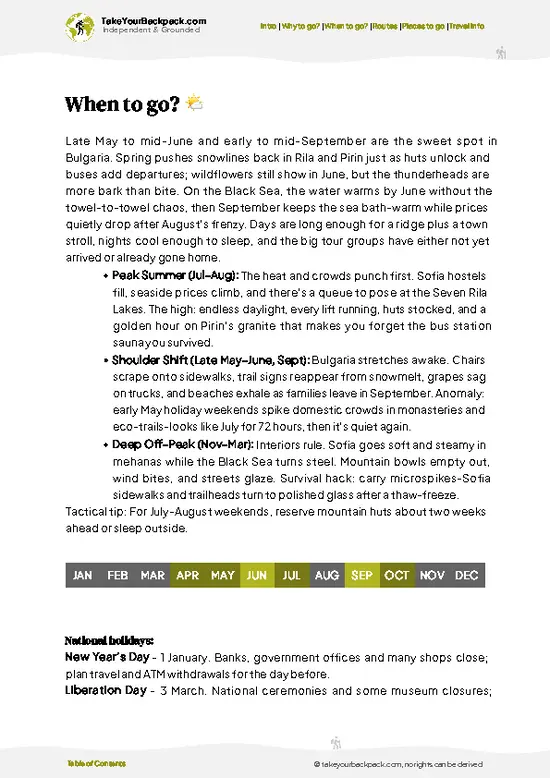
source: climatestotravel.comJANJanuary: fair for travelingFEBFebruary: fair for travelingMARMarch: highly recommended for travelingAPRApril: excellent for travelingMAYMay: excellent for travelingJUNJune: highly recommended for travelingJULJuly: good for travelingAUGAugust: good for travelingSEPSeptember: excellent for travelingOCTOctober: highly recommended for travelingNOVNovember: good for travelingDECDecember: fair for traveling
bulgaria-attraction-national-museum-of-history-of-plovdiv v1
© Google |

✈️ The backpacker research shortcutBulgaria Travel Guide

An offline-friendly backpacking guide with optimized travel routes, ranked highlights, transport advice, and the best areas to stay.
example page 0 from our offline Travel Guide for Bulgaria
example page 1 from our offline Travel Guide for Bulgaria
example page 2 from our offline Travel Guide for Bulgaria
example page 3 from our offline Travel Guide for Bulgaria
example page 4 from our offline Travel Guide for Bulgaria
example page 5 from our offline Travel Guide for Bulgaria
example page 6 from our offline Travel Guide for Bulgaria
example page 7 from our offline Travel Guide for Bulgaria
The digital guide (355 pages) contains:
93 highlights, ranked by travel appeal
Optimized 5, 10 & 15-day travel routes
Cities, national parks, landmarks, beaches
How to get around
Offline-friendly for travel without Wi-Fi
👉 Click to see all 30+ guide features

📅 Plan smarter in minutes, not weeks
Month by month travel advice
Festivals & national holidays
Budget expectations

🗺️ Go to the right places, skip the overrated ones
Honest pros & cons of destinations
Top hikes, parks & viewpoints
Lesser-known places most travelers miss
Clear “worth it vs skip it” guidance

🛏️ Travel smoothly without rookie mistakes
Best areas to stay
Transport systems explained simply
Common scams & safety advice
SIM cards, money & practical tips

🌍 Understand the country, not just visit it
Culture & traditions
52 Essential phrases & customs
Festivals worth planning around
Traveler-friendly historical context
Insights that make places more meaningful

📱 Built for real travel conditions
Fully downloadable PDF
Works completely offline
Optimized for phone use
Useful in remote areas & buses
Everything in one place
Save weeks of stressful planning
Get instant access to your full guide. 30‑day money-back guarantee.
+ Add another guide for just US$7.80

By proceeding you agree to our terms.
Sent to your inbox immediately after payment • 100% Secure Checkout
Best Backpacking Travel Advisor 2025 tourism awardBest Backpacking
Travel Advisor
2025
What others say about Take Your Backpack Guides:
⭐⭐⭐⭐⭐
Fantastic, amazing amount of information!
⭐⭐⭐⭐⭐
My goodness this is amazing, it's what I've been looking for hats off too you!
⭐⭐⭐⭐⭐
I think this is absolutely BRILLIANT
⭐⭐⭐⭐
Very complete and informative. It's still missing places, but I gotta to commend you
⭐⭐⭐⭐⭐
This is truly amazing, thank you, can't wait to explore it with my kids!
⭐⭐⭐⭐⭐
Awesome resource, thank you!
⭐⭐⭐⭐⭐
This is amazing! Can't wait to explore the ones I haven't seen
⭐⭐⭐⭐
I love this! Well done, great idea.
⭐⭐⭐⭐⭐
Thanks for taking the time to make this gem!
⭐⭐⭐⭐⭐
This might be the best website I've ever seen.
⭐⭐⭐⭐⭐
Congratulations, and thank you so much for your work; it's incredibly valuable.
⭐⭐⭐⭐
In all seriousness I think you did a great job pointing out the important spots
⭐⭐⭐⭐⭐
10/10 very good
⭐⭐⭐⭐⭐
As someone who's only just starting to visit regularly this is awesome, thank you.
⭐⭐⭐⭐
Thank you very much! I'm going to visit my dad, it's going to be very useful!
⭐⭐⭐⭐⭐
This is really cool! We'll be travelling for the first time and this definitely come in handy.
⭐⭐⭐⭐⭐
You are now our minister of culture, congratulations 👨‍💼
⭐⭐⭐⭐⭐
Just wanted to tell you that this is a pearl! Going to follow your recommendations.
⭐⭐⭐⭐⭐
This is so cool. I'll definitely be using the resource for my travels soon.
⭐⭐⭐⭐⭐
This is very impressive! Good work.
⭐⭐⭐⭐⭐
This is an amazing and informative site. Very well done!

🛏️ Where to stay?Choosing the right base

The National Museum of History in Plovdiv sits just outside the city center, which means your best bets for backpacker digs aren’t right on its doorstep but a short, easy ride away. Forget the tourist-packed Old Town; it’s charming but pricey and often feels like a curated postcard. Instead, aim for the neighborhoods of Kapana and the area around the main pedestrian street, Knyaz Alexander I.

Kapana is where Plovdiv’s real pulse beats—gritty, artsy, and buzzing with cafés, bars, and street art. It’s safe, lively, and packed with fellow travelers and locals who aren’t just passing through. You’ll … read more 👉
The National Museum of History in Plovdiv sits just outside the city center, which means your best bets for backpacker digs aren’t right on its doorstep but a short, easy ride away. Forget the tourist-packed Old Town; it’s charming but pricey and often feels like a curated postcard. Instead, aim for the neighborhoods of Kapana and the area around the main pedestrian street, Knyaz Alexander I.

Kapana is where Plovdiv’s real pulse beats—gritty, artsy, and buzzing with cafés, bars, and street art. It’s safe, lively, and packed with fellow travelers and locals who aren’t just passing through. You’ll find plenty of budget-friendly spots here that encourage socializing, perfect for solo backpackers looking to swap stories over a cheap beer.

The Knyaz Alexander I area offers a bit more of a city vibe with easy access to public transport, making the museum just a quick tram or bus ride away. It’s a practical choice if you want to balance social life with convenience. Both areas dodge the tourist traps and give you a real taste of Plovdiv’s everyday life—exactly what makes the museum visit more than just a tick on the list.

👛 Costs (as of 4 September 2026)Travel costs and budget guide for National Museum of History of Plovdiv

As of the most recent estimates, the National Museum of History of Plovdiv offers admission fees ranging from €3.07 to €7.67, depending on the number of sites visited. Additional charges may apply for temporary exhibitions and guided tours. Children up to 7 years old and visitors with disabilities receive free admission. ([rimplovdiv.com](https://rimplovdiv.com/en/admission-and-guided-tours/?utm_source=openai))

source: rimplovdiv.com
⚠️ Prices can change and everyone travels differently, so take this as a rough guide. Hope it helps you plan your adventure!

FAQFrequently asked questions about National Museum of History of Plovdiv

2 to 3 hours is sufficient to explore the National Museum of History of Plovdiv, allowing time to view the extensive archaeological and historical exhibits thoroughly.
Yes, the entrance fee is worth it; it is typically around 6 Bulgarian lev (about 3 euros), offering access to a rich collection of Thracian artifacts, medieval treasures, and Bulgarian history.
You can reach the National Museum of History of Plovdiv by taking a taxi or local bus from the city center; it is located about 6 kilometers northeast of central Plovdiv, near the village of Starosel.
⚠️ Things can change over time, so always validate details locally before you go.

Other Bulgarian attractions near National Museum of History of Plovdiv

Explore more nearby:


💡 Not sure where to go next?
Create a personalized itinerary for Bulgaria including National Museum of History of Plovdiv and the places that fit your trip.

Generate my itinerary

👉 Discover all attractions

Or checkout all Bulgaria has to offer (think cities, towns, villages, national parks, hikes, beaches, festivals)
Country photo of Bulgaria

We 💚 feedbackIs it worth it?

The National Museum of History in Plovdiv isn’t going to wow you with crowds or flashy displays—it’s quiet, almost under the radar, which is exactly why it’s worth your time. The real magic is in the layers of Bulgaria’s past, told through artifacts that feel like they’ve been pulled straight from the soil beneath your feet. Don’t expect a polished tourist trap; expect a raw, honest dive into history that sticks with you longer than any selfie. If you want history with soul, this is it.

✍️ Help improve this page!
The information on this page is based on in-depth research, insights shared by experienced travelers, and feedback from the local travel community in Bulgaria. While every effort is made to keep the information accurate and current, conditions can change — so if you spot anything incorrect or outdated, please get in touch.


🙋‍♂️ Give feedback

👋 Meet the founderWho’s Behind Take Your Backpack?

Johan, backpacker and founder of TakeYourBackpackHi, I’m Johan (Netherlands 🇳🇱), the creator of TakeYourBackpack. Over the past decade, I’ve backpacked through 80+ countries across six continents, gaining extensive experience with independent travel, long-term trips, and overland routes.

This site is built on a combination of firsthand travel experience and carefully curated insights from other backpackers. Many guides are based on places I’ve personally visited, while others bring together tips, observations, and practical advice shared by trusted travelers I’ve met along the way.

The goal is to provide realistic, experience-driven guidance — not generic itineraries — so you can explore destinations with better context, clearer expectations, and more confidence.

Get full Bulgaria guide •
Instant download • 93 highlights • Full Offline guide