×

Burkina Faso🇧🇫 | townsDjiboFulani emirate, camel trade, reservoir gardens, Sahel dust | things to do and best time to go

Explore BogandéExplore Tougan

Backpacking in Djibo
🌟 Highlighttown ranked #9
By Johan Kruseman 🇳🇱 | Updated October 22, 2026

Djibo has been under severe access restrictions since the late 2010s, and most governments advise against all travel there, so it sits outside any ordinary backpacker circuit. It lies in the north of Burkina Faso, in the Sahel, and is the capital of Soum province and the seat of a Fulani emirate. On the ground it is a flat, dusty town of mud-brick compounds, sandy lanes, donkey carts and a large livestock trade. Tourist infrastructure is minimal, and I would not plan a trip around it. Hostels, cafés and a backpacker scene do not exist here, so evenings are quiet and meeting other travelers is unlikely. The town is worth understanding for its Fulani herding culture and its market life, not for sights. A first day would start at the market, move to the emir’s quarter and end by the reservoir at dusk.

Discover everything you want to know in the 📖 Burkina Faso Travel Guide.
Safety warning

The current risk level for Burkina Faso is high. Check the advice before going.


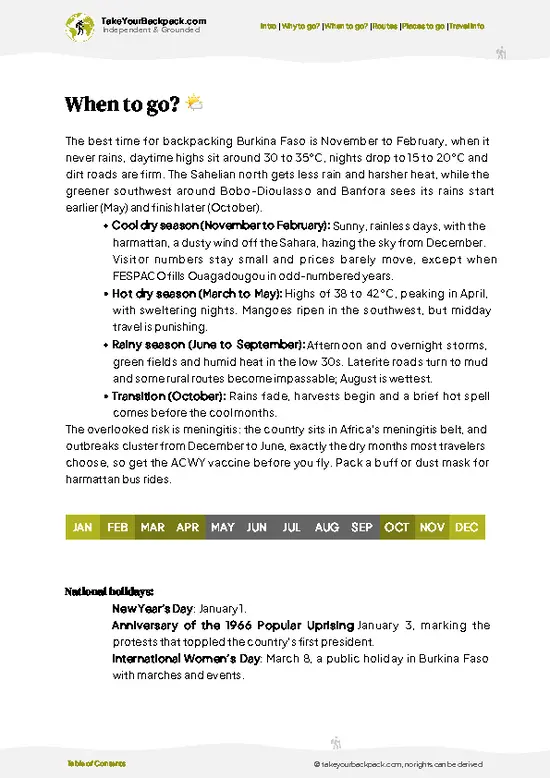
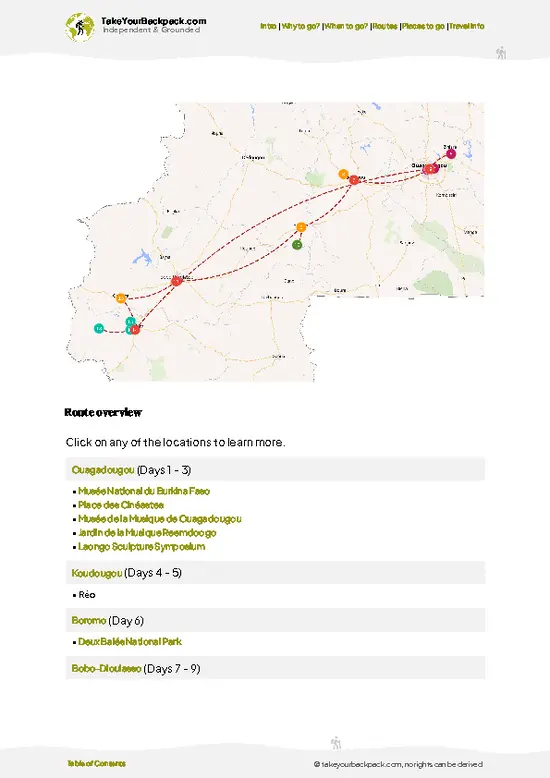
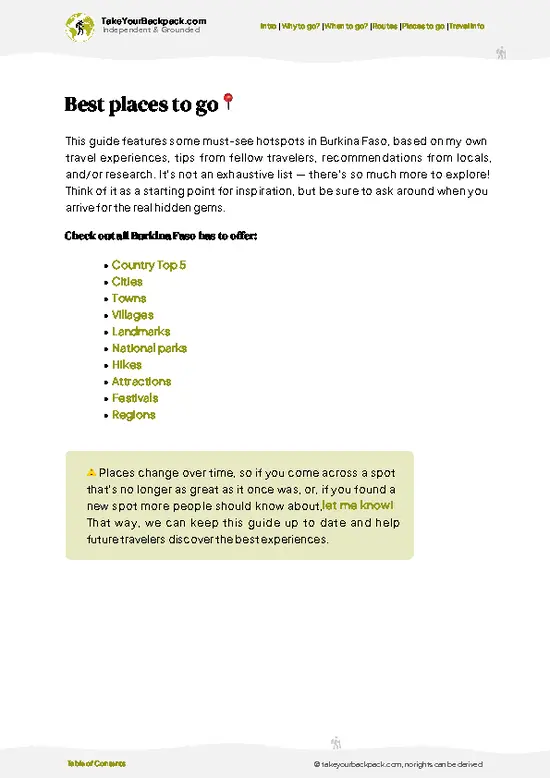
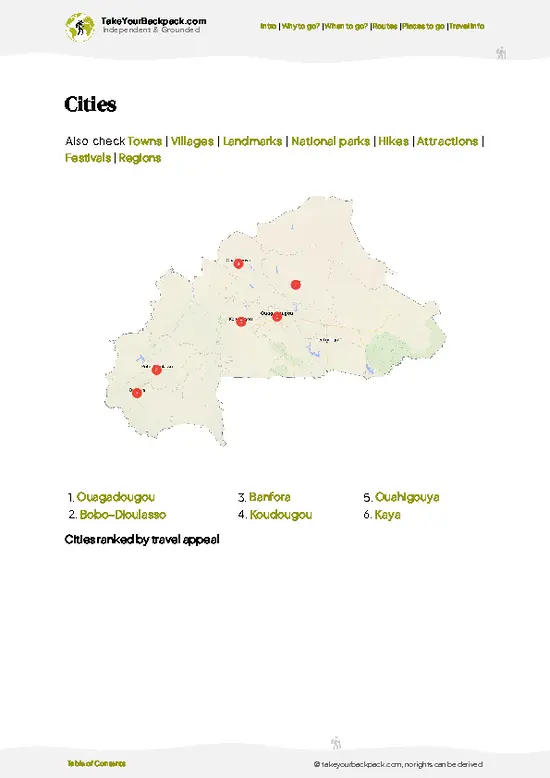
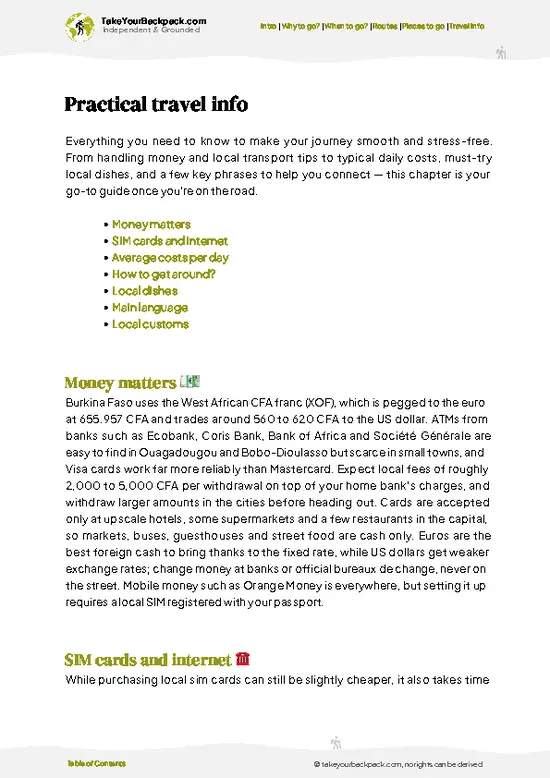
example page 0 from our offline Travel Guide for Burkina Faso
example page 1 from our offline Travel Guide for Burkina Faso
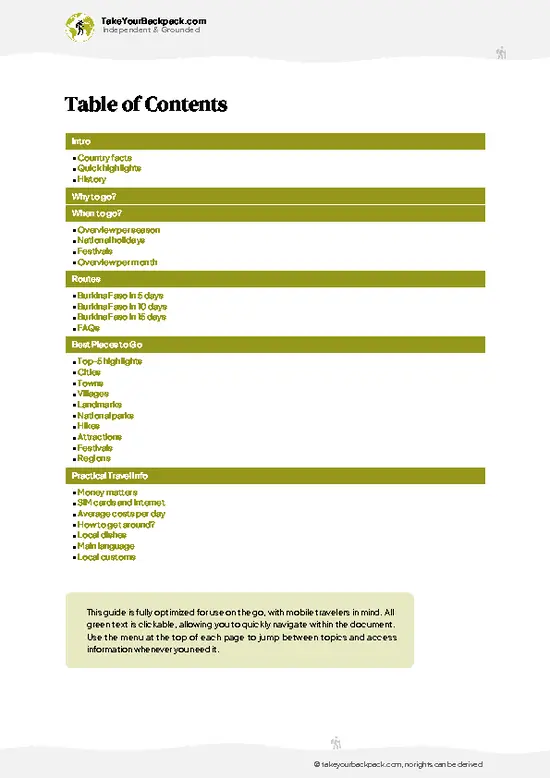
example page 2 from our offline Travel Guide for Burkina Faso
example page 3 from our offline Travel Guide for Burkina Faso
example page 4 from our offline Travel Guide for Burkina Faso
example page 5 from our offline Travel Guide for Burkina Faso
example page 6 from our offline Travel Guide for Burkina Faso
example page 7 from our offline Travel Guide for Burkina Faso
Loading the map 🌍
CLICK TO FILTER
cities
towns
villages
landmarks
national parks
hikes
attractions
festivals
regions
SHOW COUNTRY’S BESTSHOW ALL

✨ Why go?
Ranked #9 town in Burkina Faso
Reasons people choose to visit here

Djibo matters to travelers who care about Sahel pastoral culture, the Fulani and Rimaïbé communities, and the long caravan and cattle routes that cross northern Burkina Faso. Its draw is cultural, not scenic: the Djibo emirate, the livestock market and the reservoir on the edge of town show how herding, farming and trade fit together in a dry landscape. Nobody lingers here for nightlife, since there is none worth the name. Visitors who come stay briefly and keep a low profile, with local contacts arranging everything. This suits experienced, self-reliant solo travelers with Sahel knowledge and patience, and it does not suit anyone wanting hostels, group tours or easy social evenings. For most backpackers, the better plan is to read about Djibo and spend time in calmer parts of the country.

💡 HighlightsPlaces and moments you shouldn't skip

  1. Djibo Central Market: The town’s commercial heart, where herders, grain sellers, leatherworkers and tea vendors trade. Go early in the morning, when the animals and goods arrive. Entry is free and an hour or two is plenty.
  2. The Emir’s Court (Djibo Emirate): The seat of the Fulani chiefdom that has shaped local authority for generations. Visits depend on permission and a respectful greeting, and a polite introduction through a local contact is essential. Mid-morning works best. It is usually free, and 30 to 45 minutes is enough.
  3. Djibo Livestock Market: Cattle, sheep, goats and camels change hands here, and the bargaining is a lesson in how Sahel wealth is counted. Early mornings are busiest. Entry is free, and an hour gives you the full picture.
  4. Djibo Reservoir: The town’s dam and water body, where
… read more 👉
  1. Djibo Central Market: The town’s commercial heart, where herders, grain sellers, leatherworkers and tea vendors trade. Go early in the morning, when the animals and goods arrive. Entry is free and an hour or two is plenty.
  2. The Emir’s Court (Djibo Emirate): The seat of the Fulani chiefdom that has shaped local authority for generations. Visits depend on permission and a respectful greeting, and a polite introduction through a local contact is essential. Mid-morning works best. It is usually free, and 30 to 45 minutes is enough.
  3. Djibo Livestock Market: Cattle, sheep, goats and camels change hands here, and the bargaining is a lesson in how Sahel wealth is counted. Early mornings are busiest. Entry is free, and an hour gives you the full picture.
  4. Djibo Reservoir: The town’s dam and water body, where cattle drink and gardeners work the banks. Late afternoon is cooler and the birdlife is best then. It costs nothing, and 45 minutes to an hour covers a walk along the edge.
  5. Grand Mosque area: A simple place to see the town’s Islamic life, with the prayer call setting the day’s pace. Visit outside prayer times and dress modestly. Non-Muslim entry to the interior may not be possible, so plan 20 to 30 minutes outside.
Beyond the town, the lake at Baraboulé and the Tongomayel area are the nearest places for a longer outing, if conditions allow. The livestock market and the reservoir combine well in one day, with the animals first thing and the water as the heat fades.
Spotted a mistake or missing something? Contact us.

🏘️ NeighborhoodsWhere things are and how it's laid out

Djibo is small enough to cover on foot or by moto in an afternoon, and the areas below are where your time pays off.
  • Central market and main road: The market is the one place worth a long wander. Stalls sell millet, dried fish, leather goods and the Fulani blankets and jewelry the Soum region is known for, and the livestock trading is loudest on market day. You leave with a feel for how the Sahel actually trades.
  • Fulani and Rimaibe quarters: Sandy lanes of mud-brick compounds, goats in the shade, women pounding grain. Walk in, greet people first, and ask before photographing. You get an unfiltered look at pastoral life, but there is nothing formal to tick off.
  • Around the Djibo mosque: Short and quiet, a ten-minute stop. The earthen architecture is the point, so skip it if you are short on time.
… read more 👉
Djibo is small enough to cover on foot or by moto in an afternoon, and the areas below are where your time pays off.
  • Central market and main road: The market is the one place worth a long wander. Stalls sell millet, dried fish, leather goods and the Fulani blankets and jewelry the Soum region is known for, and the livestock trading is loudest on market day. You leave with a feel for how the Sahel actually trades.
  • Fulani and Rimaibe quarters: Sandy lanes of mud-brick compounds, goats in the shade, women pounding grain. Walk in, greet people first, and ask before photographing. You get an unfiltered look at pastoral life, but there is nothing formal to tick off.
  • Around the Djibo mosque: Short and quiet, a ten-minute stop. The earthen architecture is the point, so skip it if you are short on time.
  • Outskirts and the Nassoumbou road: Dusty, empty, and not worth wandering. Staying in town is the sensible choice, and tea stalls near the market give you the better evening: sweet green tea, grilled meat, local gossip.

⌛️ 1 day1-day itinerary for Djibo

A market-and-water day, kept short and low-key, with local hosts guiding every step.

7:30 AM, Tea at your host’s compound: Start with sweet green tea and a greeting round, which is how every outing in Djibo properly begins. Your host sets the plan and tells you which areas to avoid.

8:30 AM, Djibo Central Market: Walk through the grain, spice, leather and tea stalls while it is still cool. Buy a small item such as a leather pouch or dried hibiscus, which is a polite way to spend time with vendors.

10:30 AM, Livestock Market: Move on to the animal pens, where buyers inspect cattle and goats. Watch from the edge and ask before photographing anyone.

12:30 PM, Lunch and rest: Eat rice with sauce or grilled meat at a simple local eatery, then rest indoors through the worst heat.

3:30 PM, The Emir’s … read more 👉
A market-and-water day, kept short and low-key, with local hosts guiding every step.

7:30 AM, Tea at your host’s compound: Start with sweet green tea and a greeting round, which is how every outing in Djibo properly begins. Your host sets the plan and tells you which areas to avoid.

8:30 AM, Djibo Central Market: Walk through the grain, spice, leather and tea stalls while it is still cool. Buy a small item such as a leather pouch or dried hibiscus, which is a polite way to spend time with vendors.

10:30 AM, Livestock Market: Move on to the animal pens, where buyers inspect cattle and goats. Watch from the edge and ask before photographing anyone.

12:30 PM, Lunch and rest: Eat rice with sauce or grilled meat at a simple local eatery, then rest indoors through the worst heat.

3:30 PM, The Emir’s Court: With an introduction arranged by your host, pay a short courtesy visit and learn how customary authority still works.

5:00 PM, Djibo Reservoir, the quiet corner: Skip the main embankment and walk to the market gardens on the far bank, where women water vegetable plots by hand. Few outsiders see this working side of the dam, and the herds arriving at dusk make a fine closing view.

🌤️ When to go?Seasonal considerations and timing

November to February is the most comfortable window for Djibo, with days of roughly 32 to 36°C (90 to 97°F) and cool nights near 17 to 20°C (63 to 68°F).
  • Cool Dry Season (Nov to Feb): Dusty harmattan haze, pleasant walking, and the busiest livestock markets. Prices stay flat because tourists are rare.
  • Hot Season (Mar to May): Afternoons reach 40 to 44°C (104 to 111°F). Plan everything before 10 a.m. and after 4 p.m.
  • Rainy Season (Jun to Sep): Highs of 32 to 37°C (90 to 99°F), short violent storms, and tracks turning to mud. Days are long and green, but transport slows.
Arrive early in the cool season and check current local conditions before committing to travel.

source: climatestotravel.comJANJanuary: excellent for travelingFEBFebruary: excellent for travelingMARMarch: good for travelingAPRApril: fair for travelingMAYMay: fair for travelingJUNJune: fair for travelingJULJuly: fair for travelingAUGAugust: fair for travelingSEPSeptember: fair for travelingOCTOctober: good for travelingNOVNovember: highly recommended for travelingDECDecember: excellent for traveling
when-to-go

✈️ The backpacker research shortcutBurkina Faso Travel Guide

An offline-friendly backpacking guide with optimized travel routes, ranked highlights, transport advice, and the best areas to stay.
example page 0 from our offline Travel Guide for Burkina Faso
example page 1 from our offline Travel Guide for Burkina Faso
example page 2 from our offline Travel Guide for Burkina Faso
example page 3 from our offline Travel Guide for Burkina Faso
example page 4 from our offline Travel Guide for Burkina Faso
example page 5 from our offline Travel Guide for Burkina Faso
example page 6 from our offline Travel Guide for Burkina Faso
example page 7 from our offline Travel Guide for Burkina Faso
The digital guide (273 pages) contains:
✅ 63 highlights, ranked by travel appeal
✅ Optimized 5, 10 & 15-day travel routes
✅ Cities, national parks, landmarks, beaches
✅ How to get around
✅ Offline-friendly for travel without Wi-Fi
👉 Click to see all 30+ guide features

📅 Plan smarter in minutes, not weeks
✅ Month by month travel advice
✅ Festivals & national holidays
✅ Budget expectations

🗺️ Go to the right places, skip the overrated ones
✅ Honest pros & cons of destinations
✅ Top hikes, parks & viewpoints
✅ Lesser-known places most travelers miss
✅ Clear “worth it vs skip it” guidance

🛏️ Travel smoothly without rookie mistakes
✅ Best areas to stay
✅ Transport systems explained simply
✅ Common scams & safety advice
✅ SIM cards, money & practical tips

🌍 Understand the country, not just visit it
✅ Culture & traditions
✅ 52 Essential phrases & customs
✅ Festivals worth planning around
✅ Traveler-friendly historical context
✅ Insights that make places more meaningful

📱 Built for real travel conditions
✅ Fully downloadable PDF
✅ Works completely offline
✅ Optimized for phone use
✅ Useful in remote areas & buses
✅ Everything in one place
Stop searching, start planning
Get instant access to your full guide. 30‑day money-back guarantee.
+ Add another guide for just

By proceeding you agree to our terms.
Sent to your inbox immediately after payment • 100% Secure Checkout
Best Backpacking Travel Advisor 2025 tourism awardBest Backpacking
Travel Advisor
2025
What others say about Take Your Backpack Guides:
⭐⭐⭐⭐⭐
Fantastic, amazing amount of information!
⭐⭐⭐⭐⭐
My goodness this is amazing, it's what I've been looking for hats off too you!
⭐⭐⭐⭐⭐
I think this is absolutely BRILLIANT
⭐⭐⭐⭐
Very complete and informative. It's still missing places, but I gotta to commend you
⭐⭐⭐⭐⭐
This is truly amazing, thank you, can't wait to explore it with my kids!
⭐⭐⭐⭐⭐
Awesome resource, thank you!
⭐⭐⭐⭐⭐
This is amazing! Can't wait to explore the ones I haven't seen
⭐⭐⭐⭐
I love this! Well done, great idea.
⭐⭐⭐⭐⭐
Thanks for taking the time to make this gem!
⭐⭐⭐⭐⭐
This might be the best website I've ever seen.
⭐⭐⭐⭐⭐
Congratulations, and thank you so much for your work; it's incredibly valuable.
⭐⭐⭐⭐
In all seriousness I think you did a great job pointing out the important spots
⭐⭐⭐⭐⭐
10/10 very good
⭐⭐⭐⭐⭐
As someone who's only just starting to visit regularly this is awesome, thank you.
⭐⭐⭐⭐
Thank you very much! I'm going to visit my dad, it's going to be very useful!
⭐⭐⭐⭐⭐
This is really cool! We'll be travelling for the first time and this definitely come in handy.
⭐⭐⭐⭐⭐
You are now our minister of culture, congratulations 👨‍💼
⭐⭐⭐⭐⭐
Just wanted to tell you that this is a pearl! Going to follow your recommendations.
⭐⭐⭐⭐⭐
This is so cool. I'll definitely be using the resource for my travels soon.
⭐⭐⭐⭐⭐
This is very impressive! Good work.
⭐⭐⭐⭐⭐
This is an amazing and informative site. Very well done!

🛏️ Where to stay?Where staying makes the most sense

The area around the central market and main road is the best base in Djibo, because the few budget guesthouses and basic auberges cluster there. Dorm beds in the hostel sense barely exist, so expect simple private rooms with a fan, often with shared bathrooms, at roughly €6 to 15 a night.
Staying central means you can walk to food stalls and tea spots, and the neighbors and street activity make it feel safer after dark than the quiet edges. Noise is the cost: market traffic starts early, motos pass late, and mosque calls come before dawn. Bring earplugs.
Transport links are also better here, since … read more 👉
The area around the central market and main road is the best base in Djibo, because the few budget guesthouses and basic auberges cluster there. Dorm beds in the hostel sense barely exist, so expect simple private rooms with a fan, often with shared bathrooms, at roughly €6 to 15 a night.
Staying central means you can walk to food stalls and tea spots, and the neighbors and street activity make it feel safer after dark than the quiet edges. Noise is the cost: market traffic starts early, motos pass late, and mosque calls come before dawn. Bring earplugs.
Transport links are also better here, since bush taxis and moto drivers gather near the main road. Availability is limited, so confirm a room by phone or on arrival early in the day. Avoid the outskirts, where lighting is poor and help is further away.

🚌 Getting aroundTransportation options and practical tips

Djibo runs on motorbike taxis, and a ride across town costs about €0.30 to 0.70, paid in cash to the rider at the end, with the price agreed first. The town is flat and compact, so most of your movement is on foot or by moto. Roads in from the south are paved, but surrounding tracks degrade fast after rain.
  • Walking: Everything central sits within 20 minutes of the market. Go early or late, because midday sun is punishing, and you will see far more on foot than from a bike.
  • Moto taxi: The default option. Short hops cost €0.30 to 0.70, and longer rides to the edge of town about €1 to 1.50. Negotiate before climbing on, and keep small coins ready.
  • Bush taxi and bus from Ouagadougou or Ouahigouya: Minibuses and shared cars run between regional hubs. Expect €6 to 12 and a long day of 5 to 7 hours
… read more 👉
Djibo runs on motorbike taxis, and a ride across town costs about €0.30 to 0.70, paid in cash to the rider at the end, with the price agreed first. The town is flat and compact, so most of your movement is on foot or by moto. Roads in from the south are paved, but surrounding tracks degrade fast after rain.
  • Walking: Everything central sits within 20 minutes of the market. Go early or late, because midday sun is punishing, and you will see far more on foot than from a bike.
  • Moto taxi: The default option. Short hops cost €0.30 to 0.70, and longer rides to the edge of town about €1 to 1.50. Negotiate before climbing on, and keep small coins ready.
  • Bush taxi and bus from Ouagadougou or Ouahigouya: Minibuses and shared cars run between regional hubs. Expect €6 to 12 and a long day of 5 to 7 hours from the capital, depending on stops. Leave early, since departures thin out by afternoon and you do not want to arrive after dark.
  • Bicycle hire: Occasionally arranged through a guesthouse, around €2 to 4 a day. It works well for the flat outskirts, though sand slows you.
Always confirm current road and security conditions locally before choosing any route beyond town.

👛 Costs (as of 22 October 2026)How expensive it really is

Djibo costs roughly €22 to 35 a day for a backpacker, and the figure below totals €27 at the high-season rate.
CategoryBudget RangeLocal Reality
Dorm accommodation€6 to 10No true dorms; a basic private room with fan is the norm, high season price shown.
Meals€5 to 9Rice, tô and sauce, grilled meat and tea stalls; sit-down restaurants are few.
Local transport€1 to 3Moto taxis at €0.30 to 0.70 a ride.
Basic activities/entry fees€2 to 5Mostly free walking; guides or moto hire for villages and wetlands.
Miscellaneous expenses€2 to 4Water, phone credit and small gifts or tips.
Total Daily Budget€27Per day for one traveler.
Eat where locals do and carry cash in small notes, since change is hard to find and card payment does not exist.
⚠️ Prices can change and everyone travels differently, so take this as a rough guide. Hope it helps you plan your adventure!

🚌 Day tripsWhere to go beyond the main area

Djibo is a workable base for short, local excursions only, and security conditions in the Soum province mean you must check current advice before leaving town.
Lake Dem and nearby wetlands:
Shallow seasonal water draws herders, fishermen and migratory birds, best from November to February. Budget about €3 to 6 for a moto and a local guide, with 30 to 60 minutes each way. First-timers go at midday and see little, so go at first light.

Rural Fulani villages:
A short moto ride out brings you to herding camps and villages where life follows the cattle. Expect €4 to 8 for transport and a local contact, plus small gifts of tea or sugar. Do not show up unannounced; arrange an introduction through your guesthouse.

Mare d’Oursi:
This larger pond region to the northeast has dunes and birdlife, but … read more 👉
Djibo is a workable base for short, local excursions only, and security conditions in the Soum province mean you must check current advice before leaving town.
Lake Dem and nearby wetlands:
Shallow seasonal water draws herders, fishermen and migratory birds, best from November to February. Budget about €3 to 6 for a moto and a local guide, with 30 to 60 minutes each way. First-timers go at midday and see little, so go at first light.

Rural Fulani villages:
A short moto ride out brings you to herding camps and villages where life follows the cattle. Expect €4 to 8 for transport and a local contact, plus small gifts of tea or sugar. Do not show up unannounced; arrange an introduction through your guesthouse.

Mare d’Oursi:
This larger pond region to the northeast has dunes and birdlife, but the trip is long and depends heavily on conditions. Expect half a day each way by road and €15 to 25 for a shared vehicle. Only consider it with up-to-date local advice.

🛡️ SafetyStaying Safe: What Travelers Should Know

Djibo lies in a region where security has been seriously affected by armed groups, and that is the main thing to understand. Government and foreign advisories have for years warned against travel to the Sahel area, so check current guidance before you go and again on arrival. Within town, petty theft is uncommon, but avoid walking after dark, especially solo, and do not travel the surrounding roads at night. Keep a low profile, dress modestly, and ask before photographing people or officials. Checkpoints are common, so carry your passport and visa copies and be polite. Moto drivers sometimes inflate prices for foreigners, so agree fares first. Rely on local contacts for current conditions before any excursion.

FAQTraveler FAQ

Djibo is worth a visit only if you want the Sahel as it is, with a weekly livestock market, Fulani and Mossi culture, and long open horizons, and its security situation needs checking before any trip. The town sits in Soum province about 200 km north of Ouagadougou on the road toward Mali, and the region has seen serious insecurity in recent years, so most foreign governments advise against travel there. Where access is possible, the main draws are the Monday market, the dusty streets near the central mosque and the nearby Lake Dargo area, with rooms at roughly €6 to 15 a night.
Plan one to two days in Djibo, which is enough for the market, a walk through town and a sunset visit to the lake or reservoir outskirts. Market day brings the most animals and traders, so a stay that includes it makes the trip worth the long road. The drive from Ouagadougou takes around 4 to 6 hours depending on road conditions and checkpoints, so a third day adds little unless you are heading on elsewhere.
Djibo is a long day trip from Ouagadougou, but only with a very early start and a firm turnaround time. The road is about 200 km each way, roughly 4 to 6 hours in each direction by bus or shared car at about €6 to 10 one way, which leaves only two to four hours on the ground. Travelers who come for the Monday market are better off sleeping over, and current security conditions in Soum province may rule out the trip entirely.
⚠️ Things can change over time, so always validate details locally before you go.

Other Burkinabé towns near Djibo

Explore more nearby:

  • Titao—Loroum capital, Fulani livestock, reservoir plots, mosque quarter| 61 km away
  • Kongoussi—Lake Bam, pirogue rides, pelicans, onion gardens| 87 km away
  • Gourcy—Onion market, irrigated gardens, Mossi chief, kola nuts| 127 km away

💡 Not sure where to go next?
Create a personalized itinerary for Burkina Faso including Djibo and the places that fit your trip.

Generate my itinerary

👉 Discover all towns

Or checkout all Burkina Faso has to offer (think cities, towns, villages, national parks, hikes, beaches, festivals)
Country photo of Burkina Faso

We 💚 feedbackKey takeaways before you go

Djibo punishes travelers who treat it like a casual stop and turn up without a local host. I would arrange a trusted contact first, keep every plan short, and go only when conditions are confirmed to be calm. For a gentler Sahel introduction, I would choose a weekly market elsewhere in the north.

✍️ Help improve this page!
The information on this page is based on in-depth research, insights shared by experienced travelers, and feedback from the local travel community in Burkina Faso. While every effort is made to keep the information accurate and current, conditions can change — so if you spot anything incorrect or outdated, please get in touch.


🙋‍♂️ Give feedback

👋 Meet the founderWho’s Behind Take Your Backpack?

Johan, backpacker and founder of TakeYourBackpackHi, I’m Johan (Netherlands 🇳🇱), the creator of TakeYourBackpack. Over the past 3 decades, I’ve backpacked through 90+ countries across six continents, gaining extensive experience with independent travel, long-term trips, and overland routes.

This site is built on a combination of firsthand travel experience and carefully curated insights from other backpackers. Many guides are based on places I’ve personally visited, while others bring together tips, observations, and practical advice shared by trusted travelers I’ve met along the way.

The goal is to provide realistic, experience-driven guidance — not generic itineraries — so you can explore destinations with better context, clearer expectations, and more confidence.