v2.webp)
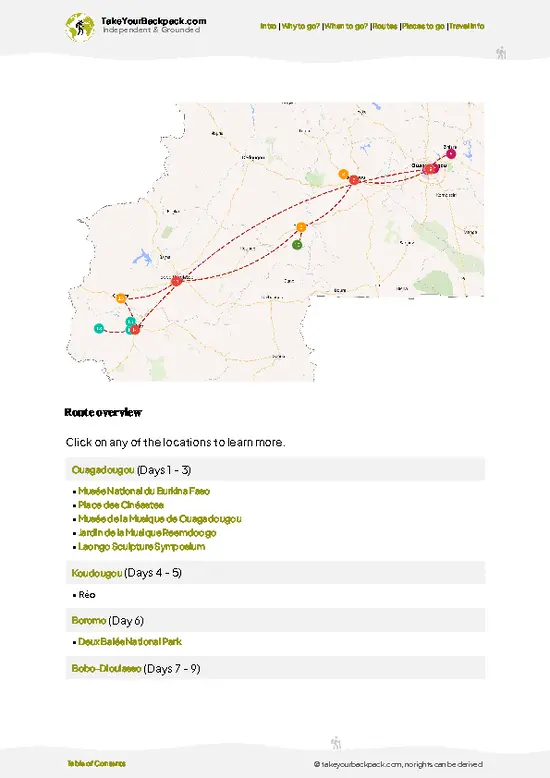
- Court of the Tenkodogo Naba: The royal compound is the town’s best-known sight and the seat of a chiefly line tied to Mossi origins. Ask permission and greet properly, with a small gift customary. Mornings are best. Entry is by courtesy, a donation of about €2 to 5 is appropriate, and a visit takes 45 minutes to an hour.
- Central Market: Stalls sell shea butter, millet, dolo beer ingredients, cloth and livestock. Go early morning, when trading peaks. Entry is free, and an hour or two is plenty.
- Dolo Cabarets: Small courtyards serve millet beer from calabashes. Late afternoon is lively and conversation comes easily. A calabash costs well under €1, and an hour is enough.
- Grand Mosque and Old Quarter Walk: A wander through mud-walled compounds and the central mosque shows everyday life. Early evening
- Court of the Tenkodogo Naba: The royal compound is the town’s best-known sight and the seat of a chiefly line tied to Mossi origins. Ask permission and greet properly, with a small gift customary. Mornings are best. Entry is by courtesy, a donation of about €2 to 5 is appropriate, and a visit takes 45 minutes to an hour.
- Central Market: Stalls sell shea butter, millet, dolo beer ingredients, cloth and livestock. Go early morning, when trading peaks. Entry is free, and an hour or two is plenty.
- Dolo Cabarets: Small courtyards serve millet beer from calabashes. Late afternoon is lively and conversation comes easily. A calabash costs well under €1, and an hour is enough.
- Grand Mosque and Old Quarter Walk: A wander through mud-walled compounds and the central mosque shows everyday life. Early evening is cooler. It is free and takes about an hour.
- Roadside Grill Stands: Grilled chicken, brochettes and fried plantain come off the coals after dark. Expect €1 to 3 for a meal, and allow an hour.
Spotted a mistake or missing something? Contact us.
 Best Backpacking
.jpg) Hi, I’m Johan (Netherlands 🇳🇱), the creator of TakeYourBackpack. Over the past 3 decades, I’ve backpacked through 90+ countries across six continents, gaining extensive experience with independent travel, long-term trips, and overland routes.
Hi, I’m Johan (Netherlands 🇳🇱), the creator of TakeYourBackpack. Over the past 3 decades, I’ve backpacked through 90+ countries across six continents, gaining extensive experience with independent travel, long-term trips, and overland routes.