v2.webp)
- Fortaleza Real de São Filipe — The big, dramatic fortress that dominates the bay: walk the old ramparts, see cannon emplacements, and get the best panorama over Cidade Velha and Gamboa beach while feeling the weight of the town’s colonial past.
- Igreja de Nossa Senhora do Rosário — A compact, atmospheric stone church from the early Portuguese period; its plain interior and façade are a direct, tangible link to the town’s 15th-16th century origins.
- Pelourinho (the pillory) and Pelourinho Square — The carved pillory in the main square is a blunt reminder of municipal power and the slave trade; the square around it is where the town’s public life has always happened, useful for people-watching and photos.
- Historic centre (the UNESCO streets and stone houses) — The narrow lanes, low stone
- Fortaleza Real de São Filipe — The big, dramatic fortress that dominates the bay: walk the old ramparts, see cannon emplacements, and get the best panorama over Cidade Velha and Gamboa beach while feeling the weight of the town’s colonial past.
- Igreja de Nossa Senhora do Rosário — A compact, atmospheric stone church from the early Portuguese period; its plain interior and façade are a direct, tangible link to the town’s 15th-16th century origins.
- Pelourinho (the pillory) and Pelourinho Square — The carved pillory in the main square is a blunt reminder of municipal power and the slave trade; the square around it is where the town’s public life has always happened, useful for people-watching and photos.
- Historic centre (the UNESCO streets and stone houses) — The narrow lanes, low stone houses and merchant façades are the real attraction here: wandering them gives a strong sense of the old Atlantic trading town that UNESCO protected.
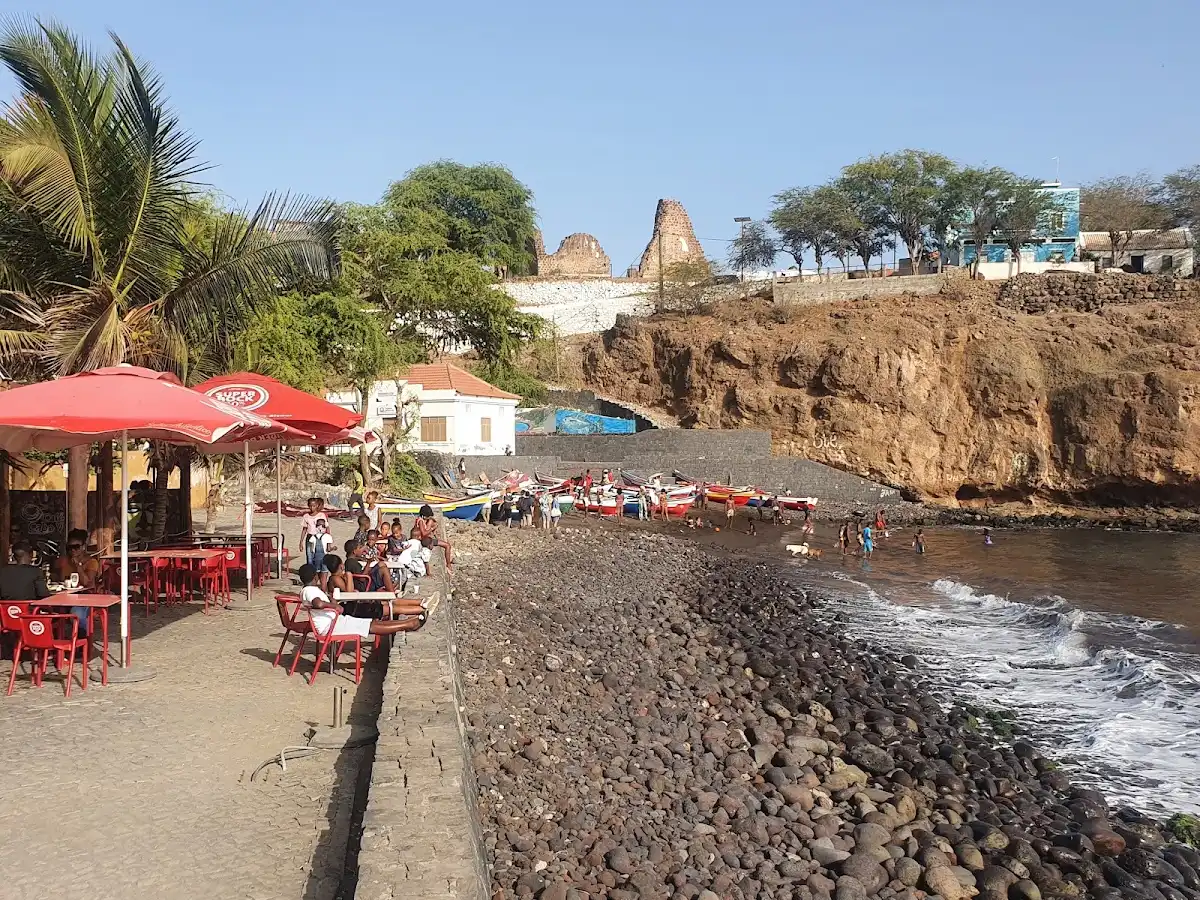
- Praia da Gamboa (Gamboa Beach) — A small black-sand beach tucked beneath the fort where fishermen land boats and locals swim; great for a quiet stroll, low-tide rock pools and watching life on the water.
- Old harbour and waterfront ruins — The shoreline still shows the traces of warehouses and landing spots; walking the littoral you can picture the ships that once unloaded goods—and people—into the bay.
- Ruins of colonial administrative buildings — Scattered foundations and partial walls near the main quarter mark where the governor’s and administrative complexes once stood; they’re evocative, easy to visit and photograph, and often explain the town’s governance history.
- Interpretive panels and small visitor spots — Scattered around the centre you’ll find plaques and small info panels that place individual ruins, churches and streets in context—bring them into your walk to turn fragments into a clear story.
- Local craft stalls and informal markets near the square — Not a flashy market, but the small sellers clustered around the main streets are where you’ll meet artisans, taste local snacks and pick up simple souvenirs made in the area.
- Short coastal and village walking routes — Simple paths link the fort, beach, harbour and viewpoints; take one slowly at golden hour for great light, birds, and the everyday rhythms of Cidade Velha away from any coach circuits.
Spotted a mistake or missing something? Contact us.

From Praia: Discover Santiago Island in 1 Day

Serra Malagueta Natural Park Hike & Relaxing Swim at Tarrafal Beach

Santiago Island: 4-Hour Calabaceira Valley Hike & Guided Tour to Cidade Velha

Like Locals: Praia and Cidade Velha Tour + Local Pontxi Tasting

Santiago Island: Best of Praia & Cidade Velha Tour, a World Heritage Site

Santiago Island Experience - Culture, Nature & Tarrafal Beach

Hiking: Monte Tchota Natural Park - Pico D’Antónia (1394m) - Longueira

Santiago Island: Banana Plantation, Natural Park & Workshop with a local family

Ribeira da Barca: Boat Trip to the Cave, Snorkeling and BBQ on the beach

 Best Backpacking
.jpg) Hi, I’m Johan (Netherlands 🇳🇱), the creator of TakeYourBackpack. Over the past decade, I’ve backpacked through 80+ countries across six continents, gaining extensive experience with independent travel, long-term trips, and overland routes.
Hi, I’m Johan (Netherlands 🇳🇱), the creator of TakeYourBackpack. Over the past decade, I’ve backpacked through 80+ countries across six continents, gaining extensive experience with independent travel, long-term trips, and overland routes.