×

Cabo Verde🇨🇻 | beachesPraia de TarrafalPalm-backed crescent, sea-wall fish sales, calm shallows, weekend picnics | things to do and best time to go

Explore Praia de São PedroExplore Praia de Curralinho

Backpacking in Praia de Tarrafal
👍 Recommendedbeach ranked #6
By Johan Kruseman 🇳🇱 | Updated October 22, 2026

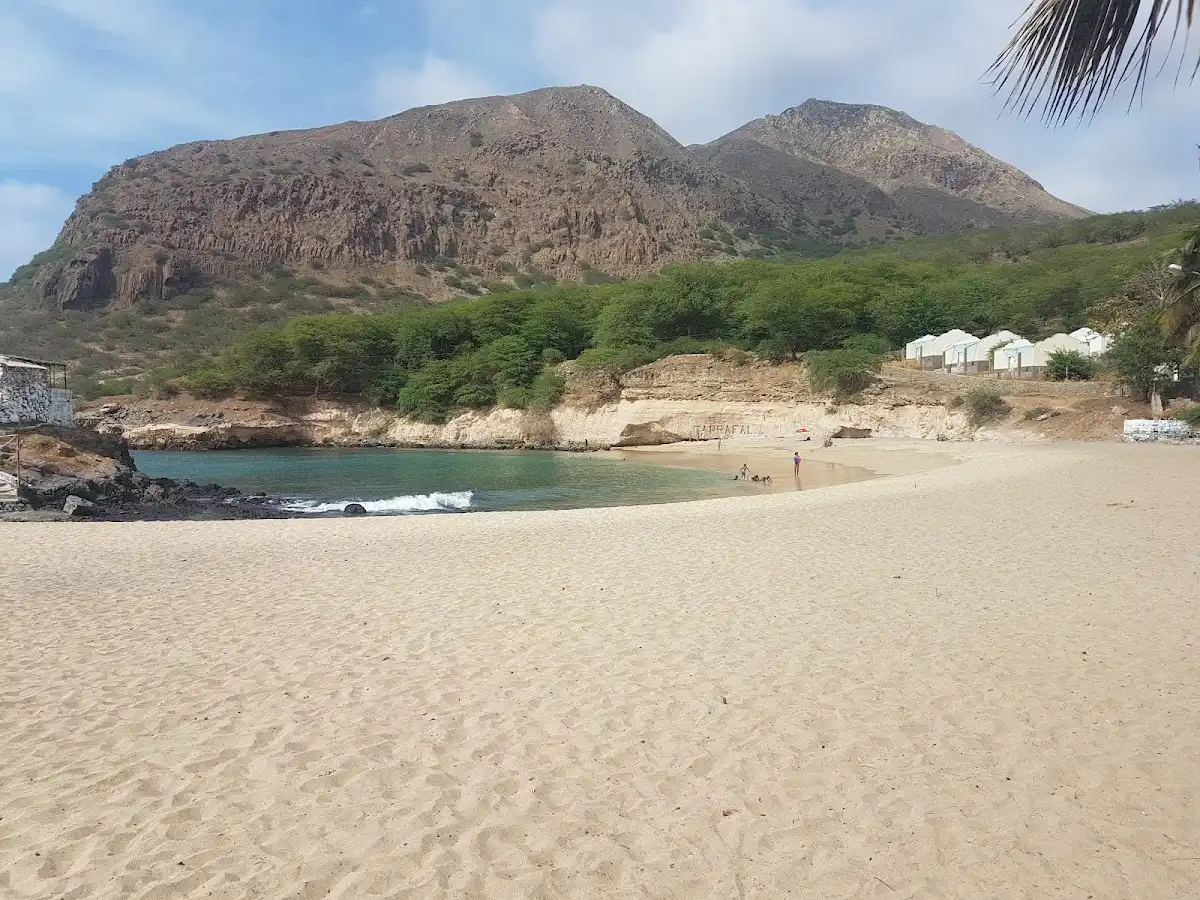
The black-and-white sea wall at the far end of the bay is where the fishing boats pull up each afternoon, and the catch gets sold straight off the sand. Praia de Tarrafal sits on the northwest tip of Santiago island in Cabo Verde, a long crescent of pale sand backed by palms and a calm, shallow bay. Swimming is easy, the water is clear, and the town behind it is walkable in minutes, with cheap grilled fish plates and simple guesthouses a few streets back. Weekends bring Cape Verdean families and crowds, while weekdays are quiet. Surf is minimal, but snorkeling near the rocks at the edges is decent. The sand is mostly clean, though litter collects after busy days. Arrive by shared minibus from Praia, ideally in the morning, so you catch the boats.

Discover everything you want to know in the 📖 Cabo Verde Travel Guide.


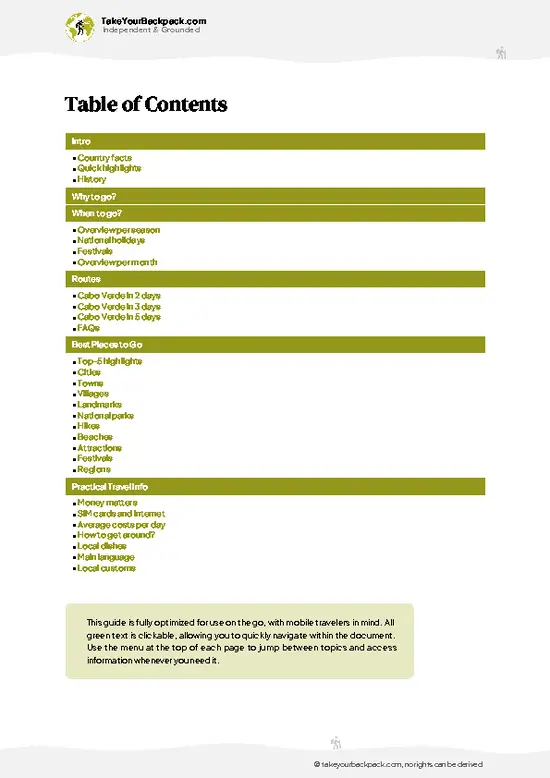
example page 0 from our offline Travel Guide for Cabo Verde
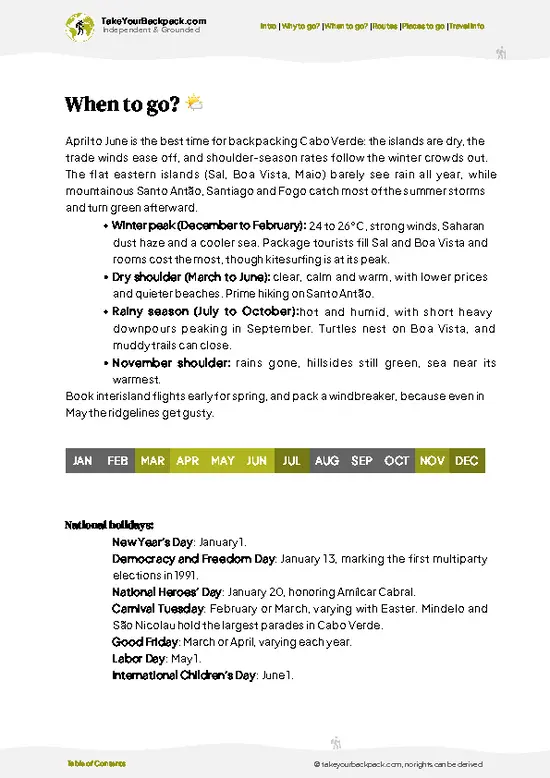
example page 1 from our offline Travel Guide for Cabo Verde
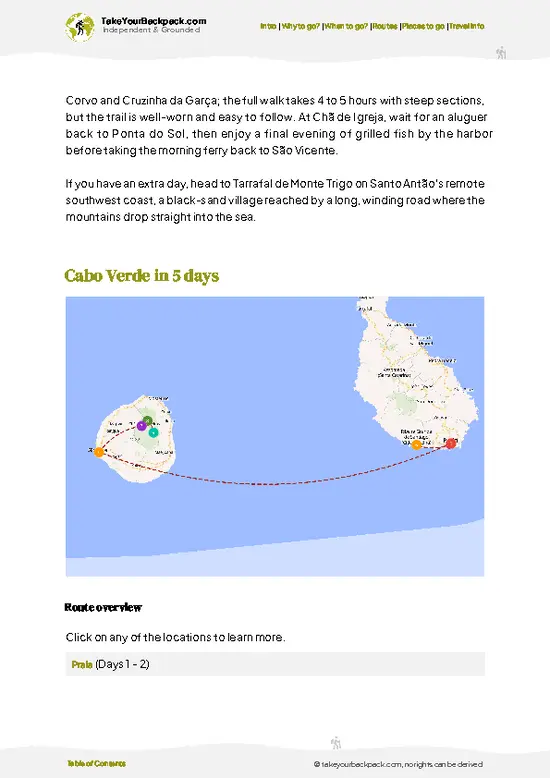
example page 2 from our offline Travel Guide for Cabo Verde
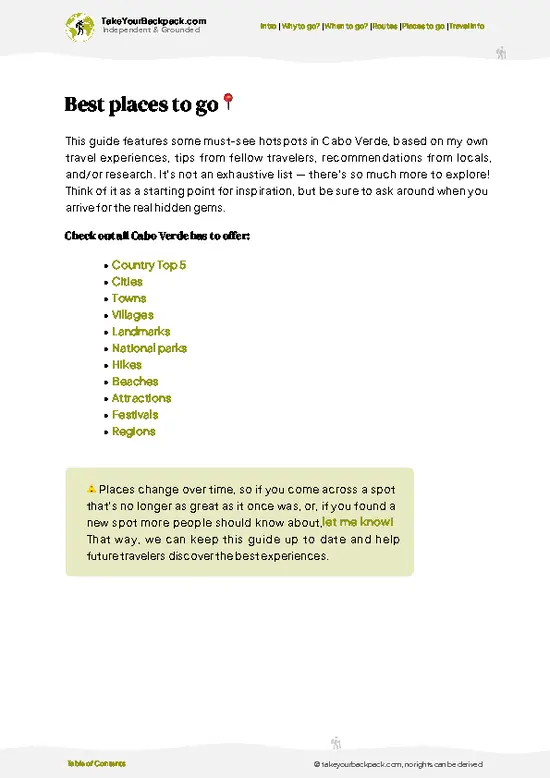
example page 3 from our offline Travel Guide for Cabo Verde
example page 4 from our offline Travel Guide for Cabo Verde
example page 5 from our offline Travel Guide for Cabo Verde
example page 6 from our offline Travel Guide for Cabo Verde
example page 7 from our offline Travel Guide for Cabo Verde
Loading the map 🌍
CLICK TO FILTER
cities
towns
villages
landmarks
national parks
hikes
beaches
attractions
festivals
regions
SHOW COUNTRY’S BESTSHOW ALL

✨ Why go?
Ranked #6 beach in Cabo Verde
Why visitors keep coming back

Praia de Tarrafal works because it is the one place on Santiago where the sea is gentle enough to float in for an hour without a thought. The bay is sheltered, so the calm, shallow water suits swimmers who find the rest of the island's coast rough. It is also a proper town, not a resort, so you eat where fishermen eat and pay local prices, with grilled catch of the day sold within sight of the boats. Many travelers use it as a pause after the hot, dusty trek through the island's interior, and the place has a slow rhythm that makes staying an extra night easy. You meet other backpackers on the sand and at the small cafés along the waterfront. It also sits at the end of the road north, so it makes a natural stop before heading back toward the capital or onward by ferry.

💡 HighlightsWhat this place is best known for

  1. The main bay and palm-backed sand: The long crescent of pale sand is the reason people come. The water stays calm and shallow near the shore, so you can swim and float without fighting waves. Early morning is quiet, with only a few walkers.
  2. The fishing boats at the sea wall: In the afternoon the small boats come in and fishermen sell their catch directly on the sand. Watching the sorting and haggling is free and gives you a real look at the town's working life.
  3. Snorkeling along the rocky edges: At the sides of the bay, rocks shelter small fish and clear water. Bring your own mask, since rental options are limited, and swim in the calmer morning hours.
  4. Seafront walk and local cafés: The promenade runs beside the beach and leads to simple places serving grilled fish with rice and a cold beer. Evenings
… read more 👉
  1. The main bay and palm-backed sand: The long crescent of pale sand is the reason people come. The water stays calm and shallow near the shore, so you can swim and float without fighting waves. Early morning is quiet, with only a few walkers.
  2. The fishing boats at the sea wall: In the afternoon the small boats come in and fishermen sell their catch directly on the sand. Watching the sorting and haggling is free and gives you a real look at the town's working life.
  3. Snorkeling along the rocky edges: At the sides of the bay, rocks shelter small fish and clear water. Bring your own mask, since rental options are limited, and swim in the calmer morning hours.
  4. Seafront walk and local cafés: The promenade runs beside the beach and leads to simple places serving grilled fish with rice and a cold beer. Evenings are low-key, with music drifting from a few spots and locals chatting on benches.
  5. Weekend beach scene: On Saturdays and Sundays, families from across the island fill the sand with picnics, football and loud music. It is the best time to meet Cape Verdeans, though if you want peace, come on a weekday.
Praia de Tarrafal needs no ticket or advance booking for any of these, since the beach and the boats are free to enjoy.
Spotted a mistake or missing something? Contact us.

Things to do around Praia de Tarrafal

Ratings based on Tripadvisor reviews. When you book through this link, you support our work at no extra cost to you.

🌤️ When to go?Seasonal considerations and timing

  • Peak Season (December to April): Mornings and afternoons are dry and sunny, with highs of 26 to 29°C (79 to 84°F) and nights near 19 to 21°C (66 to 70°F). Dry harmattan dust can haze the horizon at times. Beds fill up and prices rise by roughly 20 to 40 percent, especially around Carnival in February.
  • Hot Season (May to July): Warm and calm, 25 to 29°C (77 to 84°F), with quieter sand and the easiest bargains on rooms. Sea temperature starts to climb.
  • Rainy Season (August to October): The hottest and most humid stretch, 28 to 32°C (82 to 90°F). Rain comes in short, heavy bursts, and the surrounding hills turn green. Sea is warmest, around 26 to 27°C (79 to 81°F). Daylight stays near 12 hours all year.
  • Festival Peak (late May to June): Tarrafal’s music festival and local saint days draw crowds,
… read more 👉
  • Peak Season (December to April): Mornings and afternoons are dry and sunny, with highs of 26 to 29°C (79 to 84°F) and nights near 19 to 21°C (66 to 70°F). Dry harmattan dust can haze the horizon at times. Beds fill up and prices rise by roughly 20 to 40 percent, especially around Carnival in February.
  • Hot Season (May to July): Warm and calm, 25 to 29°C (77 to 84°F), with quieter sand and the easiest bargains on rooms. Sea temperature starts to climb.
  • Rainy Season (August to October): The hottest and most humid stretch, 28 to 32°C (82 to 90°F). Rain comes in short, heavy bursts, and the surrounding hills turn green. Sea is warmest, around 26 to 27°C (79 to 81°F). Daylight stays near 12 hours all year.
  • Festival Peak (late May to June): Tarrafal’s music festival and local saint days draw crowds, and rooms book out.
Book ahead for February and the festival weeks, and visit in November or early December for good weather with thin crowds.


source: climatestotravel.comJANJanuary: highly recommended for travelingFEBFebruary: highly recommended for travelingMARMarch: excellent for travelingAPRApril: excellent for travelingMAYMay: highly recommended for travelingJUNJune: highly recommended for travelingJULJuly: good for travelingAUGAugust: fair for travelingSEPSeptember: fair for travelingOCTOctober: fair for travelingNOVNovember: excellent for travelingDECDecember: highly recommended for traveling
cabo-verde-beach-praia-de-tarrafal v1
© Google |

✈️ The backpacker research shortcutCabo Verde Travel Guide

An offline-friendly backpacking guide with optimized travel routes, ranked highlights, transport advice, and the best areas to stay.
example page 0 from our offline Travel Guide for Cabo Verde
example page 1 from our offline Travel Guide for Cabo Verde
example page 2 from our offline Travel Guide for Cabo Verde
example page 3 from our offline Travel Guide for Cabo Verde
example page 4 from our offline Travel Guide for Cabo Verde
example page 5 from our offline Travel Guide for Cabo Verde
example page 6 from our offline Travel Guide for Cabo Verde
example page 7 from our offline Travel Guide for Cabo Verde
The digital guide (234 pages) contains:
✅ 57 highlights, ranked by travel appeal
✅ Optimized 2, 3 & 5-day travel routes
✅ Cities, national parks, landmarks, beaches
✅ How to get around
✅ Offline-friendly for travel without Wi-Fi
👉 Click to see all 30+ guide features

📅 Plan smarter in minutes, not weeks
✅ Month by month travel advice
✅ Festivals & national holidays
✅ Budget expectations

🗺️ Go to the right places, skip the overrated ones
✅ Honest pros & cons of destinations
✅ Top hikes, parks & viewpoints
✅ Lesser-known places most travelers miss
✅ Clear “worth it vs skip it” guidance

🛏️ Travel smoothly without rookie mistakes
✅ Best areas to stay
✅ Transport systems explained simply
✅ Common scams & safety advice
✅ SIM cards, money & practical tips

🌍 Understand the country, not just visit it
✅ Culture & traditions
✅ 52 Essential phrases & customs
✅ Festivals worth planning around
✅ Traveler-friendly historical context
✅ Insights that make places more meaningful

📱 Built for real travel conditions
✅ Fully downloadable PDF
✅ Works completely offline
✅ Optimized for phone use
✅ Useful in remote areas & buses
✅ Everything in one place
Stop searching, start planning
Get instant access to your full guide. 30‑day money-back guarantee.
+ Add another guide for just

By proceeding you agree to our terms.
Sent to your inbox immediately after payment • 100% Secure Checkout
Best Backpacking Travel Advisor 2025 tourism awardBest Backpacking
Travel Advisor
2025
What others say about Take Your Backpack Guides:
⭐⭐⭐⭐⭐
Fantastic, amazing amount of information!
⭐⭐⭐⭐⭐
My goodness this is amazing, it's what I've been looking for hats off too you!
⭐⭐⭐⭐⭐
I think this is absolutely BRILLIANT
⭐⭐⭐⭐
Very complete and informative. It's still missing places, but I gotta to commend you
⭐⭐⭐⭐⭐
This is truly amazing, thank you, can't wait to explore it with my kids!
⭐⭐⭐⭐⭐
Awesome resource, thank you!
⭐⭐⭐⭐⭐
This is amazing! Can't wait to explore the ones I haven't seen
⭐⭐⭐⭐
I love this! Well done, great idea.
⭐⭐⭐⭐⭐
Thanks for taking the time to make this gem!
⭐⭐⭐⭐⭐
This might be the best website I've ever seen.
⭐⭐⭐⭐⭐
Congratulations, and thank you so much for your work; it's incredibly valuable.
⭐⭐⭐⭐
In all seriousness I think you did a great job pointing out the important spots
⭐⭐⭐⭐⭐
10/10 very good
⭐⭐⭐⭐⭐
As someone who's only just starting to visit regularly this is awesome, thank you.
⭐⭐⭐⭐
Thank you very much! I'm going to visit my dad, it's going to be very useful!
⭐⭐⭐⭐⭐
This is really cool! We'll be travelling for the first time and this definitely come in handy.
⭐⭐⭐⭐⭐
You are now our minister of culture, congratulations 👨‍💼
⭐⭐⭐⭐⭐
Just wanted to tell you that this is a pearl! Going to follow your recommendations.
⭐⭐⭐⭐⭐
This is so cool. I'll definitely be using the resource for my travels soon.
⭐⭐⭐⭐⭐
This is very impressive! Good work.
⭐⭐⭐⭐⭐
This is an amazing and informative site. Very well done!

🛏️ Where to stay?Best areas to stay in Cabo Verde

The center of Tarrafal town, within a five-minute walk of the beach, is where most backpackers stay. The grid of streets behind the sand holds guesthouses, small pensions and apartment rentals, and you can reach the waterfront, the market, the bakeries and the bus stop on foot. Rooms here run roughly €15 to 40 a night, with the cheapest near the market and the pricier ones facing the sea.

The streets just off the main square are the social choice. Restaurants and bars stay open into the evening, live music turns up on weekends, and solo travelers meet easily over a beer at the beach cafes. Expect … read more 👉
The center of Tarrafal town, within a five-minute walk of the beach, is where most backpackers stay. The grid of streets behind the sand holds guesthouses, small pensions and apartment rentals, and you can reach the waterfront, the market, the bakeries and the bus stop on foot. Rooms here run roughly €15 to 40 a night, with the cheapest near the market and the pricier ones facing the sea.

The streets just off the main square are the social choice. Restaurants and bars stay open into the evening, live music turns up on weekends, and solo travelers meet easily over a beer at the beach cafes. Expect noise on festival nights, so ask for a room at the back if you sleep lightly.

The quieter northern end of the bay, toward the fishing harbor, suits those who prefer calmer mornings and early fishing boats. It is still a short walk to the center, and the streets feel safe after dark. Farther out, the Chao Bom area is quieter but you will need a taxi (about €2 to 4) to get to the beach and restaurants.

🛡️ SafetyScams, Hazards, and Annoyances

The bay at Praia de Tarrafal is one of the calmest on Santiago, sheltered by headlands, with gentle surf and wide shallows that make swimming easy for most people. Currents are mild near the shore but can pick up near the harbor mouth and the rocky edges, so stay in the middle of the beach where locals and families swim. Waves grow somewhat larger in winter. There are no lifeguard flags to follow, so watch what others do.

Sun is the main issue. The black-and-white sand reflects heat, and midday is strong all year, so bring reflective protection and shade. Occasional sea urchins sit on rocks, and water shoes help there.

Petty theft happens, mostly bags left unattended while people swim. Keep valuables at your room and carry only what you need. Evenings on the beachfront are lively and generally relaxed.

FAQFrequently asked questions about Praia de Tarrafal

From Praia, the capital, take a shared minibus (aluguer) to Tarrafal, which takes about 1.5 to 2 hours and costs roughly €2 to 3. Taxis cost about €45 to 60 for the same trip. Flights land at Praia airport, a short taxi ride from the minibus stop at Sucupira market. Buses run frequently through the day, with the last departures in the late afternoon.
Praia de Tarrafal is good for swimming, thanks to a sheltered bay with calm, shallow water and few waves. Snorkeling is decent along the rocky edges of the bay, where small reef fish gather, and local operators run dive trips from about €35 to 50. Surfing is not a draw here, as waves stay small, so surfers head to other islands. Water temperatures range from about 22°C in winter to 27°C in autumn.
Yes, Praia de Tarrafal is free to enter, with no fees for the sand or the waterfront. Sunbeds and umbrellas are not part of the experience, but beach cafes will serve you food and drinks at modest prices, with a meal at about €5 to 10. Showers and toilets, when available, may cost a small fee of under €1. You pay in Cape Verdean escudos, though many places accept euros.
⚠️ Things can change over time, so always validate details locally before you go.

Other Cape Verdean beaches near Praia de Tarrafal

Explore more nearby:


💡 Not sure where to go next?
Create a personalized itinerary for Cabo Verde including Praia de Tarrafal and the places that fit your trip.

Generate my itinerary

👉 Discover all beaches

Or checkout all Cabo Verde has to offer (think cities, towns, villages, national parks, hikes, beaches, festivals)
Country photo of Cabo Verde

We 💚 feedbackFinal thoughts on visiting Praia de Tarrafal

Praia de Tarrafal suits travelers who want a few slow days of swimming, fish and conversation more than nightlife or adventure. If that is you, plan at least two nights and arrive on a weekday for the quiet. I would bring a snorkel mask and cash, since small shops and cafés often prefer it.

✍️ Help improve this page!
The information on this page is based on in-depth research, insights shared by experienced travelers, and feedback from the local travel community in Cabo Verde. While every effort is made to keep the information accurate and current, conditions can change — so if you spot anything incorrect or outdated, please get in touch.


🙋‍♂️ Give feedback

👋 Meet the founderWho’s Behind Take Your Backpack?

Johan, backpacker and founder of TakeYourBackpackHi, I’m Johan (Netherlands 🇳🇱), the creator of TakeYourBackpack. Over the past 3 decades, I’ve backpacked through 90+ countries across six continents, gaining extensive experience with independent travel, long-term trips, and overland routes.

This site is built on a combination of firsthand travel experience and carefully curated insights from other backpackers. Many guides are based on places I’ve personally visited, while others bring together tips, observations, and practical advice shared by trusted travelers I’ve met along the way.

The goal is to provide realistic, experience-driven guidance — not generic itineraries — so you can explore destinations with better context, clearer expectations, and more confidence.