×

Cabo Verde🇨🇻 | townsRibeira BravaSeminário-Liceu, ribeira lanes, cobbled square, island quiet | things to do and best time to go

Explore Porto NovoExplore Assomada

Backpacking in Ribeira Brava
👍 Recommendedtown ranked #9
By Johan Kruseman 🇳🇱 | Updated October 22, 2026

Years ago Ribeira Brava was a sleepy fishing and farming village where the main event was boats landing the morning catch. Today it is a small, tidy town on the north coast of São Nicolau island in Cabo Verde, with a colonial center that still moves at the speed of its donkeys. Reaching it takes some effort, since flights and ferries are limited and the road from the airport is winding, but that keeps crowds away. The cobbled lanes around the cathedral square are walkable in twenty minutes, and the pastel facades make a good backdrop for a coffee. Evenings are quiet, with a handful of guesthouses and few other backpackers, so you will meet people at the café tables. Start with a slow wander at 8 a.m., then catch the late-afternoon light on the square.

Discover everything you want to know in the 📖 Cabo Verde Travel Guide.


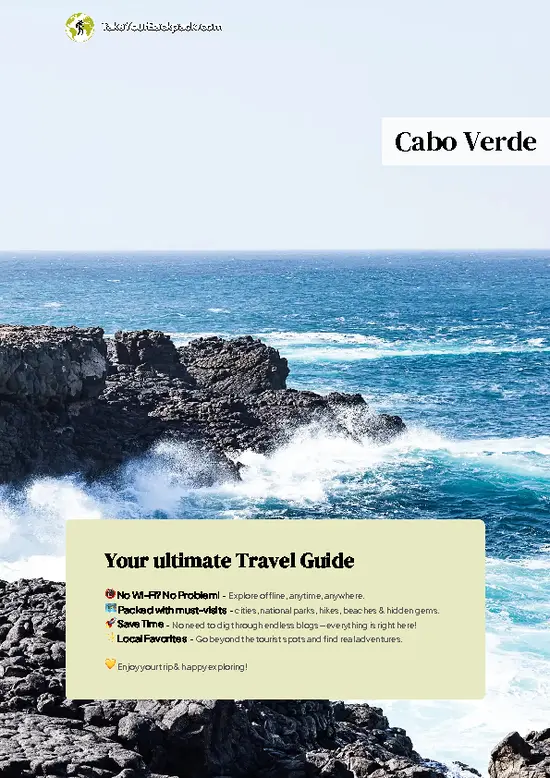
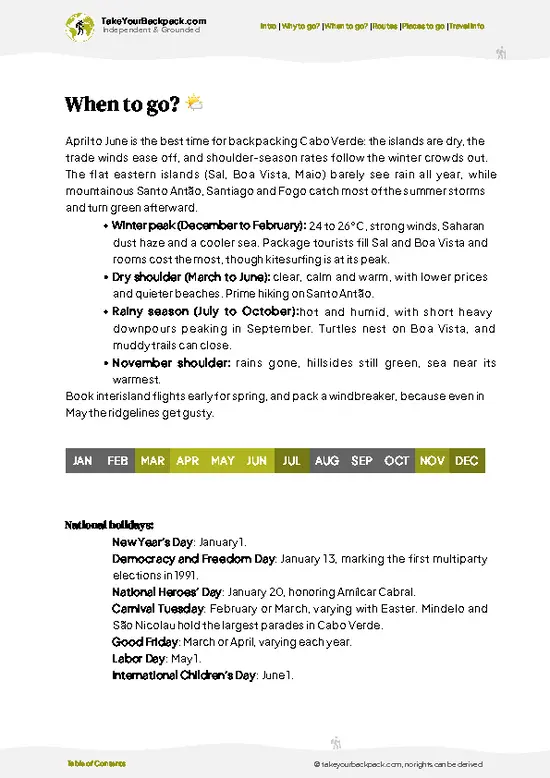
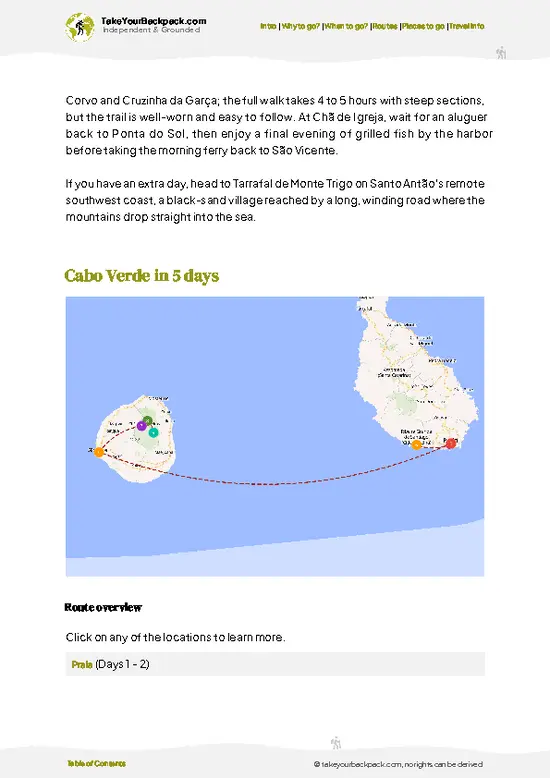
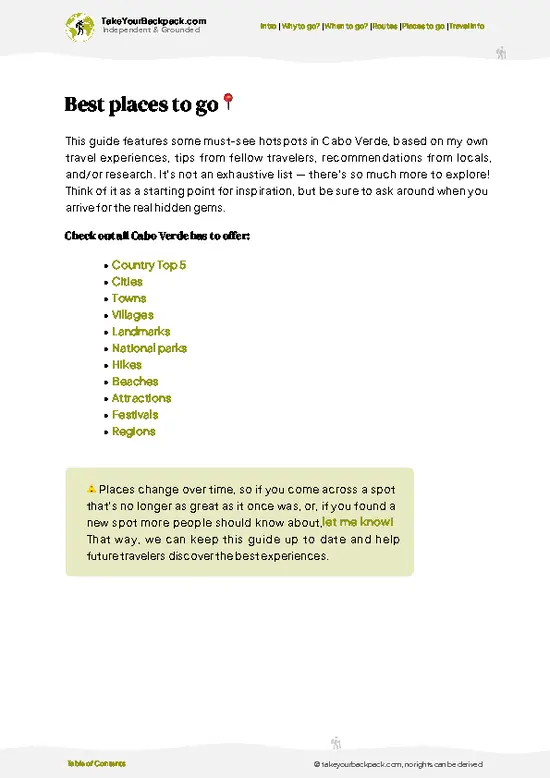
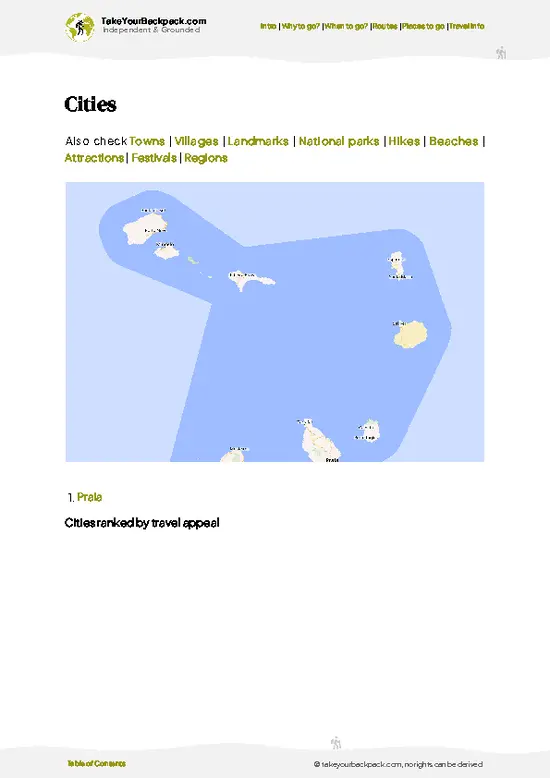
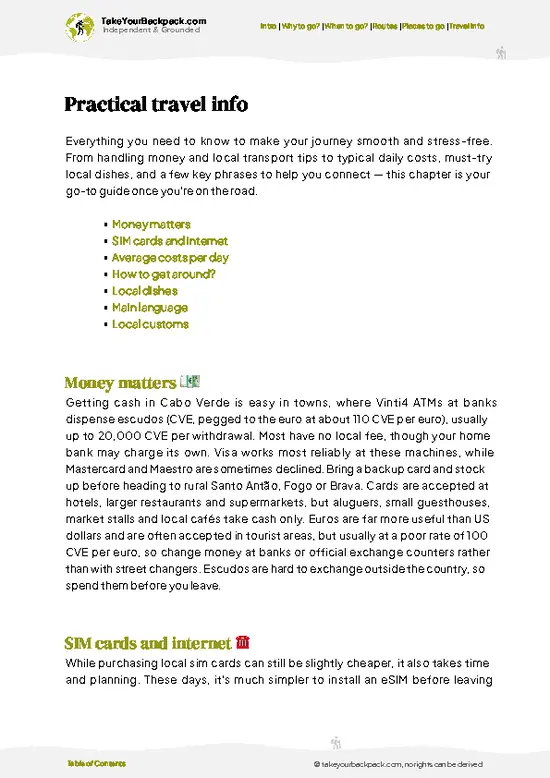
example page 0 from our offline Travel Guide for Cabo Verde
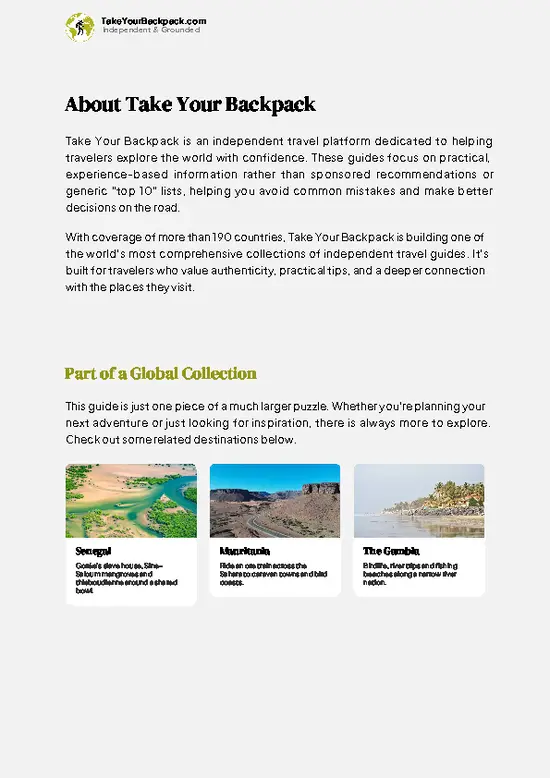
example page 1 from our offline Travel Guide for Cabo Verde
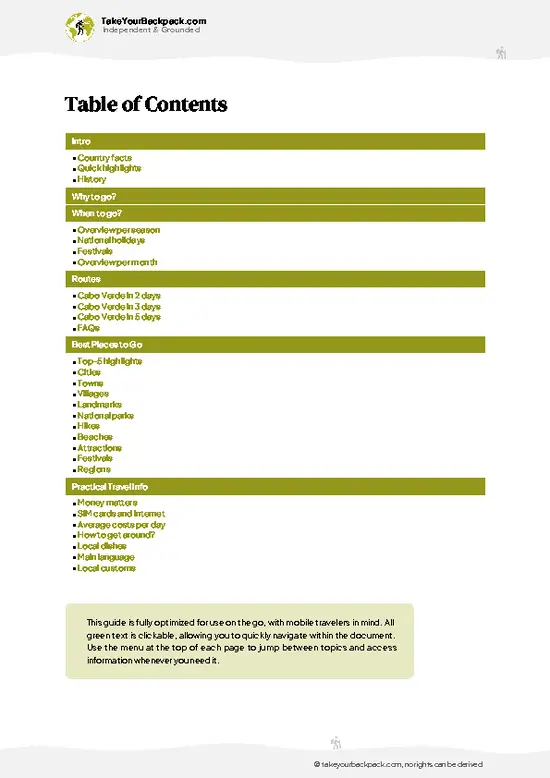
example page 2 from our offline Travel Guide for Cabo Verde
example page 3 from our offline Travel Guide for Cabo Verde
example page 4 from our offline Travel Guide for Cabo Verde
example page 5 from our offline Travel Guide for Cabo Verde
example page 6 from our offline Travel Guide for Cabo Verde
example page 7 from our offline Travel Guide for Cabo Verde
Loading the map 🌍
CLICK TO FILTER
cities
towns
villages
landmarks
national parks
hikes
beaches
attractions
festivals
regions
SHOW COUNTRY’S BESTSHOW ALL

✨ Why go?
Ranked #9 town in Cabo Verde
What makes it a must-see town

Ribeira Brava is where you slow down after the busier islands, and it suits hikers, solo travelers and anyone happy with quiet evenings. Its pull is the mountain interior: trails climb toward the ridge of Monte Gordo, the island’s highest point, and drop through terraced valleys where farmers still grow sugarcane, maize and beans. Guesthouses here are small and family-run, so you get tips on trails and rides along with the room. Stay two or three nights if you want to walk, as most routes need an early start and a transport arrangement. The town itself is walkable in an hour, anchored by the cathedral square and the old seminary quarter, which gives the place a sense of history few small Cabo Verdean towns have. Expect simple grilled fish, cachupa and strong local grogue, not a nightlife scene.

💡 HighlightsTop highlights of Ribeira Brava

  1. Igreja Matriz de Nossa Senhora do Rosário: The town’s main church, a white building facing the central square, with a cool interior and a long role in island life. Go in the morning when it is quiet and the light hits the facade. Free, 20 to 30 minutes.
  2. Old Seminário-Liceu: Founded in the 19th century, this school trained many of the islands’ teachers, priests and writers, and shaped the Claridade literary movement. The exterior and surroundings tell the story best. Free from outside, 30 minutes, best in daylight.
  3. Praça central: The small town square is where locals sit, gossip and wait for rides. Come early morning or late afternoon for the most life, with a coffee for about €1. Allow 30 to 45 minutes.
  4. Mercado Municipal: A modest market for vegetables, fruit and fish, best before 10 AM when
… read more 👉
  1. Igreja Matriz de Nossa Senhora do Rosário: The town’s main church, a white building facing the central square, with a cool interior and a long role in island life. Go in the morning when it is quiet and the light hits the facade. Free, 20 to 30 minutes.
  2. Old Seminário-Liceu: Founded in the 19th century, this school trained many of the islands’ teachers, priests and writers, and shaped the Claridade literary movement. The exterior and surroundings tell the story best. Free from outside, 30 minutes, best in daylight.
  3. Praça central: The small town square is where locals sit, gossip and wait for rides. Come early morning or late afternoon for the most life, with a coffee for about €1. Allow 30 to 45 minutes.
  4. Mercado Municipal: A modest market for vegetables, fruit and fish, best before 10 AM when stock is freshest. Buy bananas, papaya or cheese for trail snacks, usually under €5. One hour at most.
  5. The old lanes along the ribeira: A free walk through the cobbled streets and stream-bed valley, with colored houses and views of the surrounding hills. Late afternoon is the coolest and most photogenic time. Allow 1 to 2 hours.
Ribeira Brava makes a good launch pad for day trips to Carrical, Fajã de Baixo, Monte Gordo, Tarrafal de São Nicolau and the beach at Praia Branca. For a first visit, start with the church and square, since they put the whole town in context in under an hour.
Spotted a mistake or missing something? Contact us.

Things to do near Ribeira Brava

Ratings based on Tripadvisor reviews. When you book through this link, you support our work at no extra cost to you.

🏘️ NeighborhoodsNeighborhood guide to Ribeira Brava

Ribeira Brava is compact, so you can cover all of it on foot in an afternoon, and the steep streets are the only workout.
  • Praça and the cathedral: The pastel square is the town’s living room. Grab a coffee at a corner café around 5 pm, when schoolkids and old men claim the benches, and you get the best people-watching on the island.
  • Seminary-Liceu ruins: A short uphill walk takes you to the shell of the old seminary that once educated much of the archipelago’s elite. Go in the morning for soft light and an empty courtyard, and you leave understanding why this small town matters.
  • Lower valley streets: The cobbled lanes toward the dry riverbed hold bakeries, tiny grocery shops and women selling cheese and homemade grogue. Ask for cuscuz at breakfast and you will eat what locals eat.
  • Upper hillside
… read more 👉
Ribeira Brava is compact, so you can cover all of it on foot in an afternoon, and the steep streets are the only workout.
  • Praça and the cathedral: The pastel square is the town’s living room. Grab a coffee at a corner café around 5 pm, when schoolkids and old men claim the benches, and you get the best people-watching on the island.
  • Seminary-Liceu ruins: A short uphill walk takes you to the shell of the old seminary that once educated much of the archipelago’s elite. Go in the morning for soft light and an empty courtyard, and you leave understanding why this small town matters.
  • Lower valley streets: The cobbled lanes toward the dry riverbed hold bakeries, tiny grocery shops and women selling cheese and homemade grogue. Ask for cuscuz at breakfast and you will eat what locals eat.
  • Upper hillside lanes: Quieter and steeper, with views over terraced fields and green slopes toward the mountains. Walk up at golden hour, bring water, and you get a view of the valley most people never see.

⌛️ 1 daySeeing the highlights in 24 hours

8:00 AM: Praça Dr. Baltasar Lopes da Silva
Start at the main square before the heat builds. Sit with a strong coffee and a fresh pastry from a nearby bakery, and watch the town wake up. The cathedral’s whitewashed front is photogenic in the soft morning light.
9:30 AM: Seminário-Liceu and old center
Walk five minutes uphill to the former seminary, a landmark of Cabo Verdean education that shaped generations of writers and thinkers. Stroll the cobbled lanes behind it, where you can peek into courtyards and see how locals live without any tourist staging.
11:30 AM: Fishing harbor
Head downhill toward the water as boats come in. Buy a few fresh fish if a guesthouse kitchen will cook them, or just watch the unloading and chat with fishermen. It is the most honest hour of the day here.
1:00 PM: Lunch … read more 👉
8:00 AM: Praça Dr. Baltasar Lopes da Silva
Start at the main square before the heat builds. Sit with a strong coffee and a fresh pastry from a nearby bakery, and watch the town wake up. The cathedral’s whitewashed front is photogenic in the soft morning light.
9:30 AM: Seminário-Liceu and old center
Walk five minutes uphill to the former seminary, a landmark of Cabo Verdean education that shaped generations of writers and thinkers. Stroll the cobbled lanes behind it, where you can peek into courtyards and see how locals live without any tourist staging.
11:30 AM: Fishing harbor
Head downhill toward the water as boats come in. Buy a few fresh fish if a guesthouse kitchen will cook them, or just watch the unloading and chat with fishermen. It is the most honest hour of the day here.
1:00 PM: Lunch at a local tasca
Order the catch of the day with rice and a cold local beer. Portions are generous, and you will likely share a table with residents.
3:30 PM: Valley path behind town
This is a corner off the usual route. Follow the dry streambed inland on foot for about an hour, passing terraced gardens, banana plants and goats. The silence and the green against the dry hills are the reward.
6:00 PM: Back to the square
Return as the light softens and the square fills with strolling families and kids playing football. End with a drink on a terrace and plan tomorrow’s hike.

🌤️ When to go?When to go for the best experience

November to June is the easiest window, with dry, breezy days around 22 to 27°C (72 to 81°F) in town and cooler nights in the hills.
  • Cool Season (Nov to Feb): Pleasant for hiking, with mornings near 18 to 20°C (64 to 68°F), a light haze and moderate prices.
  • Hot Season (Mar to Jun): Warmer and drier, around 24 to 29°C (75 to 84°F). Trails are clear and crowds stay thin.
  • Rain Season (Aug to Oct): Showers turn the valley green, but heat reaches 30°C (86°F) and some tracks get slippery. Sea swells can disrupt ferries.
  • Festivals: Carnival in February and the town’s feast days bring full guesthouses and higher prices.
Daylight stays steady year-round at roughly 11 to 13 hours, so start hikes early. Book beds ahead for Carnival.

source: climatestotravel.comJANJanuary: highly recommended for travelingFEBFebruary: highly recommended for travelingMARMarch: highly recommended for travelingAPRApril: highly recommended for travelingMAYMay: excellent for travelingJUNJune: excellent for travelingJULJuly: excellent for travelingAUGAugust: fair for travelingSEPSeptember: fair for travelingOCTOctober: fair for travelingNOVNovember: highly recommended for travelingDECDecember: highly recommended for traveling
when-to-go

✈️ The backpacker research shortcutCabo Verde Travel Guide

An offline-friendly backpacking guide with optimized travel routes, ranked highlights, transport advice, and the best areas to stay.
example page 0 from our offline Travel Guide for Cabo Verde
example page 1 from our offline Travel Guide for Cabo Verde
example page 2 from our offline Travel Guide for Cabo Verde
example page 3 from our offline Travel Guide for Cabo Verde
example page 4 from our offline Travel Guide for Cabo Verde
example page 5 from our offline Travel Guide for Cabo Verde
example page 6 from our offline Travel Guide for Cabo Verde
example page 7 from our offline Travel Guide for Cabo Verde
The digital guide (234 pages) contains:
✅ 57 highlights, ranked by travel appeal
✅ Optimized 2, 3 & 5-day travel routes
✅ Cities, national parks, landmarks, beaches
✅ How to get around
✅ Offline-friendly for travel without Wi-Fi
👉 Click to see all 30+ guide features

📅 Plan smarter in minutes, not weeks
✅ Month by month travel advice
✅ Festivals & national holidays
✅ Budget expectations

🗺️ Go to the right places, skip the overrated ones
✅ Honest pros & cons of destinations
✅ Top hikes, parks & viewpoints
✅ Lesser-known places most travelers miss
✅ Clear “worth it vs skip it” guidance

🛏️ Travel smoothly without rookie mistakes
✅ Best areas to stay
✅ Transport systems explained simply
✅ Common scams & safety advice
✅ SIM cards, money & practical tips

🌍 Understand the country, not just visit it
✅ Culture & traditions
✅ 52 Essential phrases & customs
✅ Festivals worth planning around
✅ Traveler-friendly historical context
✅ Insights that make places more meaningful

📱 Built for real travel conditions
✅ Fully downloadable PDF
✅ Works completely offline
✅ Optimized for phone use
✅ Useful in remote areas & buses
✅ Everything in one place
Stop searching, start planning
Get instant access to your full guide. 30‑day money-back guarantee.
+ Add another guide for just

By proceeding you agree to our terms.
Sent to your inbox immediately after payment • 100% Secure Checkout
Best Backpacking Travel Advisor 2025 tourism awardBest Backpacking
Travel Advisor
2025
What others say about Take Your Backpack Guides:
⭐⭐⭐⭐⭐
Fantastic, amazing amount of information!
⭐⭐⭐⭐⭐
My goodness this is amazing, it's what I've been looking for hats off too you!
⭐⭐⭐⭐⭐
I think this is absolutely BRILLIANT
⭐⭐⭐⭐
Very complete and informative. It's still missing places, but I gotta to commend you
⭐⭐⭐⭐⭐
This is truly amazing, thank you, can't wait to explore it with my kids!
⭐⭐⭐⭐⭐
Awesome resource, thank you!
⭐⭐⭐⭐⭐
This is amazing! Can't wait to explore the ones I haven't seen
⭐⭐⭐⭐
I love this! Well done, great idea.
⭐⭐⭐⭐⭐
Thanks for taking the time to make this gem!
⭐⭐⭐⭐⭐
This might be the best website I've ever seen.
⭐⭐⭐⭐⭐
Congratulations, and thank you so much for your work; it's incredibly valuable.
⭐⭐⭐⭐
In all seriousness I think you did a great job pointing out the important spots
⭐⭐⭐⭐⭐
10/10 very good
⭐⭐⭐⭐⭐
As someone who's only just starting to visit regularly this is awesome, thank you.
⭐⭐⭐⭐
Thank you very much! I'm going to visit my dad, it's going to be very useful!
⭐⭐⭐⭐⭐
This is really cool! We'll be travelling for the first time and this definitely come in handy.
⭐⭐⭐⭐⭐
You are now our minister of culture, congratulations 👨‍💼
⭐⭐⭐⭐⭐
Just wanted to tell you that this is a pearl! Going to follow your recommendations.
⭐⭐⭐⭐⭐
This is so cool. I'll definitely be using the resource for my travels soon.
⭐⭐⭐⭐⭐
This is very impressive! Good work.
⭐⭐⭐⭐⭐
This is an amazing and informative site. Very well done!

🛏️ Where to stay?How to pick the right area

Stay in Ribeira Brava’s center near the main square, because this is where the few guesthouses and budget rooms cluster and everything is a short walk away. Beds are limited on São Nicolau, so book ahead during Carnival and in high season. Streets are quiet at night, and the main noise is the odd bar and roosters at dawn. Aluguers and taxis pick up around the square, which makes early departures easy.

The other sensible option is the coast at Tarrafal de São Nicolau, about an hour away by road. It has more beds, small apartments and a beach, and its social scene is stronger for meeting other … read more 👉
Stay in Ribeira Brava’s center near the main square, because this is where the few guesthouses and budget rooms cluster and everything is a short walk away. Beds are limited on São Nicolau, so book ahead during Carnival and in high season. Streets are quiet at night, and the main noise is the odd bar and roosters at dawn. Aluguers and taxis pick up around the square, which makes early departures easy.

The other sensible option is the coast at Tarrafal de São Nicolau, about an hour away by road. It has more beds, small apartments and a beach, and its social scene is stronger for meeting other travelers. It suits those wanting sand and sunsets, though Ribeira Brava is closer to the interior hikes. Expect basic comfort and cold showers rather than hostel-style common rooms.

🚌 Getting aroundTransportation options and practical tips

Ribeira Brava’s aluguer shared minibuses cost about €0.50 to 3 per ride depending on distance, and you pay the driver in cash, in escudos, when you get off. Most backpackers walk around town, since everything sits within ten minutes of the square, and hop in an aluguer for anything farther. Roads are quiet, but mountain routes are steep, winding and slow. Services thin out in the afternoon, so leave early.
  • Walking: Free and the best way to see the town. Streets are steep and cobbled, so wear shoes with grip. You get the valley views at every corner.
  • Aluguer (shared minibus): Runs to Preguiça, Tarrafal and mountain villages like Cachaço, usually €1 to 4. Vehicles leave when full, with the first around 6 to 7 am and the last mid-afternoon. Sit by the window on the Cachaço road for the cliff-edge
… read more 👉
Ribeira Brava’s aluguer shared minibuses cost about €0.50 to 3 per ride depending on distance, and you pay the driver in cash, in escudos, when you get off. Most backpackers walk around town, since everything sits within ten minutes of the square, and hop in an aluguer for anything farther. Roads are quiet, but mountain routes are steep, winding and slow. Services thin out in the afternoon, so leave early.
  • Walking: Free and the best way to see the town. Streets are steep and cobbled, so wear shoes with grip. You get the valley views at every corner.
  • Aluguer (shared minibus): Runs to Preguiça, Tarrafal and mountain villages like Cachaço, usually €1 to 4. Vehicles leave when full, with the first around 6 to 7 am and the last mid-afternoon. Sit by the window on the Cachaço road for the cliff-edge drama.
  • Taxi: Pick-ups wait near the square. Expect about €5 to 8 to Preguiça and €30 to 45 to Tarrafal, so agree the fare first. It is worth splitting with others for early flights or ferries.
  • Hiking: Trails link Ribeira Brava to villages such as Fajã and up toward Monte Gordo. Free, with signs patchy, so hire a local guide for about €20 to 30 on longer routes. You walk into terraces and cloud-level views.
  • Ferry and flights: Boats from Preguiça port serve nearby islands, with fares around €15 to 30 and schedules that change weekly. Check them on arrival.

👛 Costs (as of 22 October 2026)Money, prices, and spending tips

Ribeira Brava costs about €38 to 65 a day for a backpacker, which is higher than mainland Africa because many goods arrive by boat. Everything is paid in cash, in escudos, and card machines are rare.
CategoryBudget RangeLocal Reality
Dorm accommodation€20 to 28Beds are limited, so most travelers take a simple guesthouse room or private room, often with shared bathrooms.
Meals€10 to 16Fish, cachupa and rice dishes in local restaurants run about €4 to 8, and bakery breakfasts are cheap.
Local transport€2 to 5Aluguer rides cost €0.50 to 3. Taxis cost much more.
Basic activities/entry fees€3 to 10Most sights are free. A hiking guide costs about €20 to 35 for a day, so split it.
Miscellaneous expenses€3 to 6Water, snacks, a coffee, and the occasional local grogue.
Total Daily Budget€38 to 65Lower with
… read more 👉
Ribeira Brava costs about €38 to 65 a day for a backpacker, which is higher than mainland Africa because many goods arrive by boat. Everything is paid in cash, in escudos, and card machines are rare.
CategoryBudget RangeLocal Reality
Dorm accommodation€20 to 28Beds are limited, so most travelers take a simple guesthouse room or private room, often with shared bathrooms.
Meals€10 to 16Fish, cachupa and rice dishes in local restaurants run about €4 to 8, and bakery breakfasts are cheap.
Local transport€2 to 5Aluguer rides cost €0.50 to 3. Taxis cost much more.
Basic activities/entry fees€3 to 10Most sights are free. A hiking guide costs about €20 to 35 for a day, so split it.
Miscellaneous expenses€3 to 6Water, snacks, a coffee, and the occasional local grogue.
Total Daily Budget€38 to 65Lower with shared rooms and market lunches.
Buy fruit, bread and cheese at the morning stalls and picnic on hikes, which saves several euros a day.
⚠️ Prices can change and everyone travels differently, so take this as a rough guide. Hope it helps you plan your adventure!

🚌 Day tripsWhere to go beyond the main area

Ribeira Brava is a good base for day trips, since most worthwhile sights lie within one to two hours by aluguer or taxi, and you return by afternoon.Fajã de Baixo: A green valley with banana and sugarcane terraces and a walking route that rewards early starts. Allow half a day, with transport and a simple lunch costing about €8 to 15. Go in the cooler months, and do not start late, as the last aluguers back leave early.
Monte Gordo: The island’s highest peak at 1,312 m, with a natural park, cloud forest and big views toward other islands. A guide costs about €20 to 35 and the transport adds €5 to 10. Go on a clear morning, since mist often covers the summit after midday, and pack a layer.
Tarrafal de São Nicolau: The island’s main beach town, about an hour away, with a dark-sand beach, fresh … read more 👉
Ribeira Brava is a good base for day trips, since most worthwhile sights lie within one to two hours by aluguer or taxi, and you return by afternoon.Fajã de Baixo: A green valley with banana and sugarcane terraces and a walking route that rewards early starts. Allow half a day, with transport and a simple lunch costing about €8 to 15. Go in the cooler months, and do not start late, as the last aluguers back leave early.
Monte Gordo: The island’s highest peak at 1,312 m, with a natural park, cloud forest and big views toward other islands. A guide costs about €20 to 35 and the transport adds €5 to 10. Go on a clear morning, since mist often covers the summit after midday, and pack a layer.
Tarrafal de São Nicolau: The island’s main beach town, about an hour away, with a dark-sand beach, fresh fish and a relaxed fishing harbor. Budget €10 to 20 including the ride and lunch. Many first-timers leave too late and miss the last connection back.
Preguiça: A quiet fishing port and gateway to the coast, only a short ride away. It costs under €10 with lunch, and is best for harbor views and a seafood meal on a slow afternoon.

🛡️ SafetyScams, Hazards, and Annoyances

Ribeira Brava is very safe, and violent crime is rare. The main risks are practical: steep cobbles, strong sun, and mountain roads with sheer drops. Walking around town at night is generally fine, including for solo travelers, but streetlights are sparse on the upper lanes, so bring a headlamp or phone light. Petty theft is uncommon, though a bag left unattended on a beach or in a taxi can disappear, so keep valuables with you. Some drivers raise prices for visitors, so agree a taxi fare before you set off and carry small notes. For hikes, tell your host your route, carry water, and avoid trails in mist or after heavy rain.

FAQCommon questions from travelers

Ribeira Brava is worth visiting rather than treating as a stopover, especially for hikers and anyone wanting quiet, untouristy Cabo Verde. You can see the cathedral and the Seminary-Liceu ruins in half a day, and trails to Fajã and Monte Gordo start close by. Beds are limited, so book ahead.
Ribeira Brava works best with two to three days. One day covers the town, the seminary ruins and the square, and one or two more allow Fajã de Baixo, Monte Gordo with a guide (about €20 to 35) or a trip to Tarrafal, roughly an hour away. Add another day if you want the beach.
Ribeira Brava is hard to do as a day trip from another city, because the only real links are flights or ferries from other islands, and sailing times vary. São Nicolau’s port at Preguiça is a short ride away, but schedules rarely allow a same-day return. Staying at least one night, at €20 to 28 for a basic room, makes the trip worthwhile.
⚠️ Things can change over time, so always validate details locally before you go.

Other Cape Verdean towns near Ribeira Brava

Explore more nearby:

  • Mindelo—harbor city, live music, colonial architecture| 78 km away
  • Porto Novo—arid plateaus, ferry port, mountain gateway| 94 km away
  • Ponta do Sol—northernmost town, ocean promenade, art deco buildings| 107 km away

💡 Not sure where to go next?
Create a personalized itinerary for Cabo Verde including Ribeira Brava and the places that fit your trip.

Generate my itinerary

👉 Discover all towns

Or checkout all Cabo Verde has to offer (think cities, towns, villages, national parks, hikes, beaches, festivals)
Country photo of Cabo Verde

We 💚 feedbackFinal thoughts on visiting Ribeira Brava

Ribeira Brava will suit hikers, writers, slow travelers and anyone who likes quiet more than parties. Bring cash, a headlamp and snacks, since shops close early. I would come with at least one full day free for a mountain walk and spend the evening talking to your host.

✍️ Help improve this page!
The information on this page is based on in-depth research, insights shared by experienced travelers, and feedback from the local travel community in Cabo Verde. While every effort is made to keep the information accurate and current, conditions can change — so if you spot anything incorrect or outdated, please get in touch.


🙋‍♂️ Give feedback

👋 Meet the founderWho’s Behind Take Your Backpack?

Johan, backpacker and founder of TakeYourBackpackHi, I’m Johan (Netherlands 🇳🇱), the creator of TakeYourBackpack. Over the past 3 decades, I’ve backpacked through 90+ countries across six continents, gaining extensive experience with independent travel, long-term trips, and overland routes.

This site is built on a combination of firsthand travel experience and carefully curated insights from other backpackers. Many guides are based on places I’ve personally visited, while others bring together tips, observations, and practical advice shared by trusted travelers I’ve met along the way.

The goal is to provide realistic, experience-driven guidance — not generic itineraries — so you can explore destinations with better context, clearer expectations, and more confidence.