×

Cameroon🇨🇲 | regionsBamenda Highlandsmisty valleys, terraced farms, volcanic outcrops, cool uplands | things to do and best time to go

Explore Kimbi-Fungom National ParkExplore Ngong Hills

Backpacking in Bamenda Highlands
🏆 Top pickregion ranked #1
By Johan Kruseman 🇳🇱 | Updated May 25, 2026

Everyone talks about the “cool mountain air” drawing travelers to the Bamenda Highlands, but let’s be honest—if you’re coming all this way for a breeze, you’re missing the real story. What actually matters is how the region lets you trade a bit of comfort for a shot at genuine, unscripted adventure. Tucked in Cameroon’s Northwest, the Bamenda Highlands are a patchwork of rolling hills, crater lakes, and villages where English is spoken with a Cameroonian twist and the rhythm of daily life feels refreshingly unhurried. Backpackers get a rare mix: hiking trails that wind through cloud forests, lively markets in towns like Bamenda and Fundong, and the kind of hospitality that’s warm but never pushy. It’s affordable—if you’re willing to put up with slow, crowded bush taxis between towns. The region isn’t overrun with tourists (unlike Limbe’s beaches or the busier Southwest), so you’ll find more authenticity but fewer creature comforts. If you want manicured resorts, look elsewhere. If you want stories worth telling, start here.

Discover everything you want to know in the 📖 Cameroon Travel Guide.


Get your Cameroon guide
95 ranked highlights, routes & tips, works offline (383 pages)
Loading the map 🌍
CLICK TO FILTER
cities
towns
landmarks
national parks
hikes
beaches
attractions
festivals
regions
SHOW COUNTRY’S BESTSHOW ALL

✨ Why go?
Ranked #1 region in Cameroon
The unique appeal for travelers

The Bamenda Highlands in Cameroon are a backpacker’s playground, offering a rich tapestry of experiences without the hassle of constant relocation. You’ll find variety of landscapes here, from rolling hills to lush valleys, each begging to be explored.

Why spend time in this region? For starters, the transport flexibility is a game-changer. Local buses and shared taxis make it easy to hop between villages, allowing you to soak in the culture without feeling rushed. You can linger in a village market, savoring street food, or join a local dance, all while knowing your next adventure is just a ride away.

The beauty of the Bamenda Highlands lies in its ability to blend nature and culture seamlessly. You can hike through stunning trails by day and engage with the vibrant local communities by … read more 👉
The Bamenda Highlands in Cameroon are a backpacker’s playground, offering a rich tapestry of experiences without the hassle of constant relocation. You’ll find variety of landscapes here, from rolling hills to lush valleys, each begging to be explored.

Why spend time in this region? For starters, the transport flexibility is a game-changer. Local buses and shared taxis make it easy to hop between villages, allowing you to soak in the culture without feeling rushed. You can linger in a village market, savoring street food, or join a local dance, all while knowing your next adventure is just a ride away.

The beauty of the Bamenda Highlands lies in its ability to blend nature and culture seamlessly. You can hike through stunning trails by day and engage with the vibrant local communities by night. This isn’t just travel; it’s slow travel, where every moment counts.

So, if you’re looking for a place where you can truly immerse yourself, the Bamenda Highlands offer the perfect balance of comfort and adventure. You’ll leave feeling enriched, not just by the sights, but by the connections you’ve made along the way.
Want to include Bamenda Highlands in your Cameroon route?
Create a personalized Cameroon itinerary that includes Bamenda Highlands and the places that fit your trip — based on your travel style, budget, and available time. Get your route in seconds.

Generate my trip

💡 HighlightsKey sights and experiences for travelers

  1. Kilum-Ijim Forest Reserve — One of the last intact high-altitude montane forests in West Africa. You can hike old trails through cloud forest, see endemics (think Bannerman’s turaco) and meet communities that guard the forest—birding and quiet, mossy ridgelines you won’t find anywhere else in Cameroon.
  2. Mount Oku and Lake Oku — The plateau summit of the Bamenda Highlands, with a small, clear crater lake tucked into the rim. The climb isn’t technical but the views across the highlands, the cool air and the unique alpine-like vegetation make this a proper mountain day-trip that feels very different from the lowlands.
  3. Lake Nyos — Infamous for the 1986 limnic eruption, the crater lake is a sobering, visitable landscape: the lake itself, the memorial sites and the new degassing installations
read more 👉
  1. Kilum-Ijim Forest Reserve — One of the last intact high-altitude montane forests in West Africa. You can hike old trails through cloud forest, see endemics (think Bannerman’s turaco) and meet communities that guard the forest—birding and quiet, mossy ridgelines you won’t find anywhere else in Cameroon.
  2. Mount Oku and Lake Oku — The plateau summit of the Bamenda Highlands, with a small, clear crater lake tucked into the rim. The climb isn’t technical but the views across the highlands, the cool air and the unique alpine-like vegetation make this a proper mountain day-trip that feels very different from the lowlands.
  3. Lake Nyos — Infamous for the 1986 limnic eruption, the crater lake is a sobering, visitable landscape: the lake itself, the memorial sites and the new degassing installations tell a powerful human-geology story. It’s both a nature visit and a lesson in resilience from local communities.
  4. Bafut Royal Palace & Museum — A living Grassfields palace north of Bamenda where the Fon still plays a role in daily life. Visit the courtyard, see royal regalia and traditional masks, and catch drumming/dance if you time it right. It’s one of the clearest windows into Bamenda-highlands court culture.
  5. Nso (Kumbo) Palace and Stone Monoliths — Kumbo is the center of the Nso fondom: ornate palace compounds, carved chiefs’ stools and granite monoliths scattered around town. The architecture and ritual life here are distinct to the Nso people—great for people who like culture woven into everyday streets.
  6. Awing Crater Lake — Hidden gem. Small, peaceful crater lake surrounded by farms and short forest pockets. Locals ferry small pirogues, fish, and hold seasonal rituals here. It’s compact, photogenic and easy to combine with village walks; most guidebooks barely mention it.
  7. Oku White Honey cooperatives & beekeeping trails — Hidden gem. The Bamenda Highlands’ famous “Oku white honey” comes from beekeepers on Mount Oku’s slopes. Visit hives, watch traditional smoke-techniques, and taste honey you won’t find elsewhere—the entire process is very hands-on and rooted in local ecology.
  8. Bali-Nyonga Fondom — Hidden gem. A smaller, less-touristed palace town with lively markets, skilled potters and a distinctive palace culture. If you want grassfields traditions without the weekend tour crowds, Bali-Nyonga’s compound life and craft scene are genuinely local.
  9. Menchum Falls (Wum area) — A dramatic cascade tucked into the northern reaches of the highlands. It’s a proper waterfall hike: slippery tracks, river pools and great picnic spots. The landscape changes quickly from farmland to forest ravine—classic highland scenery.
  10. Mankon Fon’s Quarter & craft workshops (Bamenda) — Visit the Mankon palace area inside Bamenda for on-the-ground craft life: woodcarvers, mask makers and pottery stalls. It’s where urban and traditional life meet—good for seeing artisans at work and buying authentic items directly from makers.
Spotted a mistake or missing something? Contact us.

⌛️ 5 daysA smart one-week plan

Day 1: Bamenda
The adventure kicks off in Bamenda, the bustling capital of the Northwest Region. You’ll want to get your bearings here, as it’s the transport hub for the Highlands. Use the day to explore local markets and sample street food. The vibrant atmosphere is a great introduction to Cameroonian culture. Grab a taxi-brousse (shared taxi) to your next destination; they leave when full, so be patient. This is where you’ll feel the rhythm of local life.

Day 2: Limbe
After a morning in Bamenda, head to Limbe. This coastal city offers a refreshing contrast to the Highlands. The journey takes about three hours, but the views of lush landscapes are worth it. Limbe’s beaches are a perfect spot to unwind. Spend the afternoon at the Limbe Wildlife Centre, where you can see rescued primates. … read more 👉
Day 1: Bamenda
The adventure kicks off in Bamenda, the bustling capital of the Northwest Region. You’ll want to get your bearings here, as it’s the transport hub for the Highlands. Use the day to explore local markets and sample street food. The vibrant atmosphere is a great introduction to Cameroonian culture. Grab a taxi-brousse (shared taxi) to your next destination; they leave when full, so be patient. This is where you’ll feel the rhythm of local life.

Day 2: Limbe
After a morning in Bamenda, head to Limbe. This coastal city offers a refreshing contrast to the Highlands. The journey takes about three hours, but the views of lush landscapes are worth it. Limbe’s beaches are a perfect spot to unwind. Spend the afternoon at the Limbe Wildlife Centre, where you can see rescued primates. This detour adds a unique layer to your trip, connecting you with local conservation efforts.

Day 3: Bafut
Return to the Highlands and make your way to Bafut. The trip is short, around an hour, but the change in scenery is striking. Bafut is known for its rich history and the Bafut Palace. Spend the day exploring the palace and learning about the local traditions. The slower pace here allows for deeper connections with the community.

Day 4: Nkwen
From Bafut, it’s a quick ride to Nkwen, just 30 minutes away. This area is less touristy, giving you a chance to experience authentic village life. Engage with locals and perhaps join a cooking class. This is where you’ll appreciate the trade-off of comfort for genuine experiences.

Day 5: Must-Do Day: Mount Oku
Finish strong with a trek up Mount Oku. The journey to the trailhead takes about an hour, but the hike rewards you with breathtaking views and a sense of accomplishment. This day encapsulates the essence of the Bamenda Highlands—nature, culture, and adventure all rolled into one. It’s the highlight that justifies your entire trip.
Turn your Bamenda Highlands visit into an Cameroon adventure
Build a complete Cameroon route with Bamenda Highlands, hidden gems, must-see destinations, and realistic travel times included.

Generate my trip

🌤️ When to go?Weather, crowds, and seasonal trade-offs


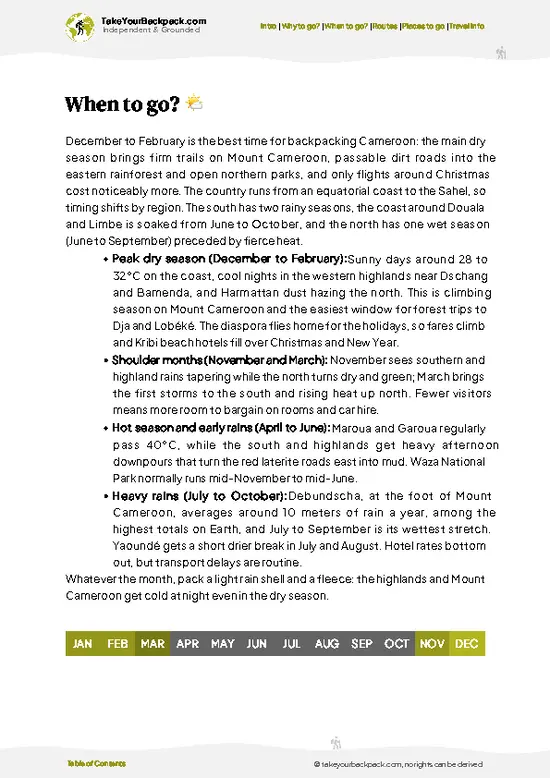
  • Topic: Weather – The Bamenda Highlands swing between a wet season from March to October and a dry season from November to February. Rain can be relentless in the wet months, turning trails into mud slides and making camping a soggy affair. Dry season means clearer skies and easier hiking.

  • Topic: Temperature – Expect mild highs around 22-25°C (72-77°F) during the day, dropping to cool lows near 12-15°C (54-59°F) at night. The dry season brings more stable temps, perfect for layering and comfortable trekking.

  • Topic: Daylight Hours – Near the equator, daylight stays steady year-round, roughly 12 hours daily. Sunrise around 6:30 AM and sunset near 6:30 PM give you a reliable window for early starts and late finishes without surprises.

  • Topic: Crowds – The dry season sees fewer tourists,
read more 👉

  • Topic: Weather – The Bamenda Highlands swing between a wet season from March to October and a dry season from November to February. Rain can be relentless in the wet months, turning trails into mud slides and making camping a soggy affair. Dry season means clearer skies and easier hiking.

  • Topic: Temperature – Expect mild highs around 22-25°C (72-77°F) during the day, dropping to cool lows near 12-15°C (54-59°F) at night. The dry season brings more stable temps, perfect for layering and comfortable trekking.

  • Topic: Daylight Hours – Near the equator, daylight stays steady year-round, roughly 12 hours daily. Sunrise around 6:30 AM and sunset near 6:30 PM give you a reliable window for early starts and late finishes without surprises.

  • Topic: Crowds – The dry season sees fewer tourists, mostly locals and serious hikers. The wet season deters casual visitors, so if you want trails to yourself, aim for late dry season before the rains kick in.

  • Topic: Seasonal Activities – Dry months are prime for trekking, birdwatching, and cultural festivals like the Nguon Festival in January, which is a rare treat for authentic local interaction.

  • Topic: Price Fluctuations – Accommodation and guides drop prices in the wet season due to low demand, but you pay in comfort and accessibility. Dry season commands a premium but delivers on experience.


Pro-tip: Book your trip for January or February—dry trails, cool temps, and the Nguon Festival all align, giving you the best bang for your buck and boots.


source: climatestotravel.comJANJanuary: excellent for travelingFEBFebruary: excellent for travelingMARMarch: fair for travelingAPRApril: fair for travelingMAYMay: fair for travelingJUNJune: fair for travelingJULJuly: fair for travelingAUGAugust: fair for travelingSEPSeptember: fair for travelingOCTOctober: fair for travelingNOVNovember: highly recommended for travelingDECDecember: highly recommended for traveling
when-to-go

✈️ The backpacker research shortcutCameroon Travel Guide

An offline-friendly backpacking guide with optimized travel routes, ranked highlights, transport advice, and the best areas to stay.
example page 0 from our offline Travel Guide for Cameroonexample page 1 from our offline Travel Guide for Cameroonexample page 2 from our offline Travel Guide for Cameroonexample page 3 from our offline Travel Guide for Cameroonexample page 4 from our offline Travel Guide for Cameroonexample page 5 from our offline Travel Guide for Cameroonexample page 6 from our offline Travel Guide for Cameroonexample page 7 from our offline Travel Guide for Cameroon
The digital guide (383 pages) contains:
95 highlights, ranked by travel appeal
Optimized 7, 14 & 21-day travel routes
Cities, national parks, landmarks, beaches
How to get around
Offline-friendly for travel without Wi-Fi
👉 Click to see all 30+ guide features

📅 Plan smarter in minutes, not weeks
Month by month travel advice
Festivals & national holidays
Budget expectations

🗺️ Go to the right places, skip the overrated ones
Honest pros & cons of destinations
Top hikes, parks & viewpoints
Lesser-known places most travelers miss
Clear “worth it vs skip it” guidance

🛏️ Travel smoothly without rookie mistakes
Best areas to stay
Transport systems explained simply
Common scams & safety advice
SIM cards, money & practical tips

🌍 Understand the country, not just visit it
Culture & traditions
52 Essential phrases & customs
Festivals worth planning around
Traveler-friendly historical context
Insights that make places more meaningful

📱 Built for real travel conditions
Fully downloadable PDF
Works completely offline
Optimized for phone use
Useful in remote areas & buses
Everything in one place
Save weeks of stressful planning
Get instant access to your full guide. 30‑day money-back guarantee.


By proceeding you agree to our terms.
Sent to your inbox immediately after payment • 100% Secure Checkout
Best Backpacking Travel Advisor 2025 tourism awardBest Backpacking
Travel Advisor
2025
What others say about Take Your Backpack Guides:
⭐⭐⭐⭐⭐
Fantastic, amazing amount of information!
⭐⭐⭐⭐⭐
My goodness this is amazing, it's what I've been looking for hats off too you!
⭐⭐⭐⭐⭐
I think this is absolutely BRILLIANT
⭐⭐⭐⭐
Very complete and informative. It's still missing places, but I gotta to commend you
⭐⭐⭐⭐⭐
This is truly amazing, thank you, can't wait to explore it with my kids!
⭐⭐⭐⭐⭐
Awesome resource, thank you!
⭐⭐⭐⭐⭐
This is amazing! Can't wait to explore the ones I haven't seen
⭐⭐⭐⭐
I love this! Well done, great idea.
⭐⭐⭐⭐⭐
Thanks for taking the time to make this gem!
⭐⭐⭐⭐⭐
This might be the best website I've ever seen.
⭐⭐⭐⭐⭐
Congratulations, and thank you so much for your work; it's incredibly valuable.
⭐⭐⭐⭐
In all seriousness I think you did a great job pointing out the important spots
⭐⭐⭐⭐⭐
10/10 very good
⭐⭐⭐⭐⭐
As someone who's only just starting to visit regularly this is awesome, thank you.
⭐⭐⭐⭐
Thank you very much! I'm going to visit my dad, it's going to be very useful!
⭐⭐⭐⭐⭐
This is really cool! We'll be travelling for the first time and this definitely come in handy.
⭐⭐⭐⭐⭐
You are now our minister of culture, congratulations 👨‍💼
⭐⭐⭐⭐⭐
Just wanted to tell you that this is a pearl! Going to follow your recommendations.
⭐⭐⭐⭐⭐
This is so cool. I'll definitely be using the resource for my travels soon.
⭐⭐⭐⭐⭐
This is very impressive! Good work.
⭐⭐⭐⭐⭐
This is an amazing and informative site. Very well done!

🛏️ Where to stay?Choosing the right base

The Bamenda Highlands are a treasure trove for backpackers, and knowing where to stay can make all the difference.

Start with Bamenda City itself. It’s the bustling heart of the region, where you’ll find a mix of locals and travelers. The vibe is friendly, and the markets are alive with chatter. You can grab a meal for a few bucks and meet fellow backpackers at local hangouts. The city’s central location makes it a perfect base for day trips to nearby attractions.

Next, consider Limbe, a bit further out but worth it for its coastal charm. The beaches are a refreshing escape, and the laid-back … read more 👉
The Bamenda Highlands are a treasure trove for backpackers, and knowing where to stay can make all the difference.

Start with Bamenda City itself. It’s the bustling heart of the region, where you’ll find a mix of locals and travelers. The vibe is friendly, and the markets are alive with chatter. You can grab a meal for a few bucks and meet fellow backpackers at local hangouts. The city’s central location makes it a perfect base for day trips to nearby attractions.

Next, consider Limbe, a bit further out but worth it for its coastal charm. The beaches are a refreshing escape, and the laid-back atmosphere is ideal for unwinding after a trek. You’ll find a good mix of budget accommodations and social spots where you can swap stories with other travelers.

Then there’s Bafut, a quaint village that offers a glimpse into traditional life. It’s quieter, but that’s its charm. You can explore the local culture and enjoy the stunning scenery. Plus, the community is welcoming, making it easy to connect with locals and fellow adventurers.

Each of these spots has its own flavor, so choose based on what you crave—social buzz, coastal relaxation, or cultural immersion. You can’t go wrong!

🚌 Getting aroundGetting around like a local

The Bamenda Highlands pulse with a rhythm that’s anything but predictable. Here, the air is thick with the scent of fresh earth and the chatter of locals, creating a vibe that’s more about intuition than rigid schedules. You’ll find yourself swept up in a dance of spontaneity, where the next ride might just appear when you least expect it. Forget the clock; this is a place where time bends, and the journey is as important as the destination. Embrace the chaos, and you’ll discover that the real magic lies in the unexpected encounters along the way.


  • Shared Taxis: These are the lifeblood of local transport. They zip around town and beyond, often leaving when full. Expect to pay around 1,000 to 2,000 CFA for a ride to nearby towns. They’re quick, usually taking about 30-45 minutes to reach your
read more 👉
The Bamenda Highlands pulse with a rhythm that’s anything but predictable. Here, the air is thick with the scent of fresh earth and the chatter of locals, creating a vibe that’s more about intuition than rigid schedules. You’ll find yourself swept up in a dance of spontaneity, where the next ride might just appear when you least expect it. Forget the clock; this is a place where time bends, and the journey is as important as the destination. Embrace the chaos, and you’ll discover that the real magic lies in the unexpected encounters along the way.


  • Shared Taxis: These are the lifeblood of local transport. They zip around town and beyond, often leaving when full. Expect to pay around 1,000 to 2,000 CFA for a ride to nearby towns. They’re quick, usually taking about 30-45 minutes to reach your destination, but comfort can be hit or miss, especially during peak hours.


  • Buses: Larger and more structured, these buses connect Bamenda to major cities like Douala and Yaoundé. They typically run from early morning until late afternoon, with tickets costing between 3,000 to 5,000 CFA. The ride can take anywhere from 4 to 6 hours, so pack snacks and a good playlist. While they offer more space, the schedules can be a bit loose, so patience is key.


  • Bike Taxis (Bamenda Bicycles): For a more adventurous option, hop on a bike taxi. They’re everywhere and can take you through the winding streets and up into the hills. Fares are negotiable, usually around 500 to 1,000 CFA for short distances. It’s a breezy way to see the sights, but hold on tight; these riders know how to navigate the chaos!


  • Motorbike Taxis: Similar to bike taxis but faster and more thrilling. They’re great for getting around quickly, especially in traffic. Expect to pay about 700 to 1,500 CFA depending on distance. Just be ready for a wild ride; helmets are often optional, but safety first, right?


  • Walking: Don’t underestimate the power of your own two feet. Many attractions are within walking distance, and you’ll get a real feel for the local culture. Plus, it’s free! Just be prepared for some steep climbs and uneven paths.


For a smooth experience, always ask locals about the best times to travel. Early mornings are often less crowded, and you’ll snag a better seat. Embrace the unpredictability, and you’ll navigate the Bamenda Highlands like a pro.

🍲 FoodWhat to Eat & Drink

In the Bamenda Highlands, food is a celebration of local culture. You can’t miss the fufu, a starchy staple made from cassava or plantains, often paired with a rich eru soup, bursting with flavors from wild spinach and palm oil. The aroma alone is enough to draw you in.

Street food is where the magic happens. Vendors line the bustling markets, serving up suya, spicy skewers of grilled meat that sizzle on hot coals. Grab a few and enjoy them with a cold Star Lager or a local favorite, palm wine, served fresh from the tree. The sweetness of the wine complements the heat of the suya perfectly.

Cafés and casual eateries are perfect for soaking in the local vibe. Sit back and enjoy a bowl of pepper soup, a fiery broth that warms you from the inside out. Dining here is communal; expect to share … read more 👉
In the Bamenda Highlands, food is a celebration of local culture. You can’t miss the fufu, a starchy staple made from cassava or plantains, often paired with a rich eru soup, bursting with flavors from wild spinach and palm oil. The aroma alone is enough to draw you in.

Street food is where the magic happens. Vendors line the bustling markets, serving up suya, spicy skewers of grilled meat that sizzle on hot coals. Grab a few and enjoy them with a cold Star Lager or a local favorite, palm wine, served fresh from the tree. The sweetness of the wine complements the heat of the suya perfectly.

Cafés and casual eateries are perfect for soaking in the local vibe. Sit back and enjoy a bowl of pepper soup, a fiery broth that warms you from the inside out. Dining here is communal; expect to share dishes and stories with fellow travelers and locals alike.

Etiquette is simple: eat with your hands, especially when enjoying fufu. It’s not just food; it’s an experience. Embrace the messiness and the laughter that comes with it. In the Bamenda Highlands, every meal is a chance to connect, to savor, and to truly feel the heart of the region.

Where to go next

Bamenda Highlands isn’t the only highlight in Cameroon. Explore all what Cameroon has to offer.
Country photo of Cameroon

We 💚 feedbackIs it worth it?

The Bamenda Highlands have a vibe that feels like a warm hug from nature. You’ll stumble upon local markets bursting with color and laughter—don’t miss the chance to chat with vendors; they’re full of stories. The best surprise? The mist rolling over the hills at dawn; it’s like nature’s own magic show. Just a heads-up: the roads can be tricky, so don’t rush. Take your time to soak it all in. Trust me, the slower pace reveals the true heart of this place.

✍️ Help improve this page!
The information on this page is based on in-depth research, insights shared by experienced travelers, and feedback from the local travel community in Cameroon. While every effort is made to keep the information accurate and current, conditions can change — so if you spot anything incorrect or outdated, please get in touch.


🙋‍♂️ Give feedback

👋 Meet the founderWho’s Behind Take Your Backpack?

Johan, backpacker and founder of TakeYourBackpackHi, I’m Johan (Netherlands 🇳🇱), the creator of TakeYourBackpack. Over the past decade, I’ve backpacked through 80+ countries across six continents, gaining extensive experience with independent travel, long-term trips, and overland routes.

This site is built on a combination of firsthand travel experience and carefully curated insights from other backpackers. Many guides are based on places I’ve personally visited, while others bring together tips, observations, and practical advice shared by trusted travelers I’ve met along the way.

The goal is to provide realistic, experience-driven guidance — not generic itineraries — so you can explore destinations with better context, clearer expectations, and more confidence.

Get full Cameroon guide •
Instant download • 95 highlights • Full Offline guide