×

Cameroon🇨🇲 | festivalsNgondo FestivalWouri River dive, Jengu spirits, Sawa chiefs, canoe races | things to do and best time to go

Explore GuiderExplore Ngouon Festival

Backpacking in Ngondo
🏆 Top pickfestival ranked #1
By Johan Kruseman 🇳🇱 | Updated October 24, 2026

The river dive is the climax of Ngondo Festival, not the whole of it: the event runs as a week of assemblies, rituals, wrestling and canoe races before the final plunge. It takes place in Douala, Cameroon’s port city, along the banks of the Wouri River, and it belongs to the Sawa coastal peoples, chiefly the Duala. The soundtrack is drums, call-and-response chanting and the thump of bodies hitting sand during wrestling bouts. The air smells of river mud, smoke and frying plantain, and the December light is hazy and heavy. Crowds are mostly Sawa families, diaspora returnees, chiefs in ceremonial dress and a thin scattering of foreign visitors. Expect heat, humidity, crowding on the riverbank and schedules that slip by hours. That is part of the deal. What you get is a living ritual, not a staged show. Unlike the Nguon festival in the Bamoun highlands around the sultan’s palace in Foumban, Ngondo centers on water spirits and a river, not a royal court.

Discover everything you want to know in the 📖 Cameroon Travel Guide.


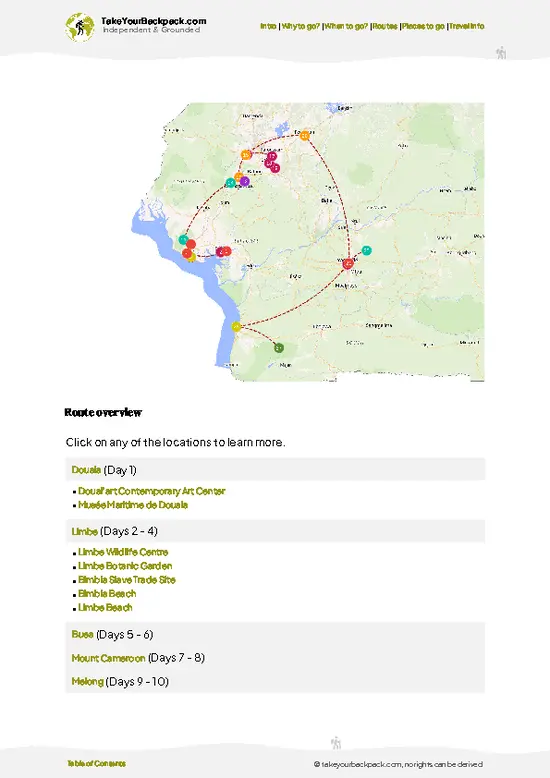
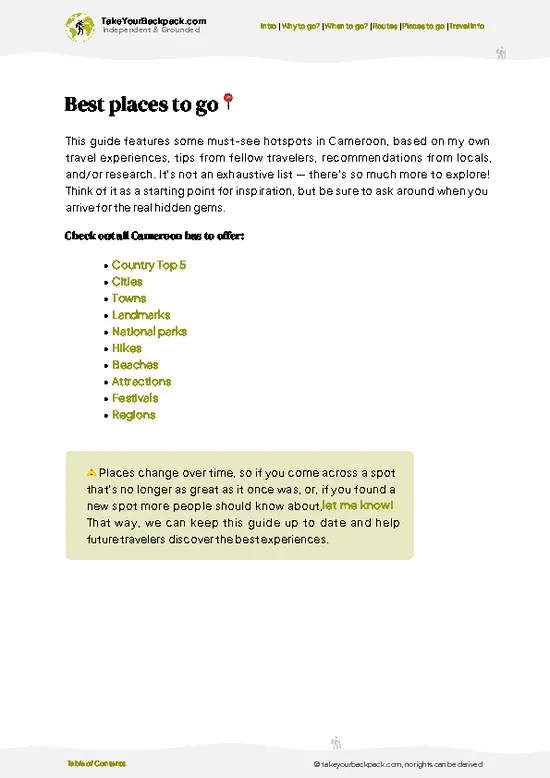
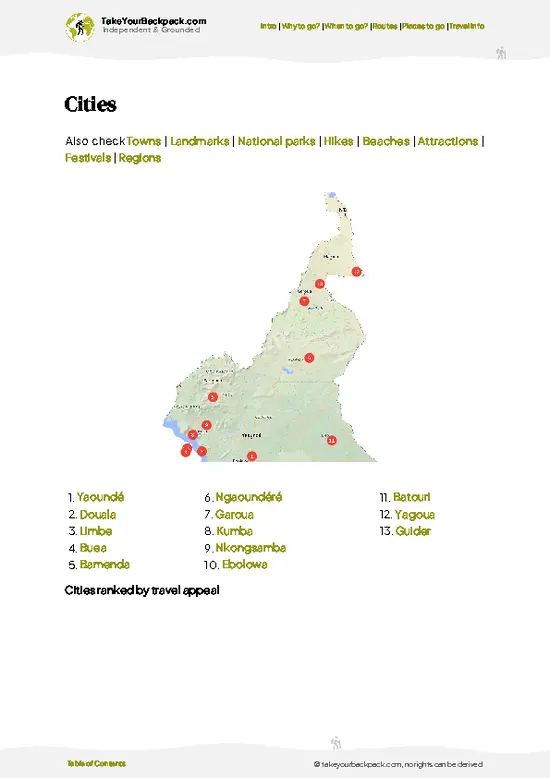
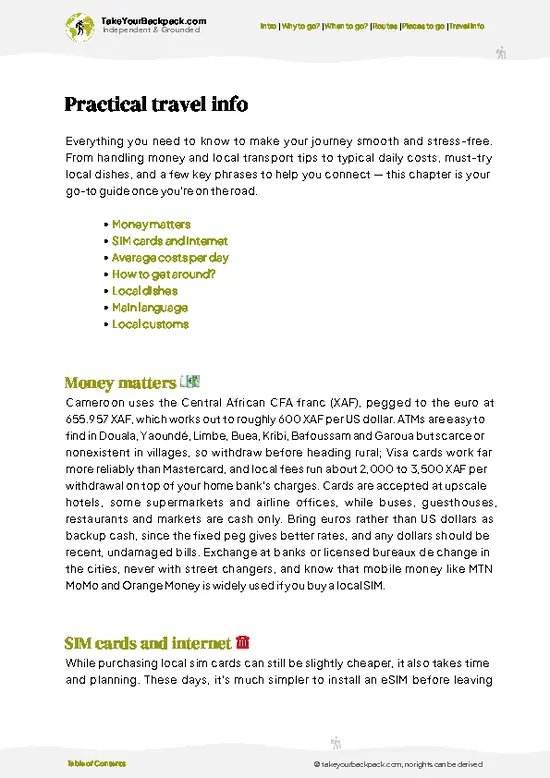
example page 0 from our offline Travel Guide for Cameroon
example page 1 from our offline Travel Guide for Cameroon
example page 2 from our offline Travel Guide for Cameroon
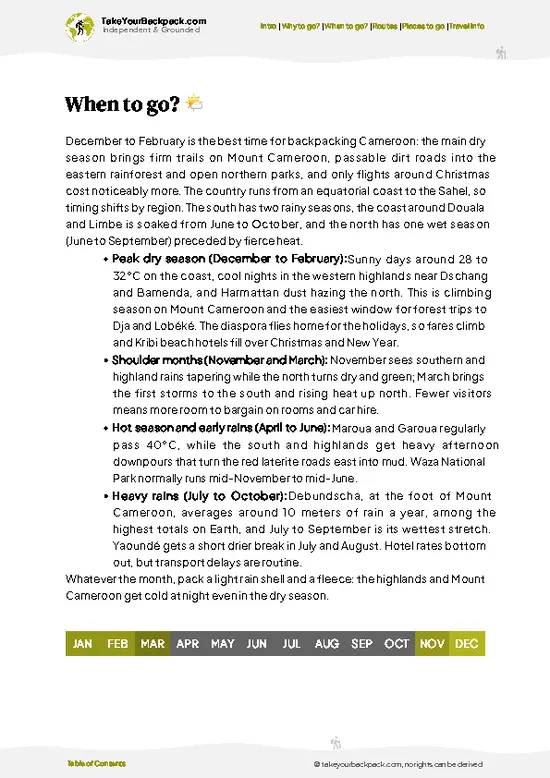
example page 3 from our offline Travel Guide for Cameroon
example page 4 from our offline Travel Guide for Cameroon
example page 5 from our offline Travel Guide for Cameroon
example page 6 from our offline Travel Guide for Cameroon
example page 7 from our offline Travel Guide for Cameroon
Loading the map 🌍
CLICK TO FILTER
cities
towns
landmarks
national parks
hikes
beaches
attractions
festivals
regions
SHOW COUNTRY’S BESTSHOW ALL

✨ Why go?
Ranked #1 festival in Cameroon
The unique appeal for travelers

Ngondo Festival gives you something rare on a Cameroon route: a ceremony that exists for its own community first and visitors a distant second. That changes how it feels. You are standing among Sawa families who return to Douala every year, and the welcome comes from being curious, not from buying a ticket to a performance. Chiefs, elders and young people from the diaspora mingle on the Wouri riverbank, so a question about a costume or a chant usually turns into a long explanation.
The clearest draw is the ritual dive to the Jengu water spirits, where a chosen diver carries the community’s messages beneath the river. Few events anywhere let you watch something like that in an open public setting.
It also fits neatly into a longer trip. Douala is the main arrival point for many travelers, so … read more 👉
Ngondo Festival gives you something rare on a Cameroon route: a ceremony that exists for its own community first and visitors a distant second. That changes how it feels. You are standing among Sawa families who return to Douala every year, and the welcome comes from being curious, not from buying a ticket to a performance. Chiefs, elders and young people from the diaspora mingle on the Wouri riverbank, so a question about a costume or a chant usually turns into a long explanation.
The clearest draw is the ritual dive to the Jengu water spirits, where a chosen diver carries the community’s messages beneath the river. Few events anywhere let you watch something like that in an open public setting.
It also fits neatly into a longer trip. Douala is the main arrival point for many travelers, so the festival works as an opening or closing chapter before heading to the beaches around Kribi or the slopes of Mount Cameroon. Stay for the wrestling and canoe racing days as well as the climax, and you leave with a far fuller picture of coastal Cameroon than a few hours in the city would give.

💡 HighlightsTop highlights of Ngondo

  1. The ritual dive into the Wouri River. This is what Ngondo is known for. A designated diver descends into the river to meet the Jengu, the water spirits of Sawa belief, carrying the people’s requests and returning with their answer. Elders and chiefs gather on the bank and the whole crowd goes quiet and tense as the diver is awaited.
  2. The Grand Assembly of the Sawa. Ngondo began as a council of Sawa chiefs and notables, and the gathering still carries that weight. You will see chiefs in beaded caps, wrappers and ceremonial regalia debating community matters and receiving guests. It is the best window into how the festival remains a serious civic and spiritual event.
  3. Traditional wrestling. Bouts take place on sand in front of a loud, partisan crowd. Drumming drives the pace, and fighters wear wrappers
… read more 👉
  1. The ritual dive into the Wouri River. This is what Ngondo is known for. A designated diver descends into the river to meet the Jengu, the water spirits of Sawa belief, carrying the people’s requests and returning with their answer. Elders and chiefs gather on the bank and the whole crowd goes quiet and tense as the diver is awaited.
  2. The Grand Assembly of the Sawa. Ngondo began as a council of Sawa chiefs and notables, and the gathering still carries that weight. You will see chiefs in beaded caps, wrappers and ceremonial regalia debating community matters and receiving guests. It is the best window into how the festival remains a serious civic and spiritual event.
  3. Traditional wrestling. Bouts take place on sand in front of a loud, partisan crowd. Drumming drives the pace, and fighters wear wrappers and body paint. Matches are short and sharp, and the atmosphere tends to be more raucous than the formal ritual days.
  4. The pirogue races on the Wouri. Long dugout canoes with teams of paddlers cut across the brown river in chorus with chanting and horn blasts from the bank. The water is the stage for the whole festival, so seeing it in action explains why the Jengu matter. Get to the bank early for a spot with a view.
  5. Miss Ngondo and the cultural displays. Beyond the rituals, there are exhibitions of Sawa dress, dance, food and craftsmanship, along with an evening beauty pageant showcasing traditional attire. Dance groups perform to drums and rattles, and food stalls sell fish, plantain and local specialties. It gives you the lighter, social side of the week.
Ngondo Festival needs no booking for the river ritual, wrestling or canoe races, which play out in open public spaces; only the evening gala shows sometimes sell tickets at the door.
Spotted a mistake or missing something? Contact us.

Things to do around Ngondo Festival

Ratings based on Tripadvisor reviews. When you book through this link, you support our work at no extra cost to you.

🌤️ When to go?When is the celebration of Ngondo Festival?

Ngondo Festival takes place in Douala, on the banks of the Wouri River, usually in early December (often the first weekend), and runs for about a week of events, with the date set by the Sawa elders each year.
  • Best day: Go for the final weekend. The river ceremony, with decorated pirogue races and the ritual dive by the Sawa priests to meet the water spirits, draws the biggest crowds and the best photos. Weekdays offer quieter cultural exhibitions and wrestling.
  • Weather: Expect 23 to 31°C (73 to 88°F), humid air, a chance of short showers and long, bright days. Bring a light rain jacket, sunscreen, a hat and quick-dry clothes.
  • Booking: Reserve a bed three to four weeks ahead. Central rooms can rise 20 to 40 percent in festival week.
  • Crowds: Reach the riverbank early on the main day, as roads around
… read more 👉
Ngondo Festival takes place in Douala, on the banks of the Wouri River, usually in early December (often the first weekend), and runs for about a week of events, with the date set by the Sawa elders each year.
  • Best day: Go for the final weekend. The river ceremony, with decorated pirogue races and the ritual dive by the Sawa priests to meet the water spirits, draws the biggest crowds and the best photos. Weekdays offer quieter cultural exhibitions and wrestling.
  • Weather: Expect 23 to 31°C (73 to 88°F), humid air, a chance of short showers and long, bright days. Bring a light rain jacket, sunscreen, a hat and quick-dry clothes.
  • Booking: Reserve a bed three to four weeks ahead. Central rooms can rise 20 to 40 percent in festival week.
  • Crowds: Reach the riverbank early on the main day, as roads around Bonanjo and Akwa jam up by midmorning. Leave after dark, or the next morning, to avoid gridlock.
Confirm the exact dates with the Sawa cultural committee a month out, since they shift year to year.


source: climatestotravel.comJANJanuary: not recommended for travelingFEBFebruary: not recommended for travelingMARMarch: not recommended for travelingAPRApril: not recommended for travelingMAYMay: not recommended for travelingJUNJune: not recommended for travelingJULJuly: not recommended for travelingAUGAugust: not recommended for travelingSEPSeptember: not recommended for travelingOCTOctober: not recommended for travelingNOVNovember: not recommended for travelingDECDecember: excellent for traveling

✈️ The backpacker research shortcutCameroon Travel Guide

An offline-friendly backpacking guide with optimized travel routes, ranked highlights, transport advice, and the best areas to stay.
example page 0 from our offline Travel Guide for Cameroon
example page 1 from our offline Travel Guide for Cameroon
example page 2 from our offline Travel Guide for Cameroon
example page 3 from our offline Travel Guide for Cameroon
example page 4 from our offline Travel Guide for Cameroon
example page 5 from our offline Travel Guide for Cameroon
example page 6 from our offline Travel Guide for Cameroon
example page 7 from our offline Travel Guide for Cameroon
The digital guide (351 pages) contains:
✅ 85 highlights, ranked by travel appeal
✅ Optimized 7, 14 & 21-day travel routes
✅ Cities, national parks, landmarks, beaches
✅ How to get around
✅ Offline-friendly for travel without Wi-Fi
👉 Click to see all 30+ guide features

📅 Plan smarter in minutes, not weeks
✅ Month by month travel advice
✅ Festivals & national holidays
✅ Budget expectations

🗺️ Go to the right places, skip the overrated ones
✅ Honest pros & cons of destinations
✅ Top hikes, parks & viewpoints
✅ Lesser-known places most travelers miss
✅ Clear “worth it vs skip it” guidance

🛏️ Travel smoothly without rookie mistakes
✅ Best areas to stay
✅ Transport systems explained simply
✅ Common scams & safety advice
✅ SIM cards, money & practical tips

🌍 Understand the country, not just visit it
✅ Culture & traditions
✅ 52 Essential phrases & customs
✅ Festivals worth planning around
✅ Traveler-friendly historical context
✅ Insights that make places more meaningful

📱 Built for real travel conditions
✅ Fully downloadable PDF
✅ Works completely offline
✅ Optimized for phone use
✅ Useful in remote areas & buses
✅ Everything in one place
Stop searching, start planning
Get instant access to your full guide. 30‑day money-back guarantee.
+ Add another guide for just

By proceeding you agree to our terms.
Sent to your inbox immediately after payment • 100% Secure Checkout
Best Backpacking Travel Advisor 2025 tourism awardBest Backpacking
Travel Advisor
2025
What others say about Take Your Backpack Guides:
⭐⭐⭐⭐⭐
Fantastic, amazing amount of information!
⭐⭐⭐⭐⭐
My goodness this is amazing, it's what I've been looking for hats off too you!
⭐⭐⭐⭐⭐
I think this is absolutely BRILLIANT
⭐⭐⭐⭐
Very complete and informative. It's still missing places, but I gotta to commend you
⭐⭐⭐⭐⭐
This is truly amazing, thank you, can't wait to explore it with my kids!
⭐⭐⭐⭐⭐
Awesome resource, thank you!
⭐⭐⭐⭐⭐
This is amazing! Can't wait to explore the ones I haven't seen
⭐⭐⭐⭐
I love this! Well done, great idea.
⭐⭐⭐⭐⭐
Thanks for taking the time to make this gem!
⭐⭐⭐⭐⭐
This might be the best website I've ever seen.
⭐⭐⭐⭐⭐
Congratulations, and thank you so much for your work; it's incredibly valuable.
⭐⭐⭐⭐
In all seriousness I think you did a great job pointing out the important spots
⭐⭐⭐⭐⭐
10/10 very good
⭐⭐⭐⭐⭐
As someone who's only just starting to visit regularly this is awesome, thank you.
⭐⭐⭐⭐
Thank you very much! I'm going to visit my dad, it's going to be very useful!
⭐⭐⭐⭐⭐
This is really cool! We'll be travelling for the first time and this definitely come in handy.
⭐⭐⭐⭐⭐
You are now our minister of culture, congratulations 👨‍💼
⭐⭐⭐⭐⭐
Just wanted to tell you that this is a pearl! Going to follow your recommendations.
⭐⭐⭐⭐⭐
This is so cool. I'll definitely be using the resource for my travels soon.
⭐⭐⭐⭐⭐
This is very impressive! Good work.
⭐⭐⭐⭐⭐
This is an amazing and informative site. Very well done!

🛏️ Where to stay?Where staying makes the most sense

Akwa is the best area to stay for the festival, with Bonanjo and Bonapriso as calmer alternatives. Akwa is the commercial heart of Douala, and it is a short taxi ride from the Wouri riverfront where the main ceremony unfolds. Budget guesthouses, cheap eateries, money changers and shared-taxi stops cluster here, so you can sort food, cash and transport without much hassle. It is also where you will meet other independent travelers and Cameroonians in town for the celebrations. Streets stay busy into the evening, which helps with safety, but take a taxi after dark rather than walking.
Bonanjo, the … read more 👉
Akwa is the best area to stay for the festival, with Bonanjo and Bonapriso as calmer alternatives. Akwa is the commercial heart of Douala, and it is a short taxi ride from the Wouri riverfront where the main ceremony unfolds. Budget guesthouses, cheap eateries, money changers and shared-taxi stops cluster here, so you can sort food, cash and transport without much hassle. It is also where you will meet other independent travelers and Cameroonians in town for the celebrations. Streets stay busy into the evening, which helps with safety, but take a taxi after dark rather than walking.
Bonanjo, the old colonial district beside the river, is quieter and more orderly. Its administrative buildings and cultural venues sit close to the festival action, and you can often walk to events in daylight. Rooms tend to cost more, but the area feels calm and secure. Bonapriso is leafy and residential, with a few small guesthouses and good restaurants, and it suits solo travelers who want a relaxed night after crowded days. Deido, across from the river on the Sawa side, is closer to the cultural heart of the festival but has fewer places for visitors. Book early, and choose somewhere with a reliable night guard and a place to lock up your bag.

👛 Costs (as of 24 October 2026)Travel costs and budget guide for Ngondo

A realistic budget for Ngondo Festival is about €25 to 71 a day for an independent traveler in Douala. Entry to the main riverside events is generally free, and costs come mostly from beds and food. You pay in Central African francs, with cash being king.
CategoryBudget RangeLocal Reality
Festival tickets€0 to 8The river ceremony and street events are free to watch. Some staged shows, exhibitions and reserved seating charge a small fee at the door.
Accommodation€15 to 40Basic guesthouses in Akwa cost less in low season. During festival week, expect rises of 20 to 40 percent and book early.
Local transport€2 to 6Shared taxis run on fixed routes for under €1 per ride. Private taxis cost more and jump in price on the main festival days.
Food & drinks€6 to 12Grilled fish and bobolo or a plate of ndolé
… read more 👉
A realistic budget for Ngondo Festival is about €25 to 71 a day for an independent traveler in Douala. Entry to the main riverside events is generally free, and costs come mostly from beds and food. You pay in Central African francs, with cash being king.
CategoryBudget RangeLocal Reality
Festival tickets€0 to 8The river ceremony and street events are free to watch. Some staged shows, exhibitions and reserved seating charge a small fee at the door.
Accommodation€15 to 40Basic guesthouses in Akwa cost less in low season. During festival week, expect rises of 20 to 40 percent and book early.
Local transport€2 to 6Shared taxis run on fixed routes for under €1 per ride. Private taxis cost more and jump in price on the main festival days.
Food & drinks€6 to 12Grilled fish and bobolo or a plate of ndolé cost €2 to 5. Beers run about €1 to 2.
Miscellaneous expenses€2 to 5SIM data, bottled water, photo fees for performers and small tips.
Total Daily Budget€25 to 71About €55 a day with a mid-range guesthouse in festival week.
⚠️ Prices can change and everyone travels differently, so take this as a rough guide. Hope it helps you plan your adventure!

🍲 FoodLocal Cuisine & Drinks

Expect the smoke and sizzle of the riverbank. Stalls sell grilled fish (often braised catfish or tilapia) with bobolo, steamed cassava sticks wrapped in leaves, and spicy pepper sauce. Many are fanned over charcoal right beside the crowd.
The Sawa people’s signature dish is miondo, cassava sticks served with kwem, ndolé (bitterleaf stew with peanuts and shrimp or beef) or fish. Try ndolé at least once, as it is the dish most tied to Douala and the Littoral. Plantains, fried or roasted, and sugarcane juice keep you going between ceremonies. For drinks, local beers such as 33 Export and Castel are everywhere, along with palm wine poured from jerrycans and ginger or bissap (hibiscus) drinks sold in bottles.
Bring cash in small notes, as most stalls do not take cards and change can be scarce in … read more 👉
Expect the smoke and sizzle of the riverbank. Stalls sell grilled fish (often braised catfish or tilapia) with bobolo, steamed cassava sticks wrapped in leaves, and spicy pepper sauce. Many are fanned over charcoal right beside the crowd.
The Sawa people’s signature dish is miondo, cassava sticks served with kwem, ndolé (bitterleaf stew with peanuts and shrimp or beef) or fish. Try ndolé at least once, as it is the dish most tied to Douala and the Littoral. Plantains, fried or roasted, and sugarcane juice keep you going between ceremonies. For drinks, local beers such as 33 Export and Castel are everywhere, along with palm wine poured from jerrycans and ginger or bissap (hibiscus) drinks sold in bottles.
Bring cash in small notes, as most stalls do not take cards and change can be scarce in the crush. Prices are often negotiated, so ask before you order. Portions are big and made for sharing, so order one plate with a friend and add sides. Lines are loose, so step up politely and make eye contact with the vendor. Wash your hands before eating, and favor food cooked fresh in front of you.

FAQFrequently asked questions about Ngondo

Ngondo Festival is held in Douala each year, normally in early December, with a week of events that peaks on the final weekend. The Sawa elders set the exact dates annually, so check a month ahead. The main ceremony takes place on the Wouri River near Bonanjo, and daytime events start in the morning.
Attending Ngondo Festival is cheap, as the river ceremony and most street events are free. Expect about €0 to 8 for staged shows or reserved seats, plus €15 to 40 a night for a bed in Akwa. A realistic daily budget with food and taxis is around €30 to 55.
Ngondo Festival does not require advance tickets for the main riverside ceremony, which is open to the public. Some indoor shows and cultural exhibitions sell tickets at the door for a few euros. What you should book early is a bed, ideally three to four weeks ahead, since central Douala guesthouses fill and prices rise 20 to 40 percent.
⚠️ Things can change over time, so always validate details locally before you go.

Other Cameroonian festivals near Ngondo

Explore more nearby:


💡 Not sure where to go next?
Create a personalized itinerary for Cameroon including Ngondo and the places that fit your trip.

Generate my itinerary

👉 Discover all festivals

Or checkout all Cameroon has to offer (think cities, towns, villages, national parks, hikes, beaches, festivals)
Country photo of Cameroon

We 💚 feedbackParting advice and final tips

Ngondo Festival is often treated as a single-day spectacle, and travelers who turn up only for the dive end up with a view of the backs of other people’s heads. I would go for several days, start with the wrestling and canoe races, and reach the riverbank early on the final day to claim a spot. Bring a hat, water and patience.

✍️ Help improve this page!
The information on this page is based on in-depth research, insights shared by experienced travelers, and feedback from the local travel community in Cameroon. While every effort is made to keep the information accurate and current, conditions can change — so if you spot anything incorrect or outdated, please get in touch.


🙋‍♂️ Give feedback

👋 Meet the founderWho’s Behind Take Your Backpack?

Johan, backpacker and founder of TakeYourBackpackHi, I’m Johan (Netherlands 🇳🇱), the creator of TakeYourBackpack. Over the past 3 decades, I’ve backpacked through 90+ countries across six continents, gaining extensive experience with independent travel, long-term trips, and overland routes.

This site is built on a combination of firsthand travel experience and carefully curated insights from other backpackers. Many guides are based on places I’ve personally visited, while others bring together tips, observations, and practical advice shared by trusted travelers I’ve met along the way.

The goal is to provide realistic, experience-driven guidance — not generic itineraries — so you can explore destinations with better context, clearer expectations, and more confidence.