×

Cameroon🇨🇲 | best festivalsThe Must-See 10 festivals in Cameroon

In Cameroon, festivals pulse with the heartbeat of diverse cultures, each offering a unique glimpse into the nation’s rich tapestry. From the Ngondo Festival on the shores of Lake Sanaga to the vibrant Fête de la Musique in urban centers, these events are deeply rooted in local traditions and seasonal rhythms.

Timing is crucial; many festivals align with harvest seasons or significant cultural dates, impacting everything from the crowds you’ll encounter to the budget you’ll need. For backpackers, this means choosing wisely can enhance your experience—opting for a smaller, local celebration might yield more intimate cultural immersion, while larger events can be overwhelming yet exhilarating.

Safety and ease of travel vary by region, with some areas bustling with tourists and others more remote. Understanding these nuances ensures that your festival experience in Cameroon is not just a spectacle, but a meaningful connection to the land and its people.

By Johan Kruseman 🇳🇱 | Updated June 8, 2026
Explore the best regions in Cameroon

Why go?Key Factors That Shape the Experience

Festivals in Cameroon pulse with a unique rhythm, reflecting the country’s rich tapestry of cultures and traditions. Each celebration is a vibrant expression of heritage, showcasing the diverse ethnic groups that call this land home. From the lively Ngondo Festival of the Sawa people to the Fête de la Musique, these events are not just parties; they are communal gatherings steeped in history and identity.

The timing of these festivals often aligns with the seasons, enhancing their significance. For instance, many occur during the dry season, when the weather is more favorable for outdoor celebrations. This climatic advantage allows for larger crowds and more elaborate displays, but it also means travelers should prepare for the hustle and bustle that comes with peak attendance. The energy … read more 👉
Festivals in Cameroon pulse with a unique rhythm, reflecting the country’s rich tapestry of cultures and traditions. Each celebration is a vibrant expression of heritage, showcasing the diverse ethnic groups that call this land home. From the lively Ngondo Festival of the Sawa people to the Fête de la Musique, these events are not just parties; they are communal gatherings steeped in history and identity.

The timing of these festivals often aligns with the seasons, enhancing their significance. For instance, many occur during the dry season, when the weather is more favorable for outdoor celebrations. This climatic advantage allows for larger crowds and more elaborate displays, but it also means travelers should prepare for the hustle and bustle that comes with peak attendance. The energy is infectious, but navigating through throngs of people can be a challenge.

Cameroon’s geographical diversity—from coastal regions to mountainous areas—adds layers to the festival experience. However, this also means that accessibility can vary. Some festivals are held in remote areas, requiring careful planning and potentially long travel times. This trade-off can lead to deeper immersion in local culture, but it demands patience and flexibility.

Infrastructural challenges, such as limited transportation options and varying accommodation standards, can also impact the experience. While some travelers may seek the comfort of modern amenities, those willing to embrace the rustic charm will find themselves rewarded with authentic interactions and a genuine sense of community.

Ultimately, the festivals of Cameroon offer a rich and immersive experience, but they require a willingness to engage with the complexities of travel in this vibrant country. The rewards—cultural insights, local flavors, and unforgettable moments—make the effort worthwhile.
Evaluating the Top Choices
The list of best festivals in Cameroon is created based on energy, traditions, crowd experience, activities, and overall excitement. If you feel a festival is missing in this list, please let us know.

When to go?When to Plan Your Trip

Seasonality plays a crucial role in the festival landscape of Cameroon. The country experiences a tropical climate, characterized by a wet season and a dry season. The dry season, typically from November to February, is when many of the most vibrant festivals occur. This period offers clear skies and comfortable temperatures, making it ideal for outdoor celebrations. The atmosphere buzzes with energy, as locals and visitors alike gather to partake in cultural displays, music, and dance.

Optimal months for experiencing the full spectrum of Cameroonian festivals are generally December and January. During this time, the air is filled with the scent of street food, and the sounds of drums echo through the streets. Crowds swell, creating a lively but sometimes overwhelming experience. Prices for … read more 👉
Seasonality plays a crucial role in the festival landscape of Cameroon. The country experiences a tropical climate, characterized by a wet season and a dry season. The dry season, typically from November to February, is when many of the most vibrant festivals occur. This period offers clear skies and comfortable temperatures, making it ideal for outdoor celebrations. The atmosphere buzzes with energy, as locals and visitors alike gather to partake in cultural displays, music, and dance.

Optimal months for experiencing the full spectrum of Cameroonian festivals are generally December and January. During this time, the air is filled with the scent of street food, and the sounds of drums echo through the streets. Crowds swell, creating a lively but sometimes overwhelming experience. Prices for accommodations and travel may rise, reflecting the peak tourist season.

Shoulder seasons—the months just before and after the dry season—can offer a different experience. Visiting in late October or early March means fewer crowds and potentially lower costs. However, the trade-off is that some festivals may be less frequent or lack the same intensity. The atmosphere can feel more subdued, but this allows for a deeper connection with local traditions, as interactions may be more genuine without the throngs of tourists.

Peak periods are marked by significant cultural events that draw large crowds. These moments can be exhilarating but also come with logistical challenges, such as crowded transport and limited accommodations. Understanding these dynamics is essential for planning a visit that balances the thrill of participation with the desire for a more intimate experience.

festival hoppingHow to Combine festivals Into One Trip

To efficiently combine multiple festivals across Cameroon, start by clustering events regionally. The country’s diverse cultural landscape means that festivals often reflect local traditions and can be found in concentrated areas. Begin in the Littoral Region, where Douala hosts vibrant celebrations like the Douala Carnival. From there, head north to the Northwest Region for the Ngondo Festival, a celebration of the Sawa people, which typically occurs in June. This routing minimizes travel time and maximizes cultural immersion.

Consider the timing of each festival. Many events last several days, but the peak experiences often occur on weekends. Allocate at least two to three days per festival to soak in the atmosphere and participate fully. This pacing allows for rest and exploration of local read more 👉
To efficiently combine multiple festivals across Cameroon, start by clustering events regionally. The country’s diverse cultural landscape means that festivals often reflect local traditions and can be found in concentrated areas. Begin in the Littoral Region, where Douala hosts vibrant celebrations like the Douala Carnival. From there, head north to the Northwest Region for the Ngondo Festival, a celebration of the Sawa people, which typically occurs in June. This routing minimizes travel time and maximizes cultural immersion.

Consider the timing of each festival. Many events last several days, but the peak experiences often occur on weekends. Allocate at least two to three days per festival to soak in the atmosphere and participate fully. This pacing allows for rest and exploration of local sights, which enhances the overall experience. Avoid the common mistake of trying to cram too many festivals into a short timeframe; rushing can lead to fatigue and missed opportunities for genuine engagement.

Travel logistics are crucial. Domestic flights can save time between major cities, but road travel offers a chance to see the countryside. Be prepared for variable road conditions and plan for longer travel times than expected. Balancing speed with comfort is essential; overnight buses can be a budget-friendly option but may sacrifice rest. Prioritize comfort when possible, especially if traveling with a group.

Lastly, remain flexible. Festivals can change dates or be affected by local circumstances. Having a loose itinerary allows for spontaneous experiences that can enrich the journey. Embrace the unpredictability; the reward often lies in the unexpected moments that make the trip memorable.

The ListMust-Visit festivals in Cameroon

1 Mount Cameroon Race of Hope

mountain ascent, volcanic terrain, endurance race, Buea starting point

Follow athletes and locals as they tackle steep volcanic slopes, testing stamina and spirit on West Africa’s highest peak.

2 Ngondo Festival

Wouri River rituals, Sawa chiefs, water spirits, Douala waterfront

Observe sacred river ceremonies and traditional Sawa gatherings that connect Douala’s people to their aquatic heritage.

3 Limbe Festival of Arts and Culture

Atlantic coastline, art exhibitions, culinary showcases, Limbe Botanic Garden

Sample regional cuisine, view contemporary art, and mingle with artists in Limbe’s open-air venues set against a lush coastal backdrop.

4 Bamoun Nguon Festival

royal palace, Bamoun dynasty, masked dances, Foumban traditions

Witness royal processions, elaborate costumes, and centuries-old customs that define the Bamoun kingdom’s most important gathering in Foumban.

5 Kribi Beach Festival

white sand beaches, seaside concerts, seafood tastings, coastal games

Relax on Kribi’s beaches, enjoy open-air music, and sample fresh seafood during a festival shaped by the rhythms of the Atlantic.

6 Douala Hip Hop Festival

urban street art, live rap battles, local DJs, youth culture

Experience Douala’s creative pulse through live performances, graffiti, and dance that spotlight the city’s evolving hip hop scene.

7 Foumban Arts and Culture Festival

Bamoun crafts, palace museum, artisan workshops, local cuisine

Explore artisan workshops, sample regional dishes, and visit the palace museum to understand Foumban’s role in Cameroonian arts.

8 Yaoundé International Book Fair

literary panels, Cameroonian authors, book stalls, cultural debates

Browse new releases, attend readings, and engage with writers at a book fair that draws readers and thinkers from across Cameroon.

9 Bafut Cultural Festival

Bafut palace, grassfields regalia, drumming circles, local chiefs

Observe the convergence of Bafut clans, where music, regalia, and palace rituals offer insight into the region’s layered social structure.

10 Bafoussam Cultural Festival

Bamileke masks, highland dances, local markets, community feasts

Immerse yourself in Bamileke artistry, energetic dance, and bustling markets that define Bafoussam’s annual celebration of identity.

11 Bamenda Cultural Festival

Northwest music, traditional attire, local cuisine, community storytelling

Join Bamenda’s communities for music, food, and storytelling that highlight the diversity and traditions of Cameroon’s Northwest.

12 Ewondo Cultural Festival

traditional Ewondo attire, ancestral rituals, local music, Yaoundé neighborhoods

Experience Ewondo heritage through ceremonial gatherings, distinctive dress, and communal meals that reveal the rhythms of daily life in Cameroon’s capital.

13 Mpo’o Festival

coastal villages, ancestral shrines, Mpo’o language, river ceremonies

Join riverside communities as they honor lineage, perform water rituals, and share oral histories unique to the Mpo’o people of Cameroon’s coast.

14 Ebolowa Cultural Festival

South Cameroon crafts, Beti folklore, forest foods, community parades

Taste forest specialties, watch Beti storytellers, and join processions that highlight the agricultural and artistic life of Ebolowa.

15 Dschang Cultural Festival

Western Highlands music, university town, local crafts, traditional wrestling

Discover a blend of academic life and highland traditions, where music, crafts, and wrestling animate Dschang’s festival week.

Think you know Cameroon?

Prove you’re a true local — uncover 5 lesser-known festivals in Cameroon that locals tend to keep to themselves.
Loading the map 🌍

Expert viewWhat You Should Know

Festival Timing
Cameroon’s festival calendar is a vibrant tapestry of cultural expression, with events spread throughout the year. The dry season, from November to March, is prime time for festivals. This is when the air is crisp, and the skies are clear, making it easier to navigate the often rugged terrain. Expect to see a mix of traditional ceremonies, music festivals, and food fairs. The rainy season can dampen spirits and logistics, so plan your festival-hopping during the dry months for the best experience.

Energy and Atmosphere
Each festival pulses with its own unique energy. The Ngondo Festival, for example, is a celebration of the Sawa people, where the air fills with the scent of grilled fish and the sound of drums reverberates through the crowd. You’ll find yourself swept up … read more 👉
Festival Timing
Cameroon’s festival calendar is a vibrant tapestry of cultural expression, with events spread throughout the year. The dry season, from November to March, is prime time for festivals. This is when the air is crisp, and the skies are clear, making it easier to navigate the often rugged terrain. Expect to see a mix of traditional ceremonies, music festivals, and food fairs. The rainy season can dampen spirits and logistics, so plan your festival-hopping during the dry months for the best experience.

Energy and Atmosphere
Each festival pulses with its own unique energy. The Ngondo Festival, for example, is a celebration of the Sawa people, where the air fills with the scent of grilled fish and the sound of drums reverberates through the crowd. You’ll find yourself swept up in the rhythm, surrounded by locals adorned in colorful attire, their laughter mingling with the music. The atmosphere is electric, but be prepared for large crowds. Arrive early to secure a good spot, as the best views often fill up fast.

Cultural Context
Understanding the cultural significance of each festival enriches the experience. The Fête de la Musique, held in June, showcases not just local talent but also international acts, reflecting Cameroon’s diverse musical heritage. This festival is a microcosm of the country’s identity, where traditional and modern music collide. However, be mindful of cultural norms; respect local customs and dress modestly, especially in more traditional settings.

Budget Considerations
Festivals can vary widely in cost. Some events are free, while others may charge for entry or specific activities. Expect to spend on food, drinks, and souvenirs, but you can often find affordable local options. Street food stalls offer delicious bites at a fraction of the cost of sit-down restaurants. Just remember, the more popular the festival, the higher the prices tend to climb.

Travel Logistics
Getting around during festival season can be a challenge. Roads may be congested, and public transport can be unpredictable. Consider hiring a local guide who knows the ins and outs of the area. This not only eases navigation but also enhances your understanding of the cultural context. If you’re traveling from afar, book accommodations well in advance; hotels fill up quickly during peak festival times.

Safety and Comfort
While Cameroon is generally safe, it’s wise to stay alert, especially in crowded areas. Keep your belongings close and be cautious when accepting food or drinks from strangers. Familiarize yourself with local emergency numbers and have a plan in case you need assistance. Comfort-wise, the heat can be intense, so dress in light, breathable fabrics and stay hydrated.

Festival Prioritization
With so many festivals to choose from, I recommend aiming for three to five key events during your visit. This allows you to immerse yourself without feeling rushed. Prioritize based on your interests—whether it’s music, dance, or food. The more you align your choices with your passions, the more rewarding the experience will be.

Regional Variations
Cameroon’s festivals reflect its regional diversity. The northern regions celebrate with traditional dances and ceremonies that may feel worlds apart from the coastal festivities. If you’re in the south, the vibrant colors and sounds of the coastal festivals will be a stark contrast to the more subdued, yet equally rich, traditions of the north. Each region offers a different slice of Cameroonian life, so consider mixing it up to get a fuller picture of the culture.

Effort vs. Reward
Attending festivals often requires some effort—whether it’s navigating crowded streets, enduring long waits, or dealing with the heat. But the payoff is immense. The moment you find yourself dancing with locals, sharing a laugh over a plate of spicy grilled meat, or simply soaking in the atmosphere, you’ll realize that the effort was worth it. The connections you make and the experiences you share will linger long after the festival ends.

Final Thoughts
Festivals in Cameroon are not just events; they are living expressions of culture, community, and joy. By planning wisely and immersing yourself in the local customs, you’ll not only witness the vibrancy of Cameroonian life but also become a part of it. Embrace the grit, savor the moments, and let the festivals transform your understanding of this remarkable country.

✈️ The backpacker research shortcutCameroon Travel Guide

An offline-friendly backpacking guide with optimized travel routes, ranked highlights, transport advice, and the best areas to stay.
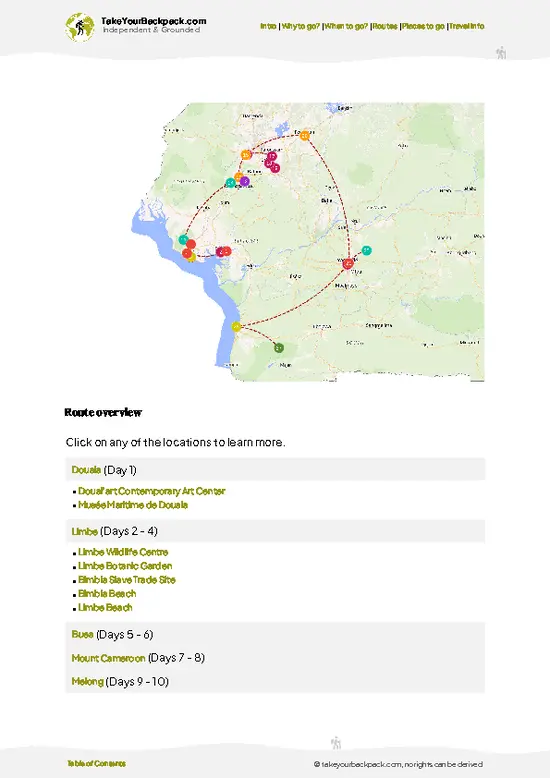
example page 0 from our offline Travel Guide for Cameroon
example page 1 from our offline Travel Guide for Cameroon
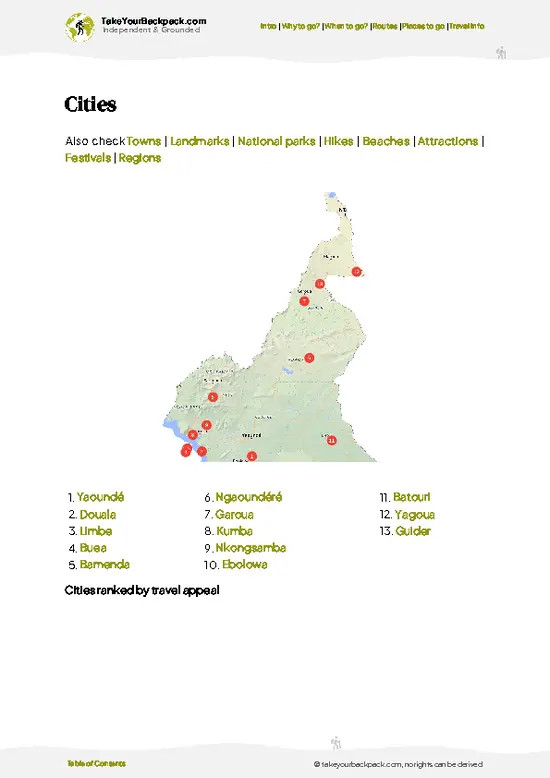
example page 2 from our offline Travel Guide for Cameroon
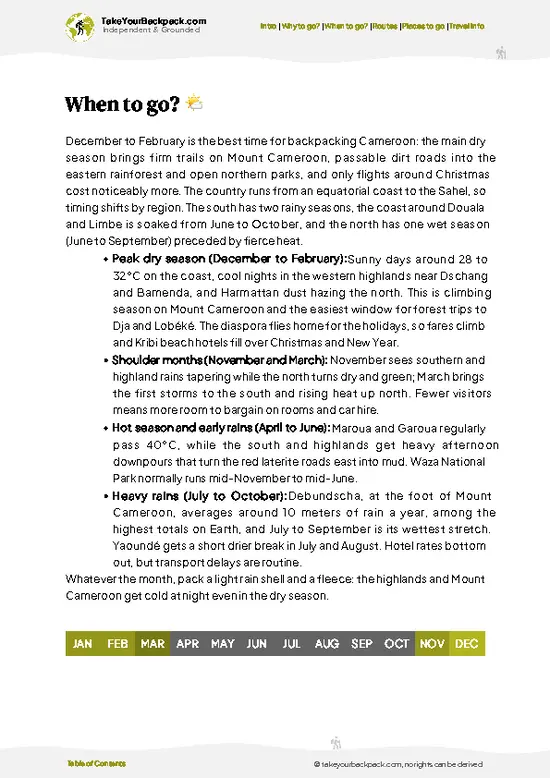
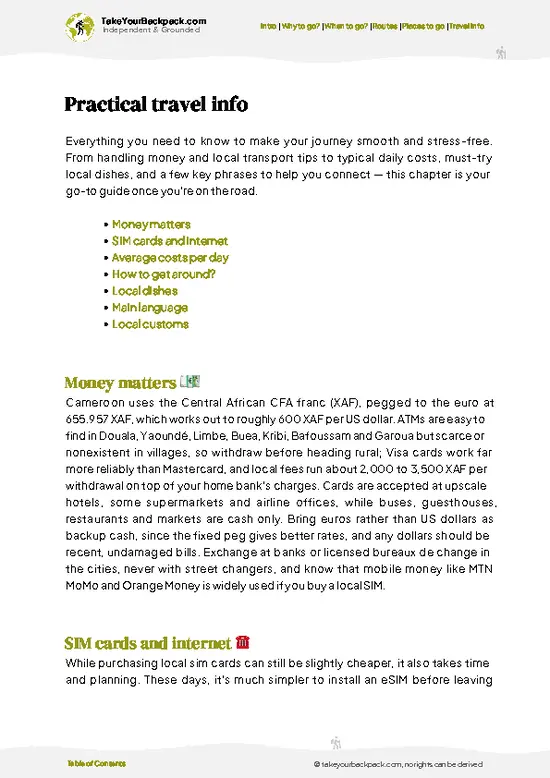
example page 3 from our offline Travel Guide for Cameroon
example page 4 from our offline Travel Guide for Cameroon
example page 5 from our offline Travel Guide for Cameroon
example page 6 from our offline Travel Guide for Cameroon
example page 7 from our offline Travel Guide for Cameroon
The digital guide (383 pages) contains:
95 highlights, ranked by travel appeal
Optimized 7, 14 & 21-day travel routes
Cities, national parks, landmarks, beaches
How to get around
Offline-friendly for travel without Wi-Fi
👉 Click to see all 30+ guide features

📅 Plan smarter in minutes, not weeks
Month by month travel advice
Festivals & national holidays
Budget expectations

🗺️ Go to the right places, skip the overrated ones
Honest pros & cons of destinations
Top hikes, parks & viewpoints
Lesser-known places most travelers miss
Clear “worth it vs skip it” guidance

🛏️ Travel smoothly without rookie mistakes
Best areas to stay
Transport systems explained simply
Common scams & safety advice
SIM cards, money & practical tips

🌍 Understand the country, not just visit it
Culture & traditions
52 Essential phrases & customs
Festivals worth planning around
Traveler-friendly historical context
Insights that make places more meaningful

📱 Built for real travel conditions
Fully downloadable PDF
Works completely offline
Optimized for phone use
Useful in remote areas & buses
Everything in one place
Save weeks of stressful planning
Get instant access to your full guide. 30‑day money-back guarantee.


By proceeding you agree to our terms.
Sent to your inbox immediately after payment • 100% Secure Checkout
Best Backpacking Travel Advisor 2025 tourism awardBest Backpacking
Travel Advisor
2025
What others say about Take Your Backpack Guides:
⭐⭐⭐⭐⭐
Fantastic, amazing amount of information!
⭐⭐⭐⭐⭐
My goodness this is amazing, it's what I've been looking for hats off too you!
⭐⭐⭐⭐⭐
I think this is absolutely BRILLIANT
⭐⭐⭐⭐
Very complete and informative. It's still missing places, but I gotta to commend you
⭐⭐⭐⭐⭐
This is truly amazing, thank you, can't wait to explore it with my kids!
⭐⭐⭐⭐⭐
Awesome resource, thank you!
⭐⭐⭐⭐⭐
This is amazing! Can't wait to explore the ones I haven't seen
⭐⭐⭐⭐
I love this! Well done, great idea.
⭐⭐⭐⭐⭐
Thanks for taking the time to make this gem!
⭐⭐⭐⭐⭐
This might be the best website I've ever seen.
⭐⭐⭐⭐⭐
Congratulations, and thank you so much for your work; it's incredibly valuable.
⭐⭐⭐⭐
In all seriousness I think you did a great job pointing out the important spots
⭐⭐⭐⭐⭐
10/10 very good
⭐⭐⭐⭐⭐
As someone who's only just starting to visit regularly this is awesome, thank you.
⭐⭐⭐⭐
Thank you very much! I'm going to visit my dad, it's going to be very useful!
⭐⭐⭐⭐⭐
This is really cool! We'll be travelling for the first time and this definitely come in handy.
⭐⭐⭐⭐⭐
You are now our minister of culture, congratulations 👨‍💼
⭐⭐⭐⭐⭐
Just wanted to tell you that this is a pearl! Going to follow your recommendations.
⭐⭐⭐⭐⭐
This is so cool. I'll definitely be using the resource for my travels soon.
⭐⭐⭐⭐⭐
This is very impressive! Good work.
⭐⭐⭐⭐⭐
This is an amazing and informative site. Very well done!

🛏️ Where to stay?Where to Stay: Cameroon Edition

Yes — hostels, budget guesthouses and low‑cost hotels are available in Cameroon’s main cities and tourist hubs for backpackers, but they concentrate in Douala, Yaoundé and a few regional towns so expect far fewer options in rural or highland areas and plan accordingly.
In Douala, Akwa offers the widest choice and nightlife with good transport links but only moderate nighttime security; Deïdo is cheapest and closest to markets and bus hubs yet busy and basic with lower safety after dark; Bonapriso gives quieter, safer stays at higher prices.
In Yaoundé, Bastos has safer, quieter expat‑style lodgings that cost more; Mokolo is the cheapest and most central near markets and buses but noisy and … read more 👉
Yes — hostels, budget guesthouses and low‑cost hotels are available in Cameroon’s main cities and tourist hubs for backpackers, but they concentrate in Douala, Yaoundé and a few regional towns so expect far fewer options in rural or highland areas and plan accordingly.
In Douala, Akwa offers the widest choice and nightlife with good transport links but only moderate nighttime security; Deïdo is cheapest and closest to markets and bus hubs yet busy and basic with lower safety after dark; Bonapriso gives quieter, safer stays at higher prices.
In Yaoundé, Bastos has safer, quieter expat‑style lodgings that cost more; Mokolo is the cheapest and most central near markets and buses but noisy and spartan; university areas (Ngoa‑Eké/Melen) host wallet‑friendly guesthouses and lively street food while being noisy and occasionally inconsistent on services.

If you enjoy meeting fellow travelers, consider choosing hostels with high ratings for atmosphere. On the other hand, if you prefer having your own space, a hotel might be a better option.

CameroonExplore Beyond This Category

👋 Meet the founderWho’s Behind Take Your Backpack?

Johan, backpacker and founder of TakeYourBackpackHi, I’m Johan (Netherlands 🇳🇱), the creator of TakeYourBackpack. Over the past decade, I’ve backpacked through 80+ countries across six continents, gaining extensive experience with independent travel, long-term trips, and overland routes.

This site is built on a combination of firsthand travel experience and carefully curated insights from other backpackers. Many guides are based on places I’ve personally visited, while others bring together tips, observations, and practical advice shared by trusted travelers I’ve met along the way.

The goal is to provide realistic, experience-driven guidance — not generic itineraries — so you can explore destinations with better context, clearer expectations, and more confidence.

Get full Cameroon guide •
Instant download • 95 highlights • Full Offline guide