×

Canada🇨🇦 | attractionsCanadian Museum of HistoryTotem poles, Canadian History Hall, children’s museum, Parliament views | things to do and best time to go

Explore Royal Ontario MuseumExplore Art Gallery of Ontario

Backpacking in Canadian Museum of History
🌟 Highlightattraction ranked #6
By Johan Kruseman 🇳🇱 | Updated October 22, 2026

Most people come for the Grand Hall, where Indigenous totem poles stand against a curved glass wall facing the Ottawa River and Parliament Hill. What gets overlooked is how much the building itself teaches: Douglas Cardinal drew its sweeping, wind-carved limestone curves, and the Canadian Children’s Museum sits inside the same complex. It stands in Gatineau, Quebec, across the river from Canada’s capital. Crowds thicken with school groups on weekday mornings, and adult admission runs about US$15 to 20, with extra for special exhibitions, so go with a plan. I asked a museum security guard where to find the best river view, and he grinned, pointed me to the terrace and said, “Go before the buses.” The wet-stone smell and the hush of the cedar poles made him right. A first day could mean the Grand Hall at opening, the History Hall after lunch, then sunset walking the riverside path.

Discover everything you want to know in the 📖 Canada Travel Guide.


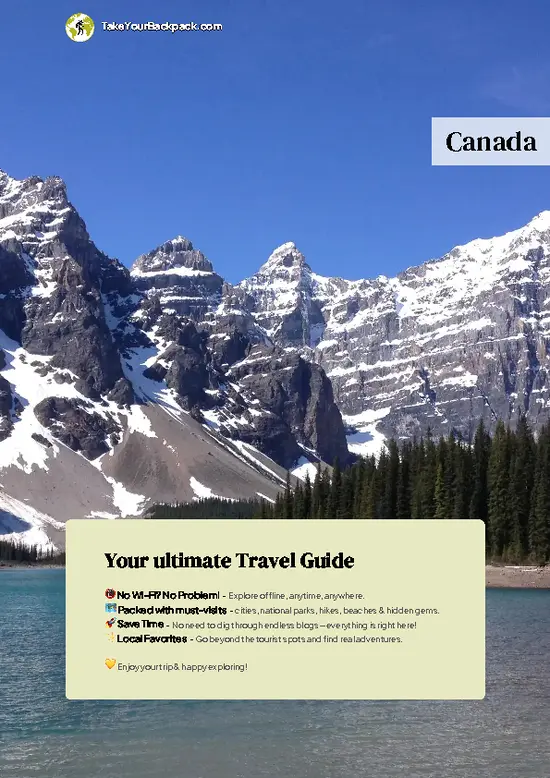
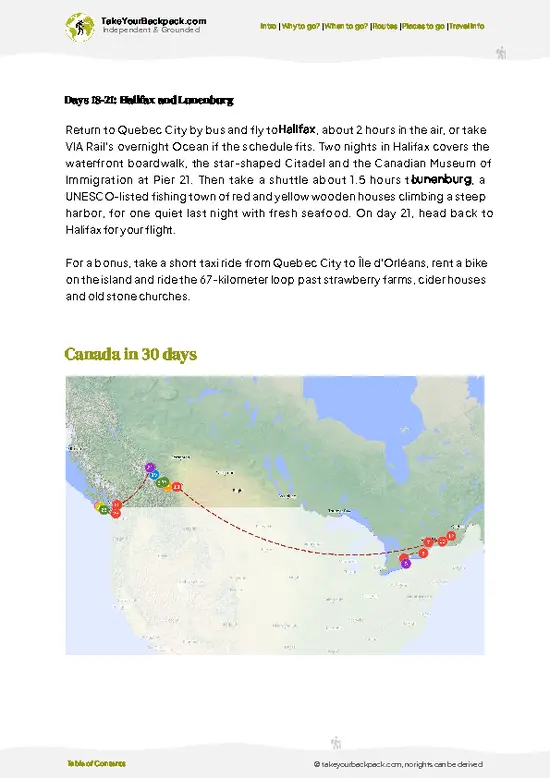
example page 0 from our offline Travel Guide for Canada
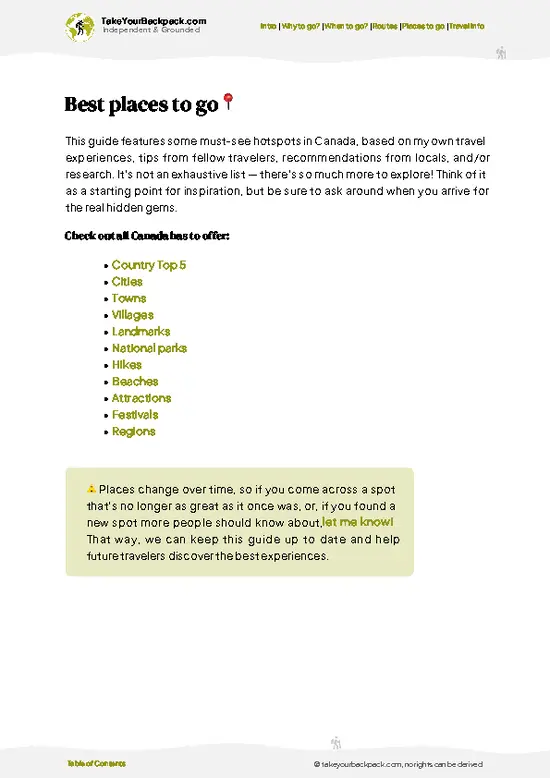
example page 1 from our offline Travel Guide for Canada
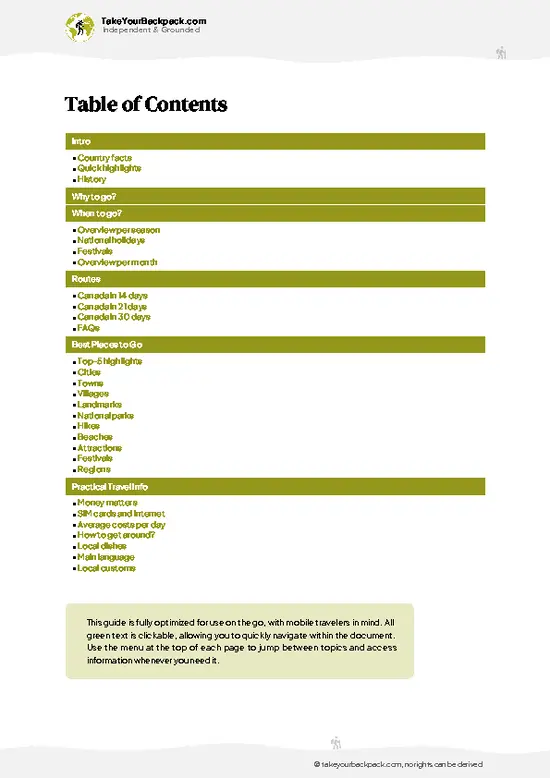
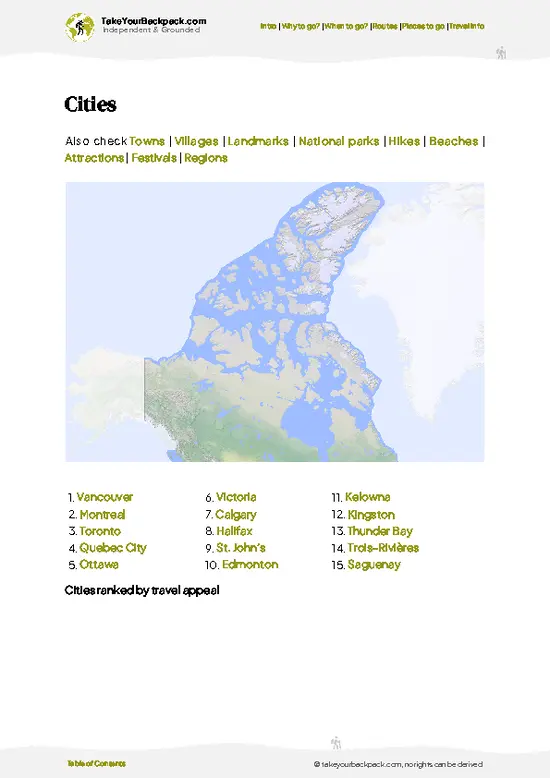
example page 2 from our offline Travel Guide for Canada
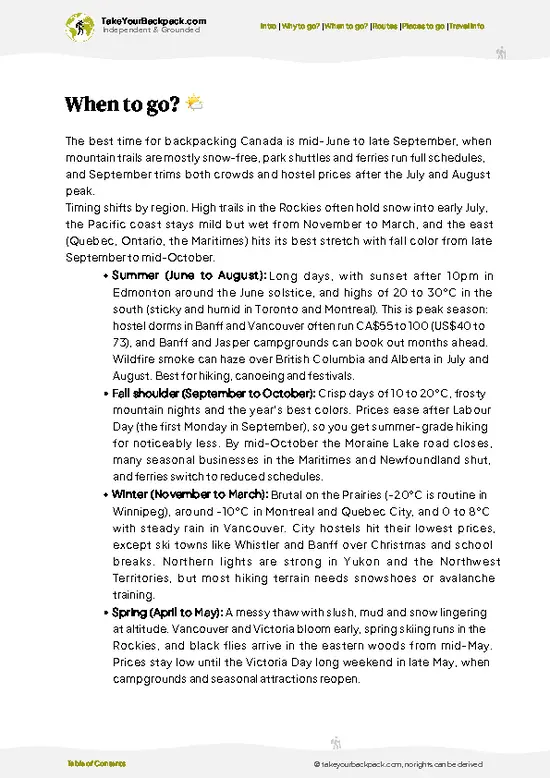
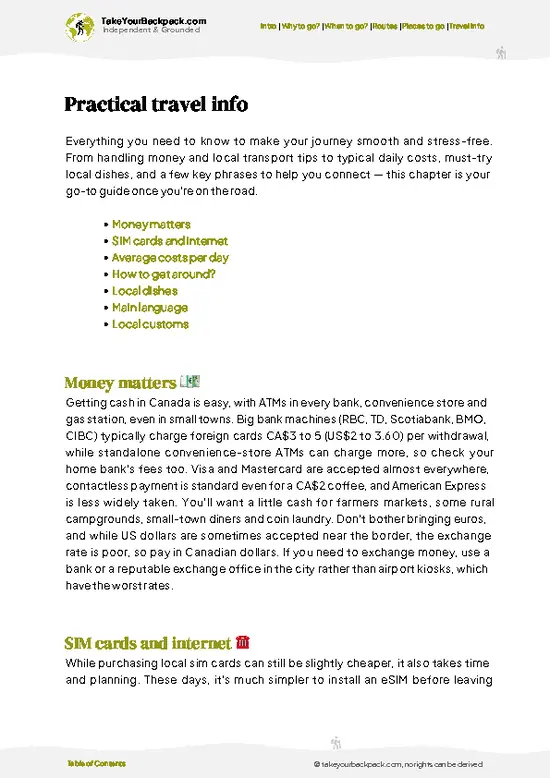
example page 3 from our offline Travel Guide for Canada
example page 4 from our offline Travel Guide for Canada
example page 5 from our offline Travel Guide for Canada
example page 6 from our offline Travel Guide for Canada
example page 7 from our offline Travel Guide for Canada
Loading the map 🌍
CLICK TO FILTER
cities
towns
villages
landmarks
national parks
hikes
beaches
attractions
festivals
regions
SHOW COUNTRY’S BESTSHOW ALL

✨ Why go?
Ranked #6 attraction in Canada
What makes this attraction worth visiting

Canadian Museum of History holds the country’s most complete walk through 15,000 years of human presence, and that is the main reason to visit. The Grand Hall alone justifies the ticket, with its Pacific Northwest Coast Indigenous house fronts and poles shown under a soaring ceiling of glass and light. The History Hall then runs you from Norse landings to the present, which makes it a useful orientation before you hit Quebec City, Montreal or the Maritimes. Context changes how the rest of the trip reads, and few places in the country do that this quickly. It also works as a milestone for any Ottawa stay, since it sits across the river from the Parliament Hill skyline, giving you the best postcard view of the capital for free from its terrace. Pair it with the Gatineau side’s cafes and you … read more 👉
Canadian Museum of History holds the country’s most complete walk through 15,000 years of human presence, and that is the main reason to visit. The Grand Hall alone justifies the ticket, with its Pacific Northwest Coast Indigenous house fronts and poles shown under a soaring ceiling of glass and light. The History Hall then runs you from Norse landings to the present, which makes it a useful orientation before you hit Quebec City, Montreal or the Maritimes. Context changes how the rest of the trip reads, and few places in the country do that this quickly. It also works as a milestone for any Ottawa stay, since it sits across the river from the Parliament Hill skyline, giving you the best postcard view of the capital for free from its terrace. Pair it with the Gatineau side’s cafes and you see a French-speaking Canada that many first-timers skip.

💡 HighlightsTop highlights of Canadian Museum of History

  1. Grand Hall: The signature space, with Indigenous totem poles and house fronts from the Pacific Northwest Coast rising beneath tall windows over the river.
  2. Canadian History Hall: A chronological walk of about 1,500 artifacts, from Viking-era contact to modern Canada, told through objects, voices and short films.
  3. First Peoples Hall: Shows Indigenous histories and cultures across the country, including art, clothing and tools, with an emphasis on living communities.
  4. Canadian Children’s Museum: A hands-on world of play zones and a Global Village, which is fun even for adults traveling without kids.
  5. Riverside terrace: A free outdoor viewpoint across the Ottawa River to Parliament Hill, especially good for photographs in morning light.
Canadian Museum of History takes about three to four hours to cover … read more 👉
  1. Grand Hall: The signature space, with Indigenous totem poles and house fronts from the Pacific Northwest Coast rising beneath tall windows over the river.
  2. Canadian History Hall: A chronological walk of about 1,500 artifacts, from Viking-era contact to modern Canada, told through objects, voices and short films.
  3. First Peoples Hall: Shows Indigenous histories and cultures across the country, including art, clothing and tools, with an emphasis on living communities.
  4. Canadian Children’s Museum: A hands-on world of play zones and a Global Village, which is fun even for adults traveling without kids.
  5. Riverside terrace: A free outdoor viewpoint across the Ottawa River to Parliament Hill, especially good for photographs in morning light.
Canadian Museum of History takes about three to four hours to cover well, or a full day if you add the Children’s Museum.
Spotted a mistake or missing something? Contact us.

Things to do around Canadian Museum of History

Ratings based on Tripadvisor reviews. When you book through this link, you support our work at no extra cost to you.

🌤️ When to go?When to go for the best experience

  • Summer (June to August): Highs run 24 to 27°C (75 to 81°F) with long daylight, and the museum’s riverside terrace plus Gatineau’s Jacques-Cartier Park are at their best. School groups and tour buses peak, and Ottawa hotel prices are highest.
  • Fall (September to October): Temperatures sit at 8 to 18°C (46 to 64°F), crowds thin, and the maples across the river turn color. Rates drop noticeably after Labor Day.
  • Winter (December to March): Expect -15 to -3°C (5 to 27°F) and short days, but the museum is heated and quiet, and Winterlude in February brings ice sculptures and skating nearby. Beds are cheapest.
  • Spring (April to May): Cool at 3 to 15°C (37 to 59°F) with muddy shoulder-season gloom early on, then tulips bloom in May. Crowds are light until the festival weekends.
Go on a weekday morning outside … read more 👉
  • Summer (June to August): Highs run 24 to 27°C (75 to 81°F) with long daylight, and the museum’s riverside terrace plus Gatineau’s Jacques-Cartier Park are at their best. School groups and tour buses peak, and Ottawa hotel prices are highest.
  • Fall (September to October): Temperatures sit at 8 to 18°C (46 to 64°F), crowds thin, and the maples across the river turn color. Rates drop noticeably after Labor Day.
  • Winter (December to March): Expect -15 to -3°C (5 to 27°F) and short days, but the museum is heated and quiet, and Winterlude in February brings ice sculptures and skating nearby. Beds are cheapest.
  • Spring (April to May): Cool at 3 to 15°C (37 to 59°F) with muddy shoulder-season gloom early on, then tulips bloom in May. Crowds are light until the festival weekends.
Go on a weekday morning outside July and August to have the Grand Hall nearly to yourself.


source: climatestotravel.comJANJanuary: below average for travelingFEBFebruary: below average for travelingMARMarch: fair for travelingAPRApril: good for travelingMAYMay: highly recommended for travelingJUNJune: highly recommended for travelingJULJuly: good for travelingAUGAugust: good for travelingSEPSeptember: highly recommended for travelingOCTOctober: highly recommended for travelingNOVNovember: fair for travelingDECDecember: below average for traveling
when-to-go

✈️ The backpacker research shortcutCanada Travel Guide

An offline-friendly backpacking guide with optimized travel routes, ranked highlights, transport advice, and the best areas to stay.
example page 0 from our offline Travel Guide for Canada
example page 1 from our offline Travel Guide for Canada
example page 2 from our offline Travel Guide for Canada
example page 3 from our offline Travel Guide for Canada
example page 4 from our offline Travel Guide for Canada
example page 5 from our offline Travel Guide for Canada
example page 6 from our offline Travel Guide for Canada
example page 7 from our offline Travel Guide for Canada
The digital guide (385 pages) contains:
✅ 125 highlights, ranked by travel appeal
✅ Optimized 14, 21 & 30-day travel routes
✅ Cities, national parks, landmarks, beaches
✅ How to get around
✅ Offline-friendly for travel without Wi-Fi
👉 Click to see all 30+ guide features

📅 Plan smarter in minutes, not weeks
✅ Month by month travel advice
✅ Festivals & national holidays
✅ Budget expectations

🗺️ Go to the right places, skip the overrated ones
✅ Honest pros & cons of destinations
✅ Top hikes, parks & viewpoints
✅ Lesser-known places most travelers miss
✅ Clear “worth it vs skip it” guidance

🛏️ Travel smoothly without rookie mistakes
✅ Best areas to stay
✅ Transport systems explained simply
✅ Common scams & safety advice
✅ SIM cards, money & practical tips

🌍 Understand the country, not just visit it
✅ Culture & traditions
✅ Local customs
✅ Festivals worth planning around
✅ Traveler-friendly historical context
✅ Insights that make places more meaningful

📱 Built for real travel conditions
✅ Fully downloadable PDF
✅ Works completely offline
✅ Optimized for phone use
✅ Useful in remote areas & buses
✅ Everything in one place
Stop searching, start planning
Get instant access to your full guide. 30‑day money-back guarantee.
+ Add another guide for just

By proceeding you agree to our terms.
Sent to your inbox immediately after payment • 100% Secure Checkout
Best Backpacking Travel Advisor 2025 tourism awardBest Backpacking
Travel Advisor
2025
What others say about Take Your Backpack Guides:
⭐⭐⭐⭐⭐
Fantastic, amazing amount of information!
⭐⭐⭐⭐⭐
My goodness this is amazing, it's what I've been looking for hats off too you!
⭐⭐⭐⭐⭐
I think this is absolutely BRILLIANT
⭐⭐⭐⭐
Very complete and informative. It's still missing places, but I gotta to commend you
⭐⭐⭐⭐⭐
This is truly amazing, thank you, can't wait to explore it with my kids!
⭐⭐⭐⭐⭐
Awesome resource, thank you!
⭐⭐⭐⭐⭐
This is amazing! Can't wait to explore the ones I haven't seen
⭐⭐⭐⭐
I love this! Well done, great idea.
⭐⭐⭐⭐⭐
Thanks for taking the time to make this gem!
⭐⭐⭐⭐⭐
This might be the best website I've ever seen.
⭐⭐⭐⭐⭐
Congratulations, and thank you so much for your work; it's incredibly valuable.
⭐⭐⭐⭐
In all seriousness I think you did a great job pointing out the important spots
⭐⭐⭐⭐⭐
10/10 very good
⭐⭐⭐⭐⭐
As someone who's only just starting to visit regularly this is awesome, thank you.
⭐⭐⭐⭐
Thank you very much! I'm going to visit my dad, it's going to be very useful!
⭐⭐⭐⭐⭐
This is really cool! We'll be travelling for the first time and this definitely come in handy.
⭐⭐⭐⭐⭐
You are now our minister of culture, congratulations 👨‍💼
⭐⭐⭐⭐⭐
Just wanted to tell you that this is a pearl! Going to follow your recommendations.
⭐⭐⭐⭐⭐
This is so cool. I'll definitely be using the resource for my travels soon.
⭐⭐⭐⭐⭐
This is very impressive! Good work.
⭐⭐⭐⭐⭐
This is an amazing and informative site. Very well done!

🛏️ Where to stay?How to pick the right area

Downtown Ottawa, especially the ByWard Market area, is the best base for backpackers, because the museum is a 20 to 25 minute walk or short bus ride across the Alexandra Bridge. The Market has the densest cluster of hostels, pubs, cheap eats and late-night foot traffic, so solo travelers meet people easily and rarely walk home alone through empty streets. It is lively on weekend nights, so light sleepers should ask for a rear-facing room.

Centretown and the Elgin Street strip, about 15 minutes' walk south of Parliament Hill, are calmer. You get diners, grocery stores and a more local feel, with … read more 👉
Downtown Ottawa, especially the ByWard Market area, is the best base for backpackers, because the museum is a 20 to 25 minute walk or short bus ride across the Alexandra Bridge. The Market has the densest cluster of hostels, pubs, cheap eats and late-night foot traffic, so solo travelers meet people easily and rarely walk home alone through empty streets. It is lively on weekend nights, so light sleepers should ask for a rear-facing room.

Centretown and the Elgin Street strip, about 15 minutes' walk south of Parliament Hill, are calmer. You get diners, grocery stores and a more local feel, with slightly lower prices than the Market. Sandy Hill, near the University of Ottawa, suits longer stays with student-priced cafes and quiet tree-lined streets, and it is well connected by bus to the museum.

Staying in downtown Gatineau puts you closest to the museum, but nightlife is thinner and hostel options are limited. Most budget travelers prefer Ottawa for the choice and the social scene, then cross the bridge by foot or OC Transpo or STO bus. Book ahead in summer, when dorm beds fill several weeks out.

👛 Costs (as of 22 October 2026)Typical daily expenses

A day at the Canadian Museum of History in Gatineau, Quebec costs roughly US$75 for a backpacker who covers admission, lunch, local transit and a dorm bed. Admission for adults runs about US$13 to 15 (paid in Canadian dollars), with discounts for students and youth. Ottawa sits just across the river, so most travelers sleep there and cross by bus or on foot.
CategoryBudget RangeLocal Reality
Museum admissionUS$10 to 15Adults pay at the top of this range; students with ID and seniors pay less, and children under 3 are free. Some evenings and special days bring reduced rates.
Special exhibitionsUS$0 to 10Many temporary shows are included in the ticket, while a few large ones add a surcharge.
Local transportUS$2 to 7A single bus fare is about US$2.50 to 3.50 on OC Transpo or STO; a day pass costs
… read more 👉
A day at the Canadian Museum of History in Gatineau, Quebec costs roughly US$75 for a backpacker who covers admission, lunch, local transit and a dorm bed. Admission for adults runs about US$13 to 15 (paid in Canadian dollars), with discounts for students and youth. Ottawa sits just across the river, so most travelers sleep there and cross by bus or on foot.
CategoryBudget RangeLocal Reality
Museum admissionUS$10 to 15Adults pay at the top of this range; students with ID and seniors pay less, and children under 3 are free. Some evenings and special days bring reduced rates.
Special exhibitionsUS$0 to 10Many temporary shows are included in the ticket, while a few large ones add a surcharge.
Local transportUS$2 to 7A single bus fare is about US$2.50 to 3.50 on OC Transpo or STO; a day pass costs more but suits a few crossings.
LunchUS$8 to 18The museum cafe sells sandwiches and soups at the upper end. Gatineau eateries nearby and grocery stores in Ottawa cost less.
Accommodation, high season (June to September)US$35 to 55Hostel dorm beds in downtown Ottawa, a short bus ride or a walk across the Alexandra Bridge from the museum.
Accommodation, low season (November to March)US$25 to 40Dorm rates drop noticeably outside summer and holiday weekends.
Parking, if drivingUS$8 to 13The on-site lot charges a daily rate; most backpackers skip it.
Total Daily BudgetUS$75Covers admission, lunch, transit and a high-season dorm bed.
⚠️ Prices can change and everyone travels differently, so take this as a rough guide. Hope it helps you plan your adventure!

FAQFrequently asked questions about Canadian Museum of History

Plan on 3 to 4 hours for the Canadian Museum of History if you want the Grand Hall and the Canadian History Hall. The Canadian History Hall alone covers about 15,000 years and takes 2 to 3 hours at a steady pace. Add another hour for a temporary exhibition or the Canadian Children’s Museum. Families and history enthusiasts can easily fill a full day.
Yes, the Canadian Museum of History is worth the roughly US$10 to 17 adult admission for most travelers. The Grand Hall holds towering Pacific Northwest Indigenous totem poles, and the Canadian History Hall is among the largest permanent exhibits in the country. Students and seniors get discounts, and the windows frame Parliament Hill across the Ottawa River. Free evenings or special offers sometimes apply, so check the museum website before you go.
The Canadian Museum of History sits in Gatineau, Quebec, directly across the Ottawa River from downtown Ottawa. From Parliament Hill it is a 20 to 30 minute walk over the Alexandra Bridge. OC Transpo and STO buses make the trip in about 10 to 15 minutes for roughly US$3 to 4. Drivers can use the on-site paid parking lot.
⚠️ Things can change over time, so always validate details locally before you go.

Other Canadian attractions near Canadian Museum of History

Explore more nearby:


💡 Not sure where to go next?
Create a personalized itinerary for Canada including Canadian Museum of History and the places that fit your trip.

Generate my itinerary

👉 Discover all attractions

Or checkout all Canada has to offer (think cities, towns, villages, national parks, hikes, beaches, festivals)
Country photo of Canada

We 💚 feedbackKey takeaways before you go

Canadian Museum of History deserves a full half day, and a whole day if you add the Children’s Museum. If you only have two hours, I would spend the time in the Grand Hall and History Hall. Bring a light layer, since galleries run cool.

✈️ When did I visit Canada?
As part of my 1.5 year travel around the world trip, I visited Canada in 2016.

✍️ Help improve this page!
The information on this page is based on my own backpacking experience in Canada, supplemented with up-to-date research and feedback from other travelers. Travel details can change, so if you notice anything outdated or incomplete, feel free to let me know.


🙋‍♂️ Give feedback

👋 Meet the founderWho’s Behind Take Your Backpack?

Johan, backpacker and founder of TakeYourBackpackHi, I’m Johan (Netherlands 🇳🇱), the creator of TakeYourBackpack. Over the past 3 decades, I’ve backpacked through 90+ countries across six continents, gaining extensive experience with independent travel, long-term trips, and overland routes.

This site is built on a combination of firsthand travel experience and carefully curated insights from other backpackers. Many guides are based on places I’ve personally visited, while others bring together tips, observations, and practical advice shared by trusted travelers I’ve met along the way.

The goal is to provide realistic, experience-driven guidance — not generic itineraries — so you can explore destinations with better context, clearer expectations, and more confidence.