
×

Canada🇨🇦 | villagesLunenburgPainted waterfront, dory shop, Bluenose II, harbor chowder | things to do and best time to go

Explore Niagara FallsExplore St. Andrews by-the-Sea

Backpacking in Lunenburg
🌟 Highlightvillage ranked #3
By Johan Kruseman 🇳🇱 | Updated October 22, 2026

A steamer of Solomon Gundy herring and a bowl of seafood chowder hit the table at a waterfront spot, the harbor smelling of diesel, salt and fried haddock, and the bill came to about US$22 with tip. Lunenburg sits on Nova Scotia’s South Shore in Canada, roughly an hour southwest of Halifax. The painted wooden waterfront of the old town is a UNESCO World Heritage Site, and the steep grid of streets climbs from the harbor past gingerbread-trimmed houses. Good: walkable, gorgeous at dusk, close to Blue Rocks and Mahone Bay. Bad: summer crowds, pricey rooms, and evenings that go quiet early, with a few pubs and the occasional fiddle night as the main social scene. Meeting other travelers is easy at hostel-style stays and on the Bluenose II dock. For a first day, walk the waterfront, climb to the Academy hill for the view, eat a late lunch, then catch sunset from the harbor.

Discover everything you want to know in the 📖 Canada Travel Guide.


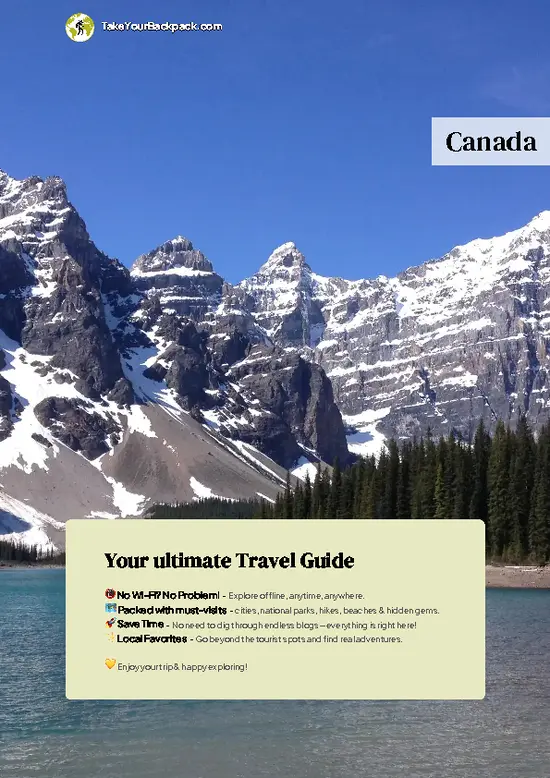
example page 0 from our offline Travel Guide for Canada
example page 1 from our offline Travel Guide for Canada
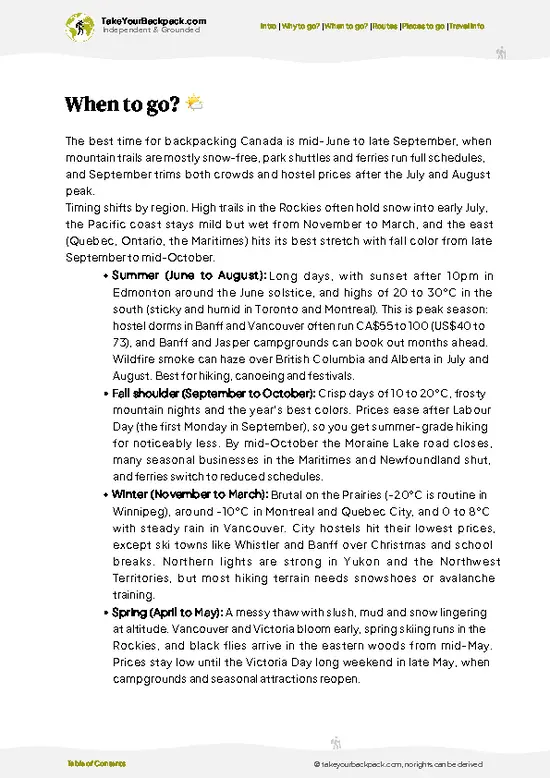
example page 2 from our offline Travel Guide for Canada
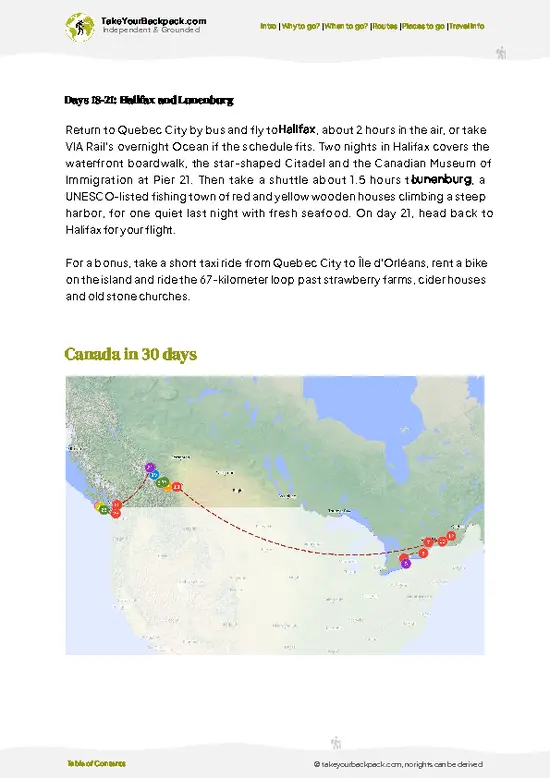
example page 3 from our offline Travel Guide for Canada
example page 4 from our offline Travel Guide for Canada
example page 5 from our offline Travel Guide for Canada
example page 6 from our offline Travel Guide for Canada
example page 7 from our offline Travel Guide for Canada
Loading the map 🌍
CLICK TO FILTER
cities
towns
villages
landmarks
national parks
hikes
beaches
attractions
festivals
regions
SHOW COUNTRY’S BESTSHOW ALL

✨ Why go?
Ranked #3 village in Canada
The unique appeal for travelers

Lunenburg earns a stop because it is a working fishing port that still smells like one, with the schooner Bluenose II tied up at the wharf and trawlers unloading beside it. The old town is compact, so you can see it on foot and linger without a plan. Most backpackers stay one or two nights, and those with a slow-travel streak stretch to three, using the town as a base for the coast. Kayaking, cycling and short coastal walks are close, and the painted village of Blue Rocks is a short ride away. It suits couples, photographers, history-minded solo travelers and anyone breaking up the drive between Halifax and the Annapolis Valley or Cape Breton. The town is calm rather than social, so if you want hostel parties or nightlife, push on. If you want a harbor, good seafood and quiet streets after … read more 👉
Lunenburg earns a stop because it is a working fishing port that still smells like one, with the schooner Bluenose II tied up at the wharf and trawlers unloading beside it. The old town is compact, so you can see it on foot and linger without a plan. Most backpackers stay one or two nights, and those with a slow-travel streak stretch to three, using the town as a base for the coast. Kayaking, cycling and short coastal walks are close, and the painted village of Blue Rocks is a short ride away. It suits couples, photographers, history-minded solo travelers and anyone breaking up the drive between Halifax and the Annapolis Valley or Cape Breton. The town is calm rather than social, so if you want hostel parties or nightlife, push on. If you want a harbor, good seafood and quiet streets after dark, Lunenburg fits the pause between busier stops.

💡 HighlightsKey sights and experiences for travelers

  1. Old Town Lunenburg Walk: The UNESCO-listed grid of brightly painted wooden buildings, many with the distinctive “Lunenburg bump” dormers, is the reason people come. Wander Montague, Lincoln and Pleasant Streets, and climb to St. John’s Anglican Church. Free, 2 to 3 hours, best in early morning or around golden hour when crowds thin.
  2. Fisheries Museum of the Atlantic: Set on the harbor, it houses working vessels, an aquarium, a dory shop and a visitor-friendly look at the offshore fishing trade. Expect US$12 to 17 for adults in season, 1.5 to 2 hours. Go on a drizzly day or mid-morning before tour groups arrive.
  3. Bluenose II Waterfront: The sailing ship, a replica of the famed racing schooner pictured on the Canadian dime, docks along the wharf in summer. Viewing from the dock is free, 20 to 30
… read more 👉
  1. Old Town Lunenburg Walk: The UNESCO-listed grid of brightly painted wooden buildings, many with the distinctive “Lunenburg bump” dormers, is the reason people come. Wander Montague, Lincoln and Pleasant Streets, and climb to St. John’s Anglican Church. Free, 2 to 3 hours, best in early morning or around golden hour when crowds thin.
  2. Fisheries Museum of the Atlantic: Set on the harbor, it houses working vessels, an aquarium, a dory shop and a visitor-friendly look at the offshore fishing trade. Expect US$12 to 17 for adults in season, 1.5 to 2 hours. Go on a drizzly day or mid-morning before tour groups arrive.
  3. Bluenose II Waterfront: The sailing ship, a replica of the famed racing schooner pictured on the Canadian dime, docks along the wharf in summer. Viewing from the dock is free, 20 to 30 minutes, while sailing trips run roughly US$40 to 70 for a couple of hours depending on the vessel and season. Evening light on the rigging is best.
Day trips from Lunenburg include Mahone Bay with its three waterfront churches, the painted fishing shacks at Blue Rocks, and Oak Island, famous for treasure-hunting legend. Start with the Old Town Lunenburg Walk, because the town’s character shows best before you decide where to spend money, and the early light and empty lanes make the ideal introduction.
Spotted a mistake or missing something? Contact us.

Things to do around Lunenburg

Ratings based on Tripadvisor reviews. When you book through this link, you support our work at no extra cost to you.

🌤️ When to go?Best time to visit Lunenburg

  • Summer (July to August): Lunenburg runs warmest and busiest, with highs around 22 to 25°C (72 to 77°F), cool nights near 13°C (55°F), and daylight past 8 pm. Harbor patios fill, the Folk Harbour Festival draws crowds, and beds cost the most.
  • Early Autumn (September to October): Highs of 14 to 20°C (57 to 68°F), thinner crowds and turning maples along the shore roads. Fog is common, and prices ease after Labor Day.
  • Winter (December to March): Highs hover between -4 and 3°C (25 to 37°F), daylight lasts only about 9 hours, and many seasonal restaurants and tours close. Rooms are cheapest, but you will have the colorful waterfront nearly to yourself.
  • Spring (April to June): Cool and damp, with highs of 8 to 18°C (46 to 64°F) and frequent sea fog. Shops reopen gradually from May, and rates stay moderate.
… read more 👉
  • Summer (July to August): Lunenburg runs warmest and busiest, with highs around 22 to 25°C (72 to 77°F), cool nights near 13°C (55°F), and daylight past 8 pm. Harbor patios fill, the Folk Harbour Festival draws crowds, and beds cost the most.
  • Early Autumn (September to October): Highs of 14 to 20°C (57 to 68°F), thinner crowds and turning maples along the shore roads. Fog is common, and prices ease after Labor Day.
  • Winter (December to March): Highs hover between -4 and 3°C (25 to 37°F), daylight lasts only about 9 hours, and many seasonal restaurants and tours close. Rooms are cheapest, but you will have the colorful waterfront nearly to yourself.
  • Spring (April to June): Cool and damp, with highs of 8 to 18°C (46 to 64°F) and frequent sea fog. Shops reopen gradually from May, and rates stay moderate.
Book summer weekends a month or more ahead, or arrive midweek in September for easier beds.


source: climatestotravel.comJANJanuary: below average for travelingFEBFebruary: below average for travelingMARMarch: fair for travelingAPRApril: good for travelingMAYMay: highly recommended for travelingJUNJune: excellent for travelingJULJuly: good for travelingAUGAugust: good for travelingSEPSeptember: highly recommended for travelingOCTOctober: good for travelingNOVNovember: fair for travelingDECDecember: below average for traveling
canada-city-lunenburg
© Google |

✈️ The backpacker research shortcutCanada Travel Guide

An offline-friendly backpacking guide with optimized travel routes, ranked highlights, transport advice, and the best areas to stay.
example page 0 from our offline Travel Guide for Canada
example page 1 from our offline Travel Guide for Canada
example page 2 from our offline Travel Guide for Canada
example page 3 from our offline Travel Guide for Canada
example page 4 from our offline Travel Guide for Canada
example page 5 from our offline Travel Guide for Canada
example page 6 from our offline Travel Guide for Canada
example page 7 from our offline Travel Guide for Canada
The digital guide (385 pages) contains:
✅ 125 highlights, ranked by travel appeal
✅ Optimized 14, 21 & 30-day travel routes
✅ Cities, national parks, landmarks, beaches
✅ How to get around
✅ Offline-friendly for travel without Wi-Fi
👉 Click to see all 30+ guide features

📅 Plan smarter in minutes, not weeks
✅ Month by month travel advice
✅ Festivals & national holidays
✅ Budget expectations

🗺️ Go to the right places, skip the overrated ones
✅ Honest pros & cons of destinations
✅ Top hikes, parks & viewpoints
✅ Lesser-known places most travelers miss
✅ Clear “worth it vs skip it” guidance

🛏️ Travel smoothly without rookie mistakes
✅ Best areas to stay
✅ Transport systems explained simply
✅ Common scams & safety advice
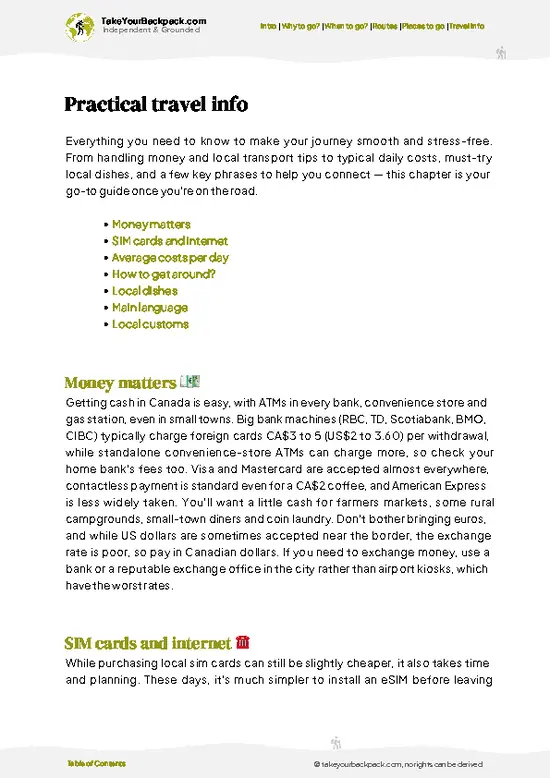
✅ SIM cards, money & practical tips

🌍 Understand the country, not just visit it
✅ Culture & traditions
✅ Local customs
✅ Festivals worth planning around
✅ Traveler-friendly historical context
✅ Insights that make places more meaningful

📱 Built for real travel conditions
✅ Fully downloadable PDF
✅ Works completely offline
✅ Optimized for phone use
✅ Useful in remote areas & buses
✅ Everything in one place
Stop searching, start planning
Get instant access to your full guide. 30‑day money-back guarantee.
+ Add another guide for just

By proceeding you agree to our terms.
Sent to your inbox immediately after payment • 100% Secure Checkout
Best Backpacking Travel Advisor 2025 tourism awardBest Backpacking
Travel Advisor
2025
What others say about Take Your Backpack Guides:
⭐⭐⭐⭐⭐
Fantastic, amazing amount of information!
⭐⭐⭐⭐⭐
My goodness this is amazing, it's what I've been looking for hats off too you!
⭐⭐⭐⭐⭐
I think this is absolutely BRILLIANT
⭐⭐⭐⭐
Very complete and informative. It's still missing places, but I gotta to commend you
⭐⭐⭐⭐⭐
This is truly amazing, thank you, can't wait to explore it with my kids!
⭐⭐⭐⭐⭐
Awesome resource, thank you!
⭐⭐⭐⭐⭐
This is amazing! Can't wait to explore the ones I haven't seen
⭐⭐⭐⭐
I love this! Well done, great idea.
⭐⭐⭐⭐⭐
Thanks for taking the time to make this gem!
⭐⭐⭐⭐⭐
This might be the best website I've ever seen.
⭐⭐⭐⭐⭐
Congratulations, and thank you so much for your work; it's incredibly valuable.
⭐⭐⭐⭐
In all seriousness I think you did a great job pointing out the important spots
⭐⭐⭐⭐⭐
10/10 very good
⭐⭐⭐⭐⭐
As someone who's only just starting to visit regularly this is awesome, thank you.
⭐⭐⭐⭐
Thank you very much! I'm going to visit my dad, it's going to be very useful!
⭐⭐⭐⭐⭐
This is really cool! We'll be travelling for the first time and this definitely come in handy.
⭐⭐⭐⭐⭐
You are now our minister of culture, congratulations 👨‍💼
⭐⭐⭐⭐⭐
Just wanted to tell you that this is a pearl! Going to follow your recommendations.
⭐⭐⭐⭐⭐
This is so cool. I'll definitely be using the resource for my travels soon.
⭐⭐⭐⭐⭐
This is very impressive! Good work.
⭐⭐⭐⭐⭐
This is an amazing and informative site. Very well done!

🛏️ Where to stay?Choosing the right base

Lunenburg has no true hostel, so backpackers rely on guesthouses, small inns and campgrounds, with the best options within walking distance of the waterfront. Expect US$90 to 150 for a basic room in summer, dropping to US$60 to 100 off-season.
Old Town guesthouses and B&Bs: The heritage district on the hill is the best base. Streets are steep but compact, and the Front Street harbor, bakeries and pubs are minutes on foot. Rooms in converted merchant houses are often small, but breakfast is usually included, which stretches a budget.
Budget motels on the edge of town: A short walk or drive outside … read more 👉
Lunenburg has no true hostel, so backpackers rely on guesthouses, small inns and campgrounds, with the best options within walking distance of the waterfront. Expect US$90 to 150 for a basic room in summer, dropping to US$60 to 100 off-season.
Old Town guesthouses and B&Bs: The heritage district on the hill is the best base. Streets are steep but compact, and the Front Street harbor, bakeries and pubs are minutes on foot. Rooms in converted merchant houses are often small, but breakfast is usually included, which stretches a budget.
Budget motels on the edge of town: A short walk or drive outside the center, these run about US$80 to 130 in summer. They suit travelers with a car who want easy parking, which is scarce in the Old Town.
Campgrounds: Several seaside and lakeside campgrounds sit within roughly 10 to 25 minutes by car, with tent sites around US$30 to 45 a night. Most open from May to October.
Splurge: A harborfront inn with water views costs US$200 or more in July and August, and is worth it for one night if you want to watch the fishing boats and schooner from your window.

🚌 Day tripsWhere to go beyond the main area

Lunenburg works well as a base for day trips if you have a car, because public transit in this part of Nova Scotia is minimal. Budget about US$40 to 70 per day for fuel and parking, and most outings return by dinner.
Peggy’s Cove:
The lighthouse on bare granite is the province’s most photographed scene, about 1 hour 10 minutes by road. Go early on a weekday in June or September to beat the tour buses. First-timers often walk onto the dark wet rocks near the surf, which is dangerous, so stay on the pale dry stone. Entry is free.

Mahone Bay:
Three churches line the water in a row, and the town’s shops, bakeries and paddling outfitters make an easy half day, about 20 minutes away. Rent a kayak for roughly US$40 to 60, or just walk the waterfront. July to September is liveliest, and the Scarecrow … read more 👉
Lunenburg works well as a base for day trips if you have a car, because public transit in this part of Nova Scotia is minimal. Budget about US$40 to 70 per day for fuel and parking, and most outings return by dinner.
Peggy’s Cove:
The lighthouse on bare granite is the province’s most photographed scene, about 1 hour 10 minutes by road. Go early on a weekday in June or September to beat the tour buses. First-timers often walk onto the dark wet rocks near the surf, which is dangerous, so stay on the pale dry stone. Entry is free.

Mahone Bay:
Three churches line the water in a row, and the town’s shops, bakeries and paddling outfitters make an easy half day, about 20 minutes away. Rent a kayak for roughly US$40 to 60, or just walk the waterfront. July to September is liveliest, and the Scarecrow Festival in early October is a local favorite.

Oak Island and Chester:
Chester is a quiet summer-resort town with a ferry to Tancook Island, about 35 minutes by car. Pair it with a drive along the Lighthouse Route, and allow 4 to 5 hours with stops. Oak Island’s treasure site is private property, open only on pre-booked guided tours from the interpretive centre at Martin’s Point, so book ahead if you want to see it.

Kejimkujik Seaside:
The wild coast at Port Joli offers empty beaches, seal colonies and forest trails, around 1 hour 15 minutes from Lunenburg. Park entry is roughly US$5 to 6 per adult. Visit June to September for the best walking weather, and bring bug repellent.

FAQTraveler FAQ

Lunenburg is reached by car in about 1 hour 15 minutes from Halifax, roughly 100 kilometers southwest via Highway 103 and Exit 10. Halifax Stanfield Airport is about 1 hour 40 minutes away, and rental cars start around US$40 to 70 a day. Public transit is limited, so driving or booking a seasonal shuttle from Halifax is the practical route.
Lunenburg is worth the trip for its UNESCO-listed Old Town, a grid of brightly painted wooden buildings from the 1700s and 1800s climbing from the harbor. Plan one to two days to see the Fisheries Museum of the Atlantic (about US$15 to 20 entry), the waterfront and the seafood restaurants. It suits travelers who like history and the coast more than nightlife.
Lunenburg can be done as a day trip from Halifax, since the drive is about 1 hour 15 minutes each way. That gives you four to six hours for the Old Town, the museum and a harbor lunch, with fuel costing roughly US$15 to 25 round trip. Staying one night lets you add Mahone Bay or Peggy’s Cove without rushing, and evenings are quieter once the day crowds leave.
⚠️ Things can change over time, so always validate details locally before you go.

Other Canadian villages near Lunenburg

Explore more nearby:

  • St. Andrews by-the-Sea—Tide table, sandbar crossing, Kingsbrae alpacas, wharf kayaks| 230 km away
  • Tadoussac—Fjord mouth, free ferry, Zodiac tours, 1747 chapel| 589 km away
  • Tofino—Surf breaks, tidal flats, rainforest gardens, taproom crowd| 4591 km away

💡 Not sure where to go next?
Create a personalized itinerary for Canada including Lunenburg and the places that fit your trip.

Generate my itinerary

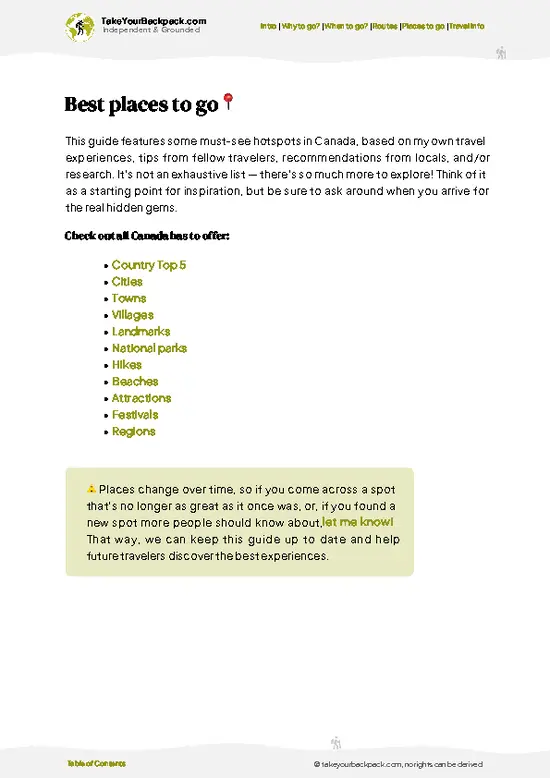
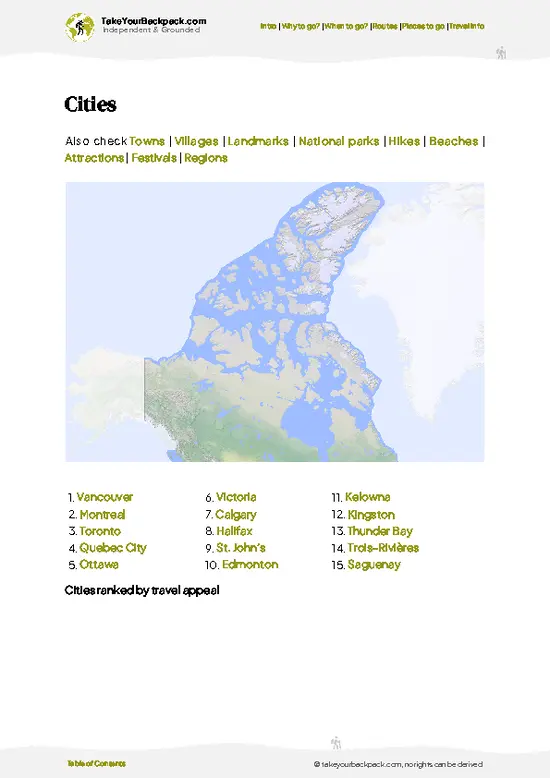
👉 Discover all villages

Or checkout all Canada has to offer (think cities, towns, villages, national parks, hikes, beaches, festivals)
Country photo of Canada

We 💚 feedbackParting advice and final tips

Lunenburg trips go wrong when travelers treat it as a one-hour photo stop from the highway. I would stay at least one night, because the harbor at dusk and early morning is when the colors and fishing-town life show properly. Book ahead for summer weekends, and pack a rain layer for sea fog.

✈️ When did I visit Canada?
As part of my 1.5 year travel around the world trip, I visited Canada in 2016.

✍️ Help improve this page!
The information on this page is based on my own backpacking experience in Canada, supplemented with up-to-date research and feedback from other travelers. Travel details can change, so if you notice anything outdated or incomplete, feel free to let me know.


🙋‍♂️ Give feedback

👋 Meet the founderWho’s Behind Take Your Backpack?

Johan, backpacker and founder of TakeYourBackpackHi, I’m Johan (Netherlands 🇳🇱), the creator of TakeYourBackpack. Over the past 3 decades, I’ve backpacked through 90+ countries across six continents, gaining extensive experience with independent travel, long-term trips, and overland routes.

This site is built on a combination of firsthand travel experience and carefully curated insights from other backpackers. Many guides are based on places I’ve personally visited, while others bring together tips, observations, and practical advice shared by trusted travelers I’ve met along the way.

The goal is to provide realistic, experience-driven guidance — not generic itineraries — so you can explore destinations with better context, clearer expectations, and more confidence.