
×

Chad🇹🇩 | hikesOunianga Lakesdesert lakes, salt flats, palm-fringed shores, contrasting colors | things to do and best time to go

Explore Guera MassifExplore Fada Arch Trail

Backpacking in Ounianga Lakes
🏆 Top pickhike ranked #2
By Johan Kruseman 🇳🇱 | Updated September 3, 2026

You face a real fork in the sand when you set your sights on Ounianga Lakes: do you brave the logistics and isolation, or do you settle for easier, less otherworldly adventures in Chad? This isn’t a casual detour. Ounianga Lakes sits deep in the Sahara, in northern Chad’s Ennedi region—a place where the map thins out and the desert swallows roads. The hike itself is a test of resolve: the sun doesn’t just shine, it hammers. The sand shifts underfoot, and the air tastes like salt and dust. But then you crest a dune and the lakes explode into view—turquoise water ringed by palm trees, mirages made real. The trek is long, often multi-day, and public transport is a myth; you’ll need a 4x4 and a local fixer just to reach the trailhead. Compared to the Ennedi Plateau’s rock arches and canyons, Ounianga is rawer, lonelier, and—if you’re chasing that sense of discovery—absolutely worth the sweat.

Discover everything you want to know in the 📖 Chad Travel Guide.
Best time to go: October - April
Duration: 3 to 5 days
Distance: 50 kilometers
Total ascent: 300 meters
Safety warning

The current risk level for Chad is high. Check the advice before going.


Get your Chad guide
70 ranked highlights, routes & tips, works offline (294 pages)
Loading the map 🌍
CLICK TO FILTER
cities
towns
landmarks
national parks
hikes
attractions
festivals
regions
SHOW COUNTRY’S BESTSHOW ALL

✨ Why go?
Ranked #2 hike in Chad
Why Ounianga Lakes should be on your travel list

The hike to Ounianga Lakes in Chad is a backpacker’s dream, blending stunning scenery with a manageable effort. Picture this: a series of emerald lakes shimmering against the backdrop of the Sahara’s golden dunes. The scenery-to-effort ratio is off the charts; you’ll feel the burn in your legs, but the views make every step worthwhile.

Getting there is a breeze. Public transport options are available from nearby towns, making it accessible without breaking the bank. You can easily hop on a bus or share a ride, keeping costs low while you soak in the local vibe.

What’s even better? The hike offers flexible distances. Whether you want a quick jaunt or a full-day trek, you can tailor your adventure to fit your pace. This adaptability makes it a perfect fit in a longer backpacking route through … read more 👉
The hike to Ounianga Lakes in Chad is a backpacker’s dream, blending stunning scenery with a manageable effort. Picture this: a series of emerald lakes shimmering against the backdrop of the Sahara’s golden dunes. The scenery-to-effort ratio is off the charts; you’ll feel the burn in your legs, but the views make every step worthwhile.

Getting there is a breeze. Public transport options are available from nearby towns, making it accessible without breaking the bank. You can easily hop on a bus or share a ride, keeping costs low while you soak in the local vibe.

What’s even better? The hike offers flexible distances. Whether you want a quick jaunt or a full-day trek, you can tailor your adventure to fit your pace. This adaptability makes it a perfect fit in a longer backpacking route through Chad, allowing you to explore more without feeling rushed.

After the trek, reward yourself with a cold beer at a local spot, where the camaraderie of fellow travelers adds to the experience. The effort pays off, not just in the views, but in the stories you’ll carry with you.
Want to include Ounianga Lakes in your Chad route?
Create a personalized Chad itinerary that includes Ounianga Lakes and the places that fit your trip — based on your travel style, budget, and available time. Get your route in seconds.

Generate my trip

💡 HighlightsMust-see experiences and standout moments

  • Chain of turquoise and indigo lakes — You’re not hallucinating: the Ounianga lakes sit in bands of electric blue, teal and deep navy that pop against the ochre desert. Walking along the narrow ridges between them you can see the color changes up close — they’re caused by different salinity and depth, and nowhere else in the Sahara does that palette sit so neatly in a string of ponds.
  • Palm-ringed oases and date groves — Lush green palms and small gardens hug the shores like a little island of life. It’s a rare chance on a hike to step from hot sand into cool shade, watch locals tend dates, and feel how people have adapted to this fossil-water miracle.
  • Dune ridges that drop into water — Hikes that climb the surrounding dunes reward you with dramatic viewpoints where sand literally falls
read more 👉
  • Chain of turquoise and indigo lakes — You’re not hallucinating: the Ounianga lakes sit in bands of electric blue, teal and deep navy that pop against the ochre desert. Walking along the narrow ridges between them you can see the color changes up close — they’re caused by different salinity and depth, and nowhere else in the Sahara does that palette sit so neatly in a string of ponds.
  • Palm-ringed oases and date groves — Lush green palms and small gardens hug the shores like a little island of life. It’s a rare chance on a hike to step from hot sand into cool shade, watch locals tend dates, and feel how people have adapted to this fossil-water miracle.
  • Dune ridges that drop into water — Hikes that climb the surrounding dunes reward you with dramatic viewpoints where sand literally falls away toward the lakes. The mix of soft dune contours and glassy water below is unlike the usual mountain or forest trek — it’s desert minimalism with a big payoff at the top.
  • Salt crusts, shoreline textures and micro-landscapes — Walk the lake edges and you’ll find white salt rims, delicate crusts, reed fringes and oddly sculpted beaches. Those close-up differences — crunchy salt flats one step, reed pockets and mud songs the next — make every turn on the trail feel different.
  • Dawn/dusk mirrors and the desert night sky — Early morning or late evening the lakes turn into perfect mirrors, throwing back unbelievable color and light; it’s prime time for reflections and photographs. Then at night there’s almost no light pollution, so a stargazing stop after the hike feels cinematic — quiet, vast and full of the Milky Way.
Spotted a mistake or missing something? Contact us.

🌤️ When to go?Choosing the right time of year


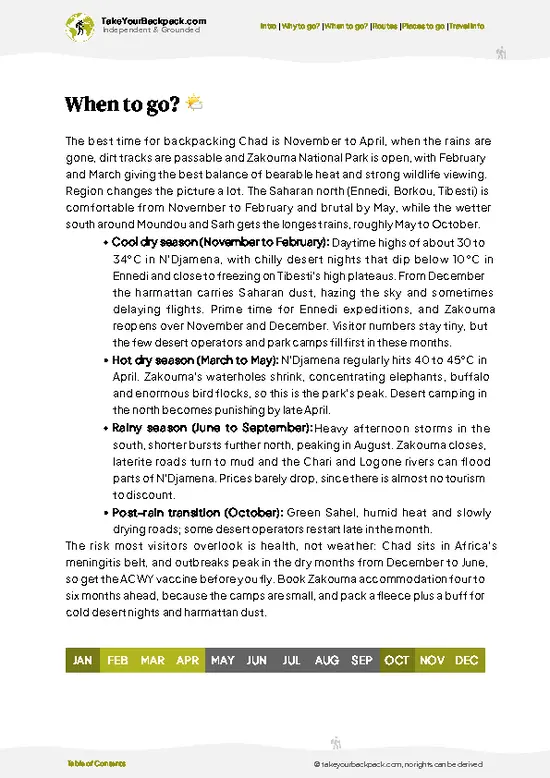
  • Weather: The dry season from October to April is your window. Expect relentless sun and almost zero rain, which means the sandy trails stay firm and the lakes’ colors pop without the haze of humidity.

  • Temperature: Daytime highs range from 30°C to 40°C (86°F to 104°F), scorching but manageable if you start early. Nights drop sharply to 15°C to 20°C (59°F to 68°F), so pack layers for the chill after sunset.

  • Daylight Hours: Roughly 11 to 12 hours of daylight year-round, but the dry season offers clearer skies and longer stretches of usable light, perfect for extended hikes and catching those golden-hour reflections on the lakes.

  • Crowds: The Ounianga Lakes are remote, so expect solitude almost any time. The dry season sees a slight uptick in adventurous travelers, but you’ll rarely feel
read more 👉

  • Weather: The dry season from October to April is your window. Expect relentless sun and almost zero rain, which means the sandy trails stay firm and the lakes’ colors pop without the haze of humidity.

  • Temperature: Daytime highs range from 30°C to 40°C (86°F to 104°F), scorching but manageable if you start early. Nights drop sharply to 15°C to 20°C (59°F to 68°F), so pack layers for the chill after sunset.

  • Daylight Hours: Roughly 11 to 12 hours of daylight year-round, but the dry season offers clearer skies and longer stretches of usable light, perfect for extended hikes and catching those golden-hour reflections on the lakes.

  • Crowds: The Ounianga Lakes are remote, so expect solitude almost any time. The dry season sees a slight uptick in adventurous travelers, but you’ll rarely feel like you’re sharing the trail.

  • Seasonal Activities: The dry season is prime for trekking and camping by the lakes. Avoid the brief rainy season (May to September), when trails become slippery and some access routes can flood or get bogged down in mud.

  • Price Fluctuations: Costs for guides and local transport peak slightly during the dry season due to demand but remain reasonable given the region’s remoteness. Off-season rates drop but come with the risk of weather-related delays.


Pro-tip: Hit the trail at dawn during the dry season to beat the heat and catch the lakes shimmering in the soft morning light—nothing else matches that moment.


source: climatestotravel.comJANJanuary: excellent for travelingFEBFebruary: excellent for travelingMARMarch: excellent for travelingAPRApril: excellent for travelingMAYMay: fair for travelingJUNJune: fair for travelingJULJuly: below average for travelingAUGAugust: below average for travelingSEPSeptember: fair for travelingOCTOctober: excellent for travelingNOVNovember: excellent for travelingDECDecember: excellent for traveling
when-to-go

✈️ The backpacker research shortcutChad Travel Guide

An offline-friendly backpacking guide with optimized travel routes, ranked highlights, transport advice, and the best areas to stay.
example page 0 from our offline Travel Guide for Chad
example page 1 from our offline Travel Guide for Chad
example page 2 from our offline Travel Guide for Chad
example page 3 from our offline Travel Guide for Chad
example page 4 from our offline Travel Guide for Chad
example page 5 from our offline Travel Guide for Chad
example page 6 from our offline Travel Guide for Chad
example page 7 from our offline Travel Guide for Chad
The digital guide (294 pages) contains:
70 highlights, ranked by travel appeal
Optimized 7, 14 & 21-day travel routes
Cities, national parks, landmarks, beaches
How to get around
Offline-friendly for travel without Wi-Fi
👉 Click to see all 30+ guide features

📅 Plan smarter in minutes, not weeks
Month by month travel advice
Festivals & national holidays
Budget expectations

🗺️ Go to the right places, skip the overrated ones
Honest pros & cons of destinations
Top hikes, parks & viewpoints
Lesser-known places most travelers miss
Clear “worth it vs skip it” guidance

🛏️ Travel smoothly without rookie mistakes
Best areas to stay
Transport systems explained simply
Common scams & safety advice
SIM cards, money & practical tips

🌍 Understand the country, not just visit it
Culture & traditions
52 Essential phrases & customs
Festivals worth planning around
Traveler-friendly historical context
Insights that make places more meaningful

📱 Built for real travel conditions
Fully downloadable PDF
Works completely offline
Optimized for phone use
Useful in remote areas & buses
Everything in one place
Save weeks of stressful planning
Get instant access to your full guide. 30‑day money-back guarantee.
+ Add another guide for just US$7.80

By proceeding you agree to our terms.
Sent to your inbox immediately after payment • 100% Secure Checkout
Best Backpacking Travel Advisor 2025 tourism awardBest Backpacking
Travel Advisor
2025
What others say about Take Your Backpack Guides:
⭐⭐⭐⭐⭐
Fantastic, amazing amount of information!
⭐⭐⭐⭐⭐
My goodness this is amazing, it's what I've been looking for hats off too you!
⭐⭐⭐⭐⭐
I think this is absolutely BRILLIANT
⭐⭐⭐⭐
Very complete and informative. It's still missing places, but I gotta to commend you
⭐⭐⭐⭐⭐
This is truly amazing, thank you, can't wait to explore it with my kids!
⭐⭐⭐⭐⭐
Awesome resource, thank you!
⭐⭐⭐⭐⭐
This is amazing! Can't wait to explore the ones I haven't seen
⭐⭐⭐⭐
I love this! Well done, great idea.
⭐⭐⭐⭐⭐
Thanks for taking the time to make this gem!
⭐⭐⭐⭐⭐
This might be the best website I've ever seen.
⭐⭐⭐⭐⭐
Congratulations, and thank you so much for your work; it's incredibly valuable.
⭐⭐⭐⭐
In all seriousness I think you did a great job pointing out the important spots
⭐⭐⭐⭐⭐
10/10 very good
⭐⭐⭐⭐⭐
As someone who's only just starting to visit regularly this is awesome, thank you.
⭐⭐⭐⭐
Thank you very much! I'm going to visit my dad, it's going to be very useful!
⭐⭐⭐⭐⭐
This is really cool! We'll be travelling for the first time and this definitely come in handy.
⭐⭐⭐⭐⭐
You are now our minister of culture, congratulations 👨‍💼
⭐⭐⭐⭐⭐
Just wanted to tell you that this is a pearl! Going to follow your recommendations.
⭐⭐⭐⭐⭐
This is so cool. I'll definitely be using the resource for my travels soon.
⭐⭐⭐⭐⭐
This is very impressive! Good work.
⭐⭐⭐⭐⭐
This is an amazing and informative site. Very well done!

🛏️ Where to stay?Where staying makes the most sense

If you enjoy meeting fellow travelers, consider choosing hostels with high ratings for atmosphere. On the other hand, if you prefer having your own space, a hotel might be a better option.

🥾 Hike detailsKey facts about the Ounianga Lakes hike

Total Distance: The Ounianga Lakes trail spans approximately 15 kilometers, making it a manageable trek for most hikers.

Estimated Duration: Expect to spend around 5 to 7 hours on the trail, depending on your pace and how often you stop to take in the stunning scenery.

Difficulty Level: This trail is rated as moderate. While it’s not overly technical, the heat and occasional sandy stretches can be challenging, especially for those not acclimated to desert conditions.

Starting Point: The trail typically begins at the village of Ounianga Kebir. To get there by public transport, you can catch … read more 👉
Total Distance: The Ounianga Lakes trail spans approximately 15 kilometers, making it a manageable trek for most hikers.

Estimated Duration: Expect to spend around 5 to 7 hours on the trail, depending on your pace and how often you stop to take in the stunning scenery.

Difficulty Level: This trail is rated as moderate. While it’s not overly technical, the heat and occasional sandy stretches can be challenging, especially for those not acclimated to desert conditions.

Starting Point: The trail typically begins at the village of Ounianga Kebir. To get there by public transport, you can catch a bus or shared taxi from the capital, N’Djamena. The ride takes about 12 to 15 hours, so buckle up for a long journey!

Major Landmarks Along the Route:
  • Ounianga Lakes: A series of beautiful, azure lakes that are the highlight of the trail.
  • Sand Dunes: You’ll encounter impressive dunes that offer panoramic views of the surrounding landscape.
  • Rock Formations: Unique geological features that provide great photo opportunities.

Type of Terrain and Scenery: The terrain varies from sandy paths to rocky outcrops, with some sections requiring careful footing. The scenery is breathtaking, showcasing a mix of shimmering lakes, expansive desert, and rugged hills. The contrast between the blue water and the golden sands is something you won’t forget.

Typical Vegetation and Wildlife:
  • Vegetation: Expect to see hardy desert plants like acacia trees and various shrubs that have adapted to the arid climate.
  • Wildlife: Keep an eye out for birds, especially migratory species, as well as small mammals and reptiles that thrive in this unique ecosystem.

Pack plenty of water, sunscreen, and a good hat, because the sun can be relentless out there. Enjoy the adventure!
⚠️ Hiking info can sometimes be outdated or inaccurate. Before you hit the trail, check the latest conditions with locals. If you do spot anything that's off, I'd love to hear from you, so I can update it for fellow travelers.

🛡️ SafetyScams, Hazards, and Annoyances

The hike to Ounianga Lakes is a thrilling blend of challenge and reward. Expect weather shifts; the sun can blaze, but storms can roll in quickly. Dress in layers and pack a lightweight rain jacket. The terrain is mostly flat, but some sections can be rocky or sandy, requiring careful footing. Navigation is straightforward, but keep an eye on your map and compass—don’t rely solely on your phone.

Wildlife encounters are rare, but if you spot a gazelle or a colorful bird, enjoy the moment quietly. Avoid sudden movements; respect their space.

Timing is crucial. Early mornings or late afternoons offer cooler temperatures and stunning light for photos. Hydration is key; carry enough water, especially in the heat.

Trail etiquette is simple: leave no trace and be mindful of fellow hikers. The … read more 👉
The hike to Ounianga Lakes is a thrilling blend of challenge and reward. Expect weather shifts; the sun can blaze, but storms can roll in quickly. Dress in layers and pack a lightweight rain jacket. The terrain is mostly flat, but some sections can be rocky or sandy, requiring careful footing. Navigation is straightforward, but keep an eye on your map and compass—don’t rely solely on your phone.

Wildlife encounters are rare, but if you spot a gazelle or a colorful bird, enjoy the moment quietly. Avoid sudden movements; respect their space.

Timing is crucial. Early mornings or late afternoons offer cooler temperatures and stunning light for photos. Hydration is key; carry enough water, especially in the heat.

Trail etiquette is simple: leave no trace and be mindful of fellow hikers. The effort pays off when you finally reach the lakes, the shimmering water a perfect reward for your journey. Enjoy that first cold drink while soaking in the view—it’s a moment you’ll cherish.

FAQFrequently asked questions about Ounianga Lakes

The Ounianga Lakes hike typically takes 1 to 2 days depending on the route and pace. The main area to explore covers around 20 kilometers, which can be done in a day if starting early. Overnight camping is possible near the lakes for a more relaxed schedule.
The hike is moderate in difficulty due to the desert environment and sandy terrain. Temperatures can be extreme, often exceeding 40°C (104°F) in the day, requiring good physical condition and preparation. There are no steep climbs, but the heat and remoteness add to the challenge.
Yes, a guide is highly recommended for safety and navigation as the area is remote and lacks clear trails. A permit is required to visit the Ounianga Lakes, usually arranged through local authorities or tour operators, costing around $50 to $100 depending on the length of stay.
⚠️ Things can change over time, so always validate details locally before you go.

Other Chadian hikes near Ounianga Lakes

Explore more nearby:

  • Ennedi Plateau—sandstone towers, prehistoric rock art, natural arches, remote canyons| 222 km away
  • Borkou Desert Trail—dune fields, volcanic outcrops, nomad camps, endless horizons| 233 km away
  • Fada Arch Trail—rock arch, wind-carved formations, open plateaus, sparse vegetation| 317 km away

💡 Not sure where to go next?
Create a personalized itinerary for Chad including Ounianga Lakes and the places that fit your trip.

Generate my itinerary

👉 Discover all hikes

Or checkout all Chad has to offer (think cities, towns, villages, national parks, hikes, beaches, festivals)
Country photo of Chad

We 💚 feedbackParting advice and final tips

The Ounianga Lakes are a wild contrast to the surrounding Sahara, a surreal oasis where the colors of the water shift with the sun. Expect a few bumps on the road—literally. The journey can be rough, but that first glimpse of the turquoise lakes makes every jolt worth it. Bring a good book for downtime; the vibe is laid-back, perfect for reflection. Just watch out for the midday heat—it’s relentless. Embrace the stillness; it’s a rare kind of magic.

✍️ Help improve this page!
The information on this page is based on in-depth research, insights shared by experienced travelers, and feedback from the local travel community in Chad. While every effort is made to keep the information accurate and current, conditions can change — so if you spot anything incorrect or outdated, please get in touch.


🙋‍♂️ Give feedback

👋 Meet the founderWho’s Behind Take Your Backpack?

Johan, backpacker and founder of TakeYourBackpackHi, I’m Johan (Netherlands 🇳🇱), the creator of TakeYourBackpack. Over the past decade, I’ve backpacked through 80+ countries across six continents, gaining extensive experience with independent travel, long-term trips, and overland routes.

This site is built on a combination of firsthand travel experience and carefully curated insights from other backpackers. Many guides are based on places I’ve personally visited, while others bring together tips, observations, and practical advice shared by trusted travelers I’ve met along the way.

The goal is to provide realistic, experience-driven guidance — not generic itineraries — so you can explore destinations with better context, clearer expectations, and more confidence.

Get full Chad guide •
Instant download • 70 highlights • Full Offline guide