
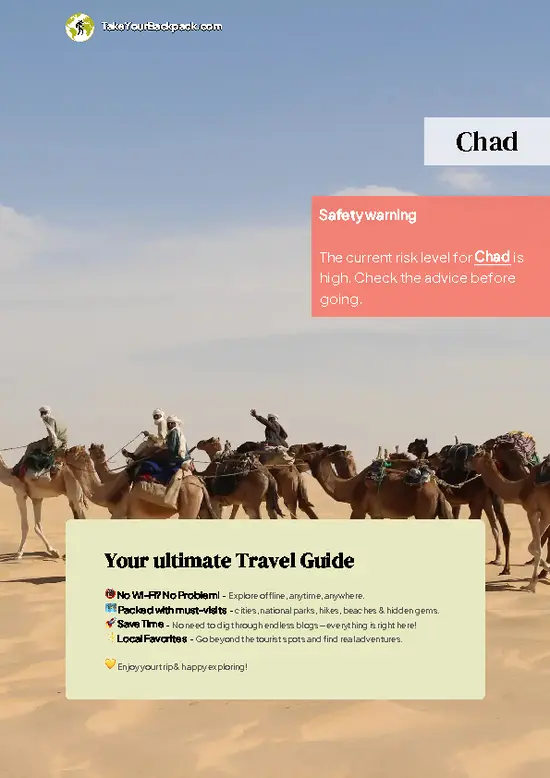
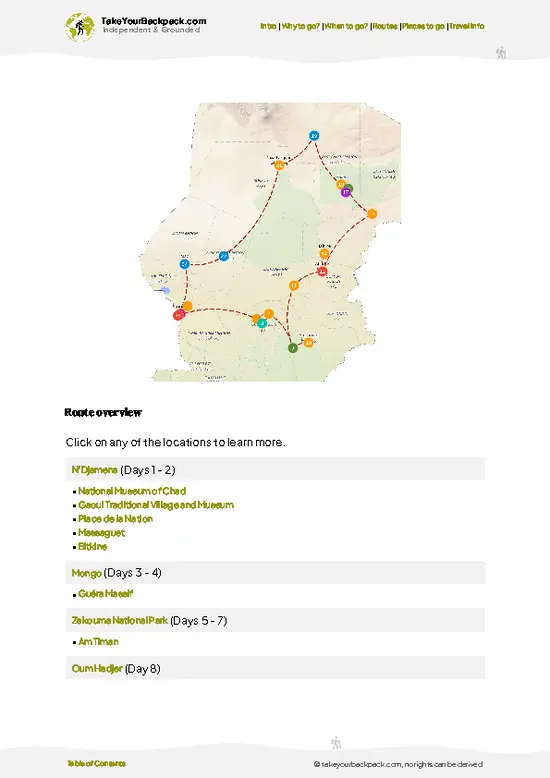
- Moussoro Grand Market — The real beating heart of Bahr El Gazel: live livestock trading (camels, goats), piled-up sacks of millet, cheap gear and loud bargaining. It’s where you’ll get the clearest feel for local rhythms, barter culture, and the town’s role as a Sahelian crossroads.
- Bahr el Gazel wadi and floodplain — The region’s namesake: a broad, seasonal riverbed that comes alive after rains. Walk its banks to see the Sahel’s odd mix of cracked mud, sudden ponds and reed-lined channels — a landscape and hydrology you won’t find in any lush river valley.
- Outlying date-palm oases around Moussoro — Small, shady palm groves irrigated from shallow wells and channels; families tend palms and dry dates on low racks. The contrast of palms against open Sahel is photogenic and tastes great (try
- Moussoro Grand Market — The real beating heart of Bahr El Gazel: live livestock trading (camels, goats), piled-up sacks of millet, cheap gear and loud bargaining. It’s where you’ll get the clearest feel for local rhythms, barter culture, and the town’s role as a Sahelian crossroads.
- Bahr el Gazel wadi and floodplain — The region’s namesake: a broad, seasonal riverbed that comes alive after rains. Walk its banks to see the Sahel’s odd mix of cracked mud, sudden ponds and reed-lined channels — a landscape and hydrology you won’t find in any lush river valley.
- Outlying date-palm oases around Moussoro — Small, shady palm groves irrigated from shallow wells and channels; families tend palms and dry dates on low racks. The contrast of palms against open Sahel is photogenic and tastes great (try the fresh or sun-dried dates).
- Visits to nomadic herding camps (Hidden gem) — Short, arranged visits to transhumant camps let you see camel- and cattle-herding up close: tea rituals, camp layout, simple dairy processing and the practical wisdom of pastoralists. Most tourists skip this, but it’s one of the truest cultural experiences in the region.
- Seasonal pools and birding spots (Hidden gem) — After rains, temporary ponds appear and attract waterbirds and waders — a surprising burst of life in an otherwise dry landscape. Locals know the best ephemeral pools; pack binoculars and go shortly after the rainy season.
- Local artisan quarters in Moussoro — Small workshops where leatherworkers, rope-makers and weavers still practice traditional Sahelian crafts. Not a museum: these are functioning trades, good for small buys and watching hands-on skills you won’t see in the capital.
- Remnants of caravan tracks and salt-trade lanes — You can still follow the old sandy tracks where traders moved between the Lake Chad basin and northern routes. Walking a short stretch gives a sense of historical movement across the Sahel and clean, empty vistas few visitors get to experience.
- Sunset from the low ridges around Moussoro — Hike a half-hour out of town to small sandstone ridges and watch the light fall over the wadi and palm groves. It’s simple, quiet and highly local — the kind of sunset that’s more about atmosphere than an Instagram spot.
- Home-cooked meals and date-based food experiences (Hidden gem) — Eat with a family in a village on the wadi edge: millet porridge, stewed goat, sweetened tea and date desserts. These intimate meals reveal culinary habits and hospitality that souvenir markets never will.
- Moussoro’s Friday mosque and religious life — Observing (respectfully) the mosque during Jummah or witnessing daily prayer cycles gives insight into social organization, dress, and rhythms of community life in Bahr El Gazel — an important cultural pillar of the region.
Spotted a mistake or missing something? Contact us.

 Best Backpacking

 Hi, I’m Johan (Netherlands 🇳🇱), the creator of TakeYourBackpack. Over the past 3 decades, I’ve backpacked through 90+ countries across six continents, gaining extensive experience with independent travel, long-term trips, and overland routes.