×

Chad🇹🇩 | best regionsThe 8 Top regions in Chad

In Chad, the choice of region can make or break your backpacking adventure. This vast country is defined by its diverse landscapes, from the arid expanses of the Sahara Desert to the lush wetlands of Lake Chad. Each region offers a unique climate and cultural character, shaping your experience in profound ways.

For instance, the northern regions are often scorching and remote, ideal for those seeking solitude and rugged beauty, while the south boasts a more temperate climate, rich in wildlife and vibrant local cultures. Understanding these seasonal nuances is crucial; the rainy season can transform travel logistics, affecting accessibility and safety.

Choosing the right region influences not just your budget but also your level of cultural immersion. Independent travelers will find that some areas are more accommodating than others, impacting ease of travel. In Chad, your regional choice is the key to unlocking authentic experiences and preserving your energy for the moments that truly matter.

By Johan Kruseman 🇳🇱 | Updated September 4, 2026
Explore the best cities in Chad

Why go?Understanding Their Importance

Chad is a land of stark contrasts, where climatic diversity shapes not just the landscape but the very essence of its culture. From the arid expanses of the Sahara to the lush greenery of the southern regions, each area offers a unique experience. This variety is not just scenic; it influences local customs, agricultural practices, and even the rhythm of daily life. Travelers will find that the cultural character is deeply tied to these environments, with communities adapting their traditions to the climate around them.

However, this diversity comes with trade-offs. The infrastructure in Chad can be challenging. While major cities may have basic amenities, remote areas often lack reliable transport and services. This means that while you can experience rich cultural interactions, reaching … read more 👉
Chad is a land of stark contrasts, where climatic diversity shapes not just the landscape but the very essence of its culture. From the arid expanses of the Sahara to the lush greenery of the southern regions, each area offers a unique experience. This variety is not just scenic; it influences local customs, agricultural practices, and even the rhythm of daily life. Travelers will find that the cultural character is deeply tied to these environments, with communities adapting their traditions to the climate around them.

However, this diversity comes with trade-offs. The infrastructure in Chad can be challenging. While major cities may have basic amenities, remote areas often lack reliable transport and services. This means that while you can experience rich cultural interactions, reaching those experiences may require significant travel time. The distance between regions can be deceptive; what looks close on a map can translate into hours on rough roads. This is crucial for planning, as the time spent traveling could limit the depth of exploration in any one area.

Moreover, Chad’s historical context adds layers to its regions. The influences of ancient trade routes and colonial history are palpable, but they also mean that some areas are more accessible than others. Travelers should weigh the accessibility of certain regions against the potential for immersive experiences. In some cases, the most rewarding encounters are found off the beaten path, but getting there may require patience and resilience.

In summary, Chad’s regions matter not just for their beauty but for the stories they tell. Understanding the constraints and trade-offs involved in exploring this diverse country is essential for making the most of your journey.
Behind the Scenes of Selection
The list of best regions in Chad is created based on landscapes, local culture, attractions, vibes, and overall appeal. If you feel a region is missing in this list, please let us know.

When to go?When to Plan Your Trip

Climate Variation

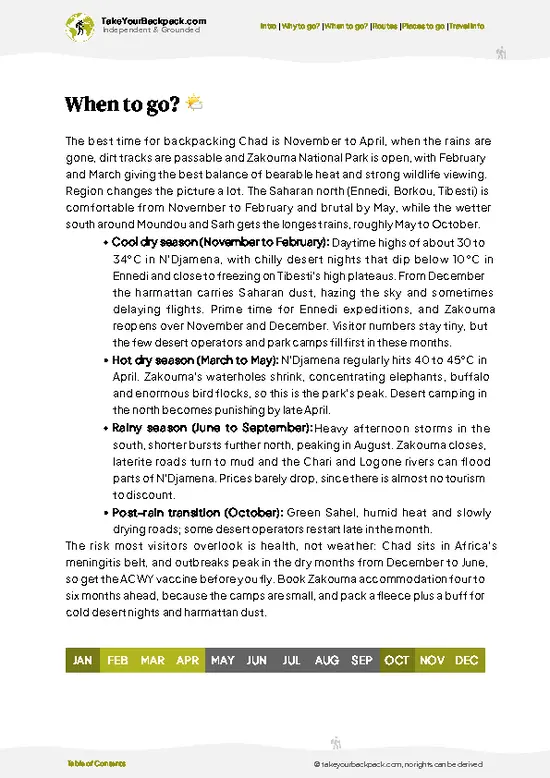
Chad’s climate is a mosaic of extremes. The northern regions are arid, while the south experiences a more humid tropical climate. The dry season, typically from November to April, offers the most comfortable temperatures and clearer skies. However, this is also when tourist traffic peaks, leading to higher costs and crowded experiences.

Optimal Months

The best months for visiting are generally December through February. During this period, temperatures are milder, making outdoor activities more enjoyable. However, be prepared for the influx of visitors, which can affect accommodation availability and prices.

Shoulder Seasons

The shoulder seasons, around late October and early May, present a mixed bag. These months can offer lower prices and fewer crowds, but the weather … read more 👉

Climate Variation

Chad’s climate is a mosaic of extremes. The northern regions are arid, while the south experiences a more humid tropical climate. The dry season, typically from November to April, offers the most comfortable temperatures and clearer skies. However, this is also when tourist traffic peaks, leading to higher costs and crowded experiences.

Optimal Months

The best months for visiting are generally December through February. During this period, temperatures are milder, making outdoor activities more enjoyable. However, be prepared for the influx of visitors, which can affect accommodation availability and prices.

Shoulder Seasons

The shoulder seasons, around late October and early May, present a mixed bag. These months can offer lower prices and fewer crowds, but the weather can be unpredictable. Expect hotter days and the potential for rain, especially in the south. This trade-off can be worthwhile for those seeking a more intimate experience, but it requires flexibility in planning.

Peak Periods

While the dry season is the most popular, certain regional festivals can draw significant crowds. These events can enhance the travel experience but also lead to logistical challenges. Planning around these festivals can mean higher costs and limited availability, so weigh the benefits against the potential inconveniences.

Seasonal Constraints

Travelers should be aware of seasonal constraints, such as the rainy season from June to October. This period can make some regions less accessible and may limit activities. Understanding these patterns is crucial for effective trip planning, ensuring that the journey aligns with personal comfort and budget considerations.

region hoppingTips for Visiting Multiple Destinations

General Routing Logic

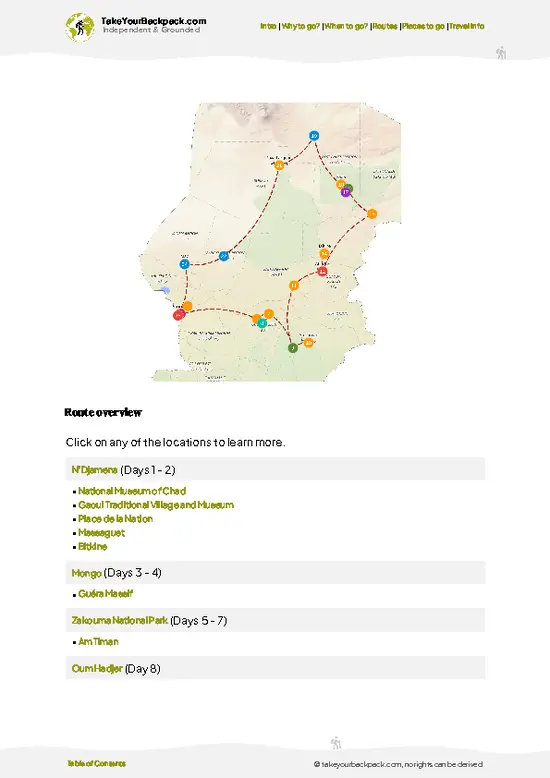
Traveling through Chad requires a smart approach to routing. Start in N’Djamena, the capital, and move north toward the Sahara. This route offers a natural progression from urban to remote landscapes. Cluster regions by their geographical proximity. For instance, after exploring the Sahelian belt, head northeast to the Ennedi Plateau, then southwest to the Lake Chad area. This minimizes backtracking and maximizes your experience.

Time Management

Expect to spend at least two to three days in each major region. This allows for meaningful exploration without feeling rushed. For example, the Ennedi Plateau deserves time for hiking and photography, while Lake Chad offers unique cultural interactions. Keep in mind that travel times can be unpredictable due to road conditions, … read more 👉

General Routing Logic

Traveling through Chad requires a smart approach to routing. Start in N’Djamena, the capital, and move north toward the Sahara. This route offers a natural progression from urban to remote landscapes. Cluster regions by their geographical proximity. For instance, after exploring the Sahelian belt, head northeast to the Ennedi Plateau, then southwest to the Lake Chad area. This minimizes backtracking and maximizes your experience.

Time Management

Expect to spend at least two to three days in each major region. This allows for meaningful exploration without feeling rushed. For example, the Ennedi Plateau deserves time for hiking and photography, while Lake Chad offers unique cultural interactions. Keep in mind that travel times can be unpredictable due to road conditions, so factor in extra time for transfers.

Common Planning Mistakes

One major pitfall is overloading the itinerary. Trying to see too much can lead to burnout. Prioritize experiences over quantity. Focus on fewer regions and dive deeper into local culture and landscapes. Another mistake is underestimating travel logistics. Roads can be rough, and public transport is limited. Renting a vehicle or hiring a local guide can save time and enhance safety.

Trade-offs and Constraints

Balancing speed with depth is crucial. Quick stops may save time but often lead to superficial experiences. Budget constraints can also affect comfort levels. Opt for mid-range accommodations that offer a good balance of comfort and cost. Flexibility is key; be prepared to adjust plans based on weather or local events. This adaptability can lead to unexpected rewards, making the journey more enriching.

The ListHighly Recommended regions of Chad

1 Tibesti Mountains

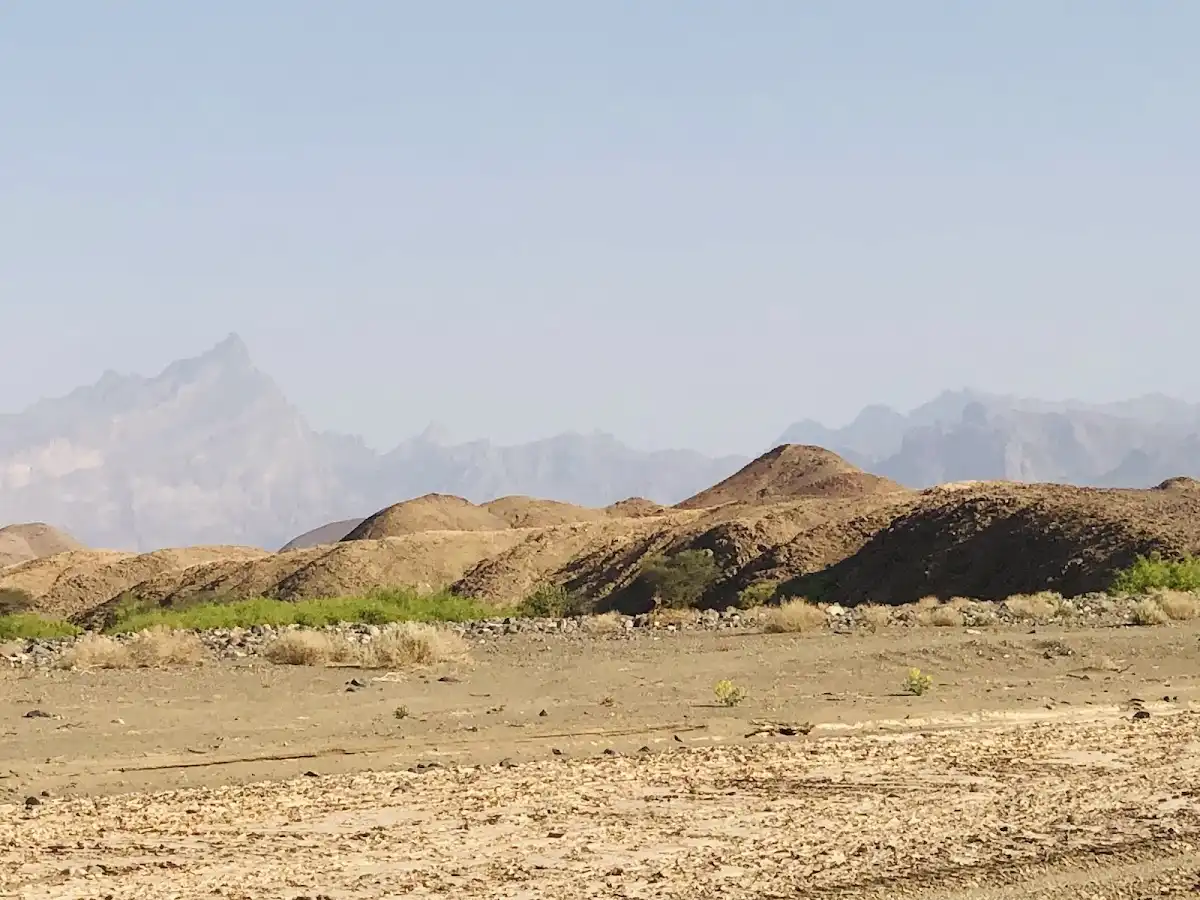
volcanic peaks, deep gorges, Toubou settlements

Ascend rugged highlands marked by ancient lava flows and remote communities, where isolation and geology define every journey.

chad-region-tibesti-mountains
© Google |

2 Lakes of Ounianga

saltwater lakes, sandstone cliffs, unique microclimates

Marvel at surreal blue lakes surrounded by desert, where rare aquatic life and dramatic geology create a striking contrast.

3 Borkou

erg dunes, remote oases, desert plateaus

Venture into a landscape of endless sand and isolated settlements, where survival depends on ancient wells and rare shade.

4 Salamat

flooded grasslands, Zakouma National Park, migratory wildlife

Witness seasonal transformations as wildlife gathers in wetlands and protected reserves offer rare glimpses of elephants and birds.

5 Bahr El Gazel

seasonal wadis, nomadic herders, Sahelian plains

Trace the shifting boundaries of desert and grassland, where pastoral life adapts to the rhythms of water and sand.

6 Chari-Baguirmi

river floodplains, millet fields, traditional villages

Follow the Chari River’s course through agricultural heartlands, encountering rural markets and the pulse of daily village life.

7 Kanem

date palm groves, historic caravan routes, clay settlements

Experience a region shaped by centuries of trade, where fortified towns and palm-lined tracks recall a Saharan crossroads.

8 Tandjilé

cotton fields, rural crossroads, weekly markets

Travel through a patchwork of farms and trading posts, where local commerce and agriculture shape the region’s daily rhythm.

Loading the map 🌍

Expert viewTips and Advice from Travelers

Geographic Diversity

Chad is a land of contrasts, where the Sahara meets savanna and the Great Lakes region offers a different vibe altogether. You’ll find six distinct regions, each with its own flavor. If you’re serious about experiencing Chad, aim to visit at least three regions. This gives you a taste of the varied landscapes and cultures without overwhelming yourself.

The northern regions are dominated by the Sahara, offering vast, arid expanses that can be both mesmerizing and challenging. The heat is relentless, and the infrastructure is sparse. If you venture here, prepare for long stretches of travel with limited amenities. The south, in contrast, is lush and teeming with life, but it’s also more populated and can feel chaotic. The cultural richness is palpable, but so are the … read more 👉

Geographic Diversity

Chad is a land of contrasts, where the Sahara meets savanna and the Great Lakes region offers a different vibe altogether. You’ll find six distinct regions, each with its own flavor. If you’re serious about experiencing Chad, aim to visit at least three regions. This gives you a taste of the varied landscapes and cultures without overwhelming yourself.

The northern regions are dominated by the Sahara, offering vast, arid expanses that can be both mesmerizing and challenging. The heat is relentless, and the infrastructure is sparse. If you venture here, prepare for long stretches of travel with limited amenities. The south, in contrast, is lush and teeming with life, but it’s also more populated and can feel chaotic. The cultural richness is palpable, but so are the logistical challenges.

Transport Between Regions

Getting around Chad is not for the faint of heart. The roads can be rough, and public transport is often unreliable. If you’re planning to hop between regions, expect to spend a good chunk of your time on the road. Travel times can stretch beyond what you might anticipate, especially in the north. A journey that looks short on a map can turn into an all-day affair.

Consider hiring a local guide or driver who knows the terrain. It’s an investment, but it can save you from headaches and help you navigate the cultural nuances. Plus, a local can provide insights that you won’t find in any guidebook. Just be aware that costs can add up quickly, especially if you’re traveling solo.

Cultural Variation

Chad is a tapestry of cultures, with over 200 ethnic groups. Each region has its own traditions, languages, and customs. In the north, you’ll encounter nomadic tribes whose lifestyles are deeply tied to the land. Their hospitality is genuine, but their way of life is starkly different from what you’ll find in the south, where communities are more settled and agricultural.

Understanding these cultural differences is crucial. In the north, dress modestly and be respectful of local customs. In the south, you might find more openness to interaction, but still tread carefully. Engaging with locals can be rewarding, but it’s essential to approach with respect and an open mind.

Pacing Trade-Offs

When planning your itinerary, pacing is everything. You might be tempted to cram in as many regions as possible, but that’s a recipe for burnout. Each region deserves time to be appreciated. A rushed trip can lead to missed experiences and cultural misunderstandings.

Aim for a balance. Spend a few days in each region, allowing yourself to soak in the atmosphere. This is especially important in areas where cultural practices are tied to specific times of the year. Festivals and local events can be transformative experiences, but they require planning.

Safety & Cultural Considerations

Safety is a genuine concern in Chad, and it varies by region. The north can be politically unstable, while the south is generally safer but still requires caution. Always stay updated on local conditions and heed travel advisories.

Cultural sensitivity is paramount. Chad is a conservative country, and respecting local customs is non-negotiable. This includes dress codes, especially in rural areas. Engaging with local communities can be enriching, but always ask for permission before taking photos or intruding on personal space.

Planning and Prioritizing Regions

When mapping out your journey, prioritize regions based on your interests. If you’re drawn to natural landscapes, the north might be your playground. If cultural immersion is your goal, focus on the southern regions.

Budget realistically. Costs can vary widely depending on your choices. Local accommodations are often basic, but they offer a chance to connect with the community. Eating local food is not only budget-friendly but also a way to experience the culture.

In summary, Chad is a country that rewards the patient and the prepared. Embrace the diversity, respect the culture, and be ready for the unexpected. The journey may be challenging, but the experiences you gain will be worth every effort.

✈️ The backpacker research shortcutChad Travel Guide

An offline-friendly backpacking guide with optimized travel routes, ranked highlights, transport advice, and the best areas to stay.
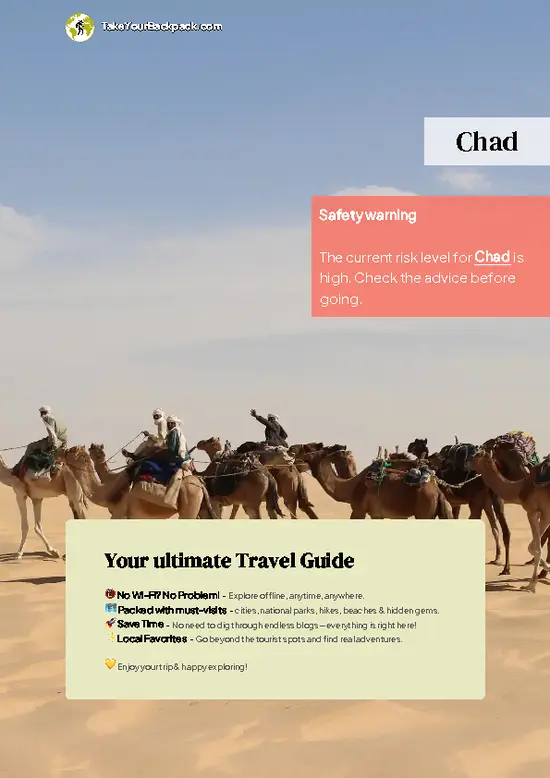
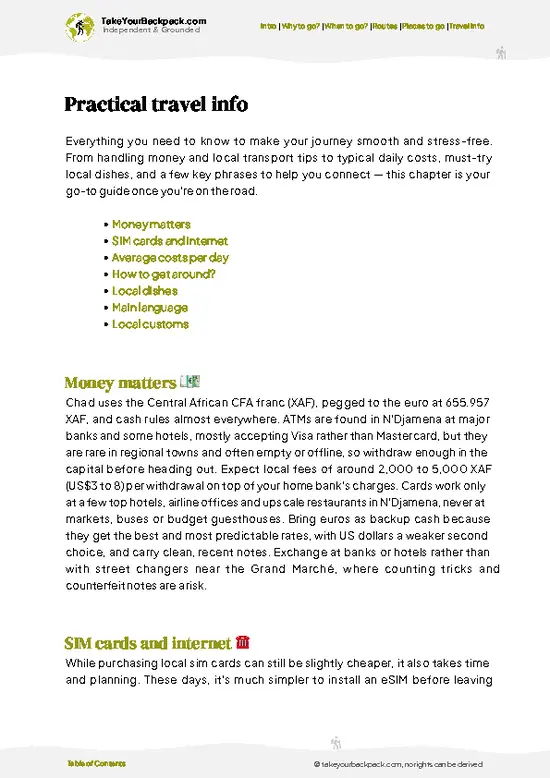
example page 0 from our offline Travel Guide for Chad
example page 1 from our offline Travel Guide for Chad
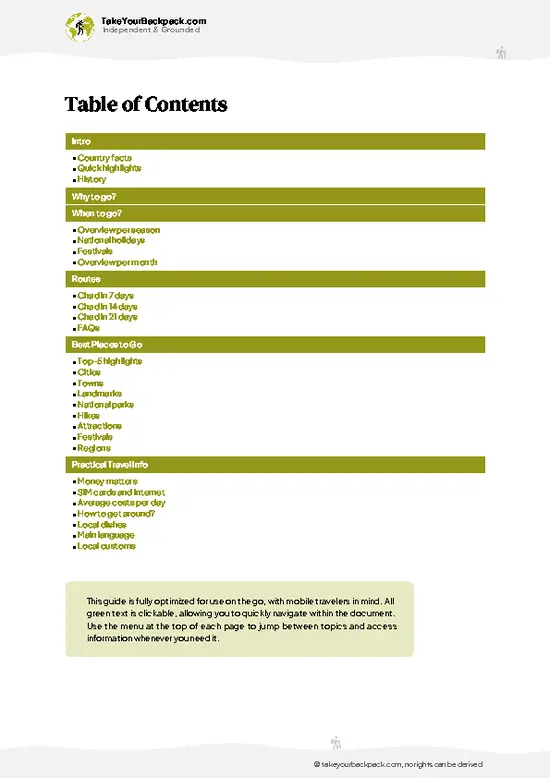
example page 2 from our offline Travel Guide for Chad
example page 3 from our offline Travel Guide for Chad
example page 4 from our offline Travel Guide for Chad
example page 5 from our offline Travel Guide for Chad
example page 6 from our offline Travel Guide for Chad
example page 7 from our offline Travel Guide for Chad
The digital guide (294 pages) contains:
70 highlights, ranked by travel appeal
Optimized 7, 14 & 21-day travel routes
Cities, national parks, landmarks, beaches
How to get around
Offline-friendly for travel without Wi-Fi
👉 Click to see all 30+ guide features

📅 Plan smarter in minutes, not weeks
Month by month travel advice
Festivals & national holidays
Budget expectations

🗺️ Go to the right places, skip the overrated ones
Honest pros & cons of destinations
Top hikes, parks & viewpoints
Lesser-known places most travelers miss
Clear “worth it vs skip it” guidance

🛏️ Travel smoothly without rookie mistakes
Best areas to stay
Transport systems explained simply
Common scams & safety advice
SIM cards, money & practical tips

🌍 Understand the country, not just visit it
Culture & traditions
52 Essential phrases & customs
Festivals worth planning around
Traveler-friendly historical context
Insights that make places more meaningful

📱 Built for real travel conditions
Fully downloadable PDF
Works completely offline
Optimized for phone use
Useful in remote areas & buses
Everything in one place
Save weeks of stressful planning
Get instant access to your full guide. 30‑day money-back guarantee.
+ Add another guide for just US$7.80

By proceeding you agree to our terms.
Sent to your inbox immediately after payment • 100% Secure Checkout
Best Backpacking Travel Advisor 2025 tourism awardBest Backpacking
Travel Advisor
2025
What others say about Take Your Backpack Guides:
⭐⭐⭐⭐⭐
Fantastic, amazing amount of information!
⭐⭐⭐⭐⭐
My goodness this is amazing, it's what I've been looking for hats off too you!
⭐⭐⭐⭐⭐
I think this is absolutely BRILLIANT
⭐⭐⭐⭐
Very complete and informative. It's still missing places, but I gotta to commend you
⭐⭐⭐⭐⭐
This is truly amazing, thank you, can't wait to explore it with my kids!
⭐⭐⭐⭐⭐
Awesome resource, thank you!
⭐⭐⭐⭐⭐
This is amazing! Can't wait to explore the ones I haven't seen
⭐⭐⭐⭐
I love this! Well done, great idea.
⭐⭐⭐⭐⭐
Thanks for taking the time to make this gem!
⭐⭐⭐⭐⭐
This might be the best website I've ever seen.
⭐⭐⭐⭐⭐
Congratulations, and thank you so much for your work; it's incredibly valuable.
⭐⭐⭐⭐
In all seriousness I think you did a great job pointing out the important spots
⭐⭐⭐⭐⭐
10/10 very good
⭐⭐⭐⭐⭐
As someone who's only just starting to visit regularly this is awesome, thank you.
⭐⭐⭐⭐
Thank you very much! I'm going to visit my dad, it's going to be very useful!
⭐⭐⭐⭐⭐
This is really cool! We'll be travelling for the first time and this definitely come in handy.
⭐⭐⭐⭐⭐
You are now our minister of culture, congratulations 👨‍💼
⭐⭐⭐⭐⭐
Just wanted to tell you that this is a pearl! Going to follow your recommendations.
⭐⭐⭐⭐⭐
This is so cool. I'll definitely be using the resource for my travels soon.
⭐⭐⭐⭐⭐
This is very impressive! Good work.
⭐⭐⭐⭐⭐
This is an amazing and informative site. Very well done!

🛏️ Where to stay?Where to Stay: Chad Edition

True backpacker hostels are rare in Chad, but basic budget hotels and guesthouses exist mainly in the capital and a few regional towns.
Most options cluster in N’Djamena’s city center/riverfront (close to markets, transport and the limited nightlife but noisier and with higher petty‑crime risk), the embassy/expat districts (quieter and safer but more expensive and isolated), and the airport/outer corridor (convenient for arrivals but with very limited services).
Outside the capital—especially towns like Moundou and Abeche—lodging is sparse and very basic, suitable for short stays near regional highlights but not for travelers who need amenities or organized hostel-style social life.

If you … read more 👉
True backpacker hostels are rare in Chad, but basic budget hotels and guesthouses exist mainly in the capital and a few regional towns.
Most options cluster in N’Djamena’s city center/riverfront (close to markets, transport and the limited nightlife but noisier and with higher petty‑crime risk), the embassy/expat districts (quieter and safer but more expensive and isolated), and the airport/outer corridor (convenient for arrivals but with very limited services).
Outside the capital—especially towns like Moundou and Abeche—lodging is sparse and very basic, suitable for short stays near regional highlights but not for travelers who need amenities or organized hostel-style social life.

If you enjoy meeting fellow travelers, consider choosing hostels with high ratings for atmosphere. On the other hand, if you prefer having your own space, a hotel might be a better option.

ChadExplore Beyond This Category

👋 Meet the founderWho’s Behind Take Your Backpack?

Johan, backpacker and founder of TakeYourBackpackHi, I’m Johan (Netherlands 🇳🇱), the creator of TakeYourBackpack. Over the past decade, I’ve backpacked through 80+ countries across six continents, gaining extensive experience with independent travel, long-term trips, and overland routes.

This site is built on a combination of firsthand travel experience and carefully curated insights from other backpackers. Many guides are based on places I’ve personally visited, while others bring together tips, observations, and practical advice shared by trusted travelers I’ve met along the way.

The goal is to provide realistic, experience-driven guidance — not generic itineraries — so you can explore destinations with better context, clearer expectations, and more confidence.

Get full Chad guide •
Instant download • 70 highlights • Full Offline guide