×

Chad🇹🇩 | festivalsFestival Darymultinational performances, art exhibitions, urban venues, cross-cultural exchange | things to do and best time to go

Explore Chari FestivalExplore Gerewol Festival

Backpacking in Dary
🌟 Highlightfestival ranked #3
By Johan Kruseman 🇳🇱 | Updated October 15, 2026

Forget the fantasy: the N’Djamena International Cultural Festival isn’t some sanitized, air-conditioned parade of “world music” acts with tidy food stalls and English-speaking guides. It’s raw, real, and planted right in the heart of N’Djamena, Chad’s pulsing capital, where the Chari River cuts through the city’s dust and chaos. This festival is a collision of Sahelian rhythms, Tuareg guitars, and Chadian hip hop, with crowds that are equal parts local families, regional artists, and a handful of wide-eyed travelers who’ve done their homework. The vibe? Electric, unpredictable, sometimes overwhelming—think more street carnival than concert hall. It runs for several days, usually in late winter, sprawling across open-air plazas and makeshift stages. If you’re chasing authenticity, this is the real deal: you’ll sweat, you’ll dance, you’ll probably get lost, and you’ll see a side of Chad that guidebooks can’t touch. Just don’t expect comfort—expect connection.

Discover everything you want to know in the 📖 Chad Travel Guide.
Safety warning

The current risk level for Chad is high. Check the advice before going.


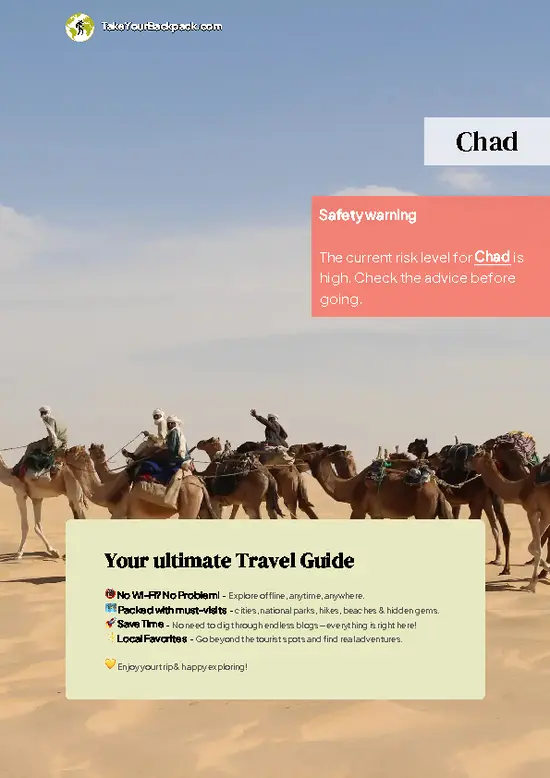
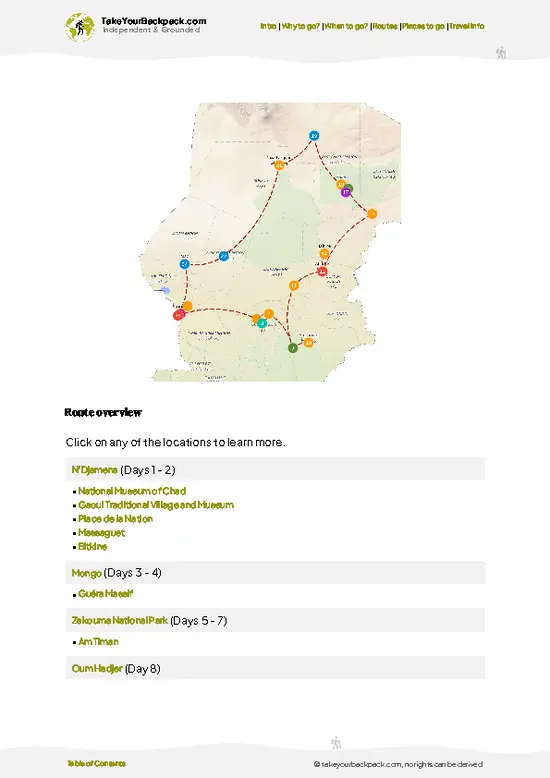
example page 0 from our offline Travel Guide for Chad
example page 1 from our offline Travel Guide for Chad
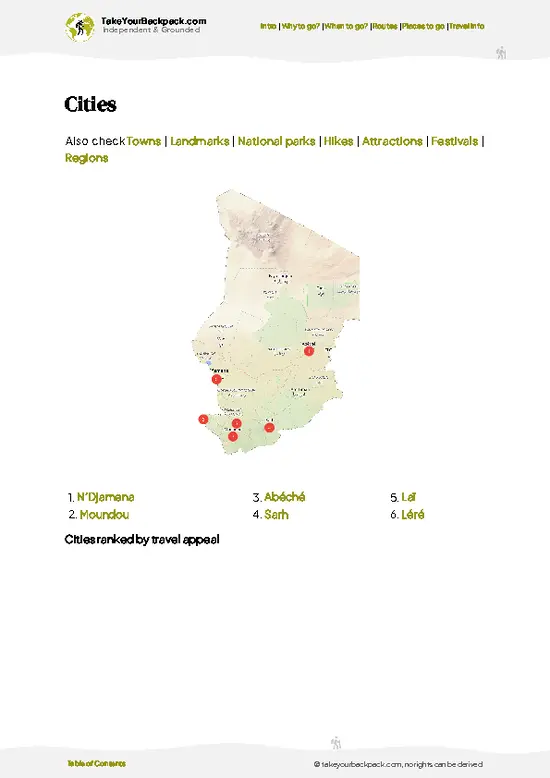
example page 2 from our offline Travel Guide for Chad
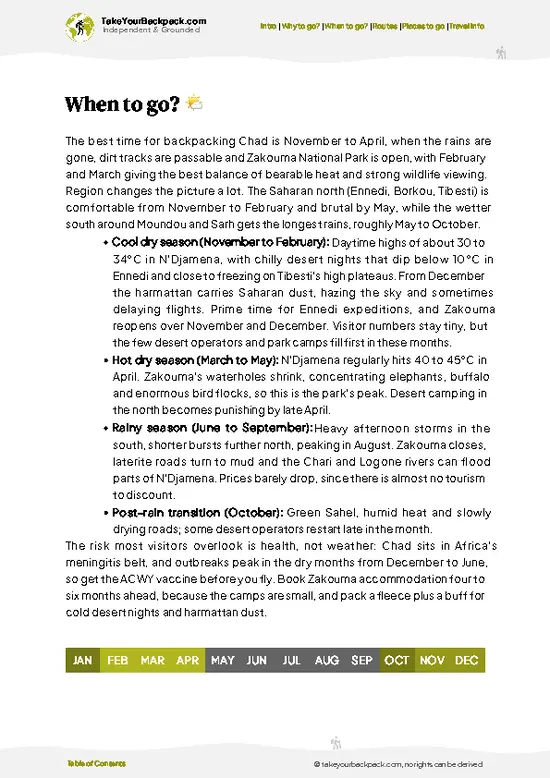
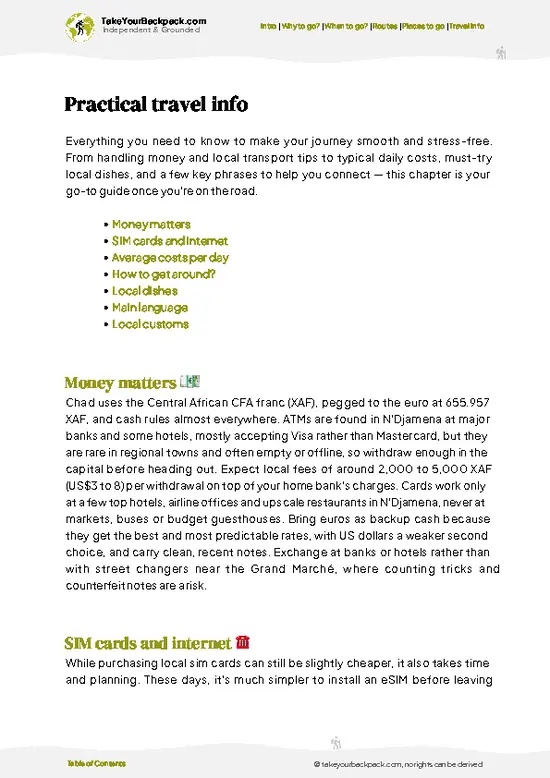
example page 3 from our offline Travel Guide for Chad
example page 4 from our offline Travel Guide for Chad
example page 5 from our offline Travel Guide for Chad
example page 6 from our offline Travel Guide for Chad
example page 7 from our offline Travel Guide for Chad
Loading the map 🌍
CLICK TO FILTER
cities
towns
landmarks
national parks
hikes
attractions
festivals
regions
SHOW COUNTRY’S BESTSHOW ALL

✨ Why go?
Ranked #3 festival in Chad
Reasons people choose to celebrate the here

Backpackers flock to the N’Djamena International Cultural Festival in Chad for a reason. This isn’t just another event; it’s a social energy powerhouse. Picture this: vibrant music, dance, and art swirling together, creating a temporary community that pulses with life. You’re not just a spectator; you’re part of something bigger.

The festival offers a deep cultural immersion that’s hard to find elsewhere. You’ll engage with local traditions, taste authentic cuisine, and meet fellow travelers and locals alike, all while sharing stories under the African sky. It’s a chance to connect, learn, and grow, all wrapped up in a joyful celebration.

Affordability is another win. Compared to similar festivals around the globe, the costs here are surprisingly low, allowing you to stretch your budget … read more 👉
Backpackers flock to the N’Djamena International Cultural Festival in Chad for a reason. This isn’t just another event; it’s a social energy powerhouse. Picture this: vibrant music, dance, and art swirling together, creating a temporary community that pulses with life. You’re not just a spectator; you’re part of something bigger.

The festival offers a deep cultural immersion that’s hard to find elsewhere. You’ll engage with local traditions, taste authentic cuisine, and meet fellow travelers and locals alike, all while sharing stories under the African sky. It’s a chance to connect, learn, and grow, all wrapped up in a joyful celebration.

Affordability is another win. Compared to similar festivals around the globe, the costs here are surprisingly low, allowing you to stretch your budget further. This means more funds for exploring Chad’s stunning landscapes or savoring local delicacies.

Planning your route around this festival isn’t just smart; it’s essential. It fits seamlessly into longer travel plans, offering a vibrant anchor point. So, gear up! The festival is a gateway to unforgettable experiences that will fuel your journey long after the last drumbeat fades.

💡 HighlightsWhat this place is best known for

  1. Pan-Chadian Music and Dance — A thunderous, live mix of regional rhythms and modern sounds where drummers, singers and dancers from different ethnic groups share the same stage. It’s raw, up-close energy — expect call-and-response, improvisation, and crowds who’ll pull you into the dance if you’re not careful.
  2. Riverfront Evenings and Open-Air Concerts — The festival spills out along the Chari River at dusk, turning sunsets into chill, communal parties with music, lights and a relaxed vibe. It’s the best spot to watch performers against a river backdrop and feel the city breathing around you.
  3. Traditional Dress Parades and Costume Displays — Bright textiles, intricate embroidery and regional styles on full display. These parades are more than fashion shows; they’re living history — fabrics,
… read more 👉
  1. Pan-Chadian Music and Dance — A thunderous, live mix of regional rhythms and modern sounds where drummers, singers and dancers from different ethnic groups share the same stage. It’s raw, up-close energy — expect call-and-response, improvisation, and crowds who’ll pull you into the dance if you’re not careful.
  2. Riverfront Evenings and Open-Air Concerts — The festival spills out along the Chari River at dusk, turning sunsets into chill, communal parties with music, lights and a relaxed vibe. It’s the best spot to watch performers against a river backdrop and feel the city breathing around you.
  3. Traditional Dress Parades and Costume Displays — Bright textiles, intricate embroidery and regional styles on full display. These parades are more than fashion shows; they’re living history — fabrics, colors and adornments that tell stories about identity and place.
  4. Artisan Market and Handicraft Bazaar — Stalls stacked with leatherwork, jewelry, woven goods, pottery and one-off souvenirs made by local hands. It’s a sensory crash course in Chadian craftsmanship and the easiest way to leave with something genuinely local (and to practice your haggling).
  5. Street Food and Communal Eating — A chance to try Sahelian flavors without pretension: grilled meats, millet-based dishes, sauces and fresh juices sold from carts and stalls. Eating at the festival is social — shared plates, loud conversation, and cheap, honest food that often tastes better than any restaurant version.
Spotted a mistake or missing something? Contact us.

Things to do near Festival Dary

Ratings based on Tripadvisor reviews. When you book through this link, you support our work at no extra cost to you.

🌤️ When to go?When is the celebration of Festival Dary?

  • Topic: Weather - Chad’s dry season, from November to April, is your best bet. Expect clear skies and minimal rain, which means no mud battles or soggy gear. Temperatures hover between 20-30°C (68-86°F), perfect for long days outdoors without frying under the sun.
  • Topic: Temperature - Nights can dip to a cool 15°C (59°F) during the dry season, so pack a light jacket. Daytime heat stays manageable, avoiding the brutal highs of the wet season that can spike above 40°C (104°F), zapping your energy fast.
  • Topic: Daylight Hours - Around 11 to 12 hours of daylight year-round, but the dry season offers more consistent, bright mornings and evenings. This gives you a solid window to explore the festival and the city without rushing or losing light.
  • Topic: Crowds - The festival draws a lively crowd
… read more 👉
  • Topic: Weather - Chad’s dry season, from November to April, is your best bet. Expect clear skies and minimal rain, which means no mud battles or soggy gear. Temperatures hover between 20-30°C (68-86°F), perfect for long days outdoors without frying under the sun.
  • Topic: Temperature - Nights can dip to a cool 15°C (59°F) during the dry season, so pack a light jacket. Daytime heat stays manageable, avoiding the brutal highs of the wet season that can spike above 40°C (104°F), zapping your energy fast.
  • Topic: Daylight Hours - Around 11 to 12 hours of daylight year-round, but the dry season offers more consistent, bright mornings and evenings. This gives you a solid window to explore the festival and the city without rushing or losing light.
  • Topic: Crowds - The festival draws a lively crowd during the dry season, but it’s not overwhelming. You’ll find a good balance between vibrant cultural exchange and enough breathing room to enjoy performances and markets without shoulder-to-shoulder stress.
  • Topic: Seasonal Activities - The dry season aligns with the festival’s peak cultural showcases, including traditional dances, music, and crafts. Avoid the rainy months when many outdoor events get canceled or scaled back.
  • Topic: Price Fluctuations - Expect higher prices for accommodation and transport during the festival’s dry season peak. Booking early can lock in better rates, while the off-season offers bargains but at the cost of missing the full festival vibe.
Pro-tip: Lock in your trip during the early dry season—November to January—when the weather is crisp, crowds are manageable, and prices haven’t hit their peak yet. This timing keeps your energy high and your wallet happy.


source: climatestotravel.comJANJanuary: excellent for travelingFEBFebruary: not recommended for travelingMARMarch: not recommended for travelingAPRApril: not recommended for travelingMAYMay: not recommended for travelingJUNJune: not recommended for travelingJULJuly: not recommended for travelingAUGAugust: not recommended for travelingSEPSeptember: not recommended for travelingOCTOctober: not recommended for travelingNOVNovember: not recommended for travelingDECDecember: not recommended for traveling

✈️ The backpacker research shortcutChad Travel Guide

An offline-friendly backpacking guide with optimized travel routes, ranked highlights, transport advice, and the best areas to stay.
example page 0 from our offline Travel Guide for Chad
example page 1 from our offline Travel Guide for Chad
example page 2 from our offline Travel Guide for Chad
example page 3 from our offline Travel Guide for Chad
example page 4 from our offline Travel Guide for Chad
example page 5 from our offline Travel Guide for Chad
example page 6 from our offline Travel Guide for Chad
example page 7 from our offline Travel Guide for Chad
The digital guide (262 pages) contains:
✅ 57 highlights, ranked by travel appeal
✅ Optimized 7, 14 & 21-day travel routes
✅ Cities, national parks, landmarks, beaches
✅ How to get around
✅ Offline-friendly for travel without Wi-Fi
👉 Click to see all 30+ guide features

📅 Plan smarter in minutes, not weeks
✅ Month by month travel advice
✅ Festivals & national holidays
✅ Budget expectations

🗺️ Go to the right places, skip the overrated ones
✅ Honest pros & cons of destinations
✅ Top hikes, parks & viewpoints
✅ Lesser-known places most travelers miss
✅ Clear “worth it vs skip it” guidance

🛏️ Travel smoothly without rookie mistakes
✅ Best areas to stay
✅ Transport systems explained simply
✅ Common scams & safety advice
✅ SIM cards, money & practical tips

🌍 Understand the country, not just visit it
✅ Culture & traditions
✅ 52 Essential phrases & customs
✅ Festivals worth planning around
✅ Traveler-friendly historical context
✅ Insights that make places more meaningful

📱 Built for real travel conditions
✅ Fully downloadable PDF
✅ Works completely offline
✅ Optimized for phone use
✅ Useful in remote areas & buses
✅ Everything in one place
Stop searching, start planning
Get instant access to your full guide. 30‑day money-back guarantee.
+ Add another guide for just

By proceeding you agree to our terms.
Sent to your inbox immediately after payment • 100% Secure Checkout
Best Backpacking Travel Advisor 2025 tourism awardBest Backpacking
Travel Advisor
2025
What others say about Take Your Backpack Guides:
⭐⭐⭐⭐⭐
Fantastic, amazing amount of information!
⭐⭐⭐⭐⭐
My goodness this is amazing, it's what I've been looking for hats off too you!
⭐⭐⭐⭐⭐
I think this is absolutely BRILLIANT
⭐⭐⭐⭐
Very complete and informative. It's still missing places, but I gotta to commend you
⭐⭐⭐⭐⭐
This is truly amazing, thank you, can't wait to explore it with my kids!
⭐⭐⭐⭐⭐
Awesome resource, thank you!
⭐⭐⭐⭐⭐
This is amazing! Can't wait to explore the ones I haven't seen
⭐⭐⭐⭐
I love this! Well done, great idea.
⭐⭐⭐⭐⭐
Thanks for taking the time to make this gem!
⭐⭐⭐⭐⭐
This might be the best website I've ever seen.
⭐⭐⭐⭐⭐
Congratulations, and thank you so much for your work; it's incredibly valuable.
⭐⭐⭐⭐
In all seriousness I think you did a great job pointing out the important spots
⭐⭐⭐⭐⭐
10/10 very good
⭐⭐⭐⭐⭐
As someone who's only just starting to visit regularly this is awesome, thank you.
⭐⭐⭐⭐
Thank you very much! I'm going to visit my dad, it's going to be very useful!
⭐⭐⭐⭐⭐
This is really cool! We'll be travelling for the first time and this definitely come in handy.
⭐⭐⭐⭐⭐
You are now our minister of culture, congratulations 👨‍💼
⭐⭐⭐⭐⭐
Just wanted to tell you that this is a pearl! Going to follow your recommendations.
⭐⭐⭐⭐⭐
This is so cool. I'll definitely be using the resource for my travels soon.
⭐⭐⭐⭐⭐
This is very impressive! Good work.
⭐⭐⭐⭐⭐
This is an amazing and informative site. Very well done!

🛏️ Where to stay?Best areas to stay in Chad

When you’re gearing up for the N’Djamena International Cultural Festival, your choice of where to stay can make or break your experience. Aim for the neighborhoods around Avenue Moussa Tavele and Avenue Charles de Gaulle. These areas pulse with energy and are close to the festival grounds, making it easy to dive into the festivities without wasting time on transport.

Look for accommodations that cater to backpackers. You’ll find a mix of guesthouses and budget-friendly lodgings that foster a social vibe. This is where you can swap stories with fellow travelers, share tips, and maybe even team … read more 👉
When you’re gearing up for the N’Djamena International Cultural Festival, your choice of where to stay can make or break your experience. Aim for the neighborhoods around Avenue Moussa Tavele and Avenue Charles de Gaulle. These areas pulse with energy and are close to the festival grounds, making it easy to dive into the festivities without wasting time on transport.

Look for accommodations that cater to backpackers. You’ll find a mix of guesthouses and budget-friendly lodgings that foster a social vibe. This is where you can swap stories with fellow travelers, share tips, and maybe even team up for festival adventures. Safety is key, so stick to well-lit streets and populated areas, especially at night.

Don’t overlook the local markets nearby. They’re not just for shopping; they’re a hub of culture and a great way to fuel up on local cuisine without breaking the bank. Plus, you’ll get a taste of everyday life in Chad, which is a bonus to your festival experience.

Stay smart, stay social, and keep your energy focused on the festival. That’s where the real magic happens.

👛 Costs (as of 15 October 2026)Money, prices, and spending tips

The N’Djamena International Cultural Festival in Chad is an exhilarating experience, but knowing the costs upfront can save you from budget surprises. Here’s how to navigate your expenses like a pro:
  • Festival Tickets: Expect to pay around €10 to €30 ($11 to $33) for entry. Prices can vary based on the day and events you want to attend. Grab your tickets early to avoid last-minute price hikes.
  • Accommodation: Budget options start at about €15 to €30 ($17 to $33) per night for hostels or basic hotels. Mid-range hotels can range from €30 to €70 ($33 to $77). Book ahead, especially during the festival, as places fill up fast.
  • Local Transport: Public transport is your friend. Buses and shared taxis cost around €0.50 to €2 ($0.55 to $2.20) per ride. If you prefer more comfort, consider renting a car,
… read more 👉
The N’Djamena International Cultural Festival in Chad is an exhilarating experience, but knowing the costs upfront can save you from budget surprises. Here’s how to navigate your expenses like a pro:
  • Festival Tickets: Expect to pay around €10 to €30 ($11 to $33) for entry. Prices can vary based on the day and events you want to attend. Grab your tickets early to avoid last-minute price hikes.
  • Accommodation: Budget options start at about €15 to €30 ($17 to $33) per night for hostels or basic hotels. Mid-range hotels can range from €30 to €70 ($33 to $77). Book ahead, especially during the festival, as places fill up fast.
  • Local Transport: Public transport is your friend. Buses and shared taxis cost around €0.50 to €2 ($0.55 to $2.20) per ride. If you prefer more comfort, consider renting a car, which can run you about €30 to €50 ($33 to $55) per day, plus fuel.
  • Food & Drinks: Street food is a steal, with meals costing between €2 to €5 ($2.20 to $5.50). Dining at local restaurants will set you back about €5 to €15 ($5.50 to $17). Don’t forget to budget for drinks; local beers are around €1 to €3 ($1.10 to $3.30).
  • Miscellaneous Expenses: Set aside about €10 to €20 ($11 to $22) for souvenirs, tips, or unexpected costs. This cushion will help you enjoy spontaneous moments without stress.

Keep these figures in mind, and you’ll be ready to dive into the festival without breaking the bank. Enjoy the rhythm of the experience while keeping your budget intact!
⚠️ Prices can change and everyone travels differently, so take this as a rough guide. Hope it helps you plan your adventure!

🍲 FoodLocal Flavors for Backpackers

At the N’Djamena International Cultural Festival, food and drink are as vibrant as the performances. You’ll find local specialties like *boulle*, a hearty millet porridge, and *djerma*, a spicy meat stew that packs a punch. Street stalls are alive with the aroma of grilled skewers, often served with a side of fresh vegetables. Don’t miss out on fritters made from beans, crispy on the outside and soft within — they’re a festival staple.

For drinks, fresh juices are everywhere, especially *bissap*, a hibiscus drink that’s both refreshing and slightly tart. If you’re feeling adventurous, try the local *palm wine*; it’s sweet and a bit fizzy, perfect for cooling down in the heat.

When it comes to etiquette, sharing is key. You might find yourself invited to join a group, and passing around … read more 👉
At the N’Djamena International Cultural Festival, food and drink are as vibrant as the performances. You’ll find local specialties like *boulle*, a hearty millet porridge, and *djerma*, a spicy meat stew that packs a punch. Street stalls are alive with the aroma of grilled skewers, often served with a side of fresh vegetables. Don’t miss out on fritters made from beans, crispy on the outside and soft within — they’re a festival staple.

For drinks, fresh juices are everywhere, especially *bissap*, a hibiscus drink that’s both refreshing and slightly tart. If you’re feeling adventurous, try the local *palm wine*; it’s sweet and a bit fizzy, perfect for cooling down in the heat.

When it comes to etiquette, sharing is key. You might find yourself invited to join a group, and passing around a plate is a sign of camaraderie. Lines can be chaotic, so be prepared to jump in when you see an opening. Cash is king here; many stalls won’t accept cards, so stock up before diving into the food frenzy. Serving sizes can vary, so don’t hesitate to ask for a smaller portion if you want to sample multiple dishes. This festival isn’t just about eating; it’s about connecting with the culture, one bite at a time.

FAQFrequently asked questions about Dary

The N’Djamena International Cultural Festival typically takes place annually in December, lasting about 3 to 5 days. Exact dates can vary each year, so planning for early to mid-December is advisable.
Attending the N’Djamena International Cultural Festival is generally free of charge for most events, but some special performances or workshops may have a small fee, usually under 10,000 CFA francs (around 15 USD). Budget extra for food, transport, and souvenirs.
Tickets are not usually required in advance for the general festival events, as many are open-air and free. However, for specific concerts or workshops, it is recommended to secure tickets early to guarantee entry.
⚠️ Things can change over time, so always validate details locally before you go.

Other Chadian festivals near Dary

Explore more nearby:

  • Chari Festival—river processions, traditional boats, local fishing communities, water rituals| 19 km away
  • Fête de la Vache—cattle shows, herding competitions, livestock markets, pastoralist traditions| 96 km away
  • Fête du Miel—honey tastings, beekeeping displays, local producers, market stalls| 96 km away

💡 Not sure where to go next?
Create a personalized itinerary for Chad including Dary and the places that fit your trip.

Generate my itinerary

👉 Discover all festivals

Or checkout all Chad has to offer (think cities, towns, villages, national parks, hikes, beaches, festivals)
Country photo of Chad

We 💚 feedbackParting advice and final tips

The N’Djamena International Cultural Festival is a whirlwind of energy and connection. You’ll feel the pulse of Chad through music, dance, and art that’s raw and real. The best surprise? The locals’ warmth; they’ll pull you into their world without hesitation. Just a heads-up: the heat can be relentless, so hydrate and pace yourself. Embrace the chaos, and let it fuel your adventure. This festival isn’t just an event; it’s a vibrant slice of life that’ll stick with you long after you leave.

✍️ Help improve this page!
The information on this page is based on in-depth research, insights shared by experienced travelers, and feedback from the local travel community in Chad. While every effort is made to keep the information accurate and current, conditions can change — so if you spot anything incorrect or outdated, please get in touch.


🙋‍♂️ Give feedback

👋 Meet the founderWho’s Behind Take Your Backpack?

Johan, backpacker and founder of TakeYourBackpackHi, I’m Johan (Netherlands 🇳🇱), the creator of TakeYourBackpack. Over the past 3 decades, I’ve backpacked through 90+ countries across six continents, gaining extensive experience with independent travel, long-term trips, and overland routes.

This site is built on a combination of firsthand travel experience and carefully curated insights from other backpackers. Many guides are based on places I’ve personally visited, while others bring together tips, observations, and practical advice shared by trusted travelers I’ve met along the way.

The goal is to provide realistic, experience-driven guidance — not generic itineraries — so you can explore destinations with better context, clearer expectations, and more confidence.