×

Chad🇹🇩 | townsGoz BeidaRefugee camps, humanitarian base, eastern savanna | things to do and best time to go

Explore Am TimanExplore Biltine

Backpacking in Goz Beida
🏆 Top picktown ranked #5
By Johan Kruseman 🇳🇱 | Updated September 3, 2026

The first real fork in the road at Goz Beida is whether to push deeper into eastern Chad’s wild, remote parks or use the town as your last outpost of semi-reliable supplies and phone signal. That choice matters—because Goz Beida, tucked in the southeast near the Sudanese border, is less a destination than a lifeline. The town itself is dusty, sun-bleached, and honest: a swirl of market stalls, battered motorbikes, and the scent of grilled goat drifting through the heat. For backpackers, it’s not about nightlife or café culture—there’s little of either—but about proximity to Zakouma National Park and the raw, open landscapes that start just beyond the last concrete building. Getting here is a test of patience: rough roads, infrequent bush taxis, and a rhythm dictated by the sun. You won’t find hostels or a backpacker scene, but you might share a tea with aid workers or traders. Costs are low, but so is comfort. Compared to busier Abéché, Goz Beida feels stripped-down and frontier-like—less scenic, more practical, and undeniably real. Safety is a factor; check the latest advice, as the region can shift from calm to tense with little warning.

Discover everything you want to know in the 📖 Chad Travel Guide.
Safety warning

The current risk level for Chad is high. Check the advice before going.


Get your Chad guide
70 ranked highlights, routes & tips, works offline (294 pages)
Loading the map 🌍
CLICK TO FILTER
cities
towns
landmarks
national parks
hikes
attractions
festivals
regions
SHOW COUNTRY’S BESTSHOW ALL

✨ Why go?
Ranked #5 town in Chad
Why visitors keep coming back

Goz Beida is a strategic hub for backpackers venturing into Chad’s wild heart. Nestled between the Sahara’s edge and the Tibesti Mountains, it offers easy access to stunning hikes and cultural sites. The local guesthouses are basic but welcoming, providing a cozy spot to recharge after a day of exploration. You’ll find friendly faces and the aroma of spicy stews wafting through the streets, inviting you to dive into the local cuisine.

The town’s walkable streets make it easy to navigate, whether you’re grabbing supplies or chatting with locals. Most travelers tend to stay a few days, soaking in the laid-back vibe and connecting with fellow adventurers. This is a place for slow travelers and solo explorers who appreciate a social atmosphere without the chaos of nightlife. Goz Beida isn’t just … read more 👉
Goz Beida is a strategic hub for backpackers venturing into Chad’s wild heart. Nestled between the Sahara’s edge and the Tibesti Mountains, it offers easy access to stunning hikes and cultural sites. The local guesthouses are basic but welcoming, providing a cozy spot to recharge after a day of exploration. You’ll find friendly faces and the aroma of spicy stews wafting through the streets, inviting you to dive into the local cuisine.

The town’s walkable streets make it easy to navigate, whether you’re grabbing supplies or chatting with locals. Most travelers tend to stay a few days, soaking in the laid-back vibe and connecting with fellow adventurers. This is a place for slow travelers and solo explorers who appreciate a social atmosphere without the chaos of nightlife. Goz Beida isn’t just a stopover; it’s a chance to immerse yourself in the rhythm of Chad before heading deeper into the landscape.
Want to include Goz Beida in your Chad route?
Create a personalized Chad itinerary that includes Goz Beida and the places that fit your trip — based on your travel style, budget, and available time. Get your route in seconds.

Generate my trip

💡 HighlightsDon't-miss highlights and experiences

  • Goz Beida Central Market (Marché central) — The beating heart of town: stalls of grain, spices, second-hand clothing and the odd pile of Western electronics. Great for people-watching, bargaining and getting a real feel for daily life.
  • Main Mosque of Goz Beida — A busy community hub more than a monument; visiting around prayer times shows how religion, social life and local rhythms shape the town.
  • Sultan’s Compound (Dar Sila traditional quarter) — The historic seat of local authority and a living link to the Dar Sila sultanate; you can often meet elders and see traditional governance and ceremonies if you ask politely.
  • Livestock Market (Marché aux bestiaux) — Held at set days/times, this is where cattle, goats and camels are traded. Loud, smelly, chaotic—and one of the best ways to understand
read more 👉
  • Goz Beida Central Market (Marché central) — The beating heart of town: stalls of grain, spices, second-hand clothing and the odd pile of Western electronics. Great for people-watching, bargaining and getting a real feel for daily life.
  • Main Mosque of Goz Beida — A busy community hub more than a monument; visiting around prayer times shows how religion, social life and local rhythms shape the town.
  • Sultan’s Compound (Dar Sila traditional quarter) — The historic seat of local authority and a living link to the Dar Sila sultanate; you can often meet elders and see traditional governance and ceremonies if you ask politely.
  • Livestock Market (Marché aux bestiaux) — Held at set days/times, this is where cattle, goats and camels are traded. Loud, smelly, chaotic—and one of the best ways to understand the local economy.
  • Goz Beida Airstrip — A small, functional landing strip that’s worth a look if your schedule depends on regional flights; it also offers a surprisingly good vantage point over town and surrounding scrubland.
  • Artisan Quarter and Leather Workshops — Small workshops and home-based artisans make mats, leather goods and simple metal tools; visiting supports local makers and reveals traditional craft techniques still in daily use.
  • Health Centre / Humanitarian Coordination Area — Clinics and NGO coordination points tell the town’s recent history and current realities. Visits (with permission) offer insight into local health services and humanitarian life on the ground.
  • Seasonal Wadi and Community Water Points — The dry riverbed and the town’s wells are focal points for daily life, and seeing them shows how people adapt to the Sahel seasonality—women collecting water, children playing, and camels watering.
  • Colonial-era Administrative Building (Sous-préfecture/Old Prefecture) — A reminder of the town’s modern history; the building and its surroundings are a quiet place to observe administrative life and old architecture surviving in a frontier town.
  • Community School and Market Square — Not flashy, but the school compound and the adjacent public square are where education, youth culture and communal events happen—very visitable and rich in everyday human detail.
A few good day-trip options outside Goz Beida include the Dar Sila villages and seasonal wadis around the town, the Tissi hills/tri-border area to the southeast, and the regional center of Abéché for bigger markets and museums.
Spotted a mistake or missing something? Contact us.

🏘️ NeighborhoodsKey areas and districts to know

Goz Beida is a vibrant hub in Chad, rich with culture and a unique atmosphere that rewards those willing to explore its streets. Here’s a breakdown of key neighborhoods to help you navigate this intriguing town.

Centre Ville: This is the heart of Goz Beida. Bustling markets and local eateries fill the air with the scent of spices and grilled meats. It’s walkable, making it easy to soak in the local vibe. Prices are reasonable, and you’ll find a mix of budget accommodations. Perfect for short stays, but the lively atmosphere can be overwhelming for longer visits.

Quartier 1: A quieter area, Quartier 1 offers a more laid-back experience. The streets are lined with trees, providing shade as you stroll. It’s a bit farther from the main action, but transport options are available. Ideal for longer … read more 👉
Goz Beida is a vibrant hub in Chad, rich with culture and a unique atmosphere that rewards those willing to explore its streets. Here’s a breakdown of key neighborhoods to help you navigate this intriguing town.

Centre Ville: This is the heart of Goz Beida. Bustling markets and local eateries fill the air with the scent of spices and grilled meats. It’s walkable, making it easy to soak in the local vibe. Prices are reasonable, and you’ll find a mix of budget accommodations. Perfect for short stays, but the lively atmosphere can be overwhelming for longer visits.

Quartier 1: A quieter area, Quartier 1 offers a more laid-back experience. The streets are lined with trees, providing shade as you stroll. It’s a bit farther from the main action, but transport options are available. Ideal for longer stays, you can find cozy guesthouses here, and the slower pace allows for deeper connections with locals.

Quartier 2: This neighborhood strikes a balance between nightlife and tranquility. Cafés and bars buzz in the evenings, while the days are calm. It’s a great spot for those who want to experience local nightlife without sacrificing comfort. Walkability is decent, and it’s suitable for both short and extended visits.

Outskirts: For the adventurous, the outskirts offer a glimpse into rural life. It’s less developed, so expect a more rugged experience. Transport can be tricky, but the payoff is authentic interactions and stunning landscapes. Best for longer stays if you’re looking to immerse yourself in the local culture.

⌛️ 1 dayWhat you can realistically do in a day

Goz Beida, Chad, is a vibrant hub where the pulse of local life beats strong. The town is a crossroads of cultures, with bustling markets and the scent of spices wafting through the air. It’s a place where you can feel the history and the everyday grind of its people.

Start your morning at the lively market in the heart of the town. The sun rises, casting a warm glow over stalls brimming with fresh produce, textiles, and handmade crafts. Engage with local vendors; their stories are as rich as the colors around you. Grab a breakfast of fresh bread and a cup of sweet, spiced tea. This isn’t just a meal; it’s an invitation into the community.

In the afternoon, head to the nearby Lake Chad. It’s a bit off the beaten path, but the tranquility is worth the detour. The shimmering water reflects … read more 👉
Goz Beida, Chad, is a vibrant hub where the pulse of local life beats strong. The town is a crossroads of cultures, with bustling markets and the scent of spices wafting through the air. It’s a place where you can feel the history and the everyday grind of its people.

Start your morning at the lively market in the heart of the town. The sun rises, casting a warm glow over stalls brimming with fresh produce, textiles, and handmade crafts. Engage with local vendors; their stories are as rich as the colors around you. Grab a breakfast of fresh bread and a cup of sweet, spiced tea. This isn’t just a meal; it’s an invitation into the community.

In the afternoon, head to the nearby Lake Chad. It’s a bit off the beaten path, but the tranquility is worth the detour. The shimmering water reflects the sky, and you might spot fishermen casting their nets. Take a moment to breathe in the earthy scent of the wetlands and listen to the calls of birds. This serene escape is a perfect contrast to the morning’s hustle.

As the sun begins to dip, return to Goz Beida and explore the neighborhoods. Visit the local artisans crafting traditional pottery. Their hands move with a rhythm that tells you they’ve been doing this for generations. You can even try your hand at shaping clay; it’s a rewarding challenge.

Wrap up your day with dinner at a local eatery. Savor a plate of grilled meat seasoned with spices that dance on your palate. The laughter and chatter around you create a warm atmosphere, making you feel like part of the family. Goz Beida isn’t just a stop; it’s an experience that lingers long after you leave.
Turn your Goz Beida visit into an Chad adventure
Build a complete Chad route with Goz Beida, hidden gems, must-see destinations, and realistic travel times included.

Generate my trip

🌤️ When to go?When to go for the best experience


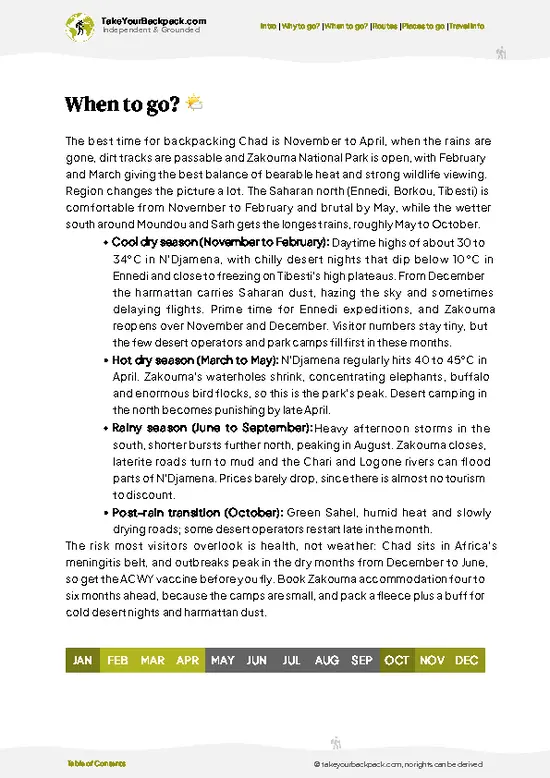
  • Topic: Weather — Goz Beida’s climate swings between a scorching dry season and a brief rainy season. The dry months from November to March offer clear skies and manageable dust, while April to October brings heavy rains that can turn roads into mud traps and limit access.

  • Topic: Temperature — Expect daytime highs around 35-40°C (95-104°F) in the dry season, cooling to 25-30°C (77-86°F) during the rainy months. Nights can drop sharply, especially in the dry season, so pack layers for comfort.

  • Topic: Daylight Hours — Near the equator, daylight stays steady year-round, roughly 12 hours. This consistency lets you plan hikes and explorations without worrying about early sunsets cutting your day short.

  • Topic: Crowds — Goz Beida isn’t a tourist hotspot, so crowds are minimal year-round.
read more 👉

  • Topic: Weather — Goz Beida’s climate swings between a scorching dry season and a brief rainy season. The dry months from November to March offer clear skies and manageable dust, while April to October brings heavy rains that can turn roads into mud traps and limit access.

  • Topic: Temperature — Expect daytime highs around 35-40°C (95-104°F) in the dry season, cooling to 25-30°C (77-86°F) during the rainy months. Nights can drop sharply, especially in the dry season, so pack layers for comfort.

  • Topic: Daylight Hours — Near the equator, daylight stays steady year-round, roughly 12 hours. This consistency lets you plan hikes and explorations without worrying about early sunsets cutting your day short.

  • Topic: Crowds — Goz Beida isn’t a tourist hotspot, so crowds are minimal year-round. Visiting in the dry season means you’ll mostly share the space with local traders and aid workers, giving you a raw, authentic vibe.

  • Topic: Seasonal Activities — The dry season is prime for trekking and village visits, as trails are passable and wildlife is easier to spot near water sources. The rainy season, while challenging, brings lush landscapes and bird migrations if you’re up for a wet adventure.

  • Topic: Price Fluctuations — Prices for lodging and transport tend to rise slightly during the dry season due to better accessibility and increased demand from NGOs and aid groups. The rainy season offers cheaper rates but comes with logistical headaches.


Pro-tip: Aim for late November to February—when the air is dry, the dust settles, and the heat is intense but bearable—so you get the full Goz Beida experience without the mud and chaos of the rains.


source: climatestotravel.comJANJanuary: excellent for travelingFEBFebruary: excellent for travelingMARMarch: highly recommended for travelingAPRApril: fair for travelingMAYMay: fair for travelingJUNJune: fair for travelingJULJuly: fair for travelingAUGAugust: fair for travelingSEPSeptember: fair for travelingOCTOctober: fair for travelingNOVNovember: highly recommended for travelingDECDecember: excellent for traveling
when-to-go

✈️ The backpacker research shortcutChad Travel Guide

An offline-friendly backpacking guide with optimized travel routes, ranked highlights, transport advice, and the best areas to stay.
example page 0 from our offline Travel Guide for Chad
example page 1 from our offline Travel Guide for Chad
example page 2 from our offline Travel Guide for Chad
example page 3 from our offline Travel Guide for Chad
example page 4 from our offline Travel Guide for Chad
example page 5 from our offline Travel Guide for Chad
example page 6 from our offline Travel Guide for Chad
example page 7 from our offline Travel Guide for Chad
The digital guide (294 pages) contains:
70 highlights, ranked by travel appeal
Optimized 7, 14 & 21-day travel routes
Cities, national parks, landmarks, beaches
How to get around
Offline-friendly for travel without Wi-Fi
👉 Click to see all 30+ guide features

📅 Plan smarter in minutes, not weeks
Month by month travel advice
Festivals & national holidays
Budget expectations

🗺️ Go to the right places, skip the overrated ones
Honest pros & cons of destinations
Top hikes, parks & viewpoints
Lesser-known places most travelers miss
Clear “worth it vs skip it” guidance

🛏️ Travel smoothly without rookie mistakes
Best areas to stay
Transport systems explained simply
Common scams & safety advice
SIM cards, money & practical tips

🌍 Understand the country, not just visit it
Culture & traditions
52 Essential phrases & customs
Festivals worth planning around
Traveler-friendly historical context
Insights that make places more meaningful

📱 Built for real travel conditions
Fully downloadable PDF
Works completely offline
Optimized for phone use
Useful in remote areas & buses
Everything in one place
Save weeks of stressful planning
Get instant access to your full guide. 30‑day money-back guarantee.
+ Add another guide for just CA$11.15

By proceeding you agree to our terms.
Sent to your inbox immediately after payment • 100% Secure Checkout
Best Backpacking Travel Advisor 2025 tourism awardBest Backpacking
Travel Advisor
2025
What others say about Take Your Backpack Guides:
⭐⭐⭐⭐⭐
Fantastic, amazing amount of information!
⭐⭐⭐⭐⭐
My goodness this is amazing, it's what I've been looking for hats off too you!
⭐⭐⭐⭐⭐
I think this is absolutely BRILLIANT
⭐⭐⭐⭐
Very complete and informative. It's still missing places, but I gotta to commend you
⭐⭐⭐⭐⭐
This is truly amazing, thank you, can't wait to explore it with my kids!
⭐⭐⭐⭐⭐
Awesome resource, thank you!
⭐⭐⭐⭐⭐
This is amazing! Can't wait to explore the ones I haven't seen
⭐⭐⭐⭐
I love this! Well done, great idea.
⭐⭐⭐⭐⭐
Thanks for taking the time to make this gem!
⭐⭐⭐⭐⭐
This might be the best website I've ever seen.
⭐⭐⭐⭐⭐
Congratulations, and thank you so much for your work; it's incredibly valuable.
⭐⭐⭐⭐
In all seriousness I think you did a great job pointing out the important spots
⭐⭐⭐⭐⭐
10/10 very good
⭐⭐⭐⭐⭐
As someone who's only just starting to visit regularly this is awesome, thank you.
⭐⭐⭐⭐
Thank you very much! I'm going to visit my dad, it's going to be very useful!
⭐⭐⭐⭐⭐
This is really cool! We'll be travelling for the first time and this definitely come in handy.
⭐⭐⭐⭐⭐
You are now our minister of culture, congratulations 👨‍💼
⭐⭐⭐⭐⭐
Just wanted to tell you that this is a pearl! Going to follow your recommendations.
⭐⭐⭐⭐⭐
This is so cool. I'll definitely be using the resource for my travels soon.
⭐⭐⭐⭐⭐
This is very impressive! Good work.
⭐⭐⭐⭐⭐
This is an amazing and informative site. Very well done!

🛏️ Where to stay?Best areas to stay in Chad

In Goz Beida, the best spot for backpackers is the central district near the main market. This area hums with life from dawn, when vendors set up stalls heavy with spices and fresh produce, to dusk, when the air thickens with the scent of grilled meat and wood smoke. Staying here means you’re steps away from local chatter and the pulse of daily life—perfect for solo travelers craving connection without the isolation of outlying neighborhoods.

Safety here is relative but better than the quieter, more residential zones where fewer eyes mean less security. The market area is naturally social, with … read more 👉
In Goz Beida, the best spot for backpackers is the central district near the main market. This area hums with life from dawn, when vendors set up stalls heavy with spices and fresh produce, to dusk, when the air thickens with the scent of grilled meat and wood smoke. Staying here means you’re steps away from local chatter and the pulse of daily life—perfect for solo travelers craving connection without the isolation of outlying neighborhoods.

Safety here is relative but better than the quieter, more residential zones where fewer eyes mean less security. The market area is naturally social, with locals and travelers mingling over shared meals or roadside tea. Hostels are sparse but tend to cluster around this hub, offering basic but reliable shelter and a chance to swap stories with fellow adventurers.

Avoid the outskirts where the streets grow dusty and empty by night; the lack of lighting and foot traffic can quickly turn a simple walk into a nerve-wracking ordeal. In the central district, the buzz of life and the presence of other travelers create a buffer against that loneliness and uncertainty. It’s not luxury, but it’s real, raw, and the best launchpad for exploring Goz Beida’s rugged charm.

🚌 Getting aroundHow to get from A to B

Goz Beida moves at its own rhythm—less a clock-driven town, more a place where the sun’s position and the dust in the air dictate your pace. The light here is harsh, casting long shadows by late afternoon, and the scent of dry earth mingles with smoke from cooking fires. It’s not a place where you’ll find neat timetables or polished transit hubs. Instead, the flow is organic, shaped by locals’ intuition and the slow churn of daily life. Understanding this is your first step to moving like a local rather than a lost tourist.


  • Walking: The most reliable and immersive way to get around. Goz Beida’s compact size means you can cover most of the town on foot within 20-30 minutes. Walking lets you absorb the textures—the cracked mud walls, the chatter from market stalls, the occasional stray goat
read more 👉
Goz Beida moves at its own rhythm—less a clock-driven town, more a place where the sun’s position and the dust in the air dictate your pace. The light here is harsh, casting long shadows by late afternoon, and the scent of dry earth mingles with smoke from cooking fires. It’s not a place where you’ll find neat timetables or polished transit hubs. Instead, the flow is organic, shaped by locals’ intuition and the slow churn of daily life. Understanding this is your first step to moving like a local rather than a lost tourist.


  • Walking: The most reliable and immersive way to get around. Goz Beida’s compact size means you can cover most of the town on foot within 20-30 minutes. Walking lets you absorb the textures—the cracked mud walls, the chatter from market stalls, the occasional stray goat weaving through alleys. No cost, no schedule, just your own pace and the town’s pulse.


  • Shared Taxis: These are informal but essential. They don’t run on strict schedules; instead, they leave when full, which can mean waiting under the blazing sun or hopping in quickly if you’re lucky. Prices are low, often just a few hundred CFA francs for short hops around town or to nearby villages. Comfort is basic—expect a crowded back seat and a driver who knows every shortcut through the dust.


  • Motorcycle Taxis (Boda-Bodas): Faster and more flexible than shared taxis, these dart through narrow streets and rough patches with surprising ease. They’re perfect if you’re in a hurry or carrying gear. Negotiate the fare upfront—usually a bit more than shared taxis but still budget-friendly. Helmets are rare, so brace for the wind and dust.


  • Minibus Services: For trips beyond Goz Beida, minibuses connect to larger towns like Abéché. They depart when full, often early morning or late afternoon, so plan accordingly. The ride can be bumpy and slow, but it’s the most economical way to cover longer distances. Bring water and patience; the road conditions demand both.


Mastering these options means you’re not just moving through Goz Beida—you’re syncing with its tempo. The town’s lack of rigid schedules isn’t a hurdle; it’s an invitation to slow down, observe, and travel on local terms. That’s where the real experience begins.

👛 Costs (as of 3 September 2026)Money, prices, and spending tips

Backpacking in Goz Beida, Chad, means embracing a raw, off-the-beaten-path experience where every dollar counts and local rhythms shape your daily expenses.
  • Dorm Accommodation: Options are extremely limited and basic, often in guesthouses or small inns rather than formal hostels. Expect to pay around $5 to $10 per night for a simple bed, usually with shared facilities and minimal amenities. The lighting might be dim, and the atmosphere rustic, but it’s enough to rest after a day in the dusty streets.
  • Meals: Food is straightforward and local—think millet porridge, grilled meat, and fresh vegetables. Street food and small local eateries dominate, with meals costing between $2 and $5. The scent of spices and charcoal fires fills the air, making even the simplest dishes satisfying. Avoid imported
read more 👉
Backpacking in Goz Beida, Chad, means embracing a raw, off-the-beaten-path experience where every dollar counts and local rhythms shape your daily expenses.
  • Dorm Accommodation: Options are extremely limited and basic, often in guesthouses or small inns rather than formal hostels. Expect to pay around $5 to $10 per night for a simple bed, usually with shared facilities and minimal amenities. The lighting might be dim, and the atmosphere rustic, but it’s enough to rest after a day in the dusty streets.
  • Meals: Food is straightforward and local—think millet porridge, grilled meat, and fresh vegetables. Street food and small local eateries dominate, with meals costing between $2 and $5. The scent of spices and charcoal fires fills the air, making even the simplest dishes satisfying. Avoid imported or luxury items, as they spike costs sharply.
  • Local Transport: Transport is mostly informal—shared taxis or minibuses, if available, cost around $1 to $3 for short trips within or near town. Walking is often the best way to soak in the atmosphere, but when distances grow, these local rides are your go-to, though schedules can be unpredictable.
  • Basic Activities/Entry Fees: Goz Beida isn’t a tourist hotspot with formal entry fees. Any local cultural visits or market explorations are free or might involve a small tip or donation, usually under $1. The real cost here is time and openness to engage with the community rather than money.
  • Miscellaneous Expenses: Budget around $1 to $3 daily for essentials like bottled water, phone credit, or small purchases. Water safety is a concern, so bottled water is a must, and it’s a small but necessary expense to keep you healthy.

Altogether, expect to spend roughly $10 to $22 per day backpacking in Goz Beida. This budget reflects the town’s simplicity and limited infrastructure, rewarding those who come prepared to adapt and appreciate the unvarnished reality of travel in this part of Chad.
⚠️ Prices can change and everyone travels differently, so take this as a rough guide. Hope it helps you plan your adventure!

🚌 Day tripsExploring the surroundings

Goz Beida is a fantastic base for exploring the raw beauty of Chad. The town’s vibrant markets and friendly locals set the stage for some unforgettable day trips. Here are a few that truly deliver.

Trip to Zakouma National Park
Just a few hours from Goz Beida, Zakouma is a wildlife lover’s paradise. The park is home to elephants, lions, and a variety of birds. The drive is bumpy but the thrill of spotting wildlife in their natural habitat makes it worthwhile. Aim for the dry season, from November to April, when animals congregate around waterholes. Expect to spend around $30 for park entry and transport. A common mistake? Underestimating the time it takes to get there; leave early to maximize your experience.
👉 Explore Zakouma National Park

Visit to the Chari River
A short trip to … read more 👉
Goz Beida is a fantastic base for exploring the raw beauty of Chad. The town’s vibrant markets and friendly locals set the stage for some unforgettable day trips. Here are a few that truly deliver.

Trip to Zakouma National Park
Just a few hours from Goz Beida, Zakouma is a wildlife lover’s paradise. The park is home to elephants, lions, and a variety of birds. The drive is bumpy but the thrill of spotting wildlife in their natural habitat makes it worthwhile. Aim for the dry season, from November to April, when animals congregate around waterholes. Expect to spend around $30 for park entry and transport. A common mistake? Underestimating the time it takes to get there; leave early to maximize your experience.
👉 Explore Zakouma National Park

Visit to the Chari River
A short trip to the Chari River offers a refreshing escape. The riverbanks are alive with the sounds of birds and the scent of wet earth. You can take a boat ride or simply relax by the water. It’s about an hour from Goz Beida, making it an easy half-day adventure. Costs are minimal, around $10 for transport and a small fee for boat rentals. The best time to visit is early morning when the light dances on the water. Don’t forget your camera; the sunrise here is something else.


Exploration of the Ouaddaï Mountains
The Ouaddaï Mountains are a stunning backdrop for a day of hiking. The trails vary from easy walks to challenging scrambles, rewarding you with panoramic views. It takes about two hours to reach the trailhead, and you can expect to spend around $20 for transport. The cooler months from November to February are ideal for hiking. A rookie mistake is not bringing enough water; the sun can be relentless.


Tour of Local Villages
Immerse yourself in local culture by visiting nearby villages. This trip is about connection, where you can engage with the community and learn about their traditions. It’s a short drive, around 30 minutes, and costs about $15 for transport. The best time is during market days, when the atmosphere buzzes with energy. Many first-timers miss out on the chance to interact; don’t be shy—ask questions and share stories.
Want to know what more Chad offers?
The Chad Travel Guide describes 70 highlights, from cities to national parks, from beaches to hikes

Get the Travel Guide -

🛡️ SafetyScams, Hazards, and Annoyances

Goz Beida is generally safe, but like any place, a little awareness goes a long way. The market area can get bustling, so keep your belongings close. A crossbody bag is ideal; it’s less likely to be snatched.

If you’re traveling solo, stick to well-lit areas after dark. The streets can feel quiet, and while that’s often peaceful, it’s best to avoid wandering too far from the main paths.

Scams are rare, but be cautious with overly friendly locals offering unsolicited help. Politely decline and keep moving. A firm but friendly demeanor can deter unwanted attention.

Overall, embrace the local vibe, but trust your instincts. Engaging with the community is rewarding, just stay aware of your surroundings, and you’ll navigate Goz Beida like a pro.

FAQCommon questions from travelers

Goz Beida is primarily a stopover rather than a destination for extended visits. It serves as a logistical hub for travelers moving through eastern Chad, with limited tourist attractions. The town's main appeal is its role in regional transit and humanitarian operations.
One to two days are sufficient for Goz Beida, mainly to rest and resupply. The town has basic accommodations and markets, but there are no significant sightseeing opportunities that require more time. Travelers usually stay briefly before continuing their journey.
No, Goz Beida cannot be effectively visited as a day trip from nearby cities due to poor road conditions and long travel times. The nearest larger town, Abeche, is about 150 kilometers away, and the journey can take several hours each way. Overnight stays in Goz Beida are recommended for practical reasons.
⚠️ Things can change over time, so always validate details locally before you go.

Other Chadian towns near Goz Beida

Explore more nearby:

  • Am Timan—seasonal wadis, remote crossroads, livestock trading, Sahel edge| 180 km away
  • Oum Hadjer—Batha River, seasonal flooding, central crossroads| 221 km away
  • Biltine—Wadi landscape, livestock markets, eastern trade| 262 km away

💡 Not sure where to go next?
Create a personalized itinerary for Chad including Goz Beida and the places that fit your trip.

Generate my itinerary

👉 Discover all towns

Or checkout all Chad has to offer (think cities, towns, villages, national parks, hikes, beaches, festivals)
Country photo of Chad

We 💚 feedbackKey takeaways before you go

Goz Beida has a raw, unfiltered vibe that’s hard to find elsewhere. The scent of spices wafts through the bustling market, where locals greet you with genuine smiles. The best surprise? The warmth of the community; they’ll share stories over tea that linger long after you leave. Just a heads-up: the heat can be relentless, so stay hydrated and pace yourself. Embrace the challenge, and the rewards will be all the sweeter.

✍️ Help improve this page!
The information on this page is based on in-depth research, insights shared by experienced travelers, and feedback from the local travel community in Chad. While every effort is made to keep the information accurate and current, conditions can change — so if you spot anything incorrect or outdated, please get in touch.


🙋‍♂️ Give feedback

👋 Meet the founderWho’s Behind Take Your Backpack?

Johan, backpacker and founder of TakeYourBackpackHi, I’m Johan (Netherlands 🇳🇱), the creator of TakeYourBackpack. Over the past decade, I’ve backpacked through 80+ countries across six continents, gaining extensive experience with independent travel, long-term trips, and overland routes.

This site is built on a combination of firsthand travel experience and carefully curated insights from other backpackers. Many guides are based on places I’ve personally visited, while others bring together tips, observations, and practical advice shared by trusted travelers I’ve met along the way.

The goal is to provide realistic, experience-driven guidance — not generic itineraries — so you can explore destinations with better context, clearer expectations, and more confidence.

Get full Chad guide •
Instant download • 70 highlights • Full Offline guide