×

Chad🇹🇩 | townsOum HadjerBatha riverbed wells, granite boulders, weekly livestock, Abéché road | things to do and best time to go

Explore ZouarExplore Kyabé

Backpacking in Oum Hadjer
👌 Worth visitingtown ranked #17
By Johan Kruseman 🇳🇱 | Updated October 22, 2026

Goats scatter as a pickup rattles into the dust, and the smell of woodsmoke and millet porridge drifts from compounds along the road. Oum Hadjer sits in the Batha region in the east of Chad, on the road between N’Djamena and Abéché. Skip hunting for sights, because there are few. The weekly market is worth your morning, since traders from surrounding villages bring livestock and grain. Beds are basic and scarce, and the evenings are quiet, so carry cash and ask locals for a room. Unlike Ati, farther west, Oum Hadjer is smaller and lies closer to the rocky hills.

Discover everything you want to know in the 📖 Chad Travel Guide.
Safety warning

The current risk level for Chad is high. Check the advice before going.


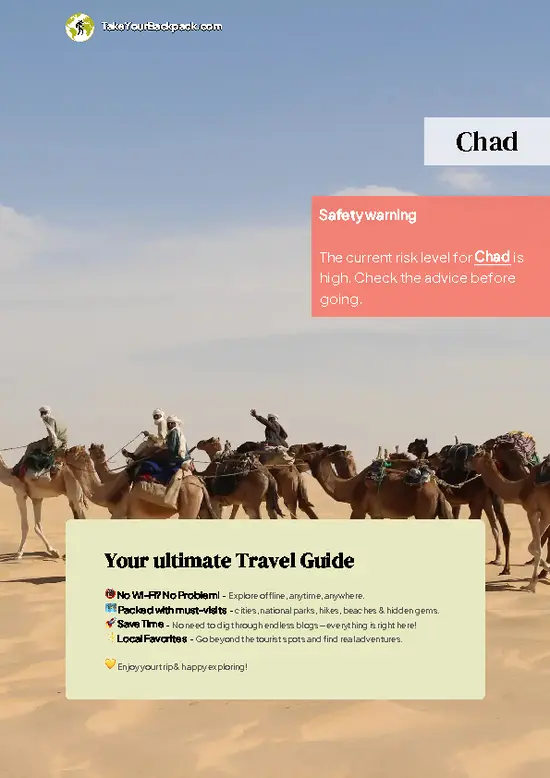
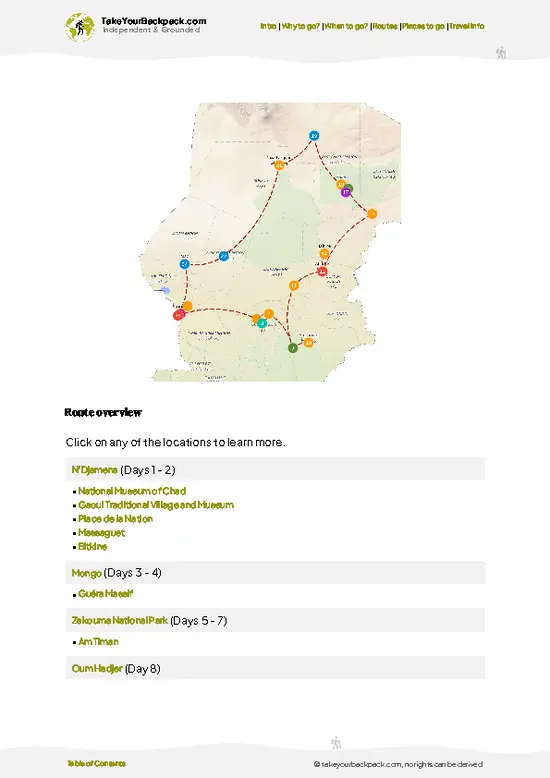
example page 0 from our offline Travel Guide for Chad
example page 1 from our offline Travel Guide for Chad
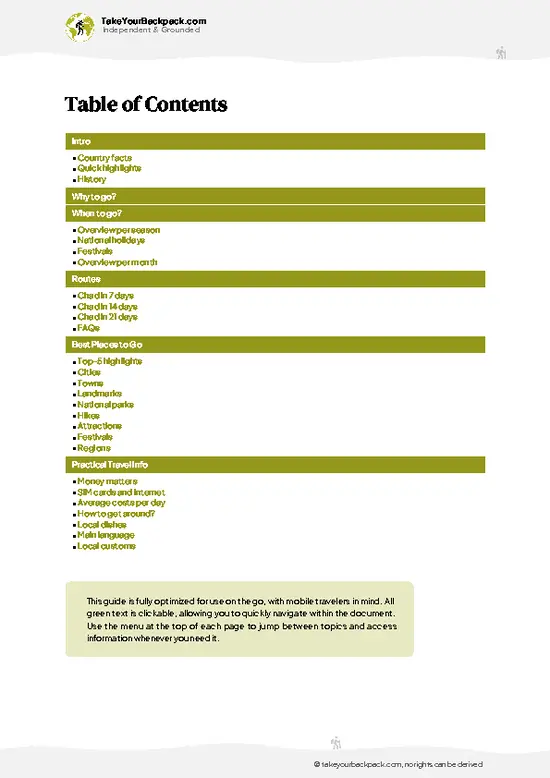
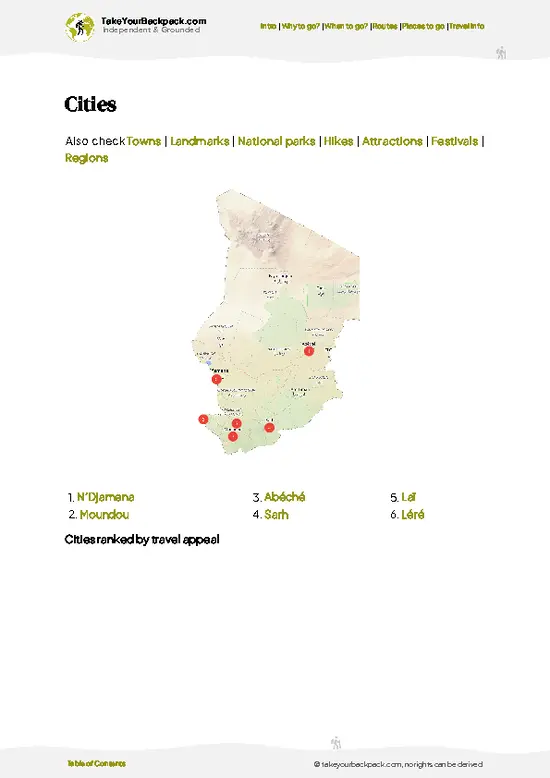
example page 2 from our offline Travel Guide for Chad
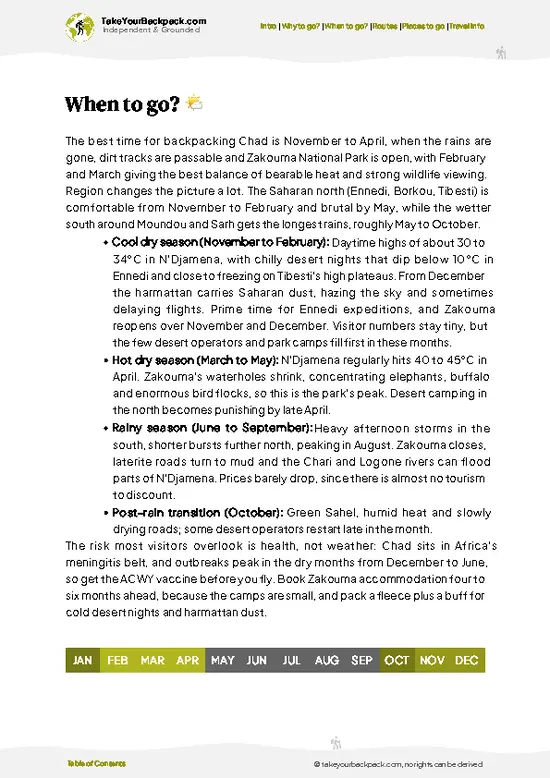
example page 3 from our offline Travel Guide for Chad
example page 4 from our offline Travel Guide for Chad
example page 5 from our offline Travel Guide for Chad
example page 6 from our offline Travel Guide for Chad
example page 7 from our offline Travel Guide for Chad
Loading the map 🌍
CLICK TO FILTER
cities
towns
landmarks
national parks
hikes
attractions
festivals
regions
SHOW COUNTRY’S BESTSHOW ALL

✨ Why go?
Ranked #17 town in Chad
What makes this town worth visiting

Oum Hadjer rewards the traveler already crossing eastern Chad who wants a real overnight rather than a roadside blur. The pull is the Batha river bed with its herders and wells, plus the odd granite outcrops that give the town its name, meaning “mother of stones.” Expect a simple guesthouse or compound and tea with locals rather than nightlife. Most people stay one night, two if they walk the hills and watch the market. Solo, self-reliant travelers with patience for permits, checkpoints and heat will enjoy it. Anyone wanting hostels, tours or easy company should keep going.

💡 HighlightsPlaces and moments you shouldn't skip

  1. Oum Hadjer central market: The town’s real attraction, with livestock, grain, spices, leather and tea sellers. Go in the morning when trade is busiest. Free to enter, 1 to 2 hours.
  2. Batha river bed: Dry most of the year, it fills with herders digging shallow wells and watering camels and cattle. Visit at dawn or late in the day. Free, about 1 hour.
  3. The granite hills at the edge of town: Rounded boulders you can scramble up for a wide view over the plain and the river line. Best before the midday heat. Free, 1 to 2 hours.
  4. Tea stalls along the main road: Sweet, strong tea in small glasses is the best way to talk to drivers and traders. Evenings are liveliest. Usually €0.15 to 0.30, 30 to 60 minutes.
  5. Livestock gathering points: Herders bring camels, goats and cattle to sell and water, a good look
… read more 👉
  1. Oum Hadjer central market: The town’s real attraction, with livestock, grain, spices, leather and tea sellers. Go in the morning when trade is busiest. Free to enter, 1 to 2 hours.
  2. Batha river bed: Dry most of the year, it fills with herders digging shallow wells and watering camels and cattle. Visit at dawn or late in the day. Free, about 1 hour.
  3. The granite hills at the edge of town: Rounded boulders you can scramble up for a wide view over the plain and the river line. Best before the midday heat. Free, 1 to 2 hours.
  4. Tea stalls along the main road: Sweet, strong tea in small glasses is the best way to talk to drivers and traders. Evenings are liveliest. Usually €0.15 to 0.30, 30 to 60 minutes.
  5. Livestock gathering points: Herders bring camels, goats and cattle to sell and water, a good look at the Sahelian pastoral economy. Mornings are best. Free, about 1 hour.
Everything in town is free except tea, which costs pennies. For day trips, travelers can head toward Ati and its Batha river setting, or toward the Guéra massif on the way to Mongo.
Spotted a mistake or missing something? Contact us.

🏘️ NeighborhoodsUnderstanding the local layout

Oum Hadjer is a small Batha-region town on the Batha River's flood plain, and you can cover all of it on foot in a morning. Skip the idea of sightseeing districts; use these areas for orientation.
  • Central market area: The only place worth real time. Trucks and donkey carts bring goods from the Sahel belt, so go in the morning when stalls are full. Eat grilled meat, millet porridge and sweet tea here, because few other spots serve food.
  • Main road and transport lots: Noisy and dusty, but this is where vehicles gather and where you ask about onward rides. Drivers leave when full, so arrive early rather than trusting any timetable.
  • Riverbank and seasonal watercourse: Quiet, with herders watering livestock. Walk it at dawn for scenery; ask before photographing people or animals.
  • Residential edges:
… read more 👉
Oum Hadjer is a small Batha-region town on the Batha River's flood plain, and you can cover all of it on foot in a morning. Skip the idea of sightseeing districts; use these areas for orientation.
  • Central market area: The only place worth real time. Trucks and donkey carts bring goods from the Sahel belt, so go in the morning when stalls are full. Eat grilled meat, millet porridge and sweet tea here, because few other spots serve food.
  • Main road and transport lots: Noisy and dusty, but this is where vehicles gather and where you ask about onward rides. Drivers leave when full, so arrive early rather than trusting any timetable.
  • Riverbank and seasonal watercourse: Quiet, with herders watering livestock. Walk it at dawn for scenery; ask before photographing people or animals.
  • Residential edges: Mud-brick compounds, no sights, no cafés. Not worth the time unless you are invited in, which does happen.

⌛️ 1 daySeeing the highlights in 24 hours

7:00 AM, Central market: Start here before the heat, when livestock and grain traders are busiest. Walk the stalls slowly, buy water, dates and bread, and greet sellers before taking photos, always asking first.
9:30 AM, Tea stall on the main road: Sit for a glass of sweet tea and let drivers tell you about the road ahead. It is a calm break before the sun climbs.
11:00 AM, Granite hills: Walk out of town and scramble up the boulders for a view across the plain. Skip this if the heat is already severe.
1:00 PM, Rest: Take shade and lunch at your guesthouse, as the town goes quiet.
4:30 PM, Batha river bed: Walk down as herders bring animals to the wells, the least touristy and best scene in town. Finish with tea at dusk.

🌤️ When to go?Weather, crowds, and seasonal trade-offs

  • Cool dry season (November to February): Days reach 30 to 35°C (86 to 95°F), nights drop to 15 to 20°C (59 to 68°F), and roads are firm. Harmattan haze can dull the light.
  • Hot season (March to June): Highs of 40 to 45°C (104 to 113°F) make midday walking miserable.
  • Rainy season (July to September): Tracks turn to mud, the river fills, and transport slows. Fares can rise.
Travel in December or January, and plan errands before late morning.

source: climatestotravel.comJANJanuary: excellent for travelingFEBFebruary: excellent for travelingMARMarch: good for travelingAPRApril: fair for travelingMAYMay: below average for travelingJUNJune: below average for travelingJULJuly: below average for travelingAUGAugust: below average for travelingSEPSeptember: fair for travelingOCTOctober: good for travelingNOVNovember: highly recommended for travelingDECDecember: excellent for traveling
when-to-go

✈️ The backpacker research shortcutChad Travel Guide

An offline-friendly backpacking guide with optimized travel routes, ranked highlights, transport advice, and the best areas to stay.
example page 0 from our offline Travel Guide for Chad
example page 1 from our offline Travel Guide for Chad
example page 2 from our offline Travel Guide for Chad
example page 3 from our offline Travel Guide for Chad
example page 4 from our offline Travel Guide for Chad
example page 5 from our offline Travel Guide for Chad
example page 6 from our offline Travel Guide for Chad
example page 7 from our offline Travel Guide for Chad
The digital guide (262 pages) contains:
✅ 57 highlights, ranked by travel appeal
✅ Optimized 7, 14 & 21-day travel routes
✅ Cities, national parks, landmarks, beaches
✅ How to get around
✅ Offline-friendly for travel without Wi-Fi
👉 Click to see all 30+ guide features

📅 Plan smarter in minutes, not weeks
✅ Month by month travel advice
✅ Festivals & national holidays
✅ Budget expectations

🗺️ Go to the right places, skip the overrated ones
✅ Honest pros & cons of destinations
✅ Top hikes, parks & viewpoints
✅ Lesser-known places most travelers miss
✅ Clear “worth it vs skip it” guidance

🛏️ Travel smoothly without rookie mistakes
✅ Best areas to stay
✅ Transport systems explained simply
✅ Common scams & safety advice
✅ SIM cards, money & practical tips

🌍 Understand the country, not just visit it
✅ Culture & traditions
✅ 52 Essential phrases & customs
✅ Festivals worth planning around
✅ Traveler-friendly historical context
✅ Insights that make places more meaningful

📱 Built for real travel conditions
✅ Fully downloadable PDF
✅ Works completely offline
✅ Optimized for phone use
✅ Useful in remote areas & buses
✅ Everything in one place
Stop searching, start planning
Get instant access to your full guide. 30‑day money-back guarantee.
+ Add another guide for just

By proceeding you agree to our terms.
Sent to your inbox immediately after payment • 100% Secure Checkout
Best Backpacking Travel Advisor 2025 tourism awardBest Backpacking
Travel Advisor
2025
What others say about Take Your Backpack Guides:
⭐⭐⭐⭐⭐
Fantastic, amazing amount of information!
⭐⭐⭐⭐⭐
My goodness this is amazing, it's what I've been looking for hats off too you!
⭐⭐⭐⭐⭐
I think this is absolutely BRILLIANT
⭐⭐⭐⭐
Very complete and informative. It's still missing places, but I gotta to commend you
⭐⭐⭐⭐⭐
This is truly amazing, thank you, can't wait to explore it with my kids!
⭐⭐⭐⭐⭐
Awesome resource, thank you!
⭐⭐⭐⭐⭐
This is amazing! Can't wait to explore the ones I haven't seen
⭐⭐⭐⭐
I love this! Well done, great idea.
⭐⭐⭐⭐⭐
Thanks for taking the time to make this gem!
⭐⭐⭐⭐⭐
This might be the best website I've ever seen.
⭐⭐⭐⭐⭐
Congratulations, and thank you so much for your work; it's incredibly valuable.
⭐⭐⭐⭐
In all seriousness I think you did a great job pointing out the important spots
⭐⭐⭐⭐⭐
10/10 very good
⭐⭐⭐⭐⭐
As someone who's only just starting to visit regularly this is awesome, thank you.
⭐⭐⭐⭐
Thank you very much! I'm going to visit my dad, it's going to be very useful!
⭐⭐⭐⭐⭐
This is really cool! We'll be travelling for the first time and this definitely come in handy.
⭐⭐⭐⭐⭐
You are now our minister of culture, congratulations 👨‍💼
⭐⭐⭐⭐⭐
Just wanted to tell you that this is a pearl! Going to follow your recommendations.
⭐⭐⭐⭐⭐
This is so cool. I'll definitely be using the resource for my travels soon.
⭐⭐⭐⭐⭐
This is very impressive! Good work.
⭐⭐⭐⭐⭐
This is an amazing and informative site. Very well done!

🛏️ Where to stay?Best areas and accommodation options

Stay near the central market and main road, because that is where the few basic guesthouses and rooms are. Expect simple rooms for roughly €6 to 20 a night, with shared or bucket washing and patchy electricity, rather than dorm hostels. The market area is lively and safe enough by day, but trucks and early prayer calls mean noise from dawn. It also puts you beside the transport lots, which matters when vehicles leave before sunrise. The quieter residential edges are calmer at night, but you will walk unlit streets to reach food or a ride. Bring earplugs, a headlamp and a mosquito net.

🚌 Getting aroundHow to get around Oum Hadjer

Oum Hadjer’s center is flat and compact, so you walk everywhere in town, and walking stops making sense only when you leave for villages or the next town. Public transport as a system does not exist. Expect shared vehicles, long waits and sand.
  • Walking: Free and fastest for the market, river and transport lots. Cover it before the heat builds, since shade is scarce.
  • Moto-taxi: The practical option for short hops, usually €0.30 to 1. Agree the fare first, because no meters exist.
  • Shared pickups and buses on the main road: The standard way to reach Mongo, Abéché or N’Djamena, typically €8 to 25 depending on distance and 4 to 10 hours. They leave when full, often at dawn, so be at the lot early and carry water.
  • Private 4x4 with driver: Costs €100 to 180 a day. Only worth it for remote tracks or tight
… read more 👉
Oum Hadjer’s center is flat and compact, so you walk everywhere in town, and walking stops making sense only when you leave for villages or the next town. Public transport as a system does not exist. Expect shared vehicles, long waits and sand.
  • Walking: Free and fastest for the market, river and transport lots. Cover it before the heat builds, since shade is scarce.
  • Moto-taxi: The practical option for short hops, usually €0.30 to 1. Agree the fare first, because no meters exist.
  • Shared pickups and buses on the main road: The standard way to reach Mongo, Abéché or N’Djamena, typically €8 to 25 depending on distance and 4 to 10 hours. They leave when full, often at dawn, so be at the lot early and carry water.
  • Private 4x4 with driver: Costs €100 to 180 a day. Only worth it for remote tracks or tight schedules, since shared rides cover the main road for a fraction.

👛 Costs (as of 22 October 2026)Typical daily expenses

Oum Hadjer costs a backpacker about €17 to 37 a day in high season.
CategoryBudget RangeLocal Reality
Dorm accommodation€6 to 12No dorms; basic private rooms, rarely with running water
Meals€5 to 9Grilled meat, rice, beans and millet at market stalls
Local transport€2 to 5Moto-taxis and shared pickups for short hops
Basic activities/entry fees€0 to 3Mostly free walking; occasional permit or guide fees
Miscellaneous expenses€4 to 8Bottled water, phone credit, small tips
Total Daily Budget€17 to 37Pay in cash; cards are not accepted
Buy water and supplies in the market, and carry small notes because change is scarce.

source: worldbank.org
⚠️ Prices can change and everyone travels differently, so take this as a rough guide. Hope it helps you plan your adventure!

🚌 Day tripsWhere to go beyond the main area

Oum Hadjer is a workable base only for short local outings, since facilities are thin and roads slow. Pick trips that return the same day.Batha River Banks: A walk of an hour or two along the watercourse shows herders and wells, free and best in the cooler months. Go early, and ask permission before photographing anyone.
Mongo: The regional hub of Guéra lies a half-day away by shared pickup, about €5 to 12 each way. A bigger market and better supplies make it worthwhile, but leave early to return by dark. First-timers often start too late and get stuck.
👉 Explore MongoAti: The Batha provincial capital is reachable in a long day by shared vehicle for roughly €8 to 15 each way. Visit in the dry season, since rains can cut the track.

🛡️ SafetyStaying Safe: What Travelers Should Know

Oum Hadjer is generally calm, but Chad as a whole needs preparation. Check current government advice before you go, and register with your embassy. Petty theft in the market is uncommon; keep valuables out of sight and carry modest cash. Avoid travel after dark, since roads have banditry and no lighting. Dress conservatively, ask before taking photos, and expect military checkpoints where you need your passport and travel permit copies. Solo women will draw attention, so cover shoulders and knees. Kids may ask for money; a polite refusal works.

FAQFrequently asked questions about Oum Hadjer

Oum Hadjer is mainly a pause on the road east, not a place to plan a trip around. It has a lively morning market and a seasonal river, but no formal sights, and rooms are basic at roughly €6 to 20 a night. Come for local life on the route between N’Djamena and Abéché.
Plan one night, or one full day and the following morning. That covers the market, a river walk at dawn and the early shared vehicle onward, which often leaves before sunrise. Add a second day only if you want to reach Mongo or Ati, each several hours away.
Oum Hadjer is too far from major cities for a realistic day trip. N’Djamena lies roughly 600 km away, a journey of 8 to 12 hours by road, and shared vehicles cost about €15 to 25. Mongo is the nearest sizable hub, about half a day away, so overnight stays make more sense.
⚠️ Things can change over time, so always validate details locally before you go.

Other Chadian towns near Oum Hadjer

Explore more nearby:

  • Mongo—Guéra massif, agricultural basin, crossroads town| 164 km away
  • Biltine—Wadi landscape, livestock markets, eastern trade| 191 km away
  • Bitkine—Guéra hills, seasonal markets, clay architecture| 217 km away

💡 Not sure where to go next?
Create a personalized itinerary for Chad including Oum Hadjer and the places that fit your trip.

Generate my itinerary

👉 Discover all towns

Or checkout all Chad has to offer (think cities, towns, villages, national parks, hikes, beaches, festivals)
Country photo of Chad

We 💚 feedbackFinal thoughts on visiting Oum Hadjer

Oum Hadjer suits slow, self-sufficient travelers who like talking to herders and drivers more than ticking sights. I would bring small bills, a scarf and patience, and arrive early so you can find a bed before dark.

✍️ Help improve this page!
The information on this page is based on in-depth research, insights shared by experienced travelers, and feedback from the local travel community in Chad. While every effort is made to keep the information accurate and current, conditions can change — so if you spot anything incorrect or outdated, please get in touch.


🙋‍♂️ Give feedback

👋 Meet the founderWho’s Behind Take Your Backpack?

Johan, backpacker and founder of TakeYourBackpackHi, I’m Johan (Netherlands 🇳🇱), the creator of TakeYourBackpack. Over the past 3 decades, I’ve backpacked through 90+ countries across six continents, gaining extensive experience with independent travel, long-term trips, and overland routes.

This site is built on a combination of firsthand travel experience and carefully curated insights from other backpackers. Many guides are based on places I’ve personally visited, while others bring together tips, observations, and practical advice shared by trusted travelers I’ve met along the way.

The goal is to provide realistic, experience-driven guidance — not generic itineraries — so you can explore destinations with better context, clearer expectations, and more confidence.