×

Chad🇹🇩 | townsMongoGuéra massif, agricultural basin, crossroads town | things to do and best time to go

Explore BitkineExplore Massaguet

Backpacking in Mongo
🌟 Highlighttown ranked #10
By Johan Kruseman 🇳🇱 | Updated October 16, 2026

Mongo is not for anyone chasing nightlife, boutique cafés, or the curated comforts of a capital city. But if you’re the kind of backpacker who finds meaning in the grit and rhythm of real, everyday Chad, Mongo rewards you with a sense of arrival few places offer. Set in the heart of Guéra, east of N’Djamena, Mongo is a crossroads town where the Sahel’s ochre dust meets the green humps of the Guéra Massif. The town itself is basic—think sun-bleached streets, a lively central market, and the scent of grilled meat drifting from roadside stalls. It’s not a destination for urban thrills, but it’s a practical, low-key base for exploring the region’s granite outcrops or arranging trips to nearby villages. Transport is straightforward: battered minibuses from N’Djamena or Abéché, then your feet or a moto-taxi. Social life is slow; you’ll meet more locals than travelers, and evenings are quiet, but that’s part of Mongo’s charm. Costs are low, safety is reasonable with standard caution, and compared to busier Abéché, Mongo feels more relaxed and less touristed—a place to catch your breath and recalibrate before the next leg.

Discover everything you want to know in the 📖 Chad Travel Guide.
Safety warning

The current risk level for Chad is high. Check the advice before going.


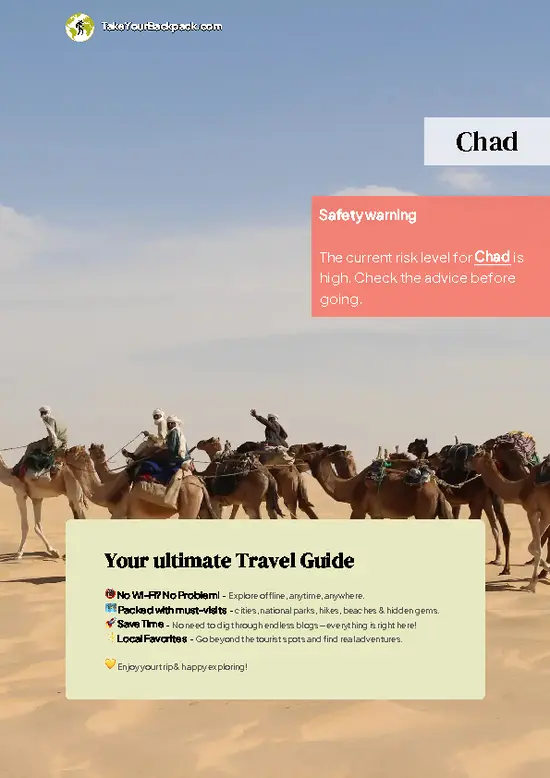
example page 0 from our offline Travel Guide for Chad
example page 1 from our offline Travel Guide for Chad
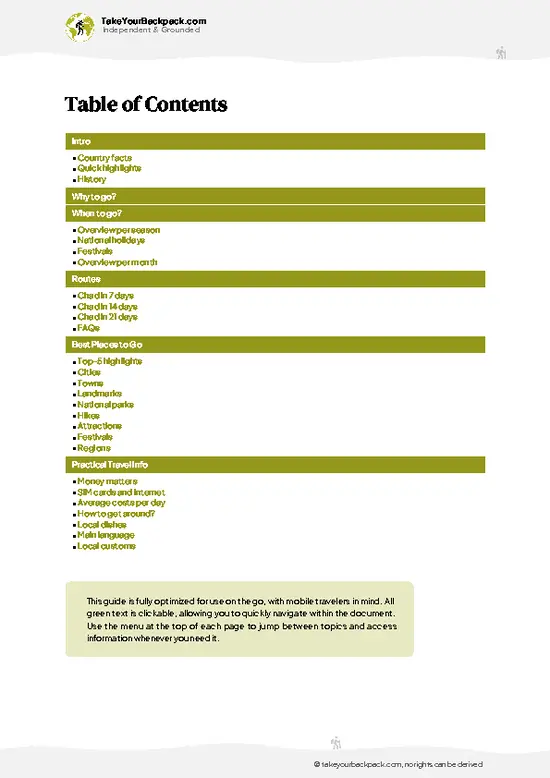
example page 2 from our offline Travel Guide for Chad
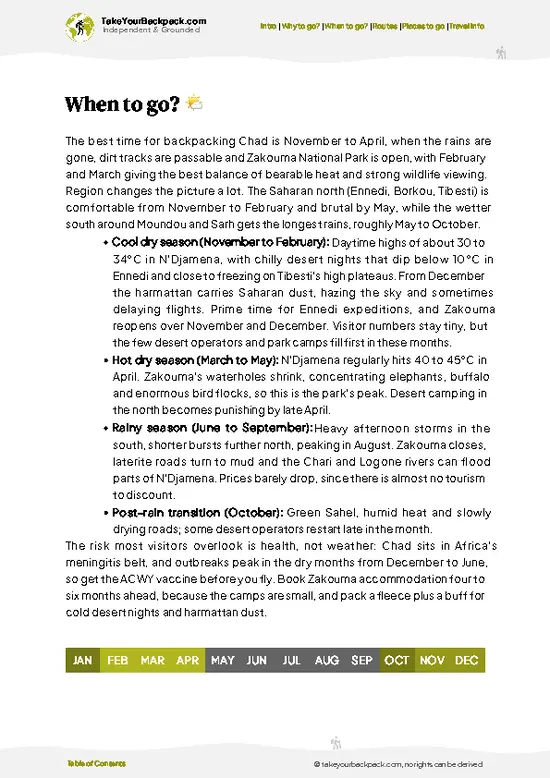
example page 3 from our offline Travel Guide for Chad
example page 4 from our offline Travel Guide for Chad
example page 5 from our offline Travel Guide for Chad
example page 6 from our offline Travel Guide for Chad
example page 7 from our offline Travel Guide for Chad
Loading the map 🌍
CLICK TO FILTER
cities
towns
landmarks
national parks
hikes
attractions
festivals
regions
SHOW COUNTRY’S BESTSHOW ALL

✨ Why go?
Ranked #10 town in Chad
Why Mongo should be on your travel list

Backpackers flock to Mongo in Chad for its strategic position as a gateway to adventure. The town serves as a launchpad for nearby hikes in the Tibesti Mountains, where the air is crisp and the views stretch endlessly. After a day of trekking, you can unwind at small-scale guesthouses that offer a cozy atmosphere and a chance to connect with fellow travelers. The local food scene is a treat; savoring spicy stews and fresh bread from street vendors fills your belly and warms your spirit.

Mongo’s walkable streets create a sense of intimacy, making it easy to explore and soak in the local culture. It’s a place where slow travelers and solo adventurers feel at home, often lingering for a few days to absorb the rhythm of life. The vibe is friendly but not overwhelming, allowing for quiet reflection … read more 👉
Backpackers flock to Mongo in Chad for its strategic position as a gateway to adventure. The town serves as a launchpad for nearby hikes in the Tibesti Mountains, where the air is crisp and the views stretch endlessly. After a day of trekking, you can unwind at small-scale guesthouses that offer a cozy atmosphere and a chance to connect with fellow travelers. The local food scene is a treat; savoring spicy stews and fresh bread from street vendors fills your belly and warms your spirit.

Mongo’s walkable streets create a sense of intimacy, making it easy to explore and soak in the local culture. It’s a place where slow travelers and solo adventurers feel at home, often lingering for a few days to absorb the rhythm of life. The vibe is friendly but not overwhelming, allowing for quiet reflection or casual conversations with locals. While it’s not a nightlife hub, the social atmosphere is vibrant enough to foster connections. For those seeking a blend of culture and nature, Mongo is more than just a stop; it’s a meaningful part of the journey.

💡 HighlightsMust-see experiences and standout moments

  • Mongo Central Market (Marché central) — The busiest, most honest snapshot of the city: stalls stacked with millet, peanuts, spices, second-hand clothing and everyday tools, with traders from surrounding villages and nomads passing through. Great for people-watching, tasting street food, and picking up affordable textiles and simple crafts.
  • Livestock Market (marché aux bestiaux) — A core economic and social event where cattle, goats and sheep change hands; seeing the bargaining, transport methods and animal penning gives clear insight into pastoral life in the Guéra region. Best visited early morning when activity is at its peak.
  • Guéra Massif viewpoints and granite inselbergs — Short walks from town lead to granite outcrops and ridgelines that frame Mongo. The views at sunrise or sunset
… read more 👉
  • Mongo Central Market (Marché central) — The busiest, most honest snapshot of the city: stalls stacked with millet, peanuts, spices, second-hand clothing and everyday tools, with traders from surrounding villages and nomads passing through. Great for people-watching, tasting street food, and picking up affordable textiles and simple crafts.
  • Livestock Market (marché aux bestiaux) — A core economic and social event where cattle, goats and sheep change hands; seeing the bargaining, transport methods and animal penning gives clear insight into pastoral life in the Guéra region. Best visited early morning when activity is at its peak.
  • Guéra Massif viewpoints and granite inselbergs — Short walks from town lead to granite outcrops and ridgelines that frame Mongo. The views at sunrise or sunset are striking, the rock formations are a unique landscape feature, and nearby hill villages offer authentic encounters with local daily life.
  • Main mosque and Friday prayer area — The mosque is the social heart for many residents; observing (or respectfully visiting outside prayer times) reveals communal rhythms, simple Sahelian religious architecture, and the central role of Islam in city life.
Nearby day-trip highlights include the Guéra Massif villages and rock outcrops around Melfi, plus the region’s surrounding village markets and pastoral landscapes that are easy to reach from Mongo.
Spotted a mistake or missing something? Contact us.

🏘️ NeighborhoodsKey areas and districts to know

Mongo, Chad, is a vibrant hub that offers a unique blend of culture and adventure. Here’s how to navigate its neighborhoods for a smoother experience.

Centre Ville: This is the heart of Mongo. Expect a lively atmosphere with bustling markets and street vendors. It’s affordable, with plenty of local eateries serving up delicious meals. The walkability is decent, but be prepared for uneven sidewalks. Nightlife is minimal, so if you’re looking for a quiet evening, this is your spot. Perfect for short stays, as you can easily access transport options to other parts of Chad.

Quartier de l’Education: A bit quieter, this area is home to schools and community centers. The vibe is more laid-back, making it ideal for longer stays. Costs are slightly higher here, but you’ll find cozy guesthouses. Walkability … read more 👉
Mongo, Chad, is a vibrant hub that offers a unique blend of culture and adventure. Here’s how to navigate its neighborhoods for a smoother experience.

Centre Ville: This is the heart of Mongo. Expect a lively atmosphere with bustling markets and street vendors. It’s affordable, with plenty of local eateries serving up delicious meals. The walkability is decent, but be prepared for uneven sidewalks. Nightlife is minimal, so if you’re looking for a quiet evening, this is your spot. Perfect for short stays, as you can easily access transport options to other parts of Chad.

Quartier de l’Education: A bit quieter, this area is home to schools and community centers. The vibe is more laid-back, making it ideal for longer stays. Costs are slightly higher here, but you’ll find cozy guesthouses. Walkability is good, and the local parks offer a nice escape. It’s a great place to soak in local life, but nightlife is virtually non-existent.

Quartier des Artisans: This neighborhood is a treasure trove of local crafts and art. The atmosphere is creative and inspiring, perfect for those looking to connect with local artisans. Prices vary, but you can find budget-friendly options. It’s walkable, and the vibrant energy makes it suitable for both short and long visits. Nightlife is low-key, with occasional cultural events that can add a unique flavor to your stay.

⌛️ 1 daySeeing the highlights in 24 hours

Mongo, Chad, is a vibrant tapestry of culture and resilience, where the rhythm of daily life pulses through the streets. The town is known for its lively markets, rich traditions, and the warm hospitality of its people. You’ll find a blend of modernity and tradition, making it a fascinating stop for any traveler.

Start your morning at the bustling central market. The air is thick with the scent of spices and fresh produce. Vendors call out, their voices mingling with the laughter of children. Grab a local breakfast of *foutou*—a starchy dish made from cassava or plantains. It’s filling and gives you the energy to explore. After breakfast, wander through the narrow streets of the old town, where mud-brick houses stand as a testament to the region’s history. The light filters through the trees, … read more 👉
Mongo, Chad, is a vibrant tapestry of culture and resilience, where the rhythm of daily life pulses through the streets. The town is known for its lively markets, rich traditions, and the warm hospitality of its people. You’ll find a blend of modernity and tradition, making it a fascinating stop for any traveler.

Start your morning at the bustling central market. The air is thick with the scent of spices and fresh produce. Vendors call out, their voices mingling with the laughter of children. Grab a local breakfast of *foutou*—a starchy dish made from cassava or plantains. It’s filling and gives you the energy to explore. After breakfast, wander through the narrow streets of the old town, where mud-brick houses stand as a testament to the region’s history. The light filters through the trees, casting playful shadows on the ground.

In the afternoon, head to the nearby *Lac de Mongo*. It’s not on every tourist’s radar, but the serene waters and surrounding landscape offer a peaceful retreat. Bring a book or simply sit by the shore, soaking in the tranquility. If you’re feeling adventurous, consider a short hike in the nearby hills for panoramic views of the town and the lake. The golden hues of the landscape at sunset are worth the effort.

As evening falls, return to the town and find a local eatery. Try *djerma*, a traditional dish made with meat and spices, served with rice. The atmosphere is lively, filled with the sounds of laughter and conversation. After dinner, stroll through the streets, where the warm glow of lanterns lights up the night. Engage with locals; their stories will enrich your experience. Mongo may not be on every travel itinerary, but it’s a place where every moment feels genuine and rewarding.

🌤️ When to go?When to go for the best experience

  • Topic: Weather — Mongo sits in a hot semi-arid zone. The dry season from November to April offers clear skies and minimal rain, making trails less slippery and the air easier to breathe. Avoid the rainy season (May to October) when sudden downpours turn dirt paths into mud traps and humidity spikes.
  • Topic: Temperature — Daytime highs in the dry season hover around 30-35°C (86-95°F), cooling to a comfortable 15-20°C (59-68°F) at night. The rainy season pushes temps higher and muggier, which can sap your energy fast.
  • Topic: Daylight Hours — Mongo enjoys roughly 11 to 12 hours of daylight year-round, but the dry season’s clearer skies mean more reliable sunlight for early starts and late finishes without the threat of sudden storms.
  • Topic: Crowds — Mongo is off the beaten path, so crowds
… read more 👉
  • Topic: Weather — Mongo sits in a hot semi-arid zone. The dry season from November to April offers clear skies and minimal rain, making trails less slippery and the air easier to breathe. Avoid the rainy season (May to October) when sudden downpours turn dirt paths into mud traps and humidity spikes.
  • Topic: Temperature — Daytime highs in the dry season hover around 30-35°C (86-95°F), cooling to a comfortable 15-20°C (59-68°F) at night. The rainy season pushes temps higher and muggier, which can sap your energy fast.
  • Topic: Daylight Hours — Mongo enjoys roughly 11 to 12 hours of daylight year-round, but the dry season’s clearer skies mean more reliable sunlight for early starts and late finishes without the threat of sudden storms.
  • Topic: Crowds — Mongo is off the beaten path, so crowds are minimal year-round. However, the dry season sees a slight uptick in regional travelers, which means better access to local markets and cultural events without feeling overwhelmed.
  • Topic: Seasonal Activities — The dry season is prime for exploring surrounding natural sites and engaging with local festivals. The rainy season limits outdoor options but brings lush landscapes if you’re prepared for the mud.
  • Topic: Price Fluctuations — Prices for lodging and guides tend to dip during the rainy season due to lower demand, but the trade-off is tougher travel conditions and less predictable schedules.
Pro-tip: Aim for late November to early April to lock in dry trails, manageable heat, and the chance to experience Mongo’s local life at its most accessible and vibrant.


source: climatestotravel.comJANJanuary: excellent for travelingFEBFebruary: excellent for travelingMARMarch: excellent for travelingAPRApril: excellent for travelingMAYMay: fair for travelingJUNJune: below average for travelingJULJuly: below average for travelingAUGAugust: below average for travelingSEPSeptember: fair for travelingOCTOctober: fair for travelingNOVNovember: highly recommended for travelingDECDecember: excellent for traveling
when-to-go

✈️ The backpacker research shortcutChad Travel Guide

An offline-friendly backpacking guide with optimized travel routes, ranked highlights, transport advice, and the best areas to stay.
example page 0 from our offline Travel Guide for Chad
example page 1 from our offline Travel Guide for Chad
example page 2 from our offline Travel Guide for Chad
example page 3 from our offline Travel Guide for Chad
example page 4 from our offline Travel Guide for Chad
example page 5 from our offline Travel Guide for Chad
example page 6 from our offline Travel Guide for Chad
example page 7 from our offline Travel Guide for Chad
The digital guide (262 pages) contains:
✅ 57 highlights, ranked by travel appeal
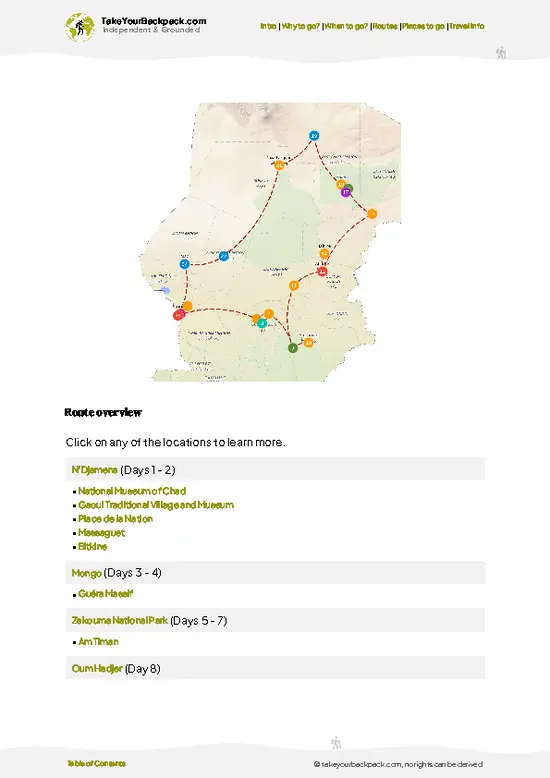
✅ Optimized 7, 14 & 21-day travel routes
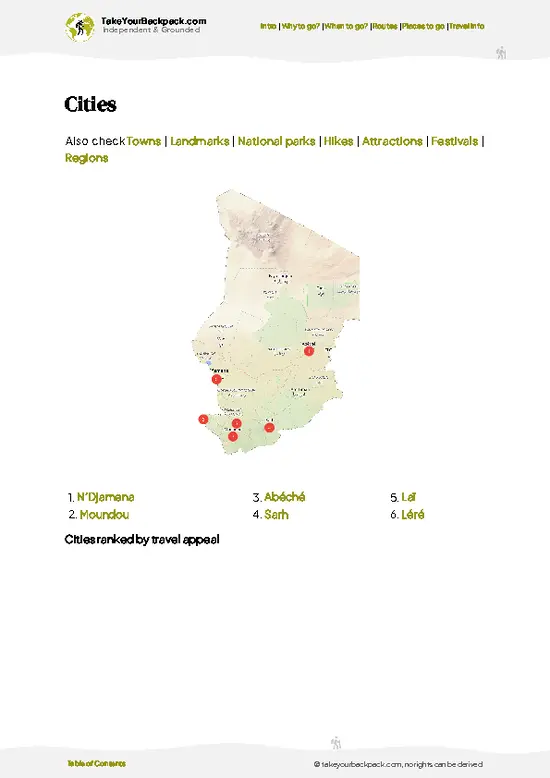
✅ Cities, national parks, landmarks, beaches
✅ How to get around
✅ Offline-friendly for travel without Wi-Fi
👉 Click to see all 30+ guide features

📅 Plan smarter in minutes, not weeks
✅ Month by month travel advice
✅ Festivals & national holidays
✅ Budget expectations

🗺️ Go to the right places, skip the overrated ones
✅ Honest pros & cons of destinations
✅ Top hikes, parks & viewpoints
✅ Lesser-known places most travelers miss
✅ Clear “worth it vs skip it” guidance

🛏️ Travel smoothly without rookie mistakes
✅ Best areas to stay
✅ Transport systems explained simply
✅ Common scams & safety advice
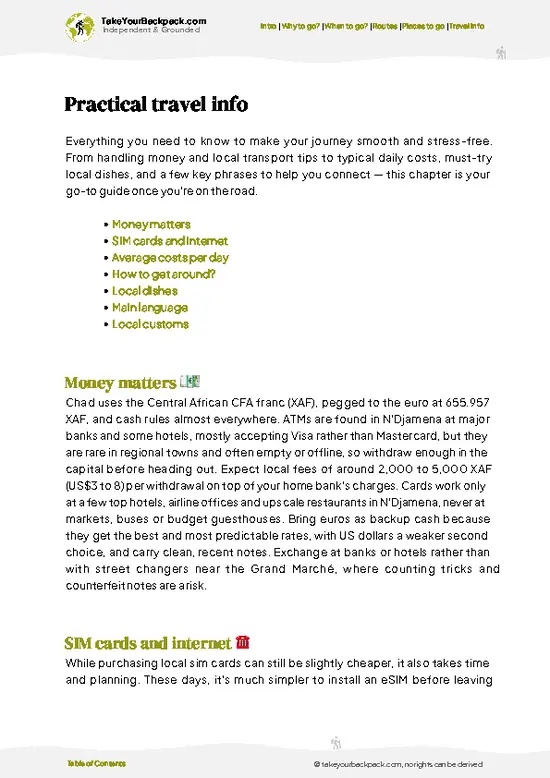
✅ SIM cards, money & practical tips

🌍 Understand the country, not just visit it
✅ Culture & traditions
✅ 52 Essential phrases & customs
✅ Festivals worth planning around
✅ Traveler-friendly historical context
✅ Insights that make places more meaningful

📱 Built for real travel conditions
✅ Fully downloadable PDF
✅ Works completely offline
✅ Optimized for phone use
✅ Useful in remote areas & buses
✅ Everything in one place
Stop searching, start planning
Get instant access to your full guide. 30‑day money-back guarantee.
+ Add another guide for just

By proceeding you agree to our terms.
Sent to your inbox immediately after payment • 100% Secure Checkout
Best Backpacking Travel Advisor 2025 tourism awardBest Backpacking
Travel Advisor
2025
What others say about Take Your Backpack Guides:
⭐⭐⭐⭐⭐
Fantastic, amazing amount of information!
⭐⭐⭐⭐⭐
My goodness this is amazing, it's what I've been looking for hats off too you!
⭐⭐⭐⭐⭐
I think this is absolutely BRILLIANT
⭐⭐⭐⭐
Very complete and informative. It's still missing places, but I gotta to commend you
⭐⭐⭐⭐⭐
This is truly amazing, thank you, can't wait to explore it with my kids!
⭐⭐⭐⭐⭐
Awesome resource, thank you!
⭐⭐⭐⭐⭐
This is amazing! Can't wait to explore the ones I haven't seen
⭐⭐⭐⭐
I love this! Well done, great idea.
⭐⭐⭐⭐⭐
Thanks for taking the time to make this gem!
⭐⭐⭐⭐⭐
This might be the best website I've ever seen.
⭐⭐⭐⭐⭐
Congratulations, and thank you so much for your work; it's incredibly valuable.
⭐⭐⭐⭐
In all seriousness I think you did a great job pointing out the important spots
⭐⭐⭐⭐⭐
10/10 very good
⭐⭐⭐⭐⭐
As someone who's only just starting to visit regularly this is awesome, thank you.
⭐⭐⭐⭐
Thank you very much! I'm going to visit my dad, it's going to be very useful!
⭐⭐⭐⭐⭐
This is really cool! We'll be travelling for the first time and this definitely come in handy.
⭐⭐⭐⭐⭐
You are now our minister of culture, congratulations 👨‍💼
⭐⭐⭐⭐⭐
Just wanted to tell you that this is a pearl! Going to follow your recommendations.
⭐⭐⭐⭐⭐
This is so cool. I'll definitely be using the resource for my travels soon.
⭐⭐⭐⭐⭐
This is very impressive! Good work.
⭐⭐⭐⭐⭐
This is an amazing and informative site. Very well done!

🛏️ Where to stay?Where staying makes the most sense

Mongo’s heart for backpackers beats strongest in the central district, where the pulse of daily life hums with a mix of market chatter, street vendors grilling meat over open flames, and the scent of fresh spices hanging in the air. This area is your best bet for safety and social energy. It’s where locals and travelers cross paths naturally, making it easier to strike up conversations or find a group heading out for a day trip.

Compared to the quieter, more residential outskirts, the central district offers a practical advantage: a handful of budget guesthouses and simple hostels cluster here, … read more 👉
Mongo’s heart for backpackers beats strongest in the central district, where the pulse of daily life hums with a mix of market chatter, street vendors grilling meat over open flames, and the scent of fresh spices hanging in the air. This area is your best bet for safety and social energy. It’s where locals and travelers cross paths naturally, making it easier to strike up conversations or find a group heading out for a day trip.

Compared to the quieter, more residential outskirts, the central district offers a practical advantage: a handful of budget guesthouses and simple hostels cluster here, providing basic but reliable accommodations. These spots are often hubs for solo travelers, creating a low-key social vibe without the touristy gloss. The streets are lively but manageable, with enough foot traffic to feel secure after dark, unlike the more isolated neighborhoods where the atmosphere can turn uneasy once the sun dips.

Staying here means you’re plugged into the city’s rhythm—close to transport links, local eateries, and the informal networks that make Mongo feel less like a stopover and more like a place you can actually live in for a bit.

🚌 Getting aroundHow to get around Mongo

Mongo hums with a rhythm that’s part old-school hustle, part laid-back pulse. The streets don’t follow a strict timetable; instead, they move with a kind of chaotic intuition that feels alive under the hot sun and the scent of street food frying nearby. You’ll find that the town’s flow rewards those who watch and listen—catching the right ride isn’t about clocks but about timing your move with the ebb and flow of local life. The air carries a mix of dust and diesel, but also the chatter of vendors and the occasional honk that signals a shared understanding rather than annoyance. This is a place where transit isn’t just a way to get from A to B—it’s a slice of the town’s character, a chance to plug into its pulse.
  • Walking: Mongo’s compact center is best explored on foot. The streets are uneven,
… read more 👉
Mongo hums with a rhythm that’s part old-school hustle, part laid-back pulse. The streets don’t follow a strict timetable; instead, they move with a kind of chaotic intuition that feels alive under the hot sun and the scent of street food frying nearby. You’ll find that the town’s flow rewards those who watch and listen—catching the right ride isn’t about clocks but about timing your move with the ebb and flow of local life. The air carries a mix of dust and diesel, but also the chatter of vendors and the occasional honk that signals a shared understanding rather than annoyance. This is a place where transit isn’t just a way to get from A to B—it’s a slice of the town’s character, a chance to plug into its pulse.
  • Walking: Mongo’s compact center is best explored on foot. The streets are uneven, so sturdy shoes are a must. Walking lets you soak in the smells of fresh bread and spices, and catch the spontaneous street performances that pop up near the market. It’s free, flexible, and the best way to feel the town’s heartbeat.
  • Shared Minibuses: These are the backbone of Mongo’s transit. They run from dawn until dusk, roughly 6 AM to 6 PM, with fares around a dollar or less. Expect crowded, bumpy rides with frequent stops. It’s a budget-friendly way to cover longer distances, but timing is unpredictable—jump on early to snag a seat and avoid the crush.
  • Motorcycle Taxis (Boda Bodas): When time is tight, boda bodas are your go-to. They weave through traffic with ease, cutting travel time in half compared to minibuses. Prices are negotiable but usually under two dollars for short trips. Helmets aren’t always standard, so hold tight and keep your wits about you.
  • Local Bicycle Rentals: For a bit more freedom without breaking the bank, renting a bike is a smart move. Rates hover around $5 per day. The terrain is mostly flat but watch for potholes and loose gravel. Riding lets you cover more ground than walking while still staying close to the sights and sounds that make Mongo unique.
  • Intercity Buses: If you’re heading out of town, these buses depart from the main station sporadically throughout the day, usually between 7 AM and 4 PM. Tickets cost between $5 and $10 depending on the destination. They’re slower and less comfortable than private options but offer a genuine local experience and a chance to see the countryside unfold.

👛 Costs (as of 16 October 2026)Typical daily expenses

Backpacking in Mongo, Chad, means embracing a raw, off-the-beaten-path vibe where costs are modest but the infrastructure is basic. Here’s what you can expect to spend daily as an independent traveler navigating this remote town.
  • Dorm Accommodation: Mongo doesn’t have a bustling hostel scene, so dorm-style lodging is rare. Budget guesthouses or simple rooms in local inns will run you about €5 to €10 per night. Expect basic amenities—think a fan, a mosquito net, and a hard mattress rather than plush comfort.
  • Meals: Eating local is the way to go. Street food and small eateries offer filling meals for around €2 to €4 each. Staples like millet porridge, grilled meat, and fresh fruit are common. Western-style or imported food is scarce and pricey, so stick to local flavors to keep costs down
… read more 👉
Backpacking in Mongo, Chad, means embracing a raw, off-the-beaten-path vibe where costs are modest but the infrastructure is basic. Here’s what you can expect to spend daily as an independent traveler navigating this remote town.
  • Dorm Accommodation: Mongo doesn’t have a bustling hostel scene, so dorm-style lodging is rare. Budget guesthouses or simple rooms in local inns will run you about €5 to €10 per night. Expect basic amenities—think a fan, a mosquito net, and a hard mattress rather than plush comfort.
  • Meals: Eating local is the way to go. Street food and small eateries offer filling meals for around €2 to €4 each. Staples like millet porridge, grilled meat, and fresh fruit are common. Western-style or imported food is scarce and pricey, so stick to local flavors to keep costs down and the experience authentic.
  • Local Transport: Transport options are limited and informal. Shared taxis or minibuses are the norm, costing roughly €0.50 to €1 per trip within town. For longer distances, expect to pay more, but these rides are infrequent and schedules unpredictable. Walking is often the best way to soak in the atmosphere and save cash.
  • Basic Activities/Entry Fees: Mongo’s attractions are mostly natural and cultural, with little to no formal entry fees. Visiting markets, local villages, or natural sites is generally free or involves a small tip or donation (€0.50 to €2). Organized tours are rare and tend to be pricier, so independent exploration is your best bet.
  • Miscellaneous Expenses: Budget around €1 to €3 for essentials like bottled water, snacks, or phone credit. Internet access is spotty and often expensive, so plan accordingly. Medical supplies or toiletries might cost a bit more due to limited availability.

All told, you’re looking at a daily budget of roughly €10 to €20. This keeps you lean but comfortable enough to experience Mongo’s unique pace without overspending on scarce luxuries. The modest costs reflect the town’s simplicity, but they also unlock a genuine, grounded travel experience far from tourist crowds.
⚠️ Prices can change and everyone travels differently, so take this as a rough guide. Hope it helps you plan your adventure!

🚌 Day tripsExploring the surroundings

Mongo, Chad, is a fantastic base for day trips that reveal the heart of this unique region. The landscape is raw and beautiful, and the experiences are rich with culture and adventure. Here are some worthwhile day trips that will make your journey truly memorable.

Trip to Zakouma National Park
Just a few hours from Mongo, Zakouma is a wildlife haven. The park is home to elephants, lions, and a variety of birds. The drive is bumpy but filled with stunning savannah views. Expect to pay around $30 for entry and a guided tour, which is worth every penny. The best time to visit is during the dry season, from November to April, when animals congregate around water sources. A common mistake? Underestimating the park’s size; plan for a full day to soak in the sights.
👉 Explore Zakouma National … read more 👉
Mongo, Chad, is a fantastic base for day trips that reveal the heart of this unique region. The landscape is raw and beautiful, and the experiences are rich with culture and adventure. Here are some worthwhile day trips that will make your journey truly memorable.

Trip to Zakouma National Park
Just a few hours from Mongo, Zakouma is a wildlife haven. The park is home to elephants, lions, and a variety of birds. The drive is bumpy but filled with stunning savannah views. Expect to pay around $30 for entry and a guided tour, which is worth every penny. The best time to visit is during the dry season, from November to April, when animals congregate around water sources. A common mistake? Underestimating the park’s size; plan for a full day to soak in the sights.
👉 Explore Zakouma National Park

Trip to the Chari River
The Chari River offers a refreshing escape. A short drive from Mongo, you can spend the day fishing or simply relaxing by the water. The scent of wet earth and the sound of flowing water create a serene atmosphere. Bring a packed lunch; local eateries are sparse. Costs are minimal—around $10 for transport and snacks. The best time to go is early morning to catch the sunrise over the river. Many first-timers miss the chance to explore the riverbanks, which are teeming with life.


Trip to the Local Markets
Dive into the vibrant local culture by visiting Mongo’s bustling markets. You’ll find everything from spices to handmade crafts. The colors and scents are intoxicating. It’s a short walk from the center, and you can easily spend a few hours wandering. Budget around $5 for snacks and small purchases. The markets are most lively on Saturdays, so plan accordingly. A common mistake is sticking to the main stalls; venture into the side alleys for unique finds and local interactions.


Trip to the Tchad Oasis
The Tchad Oasis is a hidden treasure, perfect for a day of relaxation. It’s about an hour’s drive from Mongo, and the lush greenery is a stark contrast to the surrounding desert. Bring a book and enjoy the tranquility. Entry is free, but you might want to bring some snacks. The best time to visit is during the cooler hours of the morning or late afternoon. Many travelers overlook this spot, thinking it’s too far, but it’s a quick getaway that feels worlds away.

🛡️ SafetyTraveler Safety Guide

Mongo, Chad, is generally safe, but a few practical tips can enhance your experience. The bustling market is vibrant, but keep your belongings close. Pickpockets can be a concern, especially in crowded areas. When wandering solo, especially at night, stick to well-lit streets and avoid isolated paths.

Local transportation can be a bit chaotic; always negotiate fares upfront to avoid misunderstandings. You might encounter friendly locals eager to help, but some may try to sell you overpriced goods or services. A polite but firm “no, thank you” usually suffices.

The heat can be relentless, so stay hydrated and take breaks in shaded spots. Embrace the rhythm of the town, and you’ll find that being aware and engaged makes your journey smoother and more rewarding.

FAQTraveler FAQ

Mongo is primarily a stopover rather than a destination for extended visits. It serves as a regional hub in central Chad with limited tourist attractions, mostly local markets and cultural encounters. Travelers usually pass through while exploring the Guera region or heading to Zakouma National Park.
One to two days are sufficient to explore Mongo. This allows time to visit the local market, see the nearby traditional villages, and experience the town's atmosphere without rushing. Longer stays are generally not necessary unless using it as a base for regional excursions.
No, Mongo cannot be easily visited as a day trip from a nearby city due to its remote location and limited transport options. The closest major city, N'Djamena, is about 400 kilometers away, requiring a full day of travel each way. Overland travel is slow and often challenging, making overnight stays in Mongo essential.
⚠️ Things can change over time, so always validate details locally before you go.

Other Chadian towns near Mongo

Explore more nearby:

  • Bitkine—Guéra hills, seasonal markets, clay architecture| 57 km away
  • Oum Hadjer—Batha River, seasonal flooding, central crossroads| 164 km away
  • Am Timan—seasonal wadis, remote crossroads, livestock trading, Sahel edge| 215 km away

💡 Not sure where to go next?
Create a personalized itinerary for Chad including Mongo and the places that fit your trip.

Generate my itinerary

👉 Discover all towns

Or checkout all Chad has to offer (think cities, towns, villages, national parks, hikes, beaches, festivals)
Country photo of Chad

We 💚 feedbackSumming up the experience

Mongo has a raw, unfiltered vibe that pulls you in. The sunsets here? They’re a painter’s dream—fiery oranges melting into deep purples. But don’t underestimate the heat; it’s relentless. Hydration is key. The best surprise? The local markets bursting with spices and laughter. You’ll find yourself chatting with vendors, sharing stories over a cup of sweet tea. Just remember, embrace the chaos. It’s part of the charm. This isn’t just a stop; it’s a slice of life in Chad.

✍️ Help improve this page!
The information on this page is based on in-depth research, insights shared by experienced travelers, and feedback from the local travel community in Chad. While every effort is made to keep the information accurate and current, conditions can change — so if you spot anything incorrect or outdated, please get in touch.


🙋‍♂️ Give feedback

👋 Meet the founderWho’s Behind Take Your Backpack?

Johan, backpacker and founder of TakeYourBackpackHi, I’m Johan (Netherlands 🇳🇱), the creator of TakeYourBackpack. Over the past 3 decades, I’ve backpacked through 90+ countries across six continents, gaining extensive experience with independent travel, long-term trips, and overland routes.

This site is built on a combination of firsthand travel experience and carefully curated insights from other backpackers. Many guides are based on places I’ve personally visited, while others bring together tips, observations, and practical advice shared by trusted travelers I’ve met along the way.

The goal is to provide realistic, experience-driven guidance — not generic itineraries — so you can explore destinations with better context, clearer expectations, and more confidence.