





×

China🇨🇳 | national parksLushan National Park
misty cliffs, summer villas, Buddhist temples | things to do and best time to go

Explore Jiuzhaigou Valley National ParkExplore Mount Emei National Park

Backpacking in Lushan
UNESCO World Heritage site
👌 Worth visitingnational park ranked #14
By Johan Kruseman 🇳🇱 | last update: 16 April, 2026

Most people arrive at Lushan expecting wild, remote backcountry; it’s not that. It’s a historic mountain resort inside a tightly managed national park in northern Jiangxi, just south of the Yangtze and Poyang Lake. For backpackers, it’s a trade: stone paths, misty cliffs, waterfalls, and easy-access viewpoints instead of true wilderness. Trails are mostly paved, wildlife is shy, and entrance plus mandatory buses add up, but it’s still cheaper and less chaotic than Huangshan and more atmospheric than nearby Sanqingshan. Crowds spike on weekends, camping is basically off the table, yet off-hour walks through the old villas feel quietly rewarding.

Discover everything you want to know in the 📖 China Travel Guide.
Loading the map 🌍
CLICK TO FILTER
city
town
unique site
national park
hike
beach
attraction
festival
region
SHOW COUNTRY‘S BESTSHOW ALL

✨ Why go?
Ranked #14 national park in China
Why visitors keep coming back

Lushan National Park attracts backpackers for several compelling reasons. First, independent exploration is a major draw. The park’s extensive trail network allows you to roam freely, soaking in the stunning landscapes without the constraints of guided tours.

Budget-conscious travelers appreciate the affordable camping options and hostels nearby. You can pitch a tent or find a cozy bed without breaking the bank, leaving more funds for experiences that matter.

The trail variety is another highlight. Whether you’re after a leisurely stroll or a challenging hike, Lushan has something for everyone. You can tackle steep ascents or meander through serene valleys, all while enjoying the park’s rich biodiversity.

For those who prefer to go at their own pace, Lushan is well-suited for self-guided read more 👉
Lushan National Park attracts backpackers for several compelling reasons. First, independent exploration is a major draw. The park’s extensive trail network allows you to roam freely, soaking in the stunning landscapes without the constraints of guided tours.

Budget-conscious travelers appreciate the affordable camping options and hostels nearby. You can pitch a tent or find a cozy bed without breaking the bank, leaving more funds for experiences that matter.

The trail variety is another highlight. Whether you’re after a leisurely stroll or a challenging hike, Lushan has something for everyone. You can tackle steep ascents or meander through serene valleys, all while enjoying the park’s rich biodiversity.

For those who prefer to go at their own pace, Lushan is well-suited for self-guided travelers. Maps are readily available, and the signage is generally clear, making navigation straightforward. This freedom allows you to savor the park’s beauty without feeling rushed, ensuring your energy and budget are preserved for the moments that truly count.
Get the complete Travel Guide for China
Everything organized for offline planning — routes, highlights, costs & tips

See what’s inside 👉

Get the Travel Guide -
  1. Mount Lu (Lushan) peaks & hiking trails — The backbone of the park: steep granite ridges, ancient stone steps and switchback trails that thread through forests and sudden cliff faces. Hike for a few hours or do a full-day traverse; you’ll find viewpoints that look like someone painted clouds into the valley. If you don’t want to sweat it, there are cable cars that drop you at great photo spots.
  2. Wulao Peak (Five Old Men) — A cluster of dramatic granite pillars that poke above the mist. The rock formations are sculptural, perfect for sunrise or late-afternoon light when the mountains turn a warm pink. Personal favorite — the sea-of-clouds vibe here is addictive and worth the early wake-up call.
  3. Hanpo Pass — A narrow cliffside pass with one of the park’s most breathtaking panoramas. It’s
  4. read more 👉
  1. Mount Lu (Lushan) peaks & hiking trails — The backbone of the park: steep granite ridges, ancient stone steps and switchback trails that thread through forests and sudden cliff faces. Hike for a few hours or do a full-day traverse; you’ll find viewpoints that look like someone painted clouds into the valley. If you don’t want to sweat it, there are cable cars that drop you at great photo spots.
  2. Wulao Peak (Five Old Men) — A cluster of dramatic granite pillars that poke above the mist. The rock formations are sculptural, perfect for sunrise or late-afternoon light when the mountains turn a warm pink. Personal favorite — the sea-of-clouds vibe here is addictive and worth the early wake-up call.
  3. Hanpo Pass — A narrow cliffside pass with one of the park’s most breathtaking panoramas. It’s famous for the sheer drop-offs and sweeping views down to the lower valleys; great for dramatic photos and for feeling like you’ve earned the view after a steep climb.
  4. Guling (Kuling) resort area — The cooler, colonial-era resort town on Lushan’s slopes: tree-lined streets, old villas, and relaxed cafés. It’s a good base for exploring the park, and a nice contrast to the raw mountain scenery.
  5. White Deer Grotto Academy (Bailudong) — One of China’s historic academies (Confucian learning) tucked into the mountain. It’s cultural relief from the hiking—old halls, stone inscriptions and a real sense of history woven into the landscape.
  6. Lushan Botanical Garden & rhododendron groves — A hotspot for plant lovers, especially in spring when rhododendrons and azaleas explode into color. Trails here are gentler, good for wildlife spotting (birds, butterflies) and quiet picnics.
  7. Waterfalls and river valleys — The park has a network of streams and waterfalls that cut through the cliffs; short forest walks take you to tumbling water, mossy rocks and cooler microclimates. Perfect when you want shade and the sound of running water instead of panoramic cliffs.
Spotted a mistake or missing something? Contact me.

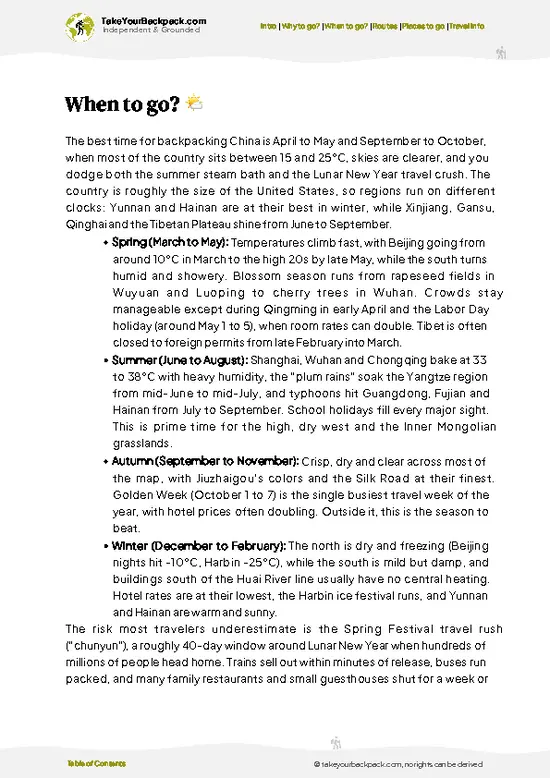
🌤️ When to go?Choosing the right time of year


  • Weather: Spring (April to June) and autumn (September to November) offer mild, stable weather. Avoid summer’s heavy rain and winter’s chill, which can drop to -5°C (23°F) and make trails slippery.

  • Temperature: Spring and autumn temperatures range from 15°C to 25°C (59°F to 77°F), ideal for hiking without overheating or freezing.

  • Daylight Hours: Around 12 hours in spring and autumn, giving you ample time for long hikes and sightseeing without rushing.

  • Crowds: Peak tourist season hits in May and October, especially during Chinese holidays, so expect busy trails and higher prices.

  • Seasonal Activities: Spring brings blooming azaleas and rhododendrons; autumn showcases colorful foliage—both worth timing your visit around.

  • Price Fluctuations: Accommodation and transport costs spike
  • read more 👉

  • Weather: Spring (April to June) and autumn (September to November) offer mild, stable weather. Avoid summer’s heavy rain and winter’s chill, which can drop to -5°C (23°F) and make trails slippery.

  • Temperature: Spring and autumn temperatures range from 15°C to 25°C (59°F to 77°F), ideal for hiking without overheating or freezing.

  • Daylight Hours: Around 12 hours in spring and autumn, giving you ample time for long hikes and sightseeing without rushing.

  • Crowds: Peak tourist season hits in May and October, especially during Chinese holidays, so expect busy trails and higher prices.

  • Seasonal Activities: Spring brings blooming azaleas and rhododendrons; autumn showcases colorful foliage—both worth timing your visit around.

  • Price Fluctuations: Accommodation and transport costs spike during national holidays and weekends in peak seasons; booking ahead can save you a headache and cash.


Pro-tip: Aim for late April or early October weekdays to dodge crowds and enjoy the park’s best natural displays without paying a premium.


source: climatestotravel.comJANJanuary: below average for travelingFEBFebruary: below average for travelingMARMarch: good for travelingAPRApril: highly recommended for travelingMAYMay: good for travelingJUNJune: highly recommended for travelingJULJuly: fair for travelingAUGAugust: fair for travelingSEPSeptember: highly recommended for travelingOCTOctober: good for travelingNOVNovember: highly recommended for travelingDECDecember: below average for traveling
when-to-go

✈️ The ultimate backpacker shortcutChina Travel Guide

Skip weeks of research and hit the road with confidence. Get 410 pages of proven routes, transport advice, and real safety insights—built for your phone and 100% offline-ready.
example page 0 from our offline Travel Guide for Chinaexample page 1 from our offline Travel Guide for Chinaexample page 2 from our offline Travel Guide for Chinaexample page 3 from our offline Travel Guide for Chinaexample page 4 from our offline Travel Guide for China
🎒 Your 410-page offline travel companion
14, 21 & 30-day routes paced for real travel
139 ranked highlights with honest skip-it advice
Logistics solved: Best areas to stay & transport
Safety blueprints: Common local scams to avoid
No Wi-Fi? No problem: Phone-optimized offline PDF
👉 See all 30+ guide features

📅 Plan smarter in minutes, not weeks
Realistic travel times & pacing
Best months per region
Festivals & national holidays
Budget expectations

🗺️ Go to the right places, skip the overrated ones
139 ranked highlights across the country
Hidden gems beyond the tourist trail
Honest pros & cons of destinations
Top hikes, parks & viewpoints
Lesser-known places most travelers miss
Clear “worth it vs skip it” guidance

🛏️ Travel smoothly without rookie mistakes
Best areas to stay
Transport systems explained simply
Local transport tradeoffs
Common scams & safety advice
SIM cards, money & practical tips
What to expect before arrival

🌍 Understand the country, not just visit it
Culture & traditions
52 Essential phrases & customs
Festivals worth planning around
Traveler-friendly historical context
Insights that make places more meaningful

📱 Built for real travel conditions
Fully downloadable PDF
Works completely offline
Optimized for phone use
Useful in remote areas & buses
Everything in one place
Save weeks of stressful planning
Get instant access to the full guide directly. 30-day money-back guarantee.


Sent to your inbox immediately after payment • 100% Secure Checkout
Best Backpacking Travel Advisor 2025 tourism awardBest Backpacking
Travel Advisor
2025
What others say about Take Your Backpack Guides:
⭐⭐⭐⭐⭐
Fantastic, amazing amount of information!
⭐⭐⭐⭐⭐
My goodness this is amazing, it's what I've been looking for hats off too you!
⭐⭐⭐⭐⭐
I think this is absolutely BRILLIANT
⭐⭐⭐⭐
Very complete and informative. It's still missing places, but I gotta to commend you
⭐⭐⭐⭐⭐
This is truly amazing, thank you, can't wait to explore it with my kids!
⭐⭐⭐⭐⭐
Awesome resource, thank you!
⭐⭐⭐⭐⭐
This is amazing! Can't wait to explore the ones I haven't seen
⭐⭐⭐⭐
I love this! Well done, great idea.
⭐⭐⭐⭐⭐
Thanks for taking the time to make this gem!
⭐⭐⭐⭐⭐
This might be the best website I've ever seen.
⭐⭐⭐⭐⭐
Congratulations, and thank you so much for your work; it's incredibly valuable.
⭐⭐⭐⭐
In all seriousness I think you did a great job pointing out the important spots
⭐⭐⭐⭐⭐
10/10 very good
⭐⭐⭐⭐⭐
As someone who's only just starting to visit regularly this is awesome, thank you.
⭐⭐⭐⭐
Thank you very much! I'm going to visit my dad, it's going to be very useful!
⭐⭐⭐⭐⭐
This is really cool! We'll be travelling for the first time and this definitely come in handy.
⭐⭐⭐⭐⭐
You are now our minister of culture, congratulations 👨‍💼
⭐⭐⭐⭐⭐
Just wanted to tell you that this is a pearl! Going to follow your recommendations.
⭐⭐⭐⭐⭐
This is so cool. I'll definitely be using the resource for my travels soon.
⭐⭐⭐⭐⭐
This is very impressive! Good work.
⭐⭐⭐⭐⭐
This is an amazing and informative site. Very well done!

🛏️ Where to stay?How to pick the right area

Lushan National Park offers a few solid options for backpackers looking to stay close to nature without breaking the bank. Inside the park, the Lushan Hotel is a reliable choice. It’s basic but clean, with easy access to trails. Expect a no-frills experience, but the location is unbeatable for early morning hikes.

If you prefer a bit more character, consider the nearby town of Jiujiang. It’s about a 30-minute drive from the park entrance. Here, you’ll find hostels and guesthouses that cater to budget travelers. The Jiujiang International Youth Hostel is popular among backpackers. It’s affordable … read more 👉
Lushan National Park offers a few solid options for backpackers looking to stay close to nature without breaking the bank. Inside the park, the Lushan Hotel is a reliable choice. It’s basic but clean, with easy access to trails. Expect a no-frills experience, but the location is unbeatable for early morning hikes.

If you prefer a bit more character, consider the nearby town of Jiujiang. It’s about a 30-minute drive from the park entrance. Here, you’ll find hostels and guesthouses that cater to budget travelers. The Jiujiang International Youth Hostel is popular among backpackers. It’s affordable and has a communal vibe, perfect for meeting fellow adventurers.

Be mindful of transportation costs. Public buses can be a hassle, especially if you’re lugging gear. Taxis are available but can add up quickly. Plan your trips wisely to save energy and funds for the park’s breathtaking views and experiences.

Avoid the temptation of luxury hotels in the area; they often come with hidden fees and less access to the park’s trails. Stick to budget-friendly options that keep you close to the action.

👛 Costs (as of 17 January 2025)Typical daily expenses

Visiting Lushan National Park in China can be a rewarding experience, but it’s essential to be aware of the costs involved to avoid surprises.

Entrance fees typically range from 60 to 100 yuan (about $9 to $15 USD). This fee grants you access to the park’s main attractions. However, if you plan to visit during peak seasons or holidays, expect to pay closer to the higher end of that range.

Transportation is another factor. If you’re coming from nearby cities like Jiujiang or Nanchang, a bus ticket will cost around 20 to 50 yuan ($3 to $8 USD). Taxis or rideshares can be more convenient but will set you back significantly more, often around 100 yuan ($15 USD) or more, depending on your starting point.

Accommodation varies widely. Budget hostels start at about 100 yuan ($15 USD) per night, … read more 👉
Visiting Lushan National Park in China can be a rewarding experience, but it’s essential to be aware of the costs involved to avoid surprises.

Entrance fees typically range from 60 to 100 yuan (about $9 to $15 USD). This fee grants you access to the park’s main attractions. However, if you plan to visit during peak seasons or holidays, expect to pay closer to the higher end of that range.

Transportation is another factor. If you’re coming from nearby cities like Jiujiang or Nanchang, a bus ticket will cost around 20 to 50 yuan ($3 to $8 USD). Taxis or rideshares can be more convenient but will set you back significantly more, often around 100 yuan ($15 USD) or more, depending on your starting point.

Accommodation varies widely. Budget hostels start at about 100 yuan ($15 USD) per night, while mid-range hotels can range from 300 to 600 yuan ($45 to $90 USD). If you’re looking for something more upscale, expect to pay upwards of 800 yuan ($120 USD).

Food costs are generally reasonable. Street food and local eateries offer meals for 20 to 50 yuan ($3 to $8 USD). Dining in more tourist-oriented restaurants can push your meal costs to 100 yuan ($15 USD) or more.

Lastly, consider additional expenses for activities like guided tours or cable car rides. These can add anywhere from 50 to 200 yuan ($8 to $30 USD) to your budget.

Planning ahead and budgeting for these costs will help you enjoy Lushan National Park without financial stress.


source: lushan.gov.cn
⚠️ Prices can change and everyone travels differently, so take this as a rough guide. Hope it helps you plan your adventure!

🥾 TrailsExploring Lushan: trails, terrain, and views

Lushan National Park is a gem for hikers, offering stunning views, diverse wildlife, and a mix of challenging and manageable trails. The park is famous for its lush greenery, dramatic cliffs, and serene waterfalls, making it a perfect escape from the hustle and bustle of city life. The terrain varies from gentle slopes to steep ascents, so there’s something for everyone, whether you’re a seasoned hiker or just looking to stretch your legs.

One of the standout trails is Hanpo Trail, which is about 6 kilometers long and takes roughly 2-3 hours to complete. It’s rated as moderate in difficulty, … read more 👉
Lushan National Park is a gem for hikers, offering stunning views, diverse wildlife, and a mix of challenging and manageable trails. The park is famous for its lush greenery, dramatic cliffs, and serene waterfalls, making it a perfect escape from the hustle and bustle of city life. The terrain varies from gentle slopes to steep ascents, so there’s something for everyone, whether you’re a seasoned hiker or just looking to stretch your legs.

One of the standout trails is Hanpo Trail, which is about 6 kilometers long and takes roughly 2-3 hours to complete. It’s rated as moderate in difficulty, with some steep sections that reward you with breathtaking views of the surrounding mountains and valleys. Key features include the iconic Hanpo Peak and several picturesque lookout points, all while winding through a mix of rocky paths and shaded forest.

Another popular option is Wulao Peak Trail, stretching around 10 kilometers and taking about 4-5 hours. This trail is a bit more challenging, rated as difficult, but the panoramic views from the summit are absolutely worth the effort. Expect rocky terrain and a few steep climbs, but you’ll be greeted by stunning vistas that make the sweat worthwhile.
  • Length: 6 km
  • Estimated Duration: 2-3 hours
  • Difficulty Level: Moderate
  • Key Features: Hanpo Peak, scenic lookout points
  • Terrain: Rocky paths, shaded forest
  • Length: 10 km
  • Estimated Duration: 4-5 hours
  • Difficulty Level: Difficult
  • Key Features: Panoramic views from Wulao Peak
  • Terrain: Rocky, steep climbs

Getting to Lushan National Park is fairly straightforward. You can catch a train to Jiujiang and then hop on a bus or taxi to the park entrance. It can get a bit crowded, especially during weekends and holidays, so if you can, try to visit on a weekday for a more peaceful experience. As for the entrance fee, it’s usually around 100 RMB, but double-check before you go as prices can change. Bring plenty of water and snacks, and enjoy the adventure!
⚠️ Hiking info can sometimes be outdated or inaccurate. Before you hit the trail, check the latest conditions with locals. If you do spot anything that's off, I'd love to hear from you, so I can update it for fellow travelers.

🛡️ SafetyTraveler Safety Guide

Lushan National Park offers a generally accessible experience, but a few practical considerations can enhance your trip. Weather can shift quickly, so pack layers and a reliable rain jacket. The trails vary in steepness; some sections require careful footing, especially after rain. Navigation is straightforward, but a map or GPS can help you stay oriented.

Wildlife encounters are rare, but if you spot a monkey, keep your distance. They’re curious but can be aggressive if approached.

First-timers often underestimate the importance of hydration and snacks. Bring enough water, as some areas lack reliable sources. Timing your hikes for early morning or late afternoon can help you avoid the crowds and enjoy a quieter experience.

Overall, with a bit of preparation, you can focus on the beauty of Lushan without unnecessary stress.

Other Chinese national parks near Lushan

Explore more nearby:


👉 Discover all national parks

Or checkout all China has to offer (think cities, towns, villages, national parks, hikes, beaches, festivals)
Country photo of China

I 💚 feedbackWhat to keep in mind

Lushan National Park offers breathtaking mountain views and lush greenery that make every hike feel like a scene from a painting. But be ready for the crowds, especially during peak seasons; they can sap your energy and make finding solitude a challenge. Plan your visits early in the morning or on weekdays to dodge the throngs. Embrace the beauty, but don’t let the masses steal your moment.

✈️ When did I visit China?
As part of my 1.5 year travel around the world trip, I visited China in August 2015, coming from Mongolia by the TransMongolia Express.

✍️ Help improve this page!
The information on this page is based on my own backpacking experience in China, supplemented with up-to-date research and feedback from other travelers. Travel details can change, so if you notice anything outdated or incomplete, feel free to let me know.


🙋‍♂️ Give feedback

👋 Meet the authorWho’s Behind Take Your Backpack?

Johan, backpacker and founder of TakeYourBackpackHi, I’m Johan (Netherlands 🇳🇱), the creator of TakeYourBackpack. Over the past decade, I’ve backpacked through 80+ countries across six continents, gaining extensive experience with independent travel, long-term trips, and overland routes.

This site is built on a combination of firsthand travel experience and carefully curated insights from other backpackers. Many guides are based on places I’ve personally visited, while others bring together tips, observations, and practical advice shared by trusted travelers I’ve met along the way.

The goal is to provide realistic, experience-driven guidance — not generic itineraries — so you can explore destinations with better context, clearer expectations, and more confidence.

Get Full Country Guide |
Instant download • 139 highlights • Full Offline guide