×

China🇨🇳 | national parksMeili Snow Mountain National Parkglaciated peaks, prayer flags, remote villages | things to do and best time to go

Explore Taishan Mountain National ParkExplore Yulong Snow Mountain Scenic Area

Backpacking in Meili Snow Mountain
🌟 Highlightnational park ranked #9
By Johan Kruseman 🇳🇱 | Updated May 18, 2026

Most people only realize on the bus ride out that Meili Snow Mountain National Park quietly saves them money: once you’re in, the best views and day hikes are essentially free, and you don’t need pricey guided tours to feel you’ve “done it right.”
Meili sits in northwest Yunnan, near Deqin on the road toward the Tibet Autonomous Region.

For backpackers, it’s a cold, thin‑air, big‑reward place: serious trekking options toward Yubeng, huge glacier views, decent chances of seeing birdlife and the odd mammal, but no safari moment. Access is slower and rougher than Tiger Leaping Gorge or Pudacuo, and the entrance fee stings a bit, yet crowds are lighter and the mood more pilgrim than selfie circus. Camping is limited and regulated, so think basic guesthouses, wood‑smoke, and early nights rather than wild-camp freedom.

Discover everything you want to know in the 📖 China Travel Guide.


Get your China guide
139 ranked highlights, routes & tips, works offline (496 pages)
Loading the map 🌍
CLICK TO FILTER
cities
towns
landmarks
national parks
hikes
beaches
attractions
festivals
regions
SHOW COUNTRY’S BESTSHOW ALL

✨ Why go?
Ranked #9 national park in China
Why Meili Snow Mountain should be on your travel list

Backpackers flock to Meili Snow Mountain National Park for its blend of independent exploration and stunning landscapes. The park is a haven for those who prefer self-guided adventures over organized tours. With a variety of trails, from easy walks to challenging treks, there’s something for everyone.

Budget-conscious travelers appreciate the camping options and nearby hostels, which keep costs down while offering a chance to connect with fellow adventurers. The park’s remote beauty allows for immersive experiences in nature, far from the tourist crowds.

However, be prepared for variable weather and potential altitude sickness; these can sneak up on you. Understanding the terrain and planning your route can save you energy and ensure you enjoy the moments that truly matter.
Want to include Meili Snow Mountain National Park in your China route?
Create a personalized China itinerary that includes Meili Snow Mountain National Park and the places that fit your trip — based on your travel style, budget, and available time. Get your route in seconds.

Generate my trip

💡 HighlightsTop highlights of Meili Snow Mountain

  • Kawagebo (Kawagarbo) Peak: the jagged, sacred centerpiece of Meili Snow Mountain — a dramatic, glaciated pyramid that dominates the skyline. It’s spiritually important to local Tibetan communities and famously unclimbable for most visitors, so most people come to admire its scale, changing light, and the clouds that wrap the ridges at sunrise and sunset.
  • Mingyong Glacier: one of the most accessible glacier tongues in the region, spilling down into forested slopes. It’s striking up close — blue ice, crevasses and moraine — and a clear, visible example of climate change as the glacier has noticeably retreated over recent years.
  • Yubeng Village (Upper & Lower Yubeng): remote Tibetan villages you can only reach on foot, famous for hot springs, waterfalls and honest-to-goodness mountain village
read more 👉
  • Kawagebo (Kawagarbo) Peak: the jagged, sacred centerpiece of Meili Snow Mountain — a dramatic, glaciated pyramid that dominates the skyline. It’s spiritually important to local Tibetan communities and famously unclimbable for most visitors, so most people come to admire its scale, changing light, and the clouds that wrap the ridges at sunrise and sunset.
  • Mingyong Glacier: one of the most accessible glacier tongues in the region, spilling down into forested slopes. It’s striking up close — blue ice, crevasses and moraine — and a clear, visible example of climate change as the glacier has noticeably retreated over recent years.
  • Yubeng Village (Upper & Lower Yubeng): remote Tibetan villages you can only reach on foot, famous for hot springs, waterfalls and honest-to-goodness mountain village life. The trails around Yubeng lead to spectacular viewpoints of Kawagebo and are great multi-day hikes. Personal favorite — quiet nights, hot springs after a long day on the trail, and the feeling of being properly off the beaten track.
  • Pilgrim Kora (circumambulation) of Kawagebo: a traditional Tibetan kora that circles the base of the sacred mountain. It’s a long, spiritual trek rather than a sightseeing stroll — prayer flags, mani walls, yak pastures, and remote high passes. Expect both cultural richness and challenging walking.
  • Feilaisi / Deqin Sunrise Viewpoint: the classic spot many photographers and trekkers use to watch Kawagebo light up at dawn. On a clear morning the orange-pink glow on the peaks is unforgettable, and the viewpoint is handily close to Deqin town for anyone not wanting a full trek.
  • Alpine meadows & rhododendron slopes: in summer the high meadows burst with wildflowers and the hillsides turn into ribbons of rhododendron and sparse alpine forest. Great for easy day-hikes and for seeing the softer side of the high mountains beyond the ice and rock.
  • High-altitude wildlife & birds: watch for marmots, blue sheep (bharal) on steeper slopes, and high-soaring raptors — bearded vultures/lammergeiers and other mountain birds. Wildlife here is shy and sparse, so patience and quiet will pay off.
Spotted a mistake or missing something? Contact us.

🌤️ When to go?Choosing the right time of year


  • Weather: The best window is late April to early June and September to October. Spring brings melting snow and blooming rhododendrons, while autumn offers crisp air and clear skies. Avoid winter—temperatures plunge below -10°C (14°F), making trails icy and risky.

  • Temperature: Daytime highs in the ideal months hover around 15-20°C (59-68°F), comfortable for hiking. Nights can dip to 5°C (41°F), so pack layers. Summer can be warmer but also wetter, with frequent afternoon showers.

  • Daylight Hours: Spring and autumn provide roughly 11-13 hours of daylight, enough for full-day treks without rushing. Winter days are shorter, limiting exploration time.

  • Crowds: Peak season aligns with Chinese public holidays, especially May Day and National Day. Visiting just before or after these spikes means
read more 👉

  • Weather: The best window is late April to early June and September to October. Spring brings melting snow and blooming rhododendrons, while autumn offers crisp air and clear skies. Avoid winter—temperatures plunge below -10°C (14°F), making trails icy and risky.

  • Temperature: Daytime highs in the ideal months hover around 15-20°C (59-68°F), comfortable for hiking. Nights can dip to 5°C (41°F), so pack layers. Summer can be warmer but also wetter, with frequent afternoon showers.

  • Daylight Hours: Spring and autumn provide roughly 11-13 hours of daylight, enough for full-day treks without rushing. Winter days are shorter, limiting exploration time.

  • Crowds: Peak season aligns with Chinese public holidays, especially May Day and National Day. Visiting just before or after these spikes means fewer people and a more authentic experience.

  • Seasonal Activities: Spring is prime for wildflower spotting and birdwatching. Autumn showcases vibrant foliage. Winter offers snow-capped vistas but demands serious cold-weather gear and experience.

  • Price Fluctuations: Accommodation and transport costs rise sharply during peak holidays. Booking outside these periods saves money and stress.


Pro-tip: Aim for late April or mid-September to balance weather, crowds, and cost—this timing keeps your energy for the trails, not battling the elements or crowds.


source: climatestotravel.comJANJanuary: below average for travelingFEBFebruary: below average for travelingMARMarch: fair for travelingAPRApril: highly recommended for travelingMAYMay: excellent for travelingJUNJune: highly recommended for travelingJULJuly: fair for travelingAUGAugust: fair for travelingSEPSeptember: highly recommended for travelingOCTOctober: excellent for travelingNOVNovember: good for travelingDECDecember: below average for traveling
when-to-go

✈️ The backpacker research shortcutChina Travel Guide

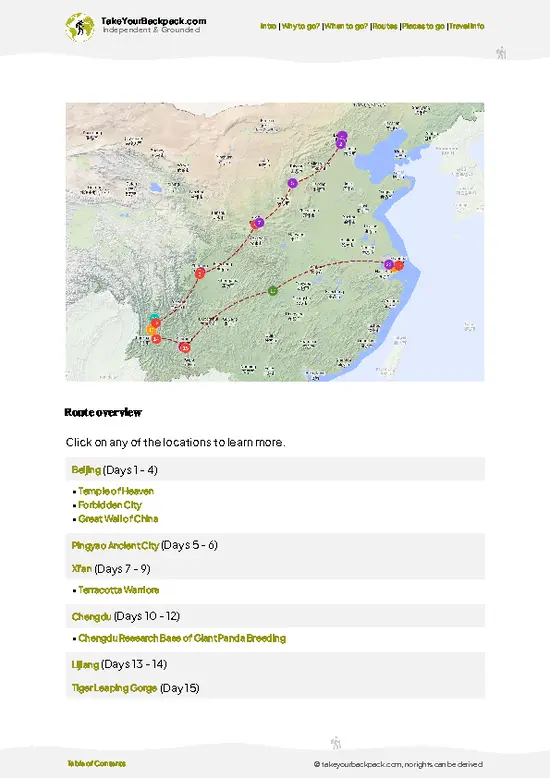
An offline-friendly backpacking guide with optimized travel routes, ranked highlights, transport advice, and the best areas to stay.
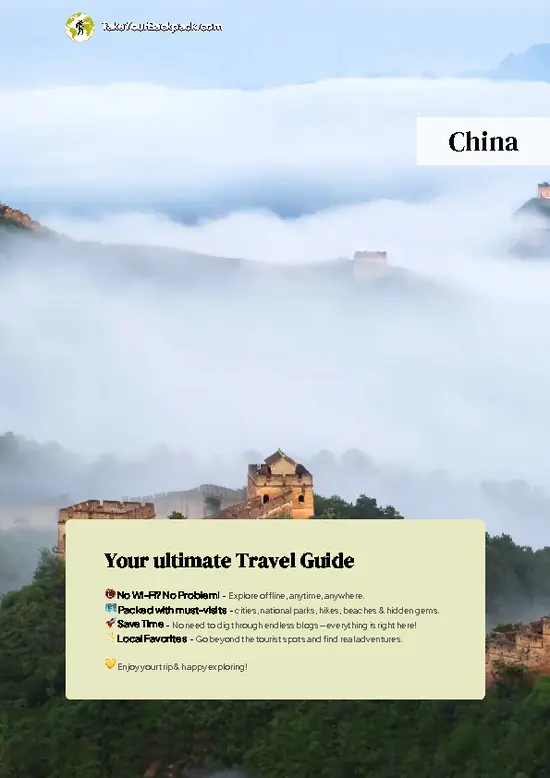
example page 0 from our offline Travel Guide for China
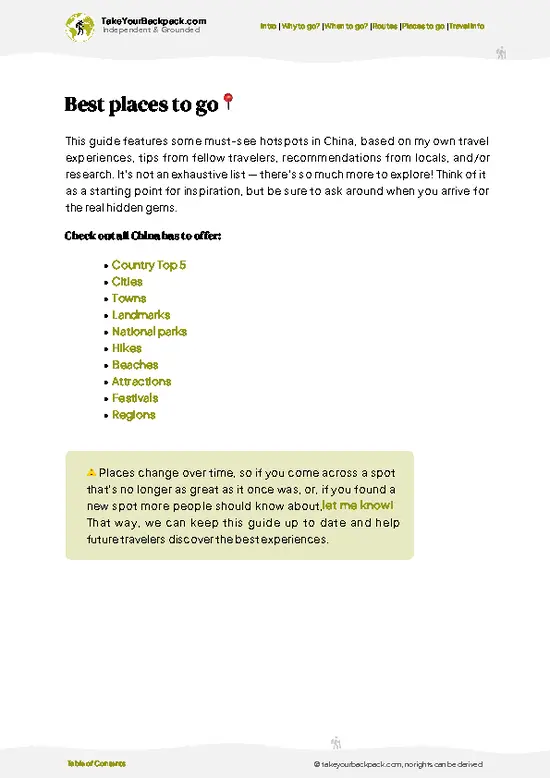
example page 1 from our offline Travel Guide for China
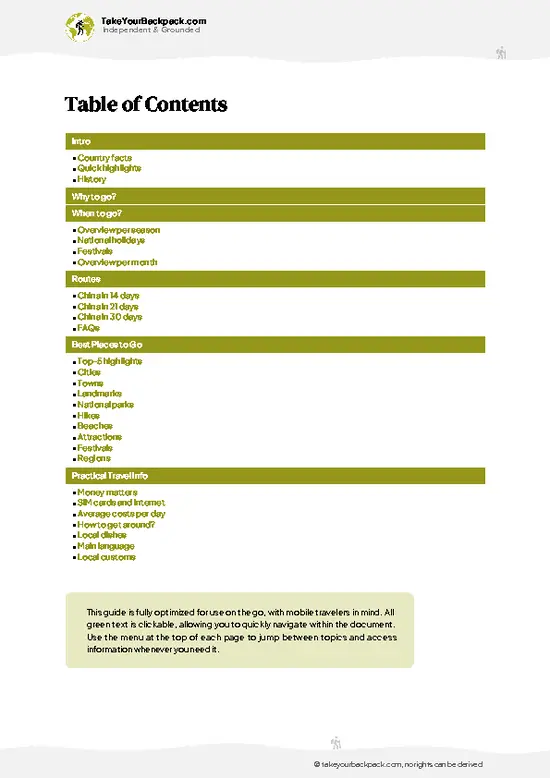
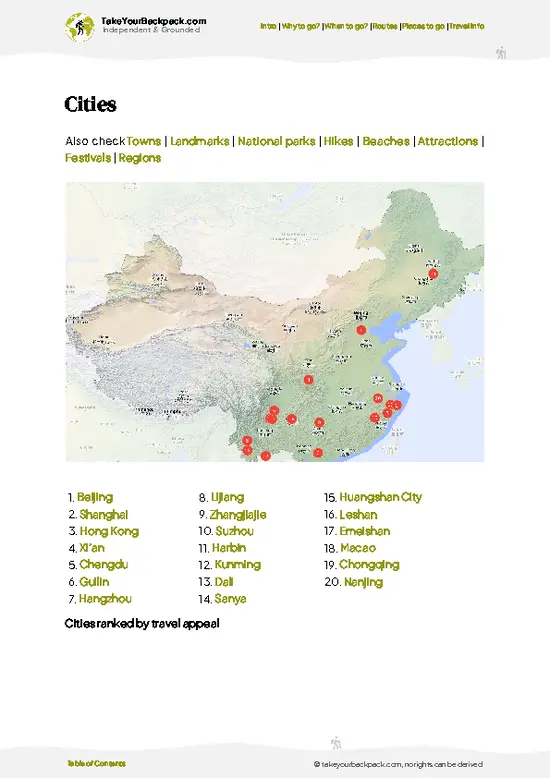
example page 2 from our offline Travel Guide for China
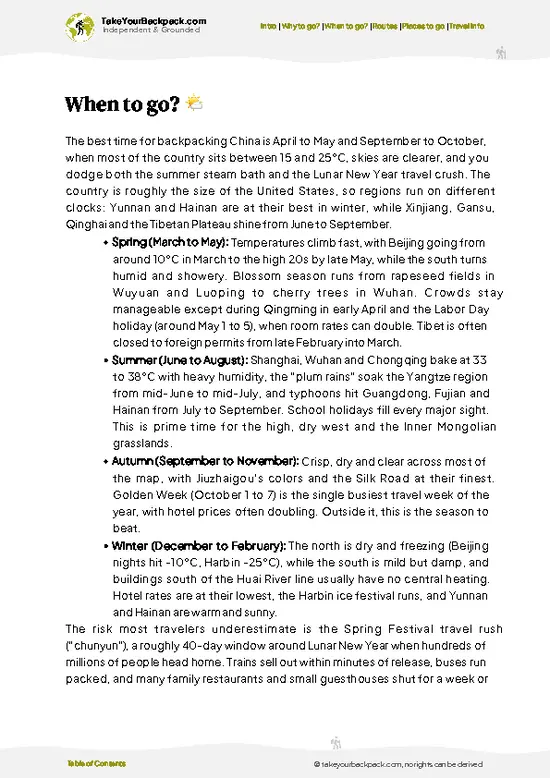
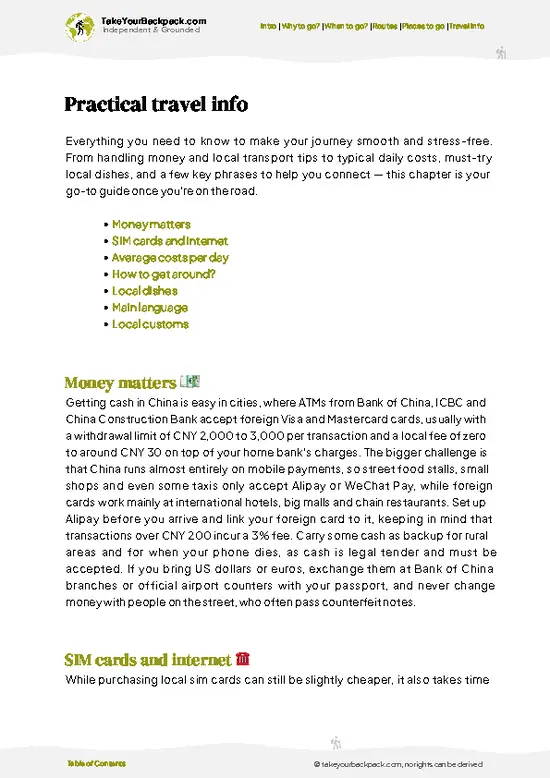
example page 3 from our offline Travel Guide for China
example page 4 from our offline Travel Guide for China
example page 5 from our offline Travel Guide for China
example page 6 from our offline Travel Guide for China
example page 7 from our offline Travel Guide for China
The digital guide (496 pages) contains:
139 highlights, ranked by travel appeal
Optimized 14, 21 & 30-day travel routes
Cities, national parks, landmarks, beaches
How to get around
Offline-friendly for travel without Wi-Fi
👉 Click to see all 30+ guide features

📅 Plan smarter in minutes, not weeks
Month by month travel advice
Festivals & national holidays
Budget expectations

🗺️ Go to the right places, skip the overrated ones
Honest pros & cons of destinations
Top hikes, parks & viewpoints
Lesser-known places most travelers miss
Clear “worth it vs skip it” guidance

🛏️ Travel smoothly without rookie mistakes
Best areas to stay
Transport systems explained simply
Common scams & safety advice
SIM cards, money & practical tips

🌍 Understand the country, not just visit it
Culture & traditions
52 Essential phrases & customs
Festivals worth planning around
Traveler-friendly historical context
Insights that make places more meaningful

📱 Built for real travel conditions
Fully downloadable PDF
Works completely offline
Optimized for phone use
Useful in remote areas & buses
Everything in one place
Save weeks of stressful planning
Get instant access to your full guide. 30‑day money-back guarantee.


By proceeding you agree to our terms.
Sent to your inbox immediately after payment • 100% Secure Checkout
Best Backpacking Travel Advisor 2025 tourism awardBest Backpacking
Travel Advisor
2025
What others say about Take Your Backpack Guides:
⭐⭐⭐⭐⭐
Fantastic, amazing amount of information!
⭐⭐⭐⭐⭐
My goodness this is amazing, it's what I've been looking for hats off too you!
⭐⭐⭐⭐⭐
I think this is absolutely BRILLIANT
⭐⭐⭐⭐
Very complete and informative. It's still missing places, but I gotta to commend you
⭐⭐⭐⭐⭐
This is truly amazing, thank you, can't wait to explore it with my kids!
⭐⭐⭐⭐⭐
Awesome resource, thank you!
⭐⭐⭐⭐⭐
This is amazing! Can't wait to explore the ones I haven't seen
⭐⭐⭐⭐
I love this! Well done, great idea.
⭐⭐⭐⭐⭐
Thanks for taking the time to make this gem!
⭐⭐⭐⭐⭐
This might be the best website I've ever seen.
⭐⭐⭐⭐⭐
Congratulations, and thank you so much for your work; it's incredibly valuable.
⭐⭐⭐⭐
In all seriousness I think you did a great job pointing out the important spots
⭐⭐⭐⭐⭐
10/10 very good
⭐⭐⭐⭐⭐
As someone who's only just starting to visit regularly this is awesome, thank you.
⭐⭐⭐⭐
Thank you very much! I'm going to visit my dad, it's going to be very useful!
⭐⭐⭐⭐⭐
This is really cool! We'll be travelling for the first time and this definitely come in handy.
⭐⭐⭐⭐⭐
You are now our minister of culture, congratulations 👨‍💼
⭐⭐⭐⭐⭐
Just wanted to tell you that this is a pearl! Going to follow your recommendations.
⭐⭐⭐⭐⭐
This is so cool. I'll definitely be using the resource for my travels soon.
⭐⭐⭐⭐⭐
This is very impressive! Good work.
⭐⭐⭐⭐⭐
This is an amazing and informative site. Very well done!

🛏️ Where to stay?Best areas to stay in China

When it comes to staying near Meili Snow Mountain National Park, your best bets are in the nearby towns of Deqin and Shangri-La. Deqin is the closest, about an hour’s drive from the park entrance. Here, you’ll find budget-friendly guesthouses and hostels that cater to backpackers. Look for places like the Meili Snow Mountain Hotel, which offers basic amenities and stunning views.

Shangri-La, a bit further away, has a wider range of accommodations, from cozy hostels to mid-range hotels. It’s a charming town with Tibetan culture, making it a great base for exploring the area.

Inside the park, … read more 👉
When it comes to staying near Meili Snow Mountain National Park, your best bets are in the nearby towns of Deqin and Shangri-La. Deqin is the closest, about an hour’s drive from the park entrance. Here, you’ll find budget-friendly guesthouses and hostels that cater to backpackers. Look for places like the Meili Snow Mountain Hotel, which offers basic amenities and stunning views.

Shangri-La, a bit further away, has a wider range of accommodations, from cozy hostels to mid-range hotels. It’s a charming town with Tibetan culture, making it a great base for exploring the area.

Inside the park, options are limited. There are a few basic lodges, but they fill up quickly, especially during peak season. Booking ahead is crucial. Be prepared for shared facilities and limited services; this is not luxury travel. Focus on the experience, and save your energy and budget for the breathtaking hikes and views that await you.

👛 Costs (as of 4 January 2025)How expensive it really is

Visiting Meili Snow Mountain National Park in China requires some careful budgeting. The entrance fee typically ranges from €10 to €15 (about $11 to $16). This fee grants access to the park, but keep in mind that it can vary based on the season and any special events.

Transportation is another key cost. If you’re traveling from nearby towns like Deqin, expect to pay around €5 to €10 ($6 to $11) for a bus ticket. Private taxis or rideshares will set you back significantly more, often between €30 and €50 ($33 to $55) depending on your negotiation skills and the distance.

Accommodation options are diverse. Budget hostels start at about €15 ($16) per night, while mid-range hotels can range from €30 to €70 ($33 to $77). If you’re looking for something more upscale, prices can soar above €100 … read more 👉
Visiting Meili Snow Mountain National Park in China requires some careful budgeting. The entrance fee typically ranges from €10 to €15 (about $11 to $16). This fee grants access to the park, but keep in mind that it can vary based on the season and any special events.

Transportation is another key cost. If you’re traveling from nearby towns like Deqin, expect to pay around €5 to €10 ($6 to $11) for a bus ticket. Private taxis or rideshares will set you back significantly more, often between €30 and €50 ($33 to $55) depending on your negotiation skills and the distance.

Accommodation options are diverse. Budget hostels start at about €15 ($16) per night, while mid-range hotels can range from €30 to €70 ($33 to $77). If you’re looking for something more upscale, prices can soar above €100 ($110).

Food is generally affordable. Street food and local eateries offer meals for around €3 to €7 ($3.30 to $7.70). Dining in more established restaurants will cost you about €10 to €20 ($11 to $22) per meal.

Lastly, consider the cost of guided tours if you want to explore deeper into the park. These can range from €50 to €150 ($55 to $165) depending on the length and inclusions.

Keep these costs in mind to avoid surprises. Planning ahead will help you focus on the breathtaking landscapes and rich culture without worrying about your wallet.


source: chinadiscovery.com
⚠️ Prices can change and everyone travels differently, so take this as a rough guide. Hope it helps you plan your adventure!

🥾 TrailsScenic routes and wildlife spotting in Meili Snow Mountain

Meili Snow Mountain National Park is a gem for hikers, offering stunning views of jagged peaks, lush valleys, and glacial lakes. The terrain can be quite diverse, ranging from forested paths to rocky inclines, so you’ll want to be prepared for anything. Wildlife is abundant, with chances to spot everything from colorful birds to elusive snow leopards, if you’re lucky.

One of the standout trails is the Meili Snow Mountain Circuit, which really showcases the park’s beauty. Here’s the scoop:
  • Length: 60 km
  • Estimated Duration: 4-7 days
  • Difficulty Level: Moderate to Challenging
  • Key Features: Breathtaking
read more 👉
Meili Snow Mountain National Park is a gem for hikers, offering stunning views of jagged peaks, lush valleys, and glacial lakes. The terrain can be quite diverse, ranging from forested paths to rocky inclines, so you’ll want to be prepared for anything. Wildlife is abundant, with chances to spot everything from colorful birds to elusive snow leopards, if you’re lucky.

One of the standout trails is the Meili Snow Mountain Circuit, which really showcases the park’s beauty. Here’s the scoop:
  • Length: 60 km
  • Estimated Duration: 4-7 days
  • Difficulty Level: Moderate to Challenging
  • Key Features: Breathtaking views of the Meili Snow Mountain range, sacred Tibetan temples, and pristine lakes.
  • Terrain: Varied, includes steep ascents, rocky paths, and some sections of soft earth.

Getting to the park isn’t too tricky. You can hop on a bus from nearby towns like Shangri-La, and the ride offers some nice scenery itself. Just keep in mind that it can get pretty crowded during peak seasons, especially in the summer and around local festivals. As for entrance fees, there’s usually a small charge, but it’s worth every yuan for the views you’ll get. Just be sure to check for any updates or changes before you go!
⚠️ Hiking info can sometimes be outdated or inaccurate. Before you hit the trail, check the latest conditions with locals. If you do spot anything that's off, I'd love to hear from you, so I can update it for fellow travelers.

🛡️ SafetyTraveler Safety Guide

Meili Snow Mountain National Park offers a stunning backdrop for backpackers, but it’s essential to stay grounded in reality. Weather can shift rapidly; always check forecasts and be prepared for sudden rain or temperature drops. Altitude can affect even seasoned hikers, so acclimatize gradually.

The terrain varies from steep ascents to rocky paths, requiring solid footwear and careful navigation. River crossings may be necessary, so assess conditions before proceeding. Wildlife is generally shy, but keep a respectful distance from any animals you encounter.

Pack smart: layers for temperature changes, enough water, and snacks to maintain energy. Timing your hikes for early morning can help avoid afternoon storms. Stay aware, and you’ll enjoy the park’s beauty without unnecessary stress.

Other Chinese national parks near Meili Snow Mountain

Explore more nearby:


💡 Not sure where to go next?
Create a personalized itinerary for China including Meili Snow Mountain and the places that fit your trip.

Generate my itinerary

👉 Discover all national parks

Or checkout all China has to offer (think cities, towns, villages, national parks, hikes, beaches, festivals)
Country photo of China

We 💚 feedbackParting advice and final tips

Meili Snow Mountain National Park is a breathtaking spectacle, especially at sunrise when the peaks glow like they’re on fire. But be ready for the altitude; it can hit hard. Take your time acclimatizing, or you’ll miss those stunning views while gasping for breath. Embrace the challenge, and you’ll find the rewards are worth every step.

✈️ When did I visit China?
As part of my 1.5 year travel around the world trip, I visited China in August 2015, coming from Mongolia by the TransMongolia Express.

✍️ Help improve this page!
The information on this page is based on my own backpacking experience in China, supplemented with up-to-date research and feedback from other travelers. Travel details can change, so if you notice anything outdated or incomplete, feel free to let me know.


🙋‍♂️ Give feedback

👋 Meet the founderWho’s Behind Take Your Backpack?

Johan, backpacker and founder of TakeYourBackpackHi, I’m Johan (Netherlands 🇳🇱), the creator of TakeYourBackpack. Over the past decade, I’ve backpacked through 80+ countries across six continents, gaining extensive experience with independent travel, long-term trips, and overland routes.

This site is built on a combination of firsthand travel experience and carefully curated insights from other backpackers. Many guides are based on places I’ve personally visited, while others bring together tips, observations, and practical advice shared by trusted travelers I’ve met along the way.

The goal is to provide realistic, experience-driven guidance — not generic itineraries — so you can explore destinations with better context, clearer expectations, and more confidence.

Get full China guide •
Instant download • 139 highlights • Full Offline guide