×

China🇨🇳 | national parksMount Qingchengdense bamboo, Taoist temples, winding trails | things to do and best time to go

Explore Mount HuaExplore Mount Heng

Backpacking in Mount Qingcheng
👀 For curious travelersnational park ranked #17
By Johan Kruseman 🇳🇱 | Updated October 15, 2026

Your boots hit damp stone steps, incense hangs in the air, and somewhere above the trees a temple bell cuts through the cicadas. This is Mount Qingcheng National Park, just outside Dujiangyan in Sichuan, western China. For backpackers, it’s a compact, forested maze of steep stair-hikes, misty ridgelines, and Taoist temples rather than big alpine drama. Trails are well-marked, wildlife is mostly birds and bugs, access from Chengdu is easy, and entrance fees are moderate but padded by cable cars and boat extras. It’s crowded on weekends and Chinese holidays, and wild camping is basically off the table, so you’re looking at cheap guesthouses near the gates instead of tents. Compared with nearby Jiuzhaigou or Siguniang, Qingcheng is lower, greener, more spiritual than scenic, and better for a day or overnight when you want culture and forest without a full-on mountain expedition.

Discover everything you want to know in the 📖 China Travel Guide.


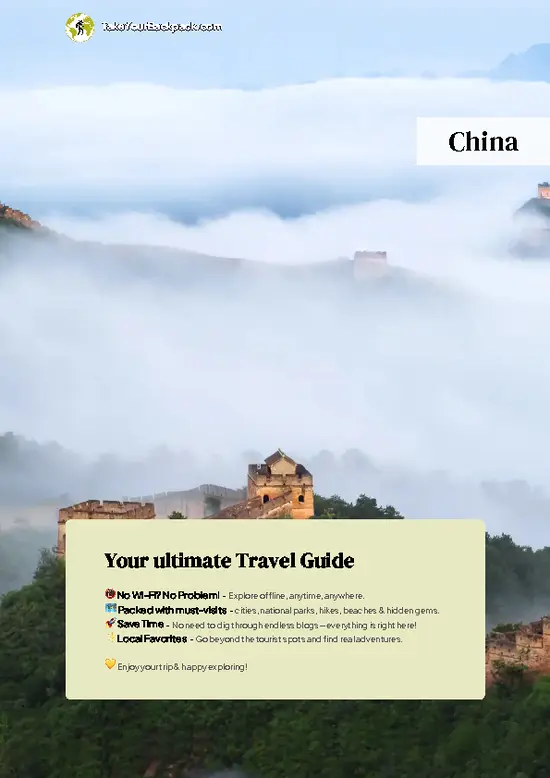
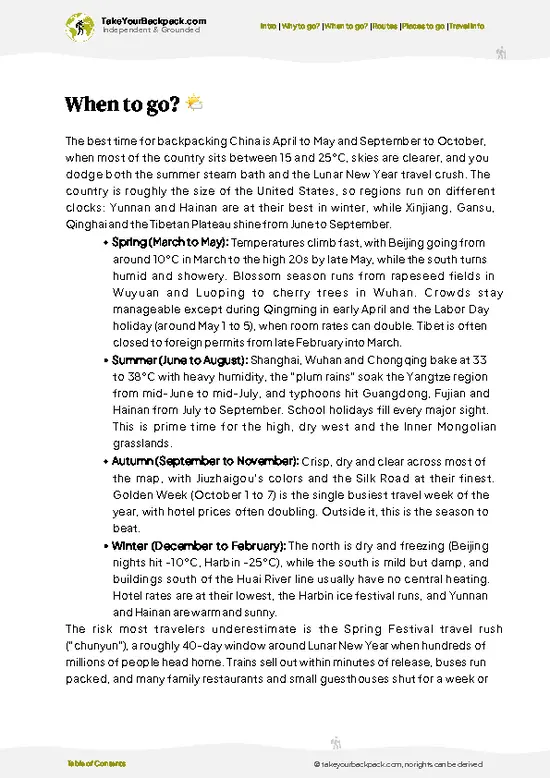
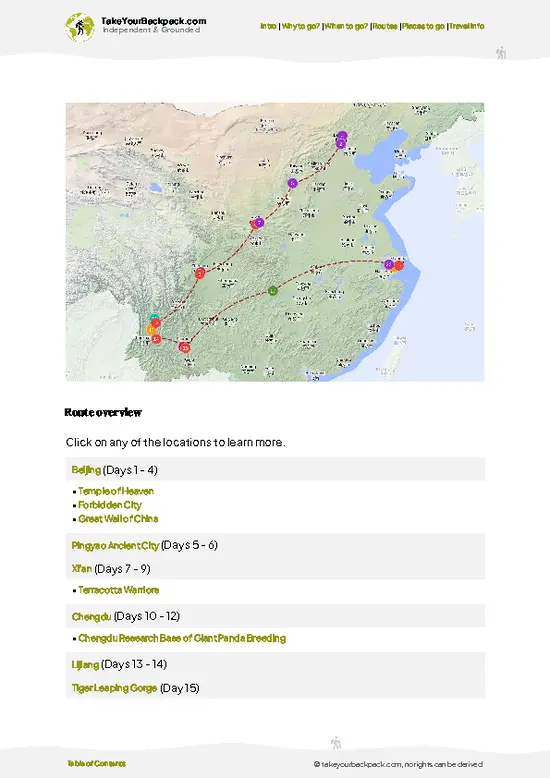
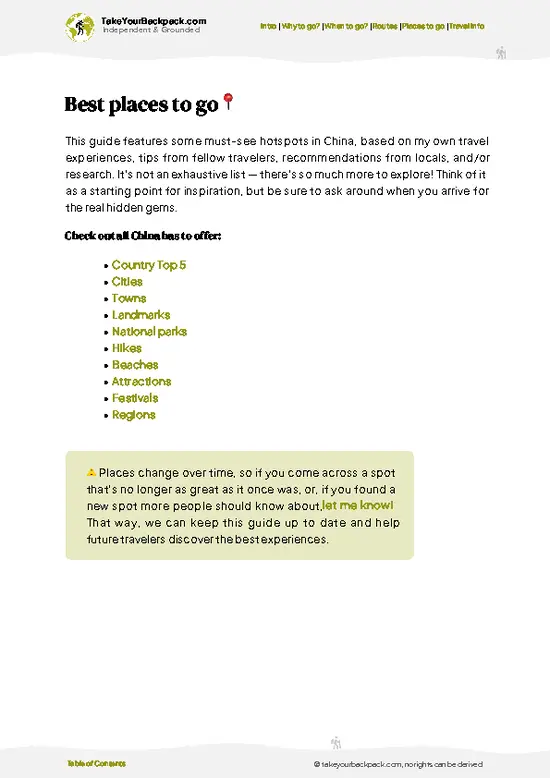
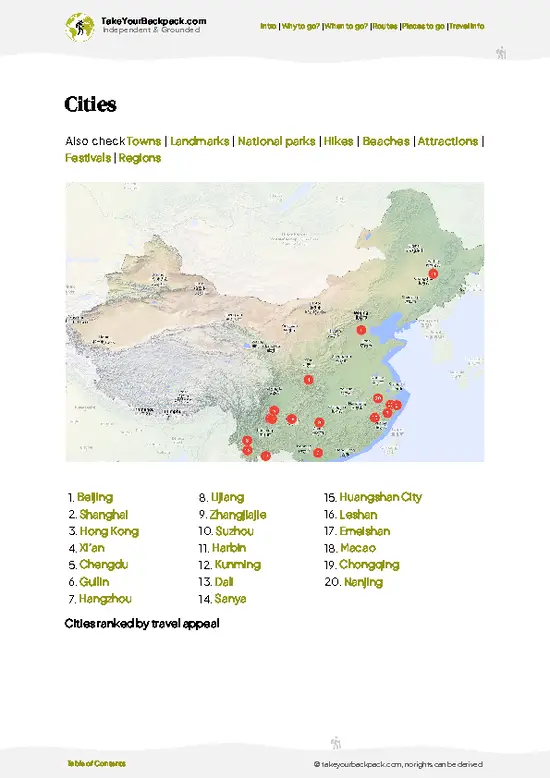
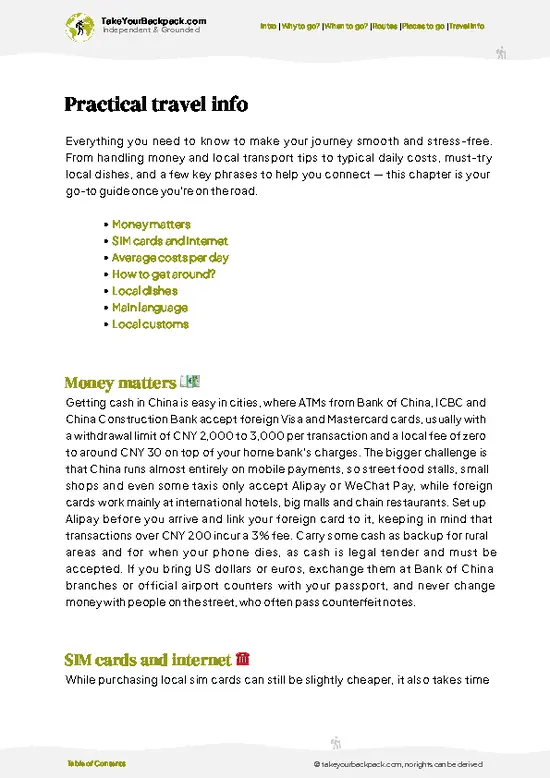
example page 0 from our offline Travel Guide for China
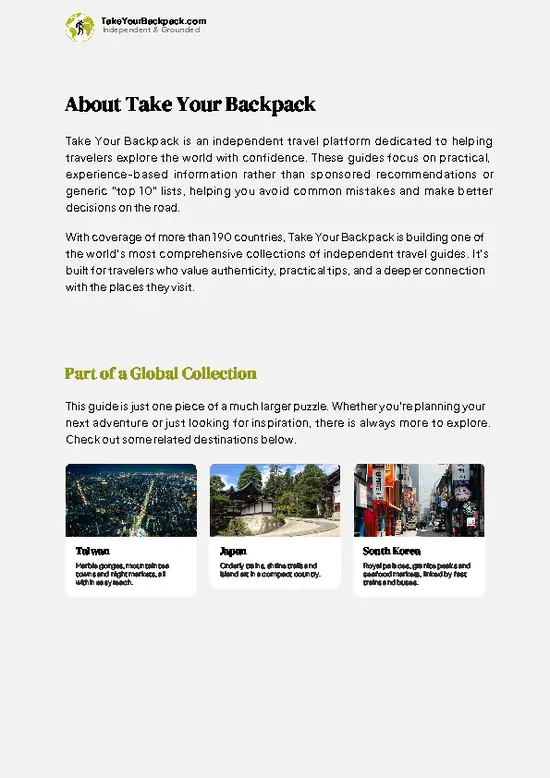
example page 1 from our offline Travel Guide for China
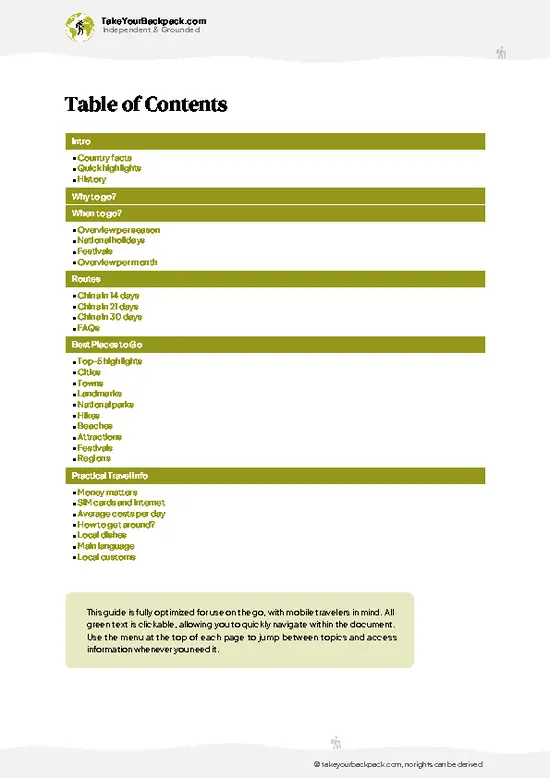
example page 2 from our offline Travel Guide for China
example page 3 from our offline Travel Guide for China
example page 4 from our offline Travel Guide for China
example page 5 from our offline Travel Guide for China
example page 6 from our offline Travel Guide for China
example page 7 from our offline Travel Guide for China
Loading the map 🌍
CLICK TO FILTER
cities
towns
landmarks
national parks
hikes
beaches
attractions
festivals
regions
SHOW COUNTRY’S BESTSHOW ALL

✨ Why go?
Ranked #17 national park in China
Why visitors keep coming back

Mount Qingcheng National Park attracts backpackers for its independent exploration opportunities. The park’s extensive trail network allows you to choose your own adventure, whether you prefer a leisurely stroll or a challenging hike. Budget camping and hostels nearby make it easy to keep costs low while enjoying the stunning scenery. This park is particularly suited for self-guided travelers; you can navigate the trails without the constraints of a tour group. Plus, the rich cultural history adds depth to your experience, making every step feel meaningful. Avoid the tourist traps and embrace the freedom of the trails—your energy and budget will thank you.

💡 HighlightsTop highlights of Mount Qingcheng

  • Front Mountain (Qianshan) — the classic temple walk: Stone paths, easy switchbacks and a string of well-preserved Taoist temples make this the must-do introduction to Qingcheng. It’s lush, shaded and perfect if you want culture + short hikes without sweating too much.
  • Back Mountain (Houshan) — wild trails and waterfalls: Less crowded and more rugged than the front, with longer trails, bamboo groves, and several small waterfalls. Feels like proper mountain hiking and is my personal favorite for quiet mornings and birdwatching.
  • Shangqing Palace (Shangqing Gong): The park’s major Taoist complex, with ornate halls tucked into the forest and a real sense of history. Great photo ops and a good place to see local religious life and stone carvings up close.
  • Jianfu Palace: An older temple compound
… read more 👉
  • Front Mountain (Qianshan) — the classic temple walk: Stone paths, easy switchbacks and a string of well-preserved Taoist temples make this the must-do introduction to Qingcheng. It’s lush, shaded and perfect if you want culture + short hikes without sweating too much.
  • Back Mountain (Houshan) — wild trails and waterfalls: Less crowded and more rugged than the front, with longer trails, bamboo groves, and several small waterfalls. Feels like proper mountain hiking and is my personal favorite for quiet mornings and birdwatching.
  • Shangqing Palace (Shangqing Gong): The park’s major Taoist complex, with ornate halls tucked into the forest and a real sense of history. Great photo ops and a good place to see local religious life and stone carvings up close.
  • Jianfu Palace: An older temple compound often quieter than Shangqing, with interesting architecture and peaceful courtyards. Good stop if you want temple atmosphere without the larger crowds.
  • Laojun Peak (summit viewpoints): The higher viewpoints reward you with panoramic views over Dujiangyan and the surrounding Sichuan basin on clear days. Short steep sections, but the vistas are worth the effort.
  • Ancient forest & bamboo slopes: Dense subtropical mixed forest, mossy rocks and thick bamboo that feel otherworldly after a rain — perfect for a slow ramble, listening for warblers and the occasional squirrel.
  • Taoist stone inscriptions and cliff carvings: Scattered along trails are old stone tablets and inscriptions that trace Qingcheng’s religious history. Not flashy, but they give context to why this place is sacred and UNESCO-listed.
Spotted a mistake or missing something? Contact us.

Things to do near Mount Qingcheng

Ratings based on Tripadvisor reviews. When you book through this link, you support our work at no extra cost to you.

🌤️ When to go?Best time to explore Mount Qingcheng

  • Weather: Spring (April to June) and autumn (September to November) offer mild, stable weather with less rain. Summers get hot and humid, often above 30°C (86°F), while winters can be chilly, dropping to around 5°C (41°F).
  • Temperature: Daytime temps in spring and autumn hover between 15-25°C (59-77°F), perfect for hiking without overheating or freezing.
  • Daylight Hours: Longer days in spring and early autumn provide 10-12 hours of light, enough for extended treks without rushing.
  • Crowds: Peak tourist season hits in May and October, especially during Chinese holidays, so expect busy trails and higher prices.
  • Seasonal Activities: Spring brings blooming flora, while autumn showcases colorful foliage—both worth timing your visit around if nature photography or scenery matters.
  • Price Fluctuations:
… read more 👉
  • Weather: Spring (April to June) and autumn (September to November) offer mild, stable weather with less rain. Summers get hot and humid, often above 30°C (86°F), while winters can be chilly, dropping to around 5°C (41°F).
  • Temperature: Daytime temps in spring and autumn hover between 15-25°C (59-77°F), perfect for hiking without overheating or freezing.
  • Daylight Hours: Longer days in spring and early autumn provide 10-12 hours of light, enough for extended treks without rushing.
  • Crowds: Peak tourist season hits in May and October, especially during Chinese holidays, so expect busy trails and higher prices.
  • Seasonal Activities: Spring brings blooming flora, while autumn showcases colorful foliage—both worth timing your visit around if nature photography or scenery matters.
  • Price Fluctuations: Accommodation and transport costs rise during peak months and holidays; off-peak spring and late autumn offer better deals.
Pro-tip: Aim for late April or early October weekdays to dodge crowds and enjoy the best weather without paying a premium.


source: climatestotravel.comJANJanuary: fair for travelingFEBFebruary: fair for travelingMARMarch: good for travelingAPRApril: highly recommended for travelingMAYMay: good for travelingJUNJune: highly recommended for travelingJULJuly: fair for travelingAUGAugust: fair for travelingSEPSeptember: highly recommended for travelingOCTOctober: good for travelingNOVNovember: highly recommended for travelingDECDecember: fair for traveling
when-to-go

✈️ The backpacker research shortcutChina Travel Guide

An offline-friendly backpacking guide with optimized travel routes, ranked highlights, transport advice, and the best areas to stay.
example page 0 from our offline Travel Guide for China
example page 1 from our offline Travel Guide for China
example page 2 from our offline Travel Guide for China
example page 3 from our offline Travel Guide for China
example page 4 from our offline Travel Guide for China
example page 5 from our offline Travel Guide for China
example page 6 from our offline Travel Guide for China
example page 7 from our offline Travel Guide for China
The digital guide (436 pages) contains:
✅ 121 highlights, ranked by travel appeal
✅ Optimized 14, 21 & 30-day travel routes
✅ Cities, national parks, landmarks, beaches
✅ How to get around
✅ Offline-friendly for travel without Wi-Fi
👉 Click to see all 30+ guide features

📅 Plan smarter in minutes, not weeks
✅ Month by month travel advice
✅ Festivals & national holidays
✅ Budget expectations

🗺️ Go to the right places, skip the overrated ones
✅ Honest pros & cons of destinations
✅ Top hikes, parks & viewpoints
✅ Lesser-known places most travelers miss
✅ Clear “worth it vs skip it” guidance

🛏️ Travel smoothly without rookie mistakes
✅ Best areas to stay
✅ Transport systems explained simply
✅ Common scams & safety advice
✅ SIM cards, money & practical tips

🌍 Understand the country, not just visit it
✅ Culture & traditions
✅ 52 Essential phrases & customs
✅ Festivals worth planning around
✅ Traveler-friendly historical context
✅ Insights that make places more meaningful

📱 Built for real travel conditions
✅ Fully downloadable PDF
✅ Works completely offline
✅ Optimized for phone use
✅ Useful in remote areas & buses
✅ Everything in one place
Stop searching, start planning
Get instant access to your full guide. 30‑day money-back guarantee.
+ Add another guide for just

By proceeding you agree to our terms.
Sent to your inbox immediately after payment • 100% Secure Checkout
Best Backpacking Travel Advisor 2025 tourism awardBest Backpacking
Travel Advisor
2025
What others say about Take Your Backpack Guides:
⭐⭐⭐⭐⭐
Fantastic, amazing amount of information!
⭐⭐⭐⭐⭐
My goodness this is amazing, it's what I've been looking for hats off too you!
⭐⭐⭐⭐⭐
I think this is absolutely BRILLIANT
⭐⭐⭐⭐
Very complete and informative. It's still missing places, but I gotta to commend you
⭐⭐⭐⭐⭐
This is truly amazing, thank you, can't wait to explore it with my kids!
⭐⭐⭐⭐⭐
Awesome resource, thank you!
⭐⭐⭐⭐⭐
This is amazing! Can't wait to explore the ones I haven't seen
⭐⭐⭐⭐
I love this! Well done, great idea.
⭐⭐⭐⭐⭐
Thanks for taking the time to make this gem!
⭐⭐⭐⭐⭐
This might be the best website I've ever seen.
⭐⭐⭐⭐⭐
Congratulations, and thank you so much for your work; it's incredibly valuable.
⭐⭐⭐⭐
In all seriousness I think you did a great job pointing out the important spots
⭐⭐⭐⭐⭐
10/10 very good
⭐⭐⭐⭐⭐
As someone who's only just starting to visit regularly this is awesome, thank you.
⭐⭐⭐⭐
Thank you very much! I'm going to visit my dad, it's going to be very useful!
⭐⭐⭐⭐⭐
This is really cool! We'll be travelling for the first time and this definitely come in handy.
⭐⭐⭐⭐⭐
You are now our minister of culture, congratulations 👨‍💼
⭐⭐⭐⭐⭐
Just wanted to tell you that this is a pearl! Going to follow your recommendations.
⭐⭐⭐⭐⭐
This is so cool. I'll definitely be using the resource for my travels soon.
⭐⭐⭐⭐⭐
This is very impressive! Good work.
⭐⭐⭐⭐⭐
This is an amazing and informative site. Very well done!

🛏️ Where to stay?How to pick the right area

Mount Qingcheng National Park offers a few options for backpackers, but staying inside the park itself is limited. The park has basic guesthouses, often run by local families, providing a cozy atmosphere. Expect simple amenities and a chance to connect with locals.

For more choices, head to nearby Dujiangyan. This city has a range of hostels and budget hotels, making it a solid base for exploring the park. Look for places near the train station for easy access.

Keep an eye on transportation costs; local buses can add up. Staying in Dujiangyan allows you to save energy and funds for the park’s … read more 👉
Mount Qingcheng National Park offers a few options for backpackers, but staying inside the park itself is limited. The park has basic guesthouses, often run by local families, providing a cozy atmosphere. Expect simple amenities and a chance to connect with locals.

For more choices, head to nearby Dujiangyan. This city has a range of hostels and budget hotels, making it a solid base for exploring the park. Look for places near the train station for easy access.

Keep an eye on transportation costs; local buses can add up. Staying in Dujiangyan allows you to save energy and funds for the park’s trails and temples, where the real magic happens.

👛 Costs (as of 15 October 2026)Money, prices, and spending tips

Visiting Mount Qingcheng National Park in China can be a rewarding experience, but it’s essential to be aware of the costs involved to avoid surprises.

Entrance fees typically range from €10 to €15 (about $11 to $16). This fee grants you access to the park and its main attractions. However, if you’re planning to explore specific areas or take guided tours, additional costs may apply. Guided tours can vary significantly, often falling between €30 and €100 ($33 to $110), depending on the length and inclusivity of the experience.

Transportation to the park is another factor. If you’re coming from Chengdu, expect to pay around €5 to €10 ($6 to $11) for a bus ticket. Taxis or rideshares will cost more, generally starting at €20 ($22) for a one-way trip.

Food and drink inside the park can also … read more 👉
Visiting Mount Qingcheng National Park in China can be a rewarding experience, but it’s essential to be aware of the costs involved to avoid surprises.

Entrance fees typically range from €10 to €15 (about $11 to $16). This fee grants you access to the park and its main attractions. However, if you’re planning to explore specific areas or take guided tours, additional costs may apply. Guided tours can vary significantly, often falling between €30 and €100 ($33 to $110), depending on the length and inclusivity of the experience.

Transportation to the park is another factor. If you’re coming from Chengdu, expect to pay around €5 to €10 ($6 to $11) for a bus ticket. Taxis or rideshares will cost more, generally starting at €20 ($22) for a one-way trip.

Food and drink inside the park can also add up. Budget around €5 to €15 ($6 to $16) for a meal, depending on whether you opt for local street food or a sit-down restaurant.

Plan for extra costs like souvenirs or snacks, which can easily add another €5 to €20 ($6 to $22) to your budget.

Overall, a day at Mount Qingcheng can range from €30 to €100 ($33 to $110) depending on your choices. Being aware of these costs will help you manage your budget and energy for the experiences that truly matter.
⚠️ Prices can change and everyone travels differently, so take this as a rough guide. Hope it helps you plan your adventure!

🥾 TrailsBest hikes in Mount Qingcheng national park

Mount Qingcheng National Park is a gem for hikers, blending serene landscapes with rich cultural history. The lush greenery, ancient temples, and winding paths make it a fantastic escape. You’ll find yourself surrounded by towering trees and the occasional glimpse of wildlife, like monkeys and colorful birds. The terrain varies quite a bit, so you’ll experience everything from gentle slopes to more challenging ascents.

One of the standout trails is Green Cloud Trail. Here are some details:
  • Length: 6 km
  • Estimated Duration: 2-3 hours
  • Difficulty Level: Moderate
  • Key Features: Scenic views, ancient temples,
… read more 👉
Mount Qingcheng National Park is a gem for hikers, blending serene landscapes with rich cultural history. The lush greenery, ancient temples, and winding paths make it a fantastic escape. You’ll find yourself surrounded by towering trees and the occasional glimpse of wildlife, like monkeys and colorful birds. The terrain varies quite a bit, so you’ll experience everything from gentle slopes to more challenging ascents.

One of the standout trails is Green Cloud Trail. Here are some details:
  • Length: 6 km
  • Estimated Duration: 2-3 hours
  • Difficulty Level: Moderate
  • Key Features: Scenic views, ancient temples, and peaceful streams
  • Terrain: Mix of paved paths and natural trails with some steep sections

Another great option is Yin Yang Valley Trail:
  • Length: 4 km
  • Estimated Duration: 1.5-2 hours
  • Difficulty Level: Easy
  • Key Features: Beautiful valley views, diverse flora, and fauna
  • Terrain: Mostly flat with a few gentle inclines

Getting to Mount Qingcheng is pretty straightforward. Public transport options like buses from Chengdu are frequent and budget-friendly, making it easy to hop over for a day hike. Just keep in mind that weekends can get busy, especially with locals, so if you want a quieter experience, aim for a weekday visit. As for the entrance fee, it’s quite reasonable, usually around 90 RMB, giving you access to all the trails and natural beauty.
⚠️ Hiking info can sometimes be outdated or inaccurate. Before you hit the trail, check the latest conditions with locals. If you do spot anything that's off, I'd love to hear from you, so I can update it for fellow travelers.

🛡️ SafetyTraveler Safety Guide

Mount Qingcheng National Park is generally well-managed, making it accessible for most hikers. However, be mindful of sudden weather changes, especially during the rainy season. The trails can be steep and rocky, so good footwear is essential. Navigation is straightforward, but keep an eye on trail markers to avoid getting sidetracked.

Wildlife encounters are rare, but if you spot a snake or other animals, observe from a distance and don’t feed them. Prepare for varying temperatures by layering your clothing. Hydration is key, especially on warmer days, so carry enough water. Respect the trails and fellow hikers to enhance everyone’s experience.

FAQCommon questions from travelers

2 days are sufficient to explore Mount Qingcheng National Park thoroughly, allowing time to visit key Taoist temples and hike the main trails. The park is known for its lush scenery and cultural sites, which can be comfortably covered in this timeframe.
Yes, you can visit Mount Qingcheng National Park without a car. Public buses and taxis from Chengdu city are common options, and the park has shuttle buses to help visitors move between major points inside the park.
Yes, there is an entrance fee for Mount Qingcheng National Park, typically around 90 CNY. No special permit is required beyond the ticket, but fees may vary slightly by season or specific areas within the park.
⚠️ Things can change over time, so always validate details locally before you go.

Other Chinese national parks near Mount Qingcheng

Explore more nearby:

  • Mount Emei—monasteries, forested slopes, golden summit statue| 162 km away
  • Huanglong—Travertine pools, alpine meadows, high-altitude valley| 200 km away
  • Hailuogou Glacier Forest Park—glacial tongue, hot springs, virgin forest| 212 km away

💡 Not sure where to go next?
Create a personalized itinerary for China including Mount Qingcheng and the places that fit your trip.

Generate my itinerary

👉 Discover all national parks

Or checkout all China has to offer (think cities, towns, villages, national parks, hikes, beaches, festivals)
Country photo of China

We 💚 feedbackKey takeaways before you go

Mount Qingcheng National Park is a treasure for those seeking tranquility and a deep dive into Taoist culture. The lush trails and ancient temples are worth every step. Just be ready for the crowds, especially on weekends. Arriving early can save you from the hustle and let you soak in the serenity.

✈️ When did I visit China?
As part of my 1.5 year travel around the world trip, I visited China in August 2015, coming from Mongolia by the TransMongolia Express.

✍️ Help improve this page!
The information on this page is based on my own backpacking experience in China, supplemented with up-to-date research and feedback from other travelers. Travel details can change, so if you notice anything outdated or incomplete, feel free to let me know.


🙋‍♂️ Give feedback

👋 Meet the founderWho’s Behind Take Your Backpack?

Johan, backpacker and founder of TakeYourBackpackHi, I’m Johan (Netherlands 🇳🇱), the creator of TakeYourBackpack. Over the past 3 decades, I’ve backpacked through 90+ countries across six continents, gaining extensive experience with independent travel, long-term trips, and overland routes.

This site is built on a combination of firsthand travel experience and carefully curated insights from other backpackers. Many guides are based on places I’ve personally visited, while others bring together tips, observations, and practical advice shared by trusted travelers I’ve met along the way.

The goal is to provide realistic, experience-driven guidance — not generic itineraries — so you can explore destinations with better context, clearer expectations, and more confidence.