×

Cocos Islands🇨🇨 | citiesHome IslandCocos Malay village, stilted timber homes, Oceania House, ferry jetty | things to do and best time to go

Explore West IslandExplore Pulu Keeling National Park

Backpacking in Home Island
👍 Recommendedcity ranked #2
By Johan Kruseman 🇳🇱 | Updated October 17, 2026

Home Island is where the Cocos Malay community lives, and it is not the airport island or the place with the resort-style beaches; those facts catch many arrivals off guard. It sits in the south of the Cocos Islands atoll, a short ferry hop from West Island, where the airstrip and most visitor accommodation are found. Staying on Home Island itself is limited, so most backpackers visit for a day or a night. Weigh it plainly: the ferry is cheap and quick, a guesthouse or homestay costs more than a day visit and gives less comfort and choice, so the day visit gives the most value for a tight budget. Why it works this way: Home Island is a living village, not a tourist enclave, so facilities are modest and respect for local custom matters. It suits curious, flexible travelers and bores anyone wanting nightlife. Unlike West Island, which is spread out, quiet and built around the airstrip, Home Island is compact, walkable and rooted in daily Cocos Malay life.

Discover everything you want to know in the 📖 Cocos Islands Travel Guide.


example page 0 from our offline Travel Guide for Cocos Islands
example page 1 from our offline Travel Guide for Cocos Islands
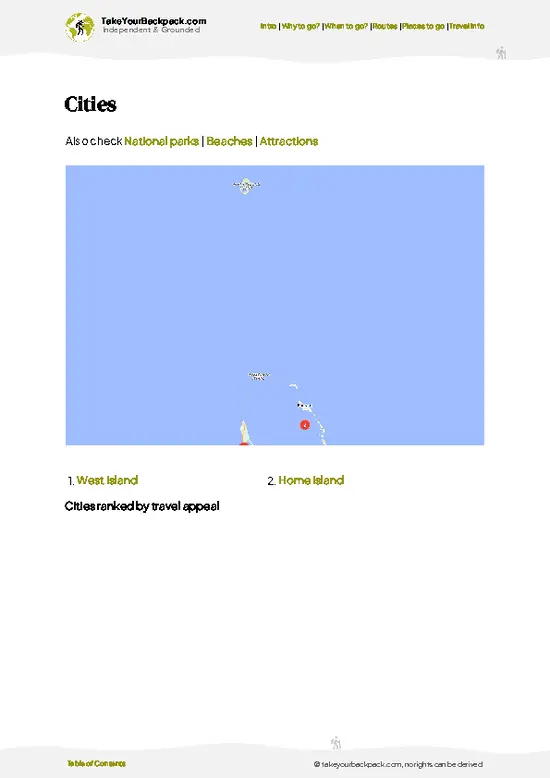
example page 2 from our offline Travel Guide for Cocos Islands
example page 3 from our offline Travel Guide for Cocos Islands
example page 4 from our offline Travel Guide for Cocos Islands
example page 5 from our offline Travel Guide for Cocos Islands
example page 6 from our offline Travel Guide for Cocos Islands
Loading the map 🌍
CLICK TO FILTER
cities
national parks
beaches
attractions
SHOW COUNTRY’S BESTSHOW ALL

✨ Why go?
Ranked #2 city in Cocos Islands
What makes it a must-see city

Home Island is the cultural heart of the atoll, and that is the reason to come. Most backpackers arrive with beaches and kitesurfing on the brain, then find that the people living here give the trip its texture. The village is small enough to cover on foot in a morning, so it fits a day or an overnight rather than a long stay. You will see Cocos Malay houses, hear a dialect found almost nowhere else, and watch daily life move at an unhurried pace. Onward travel is simple because the ferry link to West Island is the only connection you need, and it runs on a modest schedule that you plan around. Food is basic and home-style, so expect to eat what the locals cook rather than choose from menus. Nightlife is absent, which suits early sleepers and anyone who wants quiet. Treat it as a half-day … read more 👉
Home Island is the cultural heart of the atoll, and that is the reason to come. Most backpackers arrive with beaches and kitesurfing on the brain, then find that the people living here give the trip its texture. The village is small enough to cover on foot in a morning, so it fits a day or an overnight rather than a long stay. You will see Cocos Malay houses, hear a dialect found almost nowhere else, and watch daily life move at an unhurried pace. Onward travel is simple because the ferry link to West Island is the only connection you need, and it runs on a modest schedule that you plan around. Food is basic and home-style, so expect to eat what the locals cook rather than choose from menus. Nightlife is absent, which suits early sleepers and anyone who wants quiet. Treat it as a half-day or full-day cultural stop within a longer Cocos trip, paired with water time on the lagoon side. If you want only sand and snorkeling, go elsewhere; if you want to understand who lives here, come.

💡 HighlightsWhat this place is best known for

  1. Oceania House: The former residence of the Clunies-Ross family, who ruled the islands for generations, now a small museum and heritage site. It tells the story of the settlement and the family era. Visit in the cooler morning; allow about 45 minutes. Entry is cheap or by donation, roughly US$0 to 5.
  2. Cocos Malay Village Walk: A stroll along the village lanes shows the stilted and low timber homes, gardens and the everyday rhythm of the community. Go early morning or late afternoon for shade and activity. Free, 1 to 1.5 hours. Greet people, ask before photographing, and dress modestly.
  3. Home Island Museum: A small museum covering Cocos Malay culture, history and daily life, with photographs and artifacts. Opening hours are limited, so check locally. Allow 30 to 45 minutes. Entry is about US$0 to
… read more 👉
  1. Oceania House: The former residence of the Clunies-Ross family, who ruled the islands for generations, now a small museum and heritage site. It tells the story of the settlement and the family era. Visit in the cooler morning; allow about 45 minutes. Entry is cheap or by donation, roughly US$0 to 5.
  2. Cocos Malay Village Walk: A stroll along the village lanes shows the stilted and low timber homes, gardens and the everyday rhythm of the community. Go early morning or late afternoon for shade and activity. Free, 1 to 1.5 hours. Greet people, ask before photographing, and dress modestly.
  3. Home Island Museum: A small museum covering Cocos Malay culture, history and daily life, with photographs and artifacts. Opening hours are limited, so check locally. Allow 30 to 45 minutes. Entry is about US$0 to 3.
  4. Home Island Mosque: A central feature of village life and a visible sign of the community’s faith. View it respectfully from outside unless invited in. Free, 10 to 15 minutes. Avoid prayer times.
  5. Cocos Malay Crafts and Cooking: Local guides sometimes arrange craft demonstrations such as weaving, and traditional food tastings. These are best booked through the visitor contacts on West Island ahead of time. Expect US$15 to 40 and 1 to 2 hours depending on the activity.
  6. Home Island Waterfront and Jetty: The ferry arrival point offers calm lagoon views, small boats and a good spot to watch village life. Best in late afternoon. Free, 20 to 30 minutes.
Oceania House pairs well with the village walk, since both sit within easy walking distance and fill a relaxed morning. Beyond Home Island, the lagoon and beaches of West Island and the uninhabited atoll islets such as Direction Island make good day trips by boat or ferry.
Spotted a mistake or missing something? Contact us.

🏘️ NeighborhoodsWhere things are and how it's laid out

Home Island is small enough that you can read the whole settlement in one afternoon, and the useful question is which part suits the time you have. Everything sits on a few flat, sandy lanes, so walking costs nothing and bikes only save effort on the longer stretches.
  • Kampong (the village core): This is where the Cocos Malay community lives, in tidy houses with fruit trees and shaded yards. Walking here is free and the best way to see it, since cars barely pass. Dress modestly and keep voices low, because this is a residential, Muslim community. It gives you the most for the least effort.
  • Ferry jetty and Oceania House area: The jetty is where boats from West Island arrive, so it is the natural starting point. Oceania House, the old Clunies-Ross mansion, stands nearby, and the Cocos Islands Cultural
… read more 👉
Home Island is small enough that you can read the whole settlement in one afternoon, and the useful question is which part suits the time you have. Everything sits on a few flat, sandy lanes, so walking costs nothing and bikes only save effort on the longer stretches.
  • Kampong (the village core): This is where the Cocos Malay community lives, in tidy houses with fruit trees and shaded yards. Walking here is free and the best way to see it, since cars barely pass. Dress modestly and keep voices low, because this is a residential, Muslim community. It gives you the most for the least effort.
  • Ferry jetty and Oceania House area: The jetty is where boats from West Island arrive, so it is the natural starting point. Oceania House, the old Clunies-Ross mansion, stands nearby, and the Cocos Islands Cultural Museum is a short stroll away. Both are quick, inexpensive stops that explain the island’s unusual history.
  • Village shop and bakery strip: A small cluster of shops covers basics and simple local snacks. Opening hours are short and many things close for prayers and on Fridays, so shop early rather than counting on evening options.
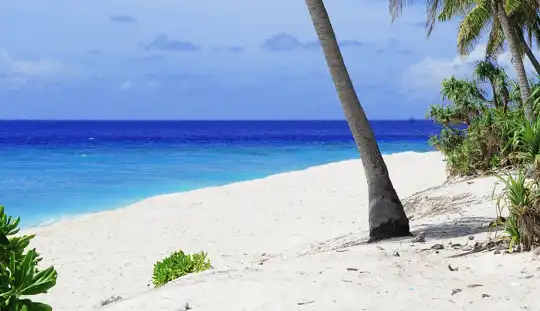
  • Lagoon and ocean beaches: The shoreline is a few minutes on foot from most lanes. The lagoon side is calm and good for a dip, while the ocean side is rougher. This costs nothing and is the best use of a hot afternoon.
  • Northern track: A quiet path leads toward the island’s edge through coconut palms. It is a calm, shaded option when you want empty space, and a bicycle makes it easy.

⌛️ 1 day1-day itinerary for Home Island

8:00 AM: Oceania House
Start at the Cocos Malay Museum (Oceania House), the one stop to keep on this island. It sits in the village center and covers Cocos Malay history, the Clunies-Ross family era and the copra plantation days that shaped the community. Entry is cheap or by small donation, and 45 minutes is enough. Go early, before the heat builds and while the staff have time to talk.

9:00 AM: Village Walk
Walk the main lanes toward the waterfront. Houses are low and tidy, with fruit trees in the yards, chickens on the verges and a mosque at the heart of daily life. This is a living Cocos Malay village of a few hundred people, so keep voices down, dress modestly in shorts below the knee and shoulders covered, and ask before photographing anyone.

10:30 AM: Home Island Shop and Cafe Stop
Drop … read more 👉
8:00 AM: Oceania House
Start at the Cocos Malay Museum (Oceania House), the one stop to keep on this island. It sits in the village center and covers Cocos Malay history, the Clunies-Ross family era and the copra plantation days that shaped the community. Entry is cheap or by small donation, and 45 minutes is enough. Go early, before the heat builds and while the staff have time to talk.

9:00 AM: Village Walk
Walk the main lanes toward the waterfront. Houses are low and tidy, with fruit trees in the yards, chickens on the verges and a mosque at the heart of daily life. This is a living Cocos Malay village of a few hundred people, so keep voices down, dress modestly in shorts below the knee and shoulders covered, and ask before photographing anyone.

10:30 AM: Home Island Shop and Cafe Stop
Drop into the local store for cold drinks and snacks. Stock is limited and opening hours are short, so buy water now for the rest of the day. Sit in the shade for a while and watch the rhythm of island life.

12:00 PM: Lagoon Beach
Follow the shoreline path to the calm lagoon side. The water is shallow, warm and clear, and good for a swim if you keep clothing modest. Bring your own lunch, as eating options are scarce.

2:00 PM: Cocos Malay Craft Visit
Ask locally about the women who weave pandanus mats and baskets and the men who build the traditional oruvas, the outrigger sailing canoes. This is not on the usual day-visitor circuit, and a small purchase goes directly to the maker. Arrangements are informal, so go with patience and a smile.

4:00 PM: Old Cemetery and Waterfront
Finish with a quiet stroll past the old graves and along the jetty, where the late light flattens across the lagoon. Check the ferry timetable before wandering far, since the last crossing back to West Island is the fixed point of your day.

🌤️ When to go?Seasonal considerations and timing

The best window for Home Island is May to October, when trade winds keep the air drier and cooler.
  • Dry Season (May to October): Highs run about 27 to 29°C (81 to 84°F), humidity is lower, and steady southeast winds help kiteboarding. Daylight lasts roughly 11.5 to 12 hours. Flights are fuller, so book early.
  • Wet Season (November to April): Expect 28 to 31°C (82 to 88°F), heavy humidity, and squalls. Seas can be calmer for snorkeling between showers. Crowds thin out, though flights are limited anyway.
  • Cyclone Risk (January to March): Storms are possible on the Indian Ocean, and weather can disrupt flights and boats.
  • Ramadan and Hari Raya: Village life slows or changes, shops keep shorter hours, and visitors see festive community celebrations. Timing shifts each year.
Book flights and accommodation … read more 👉
The best window for Home Island is May to October, when trade winds keep the air drier and cooler.
  • Dry Season (May to October): Highs run about 27 to 29°C (81 to 84°F), humidity is lower, and steady southeast winds help kiteboarding. Daylight lasts roughly 11.5 to 12 hours. Flights are fuller, so book early.
  • Wet Season (November to April): Expect 28 to 31°C (82 to 88°F), heavy humidity, and squalls. Seas can be calmer for snorkeling between showers. Crowds thin out, though flights are limited anyway.
  • Cyclone Risk (January to March): Storms are possible on the Indian Ocean, and weather can disrupt flights and boats.
  • Ramadan and Hari Raya: Village life slows or changes, shops keep shorter hours, and visitors see festive community celebrations. Timing shifts each year.
Book flights and accommodation several months ahead for the dry season, since seats and beds are few.


source: climatestotravel.comJANJanuary: fair for travelingFEBFebruary: fair for travelingMARMarch: fair for travelingAPRApril: below average for travelingMAYMay: fair for travelingJUNJune: highly recommended for travelingJULJuly: highly recommended for travelingAUGAugust: highly recommended for travelingSEPSeptember: excellent for travelingOCTOctober: excellent for travelingNOVNovember: good for travelingDECDecember: excellent for traveling
when-to-go

✈️ The backpacker research shortcutCocos Islands Travel Guide

An offline-friendly backpacking guide with optimized travel routes, ranked highlights, transport advice, and the best areas to stay.
example page 0 from our offline Travel Guide for Cocos Islands
example page 1 from our offline Travel Guide for Cocos Islands
example page 2 from our offline Travel Guide for Cocos Islands
example page 3 from our offline Travel Guide for Cocos Islands
example page 4 from our offline Travel Guide for Cocos Islands
example page 5 from our offline Travel Guide for Cocos Islands
example page 6 from our offline Travel Guide for Cocos Islands
The digital guide (48 pages) contains:
✅ 5 highlights, ranked by travel appeal
✅ Optimized 5, 10 & 15-day travel routes
✅ Cities, national parks, landmarks, beaches
✅ How to get around
✅ Offline-friendly for travel without Wi-Fi
👉 Click to see all 30+ guide features

📅 Plan smarter in minutes, not weeks
✅ Month by month travel advice
✅ Festivals & national holidays
✅ Budget expectations

🗺️ Go to the right places, skip the overrated ones
✅ Honest pros & cons of destinations
✅ Top hikes, parks & viewpoints
✅ Lesser-known places most travelers miss
✅ Clear “worth it vs skip it” guidance

🛏️ Travel smoothly without rookie mistakes
✅ Best areas to stay
✅ Transport systems explained simply
✅ Common scams & safety advice
✅ SIM cards, money & practical tips

🌍 Understand the country, not just visit it
✅ Culture & traditions
✅ 52 Essential phrases & customs
✅ Festivals worth planning around
✅ Traveler-friendly historical context
✅ Insights that make places more meaningful

📱 Built for real travel conditions
✅ Fully downloadable PDF
✅ Works completely offline
✅ Optimized for phone use
✅ Useful in remote areas & buses
✅ Everything in one place
Stop searching, start planning
Get instant access to your full guide. 30‑day money-back guarantee.
+ Add another guide for just

By proceeding you agree to our terms.
Sent to your inbox immediately after payment • 100% Secure Checkout
Best Backpacking Travel Advisor 2025 tourism awardBest Backpacking
Travel Advisor
2025
What others say about Take Your Backpack Guides:
⭐⭐⭐⭐⭐
Fantastic, amazing amount of information!
⭐⭐⭐⭐⭐
My goodness this is amazing, it's what I've been looking for hats off too you!
⭐⭐⭐⭐⭐
I think this is absolutely BRILLIANT
⭐⭐⭐⭐
Very complete and informative. It's still missing places, but I gotta to commend you
⭐⭐⭐⭐⭐
This is truly amazing, thank you, can't wait to explore it with my kids!
⭐⭐⭐⭐⭐
Awesome resource, thank you!
⭐⭐⭐⭐⭐
This is amazing! Can't wait to explore the ones I haven't seen
⭐⭐⭐⭐
I love this! Well done, great idea.
⭐⭐⭐⭐⭐
Thanks for taking the time to make this gem!
⭐⭐⭐⭐⭐
This might be the best website I've ever seen.
⭐⭐⭐⭐⭐
Congratulations, and thank you so much for your work; it's incredibly valuable.
⭐⭐⭐⭐
In all seriousness I think you did a great job pointing out the important spots
⭐⭐⭐⭐⭐
10/10 very good
⭐⭐⭐⭐⭐
As someone who's only just starting to visit regularly this is awesome, thank you.
⭐⭐⭐⭐
Thank you very much! I'm going to visit my dad, it's going to be very useful!
⭐⭐⭐⭐⭐
This is really cool! We'll be travelling for the first time and this definitely come in handy.
⭐⭐⭐⭐⭐
You are now our minister of culture, congratulations 👨‍💼
⭐⭐⭐⭐⭐
Just wanted to tell you that this is a pearl! Going to follow your recommendations.
⭐⭐⭐⭐⭐
This is so cool. I'll definitely be using the resource for my travels soon.
⭐⭐⭐⭐⭐
This is very impressive! Good work.
⭐⭐⭐⭐⭐
This is an amazing and informative site. Very well done!

🛏️ Where to stay?Best areas and accommodation options

Home Island itself is the best budget base if you want a quiet, community-centered stay, while West Island is the better choice for convenience. Home Island offers only a handful of homestays and small guesthouses, so beds are limited and booking ahead is essential, especially from May to October. Expect basic rooms with fans or air-conditioning and shared or simple facilities. Prices tend to run about US$60 to 110 a night, as there are no true dorms.

Sleeping on Home Island is very safe at night, and the main noise comes from roosters, prayer calls and the occasional scooter. It is a conservative … read more 👉
Home Island itself is the best budget base if you want a quiet, community-centered stay, while West Island is the better choice for convenience. Home Island offers only a handful of homestays and small guesthouses, so beds are limited and booking ahead is essential, especially from May to October. Expect basic rooms with fans or air-conditioning and shared or simple facilities. Prices tend to run about US$60 to 110 a night, as there are no true dorms.

Sleeping on Home Island is very safe at night, and the main noise comes from roosters, prayer calls and the occasional scooter. It is a conservative community, so quiet evenings are normal and there is no nightlife to disturb you. Transport links are limited to walking and the ferry, which stops running in the afternoon, so you need to be on the right side of the lagoon before the last sailing.

West Island is the second option. It has the airport, the main supermarket, more accommodation choices and a faster route to dive and kitesurf operators. Staying there makes arrivals and departures simple and gives you more food choices, though it feels more spread out and relies on bikes or rented vehicles. For a backpacker who wants culture and low noise, Home Island works best. For flexibility and easier logistics, West Island wins.

🚌 Getting aroundMoving around without the hassle

Walking is the easiest way to get around Home Island, because the settlement is only a couple of kilometers long and the lanes are flat, sandy and almost car-free. Traffic is minimal and there is no formal public transport network, so you plan around your own feet, a bike, or a lift from your host. The real logistics concern is getting between Home Island and the rest of the atoll.
  • Walking: Free and fast enough for the whole village. A full loop takes under an hour in heat, so carry water and wear a hat. For a backpacker this gives the best value by far.
  • Bicycle: Often lent by accommodation hosts or available for about US$5 to 10 a day, though availability is limited. It saves effort on sandy tracks to the north and beaches, and costs little, though you share narrow lanes with scooters.
  • Inter-island
… read more 👉
Walking is the easiest way to get around Home Island, because the settlement is only a couple of kilometers long and the lanes are flat, sandy and almost car-free. Traffic is minimal and there is no formal public transport network, so you plan around your own feet, a bike, or a lift from your host. The real logistics concern is getting between Home Island and the rest of the atoll.
  • Walking: Free and fast enough for the whole village. A full loop takes under an hour in heat, so carry water and wear a hat. For a backpacker this gives the best value by far.
  • Bicycle: Often lent by accommodation hosts or available for about US$5 to 10 a day, though availability is limited. It saves effort on sandy tracks to the north and beaches, and costs little, though you share narrow lanes with scooters.
  • Inter-island ferry: The passenger ferry links Home Island with West Island, usually a trip of about 20 to 30 minutes, for roughly US$5 to 10 each way. Services run on a limited schedule, with fewer sailings on Fridays and Sundays, so check times the day before. It is the cheapest dependable link, but it ties you to its timetable and last departure, which is typically in the afternoon.
  • Charter boat or lagoon tour: Costs about US$30 to 80 per person depending on group size and trip. Pricey for a solo traveler, it makes sense for snorkeling or reaching uninhabited islets, and splitting with others cuts the bill sharply.
The only airport is on West Island, so a ferry connection is part of every arrival and departure. Allow plenty of time before flights, because boats do not wait for delays and sea conditions can change a schedule.

👛 Costs (as of 17 October 2026)How expensive it really is

A realistic backpacking budget on Home Island is about US$130 to 190 per day, and the high-season total in the table below comes to US$163. Everything arrives by ship or plane, so prices run higher than on the mainland.
CategoryBudget RangeLocal Reality
Dorm accommodation (high season)US$70 to 110No true dorms exist, so a simple homestay room is the cheapest option. Estimated at US$85.
Dorm accommodation (off-season)US$60 to 90Slightly lower rates from November to April, and easier availability.
MealsUS$30 to 50Homestay meals plus groceries; the daily figure used is US$40.
Local transportUS$0 to 10Walking is free and the ferry costs US$5 to 10 each way; US$10 used.
City transport passNot availableNo pass exists, so US$0.
Basic activities/entry feesUS$10 to 60Museum entry is small, while lagoon tours
… read more 👉
A realistic backpacking budget on Home Island is about US$130 to 190 per day, and the high-season total in the table below comes to US$163. Everything arrives by ship or plane, so prices run higher than on the mainland.
CategoryBudget RangeLocal Reality
Dorm accommodation (high season)US$70 to 110No true dorms exist, so a simple homestay room is the cheapest option. Estimated at US$85.
Dorm accommodation (off-season)US$60 to 90Slightly lower rates from November to April, and easier availability.
MealsUS$30 to 50Homestay meals plus groceries; the daily figure used is US$40.
Local transportUS$0 to 10Walking is free and the ferry costs US$5 to 10 each way; US$10 used.
City transport passNot availableNo pass exists, so US$0.
Basic activities/entry feesUS$10 to 60Museum entry is small, while lagoon tours cost more. US$18 averaged.
MiscellaneousUS$5 to 15Sunscreen, water, snacks and a few extras; US$10 used.
Total Daily BudgetUS$130 to 190US$163 with high-season accommodation.
To save money, buy groceries on arrival at West Island and split charter boat costs with other travelers.
⚠️ Prices can change and everyone travels differently, so take this as a rough guide. Hope it helps you plan your adventure!

🚌 Day tripsShort trips worth adding

Home Island works as a base for three or four boat-and-flight-based outings, and none needs an overnight stay, though every one depends on tides, wind and a seat on someone else’s boat.
West Island:
The atoll’s administrative center is the easiest outing, with the airport, a small supermarket, a café and the Cocos Islands’ best-known ocean beaches on the lagoon side. Ferry crossings take roughly 20 to 30 minutes, and a return fare stays in the low US$ range. The mistake first-timers make is missing the last afternoon sailing, so confirm the return time before you set off. Bring cash and your own water, since shops close early and Sundays are quiet. May to October has the steadiest weather.

Direction Island:
This is the one for snorkeling. A sandy-bottomed channel called the Rip runs between … read more 👉
Home Island works as a base for three or four boat-and-flight-based outings, and none needs an overnight stay, though every one depends on tides, wind and a seat on someone else’s boat.
West Island:
The atoll’s administrative center is the easiest outing, with the airport, a small supermarket, a café and the Cocos Islands’ best-known ocean beaches on the lagoon side. Ferry crossings take roughly 20 to 30 minutes, and a return fare stays in the low US$ range. The mistake first-timers make is missing the last afternoon sailing, so confirm the return time before you set off. Bring cash and your own water, since shops close early and Sundays are quiet. May to October has the steadiest weather.

Direction Island:
This is the one for snorkeling. A sandy-bottomed channel called the Rip runs between Direction Island and a neighboring islet, and a drift through it past reef fish and the odd turtle is the standout swim on the atoll. Small charter boats make the run from Home Island in about 30 to 45 minutes, and a shared day trip generally lands around US$60 to 100 with gear. Calm, clear days between April and October are best, and the Rip is for confident swimmers only, so listen to the skipper about tides. Pack reef-safe sunscreen and a rash vest because there is almost no shade.

Lagoon sandbank and kitesurf flats:
Shallow flats and sandbars in the southern lagoon give a quieter alternative, with knee-deep turquoise water, rays on the sand and almost nobody around. Local operators run half-day boat trips in about 20 to 40 minutes each way, typically US$40 to 80 a person in a group. Go at a rising tide when the water is deepest over the sand, and wind in the dry months can chop the crossing, so book flexibly.

Home Island village and Oceania House:
You can walk the whole of Home Island itself in an afternoon, from Cocos Malay houses to the museum and the old Clunies-Ross residence at Oceania House. Cycling is the easy way, free if your lodging lends bikes. Go in the cooler morning and respect the dress norms in a largely Muslim community.

🍲 FoodLocal Cuisine & Drinks

Food on Home Island is shaped by the Cocos Malay community, so you get Malay-influenced home cooking with fresh fish and coconut at the center. Look for fish curries, coconut rice and sweet coconut-based snacks made in village kitchens. Seafood is mostly caught locally, and grilled reef fish with chili sambal is a smell that drifts through the lanes in the late afternoon.

Dining out is limited. There is no restaurant scene, so most travelers eat what their homestay prepares, often arranged in advance, and buy staples at the village shop. Stocks come by supply ship and flight, so prices run higher than on the mainland, and a basic meal costs about US$10 to 20. Bring snacks, because shops close early and over prayer times.

On special occasions, community feasts feature celebratory dishes and … read more 👉
Food on Home Island is shaped by the Cocos Malay community, so you get Malay-influenced home cooking with fresh fish and coconut at the center. Look for fish curries, coconut rice and sweet coconut-based snacks made in village kitchens. Seafood is mostly caught locally, and grilled reef fish with chili sambal is a smell that drifts through the lanes in the late afternoon.

Dining out is limited. There is no restaurant scene, so most travelers eat what their homestay prepares, often arranged in advance, and buy staples at the village shop. Stocks come by supply ship and flight, so prices run higher than on the mainland, and a basic meal costs about US$10 to 20. Bring snacks, because shops close early and over prayer times.

On special occasions, community feasts feature celebratory dishes and cakes, and visitors are sometimes welcomed if invited. Drinks are simple: tea, coffee, and coconut water straight from the tree. Alcohol is not sold in the village, so if you want a drink, plan to buy it on West Island.

🛡️ SafetyTraveler Safety Guide

Home Island is very safe, with almost no crime, and the main risks are the sun, the sea and cultural missteps. Leave a bag on the beach or a bike at the jetty and you will rarely have a problem, though sensible habits still apply. Solo travelers, including women, can walk the lanes at night without worry, but the village is dark and unlit in places, so bring a small flashlight.

The real hazards are environmental. Lagoon currents can be strong, especially near channels between islets, so snorkel with a guide or a buddy and check conditions locally. Sun exposure is intense and dehydration happens fast in the humidity. Saltwater crocodiles are not an issue here, but reef cuts get infected quickly, so clean them promptly.

The main annoyance is etiquette. Home Island is a conservative Muslim … read more 👉
Home Island is very safe, with almost no crime, and the main risks are the sun, the sea and cultural missteps. Leave a bag on the beach or a bike at the jetty and you will rarely have a problem, though sensible habits still apply. Solo travelers, including women, can walk the lanes at night without worry, but the village is dark and unlit in places, so bring a small flashlight.

The real hazards are environmental. Lagoon currents can be strong, especially near channels between islets, so snorkel with a guide or a buddy and check conditions locally. Sun exposure is intense and dehydration happens fast in the humidity. Saltwater crocodiles are not an issue here, but reef cuts get infected quickly, so clean them promptly.

The main annoyance is etiquette. Home Island is a conservative Muslim community, so dress modestly in the village, avoid swimwear away from the beach, and ask before photographing people. Alcohol is restricted, so respect local rules. Scams are not a feature of life here.

FAQCommon questions from travelers

Two to three days is enough for Home Island if you want to see the village, the museum and Oceania House, and add a lagoon snorkeling trip. Most travelers combine it with West Island and Direction Island, which pushes a typical stay to four or five days. Flights are limited, so your schedule is often set by the plane timetable.
Home Island is very safe for solo backpackers, with almost no theft or violent crime. The main concerns are lagoon currents, strong sun and respecting local dress and behavior in this conservative Muslim village. Bring a flashlight for unlit lanes at night and make sure you catch the last ferry, which runs on a limited timetable.
Home Island is known as the home of the Cocos Malay community and for Oceania House, the former Clunies-Ross family mansion. The Cocos Islands Cultural Museum tells the history of the settlement, and the lagoon offers calm swimming and snorkeling. It is a quiet village of a few hundred people reached by a 20 to 30 minute ferry from West Island.
⚠️ Things can change over time, so always validate details locally before you go.

Ideas for continuing your journey

Home Island isn’t the only highlight in Cocos Islands. Explore all what Cocos Islands has to offer.
Country photo of Cocos Islands

We 💚 feedbackWhat to keep in mind

Home Island works best as a half-day culture stop slotted between lagoon days on West Island and a boat trip to Direction Island. Pair it with water time, because the village alone will not fill a long stay. Check the ferry schedule the day before, bring small cash and pack modest clothes.

✍️ Help improve this page!
The information on this page is based on in-depth research, insights shared by experienced travelers, and feedback from the local travel community in Cocos Islands. While every effort is made to keep the information accurate and current, conditions can change — so if you spot anything incorrect or outdated, please get in touch.


🙋‍♂️ Give feedback

👋 Meet the founderWho’s Behind Take Your Backpack?

Johan, backpacker and founder of TakeYourBackpackHi, I’m Johan (Netherlands 🇳🇱), the creator of TakeYourBackpack. Over the past 3 decades, I’ve backpacked through 90+ countries across six continents, gaining extensive experience with independent travel, long-term trips, and overland routes.

This site is built on a combination of firsthand travel experience and carefully curated insights from other backpackers. Many guides are based on places I’ve personally visited, while others bring together tips, observations, and practical advice shared by trusted travelers I’ve met along the way.

The goal is to provide realistic, experience-driven guidance — not generic itineraries — so you can explore destinations with better context, clearer expectations, and more confidence.