×

Colombia🇨🇴 | festivalsCarnaval de Negros y BlancosBlack paint day, white talc day, papier-mâché floats, Andean flutes | things to do and best time to go

Explore Festival de la Leyenda VallenataExplore Festival de Música del Pacífico Petronio Álvarez

Backpacking in Carnaval de Negros y Blancos
🌟 Highlightfestival ranked #5
By Johan Kruseman 🇳🇱 | Updated October 19, 2026

Pasto is the cheapest place in the country to see a carnival of this scale, because the main events are street parades you watch from the curb or a modest grandstand seat. Carnaval de Negros y Blancos takes over Pasto, capital of Nariño department in the Andes of southern Colombia, close to the Ecuador border, and runs roughly the first week of January, peaking on January 5 and 6. Expect folk music, huge handmade floats and a crowd of Colombian families, with few foreign backpackers. I expected a rowdy drinking party. Instead I watched a grandmother methodically powder a stranger’s face with a tender, almost ceremonial pat, and he thanked her. Skip the paid grandstands on the big parade days unless you need a seat; the free sidewalks are livelier. Book your bed months ahead, because Pasto fills completely.

Discover everything you want to know in the 📖 Colombia Travel Guide.


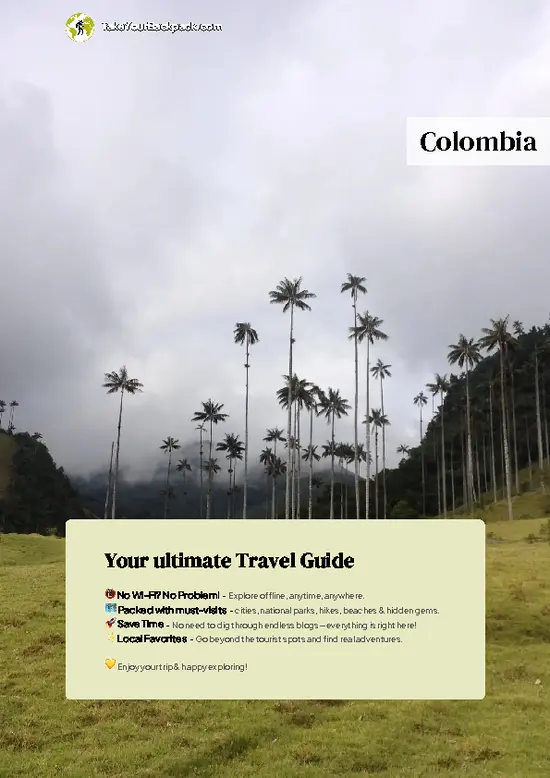
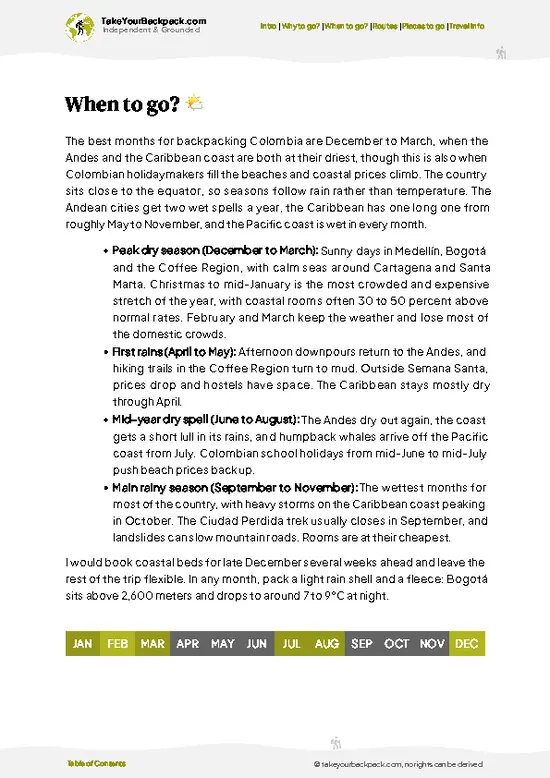
example page 0 from our offline Travel Guide for Colombia
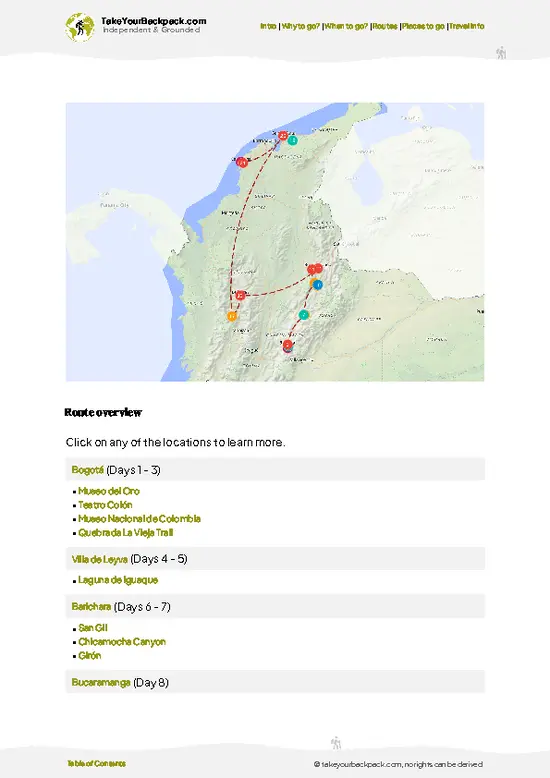
example page 1 from our offline Travel Guide for Colombia
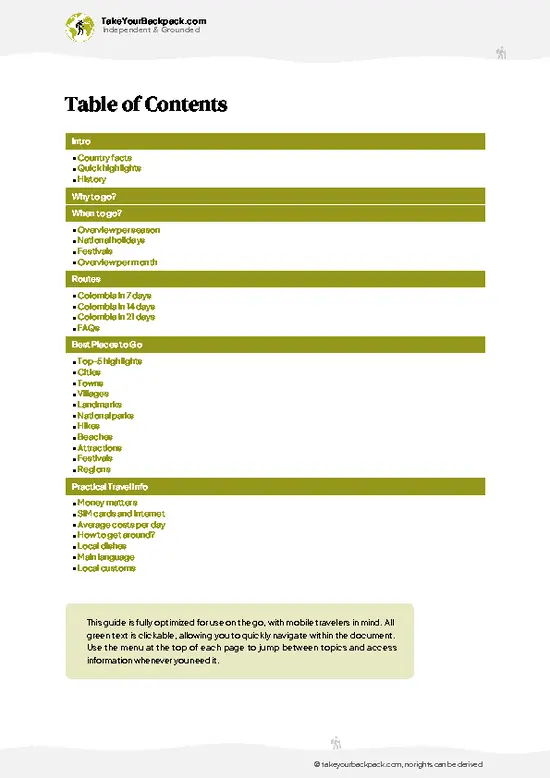
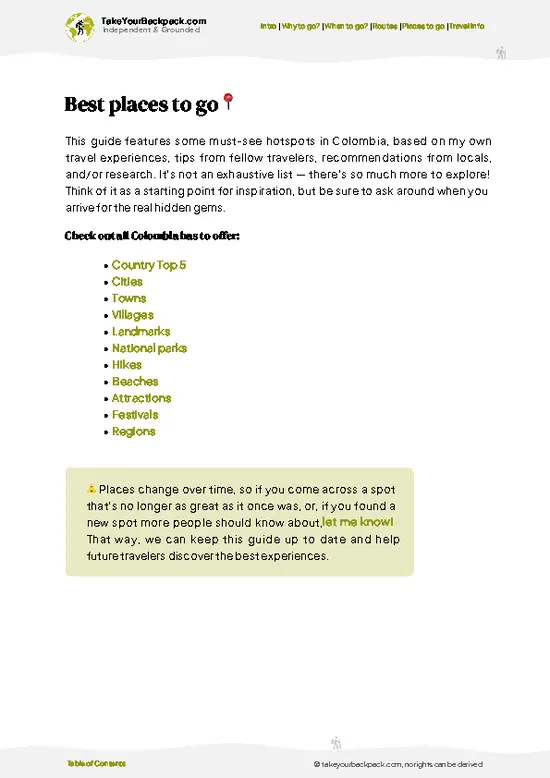
example page 2 from our offline Travel Guide for Colombia
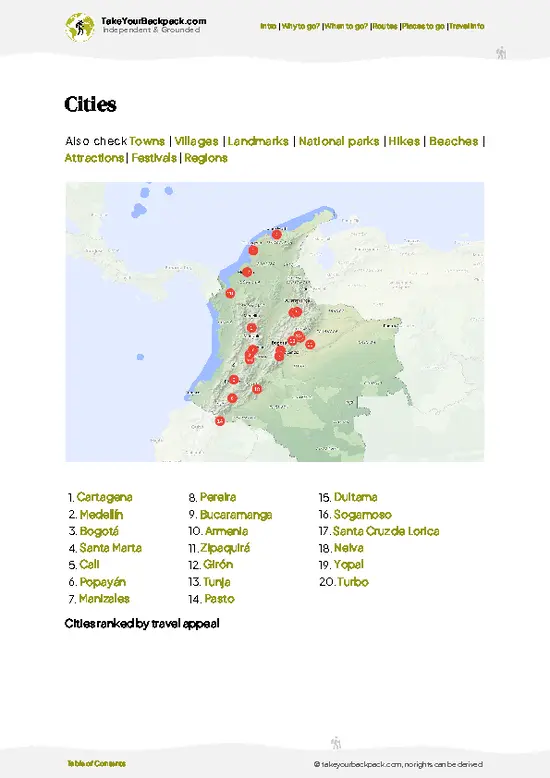
example page 3 from our offline Travel Guide for Colombia
example page 4 from our offline Travel Guide for Colombia
example page 5 from our offline Travel Guide for Colombia
example page 6 from our offline Travel Guide for Colombia
example page 7 from our offline Travel Guide for Colombia
Loading the map 🌍
CLICK TO FILTER
cities
towns
villages
landmarks
national parks
hikes
beaches
attractions
festivals
regions
SHOW COUNTRY’S BESTSHOW ALL

✨ Why go?
Ranked #5 festival in Colombia
Why visitors keep coming back

Carnaval de Negros y Blancos is one of the few festivals in South America that still feels like it belongs to the people who live there. Backpackers build a route around it because the January 5 and 6 sequence (a day of painting faces black, then a day of covering everyone in white talcum) turns an entire city into a participant, and a foreigner with a painted face is instantly adopted. Strangers hand you foam, cornstarch and a sip of canelazo, and you leave with friends from Cali or Bogotá.

It also slots well into an overland trip. Pasto sits a short hop from the Ecuador border, so many travelers time it between Quito and the Colombian interior, and the UNESCO-listed status means the craftsmanship is serious. Compared with Barranquilla’s carnival, prices and crowds stay gentler, and the mood is more family than party.

💡 HighlightsThe experiences that define the visit

  1. Desfile Magno (Great Parade, January 6): The biggest day, with dozens of floats and comparsas winding through Pasto’s center. Floats are papier-mâché and sculpted by hand over months, many standing several stories tall, mixing Andean myth with political satire.
  2. Día de los Negros (January 5): Everyone smears black paint or cosmetics on faces and bodies, a tradition tied to a historic day when enslaved people were granted a day of freedom. Join in; watching from a doorway misses the point.
  3. Día de los Blancos (January 6): White talcum and foam fly everywhere, and the whole city turns pale. Wear old clothes, protect your camera, and carry glasses or goggles for your eyes.
  4. Carnavalito: The children’s parade of miniature floats opens the main program, with local music and costumed groups. They are
… read more 👉
  1. Desfile Magno (Great Parade, January 6): The biggest day, with dozens of floats and comparsas winding through Pasto’s center. Floats are papier-mâché and sculpted by hand over months, many standing several stories tall, mixing Andean myth with political satire.
  2. Día de los Negros (January 5): Everyone smears black paint or cosmetics on faces and bodies, a tradition tied to a historic day when enslaved people were granted a day of freedom. Join in; watching from a doorway misses the point.
  3. Día de los Blancos (January 6): White talcum and foam fly everywhere, and the whole city turns pale. Wear old clothes, protect your camera, and carry glasses or goggles for your eyes.
  4. Carnavalito: The children’s parade of miniature floats opens the main program, with local music and costumed groups. They are far calmer than the main days and a good way to understand the traditions.
  5. Canto a la Tierra (January 3): Hundreds of dancers in elaborate costumes move through the streets in choreographed groups, supported by Andean flutes, drums and brass. The detail in headdresses and masks makes this the best photography subject of the festival.
Watch the choreographic collectives at the Canto a la Tierra on January 3, then the Desfile Magno on January 6, since both follow the Senda del Carnaval.
Spotted a mistake or missing something? Contact us.

Things to do near Carnaval de Negros y Blancos

Ratings based on Tripadvisor reviews. When you book through this link, you support our work at no extra cost to you.

🌤️ When to go?When is the celebration of Carnaval de Negros y Blancos?

Carnaval de Negros y Blancos runs from December 28 to January 6 each year in Pasto, in the Nariño highlands, with the Arribo de la Familia Castañeda parade on January 4 and the Negros and Blancos days themselves on January 5 and 6.
  • Best days: January 5 is the Day of the Blacks, when everyone smears face paint and soot on each other. January 6 is the Day of the Whites, when talc and foam fly, and the Gran Desfile of floats is the finale. Earlier days are calmer and good for the Carnavalito and the Canto a la Tierra.
  • Weather: Pasto sits at about 2,500 m (8,200 ft), with days around 14 to 18°C (57 to 64°F), cold nights near 7°C (45°F) and frequent drizzle. Bring a rain jacket, a warm layer, old clothes and a bandana for the powder.
  • Booking: Reserve beds by November. Rates commonly double or triple
… read more 👉
Carnaval de Negros y Blancos runs from December 28 to January 6 each year in Pasto, in the Nariño highlands, with the Arribo de la Familia Castañeda parade on January 4 and the Negros and Blancos days themselves on January 5 and 6.
  • Best days: January 5 is the Day of the Blacks, when everyone smears face paint and soot on each other. January 6 is the Day of the Whites, when talc and foam fly, and the Gran Desfile of floats is the finale. Earlier days are calmer and good for the Carnavalito and the Canto a la Tierra.
  • Weather: Pasto sits at about 2,500 m (8,200 ft), with days around 14 to 18°C (57 to 64°F), cold nights near 7°C (45°F) and frequent drizzle. Bring a rain jacket, a warm layer, old clothes and a bandana for the powder.
  • Booking: Reserve beds by November. Rates commonly double or triple from January 3 to 6.
  • Crowds: Buses and flights into Pasto fill up, so arrive by January 3 and leave on January 7 once roads clear.
Arrive a day before the main days to find food, a bed and your bearings.


source: climatestotravel.comJANJanuary: excellent for travelingFEBFebruary: not recommended for travelingMARMarch: not recommended for travelingAPRApril: not recommended for travelingMAYMay: not recommended for travelingJUNJune: not recommended for travelingJULJuly: not recommended for travelingAUGAugust: not recommended for travelingSEPSeptember: not recommended for travelingOCTOctober: not recommended for travelingNOVNovember: not recommended for travelingDECDecember: not recommended for traveling

✈️ The backpacker research shortcutColombia Travel Guide

An offline-friendly backpacking guide with optimized travel routes, ranked highlights, transport advice, and the best areas to stay.
example page 0 from our offline Travel Guide for Colombia
example page 1 from our offline Travel Guide for Colombia
example page 2 from our offline Travel Guide for Colombia
example page 3 from our offline Travel Guide for Colombia
example page 4 from our offline Travel Guide for Colombia
example page 5 from our offline Travel Guide for Colombia
example page 6 from our offline Travel Guide for Colombia
example page 7 from our offline Travel Guide for Colombia
The digital guide (349 pages) contains:
✅ 115 highlights, ranked by travel appeal
✅ Optimized 7, 14 & 21-day travel routes
✅ Cities, national parks, landmarks, beaches
✅ How to get around
✅ Offline-friendly for travel without Wi-Fi
👉 Click to see all 30+ guide features

📅 Plan smarter in minutes, not weeks
✅ Month by month travel advice
✅ Festivals & national holidays
✅ Budget expectations

🗺️ Go to the right places, skip the overrated ones
✅ Honest pros & cons of destinations
✅ Top hikes, parks & viewpoints
✅ Lesser-known places most travelers miss
✅ Clear “worth it vs skip it” guidance

🛏️ Travel smoothly without rookie mistakes
✅ Best areas to stay
✅ Transport systems explained simply
✅ Common scams & safety advice
✅ SIM cards, money & practical tips

🌍 Understand the country, not just visit it
✅ Culture & traditions
✅ 52 Essential phrases & customs
✅ Festivals worth planning around
✅ Traveler-friendly historical context
✅ Insights that make places more meaningful

📱 Built for real travel conditions
✅ Fully downloadable PDF
✅ Works completely offline
✅ Optimized for phone use
✅ Useful in remote areas & buses
✅ Everything in one place
Stop searching, start planning
Get instant access to your full guide. 30‑day money-back guarantee.
+ Add another guide for just

By proceeding you agree to our terms.
Sent to your inbox immediately after payment • 100% Secure Checkout
Best Backpacking Travel Advisor 2025 tourism awardBest Backpacking
Travel Advisor
2025
What others say about Take Your Backpack Guides:
⭐⭐⭐⭐⭐
Fantastic, amazing amount of information!
⭐⭐⭐⭐⭐
My goodness this is amazing, it's what I've been looking for hats off too you!
⭐⭐⭐⭐⭐
I think this is absolutely BRILLIANT
⭐⭐⭐⭐
Very complete and informative. It's still missing places, but I gotta to commend you
⭐⭐⭐⭐⭐
This is truly amazing, thank you, can't wait to explore it with my kids!
⭐⭐⭐⭐⭐
Awesome resource, thank you!
⭐⭐⭐⭐⭐
This is amazing! Can't wait to explore the ones I haven't seen
⭐⭐⭐⭐
I love this! Well done, great idea.
⭐⭐⭐⭐⭐
Thanks for taking the time to make this gem!
⭐⭐⭐⭐⭐
This might be the best website I've ever seen.
⭐⭐⭐⭐⭐
Congratulations, and thank you so much for your work; it's incredibly valuable.
⭐⭐⭐⭐
In all seriousness I think you did a great job pointing out the important spots
⭐⭐⭐⭐⭐
10/10 very good
⭐⭐⭐⭐⭐
As someone who's only just starting to visit regularly this is awesome, thank you.
⭐⭐⭐⭐
Thank you very much! I'm going to visit my dad, it's going to be very useful!
⭐⭐⭐⭐⭐
This is really cool! We'll be travelling for the first time and this definitely come in handy.
⭐⭐⭐⭐⭐
You are now our minister of culture, congratulations 👨‍💼
⭐⭐⭐⭐⭐
Just wanted to tell you that this is a pearl! Going to follow your recommendations.
⭐⭐⭐⭐⭐
This is so cool. I'll definitely be using the resource for my travels soon.
⭐⭐⭐⭐⭐
This is very impressive! Good work.
⭐⭐⭐⭐⭐
This is an amazing and informative site. Very well done!

🛏️ Where to stay?Where staying makes the most sense

Stay in central Pasto, within walking distance of Plaza de Nariño, because parade routes close the streets and taxis crawl or stop entirely.
The streets around Plaza de Nariño and Parque Infantil put you at the heart of the action. This is where most budget hostels and guesthouses cluster, and where you will meet other backpackers over breakfast. It is lively at night during carnival, so bring earplugs, but walking back late among crowds is far easier than from the outskirts.
The area around Plaza de Carnaval and Avenida Los Estudiantes is calmer, with simple guesthouses and local eateries. It is … read more 👉
Stay in central Pasto, within walking distance of Plaza de Nariño, because parade routes close the streets and taxis crawl or stop entirely.
The streets around Plaza de Nariño and Parque Infantil put you at the heart of the action. This is where most budget hostels and guesthouses cluster, and where you will meet other backpackers over breakfast. It is lively at night during carnival, so bring earplugs, but walking back late among crowds is far easier than from the outskirts.
The area around Plaza de Carnaval and Avenida Los Estudiantes is calmer, with simple guesthouses and local eateries. It is a short walk from the main parade avenues, and you can retreat here to dry off and rest. Stay on busy streets only if you like noise, and keep valuables locked away since pickpocketing rises in dense crowds.
Barrio Las Cuadras and the streets near Universidad de Nariño suit solo travelers who want a quieter, student-leaning feel with cheap bakeries nearby. Expect a 15 to 25 minute walk to the parade, and use well-lit main roads after dark.
Avoid staying far out of town. Late-night transport is scarce and prices surge during the festival days. Book early, as the best-located beds sell out months ahead.

👛 Costs (as of 19 October 2026)Travel costs and budget guide for Carnaval de Negros y Blancos

Expect a total daily budget of around US$68 at Carnaval de Negros y Blancos using high-season accommodation, with festival tickets from US$0 to 25.
CategoryBudget RangeLocal Reality
Festival ticketsUS$0 to 25Street events and parades are free. Paid grandstand seats for the Gran Desfile run about US$10 to 25. Budget US$5 on average.
AccommodationUS$25 to 50Dorm beds and basic rooms rise sharply from January 3 to 6. Use US$30 as the high-season figure.
Local transportUS$2 to 6Most events are walkable. Short taxi rides cost more during road closures. Budget US$4.
Food & drinksUS$10 to 22Set lunches cost about US$3 to 5, street snacks under US$2. Budget US$15.
MiscellaneousUS$8 to 20Face paint, foam, ponchos and small souvenirs. Budget US$14.
Total Daily BudgetUS$68Sum of the figures above, using high-season accommodation.


source: colombia.travel
⚠️ Prices can change and everyone travels differently, so take this as a rough guide. Hope it helps you plan your adventure!

🍲 FoodWhat to Eat & Drink

Eat your way through Pasto's streets, where carnival food is hearty, warm and made for cold highland days.
Cuy (roasted guinea pig) is the Nariño signature, served whole with potatoes and peanut sauce. It is made for sharing, so split one with a friend. Try empanadas de pipián, fried pastries filled with potato and a peanut-achiote sauce, sold from street carts for about US$0.50 to 1 each. Hornado (roast pork), fritada and lapingachos (potato patties) appear at market stalls and fixed-price lunch spots near the plaza.
For drinks, look for canelazo, a hot cinnamon and aguardiente drink that warms you during evening parades, and champús, a chilled corn, pineapple and lulo drink. Locals also sell chicha and hot chocolate with cheese at corner stands. Beer and aguardiente flow freely, but sip slowly … read more 👉
Eat your way through Pasto's streets, where carnival food is hearty, warm and made for cold highland days.
Cuy (roasted guinea pig) is the Nariño signature, served whole with potatoes and peanut sauce. It is made for sharing, so split one with a friend. Try empanadas de pipián, fried pastries filled with potato and a peanut-achiote sauce, sold from street carts for about US$0.50 to 1 each. Hornado (roast pork), fritada and lapingachos (potato patties) appear at market stalls and fixed-price lunch spots near the plaza.
For drinks, look for canelazo, a hot cinnamon and aguardiente drink that warms you during evening parades, and champús, a chilled corn, pineapple and lulo drink. Locals also sell chicha and hot chocolate with cheese at corner stands. Beer and aguardiente flow freely, but sip slowly at altitude.
Cash is king. Carry small Colombian pesos bills, as vendors rarely have change for large notes and card readers are rare at street carts. Lines move quickly and portions are generous, so a single plate often fills you. Wear old clothes, because foam and powder do not spare anyone with a plate in hand. Many stalls close early on the final parade day.

FAQFrequently asked questions about Carnaval de Negros y Blancos

Carnaval de Negros y Blancos takes place every year from December 28 to January 6 in Pasto, in southwest Colombia. The peak days are January 4 (Arrival of the Castañeda Family), January 5 (Day of the Blacks) and January 6 (Day of the Whites). The Gran Desfile of floats closes the festival.
Attending Carnaval de Negros y Blancos costs roughly US$60 to 75 a day for a backpacker. Most street events are free, while grandstand seats for the main parade cost about US$10 to 25. Beds are the biggest expense, at about US$25 to 50 a night around January 3 to 6, and meals run US$10 to 22 a day.
Carnaval de Negros y Blancos does not require tickets for most events, since street celebrations and many parades are free. Grandstand seats for the Gran Desfile on January 6 are best bought several weeks ahead, at about US$10 to 25. Accommodation is what truly needs advance booking, ideally by November, because Pasto fills up in the first week of January.
⚠️ Things can change over time, so always validate details locally before you go.

Other Colombian festivals near Carnaval de Negros y Blancos

Explore more nearby:


💡 Not sure where to go next?
Create a personalized itinerary for Colombia including Carnaval de Negros y Blancos and the places that fit your trip.

Generate my itinerary

👉 Discover all festivals

Or checkout all Colombia has to offer (think cities, towns, villages, national parks, hikes, beaches, festivals)
Country photo of Colombia

We 💚 feedbackWhat to keep in mind

Carnaval de Negros y Blancos suits curious travelers who like crowds, craft and messy participation, and it will frustrate anyone wanting quiet or polish. Families and couples fit in as easily as solo backpackers. I would bring a cheap rain poncho, a bandana for your nose and mouth, and a small dry bag for your phone.

✈️ When did I visit Colombia?
Did a good 3-week trip around Colombia in August 2014.

✍️ Help improve this page!
The information on this page is based on my own backpacking experience in Colombia, supplemented with up-to-date research and feedback from other travelers. Travel details can change, so if you notice anything outdated or incomplete, feel free to let me know.


🙋‍♂️ Give feedback

👋 Meet the founderWho’s Behind Take Your Backpack?

Johan, backpacker and founder of TakeYourBackpackHi, I’m Johan (Netherlands 🇳🇱), the creator of TakeYourBackpack. Over the past 3 decades, I’ve backpacked through 90+ countries across six continents, gaining extensive experience with independent travel, long-term trips, and overland routes.

This site is built on a combination of firsthand travel experience and carefully curated insights from other backpackers. Many guides are based on places I’ve personally visited, while others bring together tips, observations, and practical advice shared by trusted travelers I’ve met along the way.

The goal is to provide realistic, experience-driven guidance — not generic itineraries — so you can explore destinations with better context, clearer expectations, and more confidence.