×

Colombia🇨🇴 | attractionsJardín Botánico de MedellínOrquideorama canopies, lagoon iguanas, orchid collection, free entry | things to do and best time to go

Explore Parque ExploraExplore Maloka Museo Interactivo

Backpacking in Jardín Botánico de Medellín
🏆 Top pickattraction ranked #4
By Johan Kruseman 🇳🇱 | Updated October 19, 2026

The first thing I noticed walking through the gate was the sound: water slapping a pond, a rustle in the palms, and then a tilting, unbothered iguana crossing the path ahead of me. Jardín Botánico de Medellín sits in the north of the city, in Colombia’s Antioquia region, next to Parque Explora and the Universidad de Antioquia. Entry is free, and that is why it works: you don’t pay to check whether you like it. The wow-factor is the Orquideorama, a honeycomb of timber canopies, and the lagoon wildlife. Skip the small café food and the gift stand, which add little. Crowds thicken on weekends, so go on a weekday morning when the paths belong to joggers and birdwatchers. It runs on Metro logic: the Universidad station is a short walk away, so a taxi is wasted money. Bring a rain layer, because afternoon showers arrive fast.

Discover everything you want to know in the 📖 Colombia Travel Guide.


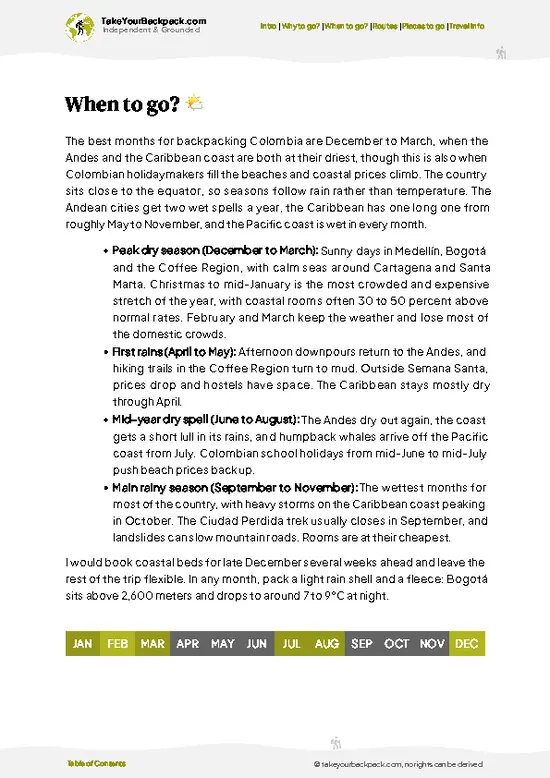
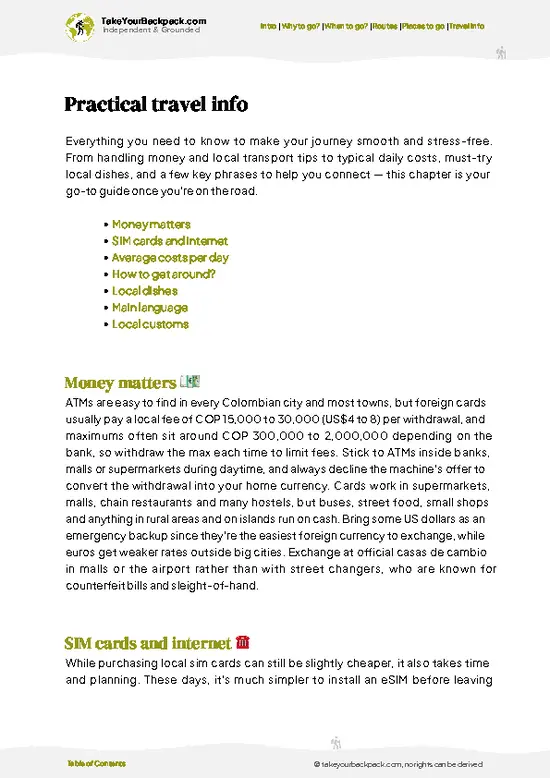
example page 0 from our offline Travel Guide for Colombia
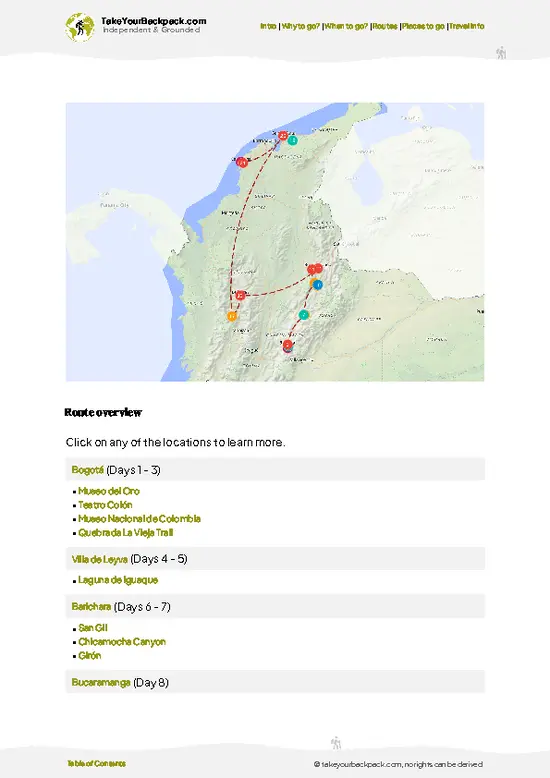
example page 1 from our offline Travel Guide for Colombia
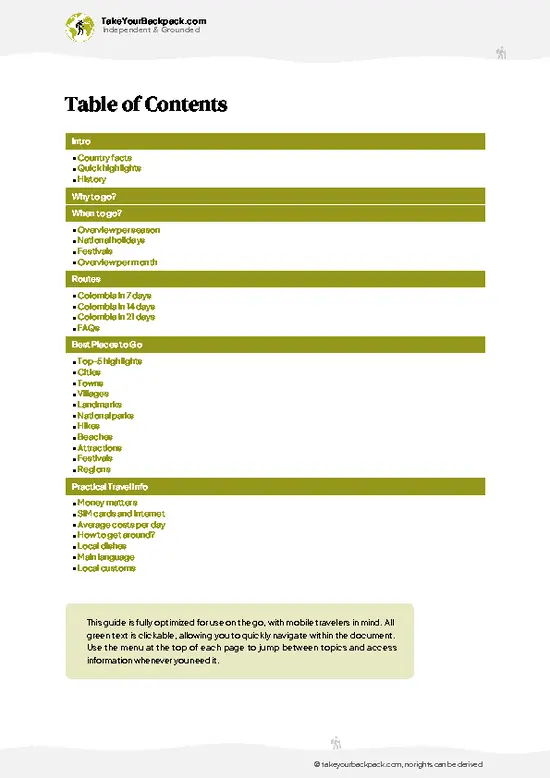
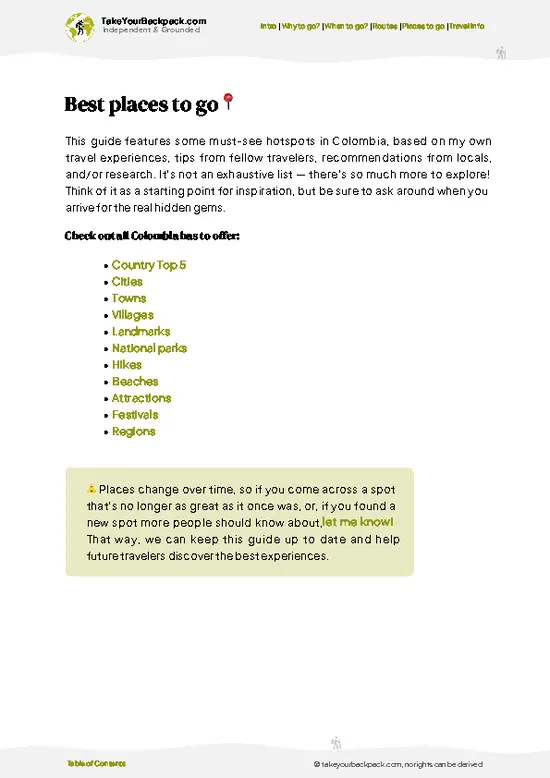
example page 2 from our offline Travel Guide for Colombia
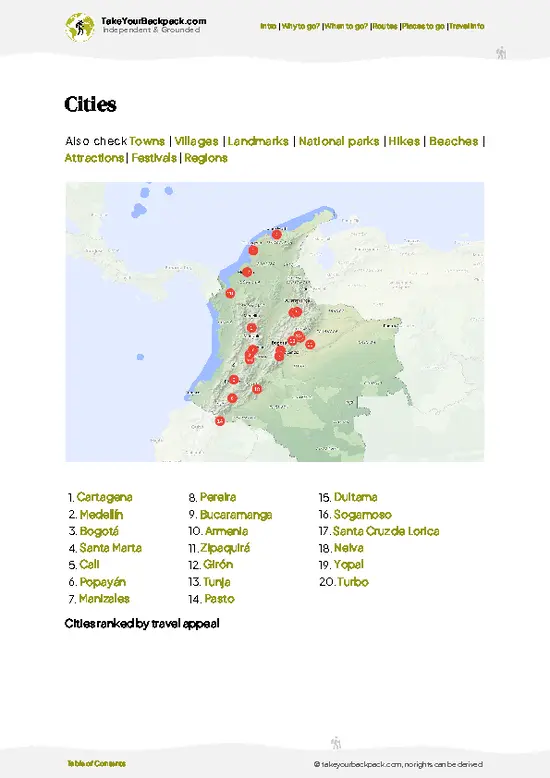
example page 3 from our offline Travel Guide for Colombia
example page 4 from our offline Travel Guide for Colombia
example page 5 from our offline Travel Guide for Colombia
example page 6 from our offline Travel Guide for Colombia
example page 7 from our offline Travel Guide for Colombia
Loading the map 🌍
CLICK TO FILTER
cities
towns
villages
landmarks
national parks
hikes
beaches
attractions
festivals
regions
SHOW COUNTRY’S BESTSHOW ALL

✨ Why go?
Ranked #4 attraction in Colombia
Why visitors keep coming back

Jardín Botánico de Medellín earns its place on a Medellín route because it is free and sits beside the Metro. After the intensity of Comuna 13 or a night in Poblado, it gives you a few quiet hours without spending anything. The Orquideorama is the main draw: hexagonal wooden structures shaped like flowers that shelter orchids and host events. The collection is large, and the grounds hold a butterfly house and a lagoon where iguanas, turtles and herons live alongside city workers eating lunch. It is also a good lesson in why Medellín gets called the City of Eternal Spring: palms, ferns, cacti and tropical trees all thrive at this altitude. You can pair it with Parque Explora across the road or the Pueblito Paisa views from a short ride away. Plan a morning here, not a full day. The place is … read more 👉
Jardín Botánico de Medellín earns its place on a Medellín route because it is free and sits beside the Metro. After the intensity of Comuna 13 or a night in Poblado, it gives you a few quiet hours without spending anything. The Orquideorama is the main draw: hexagonal wooden structures shaped like flowers that shelter orchids and host events. The collection is large, and the grounds hold a butterfly house and a lagoon where iguanas, turtles and herons live alongside city workers eating lunch. It is also a good lesson in why Medellín gets called the City of Eternal Spring: palms, ferns, cacti and tropical trees all thrive at this altitude. You can pair it with Parque Explora across the road or the Pueblito Paisa views from a short ride away. Plan a morning here, not a full day. The place is compact, easy for first-timers, and a relief for anyone tired of ticket queues.

💡 HighlightsPlaces and moments you shouldn't skip

  1. Orquideorama: the signature structure, a set of hexagonal timber canopies that look like petals from above. Underneath, orchids hang and trees grow through openings in the roof, and the shade makes it the best spot to sit.
  2. Orchid collection: Colombia has more orchid species than almost any country, and this is where you can see many of them close up. Bloom depends on the season, so expect variety rather than a fixed display.
  3. Main lagoon: the pond draws turtles, herons and large iguanas that sunbathe on the banks. Walk slowly and you can get close without any effort.
  4. Butterfly house: a small enclosed space where butterflies flutter at head height. It is quick but charming for photographers.
  5. Cactus and desert garden: a drier zone that contrasts sharply with the rainforest planting, useful for seeing
… read more 👉
  1. Orquideorama: the signature structure, a set of hexagonal timber canopies that look like petals from above. Underneath, orchids hang and trees grow through openings in the roof, and the shade makes it the best spot to sit.
  2. Orchid collection: Colombia has more orchid species than almost any country, and this is where you can see many of them close up. Bloom depends on the season, so expect variety rather than a fixed display.
  3. Main lagoon: the pond draws turtles, herons and large iguanas that sunbathe on the banks. Walk slowly and you can get close without any effort.
  4. Butterfly house: a small enclosed space where butterflies flutter at head height. It is quick but charming for photographers.
  5. Cactus and desert garden: a drier zone that contrasts sharply with the rainforest planting, useful for seeing how varied Colombian ecosystems are.
  6. Tropical forest trail: shaded paths through palms, ferns and tall trees, where birds are easiest to spot early in the day.
  7. Medicinal and edible plant areas: labeled beds showing species used in traditional remedies and food, good if you like knowing what is growing around you.
  8. Weekend events and fairs: the Orquideorama hosts markets and cultural activities, giving the garden a local feel when it fills up with families.
For a first visit, start with the Orquideorama, then loop around the lagoon.
Spotted a mistake or missing something? Contact us.

Things to do around Jardín Botánico de Medellín

Ratings based on Tripadvisor reviews. When you book through this link, you support our work at no extra cost to you.

🌤️ When to go?Weather, crowds, and seasonal trade-offs

  • December to March: Drier months with the least rain, so garden paths stay firm and the orchid pavilion is pleasant. Days run about 17 to 28°C (63 to 82°F). The December and January holidays bring local families, so weekends feel busy.
  • April to June: Showers arrive mostly in afternoons. Mornings are bright and cool, around 18 to 27°C (64 to 81°F), and the lawns turn deep green. Crowds thin out midweek.
  • July to August: A short drier spell. The Feria de las Flores in early August fills the garden with flower displays and the city with visitors, and beds elsewhere cost more.
  • September to November: The wettest stretch, often with heavy downpours after midday. Temperatures stay near 17 to 26°C (63 to 79°F) and the garden is nearly empty on weekdays.
  • Time of day: Daylight lasts roughly 12 hours in every
… read more 👉
  • December to March: Drier months with the least rain, so garden paths stay firm and the orchid pavilion is pleasant. Days run about 17 to 28°C (63 to 82°F). The December and January holidays bring local families, so weekends feel busy.
  • April to June: Showers arrive mostly in afternoons. Mornings are bright and cool, around 18 to 27°C (64 to 81°F), and the lawns turn deep green. Crowds thin out midweek.
  • July to August: A short drier spell. The Feria de las Flores in early August fills the garden with flower displays and the city with visitors, and beds elsewhere cost more.
  • September to November: The wettest stretch, often with heavy downpours after midday. Temperatures stay near 17 to 26°C (63 to 79°F) and the garden is nearly empty on weekdays.
  • Time of day: Daylight lasts roughly 12 hours in every month, so arrive at opening and finish before the afternoon rain.
Go on a weekday morning and bring a light rain jacket whatever the month.


source: climatestotravel.comJANJanuary: highly recommended for travelingFEBFebruary: excellent for travelingMARMarch: highly recommended for travelingAPRApril: good for travelingMAYMay: good for travelingJUNJune: good for travelingJULJuly: good for travelingAUGAugust: highly recommended for travelingSEPSeptember: good for travelingOCTOctober: good for travelingNOVNovember: good for travelingDECDecember: highly recommended for traveling
colombia-attraction-jardin-botanico-de-medellin v1
© Google |

✈️ The backpacker research shortcutColombia Travel Guide

An offline-friendly backpacking guide with optimized travel routes, ranked highlights, transport advice, and the best areas to stay.
example page 0 from our offline Travel Guide for Colombia
example page 1 from our offline Travel Guide for Colombia
example page 2 from our offline Travel Guide for Colombia
example page 3 from our offline Travel Guide for Colombia
example page 4 from our offline Travel Guide for Colombia
example page 5 from our offline Travel Guide for Colombia
example page 6 from our offline Travel Guide for Colombia
example page 7 from our offline Travel Guide for Colombia
The digital guide (349 pages) contains:
✅ 115 highlights, ranked by travel appeal
✅ Optimized 7, 14 & 21-day travel routes
✅ Cities, national parks, landmarks, beaches
✅ How to get around
✅ Offline-friendly for travel without Wi-Fi
👉 Click to see all 30+ guide features

📅 Plan smarter in minutes, not weeks
✅ Month by month travel advice
✅ Festivals & national holidays
✅ Budget expectations

🗺️ Go to the right places, skip the overrated ones
✅ Honest pros & cons of destinations
✅ Top hikes, parks & viewpoints
✅ Lesser-known places most travelers miss
✅ Clear “worth it vs skip it” guidance

🛏️ Travel smoothly without rookie mistakes
✅ Best areas to stay
✅ Transport systems explained simply
✅ Common scams & safety advice
✅ SIM cards, money & practical tips

🌍 Understand the country, not just visit it
✅ Culture & traditions
✅ 52 Essential phrases & customs
✅ Festivals worth planning around
✅ Traveler-friendly historical context
✅ Insights that make places more meaningful

📱 Built for real travel conditions
✅ Fully downloadable PDF
✅ Works completely offline
✅ Optimized for phone use
✅ Useful in remote areas & buses
✅ Everything in one place
Stop searching, start planning
Get instant access to your full guide. 30‑day money-back guarantee.
+ Add another guide for just

By proceeding you agree to our terms.
Sent to your inbox immediately after payment • 100% Secure Checkout
Best Backpacking Travel Advisor 2025 tourism awardBest Backpacking
Travel Advisor
2025
What others say about Take Your Backpack Guides:
⭐⭐⭐⭐⭐
Fantastic, amazing amount of information!
⭐⭐⭐⭐⭐
My goodness this is amazing, it's what I've been looking for hats off too you!
⭐⭐⭐⭐⭐
I think this is absolutely BRILLIANT
⭐⭐⭐⭐
Very complete and informative. It's still missing places, but I gotta to commend you
⭐⭐⭐⭐⭐
This is truly amazing, thank you, can't wait to explore it with my kids!
⭐⭐⭐⭐⭐
Awesome resource, thank you!
⭐⭐⭐⭐⭐
This is amazing! Can't wait to explore the ones I haven't seen
⭐⭐⭐⭐
I love this! Well done, great idea.
⭐⭐⭐⭐⭐
Thanks for taking the time to make this gem!
⭐⭐⭐⭐⭐
This might be the best website I've ever seen.
⭐⭐⭐⭐⭐
Congratulations, and thank you so much for your work; it's incredibly valuable.
⭐⭐⭐⭐
In all seriousness I think you did a great job pointing out the important spots
⭐⭐⭐⭐⭐
10/10 very good
⭐⭐⭐⭐⭐
As someone who's only just starting to visit regularly this is awesome, thank you.
⭐⭐⭐⭐
Thank you very much! I'm going to visit my dad, it's going to be very useful!
⭐⭐⭐⭐⭐
This is really cool! We'll be travelling for the first time and this definitely come in handy.
⭐⭐⭐⭐⭐
You are now our minister of culture, congratulations 👨‍💼
⭐⭐⭐⭐⭐
Just wanted to tell you that this is a pearl! Going to follow your recommendations.
⭐⭐⭐⭐⭐
This is so cool. I'll definitely be using the resource for my travels soon.
⭐⭐⭐⭐⭐
This is very impressive! Good work.
⭐⭐⭐⭐⭐
This is an amazing and informative site. Very well done!

🛏️ Where to stay?Best areas and accommodation options

Laureles and El Poblado are the two areas I would choose, with Laureles the better fit for most backpackers heading to the garden. The Jardín Botánico sits in the north-central part of the city beside Parque Explora and the Universidad de Antioquia, a short Metro ride from either area (Universidad station is next door).

Laureles is a flat, leafy neighborhood of cafés and local restaurants around Segunda Avenida and Calle 70. Hostels there run quieter and attract longer-stay travelers and remote workers, and it feels residential at night. It is also cheaper to eat in than El Poblado.

El Poblado, … read more 👉
Laureles and El Poblado are the two areas I would choose, with Laureles the better fit for most backpackers heading to the garden. The Jardín Botánico sits in the north-central part of the city beside Parque Explora and the Universidad de Antioquia, a short Metro ride from either area (Universidad station is next door).

Laureles is a flat, leafy neighborhood of cafés and local restaurants around Segunda Avenida and Calle 70. Hostels there run quieter and attract longer-stay travelers and remote workers, and it feels residential at night. It is also cheaper to eat in than El Poblado.

El Poblado, around Parque Lleras and Provenza, has the densest hostel scene and the easiest way to meet other travelers, with organized pub crawls and walking tours leaving daily. Prices are higher and the nightlife is loud, so choose a spot a few blocks off the park if you want sleep. Take licensed taxis or ride apps after dark.

Centro, closer to the garden, has the cheapest beds but is rough after dark and empties out at night. Visit it by day and sleep elsewhere. Staying near a Metro station saves money and time.

👛 Costs (as of 19 October 2026)Travel costs and budget guide for Jardín Botánico de Medellín

A day at Jardín Botánico de Medellín fits within roughly US$38 to 62 for a backpacker, and the garden itself is free. Entry has no charge, which leaves most of your money for beds, food and getting there.
CategoryBudget RangeLocal Reality
EntranceUS$0Free for all visitors. Bags may be checked at the gate.
Dorm bed (high season)US$10 to 18Laureles is cheaper; El Poblado costs more, especially in August.
Private room (alternative)US$25 to 45Not counted in the daily total.
Metro transportUS$1.50 to 3Single Metro rides cost under US$1; pay with a rechargeable card. Universidad station is next to the garden.
FoodUS$10 to 20A set lunch (menú del día) costs US$3 to 5. The garden restaurant is pricier.
Nearby attractionsUS$8 to 15Parque Explora charges separate entry, around US$8 to 10 for adults.
Snacks
… read more 👉
A day at Jardín Botánico de Medellín fits within roughly US$38 to 62 for a backpacker, and the garden itself is free. Entry has no charge, which leaves most of your money for beds, food and getting there.
CategoryBudget RangeLocal Reality
EntranceUS$0Free for all visitors. Bags may be checked at the gate.
Dorm bed (high season)US$10 to 18Laureles is cheaper; El Poblado costs more, especially in August.
Private room (alternative)US$25 to 45Not counted in the daily total.
Metro transportUS$1.50 to 3Single Metro rides cost under US$1; pay with a rechargeable card. Universidad station is next to the garden.
FoodUS$10 to 20A set lunch (menú del día) costs US$3 to 5. The garden restaurant is pricier.
Nearby attractionsUS$8 to 15Parque Explora charges separate entry, around US$8 to 10 for adults.
Snacks and drinksUS$3 to 6Fresh juice and empanadas are sold nearby, paid in pesos.
Total Daily BudgetUS$38 to 62Based on a dorm bed, Metro rides, food and one paid attraction.
⚠️ Prices can change and everyone travels differently, so take this as a rough guide. Hope it helps you plan your adventure!

FAQCommon questions from travelers

Plan on 2 to 3 hours at Jardín Botánico de Medellín, or half a day if you add a visit to the neighboring Parque Explora. The main loop past the orchid pavilion, the lake, the herbarium and the Tropical Forest section takes about 90 minutes at an easy pace. Arrive in the morning, before afternoon rain.
Entry to Jardín Botánico de Medellín costs nothing, so it is easy value for a budget traveler. You pay only for optional extras such as food at the garden restaurant (around US$6 to 12) or guided tours and special events. Free admission makes it a good rainy-morning or low-budget day in a city where many attractions charge US$8 or more.
Take the Metro to Universidad station on Line A. The garden entrance is a 3 to 5 minute walk from there, on Calle 73 near Carrera 52. From El Poblado the ride takes about 20 to 30 minutes with no transfer and costs under US$1, while a taxi or ride app costs roughly US$3 to 6.
⚠️ Things can change over time, so always validate details locally before you go.

Other Colombian attractions near Jardín Botánico de Medellín

Explore more nearby:

  • Parque Explora—Freshwater aquarium, vivarium, planetarium, Universidad metro stop| 0 km away
  • Museo de Antioquia—Botero Room, Plaza Botero bronzes, Art Deco hall, Débora Arango| 2 km away
  • Museo Casa de la Memoria—Survivor testimonies, Medellín conflict memory, free entry| 3 km away

💡 Not sure where to go next?
Create a personalized itinerary for Colombia including Jardín Botánico de Medellín and the places that fit your trip.

Generate my itinerary

👉 Discover all attractions

Or checkout all Colombia has to offer (think cities, towns, villages, national parks, hikes, beaches, festivals)
Country photo of Colombia

We 💚 feedbackIs it worth it?

Many travelers rush through Jardín Botánico de Medellín in twenty minutes, snap the Orquideorama and leave. Give it a slow morning instead, walk the lagoon loop and the forest paths, and arrive early when the birds and iguanas are active. I would bring a light rain jacket and skip paying for any tour.

✈️ When did I visit Colombia?
Did a good 3-week trip around Colombia in August 2014.

✍️ Help improve this page!
The information on this page is based on my own backpacking experience in Colombia, supplemented with up-to-date research and feedback from other travelers. Travel details can change, so if you notice anything outdated or incomplete, feel free to let me know.


🙋‍♂️ Give feedback

👋 Meet the founderWho’s Behind Take Your Backpack?

Johan, backpacker and founder of TakeYourBackpackHi, I’m Johan (Netherlands 🇳🇱), the creator of TakeYourBackpack. Over the past 3 decades, I’ve backpacked through 90+ countries across six continents, gaining extensive experience with independent travel, long-term trips, and overland routes.

This site is built on a combination of firsthand travel experience and carefully curated insights from other backpackers. Many guides are based on places I’ve personally visited, while others bring together tips, observations, and practical advice shared by trusted travelers I’ve met along the way.

The goal is to provide realistic, experience-driven guidance — not generic itineraries — so you can explore destinations with better context, clearer expectations, and more confidence.