×

Colombia🇨🇴 | townsPijaoSlow living, coffee cooperatives, mountain backdrop | things to do and best time to go

Explore HondaExplore Silvia

Backpacking in Pijao
👌 Worth visitingtown ranked #18
By Johan Kruseman 🇳🇱 | Updated September 4, 2026

Your first real decision in Pijao is whether to treat it as a quick coffee-region detour or to slow down and actually stay a few nights; that choice decides if you just “see” the town or feel its rhythm. Pijao sits in Colombia’s Quindío department, south of Salento and Armenia, tucked into green folds of coffee hills. It’s quieter and more traditional than Salento: fewer souvenir shops, more old men in hats talking under the soft, late-afternoon light. For backpackers, it works best as a base for slow coffee-farm visits and ridge walks rather than a nightlife stop or transport hub; buses arrive via Armenia, then your feet do most of the work because the center is compact and walkable. You’ll find a couple of simple hostels and cafés where the smell of fresh roast hangs in the air, but meeting other travelers is hit-or-miss, especially on weeknights. Costs are slightly lower than in Salento, and the town feels safe in that small-place, everyone-watches-the-plaza way, though late buses back from hikes can be sparse, so planning matters. If Salento is the polished, busy postcard of the coffee region, Pijao is the slower, more lived-in sketch—less convenient, less social, but more peaceful if you’re willing to trade buzz for quiet mornings and long, green horizons.

Discover everything you want to know in the 📖 Colombia Travel Guide.
Loading the map 🌍
CLICK TO FILTER
cities
towns
villages
landmarks
national parks
hikes
beaches
attractions
festivals
regions
SHOW COUNTRY’S BESTSHOW ALL

✨ Why go?
Ranked #18 town in Colombia
What makes it a must-see town

Backpackers flock to Pijao for its strategic location along the route to Colombia’s stunning coffee region and nearby hiking trails. The town serves as a cozy base for exploring the lush landscapes of the Quindío department, with trails that lead to breathtaking views and hidden waterfalls. Small-scale hostels and guesthouses create a welcoming atmosphere, perfect for solo travelers or those in small groups looking to connect. The walkable streets are lined with local eateries where you can savor authentic arepas and fresh coffee. Most travelers linger a few days, soaking in the friendly vibe and the slower pace, making it a rewarding stop on your journey.
Want to include Pijao in your Colombia route?
Create a personalized Colombia itinerary that includes Pijao and the places that fit your trip — based on your travel style, budget, and available time. Get your route in seconds.

Generate my trip

💡 HighlightsEssential experiences to have while visiting Pijao

  • Parque Principal de Pijao — The compact town square is the social heart: shaded benches, a classic kiosk, street vendors and that slow, authentic rhythm of a coffee town. Great for people-watching and starting a walking loop through town.
  • Iglesia Parroquial de Pijao — The central parish church anchors the square with traditional architecture and local religious life; visiting during a service or just to see the interior woodwork and ornamentation gives a clear sense of the town’s history and community.
  • Cobblestone streets and traditional architecture — Pijao’s preserved red-tiled roofs, whitewashed façades and narrow, cobbled lanes are themselves an attraction; wandering them reveals murals, courtyards and everyday scenes of coffee-region life.
  • Casa de la Cultura (cultural center) — The
read more 👉
  • Parque Principal de Pijao — The compact town square is the social heart: shaded benches, a classic kiosk, street vendors and that slow, authentic rhythm of a coffee town. Great for people-watching and starting a walking loop through town.
  • Iglesia Parroquial de Pijao — The central parish church anchors the square with traditional architecture and local religious life; visiting during a service or just to see the interior woodwork and ornamentation gives a clear sense of the town’s history and community.
  • Cobblestone streets and traditional architecture — Pijao’s preserved red-tiled roofs, whitewashed façades and narrow, cobbled lanes are themselves an attraction; wandering them reveals murals, courtyards and everyday scenes of coffee-region life.
  • Casa de la Cultura (cultural center) — The municipal cultural house hosts local craft exhibits, small concerts and rotating displays about regional traditions—an easy place to catch artisan shows or community workshops when they’re on.
  • Mercado Municipal — The small indoor market is where locals buy produce, cheese, arepas and snacks; it’s the best place to sample everyday flavors, grab fresh fruit or try street bites that don’t appear in guidebooks.
  • Local cafés and micro-roasters — Small, owner-run coffee shops inside town roast and sell regional beans; simple cuppings and direct chats with baristas give a short but genuine coffee-culture lesson without leaving the pueblo.
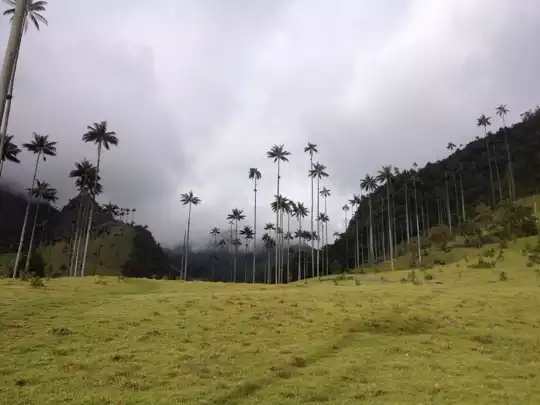
Nearby day trips worth doing: Salento and the Cocora Valley, the Parque Nacional del Café in Montenegro, and the colorful town of Filandia — Cocora is my personal favorite.
Spotted a mistake or missing something? Contact us.

Things to do near Pijao

Ratings based on Tripadvisor reviews. When you book through this link, you support our work at no extra cost to you.

🏘️ NeighborhoodsHow different areas shape the experience

Pijao is a charming town that offers a blend of authentic Colombian culture and stunning natural beauty, perfect for backpackers seeking both adventure and relaxation.

Centro Histórico: This is the heart of Pijao. You’ll find colorful buildings and local eateries serving up hearty meals. It’s walkable and vibrant, making it ideal for short stays. The nightlife is low-key, with a few bars where you can mingle with locals.

La Plaza: The main square is a hub of activity. Grab a coffee and soak in the atmosphere. It’s a great spot for people-watching and is accessible by foot from most areas. Perfect for those who want a taste of daily life.

El Barrio Alto: A quieter area with stunning views. It’s less touristy, making it ideal for longer stays. The walk up can be steep, but the tranquility … read more 👉
Pijao is a charming town that offers a blend of authentic Colombian culture and stunning natural beauty, perfect for backpackers seeking both adventure and relaxation.

Centro Histórico: This is the heart of Pijao. You’ll find colorful buildings and local eateries serving up hearty meals. It’s walkable and vibrant, making it ideal for short stays. The nightlife is low-key, with a few bars where you can mingle with locals.

La Plaza: The main square is a hub of activity. Grab a coffee and soak in the atmosphere. It’s a great spot for people-watching and is accessible by foot from most areas. Perfect for those who want a taste of daily life.

El Barrio Alto: A quieter area with stunning views. It’s less touristy, making it ideal for longer stays. The walk up can be steep, but the tranquility is worth it. You’ll find cozy guesthouses and a few local shops.

⌛️ 1 daySeeing the highlights in 24 hours

Pijao, Colombia, is a charming town that feels like a warm embrace from the Andes. It’s a place where coffee culture thrives, and the air is rich with the scent of fresh brews and blooming flowers. Start your morning at the local market, where vendors greet you with smiles and the vibrant colors of fruits and vegetables pop against the earthy backdrop. Grab a cup of tinto—Colombian black coffee—and a warm arepa from a street stall.

In the afternoon, wander through the cobblestone streets of the El Centro neighborhood. Stop by the Iglesia de San Juan Bautista, a quaint church that offers a glimpse into local life. For something off the beaten path, head to the nearby Finca La Esperanza, a coffee farm where you can learn about sustainable practices and enjoy a tasting session.

As the sun … read more 👉
Pijao, Colombia, is a charming town that feels like a warm embrace from the Andes. It’s a place where coffee culture thrives, and the air is rich with the scent of fresh brews and blooming flowers. Start your morning at the local market, where vendors greet you with smiles and the vibrant colors of fruits and vegetables pop against the earthy backdrop. Grab a cup of tinto—Colombian black coffee—and a warm arepa from a street stall.

In the afternoon, wander through the cobblestone streets of the El Centro neighborhood. Stop by the Iglesia de San Juan Bautista, a quaint church that offers a glimpse into local life. For something off the beaten path, head to the nearby Finca La Esperanza, a coffee farm where you can learn about sustainable practices and enjoy a tasting session.

As the sun sets, find a spot at a local eatery, perhaps La Casa de la Abuela, where the aroma of homemade sancocho fills the air. Share stories with locals, and let the warmth of Pijao wrap around you like a cozy blanket.
Turn your Pijao visit into an Colombia adventure
Build a complete Colombia route with Pijao, hidden gems, must-see destinations, and realistic travel times included.

Generate my trip

🌤️ When to go?When to go for the best experience


  • Weather: Pijao’s dry season runs from December to March, offering crisp mornings and clear skies—perfect for hiking without the constant threat of rain soaking your gear.

  • Temperature: Expect daytime highs around 22-26°C (72-79°F), with cooler nights dipping to 12-15°C (54-59°F). Layering is key to stay comfortable from dawn to dusk.

  • Daylight Hours: Roughly 12 hours of daylight year-round, but the dry season’s bright mornings and golden afternoons make early starts especially rewarding.

  • Crowds: Tourist flow peaks in December and January; visiting just before or after means quieter trails and more authentic local interactions.

  • Seasonal Activities: Coffee harvest peaks around March-April—catching this means lively farm tours and fresh brews, but expect more visitors then.

  • Price Fluctuations:
read more 👉

  • Weather: Pijao’s dry season runs from December to March, offering crisp mornings and clear skies—perfect for hiking without the constant threat of rain soaking your gear.

  • Temperature: Expect daytime highs around 22-26°C (72-79°F), with cooler nights dipping to 12-15°C (54-59°F). Layering is key to stay comfortable from dawn to dusk.

  • Daylight Hours: Roughly 12 hours of daylight year-round, but the dry season’s bright mornings and golden afternoons make early starts especially rewarding.

  • Crowds: Tourist flow peaks in December and January; visiting just before or after means quieter trails and more authentic local interactions.

  • Seasonal Activities: Coffee harvest peaks around March-April—catching this means lively farm tours and fresh brews, but expect more visitors then.

  • Price Fluctuations: Accommodation and tours spike during holidays and harvest season; off-peak months offer better deals without sacrificing the experience.


Pro-tip: Aim for late February to early March—dry trails, fewer crowds, and the buzz of harvest season all blend into a backpacker’s sweet spot.


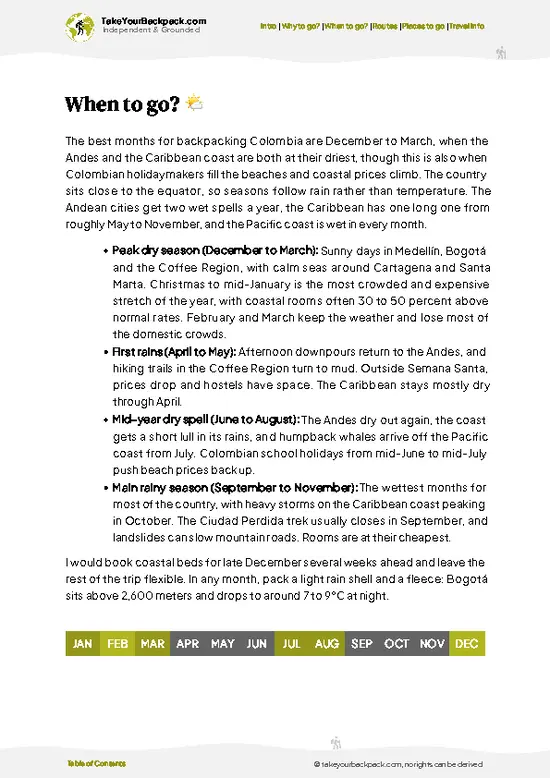
source: climatestotravel.comJANJanuary: good for travelingFEBFebruary: excellent for travelingMARMarch: excellent for travelingAPRApril: highly recommended for travelingMAYMay: good for travelingJUNJune: fair for travelingJULJuly: fair for travelingAUGAugust: fair for travelingSEPSeptember: fair for travelingOCTOctober: fair for travelingNOVNovember: good for travelingDECDecember: good for traveling
when-to-go

✈️ The backpacker research shortcutColombia Travel Guide

An offline-friendly backpacking guide with optimized travel routes, ranked highlights, transport advice, and the best areas to stay.
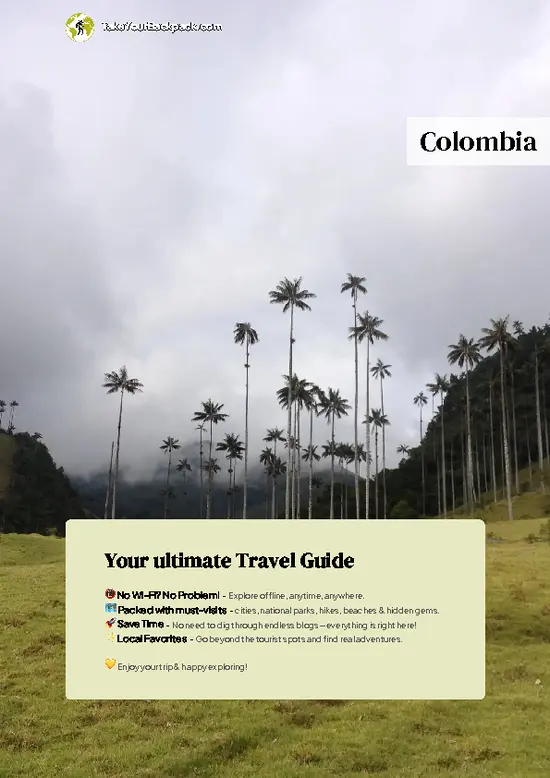
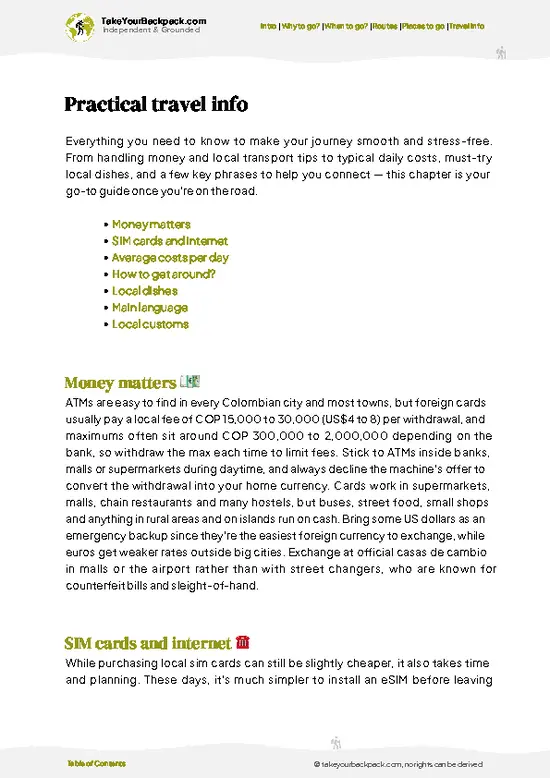
example page 0 from our offline Travel Guide for Colombia
example page 1 from our offline Travel Guide for Colombia
example page 2 from our offline Travel Guide for Colombia
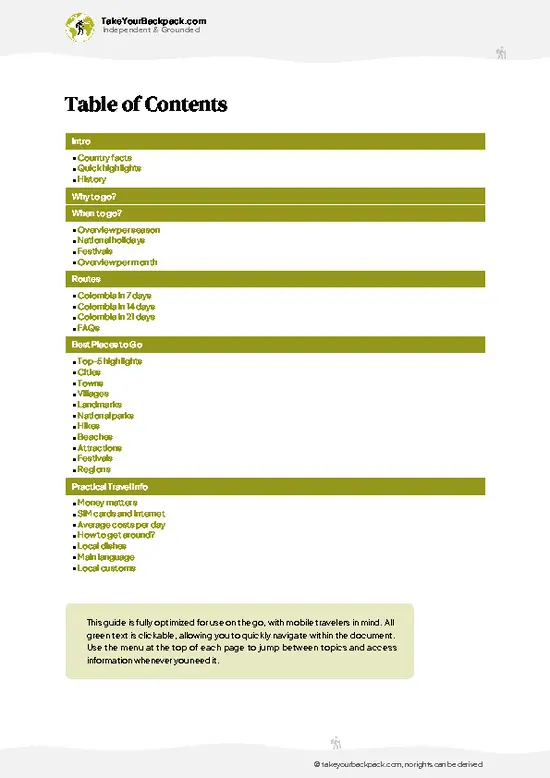
example page 3 from our offline Travel Guide for Colombia
example page 4 from our offline Travel Guide for Colombia
example page 5 from our offline Travel Guide for Colombia
example page 6 from our offline Travel Guide for Colombia
example page 7 from our offline Travel Guide for Colombia
The digital guide (464 pages) contains:
122 highlights, ranked by travel appeal
Optimized 7, 14 & 21-day travel routes
Cities, national parks, landmarks, beaches
How to get around
Offline-friendly for travel without Wi-Fi
👉 Click to see all 30+ guide features

📅 Plan smarter in minutes, not weeks
Month by month travel advice
Festivals & national holidays
Budget expectations

🗺️ Go to the right places, skip the overrated ones
Honest pros & cons of destinations
Top hikes, parks & viewpoints
Lesser-known places most travelers miss
Clear “worth it vs skip it” guidance

🛏️ Travel smoothly without rookie mistakes
Best areas to stay
Transport systems explained simply
Common scams & safety advice
SIM cards, money & practical tips

🌍 Understand the country, not just visit it
Culture & traditions
52 Essential phrases & customs
Festivals worth planning around
Traveler-friendly historical context
Insights that make places more meaningful

📱 Built for real travel conditions
Fully downloadable PDF
Works completely offline
Optimized for phone use
Useful in remote areas & buses
Everything in one place
Save weeks of stressful planning
Get instant access to your full guide. 30‑day money-back guarantee.
+ Add another guide for just US$7.80

By proceeding you agree to our terms.
Sent to your inbox immediately after payment • 100% Secure Checkout
Best Backpacking Travel Advisor 2025 tourism awardBest Backpacking
Travel Advisor
2025
What others say about Take Your Backpack Guides:
⭐⭐⭐⭐⭐
Fantastic, amazing amount of information!
⭐⭐⭐⭐⭐
My goodness this is amazing, it's what I've been looking for hats off too you!
⭐⭐⭐⭐⭐
I think this is absolutely BRILLIANT
⭐⭐⭐⭐
Very complete and informative. It's still missing places, but I gotta to commend you
⭐⭐⭐⭐⭐
This is truly amazing, thank you, can't wait to explore it with my kids!
⭐⭐⭐⭐⭐
Awesome resource, thank you!
⭐⭐⭐⭐⭐
This is amazing! Can't wait to explore the ones I haven't seen
⭐⭐⭐⭐
I love this! Well done, great idea.
⭐⭐⭐⭐⭐
Thanks for taking the time to make this gem!
⭐⭐⭐⭐⭐
This might be the best website I've ever seen.
⭐⭐⭐⭐⭐
Congratulations, and thank you so much for your work; it's incredibly valuable.
⭐⭐⭐⭐
In all seriousness I think you did a great job pointing out the important spots
⭐⭐⭐⭐⭐
10/10 very good
⭐⭐⭐⭐⭐
As someone who's only just starting to visit regularly this is awesome, thank you.
⭐⭐⭐⭐
Thank you very much! I'm going to visit my dad, it's going to be very useful!
⭐⭐⭐⭐⭐
This is really cool! We'll be travelling for the first time and this definitely come in handy.
⭐⭐⭐⭐⭐
You are now our minister of culture, congratulations 👨‍💼
⭐⭐⭐⭐⭐
Just wanted to tell you that this is a pearl! Going to follow your recommendations.
⭐⭐⭐⭐⭐
This is so cool. I'll definitely be using the resource for my travels soon.
⭐⭐⭐⭐⭐
This is very impressive! Good work.
⭐⭐⭐⭐⭐
This is an amazing and informative site. Very well done!

🛏️ Where to stay?How to pick the right area

In Pijao, the heart of backpacker life pulses strongest around the town center, where cobblestone streets hum with local chatter and the scent of fresh coffee drifts through the air. This area is your best bet—safe, lively, and sprinkled with hostels that draw solo travelers and budget adventurers alike. Staying here means easy access to communal spaces where stories flow as freely as the local brew, making it simple to connect without the awkwardness of forced socializing. Other parts of town feel quieter, more residential, lacking that buzz that turns a simple stay into a shared experience. … read more 👉
In Pijao, the heart of backpacker life pulses strongest around the town center, where cobblestone streets hum with local chatter and the scent of fresh coffee drifts through the air. This area is your best bet—safe, lively, and sprinkled with hostels that draw solo travelers and budget adventurers alike. Staying here means easy access to communal spaces where stories flow as freely as the local brew, making it simple to connect without the awkwardness of forced socializing. Other parts of town feel quieter, more residential, lacking that buzz that turns a simple stay into a shared experience. The center’s mix of friendly faces and affordable digs sets the stage for both comfort and camaraderie.

🚌 Getting aroundTransportation options and practical tips

Pijao moves at the pace of the mist rolling off the Andes—unhurried, with a rhythm that’s more about feeling than clock-watching. The town’s charm isn’t in strict timetables but in the ebb and flow of locals greeting each other on cobblestone streets, the scent of fresh coffee drifting from open windows, and the occasional rumble of a moto taxi weaving through narrow alleys. Here, you don’t just get from A to B; you soak in the atmosphere between stops. Expect a blend of laid-back spontaneity and practical, no-frills transit that keeps the town connected without fuss.


  • Walking: The best way to explore Pijao’s compact center. Streets are uneven but manageable, and wandering lets you catch the scent of roasting coffee and the chatter of market vendors. No cost, just bring sturdy shoes.

read more 👉
Pijao moves at the pace of the mist rolling off the Andes—unhurried, with a rhythm that’s more about feeling than clock-watching. The town’s charm isn’t in strict timetables but in the ebb and flow of locals greeting each other on cobblestone streets, the scent of fresh coffee drifting from open windows, and the occasional rumble of a moto taxi weaving through narrow alleys. Here, you don’t just get from A to B; you soak in the atmosphere between stops. Expect a blend of laid-back spontaneity and practical, no-frills transit that keeps the town connected without fuss.


  • Walking: The best way to explore Pijao’s compact center. Streets are uneven but manageable, and wandering lets you catch the scent of roasting coffee and the chatter of market vendors. No cost, just bring sturdy shoes.

  • Moto Taxis: These buzzing three-wheelers dart through narrow lanes and hills. Fares are cheap—usually under 3,000 COP—and they run from dawn until around 9 PM. Perfect for quick hops or when your legs need a break.

  • Shared Jeeps (Willys): The classic rural ride, these open-air jeeps connect Pijao to nearby towns like Armenia and Salento. Departures aren’t always on a strict schedule but start early morning and run until late afternoon. Expect a bumpy, scenic 30- to 45-minute ride for about 10,000 COP.

  • Local Buses: Slower but more comfortable than jeeps, buses run less frequently and mainly serve longer routes. They’re best if you’re carrying gear or heading farther out, with fares around 8,000 COP and departures timed loosely throughout the day.

👛 Costs (as of 4 September 2026)Travel costs and budget guide for Pijao

Backpacking in Pijao, Colombia, offers a charming rural escape with costs that reflect its small-town vibe and local pace of life. Here’s what you can expect to spend daily as an independent traveler navigating this coffee region town.
  • Dorm Accommodation: Dorm beds in Pijao are rare since it’s a quieter, less touristy spot. When available, expect to pay around $8 to $12 USD per night in small hostels or guesthouses. More commonly, budget travelers rent private rooms in family-run guesthouses for about $15 to $25 USD, which often include a simple breakfast.
  • Meals: Eating local is both a treat and a money-saver here. A hearty breakfast or lunch at a local comedor (small eatery) runs about $2 to $4 USD. Dinner at a modest restaurant might be $4 to $7 USD. Fresh fruit, coffee, and street snacks
read more 👉
Backpacking in Pijao, Colombia, offers a charming rural escape with costs that reflect its small-town vibe and local pace of life. Here’s what you can expect to spend daily as an independent traveler navigating this coffee region town.
  • Dorm Accommodation: Dorm beds in Pijao are rare since it’s a quieter, less touristy spot. When available, expect to pay around $8 to $12 USD per night in small hostels or guesthouses. More commonly, budget travelers rent private rooms in family-run guesthouses for about $15 to $25 USD, which often include a simple breakfast.
  • Meals: Eating local is both a treat and a money-saver here. A hearty breakfast or lunch at a local comedor (small eatery) runs about $2 to $4 USD. Dinner at a modest restaurant might be $4 to $7 USD. Fresh fruit, coffee, and street snacks are even cheaper, often under $1.50 USD each.
  • Local Transport: Pijao is small enough to explore mostly on foot, which saves money and lets you soak in the scent of coffee blossoms and the sound of birds. For longer trips, shared jeeps or minibuses to nearby towns cost around $1 to $3 USD per ride. Taxis within town are rare and usually unnecessary.
  • Basic Activities/Entry Fees: Most of Pijao’s charm lies in wandering its streets, visiting coffee farms, or hiking nearby trails, many of which are free or ask for a small donation of $2 to $5 USD. Coffee farm tours, which are the highlight, typically cost $10 to $15 USD, including tastings and explanations of the process.
  • Miscellaneous Expenses: This covers essentials like bottled water, occasional snacks, or a local SIM card top-up. Budget around $2 to $5 USD daily here. Internet cafes or Wi-Fi in guesthouses are usually free or very cheap.

All told, you’re looking at roughly $20 to $40 USD per day to live comfortably in Pijao without cutting corners. The town’s slow rhythm means you won’t be rushing to spend, but rather savoring each moment and each sip of coffee. Walking through the misty mornings, you’ll find that the modest costs are the price of a genuine, unhurried Colombian experience.


source: colombia.travel
⚠️ Prices can change and everyone travels differently, so take this as a rough guide. Hope it helps you plan your adventure!

🚌 Day tripsWhere to go beyond the main area

Pijao, Colombia, is a backpacker’s dream base, offering easy access to stunning landscapes and rich culture. Here are some day trips that will elevate your experience.

Cocora Valley
Just a couple of hours from Pijao, Cocora Valley is a must-see for its towering wax palms that stretch towards the sky. The hike through the valley is invigorating, with the scent of fresh earth and the sound of rustling leaves accompanying you. Expect to spend around 30,000 COP on transport and entry fees. The best time to visit is during the dry season, from December to March, when the trails are less muddy. A common mistake is underestimating the hike’s length; it can take up to 6 hours, so start early to soak in the views.


Salento
A quick bus ride will land you in Salento, a colorful town famous for … read more 👉
Pijao, Colombia, is a backpacker’s dream base, offering easy access to stunning landscapes and rich culture. Here are some day trips that will elevate your experience.

Cocora Valley
Just a couple of hours from Pijao, Cocora Valley is a must-see for its towering wax palms that stretch towards the sky. The hike through the valley is invigorating, with the scent of fresh earth and the sound of rustling leaves accompanying you. Expect to spend around 30,000 COP on transport and entry fees. The best time to visit is during the dry season, from December to March, when the trails are less muddy. A common mistake is underestimating the hike’s length; it can take up to 6 hours, so start early to soak in the views.


Salento
A quick bus ride will land you in Salento, a colorful town famous for its coffee culture. Spend the day sipping rich brews and exploring local artisan shops. The round trip costs about 20,000 COP, and you can easily fit this into a day. Visit during the week to avoid crowds and enjoy a more authentic vibe. Many first-timers miss the chance to tour a coffee farm; it’s a fantastic way to learn about the process and taste fresh coffee right from the source.
👉 Explore Salento

Quindio National Park
For nature lovers, Quindio National Park offers lush trails and diverse wildlife. It’s about an hour away, with transport costing around 15,000 COP. The park is best visited in the dry season when the trails are more accessible. A common pitfall is not bringing enough water; the trails can be challenging, and staying hydrated is key to enjoying the experience.


Filandia
Filandia is a charming town known for its vibrant architecture and panoramic viewpoints. The bus ride takes about 45 minutes and costs around 10,000 COP. Aim for a visit during the morning to catch the sunrise illuminating the colorful houses. Many backpackers overlook the local market; it’s a fantastic spot to grab a bite and mingle with locals.
👉 Explore Filandia
Want to know what more Colombia offers?
The Colombia Travel Guide describes 122 highlights, from cities to national parks, from beaches to hikes

Get the Travel Guide -

🛡️ SafetyStaying Safe: What Travelers Should Know

Pijao is generally safe, but staying aware enhances your experience. Stick to well-lit areas at night, especially if you’re solo. The town has a relaxed vibe, but keep an eye on your belongings in crowded spots like the market.

Watch for overly friendly locals who might offer unsolicited help; it can lead to unexpected costs. Always negotiate prices upfront for services like taxis. Carry a small amount of cash, as some places don’t accept cards. Embrace the local atmosphere, but trust your instincts.

FAQTraveler FAQ

Yes, Pijao is worth visiting for its authentic coffee culture and charming colonial architecture, not just as a stopover. It offers a peaceful atmosphere and opportunities for hiking and coffee farm tours, making it a rewarding destination for travelers interested in rural Colombia.
Two to three days are ideal to explore Pijao thoroughly. This allows time for coffee farm visits, hiking in the surrounding hills, and enjoying the town's relaxed vibe without rushing.
Yes, Pijao can be visited as a day trip from Armenia, which is about 45 kilometers away. However, a day trip limits the experience, especially if you want to visit coffee farms or hike, so staying overnight is recommended for a fuller experience.
⚠️ Things can change over time, so always validate details locally before you go.

Other Colombian towns near Pijao

Explore more nearby:

  • Salento—Wax palm valley, coffee tours, colorful houses| 37 km away
  • Filandia—Coffee farms, hilltop views, colonial balconies| 38 km away
  • Jardín—Central plaza, trout streams, lush hillsides| 141 km away

💡 Not sure where to go next?
Create a personalized itinerary for Colombia including Pijao and the places that fit your trip.

Generate my itinerary

👉 Discover all towns

Or checkout all Colombia has to offer (think cities, towns, villages, national parks, hikes, beaches, festivals)
Country photo of Colombia

We 💚 feedbackSumming up the experience

Pijao’s coffee culture is a sensory delight; the aroma of freshly roasted beans fills the air, and you can sip right where it’s grown. But be ready for steep, uneven paths—this isn’t a stroll in the park. Embrace the challenge; it’s part of the charm.

✈️ When did I visit Colombia?
Did a good 3-week trip around Colombia in August 2014.

✍️ Help improve this page!
The information on this page is based on my own backpacking experience in Colombia, supplemented with up-to-date research and feedback from other travelers. Travel details can change, so if you notice anything outdated or incomplete, feel free to let me know.


🙋‍♂️ Give feedback

👋 Meet the founderWho’s Behind Take Your Backpack?

Johan, backpacker and founder of TakeYourBackpackHi, I’m Johan (Netherlands 🇳🇱), the creator of TakeYourBackpack. Over the past decade, I’ve backpacked through 80+ countries across six continents, gaining extensive experience with independent travel, long-term trips, and overland routes.

This site is built on a combination of firsthand travel experience and carefully curated insights from other backpackers. Many guides are based on places I’ve personally visited, while others bring together tips, observations, and practical advice shared by trusted travelers I’ve met along the way.

The goal is to provide realistic, experience-driven guidance — not generic itineraries — so you can explore destinations with better context, clearer expectations, and more confidence.

Get full Colombia guide •
Instant download • 122 highlights • Full Offline guide