×

Colombia🇨🇴 | townsSanta Cruz de MompoxAlbarrada riverfront, silver filigree, island town, swamp boat rides | things to do and best time to go

Explore San GilExplore Villa de Leyva

Backpacking in Santa Cruz de Mompox
UNESCO World Heritage site
🌟 Highlighttown ranked #5
By Johan Kruseman 🇳🇱 | Updated October 19, 2026

Mompox was once a river port that moved much of Colombia’s gold, goods and people along the Magdalena, and then the river shifted course and left it asleep. Today it is a slow colonial town in the north of Colombia, on an island between river arms, with whitewashed streets, iron balconies and almost no hurry. I connect it with the clack of rocking chairs on stone porches in the evening, and the tap of silversmiths’ hammers by day. Getting here takes a long road and often a ferry crossing, which is why crowds stay thin. Skip any idea of nightlife or beaches. Do come for the Albarrada riverfront, the churches, filigree workshops and boat rides through the swamps. Hostels are few and small, so meeting other travelers happens over breakfast and on boat tours. Slow travelers, photographers and solo wanderers will love it. Anyone chasing parties or ticking sights fast will be bored.

Discover everything you want to know in the 📖 Colombia Travel Guide.


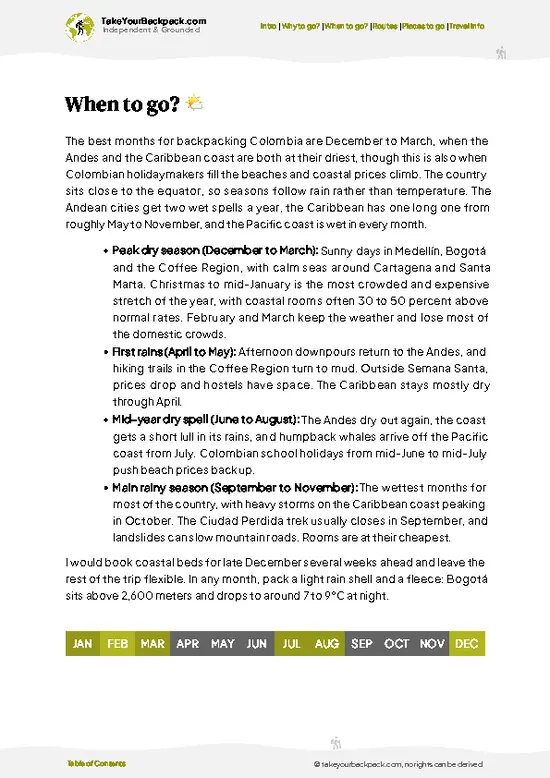
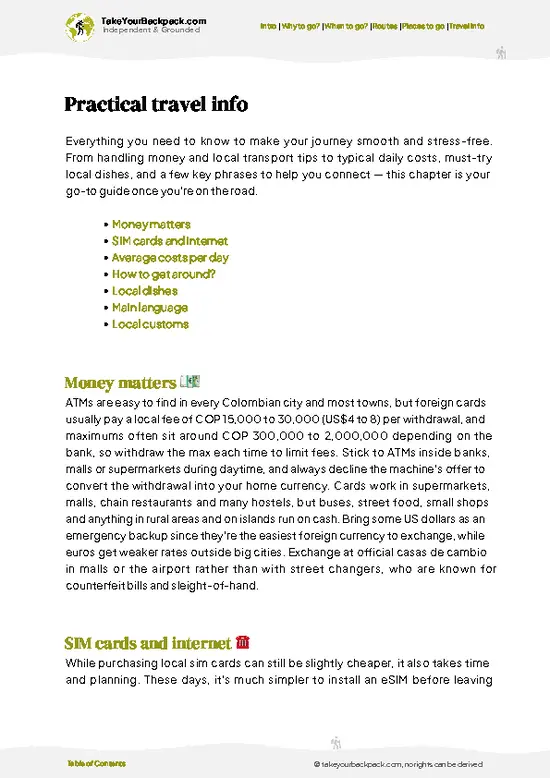
example page 0 from our offline Travel Guide for Colombia
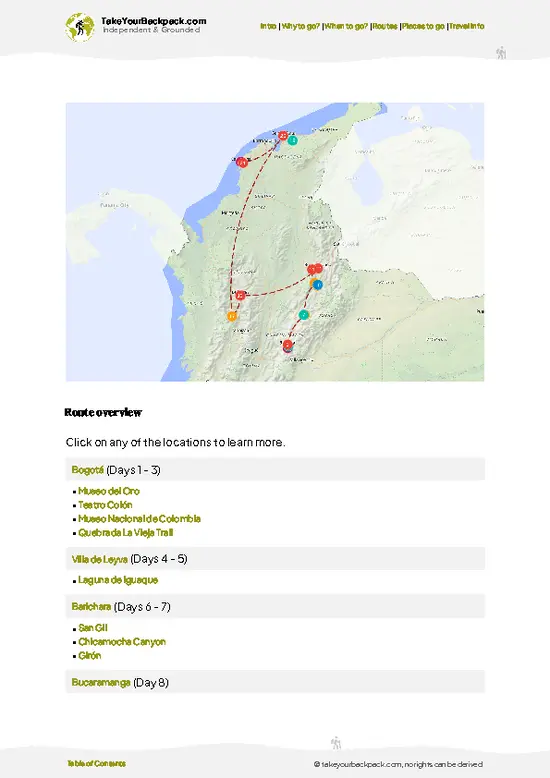
example page 1 from our offline Travel Guide for Colombia
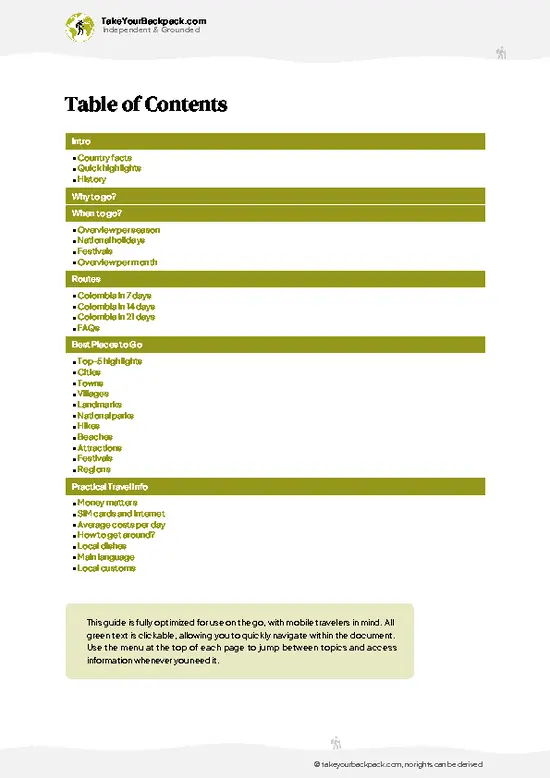
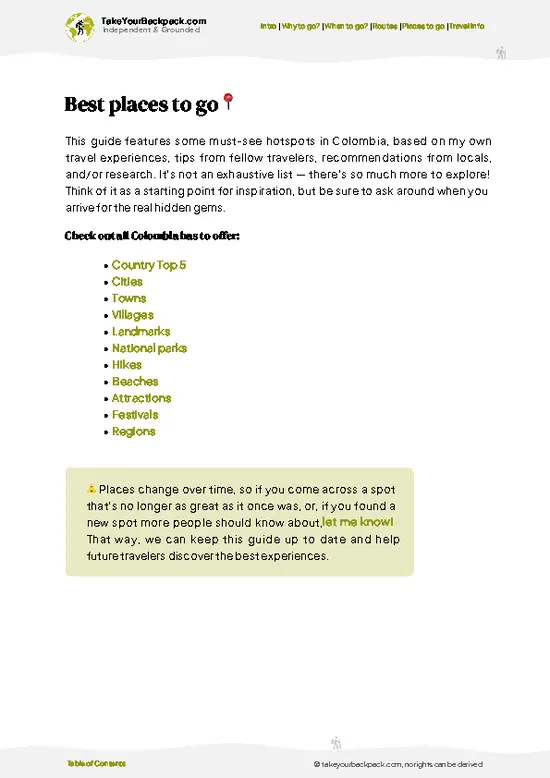
example page 2 from our offline Travel Guide for Colombia
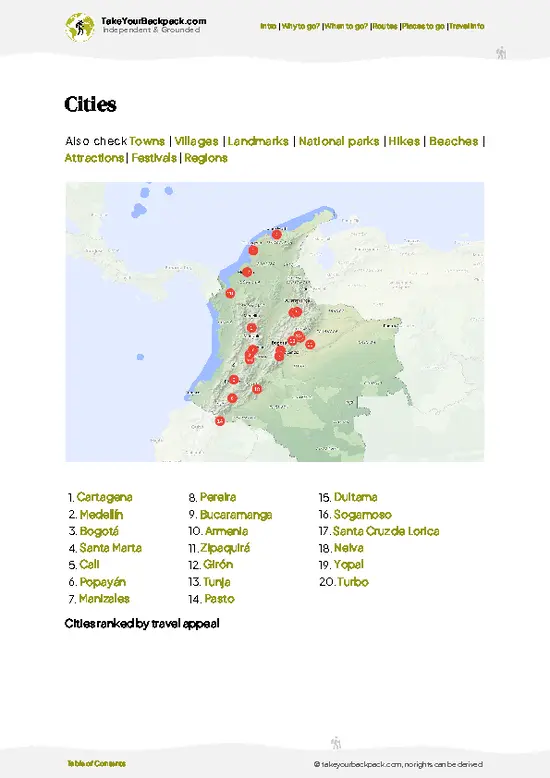
example page 3 from our offline Travel Guide for Colombia
example page 4 from our offline Travel Guide for Colombia
example page 5 from our offline Travel Guide for Colombia
example page 6 from our offline Travel Guide for Colombia
example page 7 from our offline Travel Guide for Colombia
Loading the map 🌍
CLICK TO FILTER
cities
towns
villages
landmarks
national parks
hikes
beaches
attractions
festivals
regions
SHOW COUNTRY’S BESTSHOW ALL

✨ Why go?
Ranked #5 town in Colombia
What makes it a must-see town

Santa Cruz de Mompox works because it asks you to slow down, and the town is small enough that doing so costs you nothing. Its UNESCO-listed old center is flat, walkable and genuinely lived in: families sit out on their porches, and the Albarrada along the river is where the town gathers at dusk. Silver filigree is the local craft, and you can watch it being made in small workshops rather than behind glass. Add a morning boat trip into the Magdalena wetlands, where herons, caimans and howler monkeys show up at dawn, and you have the whole appeal. Most people stay two nights, and a third makes sense if you like reading on a shaded plaza. It is quiet, a little hot and very sociable in a low-key way, with guesthouses run by owners who actually talk to you. Solo travelers, history lovers and anyone … read more 👉
Santa Cruz de Mompox works because it asks you to slow down, and the town is small enough that doing so costs you nothing. Its UNESCO-listed old center is flat, walkable and genuinely lived in: families sit out on their porches, and the Albarrada along the river is where the town gathers at dusk. Silver filigree is the local craft, and you can watch it being made in small workshops rather than behind glass. Add a morning boat trip into the Magdalena wetlands, where herons, caimans and howler monkeys show up at dawn, and you have the whole appeal. Most people stay two nights, and a third makes sense if you like reading on a shaded plaza. It is quiet, a little hot and very sociable in a low-key way, with guesthouses run by owners who actually talk to you. Solo travelers, history lovers and anyone tired of hostel party circuits will fit right in. Those wanting action should keep moving.

💡 HighlightsKey sights and experiences for travelers

  1. Iglesia de Santo Domingo and the Plaza: the best-known plaza, with a crumbling, whitewashed church and a giant old ceiba tree. Go early morning or after 5 PM when it cools. Free, 30 to 45 minutes.
  2. Albarrada riverfront: the long promenade beside the Magdalena, lined with colonial houses and churches. Sunset is when locals fill it, and it costs nothing. Allow 1 hour.
  3. Cementerio Municipal: a whitewashed cemetery with arched tombs and a famous reputation for atmosphere. Morning light is best. Entry is usually free or a small tip, about 30 minutes.
  4. Silver filigree workshops: family-run studios where artisans twist fine silver thread into earrings and crosses. Visit mornings, when they are working. Browsing is free, and pieces start around US$10 to 15. Allow 45 minutes.
  5. Casa de la Cultura and Museo
… read more 👉
  1. Iglesia de Santo Domingo and the Plaza: the best-known plaza, with a crumbling, whitewashed church and a giant old ceiba tree. Go early morning or after 5 PM when it cools. Free, 30 to 45 minutes.
  2. Albarrada riverfront: the long promenade beside the Magdalena, lined with colonial houses and churches. Sunset is when locals fill it, and it costs nothing. Allow 1 hour.
  3. Cementerio Municipal: a whitewashed cemetery with arched tombs and a famous reputation for atmosphere. Morning light is best. Entry is usually free or a small tip, about 30 minutes.
  4. Silver filigree workshops: family-run studios where artisans twist fine silver thread into earrings and crosses. Visit mornings, when they are working. Browsing is free, and pieces start around US$10 to 15. Allow 45 minutes.
  5. Casa de la Cultura and Museo de Arte Religioso: a modest collection of colonial religious art and local history in old buildings. Open weekdays and weekends with a midday break. Entry runs about US$1 to 3, taking 45 minutes.
Beyond town, the wetlands of the Magdalena by boat, the village of Bodega and the small river settlements nearby make good half-day outings. For a first visit, start with the plaza at Santo Domingo, then walk the Albarrada at dusk.
Spotted a mistake or missing something? Contact us.

🏘️ NeighborhoodsKey areas and districts to know

Mompox is a compact island town on the Magdalena River, and the whole historic core fits into about 15 blocks you can walk in an hour. Skip taxis here, since they only save you from the heat, not from distance.
  • Calle de la Albarrada: The riverfront promenade lined with whitewashed colonial houses and the Iglesia de San Francisco. Come at sunset, when locals fill the benches and vendors sell fried snacks and cold drinks. It is the one stretch worth doing twice, once by day and once at night.
  • Plaza de la Concepción and Calle Real del Medio: The old commercial spine, packed with filigree jewelry workshops, where silver and gold work is still made by hand. Buy from the workshops, not the souvenir stalls, because prices are lower and you can watch the work. Mornings are best, before the midday heat
… read more 👉
Mompox is a compact island town on the Magdalena River, and the whole historic core fits into about 15 blocks you can walk in an hour. Skip taxis here, since they only save you from the heat, not from distance.
  • Calle de la Albarrada: The riverfront promenade lined with whitewashed colonial houses and the Iglesia de San Francisco. Come at sunset, when locals fill the benches and vendors sell fried snacks and cold drinks. It is the one stretch worth doing twice, once by day and once at night.
  • Plaza de la Concepción and Calle Real del Medio: The old commercial spine, packed with filigree jewelry workshops, where silver and gold work is still made by hand. Buy from the workshops, not the souvenir stalls, because prices are lower and you can watch the work. Mornings are best, before the midday heat shuts doors.
  • Plaza Santo Domingo: Quieter and shaded, with open-air restaurants serving bocachico fish and sancocho. Eat here in the evening when the plaza fills. It is the center of nightlife, which means a few bars and music until midnight, nothing wilder.
  • Cemetery and Santa Bárbara area: The Cementerio, with its whitewashed tombs, is atmospheric and takes 20 minutes. Santa Bárbara church is worth a look if open. Go early or late, because the middle of the day is brutal.

⌛️ 1 dayA smart one-day plan

6:00 AM, Magdalena wetlands boat trip: Start before the heat with a small boat from the riverfront into the channels, where herons, kingfishers and howler monkeys are most active. Go back to town by about 8:30.
9:00 AM, Breakfast near Plaza Santo Domingo: Eat eggs, arepa and strong coffee under the old ceiba, then step inside the church while it is still cool.
10:30 AM, Silver filigree workshops: Walk a few blocks to a family studio and watch the artisans work. Ask about pieces made to order.
12:30 PM, Lunch and siesta: Eat a river-fish plate, then rest in the shade, because the town shuts down in the midday heat.
3:30 PM, Cementerio Municipal: Walk out to the whitewashed cemetery, which is rarely on the standard list of sights but gives a very quiet hour among arched tombs.
5:00 PM, Casa de la … read more 👉
6:00 AM, Magdalena wetlands boat trip: Start before the heat with a small boat from the riverfront into the channels, where herons, kingfishers and howler monkeys are most active. Go back to town by about 8:30.
9:00 AM, Breakfast near Plaza Santo Domingo: Eat eggs, arepa and strong coffee under the old ceiba, then step inside the church while it is still cool.
10:30 AM, Silver filigree workshops: Walk a few blocks to a family studio and watch the artisans work. Ask about pieces made to order.
12:30 PM, Lunch and siesta: Eat a river-fish plate, then rest in the shade, because the town shuts down in the midday heat.
3:30 PM, Cementerio Municipal: Walk out to the whitewashed cemetery, which is rarely on the standard list of sights but gives a very quiet hour among arched tombs.
5:00 PM, Casa de la Cultura and Iglesia de San Francisco: Take in colonial art and the church facing a small plaza as the light softens.
6:00 PM, Albarrada: Finish on the riverfront with a cold drink as locals fill the benches, then stroll back slowly through the lit streets.

🌤️ When to go?Weather, crowds, and seasonal trade-offs

December to March is the driest stretch, with sunny days and the lowest chance of flooded streets or canceled river trips.
  • Dry Season (December to March): Highs reach 33 to 36°C (91 to 97°F) and nights stay near 24°C (75°F). Crowds peak around Christmas, New Year and Semana Santa, and rooms cost more.
  • Rainy Seasons (April to June, September to November): Afternoon storms are common and the river rises. Humidity is heavy, mosquitoes increase, and some roads turn muddy. Rooms are easy to find and cheaper.
  • Daylight: Days run about 12 hours with little change, so plan walks for early morning and after 4 pm.
  • Semana Santa: The Holy Week processions and sacred music festival draw Colombian visitors, so prices climb and beds sell out weeks ahead.
Book Semana Santa lodging well ahead, or go the week after for quiet streets.

source: climatestotravel.comJANJanuary: excellent for travelingFEBFebruary: excellent for travelingMARMarch: highly recommended for travelingAPRApril: good for travelingMAYMay: fair for travelingJUNJune: fair for travelingJULJuly: fair for travelingAUGAugust: fair for travelingSEPSeptember: fair for travelingOCTOctober: fair for travelingNOVNovember: good for travelingDECDecember: excellent for traveling
colombia-city-santa-cruz-de-mompox
© Google | Jessica P.g

✈️ The backpacker research shortcutColombia Travel Guide

An offline-friendly backpacking guide with optimized travel routes, ranked highlights, transport advice, and the best areas to stay.
example page 0 from our offline Travel Guide for Colombia
example page 1 from our offline Travel Guide for Colombia
example page 2 from our offline Travel Guide for Colombia
example page 3 from our offline Travel Guide for Colombia
example page 4 from our offline Travel Guide for Colombia
example page 5 from our offline Travel Guide for Colombia
example page 6 from our offline Travel Guide for Colombia
example page 7 from our offline Travel Guide for Colombia
The digital guide (349 pages) contains:
✅ 115 highlights, ranked by travel appeal
✅ Optimized 7, 14 & 21-day travel routes
✅ Cities, national parks, landmarks, beaches
✅ How to get around
✅ Offline-friendly for travel without Wi-Fi
👉 Click to see all 30+ guide features

📅 Plan smarter in minutes, not weeks
✅ Month by month travel advice
✅ Festivals & national holidays
✅ Budget expectations

🗺️ Go to the right places, skip the overrated ones
✅ Honest pros & cons of destinations
✅ Top hikes, parks & viewpoints
✅ Lesser-known places most travelers miss
✅ Clear “worth it vs skip it” guidance

🛏️ Travel smoothly without rookie mistakes
✅ Best areas to stay
✅ Transport systems explained simply
✅ Common scams & safety advice
✅ SIM cards, money & practical tips

🌍 Understand the country, not just visit it
✅ Culture & traditions
✅ 52 Essential phrases & customs
✅ Festivals worth planning around
✅ Traveler-friendly historical context
✅ Insights that make places more meaningful

📱 Built for real travel conditions
✅ Fully downloadable PDF
✅ Works completely offline
✅ Optimized for phone use
✅ Useful in remote areas & buses
✅ Everything in one place
Stop searching, start planning
Get instant access to your full guide. 30‑day money-back guarantee.
+ Add another guide for just

By proceeding you agree to our terms.
Sent to your inbox immediately after payment • 100% Secure Checkout
Best Backpacking Travel Advisor 2025 tourism awardBest Backpacking
Travel Advisor
2025
What others say about Take Your Backpack Guides:
⭐⭐⭐⭐⭐
Fantastic, amazing amount of information!
⭐⭐⭐⭐⭐
My goodness this is amazing, it's what I've been looking for hats off too you!
⭐⭐⭐⭐⭐
I think this is absolutely BRILLIANT
⭐⭐⭐⭐
Very complete and informative. It's still missing places, but I gotta to commend you
⭐⭐⭐⭐⭐
This is truly amazing, thank you, can't wait to explore it with my kids!
⭐⭐⭐⭐⭐
Awesome resource, thank you!
⭐⭐⭐⭐⭐
This is amazing! Can't wait to explore the ones I haven't seen
⭐⭐⭐⭐
I love this! Well done, great idea.
⭐⭐⭐⭐⭐
Thanks for taking the time to make this gem!
⭐⭐⭐⭐⭐
This might be the best website I've ever seen.
⭐⭐⭐⭐⭐
Congratulations, and thank you so much for your work; it's incredibly valuable.
⭐⭐⭐⭐
In all seriousness I think you did a great job pointing out the important spots
⭐⭐⭐⭐⭐
10/10 very good
⭐⭐⭐⭐⭐
As someone who's only just starting to visit regularly this is awesome, thank you.
⭐⭐⭐⭐
Thank you very much! I'm going to visit my dad, it's going to be very useful!
⭐⭐⭐⭐⭐
This is really cool! We'll be travelling for the first time and this definitely come in handy.
⭐⭐⭐⭐⭐
You are now our minister of culture, congratulations 👨‍💼
⭐⭐⭐⭐⭐
Just wanted to tell you that this is a pearl! Going to follow your recommendations.
⭐⭐⭐⭐⭐
This is so cool. I'll definitely be using the resource for my travels soon.
⭐⭐⭐⭐⭐
This is very impressive! Good work.
⭐⭐⭐⭐⭐
This is an amazing and informative site. Very well done!

🛏️ Where to stay?Best areas to stay in Colombia

The historic center, around Calle de la Albarrada and Plaza Santo Domingo, is the best area for a budget bed, with guesthouses and a few hostels in restored colonial houses at roughly US$10 to 25 for a dorm or simple private room. You can walk to everything, and streets stay lit and busy until late. Rooms by the river catch breezes, which matter in this heat, but a few guesthouses on the Albarrada can be noisy on weekends.
The streets just back from the main plaza, toward Calle Real del Medio, are a quieter second choice. Prices are similar, and you are a short walk from restaurants and the workshops. … read more 👉
The historic center, around Calle de la Albarrada and Plaza Santo Domingo, is the best area for a budget bed, with guesthouses and a few hostels in restored colonial houses at roughly US$10 to 25 for a dorm or simple private room. You can walk to everything, and streets stay lit and busy until late. Rooms by the river catch breezes, which matter in this heat, but a few guesthouses on the Albarrada can be noisy on weekends.
The streets just back from the main plaza, toward Calle Real del Medio, are a quieter second choice. Prices are similar, and you are a short walk from restaurants and the workshops. Fans are common, but air conditioning is worth paying US$5 to 10 extra for in March and April, the hottest months.
Avoid the outskirts near the bus terminal unless you arrive very late. They have few options, little to do, and you would depend on mototaxis, which thin out after dark. During Semana Santa and December holidays, book ahead, since the small number of beds fills fast.

🚌 Getting aroundMoving around without the hassle

Arriving without a pre-booked seat on the shared transport from Magangué or Cartagena costs the most time, since late departures leave you stranded and force a pricey private ride. Book morning transport the day before. Mompox itself is flat and small, and walking covers almost everything. Heat is the real obstacle, so move early and late.
  • Walking: Free and the best way to see the historic center. Streets are flat and shaded by colonial arcades. Do it before 10 am and after 4 pm, not at noon.
  • Mototaxi: Costs US$1 to 2 per ride within town, and US$2 to 4 to the outskirts. They are the standard way to reach the bus terminal or a far guesthouse. Agree on the price before you climb on.
  • Shared vans and buses from Cartagena: The trip takes about 7 to 9 hours and costs roughly US$20 to 30. Direct services
… read more 👉
Arriving without a pre-booked seat on the shared transport from Magangué or Cartagena costs the most time, since late departures leave you stranded and force a pricey private ride. Book morning transport the day before. Mompox itself is flat and small, and walking covers almost everything. Heat is the real obstacle, so move early and late.
  • Walking: Free and the best way to see the historic center. Streets are flat and shaded by colonial arcades. Do it before 10 am and after 4 pm, not at noon.
  • Mototaxi: Costs US$1 to 2 per ride within town, and US$2 to 4 to the outskirts. They are the standard way to reach the bus terminal or a far guesthouse. Agree on the price before you climb on.
  • Shared vans and buses from Cartagena: The trip takes about 7 to 9 hours and costs roughly US$20 to 30. Direct services are limited and mostly leave early, so reserve a seat. Going via Magangué adds a transfer but gives more departures.
  • Boat from Magangué: Small boats cross the Magdalena branch in about 1.5 to 2 hours for US$5 to 8. Skip it if you are tight on time, since the road is faster in the dry season, though the river ride is scenic.
  • Private taxi: Costs US$60 to 100 from Cartagena or Magangué. It only makes sense for groups splitting the fare or late arrivals. Otherwise it is poor value.

👛 Costs (as of 19 October 2026)What things cost and how to budget

Expect to spend about US$35 to 76 a day in Mompox, with US$55 as a realistic average in high season.
CategoryBudget RangeLocal Reality
Dorm accommodationUS$10 to 20Dorms are few, so many travelers take a simple private room; fan rooms are cheaper than air conditioning. Prices rise at Semana Santa.
MealsUS$10 to 20Set lunches (corrientazo) cost US$3 to 5; riverside restaurants run US$8 to 12 for fish.
Local transportUS$2 to 6Mototaxis cost US$1 to 2 per ride; the town is walkable.
Basic activities/entry feesUS$8 to 20A boat tour costs US$10 to 25; churches and the cemetery are mostly free or low cost.
Miscellaneous expensesUS$5 to 10Cold drinks, water, repellent and small purchases from jewelry workshops.
Total Daily BudgetUS$35 to 76About US$55 in high season with a mid-range choice for each row.
… read more 👉
Expect to spend about US$35 to 76 a day in Mompox, with US$55 as a realistic average in high season.
CategoryBudget RangeLocal Reality
Dorm accommodationUS$10 to 20Dorms are few, so many travelers take a simple private room; fan rooms are cheaper than air conditioning. Prices rise at Semana Santa.
MealsUS$10 to 20Set lunches (corrientazo) cost US$3 to 5; riverside restaurants run US$8 to 12 for fish.
Local transportUS$2 to 6Mototaxis cost US$1 to 2 per ride; the town is walkable.
Basic activities/entry feesUS$8 to 20A boat tour costs US$10 to 25; churches and the cemetery are mostly free or low cost.
Miscellaneous expensesUS$5 to 10Cold drinks, water, repellent and small purchases from jewelry workshops.
Total Daily BudgetUS$35 to 76About US$55 in high season with a mid-range choice for each row.
Eat the set lunch at local spots and share boat tours with other travelers to cut the cost by a third.


source: colombia.travel
⚠️ Prices can change and everyone travels differently, so take this as a rough guide. Hope it helps you plan your adventure!

🚌 Day tripsShort trips worth adding

Mompox is isolated, so day trips are slow and mostly by river or dirt road, but a few are worthwhile if you start early.Boat on the Magdalena and Ciénagas: A morning boat tour through the river channels and wetlands lets you see herons, caimans, monkeys and fishing villages. Tours take 3 to 4 hours and cost US$10 to 25 per person when shared. Go at sunrise for wildlife and cooler air. First-timers often pick a midday departure and spend it sweating under the sun.
Magangué: This river port is 1.5 to 2 hours away by boat and mostly a transit point. It has a busy market and a lively waterfront, but little else. Go only if you need onward connections. Costs run US$5 to 10 each way.
San Fernando: A small riverside village about 30 to 45 minutes by road, with an old colonial street and few visitors. … read more 👉
Mompox is isolated, so day trips are slow and mostly by river or dirt road, but a few are worthwhile if you start early.Boat on the Magdalena and Ciénagas: A morning boat tour through the river channels and wetlands lets you see herons, caimans, monkeys and fishing villages. Tours take 3 to 4 hours and cost US$10 to 25 per person when shared. Go at sunrise for wildlife and cooler air. First-timers often pick a midday departure and spend it sweating under the sun.
Magangué: This river port is 1.5 to 2 hours away by boat and mostly a transit point. It has a busy market and a lively waterfront, but little else. Go only if you need onward connections. Costs run US$5 to 10 each way.
San Fernando: A small riverside village about 30 to 45 minutes by road, with an old colonial street and few visitors. It suits a half day, and a mototaxi or shared ride costs around US$3 to 8 total. Bring cash, because there are few services.
Guamal: A quiet town on the river road, roughly an hour away, with a calm plaza and local eateries. It is only worth the trip if you like small places with no tourist infrastructure. Plan about US$5 to 10 for transport.

🛡️ SafetySafety Tips and Common Scams in Santa Cruz de Mompox

Mompox is calm and small, and violent crime against travelers is rare. The main issues are heat, mosquitoes and the occasional overcharge. Walk the historic center freely at night, but stick to lit streets near the Albarrada and plazas. Away from the center, streets empty early, so take a mototaxi back after about 10 pm. Solo travelers, including women, generally report few problems, though unsolicited attention can happen near bars late at night, and a firm no is enough. Mototaxi drivers sometimes quote higher prices to visitors, so confirm the fare first. Keep your phone and cash out of sight at the riverfront and market, where petty theft occasionally happens. Use repellent at dusk and drink bottled or filtered water. Carry cash, since ATMs are few and can run empty on holiday weekends.

FAQFrequently asked questions about Santa Cruz de Mompox

Santa Cruz de Mompox is worth a real visit, not a quick pass-through, because it is a UNESCO-listed colonial river town where the pace stays slow. Spend time on the Albarrada riverfront walk, inside the Iglesia de Santa Bárbara with its Moorish-style tower, and in the filigree gold workshops along Calle Real del Medio. Getting here takes effort (roughly 3 to 4 hours by road from the Caribbean coast side or about 6 hours from Cartagena), which is why it stays calm and uncrowded.
Two nights is the practical minimum for Santa Cruz de Mompox, and three nights suits you better if you want a boat trip. The first day covers the churches, the San Carlos cemetery and the Albarrada at dusk. The second can go to a river excursion through the Magdalena wetlands (around US$10 to 20 for a shared outing) or to a filigree workshop visit. Add a day if you want to do nothing in a hammock, which the heat encourages.
A day trip to Santa Cruz de Mompox from Cartagena or Barranquilla is possible but poor value, since the one-way journey runs about 5 to 7 hours depending on the route and the final river crossing by ferry or road. You would spend most of a day in transit and see only the main plaza area. Staying at least one night (around US$10 to 25 for a dorm or basic room) lets you catch the riverfront at sunset and the quiet streets in the morning.
⚠️ Things can change over time, so always validate details locally before you go.

Other Colombian towns near Santa Cruz de Mompox

Explore more nearby:

  • Santiago de Tolú—Fishing malecón, morning catch, San Bernardo islands, Gulf of Morrosquillo| 131 km away
  • Coveñas—Gray-sand beachfront, Caimanera mangroves, seafood shacks, oil-terminal sunsets| 139 km away
  • Puerto Colombia—Ruined pier, old railway station, brown-sand beach, arepas de huevo| 203 km away

💡 Not sure where to go next?
Create a personalized itinerary for Colombia including Santa Cruz de Mompox and the places that fit your trip.

Generate my itinerary

👉 Discover all towns

Or checkout all Colombia has to offer (think cities, towns, villages, national parks, hikes, beaches, festivals)
Country photo of Colombia

We 💚 feedbackSumming up the experience

Santa Cruz de Mompox suits slow travelers, photographers and people who like conversation on a porch better than a dance floor. If a place without nightlife or fast connections sounds like a relief, you will love it. I would book two nights and make the wetlands boat trip your first morning.

✈️ When did I visit Colombia?
Did a good 3-week trip around Colombia in August 2014.

✍️ Help improve this page!
The information on this page is based on my own backpacking experience in Colombia, supplemented with up-to-date research and feedback from other travelers. Travel details can change, so if you notice anything outdated or incomplete, feel free to let me know.


🙋‍♂️ Give feedback

👋 Meet the founderWho’s Behind Take Your Backpack?

Johan, backpacker and founder of TakeYourBackpackHi, I’m Johan (Netherlands 🇳🇱), the creator of TakeYourBackpack. Over the past 3 decades, I’ve backpacked through 90+ countries across six continents, gaining extensive experience with independent travel, long-term trips, and overland routes.

This site is built on a combination of firsthand travel experience and carefully curated insights from other backpackers. Many guides are based on places I’ve personally visited, while others bring together tips, observations, and practical advice shared by trusted travelers I’ve met along the way.

The goal is to provide realistic, experience-driven guidance — not generic itineraries — so you can explore destinations with better context, clearer expectations, and more confidence.