×

Comoros🇰🇲 | citiesDomoniCarved doors, dhow quay, coral-stone lanes, former sultans’ seat | things to do and best time to go

Explore MitsamiouliExplore Iconi

Backpacking in Domoni
🌟 Highlightcity ranked #3
By Johan Kruseman 🇳🇱 | Updated October 22, 2026

Dhow hulls knock softly against the stone quay while the smell of drying octopus and clove smoke drifts up the alley, and a boy hauls a hand-sawn plank past the carved doors. That is Domoni, on the east coast of Anjouan (Ndzuwani) island in the Comoros. It is a walled-in medina feel without the crowds: narrow lanes, coral-stone mosques, a working harbor and almost no tourist infrastructure. Expect heat, uneven paving, patchy electricity and a lot of curious greetings in French and Shikomori. The cheapest way to reach it is a shared taxi from Mutsamudu, which costs little but takes patience, while a private car saves time at a higher price; for most backpackers the shared ride gives the best value. Domoni suits curious, flexible travelers who like slow walking and local conversation. It will frustrate anyone who wants nightlife, polished hostels or a checklist of sights.

Discover everything you want to know in the 📖 Comoros Travel Guide.


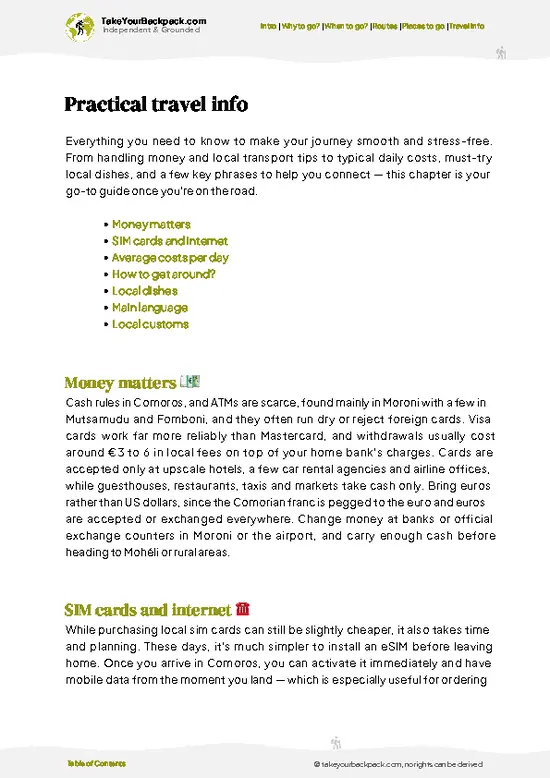
example page 0 from our offline Travel Guide for Comoros
example page 1 from our offline Travel Guide for Comoros
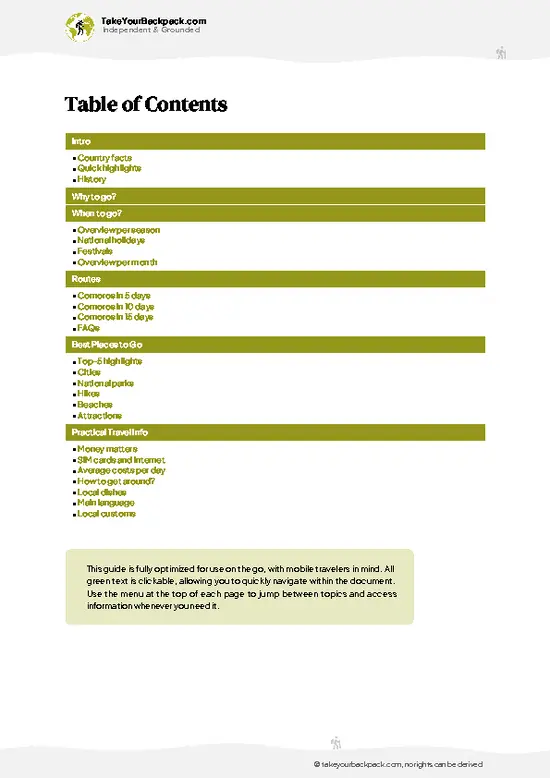
example page 2 from our offline Travel Guide for Comoros
example page 3 from our offline Travel Guide for Comoros
example page 4 from our offline Travel Guide for Comoros
example page 5 from our offline Travel Guide for Comoros
example page 6 from our offline Travel Guide for Comoros
example page 7 from our offline Travel Guide for Comoros
Loading the map 🌍
CLICK TO FILTER
cities
national parks
hikes
beaches
attractions
SHOW COUNTRY’S BESTSHOW ALL

✨ Why go?
Ranked #3 city in Comoros
What sets this place apart

Domoni earns its place on a Comoros route because it is the island’s old Swahili-style port, and you can see that history without paying a ticket. The center is compact enough to cover on foot in a morning, so the town works well as an overnight stop rather than a long stay. Most backpackers come for the carved wooden doors and the working dhow harbor, where boats still land fish and cargo and where you can talk with the people who run them. Food is simple: grilled fish, cassava, coconut dishes and bread with sweet tea, eaten at small local spots rather than restaurants. Accommodation is limited, so arrange a bed in advance and ask locally about guesthouses. Domoni also makes a good base for exploring the east side of Anjouan, with its forest, coast and villages. The honest limit is that evenings … read more 👉
Domoni earns its place on a Comoros route because it is the island’s old Swahili-style port, and you can see that history without paying a ticket. The center is compact enough to cover on foot in a morning, so the town works well as an overnight stop rather than a long stay. Most backpackers come for the carved wooden doors and the working dhow harbor, where boats still land fish and cargo and where you can talk with the people who run them. Food is simple: grilled fish, cassava, coconut dishes and bread with sweet tea, eaten at small local spots rather than restaurants. Accommodation is limited, so arrange a bed in advance and ask locally about guesthouses. Domoni also makes a good base for exploring the east side of Anjouan, with its forest, coast and villages. The honest limit is that evenings are quiet and services are thin. Come for atmosphere and real contact with daily life, and treat it as a short, rewarding stop.

💡 HighlightsEssential experiences to have while visiting Domoni

  1. Old Medina and Carved Doors: The lanes behind the harbor hold coral-stone houses with elaborately carved wooden doors, some centuries old. Go early morning when the light is soft and the streets are active. Free, 1 to 2 hours.
  2. Domoni Harbor: Wooden boats unload fish and goods on the quay, with nets mended in the shade. Best at dawn or late afternoon when boats come in. Free, about 1 hour.
  3. Friday Mosque and Old Mosques: Domoni’s mosques reflect its long Islamic and Swahili heritage. Visit outside prayer times, dress modestly and ask permission before entering or photographing. Free, 30 minutes.
  4. Sultan Abdallah I Historic Quarter: Domoni was an old seat of Anjouan’s sultans, and a local guide can point out historic houses and old remnants of the town’s past. A guide costs roughly €5 to 10, 1 to
… read more 👉
  1. Old Medina and Carved Doors: The lanes behind the harbor hold coral-stone houses with elaborately carved wooden doors, some centuries old. Go early morning when the light is soft and the streets are active. Free, 1 to 2 hours.
  2. Domoni Harbor: Wooden boats unload fish and goods on the quay, with nets mended in the shade. Best at dawn or late afternoon when boats come in. Free, about 1 hour.
  3. Friday Mosque and Old Mosques: Domoni’s mosques reflect its long Islamic and Swahili heritage. Visit outside prayer times, dress modestly and ask permission before entering or photographing. Free, 30 minutes.
  4. Sultan Abdallah I Historic Quarter: Domoni was an old seat of Anjouan’s sultans, and a local guide can point out historic houses and old remnants of the town’s past. A guide costs roughly €5 to 10, 1 to 2 hours.
  5. Town Fish and Produce Market: Morning is best for fish, bananas, breadfruit, spices and cassava. Buy snacks and try local fruit for a few euros at most. About 45 minutes.
  6. Coastal Walk and Beaches: Paths and rocky shore near town give views of the lagoon and passing boats. Go in the cooler late afternoon. Free, 1 to 2 hours.
Day trips from Domoni can reach Mutsamudu with its old medina and fort, Lake Dzialandzé and the forested interior of Anjouan, or the Moya coast beaches.

Start with the harbor at dawn, since that is when the boats and the market are most alive and the heat is still kind.
Spotted a mistake or missing something? Contact us.

🏘️ NeighborhoodsHow different areas shape the experience

Domoni sits on the east coast of Anjouan (Ndzuwani), and the whole old town can be crossed on foot in under an hour, so the choice is about where to spend your hours, not how to get between areas. Shoes with grip help, because the lanes are stone and often damp.
  • Medina and old quarter. A knot of narrow, shaded lanes with carved wooden doors, coral-stone houses and the smell of woodsmoke and cloves drying on mats. Dress modestly, greet people with a quiet “salam,” and expect to be followed by curious kids. Walk it in the early morning, when the light is soft and the heat has not yet settled. It costs nothing, and it is the best use of your time here.
  • Harbor and waterfront. The small port is loud with diesel engines, shouting and the slap of wooden boats. Fishermen land their catch in the morning,
… read more 👉
Domoni sits on the east coast of Anjouan (Ndzuwani), and the whole old town can be crossed on foot in under an hour, so the choice is about where to spend your hours, not how to get between areas. Shoes with grip help, because the lanes are stone and often damp.
  • Medina and old quarter. A knot of narrow, shaded lanes with carved wooden doors, coral-stone houses and the smell of woodsmoke and cloves drying on mats. Dress modestly, greet people with a quiet “salam,” and expect to be followed by curious kids. Walk it in the early morning, when the light is soft and the heat has not yet settled. It costs nothing, and it is the best use of your time here.
  • Harbor and waterfront. The small port is loud with diesel engines, shouting and the slap of wooden boats. Fishermen land their catch in the morning, and fresh octopus and tuna change hands fast. It is rough underfoot and fishy, but a better window onto daily life than any museum. Come at dawn or late afternoon, and skip midday when the sun bounces off the concrete.
  • Mosques and historic core. Old mosques and the former sultans’ tombs stand close to the center, where Domoni’s past as a seat of power still shows in the stonework. Entry is usually informal, so ask a local to point out the right spots and keep your shoulders and knees covered. Ten minutes on foot from the harbor, and well worth a slow wander.
  • Market and upper town. Uphill, the main road carries a few stalls with bananas, cassava, breadfruit and tiny shops selling coconut sweets. Shared taxis rattle past with dust and horns. It is the least pretty part but the cheapest place to eat, and the walk back down to the sea gives you a breeze and a view over red roofs.

⌛️ 1 dayA smart one-day plan

Plan to walk everything, start early, and rest indoors through the hottest hours after lunch.

6:30 AM: Domoni Harbor. Watch boats land the catch and nets being repaired. Light is gentle and the quay is busiest. Ask before photographing people.

8:00 AM: Fish and Produce Market. Walk five minutes inland for tea, bread and fruit. Fresh spices and breadfruit make it worth lingering.

9:30 AM: Old Medina and Carved Doors. Wander the lanes slowly, looking for old doors and coral-stone walls. A local guide adds stories about the families and houses.

11:30 AM: Old Mosques. Visit the exteriors, or go in if invited and appropriately dressed, avoiding prayer times. Then head to a small local eatery for grilled fish and rice.

1:00 PM: Midday Rest. Take shade and a break during the strongest heat. … read more 👉
Plan to walk everything, start early, and rest indoors through the hottest hours after lunch.

6:30 AM: Domoni Harbor. Watch boats land the catch and nets being repaired. Light is gentle and the quay is busiest. Ask before photographing people.

8:00 AM: Fish and Produce Market. Walk five minutes inland for tea, bread and fruit. Fresh spices and breadfruit make it worth lingering.

9:30 AM: Old Medina and Carved Doors. Wander the lanes slowly, looking for old doors and coral-stone walls. A local guide adds stories about the families and houses.

11:30 AM: Old Mosques. Visit the exteriors, or go in if invited and appropriately dressed, avoiding prayer times. Then head to a small local eatery for grilled fish and rice.

1:00 PM: Midday Rest. Take shade and a break during the strongest heat. Read, write or chat with your host.

3:30 PM: Back Lanes Beyond the Center. Most visitors stay near the harbor, so push into the residential edges. You will see gardens, drying cloves, children playing and craftspeople at work. Greet people and expect conversation.

5:00 PM: Coastal Walk. Follow the shoreline path to watch the lagoon change color and fishermen head out. Return before dark, since lighting is limited.

7:00 PM: Dinner and Tea. Eat whatever your guesthouse or a local cook prepares, then sit outside while the town quiets down.

🌤️ When to go?Weather, crowds, and seasonal trade-offs

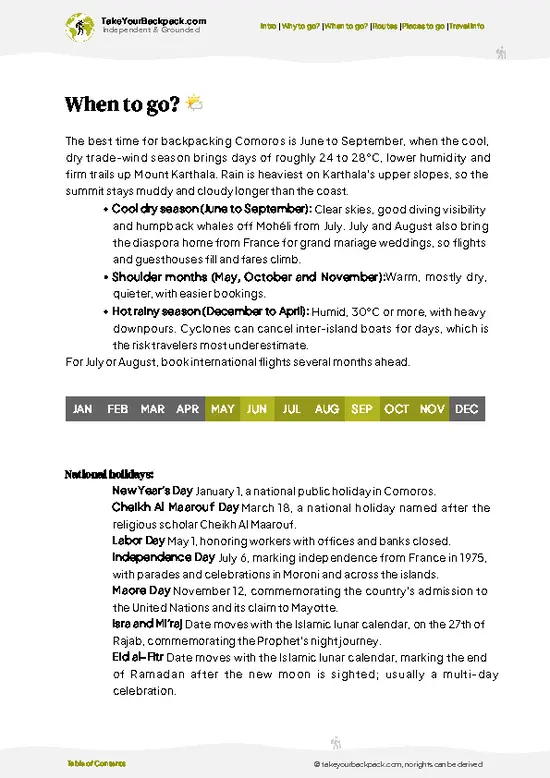
The best time for Domoni is the dry season from May to October, when days are sunny and the humidity eases.
  • Dry Season (May to October): Temperatures run about 22 to 29°C (72 to 84°F), with little rain and cooler nights. Sea conditions are calm for boat trips, and daylight lasts about 11 to 12 hours. Flights and rooms are scarcest in July and August, when diaspora families visit.
  • Hot and Wet Season (November to April): Expect 25 to 32°C (77 to 90°F), heavy downpours, high humidity and occasional cyclone risk, mostly from January to March. Roads and footpaths turn muddy, and some boats stop running. Prices are barely different, but availability is easy.
  • Ramadan and Festivals: Dates shift each year. Daytime eating places may be closed, and the town is quieter by day and lively after sunset. Weddings
… read more 👉
The best time for Domoni is the dry season from May to October, when days are sunny and the humidity eases.
  • Dry Season (May to October): Temperatures run about 22 to 29°C (72 to 84°F), with little rain and cooler nights. Sea conditions are calm for boat trips, and daylight lasts about 11 to 12 hours. Flights and rooms are scarcest in July and August, when diaspora families visit.
  • Hot and Wet Season (November to April): Expect 25 to 32°C (77 to 90°F), heavy downpours, high humidity and occasional cyclone risk, mostly from January to March. Roads and footpaths turn muddy, and some boats stop running. Prices are barely different, but availability is easy.
  • Ramadan and Festivals: Dates shift each year. Daytime eating places may be closed, and the town is quieter by day and lively after sunset. Weddings (grands mariages) can fill the town with music and feasts in the summer months.
  • Vanilla and Clove Harvests: Clove picking runs roughly July to December, filling the air with spice and offering a close look at local farming.
For the best mix of weather and space, aim for May, June or September.


source: climatestotravel.comJANJanuary: below average for travelingFEBFebruary: below average for travelingMARMarch: fair for travelingAPRApril: fair for travelingMAYMay: excellent for travelingJUNJune: excellent for travelingJULJuly: highly recommended for travelingAUGAugust: highly recommended for travelingSEPSeptember: excellent for travelingOCTOctober: highly recommended for travelingNOVNovember: fair for travelingDECDecember: fair for traveling
when-to-go

✈️ The backpacker research shortcutComoros Travel Guide

An offline-friendly backpacking guide with optimized travel routes, ranked highlights, transport advice, and the best areas to stay.
example page 0 from our offline Travel Guide for Comoros
example page 1 from our offline Travel Guide for Comoros
example page 2 from our offline Travel Guide for Comoros
example page 3 from our offline Travel Guide for Comoros
example page 4 from our offline Travel Guide for Comoros
example page 5 from our offline Travel Guide for Comoros
example page 6 from our offline Travel Guide for Comoros
example page 7 from our offline Travel Guide for Comoros
The digital guide (84 pages) contains:
✅ 15 highlights, ranked by travel appeal
✅ Optimized 5, 10 & 15-day travel routes
✅ Cities, national parks, landmarks, beaches
✅ How to get around
✅ Offline-friendly for travel without Wi-Fi
👉 Click to see all 30+ guide features

📅 Plan smarter in minutes, not weeks
✅ Month by month travel advice
✅ Festivals & national holidays
✅ Budget expectations

🗺️ Go to the right places, skip the overrated ones
✅ Honest pros & cons of destinations
✅ Top hikes, parks & viewpoints
✅ Lesser-known places most travelers miss
✅ Clear “worth it vs skip it” guidance

🛏️ Travel smoothly without rookie mistakes
✅ Best areas to stay
✅ Transport systems explained simply
✅ Common scams & safety advice
✅ SIM cards, money & practical tips

🌍 Understand the country, not just visit it
✅ Culture & traditions
✅ 52 Essential phrases & customs
✅ Festivals worth planning around
✅ Traveler-friendly historical context
✅ Insights that make places more meaningful

📱 Built for real travel conditions
✅ Fully downloadable PDF
✅ Works completely offline
✅ Optimized for phone use
✅ Useful in remote areas & buses
✅ Everything in one place
Stop searching, start planning
Get instant access to your full guide. 30‑day money-back guarantee.
+ Add another guide for just

By proceeding you agree to our terms.
Sent to your inbox immediately after payment • 100% Secure Checkout
Best Backpacking Travel Advisor 2025 tourism awardBest Backpacking
Travel Advisor
2025
What others say about Take Your Backpack Guides:
⭐⭐⭐⭐⭐
Fantastic, amazing amount of information!
⭐⭐⭐⭐⭐
My goodness this is amazing, it's what I've been looking for hats off too you!
⭐⭐⭐⭐⭐
I think this is absolutely BRILLIANT
⭐⭐⭐⭐
Very complete and informative. It's still missing places, but I gotta to commend you
⭐⭐⭐⭐⭐
This is truly amazing, thank you, can't wait to explore it with my kids!
⭐⭐⭐⭐⭐
Awesome resource, thank you!
⭐⭐⭐⭐⭐
This is amazing! Can't wait to explore the ones I haven't seen
⭐⭐⭐⭐
I love this! Well done, great idea.
⭐⭐⭐⭐⭐
Thanks for taking the time to make this gem!
⭐⭐⭐⭐⭐
This might be the best website I've ever seen.
⭐⭐⭐⭐⭐
Congratulations, and thank you so much for your work; it's incredibly valuable.
⭐⭐⭐⭐
In all seriousness I think you did a great job pointing out the important spots
⭐⭐⭐⭐⭐
10/10 very good
⭐⭐⭐⭐⭐
As someone who's only just starting to visit regularly this is awesome, thank you.
⭐⭐⭐⭐
Thank you very much! I'm going to visit my dad, it's going to be very useful!
⭐⭐⭐⭐⭐
This is really cool! We'll be travelling for the first time and this definitely come in handy.
⭐⭐⭐⭐⭐
You are now our minister of culture, congratulations 👨‍💼
⭐⭐⭐⭐⭐
Just wanted to tell you that this is a pearl! Going to follow your recommendations.
⭐⭐⭐⭐⭐
This is so cool. I'll definitely be using the resource for my travels soon.
⭐⭐⭐⭐⭐
This is very impressive! Good work.
⭐⭐⭐⭐⭐
This is an amazing and informative site. Very well done!

🛏️ Where to stay?Choosing the right base

Stay in Domoni itself if you want the old town on your doorstep, or in Mutsamudu if you want more beds and choice. Dedicated hostels do not exist on Anjouan, so budget travel here means simple guesthouses and small family-run rooms, usually about €15 to 35 a night.
Domoni near the medina and harbor is the quieter, more local option. Rooms are few, so message ahead and confirm the price, breakfast and water supply. Nights are calm, with the call to prayer at dawn and roosters the main alarm. Walking at night within the old lanes is generally fine, but lighting is patchy, so carry a headlamp. Transport … read more 👉
Stay in Domoni itself if you want the old town on your doorstep, or in Mutsamudu if you want more beds and choice. Dedicated hostels do not exist on Anjouan, so budget travel here means simple guesthouses and small family-run rooms, usually about €15 to 35 a night.
Domoni near the medina and harbor is the quieter, more local option. Rooms are few, so message ahead and confirm the price, breakfast and water supply. Nights are calm, with the call to prayer at dawn and roosters the main alarm. Walking at night within the old lanes is generally fine, but lighting is patchy, so carry a headlamp. Transport links are limited to morning shared cars, which means you can reach the coast road easily but not at all hours.
Mutsamudu, the island capital, has the widest range of budget rooms, more restaurants, ATMs and the main port. It is noisier, with traffic and street activity into the evening, but it is easier to reach by ferry or flight and gives you more transport options for day trips. Most backpackers who want one base for the island pick Mutsamudu and visit Domoni for a day, while those who want a slow stay choose a room in Domoni and accept fewer services. Bring cash, since cards are rarely accepted.

🚌 Getting aroundMoving around without the hassle

A shared taxi-brousse ride around Anjouan usually costs about €0.50 to 2, paid in cash in Comorian francs directly to the driver once you are seated or as you get off. Domoni itself is tiny and walkable, so you will use vehicles mainly to leave it. Roads are narrow and often potholed, vehicles are crowded, and schedules depend on when a car fills.
  • Walking: The medina, harbor and market sit within a ten-minute radius, and the lanes are too narrow for cars anyway. It costs nothing, and you pick up the smells of clove, frying dough and sea salt as you go. Wear sandals you can get muddy, and go early before the heat builds. For anything inside town, this wins by a wide margin.
  • Taxi-brousse (shared minibus or pickup): These run along the coastal road toward Mutsamudu and other towns, often leaving
… read more 👉
A shared taxi-brousse ride around Anjouan usually costs about €0.50 to 2, paid in cash in Comorian francs directly to the driver once you are seated or as you get off. Domoni itself is tiny and walkable, so you will use vehicles mainly to leave it. Roads are narrow and often potholed, vehicles are crowded, and schedules depend on when a car fills.
  • Walking: The medina, harbor and market sit within a ten-minute radius, and the lanes are too narrow for cars anyway. It costs nothing, and you pick up the smells of clove, frying dough and sea salt as you go. Wear sandals you can get muddy, and go early before the heat builds. For anything inside town, this wins by a wide margin.
  • Taxi-brousse (shared minibus or pickup): These run along the coastal road toward Mutsamudu and other towns, often leaving when full. Expect about €1 to 3 for the trip to Mutsamudu, which takes roughly 1 to 1.5 hours. Seats are tight, windows rattle, and bags may ride on the roof. Services thin out after mid-afternoon, so travel in the morning. It is the best value for reaching the island capital.
  • Private taxi: A whole car costs more, about €15 to 30 for a longer island run, depending on how you bargain. You gain comfort, flexibility and a stop at viewpoints, and you lose a good chunk of your daily budget. Split it with other travelers and it becomes reasonable for hard-to-reach spots.
  • Motorbike taxi: Short hops are quick and cost around €0.50 to 2, and the wind helps in the heat. They are less common than cars, and helmets are rarely offered, so use them only for brief trips on quieter roads.
Ask the driver or your host the night before about morning departures, since the first cars leave early and fill fast.

👛 Costs (as of 22 October 2026)Money, prices, and spending tips

A backpacker in Domoni should plan on about €32 a day, with most of your money going to a guesthouse bed and meals.
CategoryBudget RangeLocal Reality
Accommodation (high season, May to October)€15 to 25Simple guesthouse room or private room; no dorms. Book ahead in July and August.
Accommodation (off-season)€12 to 20Rooms are easy to find and prices can be negotiated.
Meals€6 to 10Fish with rice or cassava €2 to 5, street snacks under €2, tea and fried bread for breakfast.
Local transport€1 to 4Shared taxi-brousse fares are cheap; short motorbike rides about €0.50 to 2.
City transport passNot availableNo pass exists. You pay each driver in cash per ride, and Domoni is walkable.
Basic activities and entry fees€0 to 5Walking the medina and harbor is free; a local guide for hikes costs more at €10 to
… read more 👉
A backpacker in Domoni should plan on about €32 a day, with most of your money going to a guesthouse bed and meals.
CategoryBudget RangeLocal Reality
Accommodation (high season, May to October)€15 to 25Simple guesthouse room or private room; no dorms. Book ahead in July and August.
Accommodation (off-season)€12 to 20Rooms are easy to find and prices can be negotiated.
Meals€6 to 10Fish with rice or cassava €2 to 5, street snacks under €2, tea and fried bread for breakfast.
Local transport€1 to 4Shared taxi-brousse fares are cheap; short motorbike rides about €0.50 to 2.
City transport passNot availableNo pass exists. You pay each driver in cash per ride, and Domoni is walkable.
Basic activities and entry fees€0 to 5Walking the medina and harbor is free; a local guide for hikes costs more at €10 to 25.
Miscellaneous€2 to 4Water, SIM data, small tips and laundry.
Total Daily Budget€32Per person, per day, in high season.
Bring euros in cash, since cards and ATMs are unreliable. To save money, eat where fishermen and market workers eat and split taxi rides with other travelers.
⚠️ Prices can change and everyone travels differently, so take this as a rough guide. Hope it helps you plan your adventure!

🚌 Day tripsBest day trips from Domoni

Domoni works as a base for short trips across eastern and central Anjouan, though transport is slow and depends on shared cars, so start early.Mutsamudu Old Town: The island capital has a walled medina, a port, a busy market and the old Friday mosque. Shared cars take about 1 to 1.5 hours, costing roughly €1 to 3 each way, and a day with lunch comes to about €10 to 15. Go on a weekday morning when the market is lively, and leave by mid-afternoon since returning cars thin out.
👉 Explore MutsamuduSima and the Coastal Villages: The road toward Sima passes fishing hamlets, banana groves and lava-rock coves where you can swim. Allow 1 to 2 hours each way by taxi-brousse or a chartered car, with costs about €5 to 20 depending on how you travel. The dry season gives clearer water and firmer roads. … read more 👉
Domoni works as a base for short trips across eastern and central Anjouan, though transport is slow and depends on shared cars, so start early.Mutsamudu Old Town: The island capital has a walled medina, a port, a busy market and the old Friday mosque. Shared cars take about 1 to 1.5 hours, costing roughly €1 to 3 each way, and a day with lunch comes to about €10 to 15. Go on a weekday morning when the market is lively, and leave by mid-afternoon since returning cars thin out.
👉 Explore MutsamuduSima and the Coastal Villages: The road toward Sima passes fishing hamlets, banana groves and lava-rock coves where you can swim. Allow 1 to 2 hours each way by taxi-brousse or a chartered car, with costs about €5 to 20 depending on how you travel. The dry season gives clearer water and firmer roads. A common error is leaving without arranging a return ride, which can strand you in the afternoon.
Moya Beach: This beach on Anjouan’s southern coast has dark sand, clear water and few visitors. Expect about 1.5 to 2 hours each way by road, around €10 to 25 including transport, and bring your own water and food. Weekdays are quietest, and the sea is calmest from May to October.
Lac Dzialandzé and Highland Walks: Inland trails climb through forest and farmland toward the crater lake area, with cooler air and views over the coast. Reaching the trailheads takes about 1 to 2 hours, and a local guide costs around €10 to 25. Go in the dry season, start at dawn, and pack rain gear since clouds gather quickly. First-timers often underestimate how slippery the trails become after rain.

🍲 FoodEating & Drinking in Domoni

Eating in Domoni means fresh fish, coconut and starchy staples cooked simply over charcoal. Look for grilled or fried tuna and snapper from the harbor, served with cassava, breadfruit or green bananas boiled in coconut milk. Anjouan is known for its spices, so expect cloves, vanilla, cinnamon and ylang-ylang to scent the air and flavor sauces. Rougail and langouste (lobster) appear on occasion, with the lobster pricier at around €10 to 20.
Breakfast is often mkatra foutra, a sweet fried flatbread, or fried cassava with tea scented with ginger or cloves. Fresh coconut water from a roadside seller costs about €0.50 to 1. Street food stalls near the harbor and market sell samosas, fried fish and bananas for €0.50 to 3, and a plate of rice with fish at a small local eatery runs about €2 to 5.
Domoni … read more 👉
Eating in Domoni means fresh fish, coconut and starchy staples cooked simply over charcoal. Look for grilled or fried tuna and snapper from the harbor, served with cassava, breadfruit or green bananas boiled in coconut milk. Anjouan is known for its spices, so expect cloves, vanilla, cinnamon and ylang-ylang to scent the air and flavor sauces. Rougail and langouste (lobster) appear on occasion, with the lobster pricier at around €10 to 20.
Breakfast is often mkatra foutra, a sweet fried flatbread, or fried cassava with tea scented with ginger or cloves. Fresh coconut water from a roadside seller costs about €0.50 to 1. Street food stalls near the harbor and market sell samosas, fried fish and bananas for €0.50 to 3, and a plate of rice with fish at a small local eatery runs about €2 to 5.
Domoni is a conservative Muslim town, so alcohol is basically absent and most places stay quiet or close during daytime in Ramadan. Eat with your right hand when sharing a dish, and expect tea or a small sweet to be offered as a welcome. Evening life centers on small cafés and plastic chairs along the waterfront, where fishermen trade stories as the day cools.

🛡️ SafetyScams, Hazards, and Annoyances

Domoni is a calm, conservative town where visitors are noticed, greeted and generally left alone. Violent crime against travelers is rare, and most problems are small: opportunistic theft of phones or cash from bags on crowded shared cars, and persistent offers of paid guiding. Keep valuables in a front pocket or daypack on your lap, and carry only the cash you need for the day.
Solo travelers, including women, generally report friendly treatment, but dress modestly (covered shoulders and knees) and ask before photographing people, especially women and prayer spaces. After dark, the lanes are poorly lit and uneven, so carry a headlamp and stay on main routes or take a motorbike. Alcohol is rarely visible, and public displays of affection draw disapproval.
Currency is the main hassle. Cards and … read more 👉
Domoni is a calm, conservative town where visitors are noticed, greeted and generally left alone. Violent crime against travelers is rare, and most problems are small: opportunistic theft of phones or cash from bags on crowded shared cars, and persistent offers of paid guiding. Keep valuables in a front pocket or daypack on your lap, and carry only the cash you need for the day.
Solo travelers, including women, generally report friendly treatment, but dress modestly (covered shoulders and knees) and ask before photographing people, especially women and prayer spaces. After dark, the lanes are poorly lit and uneven, so carry a headlamp and stay on main routes or take a motorbike. Alcohol is rarely visible, and public displays of affection draw disapproval.
Currency is the main hassle. Cards and ATMs are scarce, so bring euros in cash and exchange in Mutsamudu. Agree on taxi fares before you get in. Swim only where locals do, since currents near rocky headlands can be strong and lifeguards are absent. Political tension flares occasionally on the island, so check local news before you travel.

FAQFrequently asked questions about Domoni

Two days is enough for Domoni itself, which has a compact medina, harbor and market that you can walk in half a day. Add a third or fourth day if you want to hike inland or visit coves such as Moya, which are 1.5 to 2 hours away by road. Most travelers on Anjouan spend about 4 to 5 days on the island overall.
Domoni is generally safe for solo backpackers, with low violent crime and a welcoming, conservative community. Expect petty theft on crowded shared cars and poor lighting after dark, so carry a headlamp and avoid unlit lanes. Dress modestly, carry euros in cash (about €30 to 40 a day covers most needs), and agree on fares before taxi rides.
Domoni is known for its well-preserved medina of coral-stone houses and carved doors, its old fort walls and its working fishing harbor on Anjouan’s east coast. It has a long history as a Swahili-influenced trading town and as the home of Sultan Abdallah I, and its spice-scented lanes carry clove and vanilla aromas. Grilled fish costs about €2 to 5 locally, and the town is best explored on foot in 3 to 4 hours.
⚠️ Things can change over time, so always validate details locally before you go.

Other Comoran cities near Domoni

Explore more nearby:

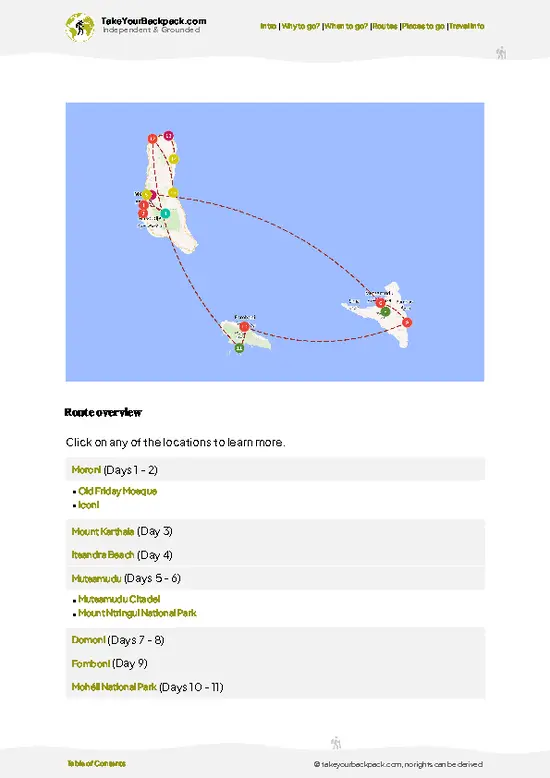
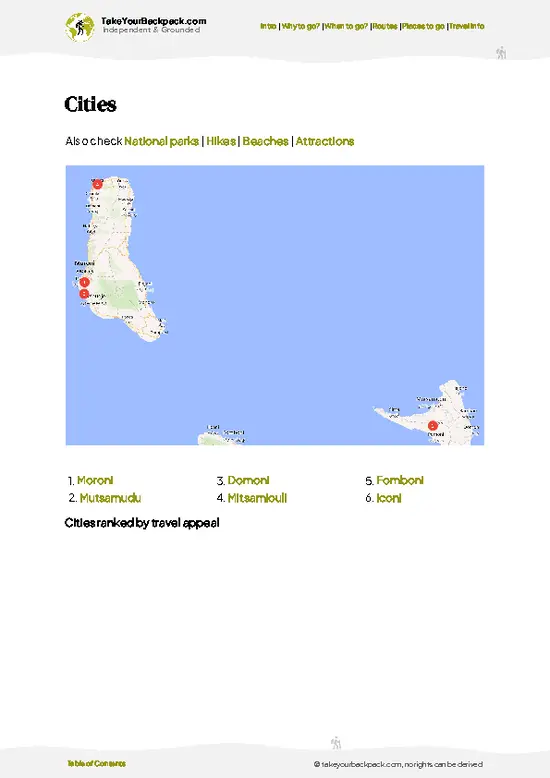
  • Mutsamudu—Hillside medina, sultanate fort, steep port, green Anjouan| 17 km away
  • Fomboni—Mohéli Marine Park gateway, turtle nights, ylang-ylang stills, ferry-paced port| 86 km away
  • Iconi—1819 cliff site, lava-stone citadel, black rock coves| 151 km away

💡 Not sure where to go next?
Create a personalized itinerary for Comoros including Domoni and the places that fit your trip.

Generate my itinerary

👉 Discover all cities

Or checkout all Comoros has to offer (think cities, towns, villages, national parks, hikes, beaches, festivals)
Country photo of Comoros

We 💚 feedbackWhat to keep in mind

Domoni suits travelers who enjoy slow mornings, small conversations and old architecture more than organized sights. The best surprise is how open people are once you greet them properly. I would bring cash, a flashlight, modest clothing and plenty of patience, and I would arrange a bed before arriving.

✍️ Help improve this page!
The information on this page is based on in-depth research, insights shared by experienced travelers, and feedback from the local travel community in Comoros. While every effort is made to keep the information accurate and current, conditions can change — so if you spot anything incorrect or outdated, please get in touch.


🙋‍♂️ Give feedback

👋 Meet the founderWho’s Behind Take Your Backpack?

Johan, backpacker and founder of TakeYourBackpackHi, I’m Johan (Netherlands 🇳🇱), the creator of TakeYourBackpack. Over the past 3 decades, I’ve backpacked through 90+ countries across six continents, gaining extensive experience with independent travel, long-term trips, and overland routes.

This site is built on a combination of firsthand travel experience and carefully curated insights from other backpackers. Many guides are based on places I’ve personally visited, while others bring together tips, observations, and practical advice shared by trusted travelers I’ve met along the way.

The goal is to provide realistic, experience-driven guidance — not generic itineraries — so you can explore destinations with better context, clearer expectations, and more confidence.