×

Comoros🇰🇲 | attractionsMutsamudu CitadelRusted cannons, harbor-view ramparts, medina lanes, carved doors | things to do and best time to go

Explore Lac SaléExplore Chomoni Beach

Backpacking in Mutsamudu Citadel
🌟 Highlightattraction ranked #2
By Johan Kruseman 🇳🇱 | Updated October 22, 2026

Mutsamudu Citadel sits above the harbor, so you can walk up from the waterfront and be back in the lanes of the old town within a morning. It stands on the northern coast of Anjouan in the Comoros. The stone is dark and rough, the cannons are rusted, and the air smells of salt, diesel from the port, and clove and frying dough drifting up from the medina below. Crowds are close to nonexistent, which is the smarter reason to come: you can linger on the ramparts without a single tour group. Facilities are thin and signage is minimal, so experienced travelers go in the cooler early hours, wear shoes with grip for the worn steps, and ask a local to point out the path. The wow-factor is modest, and the story is more atmosphere than spectacle. Expect heat, uneven stone and the odd stray goat. It suits history-minded walkers and photographers who like faded places. It will disappoint anyone wanting restored displays, museum panels or a polished attraction.

Discover everything you want to know in the 📖 Comoros Travel Guide.


example page 0 from our offline Travel Guide for Comoros
example page 1 from our offline Travel Guide for Comoros
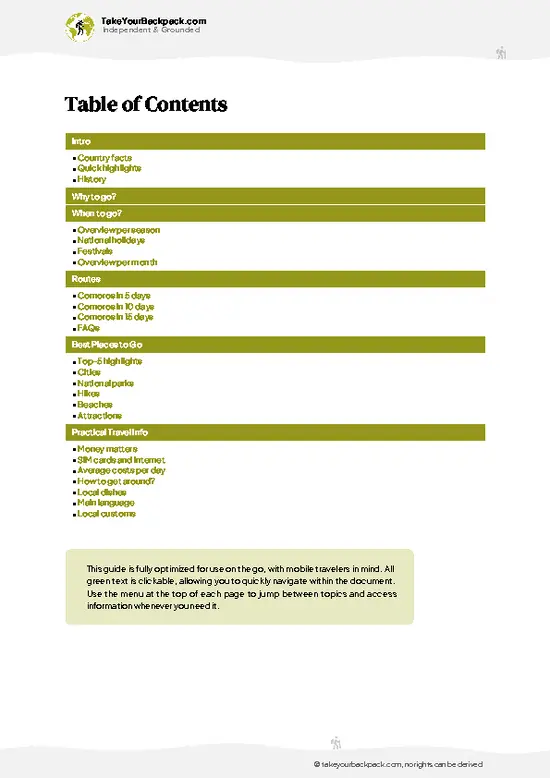
example page 2 from our offline Travel Guide for Comoros
example page 3 from our offline Travel Guide for Comoros
example page 4 from our offline Travel Guide for Comoros
example page 5 from our offline Travel Guide for Comoros
example page 6 from our offline Travel Guide for Comoros
example page 7 from our offline Travel Guide for Comoros
Loading the map 🌍
CLICK TO FILTER
cities
national parks
hikes
beaches
attractions
SHOW COUNTRY’S BESTSHOW ALL

✨ Why go?
Ranked #2 attraction in Comoros
What makes this attraction worth visiting

Mutsamudu Citadel is one of the few places in the Comoros where the Sultanate era is something you can touch. The fortress belongs to the period when Anjouan, then called Ndzuwani, was a trading power, and the harbor below it is still the island’s working port. Standing on the walls, you can see why the site was picked: the harbor mouth lies directly under the cannons, and ships had to pass in front of them.
The second reason is the setting. The citadel is the high point of a walk that runs through the medina of Mutsamudu, with its carved wooden doors, coral-stone houses and lanes narrow enough that two people carrying baskets must turn sideways. Few other places in the archipelago let you combine fort, old quarter and working waterfront on foot.
For a backpacker it also marks a milestone on … read more 👉
Mutsamudu Citadel is one of the few places in the Comoros where the Sultanate era is something you can touch. The fortress belongs to the period when Anjouan, then called Ndzuwani, was a trading power, and the harbor below it is still the island’s working port. Standing on the walls, you can see why the site was picked: the harbor mouth lies directly under the cannons, and ships had to pass in front of them.
The second reason is the setting. The citadel is the high point of a walk that runs through the medina of Mutsamudu, with its carved wooden doors, coral-stone houses and lanes narrow enough that two people carrying baskets must turn sideways. Few other places in the archipelago let you combine fort, old quarter and working waterfront on foot.
For a backpacker it also marks a milestone on the Anjouan leg of a Comoros trip. It is a calm contrast to the volcanic drama of Grande Comore, and it gives context to everything else you see on the island, from the mosques to the clove-scented hills behind town.

💡 HighlightsEssential experiences to have while visiting Mutsamudu Citadel

  1. The citadel ramparts and cannons: the walls are the reason to come. Old iron guns still point toward the harbor, and the stone is warm and pitted from centuries of salt wind.
  2. The harbor view from the walls: you look straight down on the fishing boats, cargo vessels and the shoreline of Mutsamudu. The sounds of engines and shouting float up clearly.
  3. The medina lanes below the fort: narrow alleys of stone houses wind downhill. Walk them slowly and you pass doorways, small shops and people sitting in shade.
  4. Carved wooden doors: many old houses in Mutsamudu keep Swahili-coast style doors with decorated frames. They are best seen close up, where you can make out the chiseled patterns.
  5. The old Friday mosque district: the mosques of the medina are central to daily life here. From the outside you can
… read more 👉
  1. The citadel ramparts and cannons: the walls are the reason to come. Old iron guns still point toward the harbor, and the stone is warm and pitted from centuries of salt wind.
  2. The harbor view from the walls: you look straight down on the fishing boats, cargo vessels and the shoreline of Mutsamudu. The sounds of engines and shouting float up clearly.
  3. The medina lanes below the fort: narrow alleys of stone houses wind downhill. Walk them slowly and you pass doorways, small shops and people sitting in shade.
  4. Carved wooden doors: many old houses in Mutsamudu keep Swahili-coast style doors with decorated frames. They are best seen close up, where you can make out the chiseled patterns.
  5. The old Friday mosque district: the mosques of the medina are central to daily life here. From the outside you can appreciate the whitewashed walls and hear the call to prayer echo between the lanes. Dress modestly and ask before entering.
  6. Mutsamudu port and fish landing: below the citadel the harbor is the island’s main gateway. Watching boats unload crates, sacks and fish gives context to why the fort was built here.
  7. Mutsamudu market: close to the waterfront, the stalls sell vegetables, spices and bananas. Cloves and vanilla, both grown on Anjouan, scent the air nearby.
For a first visit, start with the citadel ramparts and their cannons, because the harbor view from there explains the rest of the town.
Spotted a mistake or missing something? Contact us.

🌤️ When to go?When to go for the best experience

The best window for Mutsamudu Citadel is May to October, when the air is dry and the climb through the old town is comfortable. Anjouan stays warm all year, so the choice is mostly about rain and humidity.
  • Dry Season (May to October): Days run 24 to 29°C (75 to 84°F), with cooler nights and little rain. Stone steps and the ramparts are easier to walk, and views over the harbor are clearest. Days are shorter, with roughly 11.5 hours of light.
  • Hot and Wet Season (November to April): Expect 28 to 32°C (82 to 90°F), heavy humidity and downpours that turn the stairs slick. Cyclone risk peaks January to March, and ferry or flight disruptions are more likely. Daylight stretches to about 13 hours.
  • Crowds and Prices: Visitors are few in any month. Flights and rooms rise a little in July, August and December,
… read more 👉
The best window for Mutsamudu Citadel is May to October, when the air is dry and the climb through the old town is comfortable. Anjouan stays warm all year, so the choice is mostly about rain and humidity.
  • Dry Season (May to October): Days run 24 to 29°C (75 to 84°F), with cooler nights and little rain. Stone steps and the ramparts are easier to walk, and views over the harbor are clearest. Days are shorter, with roughly 11.5 hours of light.
  • Hot and Wet Season (November to April): Expect 28 to 32°C (82 to 90°F), heavy humidity and downpours that turn the stairs slick. Cyclone risk peaks January to March, and ferry or flight disruptions are more likely. Daylight stretches to about 13 hours.
  • Crowds and Prices: Visitors are few in any month. Flights and rooms rise a little in July, August and December, when diaspora families come home, so book ahead then.
  • Ramadan and Holidays: Opening hours around the old town can shift and many food stalls close by day, so plan the visit for mornings.
Go in the early morning, before the heat builds and while the fishing boats are still landing their catch below the walls.


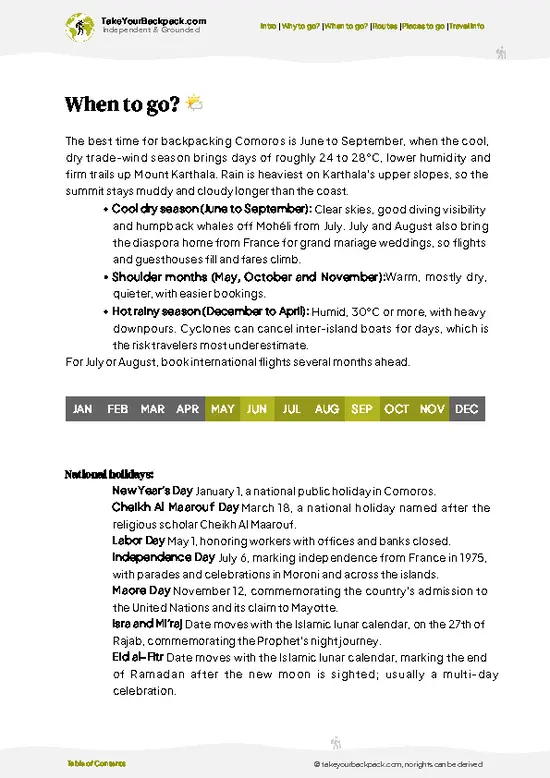
source: climatestotravel.comJANJanuary: below average for travelingFEBFebruary: below average for travelingMARMarch: fair for travelingAPRApril: fair for travelingMAYMay: excellent for travelingJUNJune: excellent for travelingJULJuly: highly recommended for travelingAUGAugust: highly recommended for travelingSEPSeptember: excellent for travelingOCTOctober: excellent for travelingNOVNovember: fair for travelingDECDecember: good for traveling
when-to-go

✈️ The backpacker research shortcutComoros Travel Guide

An offline-friendly backpacking guide with optimized travel routes, ranked highlights, transport advice, and the best areas to stay.
example page 0 from our offline Travel Guide for Comoros
example page 1 from our offline Travel Guide for Comoros
example page 2 from our offline Travel Guide for Comoros
example page 3 from our offline Travel Guide for Comoros
example page 4 from our offline Travel Guide for Comoros
example page 5 from our offline Travel Guide for Comoros
example page 6 from our offline Travel Guide for Comoros
example page 7 from our offline Travel Guide for Comoros
The digital guide (84 pages) contains:
✅ 15 highlights, ranked by travel appeal
✅ Optimized 5, 10 & 15-day travel routes
✅ Cities, national parks, landmarks, beaches
✅ How to get around
✅ Offline-friendly for travel without Wi-Fi
👉 Click to see all 30+ guide features

📅 Plan smarter in minutes, not weeks
✅ Month by month travel advice
✅ Festivals & national holidays
✅ Budget expectations

🗺️ Go to the right places, skip the overrated ones
✅ Honest pros & cons of destinations
✅ Top hikes, parks & viewpoints
✅ Lesser-known places most travelers miss
✅ Clear “worth it vs skip it” guidance

🛏️ Travel smoothly without rookie mistakes
✅ Best areas to stay
✅ Transport systems explained simply
✅ Common scams & safety advice
✅ SIM cards, money & practical tips

🌍 Understand the country, not just visit it
✅ Culture & traditions
✅ 52 Essential phrases & customs
✅ Festivals worth planning around
✅ Traveler-friendly historical context
✅ Insights that make places more meaningful

📱 Built for real travel conditions
✅ Fully downloadable PDF
✅ Works completely offline
✅ Optimized for phone use
✅ Useful in remote areas & buses
✅ Everything in one place
Stop searching, start planning
Get instant access to your full guide. 30‑day money-back guarantee.
+ Add another guide for just

By proceeding you agree to our terms.
Sent to your inbox immediately after payment • 100% Secure Checkout
Best Backpacking Travel Advisor 2025 tourism awardBest Backpacking
Travel Advisor
2025
What others say about Take Your Backpack Guides:
⭐⭐⭐⭐⭐
Fantastic, amazing amount of information!
⭐⭐⭐⭐⭐
My goodness this is amazing, it's what I've been looking for hats off too you!
⭐⭐⭐⭐⭐
I think this is absolutely BRILLIANT
⭐⭐⭐⭐
Very complete and informative. It's still missing places, but I gotta to commend you
⭐⭐⭐⭐⭐
This is truly amazing, thank you, can't wait to explore it with my kids!
⭐⭐⭐⭐⭐
Awesome resource, thank you!
⭐⭐⭐⭐⭐
This is amazing! Can't wait to explore the ones I haven't seen
⭐⭐⭐⭐
I love this! Well done, great idea.
⭐⭐⭐⭐⭐
Thanks for taking the time to make this gem!
⭐⭐⭐⭐⭐
This might be the best website I've ever seen.
⭐⭐⭐⭐⭐
Congratulations, and thank you so much for your work; it's incredibly valuable.
⭐⭐⭐⭐
In all seriousness I think you did a great job pointing out the important spots
⭐⭐⭐⭐⭐
10/10 very good
⭐⭐⭐⭐⭐
As someone who's only just starting to visit regularly this is awesome, thank you.
⭐⭐⭐⭐
Thank you very much! I'm going to visit my dad, it's going to be very useful!
⭐⭐⭐⭐⭐
This is really cool! We'll be travelling for the first time and this definitely come in handy.
⭐⭐⭐⭐⭐
You are now our minister of culture, congratulations 👨‍💼
⭐⭐⭐⭐⭐
Just wanted to tell you that this is a pearl! Going to follow your recommendations.
⭐⭐⭐⭐⭐
This is so cool. I'll definitely be using the resource for my travels soon.
⭐⭐⭐⭐⭐
This is very impressive! Good work.
⭐⭐⭐⭐⭐
This is an amazing and informative site. Very well done!

🛏️ Where to stay?Best areas to stay in Comoros

Mutsamudu town itself is the best base, and the old medina around the port puts the citadel within a ten to fifteen minute walk. You will find the most choice in the lower streets near the harbor and the main market, where small guesthouses and simple family-run lodgings sit close to shared taxis, money changers and cheap eateries. Evenings here are lively without being rowdy, with men gathered at tea stands and fishermen mending nets, and solo travelers generally find it safe if they stick to lit streets after dark. Expect to pay about €15 to 40 a night for a basic room, though hot water and … read more 👉
Mutsamudu town itself is the best base, and the old medina around the port puts the citadel within a ten to fifteen minute walk. You will find the most choice in the lower streets near the harbor and the main market, where small guesthouses and simple family-run lodgings sit close to shared taxis, money changers and cheap eateries. Evenings here are lively without being rowdy, with men gathered at tea stands and fishermen mending nets, and solo travelers generally find it safe if they stick to lit streets after dark. Expect to pay about €15 to 40 a night for a basic room, though hot water and reliable air conditioning are not guaranteed. Social hostel-style dorms barely exist in the Comoros, so conversation comes from guesthouse owners, other travelers at breakfast tables and local university students near the center. The upper residential neighborhoods, uphill from the medina, are quieter and cooler, but you will walk steep lanes with your bags. Staying farther along the coast toward Domoni or the beaches of Moya gives more space and swimming, yet it means relying on shared taxis that thin out in the evening. For a first visit, choose the harbor area, and book ahead in July, August and December.

👛 Costs (as of 22 October 2026)What things cost and how to budget

A realistic budget for Mutsamudu Citadel is about €38 a day, with the site itself costing little or nothing. Prices are paid in Comorian francs, and cash is far more useful than cards, so bring euros to exchange.
CategoryBudget RangeLocal Reality
Citadel entry€0 to 2No formal ticket office. A local may offer to guide you and expect a small tip.
Guide (optional)€3 to 8Informal guides explain the ramparts, old cannons and the medina around them.
Accommodation (high season)€15 to 25Simple guesthouse rooms, usually private, often with fan and sometimes air conditioning.
Food€5 to 9Grilled fish, cassava, rice and coconut dishes at small restaurants and market stalls.
Local transport€1 to 4Shared taxis and minibuses along the coast cost little. Within town you walk.
Water and snacks€1 to 2Bottled water
… read more 👉
A realistic budget for Mutsamudu Citadel is about €38 a day, with the site itself costing little or nothing. Prices are paid in Comorian francs, and cash is far more useful than cards, so bring euros to exchange.
CategoryBudget RangeLocal Reality
Citadel entry€0 to 2No formal ticket office. A local may offer to guide you and expect a small tip.
Guide (optional)€3 to 8Informal guides explain the ramparts, old cannons and the medina around them.
Accommodation (high season)€15 to 25Simple guesthouse rooms, usually private, often with fan and sometimes air conditioning.
Food€5 to 9Grilled fish, cassava, rice and coconut dishes at small restaurants and market stalls.
Local transport€1 to 4Shared taxis and minibuses along the coast cost little. Within town you walk.
Water and snacks€1 to 2Bottled water is sold in small shops. Bring a hat for the exposed climb.
Total Daily Budget€38Per person, per day, in high season.
⚠️ Prices can change and everyone travels differently, so take this as a rough guide. Hope it helps you plan your adventure!

FAQCommon questions from travelers

Half a day is enough for Mutsamudu Citadel, and about 1 to 2 hours covers the ramparts and old cannons. Add another 1 to 2 hours to wander the medina, the port and the old mosque quarter just below. Starting in the morning keeps the climb cooler.
Yes for most backpackers, because Mutsamudu Citadel costs little or nothing to enter, with only an optional guide at roughly €3 to 8. For that you get views over the harbor and a clear look at the 19th-century fortifications of the old sultanate. It is not a big attraction, so pair it with the medina walk.
Fly into Ouani Airport on Anjouan, then take a taxi of about 30 to 45 minutes to Mutsamudu, usually €10 to 20 for the car. From the capital area on Grande Comore you can also fly or take a ferry across. Once in town, Mutsamudu Citadel is a 10 to 15 minute walk uphill from the port.
⚠️ Things can change over time, so always validate details locally before you go.

Other Comoran attractions near Mutsamudu Citadel

Explore more nearby:

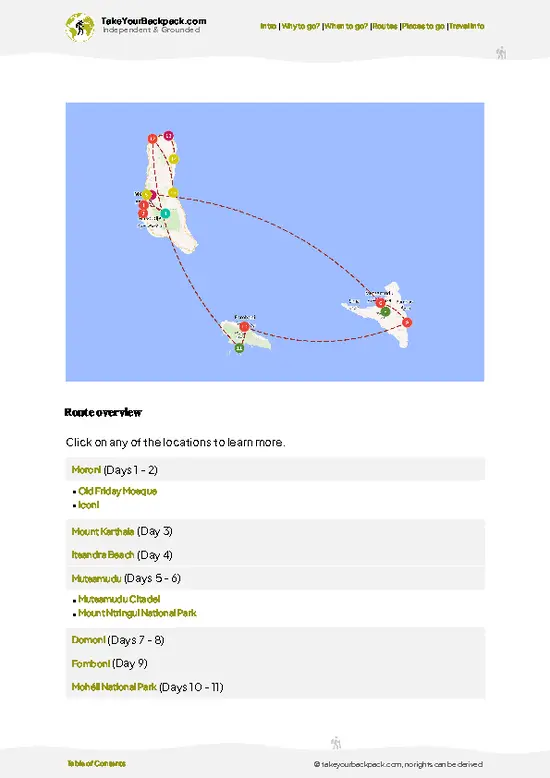
  • Old Friday Mosque—Coral-stone minaret, dhow harbor, Volo Volo market, medina doors| 133 km away
  • Lac Salé—Green crater lake, sulfur smell, tidal seepage, black basalt coast| 142 km away

💡 Not sure where to go next?
Create a personalized itinerary for Comoros including Mutsamudu Citadel and the places that fit your trip.

Generate my itinerary

👉 Discover all attractions

Or checkout all Comoros has to offer (think cities, towns, villages, national parks, hikes, beaches, festivals)
Country photo of Comoros

We 💚 feedbackIs it worth it?

Mutsamudu Citadel looks best from the gaps between its walls, where the medina roofs tumble down toward the water. Most first-timers photograph the cannons and leave, but I would stay for the harbor sounds: the winches, the hull-knocking and the shouts carry up clearly. Bring water, wear solid shoes, and go early before the stone heats up.

✍️ Help improve this page!
The information on this page is based on in-depth research, insights shared by experienced travelers, and feedback from the local travel community in Comoros. While every effort is made to keep the information accurate and current, conditions can change — so if you spot anything incorrect or outdated, please get in touch.


🙋‍♂️ Give feedback

👋 Meet the founderWho’s Behind Take Your Backpack?

Johan, backpacker and founder of TakeYourBackpackHi, I’m Johan (Netherlands 🇳🇱), the creator of TakeYourBackpack. Over the past 3 decades, I’ve backpacked through 90+ countries across six continents, gaining extensive experience with independent travel, long-term trips, and overland routes.

This site is built on a combination of firsthand travel experience and carefully curated insights from other backpackers. Many guides are based on places I’ve personally visited, while others bring together tips, observations, and practical advice shared by trusted travelers I’ve met along the way.

The goal is to provide realistic, experience-driven guidance — not generic itineraries — so you can explore destinations with better context, clearer expectations, and more confidence.