
×

Cook Islands🇨🇰 | regionsAitutaki LagoonOne Foot Island sandbar, post office stamp, motu snorkeling, scooter ring road | things to do and best time to go

Explore Takitumu Conservation AreaExplore Atiu

Backpacking in Aitutaki Lagoon
🏆 Top pickregion ranked #2
By Johan Kruseman 🇳🇱 | Updated October 15, 2026

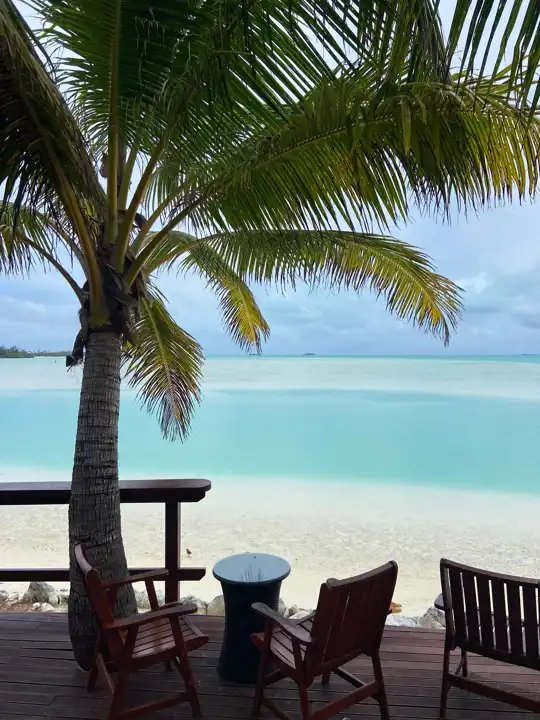
The boat engine cuts, and you drop thigh-deep into water so clear and so warm that the sand ripples show every footprint you leave. That is a typical stop on the lagoon, and it is the reason people fly out here. Aitutaki Lagoon beach sits in the southern Cook Islands, a short flight north of Rarotonga, and the shoreline around the main island is quiet, clean and almost empty of litter. Swimming is calm and shallow inside the reef, snorkeling is easy off the motus, and surf is nonexistent. Crowds stay thin, though the day-cruise boats gather at the same few sandbars around late morning. Go early or late and you will have them alone. Budget food comes from small roadside stalls and island cafes, and cheaper guesthouses sit a scooter ride from the sand. Skip the idea of a party scene. The detail that stays with you is the bone-white sand at One Foot Island, where a tiny post office stamps your passport.

Discover everything you want to know in the 📖 Cook Islands Travel Guide.


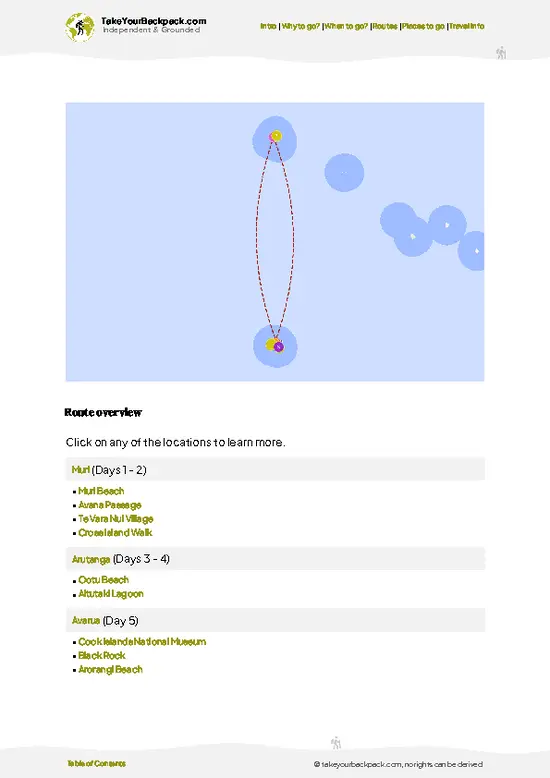
example page 0 from our offline Travel Guide for Cook Islands
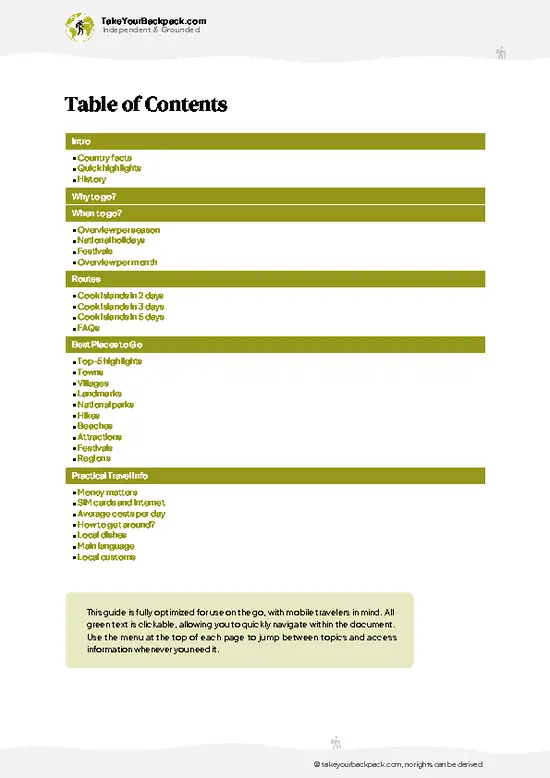
example page 1 from our offline Travel Guide for Cook Islands
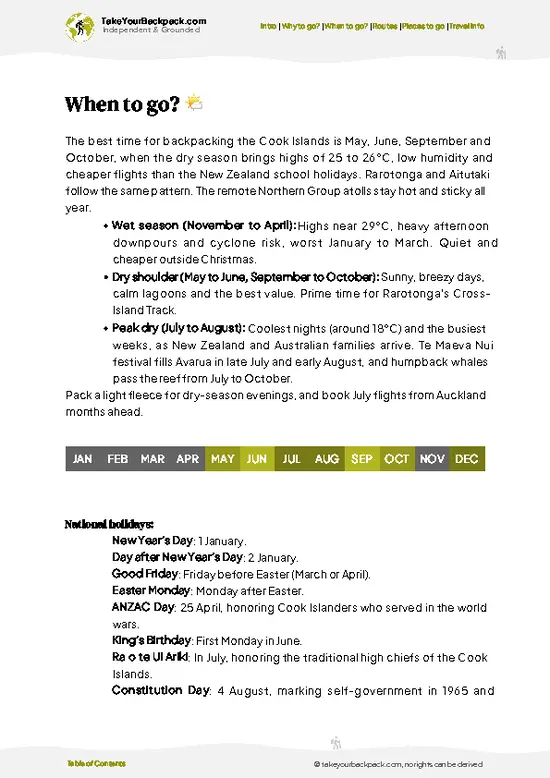
example page 2 from our offline Travel Guide for Cook Islands
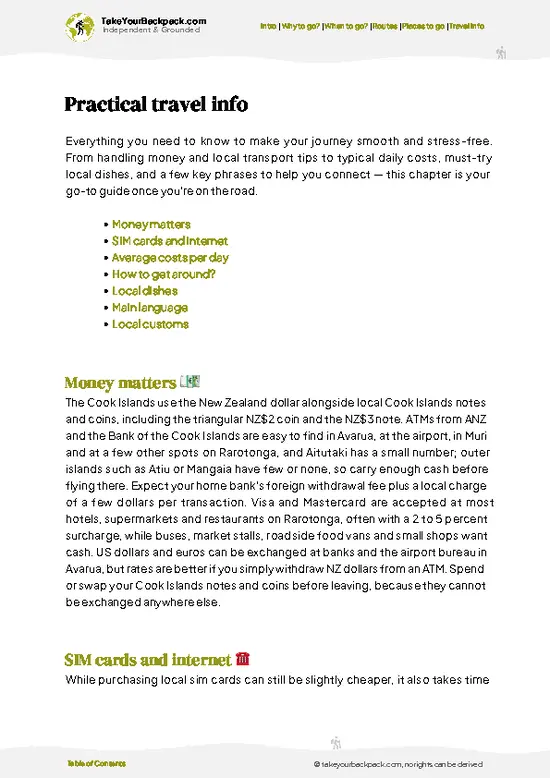
example page 3 from our offline Travel Guide for Cook Islands
example page 4 from our offline Travel Guide for Cook Islands
example page 5 from our offline Travel Guide for Cook Islands
example page 6 from our offline Travel Guide for Cook Islands
example page 7 from our offline Travel Guide for Cook Islands
Loading the map 🌍
CLICK TO FILTER
towns
villages
landmarks
national parks
hikes
beaches
attractions
festivals
regions
SHOW COUNTRY’S BESTSHOW ALL

✨ Why go?
Ranked #2 region in Cook Islands
The unique appeal for travelers

Backpackers stop here because the lagoon is the one place in the Cook Islands where the postcard turquoise is real and reachable without a luxury budget. A shared lagoon cruise covers several motus and snorkel stops in one day, and the cheaper operators still include a barbecue lunch on the sand. That makes it the best-value splurge on the island.

The second reason is the pace. Aitutaki is small enough that a rented scooter loops the entire coast in an afternoon, so you can swim, eat and be back in your guesthouse before sunset. Nobody is rushing you, and the guesthouse owners will happily tell you which quiet stretch to try that day.

Then there is the place in the route. Aitutaki works as the exhale after Rarotonga, a short flight north that lets you add a second island to a trip without … read more 👉
Backpackers stop here because the lagoon is the one place in the Cook Islands where the postcard turquoise is real and reachable without a luxury budget. A shared lagoon cruise covers several motus and snorkel stops in one day, and the cheaper operators still include a barbecue lunch on the sand. That makes it the best-value splurge on the island.

The second reason is the pace. Aitutaki is small enough that a rented scooter loops the entire coast in an afternoon, so you can swim, eat and be back in your guesthouse before sunset. Nobody is rushing you, and the guesthouse owners will happily tell you which quiet stretch to try that day.

Then there is the place in the route. Aitutaki works as the exhale after Rarotonga, a short flight north that lets you add a second island to a trip without crossing an ocean. The One Foot Island passport stamp is a small, silly souvenir that makes the day feel like an actual destination rather than just a swim stop. Pack reef shoes, because coral rubble is common near the shallow edges.

💡 HighlightsPlaces and moments you shouldn't skip

  1. One Foot Island (Tapuaetai): The lagoon’s signature stop, with a long pale sandbar and shallows that glow in several shades of blue. The small post office here will stamp your passport for a small fee. Arrive on a morning cruise or, better, on a later boat when the first groups have left.
  2. Lagoon snorkeling stops: The shallow coral patches inside the reef hold parrotfish, butterflyfish and the occasional giant clam. Visibility is usually excellent, and the water is calm enough for beginners.
  3. Maina Island sandbar: A tiny motu at the southern end of the lagoon with soft sand and good light for photos. It is quiet and ideal for a slow swim between cruise stops.
  4. Scooter loop of the island coast: The ring road passes small churches, taro patches and open beach access points where you can stop for a
… read more 👉
  1. One Foot Island (Tapuaetai): The lagoon’s signature stop, with a long pale sandbar and shallows that glow in several shades of blue. The small post office here will stamp your passport for a small fee. Arrive on a morning cruise or, better, on a later boat when the first groups have left.
  2. Lagoon snorkeling stops: The shallow coral patches inside the reef hold parrotfish, butterflyfish and the occasional giant clam. Visibility is usually excellent, and the water is calm enough for beginners.
  3. Maina Island sandbar: A tiny motu at the southern end of the lagoon with soft sand and good light for photos. It is quiet and ideal for a slow swim between cruise stops.
  4. Scooter loop of the island coast: The ring road passes small churches, taro patches and open beach access points where you can stop for a dip with nobody around. It takes a few hours at an easy pace.
  5. Sunset on the western shore: The sky turns orange over the water, and locals fish from the shallows. Evenings here are for quiet dinners, not clubs.
If time is short, skip the scooter loop and spend the hours on the lagoon cruise instead.
Spotted a mistake or missing something? Contact us.

Things to do around Aitutaki Lagoon

Ratings based on Tripadvisor reviews. When you book through this link, you support our work at no extra cost to you.

⌛️ 5 daysHow to make the most of Aitutaki Lagoon

Day 1: Arutanga: Arrive on one of the daily Air Rarotonga flights and head straight for the main village on the west side. Arutanga is where the island’s pace is set: one ring road, scooters for rent, and nothing that needs a bus timetable. Pick up a scooter on arrival, because getting around by your own wheels is what lets you string the days together. Walk the harbor, look at the Cook Islands Christian Church (built in the 1800s), and eat early, since kitchens close soon after dark.

Day 2: Aitutaki Lagoon: Spend the whole day on the water with a motor-boat lagoon cruise. Boats leave from the Arutanga harbor area, run on tides and weather, and book out, so reserve the day before. The reason to go early in your stay is flexibility: if wind cancels the trip, you have days in hand to rebook. … read more 👉
Day 1: Arutanga: Arrive on one of the daily Air Rarotonga flights and head straight for the main village on the west side. Arutanga is where the island’s pace is set: one ring road, scooters for rent, and nothing that needs a bus timetable. Pick up a scooter on arrival, because getting around by your own wheels is what lets you string the days together. Walk the harbor, look at the Cook Islands Christian Church (built in the 1800s), and eat early, since kitchens close soon after dark.

Day 2: Aitutaki Lagoon: Spend the whole day on the water with a motor-boat lagoon cruise. Boats leave from the Arutanga harbor area, run on tides and weather, and book out, so reserve the day before. The reason to go early in your stay is flexibility: if wind cancels the trip, you have days in hand to rebook. Expect snorkeling stops among giant clams and parrotfish, a pause at One Foot Island with its passport stamp, and a long beach lunch. This is the day that justifies the whole trip. The lagoon’s pale shallows shift through blues you will not believe on the first look.

Day 3: Maungapu: Trade water for height. Maungapu is the island’s highest point, reached by a steady footpath through scrub and bush that takes roughly an hour up. Go in the cooler morning, then spend the afternoon looping the ring road on your scooter, stopping at empty beaches on the east and north sides. The island is small enough that you never backtrack far, so the pace stays slow and unhurried.

Day 4: Tapuaetai Detour: Take the detour out to the motu (small islets) on the far side of the lagoon. Arrange a drop-off with a boat operator or join a small snorkel trip to a quieter motu away from the main cruise stops. It adds a quiet, near-private beach day without changing where you sleep or how you move, and you are back at your bed by dusk.

Day 5: Ring Road: Use the last morning for what you skipped. Visit the marae (old ceremonial grounds) inland, buy fruit at a roadside stall, and return the scooter in good time. Flights leave through the day, so keep your afternoon loose and the buffer wide.

🌤️ When to go?Seasonal considerations and timing

  • Dry Season (May to October): Days run 25 to 28°C (77 to 82°F) with lower humidity and steady southeast trades. Lagoon visibility is at its best and the cruise boats run most days.
  • Peak Months (July to September): Expect the fullest flights from Rarotonga and the highest room rates. Daylight lasts about 11 hours, roughly 7:15am to 6:15pm, so beach time ends earlier than you might plan.
  • Wet Season (November to April): Temperatures climb to 28 to 31°C (82 to 88°F), humidity is heavy, and squalls come through in short, loud bursts. Daylight stretches to about 13 hours. Cyclone risk peaks from January to March, though most days are still bright. Rooms are cheaper and the lagoon is quiet.
  • Shoulder Weeks (late April, November): Warm water, thin crowds and lower prices, with a modest chance of rain.
Book … read more 👉
  • Dry Season (May to October): Days run 25 to 28°C (77 to 82°F) with lower humidity and steady southeast trades. Lagoon visibility is at its best and the cruise boats run most days.
  • Peak Months (July to September): Expect the fullest flights from Rarotonga and the highest room rates. Daylight lasts about 11 hours, roughly 7:15am to 6:15pm, so beach time ends earlier than you might plan.
  • Wet Season (November to April): Temperatures climb to 28 to 31°C (82 to 88°F), humidity is heavy, and squalls come through in short, loud bursts. Daylight stretches to about 13 hours. Cyclone risk peaks from January to March, though most days are still bright. Rooms are cheaper and the lagoon is quiet.
  • Shoulder Weeks (late April, November): Warm water, thin crowds and lower prices, with a modest chance of rain.
Book the inter-island flight early for July and August, since seats on the small planes sell out first.


source: climatestotravel.comJANJanuary: fair for travelingFEBFebruary: fair for travelingMARMarch: fair for travelingAPRApril: fair for travelingMAYMay: highly recommended for travelingJUNJune: excellent for travelingJULJuly: excellent for travelingAUGAugust: excellent for travelingSEPSeptember: highly recommended for travelingOCTOctober: highly recommended for travelingNOVNovember: fair for travelingDECDecember: fair for traveling
when-to-go

✈️ The backpacker research shortcutCook Islands Travel Guide

An offline-friendly backpacking guide with optimized travel routes, ranked highlights, transport advice, and the best areas to stay.
example page 0 from our offline Travel Guide for Cook Islands
example page 1 from our offline Travel Guide for Cook Islands
example page 2 from our offline Travel Guide for Cook Islands
example page 3 from our offline Travel Guide for Cook Islands
example page 4 from our offline Travel Guide for Cook Islands
example page 5 from our offline Travel Guide for Cook Islands
example page 6 from our offline Travel Guide for Cook Islands
example page 7 from our offline Travel Guide for Cook Islands
The digital guide (99 pages) contains:
✅ 24 highlights, ranked by travel appeal
✅ Optimized 2, 3 & 5-day travel routes
✅ Cities, national parks, landmarks, beaches
✅ How to get around
✅ Offline-friendly for travel without Wi-Fi
👉 Click to see all 30+ guide features

📅 Plan smarter in minutes, not weeks
✅ Month by month travel advice
✅ Festivals & national holidays
✅ Budget expectations

🗺️ Go to the right places, skip the overrated ones
✅ Honest pros & cons of destinations
✅ Top hikes, parks & viewpoints
✅ Lesser-known places most travelers miss
✅ Clear “worth it vs skip it” guidance

🛏️ Travel smoothly without rookie mistakes
✅ Best areas to stay
✅ Transport systems explained simply
✅ Common scams & safety advice
✅ SIM cards, money & practical tips

🌍 Understand the country, not just visit it
✅ Culture & traditions
✅ 52 Essential phrases & customs
✅ Festivals worth planning around
✅ Traveler-friendly historical context
✅ Insights that make places more meaningful

📱 Built for real travel conditions
✅ Fully downloadable PDF
✅ Works completely offline
✅ Optimized for phone use
✅ Useful in remote areas & buses
✅ Everything in one place
Stop searching, start planning
Get instant access to your full guide. 30‑day money-back guarantee.
+ Add another guide for just

By proceeding you agree to our terms.
Sent to your inbox immediately after payment • 100% Secure Checkout
Best Backpacking Travel Advisor 2025 tourism awardBest Backpacking
Travel Advisor
2025
What others say about Take Your Backpack Guides:
⭐⭐⭐⭐⭐
Fantastic, amazing amount of information!
⭐⭐⭐⭐⭐
My goodness this is amazing, it's what I've been looking for hats off too you!
⭐⭐⭐⭐⭐
I think this is absolutely BRILLIANT
⭐⭐⭐⭐
Very complete and informative. It's still missing places, but I gotta to commend you
⭐⭐⭐⭐⭐
This is truly amazing, thank you, can't wait to explore it with my kids!
⭐⭐⭐⭐⭐
Awesome resource, thank you!
⭐⭐⭐⭐⭐
This is amazing! Can't wait to explore the ones I haven't seen
⭐⭐⭐⭐
I love this! Well done, great idea.
⭐⭐⭐⭐⭐
Thanks for taking the time to make this gem!
⭐⭐⭐⭐⭐
This might be the best website I've ever seen.
⭐⭐⭐⭐⭐
Congratulations, and thank you so much for your work; it's incredibly valuable.
⭐⭐⭐⭐
In all seriousness I think you did a great job pointing out the important spots
⭐⭐⭐⭐⭐
10/10 very good
⭐⭐⭐⭐⭐
As someone who's only just starting to visit regularly this is awesome, thank you.
⭐⭐⭐⭐
Thank you very much! I'm going to visit my dad, it's going to be very useful!
⭐⭐⭐⭐⭐
This is really cool! We'll be travelling for the first time and this definitely come in handy.
⭐⭐⭐⭐⭐
You are now our minister of culture, congratulations 👨‍💼
⭐⭐⭐⭐⭐
Just wanted to tell you that this is a pearl! Going to follow your recommendations.
⭐⭐⭐⭐⭐
This is so cool. I'll definitely be using the resource for my travels soon.
⭐⭐⭐⭐⭐
This is very impressive! Good work.
⭐⭐⭐⭐⭐
This is an amazing and informative site. Very well done!

🛏️ Where to stay?How to pick the right area

The best base for backpackers is the southwest and west coast of Aitutaki, from Arutanga to the Amuri side, where the lagoon is shallow, calm and a short walk from your door.

Arutanga, the main settlement, has the harbor, the little shops, the bakery and the island’s few cafes. It is the most practical spot if you want groceries, an ATM and an easy scooter rental. Budget rooms and self-catering units here are the cheapest on the island, and you will meet other travelers at the harbor and the evening food stalls.

Amuri, toward the north end, and the southern shore are quieter and sit right on … read more 👉
The best base for backpackers is the southwest and west coast of Aitutaki, from Arutanga to the Amuri side, where the lagoon is shallow, calm and a short walk from your door.

Arutanga, the main settlement, has the harbor, the little shops, the bakery and the island’s few cafes. It is the most practical spot if you want groceries, an ATM and an easy scooter rental. Budget rooms and self-catering units here are the cheapest on the island, and you will meet other travelers at the harbor and the evening food stalls.

Amuri, toward the north end, and the southern shore are quieter and sit right on the white sand looking over the lagoon. Many guesthouses have kitchens, so you can cook with fruit and fish from local stalls and cut costs. The area is flat, so a bicycle works, though a scooter saves time in the afternoon heat.

The eastern side is more remote and has fewer places to eat. Staying central keeps you close to lagoon cruise pickups, which collect from the main harbor and wharf area. Book early from July to September, because the island has limited beds and the cheapest rooms go first.

🚌 Getting aroundMoving around without the hassle

Booking a lagoon cruise before you have a scooter or a ride sorted is the slip that burns the most time, because the cruise boats collect from specific spots around the island and the day only works if you are standing at the right wharf when the crew arrives. Aitutaki is small, about 18 kilometers around the main road, and most backpackers get around by rented scooter or bicycle. It is reliable and easy, with one loop road, almost no traffic and nothing to get lost on.

  • Scooter rental: Expect about US$25 to 35 for 24 hours, and book it the day you land since the good ones go early. A full loop takes under an hour without stops, but you will stop, for the coconut palms leaning over the road, the white churches and the pull-offs where the water turns pale turquoise.
  • Bicycle: Roughly US$8 to
… read more 👉
Booking a lagoon cruise before you have a scooter or a ride sorted is the slip that burns the most time, because the cruise boats collect from specific spots around the island and the day only works if you are standing at the right wharf when the crew arrives. Aitutaki is small, about 18 kilometers around the main road, and most backpackers get around by rented scooter or bicycle. It is reliable and easy, with one loop road, almost no traffic and nothing to get lost on.

  • Scooter rental: Expect about US$25 to 35 for 24 hours, and book it the day you land since the good ones go early. A full loop takes under an hour without stops, but you will stop, for the coconut palms leaning over the road, the white churches and the pull-offs where the water turns pale turquoise.
  • Bicycle: Roughly US$8 to 12 a day, and the island is flat enough that you will not sweat much until midday. You roll along at village speed, hear roosters and kids shouting hello, and can stop at any roadside stall for a cold drink.
  • Guesthouse or tour pickup: Most accommodations and lagoon cruise operators collect you from your door, often free or for a few dollars. You can read, doze or chat on the ride, and arrive at the boat without touching a map.
  • Taxi and airport shuttle: Rides from the airport to most stays run about US$5 to 15, and many hosts meet the Air Rarotonga flights, which land several times a day. You step off the plane to a flower lei and a short drive past taro patches into your first sunset.
  • Lagoon boat and kayak: Full-day cruises cost about US$100 to 150 and visit the motu (small islets) such as One Foot Island, with snorkel stops and a beach lunch. Kayaks and paddleboards from the shore are cheaper and put you over the shallow coral in near-silence.

Go clockwise around the loop in the morning, when the sun is behind you and the lagoon colors are brightest, and fill the tank at the island’s one fuel stop before heading out.

🍲 FoodWhat to Eat & Drink

Start with ika mata, raw tuna or local fish cured in lime juice and tossed with coconut cream, cucumber and onion. It tastes cold, sharp and sweet at once, and on Aitutaki the fish is often caught that morning. Also try rukau, creamy taro leaves cooked soft like spinach, and taro or kumara (sweet potato) roasted in an earth oven called an umu, which gives everything a smoky depth. Coconut water from a freshly cut nut is the daily drink, and you can sip Cook Islands beer in the evening.

Backpackers mostly eat at small island nights, casual beachside cafés, food trucks and the little village stores that sell fresh bread and basics. A Friday or Saturday buffet with drumming and dancing is the social event of the week. Ordering ahead is smart, since many kitchens close early and supplies come … read more 👉
Start with ika mata, raw tuna or local fish cured in lime juice and tossed with coconut cream, cucumber and onion. It tastes cold, sharp and sweet at once, and on Aitutaki the fish is often caught that morning. Also try rukau, creamy taro leaves cooked soft like spinach, and taro or kumara (sweet potato) roasted in an earth oven called an umu, which gives everything a smoky depth. Coconut water from a freshly cut nut is the daily drink, and you can sip Cook Islands beer in the evening.

Backpackers mostly eat at small island nights, casual beachside cafés, food trucks and the little village stores that sell fresh bread and basics. A Friday or Saturday buffet with drumming and dancing is the social event of the week. Ordering ahead is smart, since many kitchens close early and supplies come in by plane and boat.

People are relaxed about mealtimes and service can be slow, so settle in. Shoes come off at homes, and accepting a shared plate is polite. Bring cash, as small spots may not take cards.

🛡️ SafetySafety Tips and Common Scams in Aitutaki Lagoon

The lagoon is shallow, sheltered and one of the calmer places to swim in the Pacific, so most visitors can relax here. The outer reef breaks the ocean swell, leaving glassy water with almost no waves. Currents appear only near the passes through the reef, such as the channel by Arutanga harbor, where the outgoing tide pulls hard. Keep to the sandy flats and ask locals before swimming near a gap.

Coral heads and sea urchins sit in the shallows, so reef shoes help at low tide when the water is thin. Sharks cruise the lagoon but are small reef species and rarely bother swimmers. Sun is the bigger issue. The tropical rays are strong by 10am, and the white sand reflects heat, so wear a rash shirt and reef-safe sunscreen. Theft is rare on Aitutaki. Still, leave valuables in your room rather than … read more 👉
The lagoon is shallow, sheltered and one of the calmer places to swim in the Pacific, so most visitors can relax here. The outer reef breaks the ocean swell, leaving glassy water with almost no waves. Currents appear only near the passes through the reef, such as the channel by Arutanga harbor, where the outgoing tide pulls hard. Keep to the sandy flats and ask locals before swimming near a gap.

Coral heads and sea urchins sit in the shallows, so reef shoes help at low tide when the water is thin. Sharks cruise the lagoon but are small reef species and rarely bother swimmers. Sun is the bigger issue. The tropical rays are strong by 10am, and the white sand reflects heat, so wear a rash shirt and reef-safe sunscreen. Theft is rare on Aitutaki. Still, leave valuables in your room rather than on the sand, and drink plenty of water, since little shade exists on the motus.

FAQFrequently asked questions about Aitutaki Lagoon

Fly from Rarotonga to Aitutaki with Air Rarotonga, a flight of about 50 minutes that runs several times a day and costs roughly NZ$450 to 600 return. Book ahead in July to September. From Aitutaki Airport, the lagoon beaches around Arutanga and Amuri are 10 to 25 minutes by scooter or bicycle, and many guesthouses offer airport pickup.
Swimming is excellent and snorkeling is the main draw, with calm shallow water, clear visibility and giant clams, parrotfish and coral heads around One Foot Island and Maina. Surfing is not an option inside the lagoon because the reef kills the swell, though the outer reef breaks are for experienced surfers with local boat help. Snorkel gear rents for about NZ$10 to 15 a day, and lagoon cruises cost roughly NZ$100 to 150.
Yes, the beaches are free to enter and there is no fee to swim or walk the sand. Land is owned by local families, so ask before crossing private property. Costs come from lagoon cruises, about NZ$100 to 150 with lunch included, and a small stamp fee on One Foot Island if you want a passport mark, around NZ$5.
⚠️ Things can change over time, so always validate details locally before you go.

More places to explore across Cook Islands

Aitutaki Lagoon isn’t the only highlight in Cook Islands. Explore all what Cook Islands has to offer.
Country photo of Cook Islands

We 💚 feedbackFinal thoughts on visiting Aitutaki Lagoon

Pair Aitutaki with Rarotonga, not instead of it. Rarotonga gives you hiking, markets and cheaper beds, while Aitutaki gives you the lagoon, so a few nights on each makes the best route. Fly out to Aitutaki once you’ve spent time on the main island, and book a lagoon cruise for your first full day, when the weather is clearest and the boats run. I’d keep the last night free for sunset on a quiet stretch of sand, with a cold drink and nothing scheduled.

✍️ Help improve this page!
The information on this page is based on in-depth research, insights shared by experienced travelers, and feedback from the local travel community in Cook Islands. While every effort is made to keep the information accurate and current, conditions can change — so if you spot anything incorrect or outdated, please get in touch.


🙋‍♂️ Give feedback

👋 Meet the founderWho’s Behind Take Your Backpack?

Johan, backpacker and founder of TakeYourBackpackHi, I’m Johan (Netherlands 🇳🇱), the creator of TakeYourBackpack. Over the past 3 decades, I’ve backpacked through 90+ countries across six continents, gaining extensive experience with independent travel, long-term trips, and overland routes.

This site is built on a combination of firsthand travel experience and carefully curated insights from other backpackers. Many guides are based on places I’ve personally visited, while others bring together tips, observations, and practical advice shared by trusted travelers I’ve met along the way.

The goal is to provide realistic, experience-driven guidance — not generic itineraries — so you can explore destinations with better context, clearer expectations, and more confidence.