

×

Cook Islands🇨🇰 | beachesBlack RockLava outcrop, dusk light, takeaway picnic, harbor-side stroll | things to do and best time to go

Explore Arorangi BeachExplore Muri Beach

Backpacking in Black Rock
👀 For curious travelersbeach ranked #6
By Johan Kruseman 🇳🇱 | Updated October 22, 2026

Walk out at dusk and the lagoon has already drained to a shallow, warm shimmer, with the dark volcanic boulders ticking as they cool. Black Rock beach sits on the northwest corner of Rarotonga, in the Cook Islands, a few minutes from the capital, Avarua. It is named for the lava outcrop at the point. The sand is clean and quiet, and the sunsets face open water with no buildings in the way. The lagoon here is shallow and patchy, so swimming is fair at high tide and snorkeling is only modest. Surf is absent inside the reef. Cheap bakeries and takeaway stands sit along the nearby road, and guesthouses are a short ride away. Come around 5 pm and bring your own drink. It suits sunset lovers and budget walkers, but not divers or anyone chasing nightlife.

Discover everything you want to know in the 📖 Cook Islands Travel Guide.


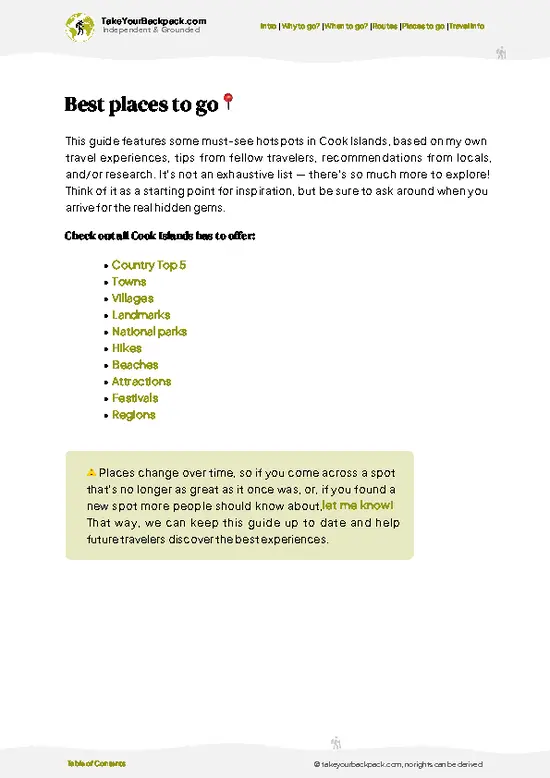
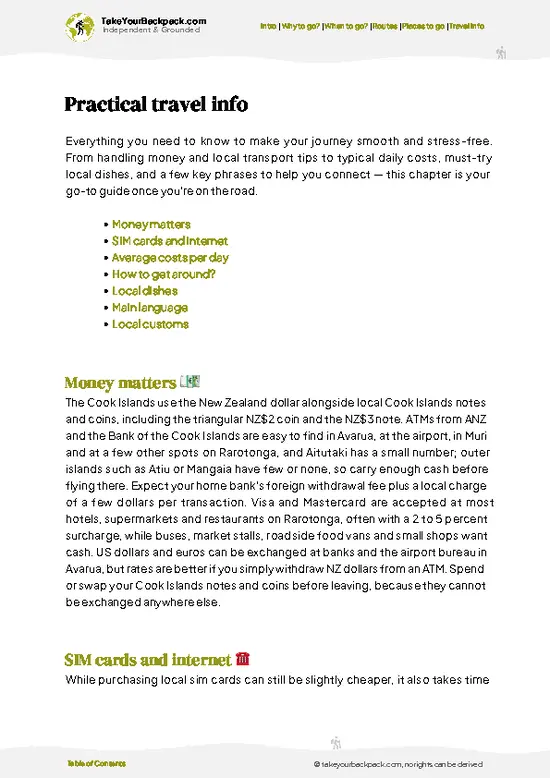
example page 0 from our offline Travel Guide for Cook Islands
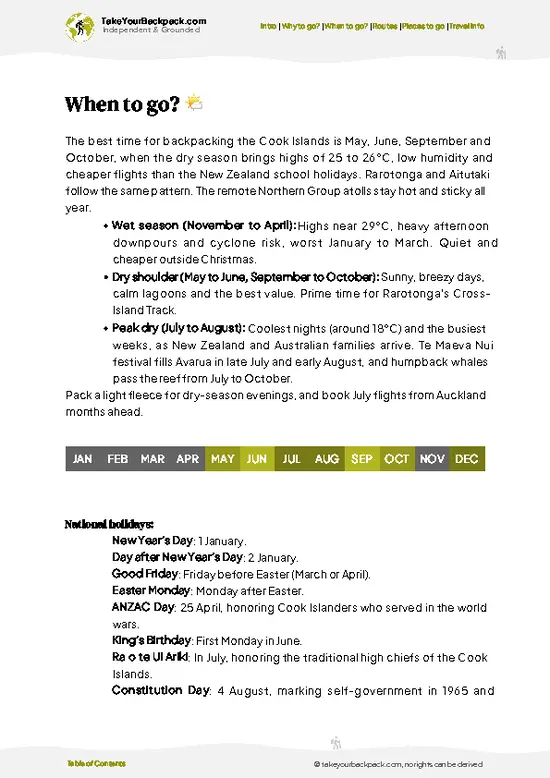
example page 1 from our offline Travel Guide for Cook Islands
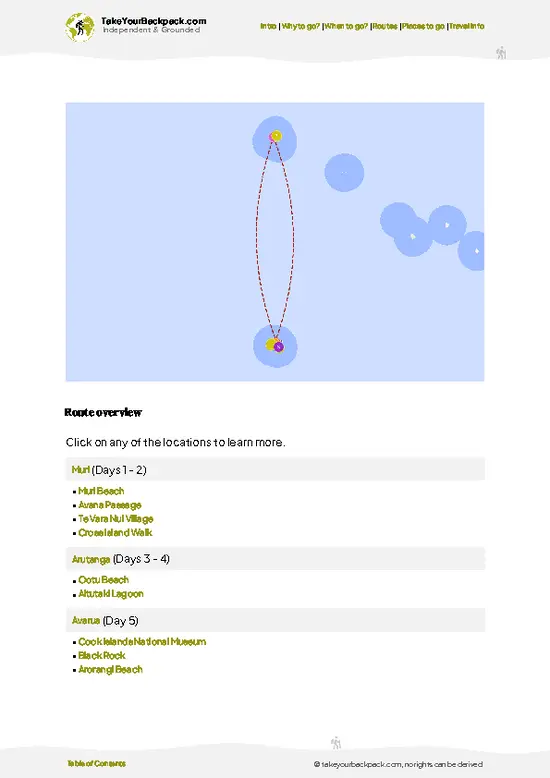
example page 2 from our offline Travel Guide for Cook Islands
example page 3 from our offline Travel Guide for Cook Islands
example page 4 from our offline Travel Guide for Cook Islands
example page 5 from our offline Travel Guide for Cook Islands
example page 6 from our offline Travel Guide for Cook Islands
example page 7 from our offline Travel Guide for Cook Islands
Loading the map 🌍
CLICK TO FILTER
towns
villages
landmarks
national parks
hikes
beaches
attractions
festivals
regions
SHOW COUNTRY’S BESTSHOW ALL

✨ Why go?
Ranked #6 beach in Cook Islands
Why visitors keep coming back

Backpackers stop at Black Rock because it is the best sunset spot within easy reach of town, and it costs nothing. The beach faces west, so the sun drops straight into the sea, and the black lava outcrop gives you a dramatic foreground that you rarely get on the lagoon-heavy east side. Locals gather here in the late afternoon, which makes it an easy way to start a conversation and get a feel for island life rather than resort life.

It also works as a connector. Because it sits close to Avarua, you can fit it between a morning at the Punanga Nui market and an evening meal without planning a full excursion. The island road runs right past, so you can hop on a bus or stop on a bike ride around the coast. It is a pause, not a destination: an hour or two of watching the light change is the whole point, and that is enough.

💡 HighlightsMust-see experiences and standout moments

  1. Sunset at the Black Rock outcrop: The dark volcanic rock at the point is the beach's best-known feature, and the sun sets directly behind the open horizon. Arrive 30 to 45 minutes early to find a spot on the sand.
  2. Lagoon wading at high tide: The water is shallow and warm, good for a gentle dip rather than serious swimming. Low tide exposes rock and reef, so check tides before you go.
  3. Photographing the lava shoreline: The contrast of black rock, pale sand and orange sky is the draw, and the light is best in the last half hour before sunset.
  4. Walking the shore toward the harbor side: A flat, easy stroll along the coast gives you views of fishing boats and local life without any climbing.
  5. Evening picnic on the sand: Pick up takeaway food from nearby stands and eat as the sky changes color. It is quiet
… read more 👉
  1. Sunset at the Black Rock outcrop: The dark volcanic rock at the point is the beach's best-known feature, and the sun sets directly behind the open horizon. Arrive 30 to 45 minutes early to find a spot on the sand.
  2. Lagoon wading at high tide: The water is shallow and warm, good for a gentle dip rather than serious swimming. Low tide exposes rock and reef, so check tides before you go.
  3. Photographing the lava shoreline: The contrast of black rock, pale sand and orange sky is the draw, and the light is best in the last half hour before sunset.
  4. Walking the shore toward the harbor side: A flat, easy stroll along the coast gives you views of fishing boats and local life without any climbing.
  5. Evening picnic on the sand: Pick up takeaway food from nearby stands and eat as the sky changes color. It is quiet after dark, with no club scene, so this is a calm end to the day.
All of it fits comfortably into two to three hours.
Spotted a mistake or missing something? Contact us.

Things to do near Black Rock

Ratings based on Tripadvisor reviews. When you book through this link, you support our work at no extra cost to you.

🌤️ When to go?Seasonal considerations and timing

  • May to October (drier, cooler): Days run about 24 to 27°C (75 to 81°F), nights dip to 18 to 20°C (64 to 68°F), humidity drops and showers are brief. Daylight lasts roughly 11 hours, with sunset around 6:10 pm in July. This is peak season, so beds fill and prices rise, especially July and August.
  • November to April (wet, hot): Expect 27 to 30°C (81 to 86°F), heavy humidity, and downpours that can last a day. Daylight stretches to about 13 hours. Cyclone season runs November to April, though direct hits are rare. Rooms and flights are cheaper and the beach is quieter.
  • Whale Season (July to October): Humpbacks pass the island, and you can often spot them from the shoreline at the southeast coast.
  • Sunsets and Low Tide: Low tide exposes more reef and shallow pools, while evening light turns the dark
… read more 👉
  • May to October (drier, cooler): Days run about 24 to 27°C (75 to 81°F), nights dip to 18 to 20°C (64 to 68°F), humidity drops and showers are brief. Daylight lasts roughly 11 hours, with sunset around 6:10 pm in July. This is peak season, so beds fill and prices rise, especially July and August.
  • November to April (wet, hot): Expect 27 to 30°C (81 to 86°F), heavy humidity, and downpours that can last a day. Daylight stretches to about 13 hours. Cyclone season runs November to April, though direct hits are rare. Rooms and flights are cheaper and the beach is quieter.
  • Whale Season (July to October): Humpbacks pass the island, and you can often spot them from the shoreline at the southeast coast.
  • Sunsets and Low Tide: Low tide exposes more reef and shallow pools, while evening light turns the dark volcanic rocks at the headland a deep orange.
Book September or early October for dry weather, whales, and slightly lighter crowds.


source: climatestotravel.comJANJanuary: fair for travelingFEBFebruary: fair for travelingMARMarch: fair for travelingAPRApril: good for travelingMAYMay: highly recommended for travelingJUNJune: highly recommended for travelingJULJuly: excellent for travelingAUGAugust: excellent for travelingSEPSeptember: highly recommended for travelingOCTOctober: highly recommended for travelingNOVNovember: fair for travelingDECDecember: fair for traveling
cook-islands-beach-black-rock
© Google | Tony Grasso

✈️ The backpacker research shortcutCook Islands Travel Guide

An offline-friendly backpacking guide with optimized travel routes, ranked highlights, transport advice, and the best areas to stay.
example page 0 from our offline Travel Guide for Cook Islands
example page 1 from our offline Travel Guide for Cook Islands
example page 2 from our offline Travel Guide for Cook Islands
example page 3 from our offline Travel Guide for Cook Islands
example page 4 from our offline Travel Guide for Cook Islands
example page 5 from our offline Travel Guide for Cook Islands
example page 6 from our offline Travel Guide for Cook Islands
example page 7 from our offline Travel Guide for Cook Islands
The digital guide (99 pages) contains:
✅ 24 highlights, ranked by travel appeal
✅ Optimized 2, 3 & 5-day travel routes
✅ Cities, national parks, landmarks, beaches
✅ How to get around
✅ Offline-friendly for travel without Wi-Fi
👉 Click to see all 30+ guide features

📅 Plan smarter in minutes, not weeks
✅ Month by month travel advice
✅ Festivals & national holidays
✅ Budget expectations

🗺️ Go to the right places, skip the overrated ones
✅ Honest pros & cons of destinations
✅ Top hikes, parks & viewpoints
✅ Lesser-known places most travelers miss
✅ Clear “worth it vs skip it” guidance

🛏️ Travel smoothly without rookie mistakes
✅ Best areas to stay
✅ Transport systems explained simply
✅ Common scams & safety advice
✅ SIM cards, money & practical tips

🌍 Understand the country, not just visit it
✅ Culture & traditions
✅ 52 Essential phrases & customs
✅ Festivals worth planning around
✅ Traveler-friendly historical context
✅ Insights that make places more meaningful

📱 Built for real travel conditions
✅ Fully downloadable PDF
✅ Works completely offline
✅ Optimized for phone use
✅ Useful in remote areas & buses
✅ Everything in one place
Stop searching, start planning
Get instant access to your full guide. 30‑day money-back guarantee.
+ Add another guide for just

By proceeding you agree to our terms.
Sent to your inbox immediately after payment • 100% Secure Checkout
Best Backpacking Travel Advisor 2025 tourism awardBest Backpacking
Travel Advisor
2025
What others say about Take Your Backpack Guides:
⭐⭐⭐⭐⭐
Fantastic, amazing amount of information!
⭐⭐⭐⭐⭐
My goodness this is amazing, it's what I've been looking for hats off too you!
⭐⭐⭐⭐⭐
I think this is absolutely BRILLIANT
⭐⭐⭐⭐
Very complete and informative. It's still missing places, but I gotta to commend you
⭐⭐⭐⭐⭐
This is truly amazing, thank you, can't wait to explore it with my kids!
⭐⭐⭐⭐⭐
Awesome resource, thank you!
⭐⭐⭐⭐⭐
This is amazing! Can't wait to explore the ones I haven't seen
⭐⭐⭐⭐
I love this! Well done, great idea.
⭐⭐⭐⭐⭐
Thanks for taking the time to make this gem!
⭐⭐⭐⭐⭐
This might be the best website I've ever seen.
⭐⭐⭐⭐⭐
Congratulations, and thank you so much for your work; it's incredibly valuable.
⭐⭐⭐⭐
In all seriousness I think you did a great job pointing out the important spots
⭐⭐⭐⭐⭐
10/10 very good
⭐⭐⭐⭐⭐
As someone who's only just starting to visit regularly this is awesome, thank you.
⭐⭐⭐⭐
Thank you very much! I'm going to visit my dad, it's going to be very useful!
⭐⭐⭐⭐⭐
This is really cool! We'll be travelling for the first time and this definitely come in handy.
⭐⭐⭐⭐⭐
You are now our minister of culture, congratulations 👨‍💼
⭐⭐⭐⭐⭐
Just wanted to tell you that this is a pearl! Going to follow your recommendations.
⭐⭐⭐⭐⭐
This is so cool. I'll definitely be using the resource for my travels soon.
⭐⭐⭐⭐⭐
This is very impressive! Good work.
⭐⭐⭐⭐⭐
This is an amazing and informative site. Very well done!

🛏️ Where to stay?Best areas to stay in Cook Islands

The best base for Black Rock is the Avarua and Nikao stretch on Rarotonga’s north coast, where you can reach the beach in minutes. Avarua, the island’s only real town, has the widest choice of budget beds, small guesthouses, and self-catering units at roughly NZ$40 to 90 (US$25 to 55) a night for dorms and basic rooms. It also has the market, supermarkets, cafés, and the bus stop for the island loop, so you can get around without renting a vehicle. Travelers gather at the Saturday market and at evening spots along the waterfront, so meeting people is easy even if you arrive alone.

Nikao, just … read more 👉
The best base for Black Rock is the Avarua and Nikao stretch on Rarotonga’s north coast, where you can reach the beach in minutes. Avarua, the island’s only real town, has the widest choice of budget beds, small guesthouses, and self-catering units at roughly NZ$40 to 90 (US$25 to 55) a night for dorms and basic rooms. It also has the market, supermarkets, cafés, and the bus stop for the island loop, so you can get around without renting a vehicle. Travelers gather at the Saturday market and at evening spots along the waterfront, so meeting people is easy even if you arrive alone.

Nikao, just west of town, is quieter and a short walk or bike ride from the beach. Accommodation here suits those wanting a calmer night with a lagoon swim nearby and sunsets facing west. Muri on the southeast side is the other social hub, with a better lagoon and more backpacker energy, but it sits across the island, about 25 to 30 minutes by bus. If Black Rock is your main draw, stay near Avarua or Nikao. Rent a scooter or use the bus, and book ahead from July to September.

🛡️ SafetySafety Tips and Common Scams in Black Rock

Black Rock is a rocky shoreline near Avarua with limited swimming, and the main thing to respect is the sea on the open side of the reef. The beach sits outside the calmest part of the lagoon, so water can be choppy and the volcanic rock is sharp and slippery. Wear reef shoes if you wade in, and swim only when the water looks calm and clear. Swells from the south pick up in winter and after storms, and surge can push through channels in the reef, so watch for stronger flow and avoid swimming near passages. Locals snorkel in calmer lagoon spots nearby. Sun is strong, even on cloudy days, so bring reef-safe sunscreen, a hat, and water. Visit late afternoon for cooler air and better light. Petty theft is uncommon but keep valuables out of sight and don’t leave bags unattended.

FAQCommon questions from travelers

Black Rock is on the northwest coast of Rarotonga, about 4 to 5 km west of Avarua town. You can ride the island bus (clockwise or anticlockwise, roughly NZ$5 to 6 a ride) toward Nikao and walk the last stretch, or rent a scooter for about NZ$15 to 25 a day. A taxi from Avarua costs around NZ$10 to 15 and takes under 10 minutes.
Swimming here is limited and snorkeling is better elsewhere. Black Rock is a rocky coast with sharp volcanic rock and exposed water, so the calm lagoon at Muri is far better for a swim, and Titikaveka or Fruits of Rarotonga are good for snorkeling. Surfing is not typical here. Experienced surfers use reef breaks like Avana Harbour, accessed by boat. Visit Black Rock for the views and the sunset.
Yes, access is free. There is no gate, ticket, or parking fee, and you can visit any time of day. The site is considered culturally significant in Cook Islands tradition, so be respectful and keep noise low. Bring your own water and snacks, since the nearest cafés and shops are in Avarua, about 5 to 10 minutes away by car.
⚠️ Things can change over time, so always validate details locally before you go.

Other Cook Islands beaches near Black Rock

Explore more nearby:

  • Arorangi Beach—West-facing sunsets, coral bommies, village church hymns, reef shoes| 3 km away
  • Rarotonga Beach—Reef-edge wading, sunset glow, mountain backdrop, coast-road cafés| 10 km away
  • Titikaveka Beach—Wide south-coast lagoon, Maire Nui Gardens, fruit stands, Sunday hymns| 10 km away

💡 Not sure where to go next?
Create a personalized itinerary for Cook Islands including Black Rock and the places that fit your trip.

Generate my itinerary

👉 Discover all beaches

Or checkout all Cook Islands has to offer (think cities, towns, villages, national parks, hikes, beaches, festivals)
Country photo of Cook Islands

We 💚 feedbackIs it worth it?

Many travelers arrive at midday expecting a swim-and-snorkel beach and leave disappointed by the shallow, rocky water. Come in the late afternoon instead, check the tide, and treat it as a sunset stop. Bring a light layer and some insect repellent, because the breeze drops once the sun is down.

✍️ Help improve this page!
The information on this page is based on in-depth research, insights shared by experienced travelers, and feedback from the local travel community in Cook Islands. While every effort is made to keep the information accurate and current, conditions can change — so if you spot anything incorrect or outdated, please get in touch.


🙋‍♂️ Give feedback

👋 Meet the founderWho’s Behind Take Your Backpack?

Johan, backpacker and founder of TakeYourBackpackHi, I’m Johan (Netherlands 🇳🇱), the creator of TakeYourBackpack. Over the past 3 decades, I’ve backpacked through 90+ countries across six continents, gaining extensive experience with independent travel, long-term trips, and overland routes.

This site is built on a combination of firsthand travel experience and carefully curated insights from other backpackers. Many guides are based on places I’ve personally visited, while others bring together tips, observations, and practical advice shared by trusted travelers I’ve met along the way.

The goal is to provide realistic, experience-driven guidance — not generic itineraries — so you can explore destinations with better context, clearer expectations, and more confidence.