×

Cook Islands🇨🇰 | beachesTitikaveka BeachWide south-coast lagoon, Maire Nui Gardens, fruit stands, Sunday hymns | things to do and best time to go

Explore Rarotonga BeachExplore Te Kūki ‘Āirani Film Festival

Backpacking in Titikaveka Beach
🌟 Highlightbeach ranked #3
By Johan Kruseman 🇳🇱 | Updated October 22, 2026

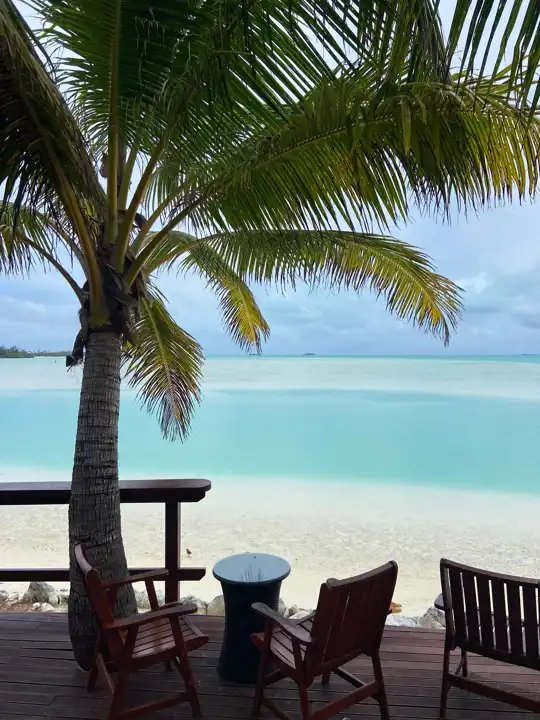
Titikaveka has no resort strip, no night market and no beach bar crowd, and that surprises first-timers who expect Rarotonga’s best lagoon to come with a scene. It sits on the quiet south coast of Rarotonga in the Cook Islands, a short ride from Muri in one direction and the airport side of the island in the other. The water is calm, clear and sandy-bottomed, with a wide shallow lagoon behind the reef, and the beach is clean and mostly empty. The trade-off is that tide matters. At low tide the inner lagoon gets thin, so swim at mid to high tide. Surf breaks only out on the reef, and snorkeling is easy from shore. Food means a roadside café or a grocery run, so pack lunch. Hop on the island bus, get off anywhere that looks good, and walk the sand until you find a shady spot of your own. Aim for early morning, when the light is soft and the lagoon is glass.

Discover everything you want to know in the 📖 Cook Islands Travel Guide.


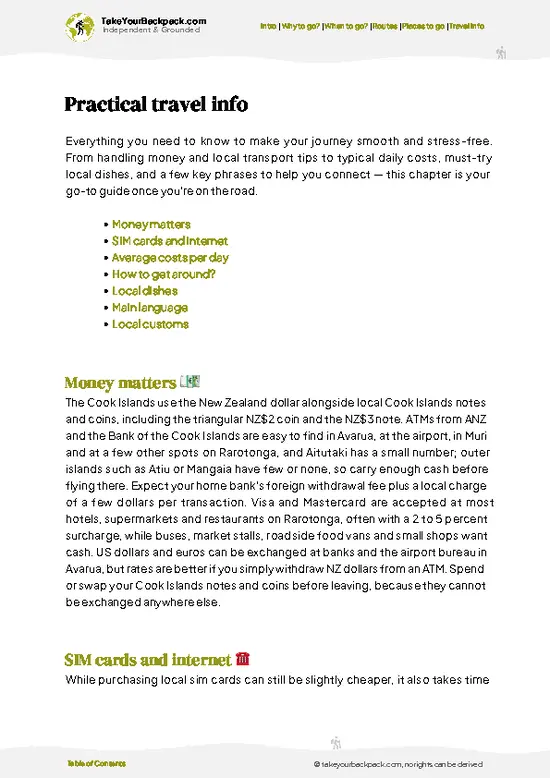
example page 0 from our offline Travel Guide for Cook Islands
example page 1 from our offline Travel Guide for Cook Islands
example page 2 from our offline Travel Guide for Cook Islands
example page 3 from our offline Travel Guide for Cook Islands
example page 4 from our offline Travel Guide for Cook Islands
example page 5 from our offline Travel Guide for Cook Islands
example page 6 from our offline Travel Guide for Cook Islands
example page 7 from our offline Travel Guide for Cook Islands
Loading the map 🌍
CLICK TO FILTER
towns
villages
landmarks
national parks
hikes
beaches
attractions
festivals
regions
SHOW COUNTRY’S BESTSHOW ALL

✨ Why go?
Ranked #3 beach in Cook Islands
The unique appeal for travelers

Backpackers stop here because Titikaveka is where Rarotonga slows down. The wide, shallow south-coast lagoon is the draw: you wade in from the sand and float over coral heads with parrotfish and sergeant majors, no boat needed and no crowd jostling for the best patch. Compared with the busier east side near Muri, you share the water with a handful of people, mostly guests from small guesthouses and locals out for a swim.

The second reason is the pace. The coast road runs right beside the beach, so the circle-island bus doubles as your connector. You can drop in for a morning swim, flag the next bus, and carry on to markets or trailheads without planning around a tour schedule. It works well as a rest day between the hikes inland and the nightlife of Avarua.

The third is the setting itself. … read more 👉
Backpackers stop here because Titikaveka is where Rarotonga slows down. The wide, shallow south-coast lagoon is the draw: you wade in from the sand and float over coral heads with parrotfish and sergeant majors, no boat needed and no crowd jostling for the best patch. Compared with the busier east side near Muri, you share the water with a handful of people, mostly guests from small guesthouses and locals out for a swim.

The second reason is the pace. The coast road runs right beside the beach, so the circle-island bus doubles as your connector. You can drop in for a morning swim, flag the next bus, and carry on to markets or trailheads without planning around a tour schedule. It works well as a rest day between the hikes inland and the nightlife of Avarua.

The third is the setting itself. Village life carries on here beside the sand, with churches, taro patches and fruit stalls close to the shore, so you feel the island rather than just a postcard of it.

💡 HighlightsMust-see experiences and standout moments

  1. Titikaveka Lagoon snorkeling: This is the main reason to come. The lagoon is wide and calm, with sandy patches and scattered coral heads that hold colorful reef fish. It works best at mid to high tide, when you can float over the coral without scraping your knees. Bring your own mask, since there is no big rental shopfront right on the sand.
  2. Maire Nui Gardens: A botanical garden and café set just back from the road, with tropical plants, a lily pond and shady paths. It is a cool break after sun and salt water, and a good spot for coffee or a light meal while you dry off.
  3. Sunrise beach walk: The south coast catches early light across the lagoon, and the sand is almost empty at that hour. Walk slowly along the shoreline past the palms and small beach houses. You get the quiet side of Rarotonga,
… read more 👉
  1. Titikaveka Lagoon snorkeling: This is the main reason to come. The lagoon is wide and calm, with sandy patches and scattered coral heads that hold colorful reef fish. It works best at mid to high tide, when you can float over the coral without scraping your knees. Bring your own mask, since there is no big rental shopfront right on the sand.
  2. Maire Nui Gardens: A botanical garden and café set just back from the road, with tropical plants, a lily pond and shady paths. It is a cool break after sun and salt water, and a good spot for coffee or a light meal while you dry off.
  3. Sunrise beach walk: The south coast catches early light across the lagoon, and the sand is almost empty at that hour. Walk slowly along the shoreline past the palms and small beach houses. You get the quiet side of Rarotonga, with the reef line breaking the swell in the distance.
  4. Roadside fruit and craft stops: Titikaveka is known for small local shops selling fresh fruit, pareu cloth and handmade goods. Stop in for a cold drink and something to eat, and chat with whoever is behind the counter. It is a gentler way to spend money than the tourist stalls in town.
  5. Sunday service at the village church: The Cook Islands Christian Church in Titikaveka fills on Sundays with congregation singing in harmony, the kind of rich, unaccompanied hymns the islands are known for. Visitors are welcomed if they dress modestly, with covered shoulders and knees, and sit quietly near the back. It is free, and it is one of the most memorable hours you can spend on the island.
Combine the sunrise beach walk with coffee at Maire Nui Gardens, then return to the lagoon later for a snorkel at high tide.
Spotted a mistake or missing something? Contact us.

Things to do near Titikaveka Beach

Ratings based on Tripadvisor reviews. When you book through this link, you support our work at no extra cost to you.

🌤️ When to go?Best time to visit Titikaveka Beach

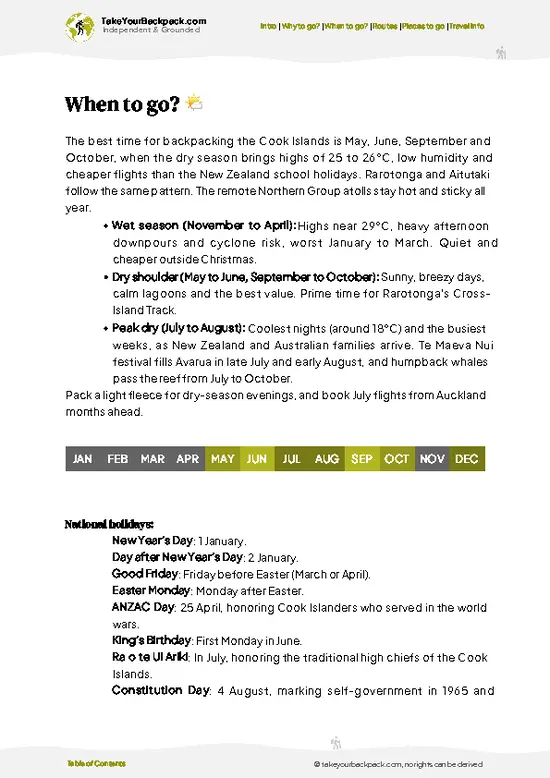
  • May to October (dry season): Days run 24 to 27°C (75 to 81°F) with low humidity and cool, clear nights near 18 to 20°C (64 to 68°F). In July, sunrise is around 7:15 am and sunset near 6:10 pm, so plan your lagoon time early. This is peak season, with the highest room rates and the busiest restaurants on the south coast.
  • November to April (wet season): Expect 26 to 30°C (79 to 86°F), thick humidity and short heavy downpours, often in the afternoon. Daylight stretches to nearly 7:30 pm in December. Rooms and rental scooters are easier to find and cheaper, and the lagoon stays warm for long swims.
  • Cyclone window (December to March): Storms are rare but possible, and a bad one can close the lagoon and cancel flights.
  • Whale season (July to October): Humpbacks pass outside the reef and sometimes show
… read more 👉
  • May to October (dry season): Days run 24 to 27°C (75 to 81°F) with low humidity and cool, clear nights near 18 to 20°C (64 to 68°F). In July, sunrise is around 7:15 am and sunset near 6:10 pm, so plan your lagoon time early. This is peak season, with the highest room rates and the busiest restaurants on the south coast.
  • November to April (wet season): Expect 26 to 30°C (79 to 86°F), thick humidity and short heavy downpours, often in the afternoon. Daylight stretches to nearly 7:30 pm in December. Rooms and rental scooters are easier to find and cheaper, and the lagoon stays warm for long swims.
  • Cyclone window (December to March): Storms are rare but possible, and a bad one can close the lagoon and cancel flights.
  • Whale season (July to October): Humpbacks pass outside the reef and sometimes show from the shore, which is a good reason to visit in these months.
Book September or early October for dry weather, whales and slightly thinner crowds.


source: climatestotravel.comJANJanuary: fair for travelingFEBFebruary: fair for travelingMARMarch: fair for travelingAPRApril: good for travelingMAYMay: highly recommended for travelingJUNJune: excellent for travelingJULJuly: highly recommended for travelingAUGAugust: highly recommended for travelingSEPSeptember: highly recommended for travelingOCTOctober: excellent for travelingNOVNovember: good for travelingDECDecember: fair for traveling
cook-islands-beach-titikaveka-beach
© Google | Ajeesh Kilimanoor

✈️ The backpacker research shortcutCook Islands Travel Guide

An offline-friendly backpacking guide with optimized travel routes, ranked highlights, transport advice, and the best areas to stay.
example page 0 from our offline Travel Guide for Cook Islands
example page 1 from our offline Travel Guide for Cook Islands
example page 2 from our offline Travel Guide for Cook Islands
example page 3 from our offline Travel Guide for Cook Islands
example page 4 from our offline Travel Guide for Cook Islands
example page 5 from our offline Travel Guide for Cook Islands
example page 6 from our offline Travel Guide for Cook Islands
example page 7 from our offline Travel Guide for Cook Islands
The digital guide (99 pages) contains:
✅ 24 highlights, ranked by travel appeal
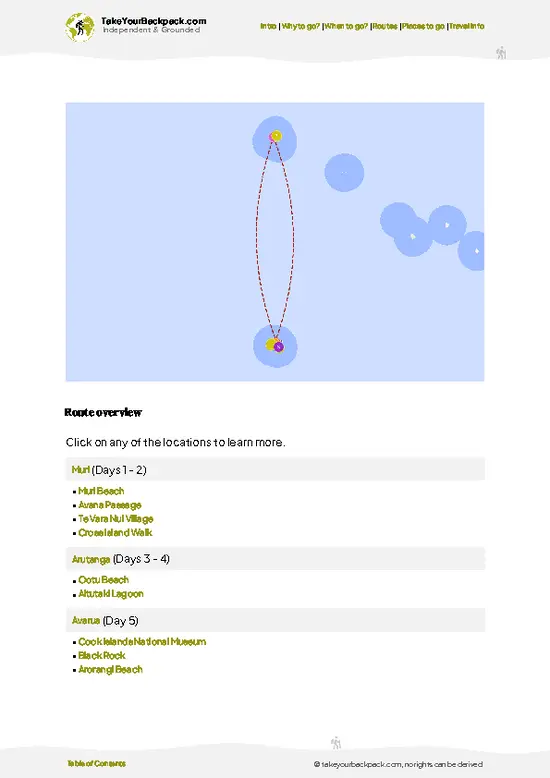
✅ Optimized 2, 3 & 5-day travel routes
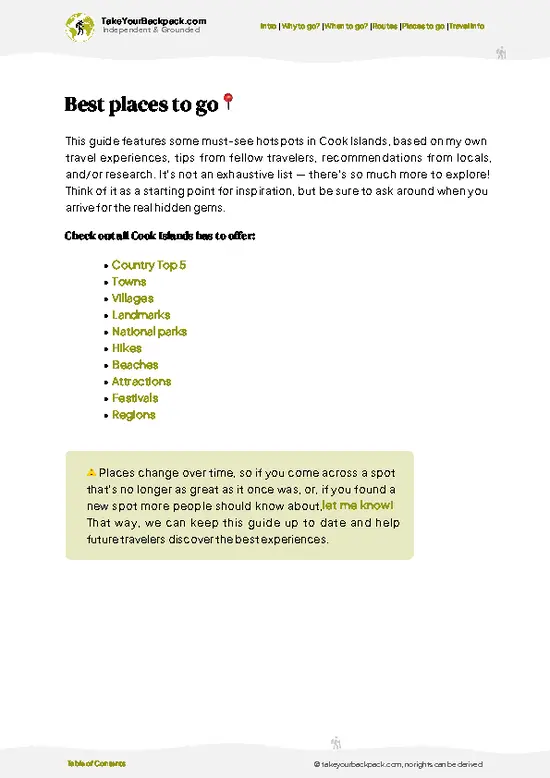
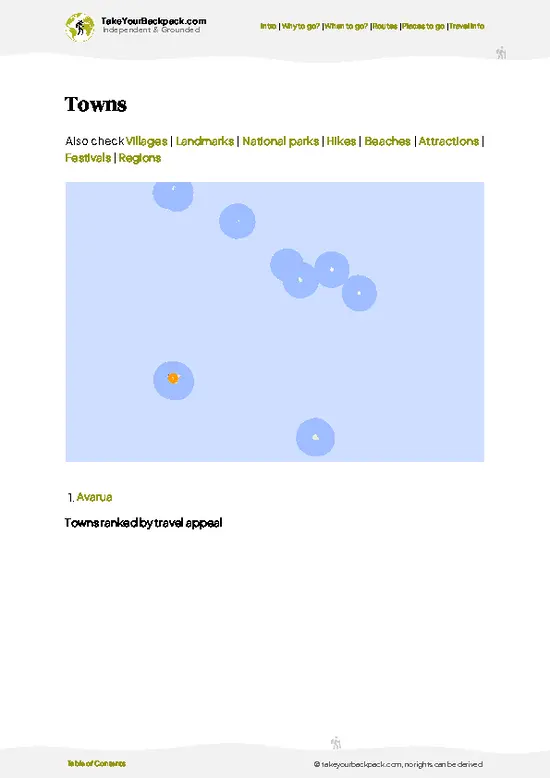
✅ Cities, national parks, landmarks, beaches
✅ How to get around
✅ Offline-friendly for travel without Wi-Fi
👉 Click to see all 30+ guide features

📅 Plan smarter in minutes, not weeks
✅ Month by month travel advice
✅ Festivals & national holidays
✅ Budget expectations

🗺️ Go to the right places, skip the overrated ones
✅ Honest pros & cons of destinations
✅ Top hikes, parks & viewpoints
✅ Lesser-known places most travelers miss
✅ Clear “worth it vs skip it” guidance

🛏️ Travel smoothly without rookie mistakes
✅ Best areas to stay
✅ Transport systems explained simply
✅ Common scams & safety advice
✅ SIM cards, money & practical tips

🌍 Understand the country, not just visit it
✅ Culture & traditions
✅ 52 Essential phrases & customs
✅ Festivals worth planning around
✅ Traveler-friendly historical context
✅ Insights that make places more meaningful

📱 Built for real travel conditions
✅ Fully downloadable PDF
✅ Works completely offline
✅ Optimized for phone use
✅ Useful in remote areas & buses
✅ Everything in one place
Stop searching, start planning
Get instant access to your full guide. 30‑day money-back guarantee.
+ Add another guide for just

By proceeding you agree to our terms.
Sent to your inbox immediately after payment • 100% Secure Checkout
Best Backpacking Travel Advisor 2025 tourism awardBest Backpacking
Travel Advisor
2025
What others say about Take Your Backpack Guides:
⭐⭐⭐⭐⭐
Fantastic, amazing amount of information!
⭐⭐⭐⭐⭐
My goodness this is amazing, it's what I've been looking for hats off too you!
⭐⭐⭐⭐⭐
I think this is absolutely BRILLIANT
⭐⭐⭐⭐
Very complete and informative. It's still missing places, but I gotta to commend you
⭐⭐⭐⭐⭐
This is truly amazing, thank you, can't wait to explore it with my kids!
⭐⭐⭐⭐⭐
Awesome resource, thank you!
⭐⭐⭐⭐⭐
This is amazing! Can't wait to explore the ones I haven't seen
⭐⭐⭐⭐
I love this! Well done, great idea.
⭐⭐⭐⭐⭐
Thanks for taking the time to make this gem!
⭐⭐⭐⭐⭐
This might be the best website I've ever seen.
⭐⭐⭐⭐⭐
Congratulations, and thank you so much for your work; it's incredibly valuable.
⭐⭐⭐⭐
In all seriousness I think you did a great job pointing out the important spots
⭐⭐⭐⭐⭐
10/10 very good
⭐⭐⭐⭐⭐
As someone who's only just starting to visit regularly this is awesome, thank you.
⭐⭐⭐⭐
Thank you very much! I'm going to visit my dad, it's going to be very useful!
⭐⭐⭐⭐⭐
This is really cool! We'll be travelling for the first time and this definitely come in handy.
⭐⭐⭐⭐⭐
You are now our minister of culture, congratulations 👨‍💼
⭐⭐⭐⭐⭐
Just wanted to tell you that this is a pearl! Going to follow your recommendations.
⭐⭐⭐⭐⭐
This is so cool. I'll definitely be using the resource for my travels soon.
⭐⭐⭐⭐⭐
This is very impressive! Good work.
⭐⭐⭐⭐⭐
This is an amazing and informative site. Very well done!

🛏️ Where to stay?Choosing the right base

Stay along the southern stretch of Titikaveka itself if you want the lagoon at your doorstep. Budget beds here are limited, so most backpackers choose a guesthouse, a self-catering unit or a small beachfront bungalow, typically NZ$80 to 160 (about US$50 to 100) a night for a double. Dorm options are rare on this side, and cooking for yourself saves money since restaurants are few and not cheap.

If you want a social scene, Muri, about 10 to 15 minutes by scooter or bus to the east, is the better base. It has the most backpacker-friendly hostels and guesthouses on the island, plus cafes, night … read more 👉
Stay along the southern stretch of Titikaveka itself if you want the lagoon at your doorstep. Budget beds here are limited, so most backpackers choose a guesthouse, a self-catering unit or a small beachfront bungalow, typically NZ$80 to 160 (about US$50 to 100) a night for a double. Dorm options are rare on this side, and cooking for yourself saves money since restaurants are few and not cheap.

If you want a social scene, Muri, about 10 to 15 minutes by scooter or bus to the east, is the better base. It has the most backpacker-friendly hostels and guesthouses on the island, plus cafes, night markets and lagoon-sports operators, and you can still reach Titikaveka in minutes.

Avarua, the capital, about 20 to 25 minutes away, suits you if you want the cheapest beds, supermarkets and the airport close by, though its beaches are weaker.

The island bus runs the coastal loop both clockwise and anticlockwise, so any of these areas works without a car. Scooters rent for about NZ$15 to 20 a day, and the road along Titikaveka is flat and easy. Book ahead from June to September.

🛡️ SafetyStaying Safe: What Travelers Should Know

Titikaveka is one of the calmest places on Rarotonga, and the main thing to know is where the lagoon ends. The water inside the reef is shallow, clear and mostly flat, with a sandy bottom and gentle tides. Currents pick up near the reef passages, where water funnels out to sea, so avoid swimming near the channel openings and stay inside the lagoon. Sharp coral and sea urchins sit in patches, so reef shoes help when snorkeling or wading near the edge. Sharks are not a concern inside the lagoon.

The sun is the real hazard. Reflection off the white sand burns skin fast, especially from 10 am to 3 pm, so bring reef-safe sunscreen and a rash shirt. Afternoon squalls roll through in the wet season, and the lagoon turns murky after heavy rain. Theft is rare, but keep phones and cash out of sight … read more 👉
Titikaveka is one of the calmest places on Rarotonga, and the main thing to know is where the lagoon ends. The water inside the reef is shallow, clear and mostly flat, with a sandy bottom and gentle tides. Currents pick up near the reef passages, where water funnels out to sea, so avoid swimming near the channel openings and stay inside the lagoon. Sharp coral and sea urchins sit in patches, so reef shoes help when snorkeling or wading near the edge. Sharks are not a concern inside the lagoon.

The sun is the real hazard. Reflection off the white sand burns skin fast, especially from 10 am to 3 pm, so bring reef-safe sunscreen and a rash shirt. Afternoon squalls roll through in the wet season, and the lagoon turns murky after heavy rain. Theft is rare, but keep phones and cash out of sight on the sand. There are no lifeguards, so swim with a buddy.

FAQTraveler FAQ

Rent a scooter or hop on the island bus, since Titikaveka sits on the south coast of Rarotonga. From Avarua and the airport it is about 20 to 25 minutes by road, and from Muri about 10 to 15 minutes. The bus loop runs both directions and costs roughly NZ$5 (about US$3) a ride, while scooters rent for NZ$15 to 20 a day and need a local license test at the Avarua police station if you do not hold a motorcycle license.
Yes for swimming and snorkeling, no for surfing. The lagoon is shallow and calm, with colorful fish and coral heads, especially near the reef edge and around the Tikioki marine reserve, and the best snorkeling is at high tide and mid-morning when the water is clearest. Surf breaks sit outside the reef and need a boat or a strong paddle through a channel, so beginners should skip them. Bring reef shoes, since coral and urchins sit in the shallows.
Yes, Titikaveka Beach is free to visit, with no entrance fee or permit, and the public access points along the main road are open all day. Parking is informal and free beside the road, and there are no lifeguards or facilities. Cafes and small shops nearby charge typical island prices, with a coffee around NZ$5 to 6 (about US$3 to 4) and a lunch around NZ$15 to 25 (about US$9 to 15).
⚠️ Things can change over time, so always validate details locally before you go.

Other Cook Islands beaches near Titikaveka Beach

Explore more nearby:

  • Rarotonga Beach—Reef-edge wading, sunset glow, mountain backdrop, coast-road cafés| 0 km away
  • Muri Beach—Low-tide motu walk, Taakoka snorkeling, kayak rentals, food trucks| 3 km away
  • Arorangi Beach—West-facing sunsets, coral bommies, village church hymns, reef shoes| 9 km away

💡 Not sure where to go next?
Create a personalized itinerary for Cook Islands including Titikaveka Beach and the places that fit your trip.

Generate my itinerary

👉 Discover all beaches

Or checkout all Cook Islands has to offer (think cities, towns, villages, national parks, hikes, beaches, festivals)
Country photo of Cook Islands

We 💚 feedbackKey takeaways before you go

Come on a weekday morning, ideally from May through October when the air is drier and the lagoon is at its clearest. Check the tide before you leave your guesthouse, since high tide makes the swim. I would bring a rash vest and reef shoes, and skip the afternoon, when the wind can chop up the water.

✍️ Help improve this page!
The information on this page is based on in-depth research, insights shared by experienced travelers, and feedback from the local travel community in Cook Islands. While every effort is made to keep the information accurate and current, conditions can change — so if you spot anything incorrect or outdated, please get in touch.


🙋‍♂️ Give feedback

👋 Meet the founderWho’s Behind Take Your Backpack?

Johan, backpacker and founder of TakeYourBackpackHi, I’m Johan (Netherlands 🇳🇱), the creator of TakeYourBackpack. Over the past 3 decades, I’ve backpacked through 90+ countries across six continents, gaining extensive experience with independent travel, long-term trips, and overland routes.

This site is built on a combination of firsthand travel experience and carefully curated insights from other backpackers. Many guides are based on places I’ve personally visited, while others bring together tips, observations, and practical advice shared by trusted travelers I’ve met along the way.

The goal is to provide realistic, experience-driven guidance — not generic itineraries — so you can explore destinations with better context, clearer expectations, and more confidence.