Total Distance: El Camino de Costa Rica covers roughly 280 kilometers from the Caribbean coast toward the Pacific side.
Estimated Duration: Around 12 to 16 days for the full route of 16 stages, or individual stages of 1 to 2 days.
Difficulty: Moderate to demanding. Heat, mud and several long days with steady climbs.
Starting Point: Parismina or Barra del Pacuare, from where a boat takes you to the pier at Goshen, where the walk starts. Public transport links by bus and boat connect the area to San José.
Major Landmarks:
- Caribbean canals: Waterways and beach at the start.
- Turrialba region: Farmland below
…
read more 👉Total Distance: El Camino de Costa Rica covers roughly 280 kilometers from the Caribbean coast toward the Pacific side.
Estimated Duration: Around 12 to 16 days for the full route of 16 stages, or individual stages of 1 to 2 days.
Difficulty: Moderate to demanding. Heat, mud and several long days with steady climbs.
Starting Point: Parismina or Barra del Pacuare, from where a boat takes you to the pier at Goshen, where the walk starts. Public transport links by bus and boat connect the area to San José.
Major Landmarks:
- Caribbean canals: Waterways and beach at the start.
- Turrialba region: Farmland below the volcano.
- Guayabo National Monument: Archaeological site near the route.
Terrain and Scenery: Flat jungle trails, plantation tracks, quiet dirt roads, river crossings and forested climbs into the highlands.
Vegetation: Lowland rainforest, banana and pineapple fields, then cloud forest with ferns, mosses and orchids at elevation.
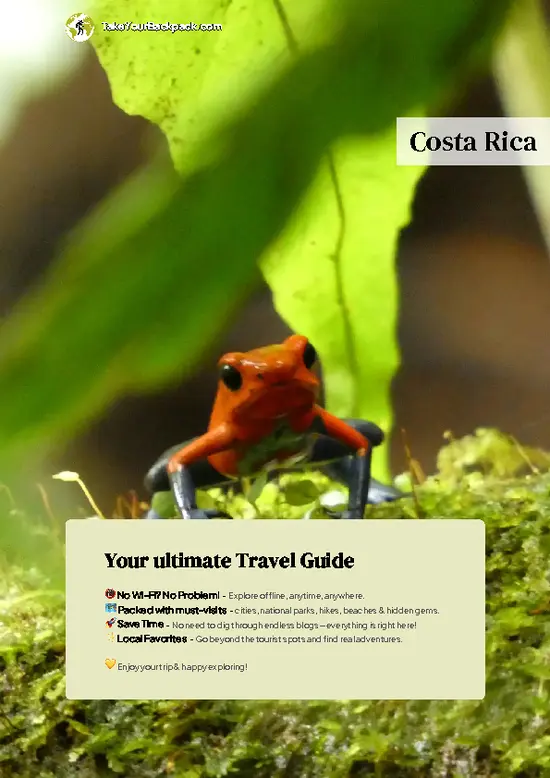
Wildlife: Howler and spider monkeys, sloths, toucans, caimans, poison dart frogs and abundant birdlife.
⚠️ Hiking info can sometimes be outdated or inaccurate. Before you hit the trail, check the latest conditions with locals. If you do spot anything that's off, I'd love to hear from you, so I can update it for fellow travelers.
v2.webp)


 Best Backpacking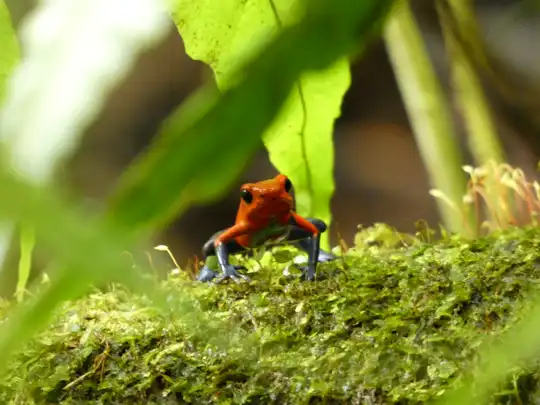
.jpg) Hi, I’m Johan (Netherlands 🇳🇱), the creator of TakeYourBackpack. Over the past 3 decades, I’ve backpacked through 90+ countries across six continents, gaining extensive experience with independent travel, long-term trips, and overland routes.
Hi, I’m Johan (Netherlands 🇳🇱), the creator of TakeYourBackpack. Over the past 3 decades, I’ve backpacked through 90+ countries across six continents, gaining extensive experience with independent travel, long-term trips, and overland routes.