×

Costa Rica🇨🇷 | beachesManuel Antonio BeachPark crescent, capuchins and sloths, calm warm water, Punta Catedral loop | things to do and best time to go

Explore Jacó BeachExplore Playa Matapalo (Guanacaste)

Backpacking in Manuel Antonio Beach
🏆 Top pickbeach ranked #1
By Johan Kruseman 🇳🇱 | Updated October 22, 2026

A white-faced capuchin was already sitting on the sand when I stepped out of the trees, wet fur, a stolen plastic bag in its hands, while the surf hissed over pale sand and the smell of salt and rotting almond leaves hung in the shade. That was my first minute at Manuel Antonio Beach, on the central Pacific coast of Costa Rica, south of Quepos. The scenery is the draw: forested headlands, small islets offshore, and sloths and monkeys right behind the sand. The water is calm and warm enough to float in for an hour. Snorkeling is poor, because visibility is usually murky, so skip it. Crowds are the hard part, since midday brings tour groups, vendors and rented umbrellas packed together. Food and beds in town are pricey, and the cheaper options sit down in Quepos. Go early, walk the park trail first, then swim once the heat sets in.

Discover everything you want to know in the 📖 Costa Rica Travel Guide.


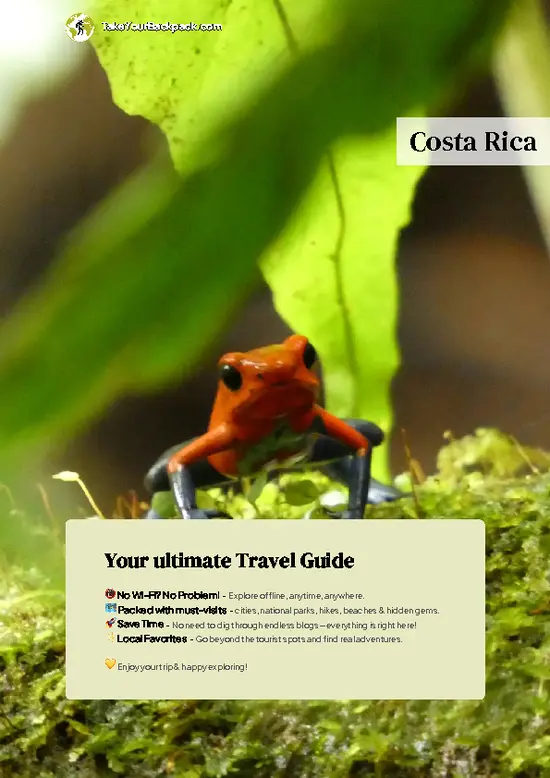
example page 0 from our offline Travel Guide for Costa Rica
example page 1 from our offline Travel Guide for Costa Rica
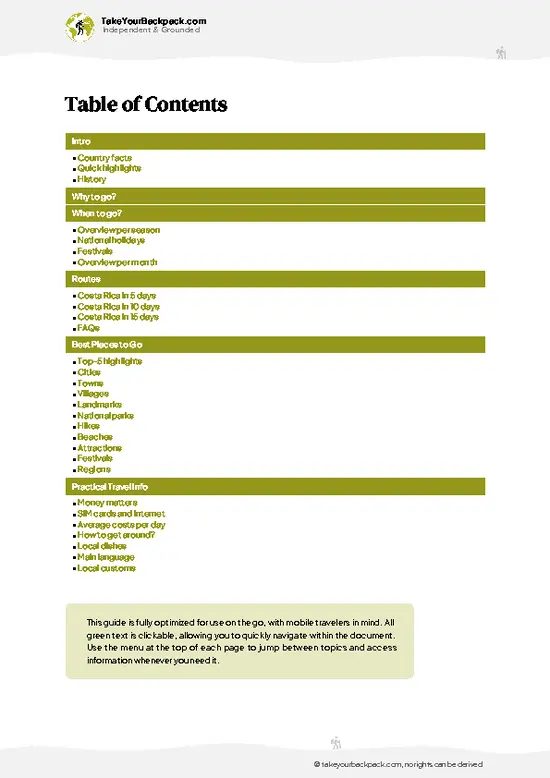
example page 2 from our offline Travel Guide for Costa Rica
example page 3 from our offline Travel Guide for Costa Rica
example page 4 from our offline Travel Guide for Costa Rica
example page 5 from our offline Travel Guide for Costa Rica
example page 6 from our offline Travel Guide for Costa Rica
example page 7 from our offline Travel Guide for Costa Rica
Loading the map 🌍
CLICK TO FILTER
cities
towns
villages
landmarks
national parks
hikes
beaches
attractions
festivals
regions
SHOW COUNTRY’S BESTSHOW ALL

✨ Why go?
Ranked #1 beach in Costa Rica
The unique appeal for travelers

Manuel Antonio Beach earns its stop because wildlife and sand sit in the same frame. Backpackers come for the white-faced capuchins and three-toed sloths that move through the trees just behind the beach, close enough to watch without a long hike. You can see more here in an afternoon than on a week of jungle trails elsewhere, and a guide is useful for spotting what you would walk past. The second reason is the water. The crescent has gentle, shallow waves and a sandy bottom, so it suits people who want a relaxed swim rather than surf, and the shade from the forest edge keeps a long beach day comfortable. The third reason is the route. Manuel Antonio Beach connects Quepos and the Pacific coast road, so it works as a pause between Jacó and Uvita or Dominical. Frequent local buses run the hill … read more 👉
Manuel Antonio Beach earns its stop because wildlife and sand sit in the same frame. Backpackers come for the white-faced capuchins and three-toed sloths that move through the trees just behind the beach, close enough to watch without a long hike. You can see more here in an afternoon than on a week of jungle trails elsewhere, and a guide is useful for spotting what you would walk past. The second reason is the water. The crescent has gentle, shallow waves and a sandy bottom, so it suits people who want a relaxed swim rather than surf, and the shade from the forest edge keeps a long beach day comfortable. The third reason is the route. Manuel Antonio Beach connects Quepos and the Pacific coast road, so it works as a pause between Jacó and Uvita or Dominical. Frequent local buses run the hill road from Quepos, which makes it easy to stay a night or two without renting a car. Social travelers find plenty of other backpackers in the hostels along that road.

💡 HighlightsPlaces and moments you shouldn't skip

  1. Playa Manuel Antonio inside the national park: The main attraction is the crescent of pale sand backed by forest, with calm, warm water and shade under the almond trees. Come early, since the park is busy by late morning.
  2. Sloth and monkey spotting: Capuchins, squirrel monkeys and sloths live right along the beach edge and trails. Hiring a licensed guide with a spotting scope costs a modest amount and reveals animals hidden high in the canopy.
  3. Playa Espadilla: The long open public stretch just outside the park entrance has more space and gentler crowds than the main beach. Waves here are stronger, so it suits beginners trying surf lessons.
  4. Punta Catedral trail: This short loop climbs a former island joined to the coast by a sand bar, with lookouts over the islets and the Pacific. It takes about
… read more 👉
  1. Playa Manuel Antonio inside the national park: The main attraction is the crescent of pale sand backed by forest, with calm, warm water and shade under the almond trees. Come early, since the park is busy by late morning.
  2. Sloth and monkey spotting: Capuchins, squirrel monkeys and sloths live right along the beach edge and trails. Hiring a licensed guide with a spotting scope costs a modest amount and reveals animals hidden high in the canopy.
  3. Playa Espadilla: The long open public stretch just outside the park entrance has more space and gentler crowds than the main beach. Waves here are stronger, so it suits beginners trying surf lessons.
  4. Punta Catedral trail: This short loop climbs a former island joined to the coast by a sand bar, with lookouts over the islets and the Pacific. It takes about an hour and is shaded most of the way.
  5. Sunset from the beach road: Outside the park, the bars and viewpoints on the hill road face west over the ocean. Dusk is the time for a cold drink while the sky changes color and howler monkeys call from the trees.
For a first visit, start with Playa Manuel Antonio itself, ideally with a guide in the morning, since it combines swimming, shade and animals in one spot.
Spotted a mistake or missing something? Contact us.

Things to do around Manuel Antonio Beach

Ratings based on Tripadvisor reviews. When you book through this link, you support our work at no extra cost to you.

🌤️ When to go?Weather, crowds, and seasonal trade-offs

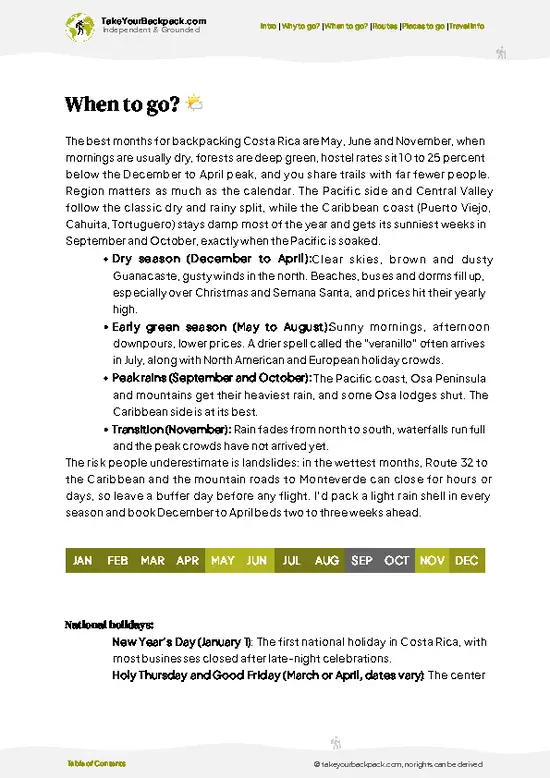
  • Dry Season (December to April): Expect mostly clear mornings, highs of 30 to 33°C (86 to 91°F) and lows near 22 to 24°C (72 to 75°F). Sunshine is reliable and the sea is calm, but this is also when the sand fills and rooms cost the most, often US$20 to 40 more per night than in the green months.
  • Green Season (May to November): Rain arrives most afternoons, with September and October the wettest. Mornings are often bright, temperatures stay at 24 to 31°C (75 to 88°F), and the forest next to the beach is lush. Crowds thin out and bargaining for a bed gets easier.
  • Shoulder Months (May, early December): Rain is still patchy, prices sit mid-range and the national park trails are quieter.
  • Daylight: Days run close to 12 hours all year this near the equator, so plan beach time for the morning.
  • Holiday
… read more 👉
  • Dry Season (December to April): Expect mostly clear mornings, highs of 30 to 33°C (86 to 91°F) and lows near 22 to 24°C (72 to 75°F). Sunshine is reliable and the sea is calm, but this is also when the sand fills and rooms cost the most, often US$20 to 40 more per night than in the green months.
  • Green Season (May to November): Rain arrives most afternoons, with September and October the wettest. Mornings are often bright, temperatures stay at 24 to 31°C (75 to 88°F), and the forest next to the beach is lush. Crowds thin out and bargaining for a bed gets easier.
  • Shoulder Months (May, early December): Rain is still patchy, prices sit mid-range and the national park trails are quieter.
  • Daylight: Days run close to 12 hours all year this near the equator, so plan beach time for the morning.
  • Holiday Peaks: Christmas, New Year and Easter week bring Costa Rican families and booked-out hostels.
Book a bed at least a few weeks ahead for late December through Easter, then arrive early on a weekday.


source: climatestotravel.comJANJanuary: excellent for travelingFEBFebruary: excellent for travelingMARMarch: excellent for travelingAPRApril: excellent for travelingMAYMay: highly recommended for travelingJUNJune: fair for travelingJULJuly: fair for travelingAUGAugust: fair for travelingSEPSeptember: fair for travelingOCTOctober: fair for travelingNOVNovember: highly recommended for travelingDECDecember: excellent for traveling
costa-rica-beach-manuel-antonio-beach
© Google | Tolek Banan

✈️ The backpacker research shortcutCosta Rica Travel Guide

An offline-friendly backpacking guide with optimized travel routes, ranked highlights, transport advice, and the best areas to stay.
example page 0 from our offline Travel Guide for Costa Rica
example page 1 from our offline Travel Guide for Costa Rica
example page 2 from our offline Travel Guide for Costa Rica
example page 3 from our offline Travel Guide for Costa Rica
example page 4 from our offline Travel Guide for Costa Rica
example page 5 from our offline Travel Guide for Costa Rica
example page 6 from our offline Travel Guide for Costa Rica
example page 7 from our offline Travel Guide for Costa Rica
The digital guide (287 pages) contains:
✅ 90 highlights, ranked by travel appeal
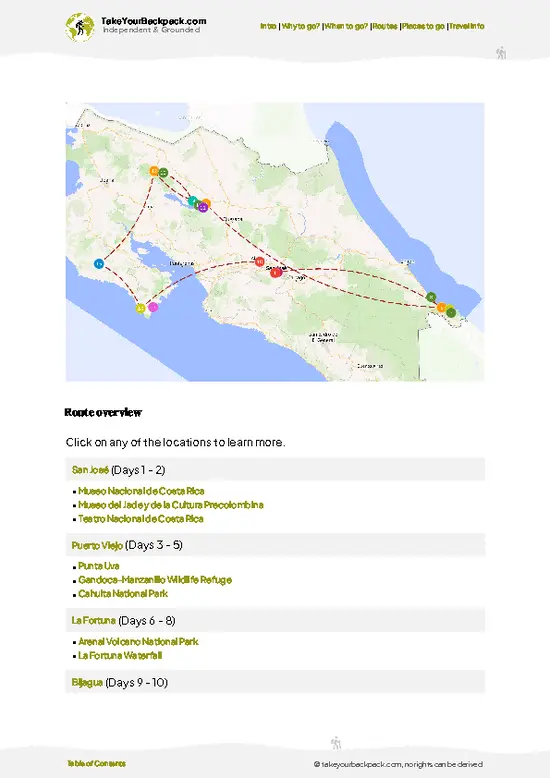
✅ Optimized 5, 10 & 15-day travel routes
✅ Cities, national parks, landmarks, beaches
✅ How to get around
✅ Offline-friendly for travel without Wi-Fi
👉 Click to see all 30+ guide features

📅 Plan smarter in minutes, not weeks
✅ Month by month travel advice
✅ Festivals & national holidays
✅ Budget expectations

🗺️ Go to the right places, skip the overrated ones
✅ Honest pros & cons of destinations
✅ Top hikes, parks & viewpoints
✅ Lesser-known places most travelers miss
✅ Clear “worth it vs skip it” guidance

🛏️ Travel smoothly without rookie mistakes
✅ Best areas to stay
✅ Transport systems explained simply
✅ Common scams & safety advice
✅ SIM cards, money & practical tips

🌍 Understand the country, not just visit it
✅ Culture & traditions
✅ 52 Essential phrases & customs
✅ Festivals worth planning around
✅ Traveler-friendly historical context
✅ Insights that make places more meaningful

📱 Built for real travel conditions
✅ Fully downloadable PDF
✅ Works completely offline
✅ Optimized for phone use
✅ Useful in remote areas & buses
✅ Everything in one place
Stop searching, start planning
Get instant access to your full guide. 30‑day money-back guarantee.
+ Add another guide for just

By proceeding you agree to our terms.
Sent to your inbox immediately after payment • 100% Secure Checkout
Best Backpacking Travel Advisor 2025 tourism awardBest Backpacking
Travel Advisor
2025
What others say about Take Your Backpack Guides:
⭐⭐⭐⭐⭐
Fantastic, amazing amount of information!
⭐⭐⭐⭐⭐
My goodness this is amazing, it's what I've been looking for hats off too you!
⭐⭐⭐⭐⭐
I think this is absolutely BRILLIANT
⭐⭐⭐⭐
Very complete and informative. It's still missing places, but I gotta to commend you
⭐⭐⭐⭐⭐
This is truly amazing, thank you, can't wait to explore it with my kids!
⭐⭐⭐⭐⭐
Awesome resource, thank you!
⭐⭐⭐⭐⭐
This is amazing! Can't wait to explore the ones I haven't seen
⭐⭐⭐⭐
I love this! Well done, great idea.
⭐⭐⭐⭐⭐
Thanks for taking the time to make this gem!
⭐⭐⭐⭐⭐
This might be the best website I've ever seen.
⭐⭐⭐⭐⭐
Congratulations, and thank you so much for your work; it's incredibly valuable.
⭐⭐⭐⭐
In all seriousness I think you did a great job pointing out the important spots
⭐⭐⭐⭐⭐
10/10 very good
⭐⭐⭐⭐⭐
As someone who's only just starting to visit regularly this is awesome, thank you.
⭐⭐⭐⭐
Thank you very much! I'm going to visit my dad, it's going to be very useful!
⭐⭐⭐⭐⭐
This is really cool! We'll be travelling for the first time and this definitely come in handy.
⭐⭐⭐⭐⭐
You are now our minister of culture, congratulations 👨‍💼
⭐⭐⭐⭐⭐
Just wanted to tell you that this is a pearl! Going to follow your recommendations.
⭐⭐⭐⭐⭐
This is so cool. I'll definitely be using the resource for my travels soon.
⭐⭐⭐⭐⭐
This is very impressive! Good work.
⭐⭐⭐⭐⭐
This is an amazing and informative site. Very well done!

🛏️ Where to stay?Best areas and accommodation options

The strip of road between Quepos and the beach, especially the hillside around Manuel Antonio village, is where most backpackers sleep. Dorm beds usually run US$12 to 25 a night, private rooms US$35 to 70, with prices climbing in the dry season.
The upper part of the road, near the Manuel Antonio village crossroads, is the most social. Cheap sodas (local restaurants), a few bars and shuttle pickups sit within walking distance, and you can meet other travelers without a taxi. The walk down to the beach is about 2 to 3 km, steep on the return, so many people take the local bus for roughly US$1 or … read more 👉
The strip of road between Quepos and the beach, especially the hillside around Manuel Antonio village, is where most backpackers sleep. Dorm beds usually run US$12 to 25 a night, private rooms US$35 to 70, with prices climbing in the dry season.
The upper part of the road, near the Manuel Antonio village crossroads, is the most social. Cheap sodas (local restaurants), a few bars and shuttle pickups sit within walking distance, and you can meet other travelers without a taxi. The walk down to the beach is about 2 to 3 km, steep on the return, so many people take the local bus for roughly US$1 or share a taxi.
Quepos town is the budget option. Beds and meals cost less, the supermarket, ATMs and bus terminal are there, and the bus to the beach runs frequently through the day. It feels more like a real Costa Rican town and less like a resort strip, though nightlife is quieter and the beach is a 20 to 30 minute ride away.
Staying right at the beach end of the road is pricey and mostly resort territory, so I would skip it on a backpacker budget. Pick somewhere with a kitchen if you can, since meals near the park entrance are expensive.

🛡️ SafetyScams, Hazards, and Annoyances

Manuel Antonio Beach is generally safe for swimming, but the water here changes with the tide and rips can form, especially at the more open ends. Stay between the groups of locals, swim on the calmer, sheltered stretch and check the water before wading deep, since the surf picks up at high tide and during the green season. Lifeguards are not posted along every part, so treat it as self-managed.
The sun is the more common problem. Shade under the trees is plentiful, but midday exposure burns fast, so bring reef-safe sunscreen and water, and plan to swim early or late afternoon.
Raccoons and white-faced monkeys will unzip bags and steal food, so keep snacks sealed and never feed them. Petty theft from cars and from unattended bags on the sand does happen, so leave valuables at your lodging and … read more 👉
Manuel Antonio Beach is generally safe for swimming, but the water here changes with the tide and rips can form, especially at the more open ends. Stay between the groups of locals, swim on the calmer, sheltered stretch and check the water before wading deep, since the surf picks up at high tide and during the green season. Lifeguards are not posted along every part, so treat it as self-managed.
The sun is the more common problem. Shade under the trees is plentiful, but midday exposure burns fast, so bring reef-safe sunscreen and water, and plan to swim early or late afternoon.
Raccoons and white-faced monkeys will unzip bags and steal food, so keep snacks sealed and never feed them. Petty theft from cars and from unattended bags on the sand does happen, so leave valuables at your lodging and carry only what you need. Locals who offer to watch your car for a tip are common in the parking areas.

FAQTraveler FAQ

Most backpackers reach Manuel Antonio Beach from San José by bus to Quepos, which takes roughly 3.5 to 4.5 hours and costs about US$10 to 15 on direct services. From Quepos, local buses run to the park entrance in around 20 to 30 minutes for about US$1, and taxis cost US$10 to 15. Shuttles from San José, Jacó and La Fortuna cost US$50 to 70 and drop off near Manuel Antonio village.
Manuel Antonio Beach is good for swimming when the sea is calm, mainly in the dry season from December to April, and the sheltered stretch is easy for casual swimmers. Surf is gentle and better for bodysurfing than serious surfing, so surfers usually head to Playa Espadilla, a few minutes away, where schools rent boards for about US$15 to 25. Snorkeling is possible in clear conditions, though visibility is often modest, and tours from Quepos cost roughly US$60 to 90.
Manuel Antonio Beach is inside Manuel Antonio National Park, which charges a foreign adult entry fee of roughly US$18 and requires a timed ticket bought online in advance. The park closes on Tuesdays and visits are limited per day, so book a few days ahead in high season. Guides, though optional, cost about US$25 to 40 per person on shared tours, and the public beach Espadilla outside the park is free.
⚠️ Things can change over time, so always validate details locally before you go.

Other Costa Rican beaches near Manuel Antonio Beach

Explore more nearby:

  • Dominicalito—Sandy-bottom beach break, headland tide pools, almond-tree shade, river-mouth parking| 37 km away
  • Jacó Beach—Beginner surf, board rentals, dusk macaws, late-night strip| 59 km away
  • Santa Teresa Beach—Seven-kilometer surf strip, tide pools, open-air yoga, Cabo Blanco hike| 116 km away

💡 Not sure where to go next?
Create a personalized itinerary for Costa Rica including Manuel Antonio Beach and the places that fit your trip.

Generate my itinerary

👉 Discover all beaches

Or checkout all Costa Rica has to offer (think cities, towns, villages, national parks, hikes, beaches, festivals)
Country photo of Costa Rica

We 💚 feedbackParting advice and final tips

Manuel Antonio Beach works best as a two-night break between the surf town of Jacó to the north and the quieter Uvita and Dominical coast to the south. I would stay in Quepos for cheaper meals, ride the local bus up, and arrive at park opening so you have the sand nearly to yourself.

✈️ When did I visit Costa Rica?
Costa Rica I visited during my half year trip through South and Central America back in 2003

✍️ Help improve this page!
The information on this page is based on my own backpacking experience in Costa Rica, supplemented with up-to-date research and feedback from other travelers. Travel details can change, so if you notice anything outdated or incomplete, feel free to let me know.


🙋‍♂️ Give feedback

👋 Meet the founderWho’s Behind Take Your Backpack?

Johan, backpacker and founder of TakeYourBackpackHi, I’m Johan (Netherlands 🇳🇱), the creator of TakeYourBackpack. Over the past 3 decades, I’ve backpacked through 90+ countries across six continents, gaining extensive experience with independent travel, long-term trips, and overland routes.

This site is built on a combination of firsthand travel experience and carefully curated insights from other backpackers. Many guides are based on places I’ve personally visited, while others bring together tips, observations, and practical advice shared by trusted travelers I’ve met along the way.

The goal is to provide realistic, experience-driven guidance — not generic itineraries — so you can explore destinations with better context, clearer expectations, and more confidence.