×

Côte d’Ivoire🇨🇮 | citiesDivoBandama fishermen, Dida quarters, palm belt, cocoa depots | things to do and best time to go

Explore TiassaléExplore Lakota

Backpacking in Divo
🌟 Highlightcity ranked #11
By Johan Kruseman 🇳🇱 | Updated October 22, 2026

Divo suits travelers who like their Côte d’Ivoire unpolished: people happy to eat at a plastic-table maquis, wander a market under tin roofs and talk to strangers in French. If you want sights with ticket booths and a hostel scene, you will find it thin. The town sits in the south-central part of Côte d’Ivoire, in the cocoa and palm belt, where the air smells of fermenting beans and wood smoke and the red laterite dust coats everything in the dry months. The Bandama River and the market deserve your time, while the main road strip is just noise and motorbike exhaust. Bring cash, because card machines are rare.

Discover everything you want to know in the 📖 Côte d’Ivoire Travel Guide.


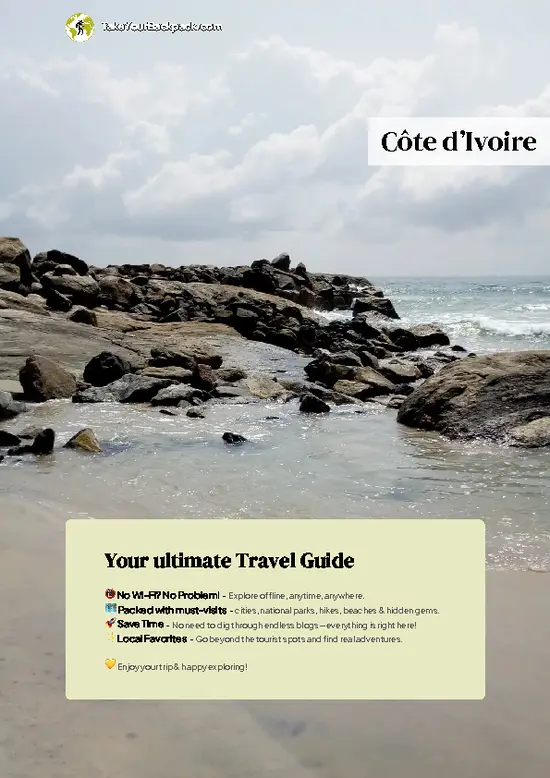
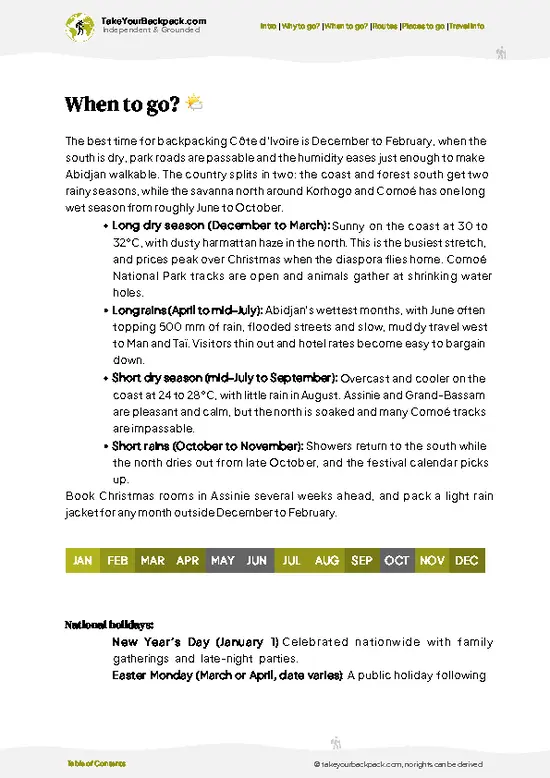
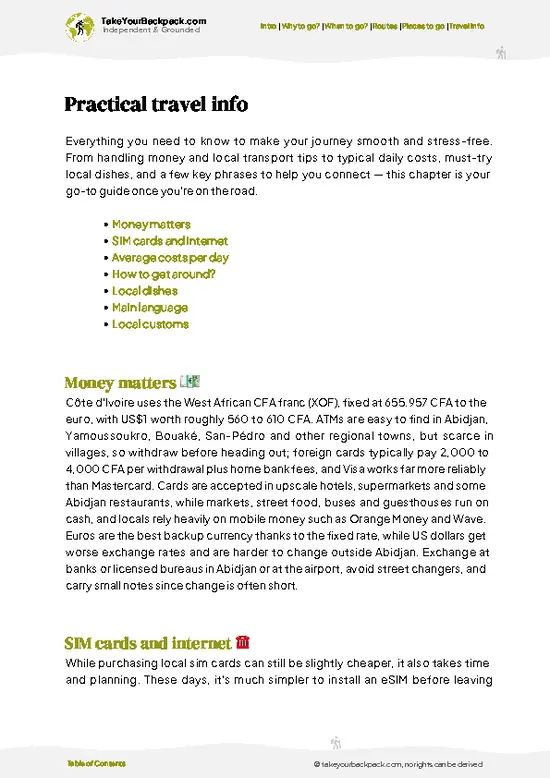
example page 0 from our offline Travel Guide for Côte d’Ivoire
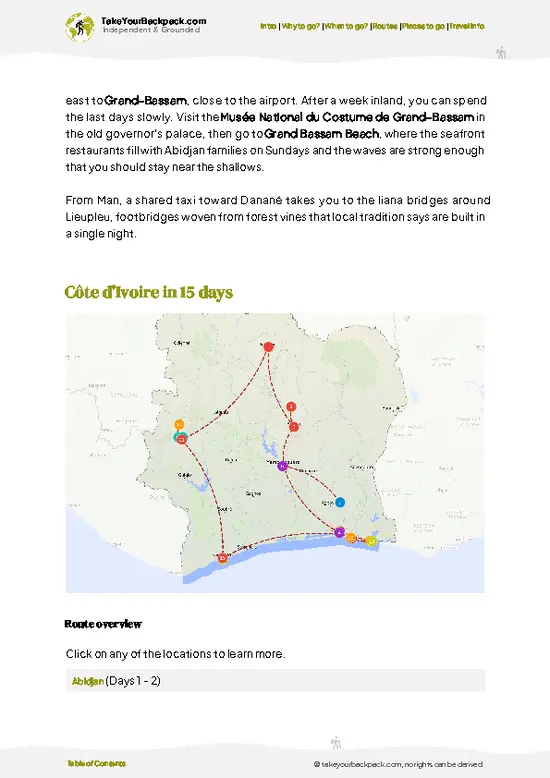
example page 1 from our offline Travel Guide for Côte d’Ivoire
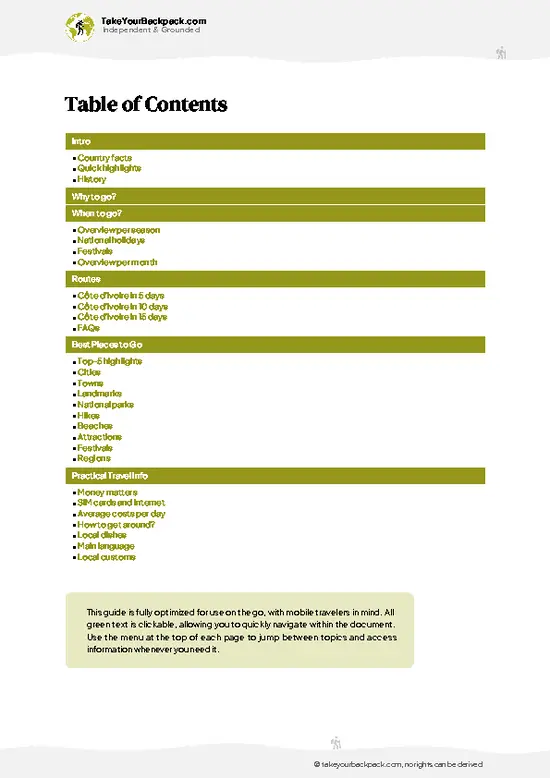
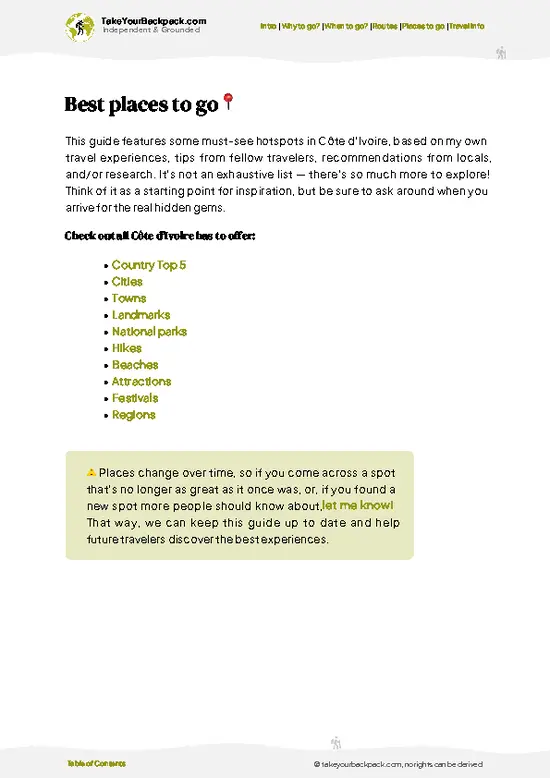
example page 2 from our offline Travel Guide for Côte d’Ivoire
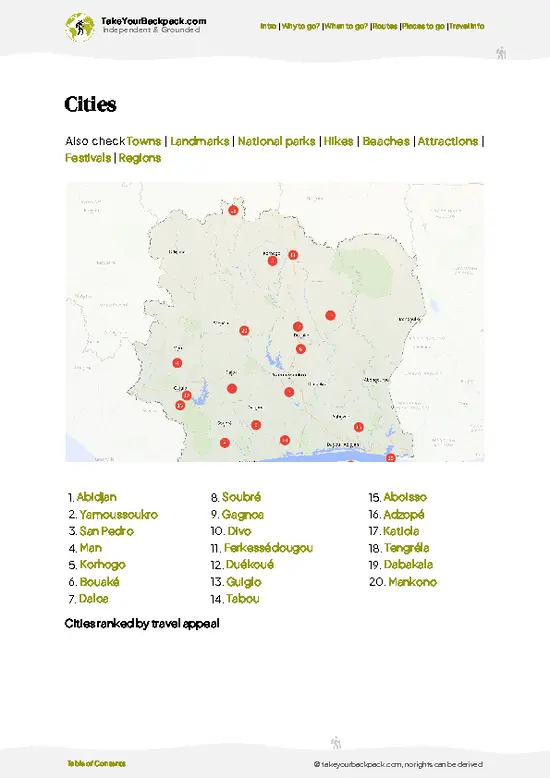
example page 3 from our offline Travel Guide for Côte d’Ivoire
example page 4 from our offline Travel Guide for Côte d’Ivoire
example page 5 from our offline Travel Guide for Côte d’Ivoire
example page 6 from our offline Travel Guide for Côte d’Ivoire
example page 7 from our offline Travel Guide for Côte d’Ivoire
Loading the map 🌍
CLICK TO FILTER
cities
towns
landmarks
national parks
hikes
beaches
attractions
festivals
regions
SHOW COUNTRY’S BESTSHOW ALL

✨ Why go?
Ranked #11 city in Côte d’Ivoire
Why visitors keep coming back

Divo works as a working-town pause between Abidjan and the west, and that is the honest reason to stop. The main draw is seeing the heart of the cocoa country at close range: cocoa and cashew traders bargaining at the market, drying beans spread on tarps, and the Bandama River close by. Accommodation is basic and few, so expect simple guesthouses rather than hostels, with no backpacker social scene to speak of. Food is the other plus, with grilled fish and attiéké served from open-air stalls. It is a place for one night or two to break a long road trip, not a base for a week. Onward connections by shared taxi and bus are easy to find on the main road.

💡 HighlightsThe experiences that define the visit

  1. Divo Central Market: The town’s best sight, with cocoa, palm oil, yams, fish and cloth sold in crowded lanes. Go in the morning, when trading is busiest. Free to enter, 1 to 2 hours.
  2. Bandama River banks: Quiet spots to watch fishermen and pirogues, with a few riverside stalls. Late afternoon is cooler and gives softer light. Free, about 1 hour.
  3. Cocoa trading depots: Around town, buyers weigh and bag beans during harvest seasons. Ask politely before photographing. Usually free, 30 minutes.
  4. Maquis street food crawl: Grilled fish, chicken and attiéké at open-air stalls in the evening, when the grills are lit. Meals cost about €2 to 5, 1 to 2 hours.
  5. Neighborhood walk through the Dida quarters: Family compounds, small chapels and roadside workshops show everyday life of the local Dida people. Early
… read more 👉
  1. Divo Central Market: The town’s best sight, with cocoa, palm oil, yams, fish and cloth sold in crowded lanes. Go in the morning, when trading is busiest. Free to enter, 1 to 2 hours.
  2. Bandama River banks: Quiet spots to watch fishermen and pirogues, with a few riverside stalls. Late afternoon is cooler and gives softer light. Free, about 1 hour.
  3. Cocoa trading depots: Around town, buyers weigh and bag beans during harvest seasons. Ask politely before photographing. Usually free, 30 minutes.
  4. Maquis street food crawl: Grilled fish, chicken and attiéké at open-air stalls in the evening, when the grills are lit. Meals cost about €2 to 5, 1 to 2 hours.
  5. Neighborhood walk through the Dida quarters: Family compounds, small chapels and roadside workshops show everyday life of the local Dida people. Early morning is best. Free, 1 to 2 hours.
Beyond town, Divo works as a base for day trips to cocoa plantations, the Lakota area and the coastal lagoons near Grand-Lahou. All of the above fits comfortably into one relaxed day.
Spotted a mistake or missing something? Contact us.

🏘️ NeighborhoodsNeighborhood guide to Divo

Divo is a compact, flat town in the cocoa belt of south-central Côte d’Ivoire, and a few areas are worth your feet while others are just roads to pass through.
  • Central market and gare routière area: This is where to spend your first hour. Stalls are stacked with cocoa-region produce, smoked fish and plastic basins of palm oil, motos whine past, and the air smells of woodsmoke and ripe plantain. It is hot, loud and tight, and it is the best place to feel the town. Walkable on foot.
  • Town center around the main boulevard: Banks, pharmacies, phone kiosks and maquis (open-air restaurants) line the road, with the best grilled fish at dusk when charcoal glows under the lamps. Evenings bring speakers thumping from small bars. Fine for a stroll, nothing to linger over by day.
  • Residential quarters and
… read more 👉
Divo is a compact, flat town in the cocoa belt of south-central Côte d’Ivoire, and a few areas are worth your feet while others are just roads to pass through.
  • Central market and gare routière area: This is where to spend your first hour. Stalls are stacked with cocoa-region produce, smoked fish and plastic basins of palm oil, motos whine past, and the air smells of woodsmoke and ripe plantain. It is hot, loud and tight, and it is the best place to feel the town. Walkable on foot.
  • Town center around the main boulevard: Banks, pharmacies, phone kiosks and maquis (open-air restaurants) line the road, with the best grilled fish at dusk when charcoal glows under the lamps. Evenings bring speakers thumping from small bars. Fine for a stroll, nothing to linger over by day.
  • Residential quarters and the town edges: Quiet lanes of red dirt, mango trees and cocoa drying on tarps in the sun. Pleasant for a slow wander early in the morning, but there is little to see, so skip them if time is short. Heat builds by late morning, so walk early.

⌛️ 1 dayA smart one-day plan

7:30 AM: Grand Marché de Divo
Start where the town starts its day, before the heat flattens everything. Vendors stack cocoa-country staples, yams, smoked fish, palm oil and tomato pyramids, and the air smells of woodsmoke and wet earth. Grab a coffee with condensed milk and a bread roll from a stall at the edge, then walk the main road toward the center.

9:30 AM: Cocoa and Coffee Plantation Edges
Divo sits in the cocoa belt, so a walk on the town outskirts shows drying racks and bean sacks lined up at the roadside. Hire a motorbike taxi for a short ride, ask a farmer to show you a split pod, and taste the sweet white pulp around the beans. It tastes nothing like chocolate, and that surprise is the point.

12:30 PM: Maquis Lunch
Sit at an open-air maquis in the center for grilled chicken or fish … read more 👉
7:30 AM: Grand Marché de Divo
Start where the town starts its day, before the heat flattens everything. Vendors stack cocoa-country staples, yams, smoked fish, palm oil and tomato pyramids, and the air smells of woodsmoke and wet earth. Grab a coffee with condensed milk and a bread roll from a stall at the edge, then walk the main road toward the center.

9:30 AM: Cocoa and Coffee Plantation Edges
Divo sits in the cocoa belt, so a walk on the town outskirts shows drying racks and bean sacks lined up at the roadside. Hire a motorbike taxi for a short ride, ask a farmer to show you a split pod, and taste the sweet white pulp around the beans. It tastes nothing like chocolate, and that surprise is the point.

12:30 PM: Maquis Lunch
Sit at an open-air maquis in the center for grilled chicken or fish with attiéké and onion-tomato sauce. Prices are low and the plastic chairs are part of the deal. Rest through the hottest hours in the shade, since the afternoon sun here is heavy.

3:00 PM: Bandama River Bank
This is the corner that rarely makes it into plans. Take a motorbike taxi toward the Bandama and walk the bank, where fishermen mend nets and kids jump from dugout canoes. Ask before photographing anyone. The light is softer by now and the breeze finally moves.

5:30 PM: Town Center Evening
Return to the center as the grills fire up and the music starts from small bars. Eat roasted corn or grilled fish from a street seller, then finish with a cold local beer. Divo is quiet after dark, so one relaxed round is plenty.

🌤️ When to go?When to go for the best experience

Divo is best from December to February, when the air is drier and hotter days are easier to handle for walking.
  • Main dry season (December to February): Around 22 to 33°C (72 to 91°F), some dusty harmattan haze, and good road conditions. Prices stay steady.
  • Long rains (March to July): Highs of 28 to 31°C (82 to 88°F), heavy downpours and muddy side roads. Fewer travelers around.
  • Short dry spell (August to September): Cloudier and cooler, around 24 to 28°C (75 to 82°F), with lighter rain.
  • Short rains (October to November): Humid and stormy, with some road delays.
Daylight lasts about 12 hours all year, so plan trips between towns for the morning.

source: climatestotravel.comJANJanuary: highly recommended for travelingFEBFebruary: highly recommended for travelingMARMarch: highly recommended for travelingAPRApril: excellent for travelingMAYMay: fair for travelingJUNJune: fair for travelingJULJuly: fair for travelingAUGAugust: fair for travelingSEPSeptember: fair for travelingOCTOctober: fair for travelingNOVNovember: excellent for travelingDECDecember: highly recommended for traveling
when-to-go

✈️ The backpacker research shortcutCôte d’Ivoire Travel Guide

An offline-friendly backpacking guide with optimized travel routes, ranked highlights, transport advice, and the best areas to stay.
example page 0 from our offline Travel Guide for Côte d’Ivoire
example page 1 from our offline Travel Guide for Côte d’Ivoire
example page 2 from our offline Travel Guide for Côte d’Ivoire
example page 3 from our offline Travel Guide for Côte d’Ivoire
example page 4 from our offline Travel Guide for Côte d’Ivoire
example page 5 from our offline Travel Guide for Côte d’Ivoire
example page 6 from our offline Travel Guide for Côte d’Ivoire
example page 7 from our offline Travel Guide for Côte d’Ivoire
The digital guide (279 pages) contains:
✅ 64 highlights, ranked by travel appeal
✅ Optimized 5, 10 & 15-day travel routes
✅ Cities, national parks, landmarks, beaches
✅ How to get around
✅ Offline-friendly for travel without Wi-Fi
👉 Click to see all 30+ guide features

📅 Plan smarter in minutes, not weeks
✅ Month by month travel advice
✅ Festivals & national holidays
✅ Budget expectations

🗺️ Go to the right places, skip the overrated ones
✅ Honest pros & cons of destinations
✅ Top hikes, parks & viewpoints
✅ Lesser-known places most travelers miss
✅ Clear “worth it vs skip it” guidance

🛏️ Travel smoothly without rookie mistakes
✅ Best areas to stay
✅ Transport systems explained simply
✅ Common scams & safety advice
✅ SIM cards, money & practical tips

🌍 Understand the country, not just visit it
✅ Culture & traditions
✅ 52 Essential phrases & customs
✅ Festivals worth planning around
✅ Traveler-friendly historical context
✅ Insights that make places more meaningful

📱 Built for real travel conditions
✅ Fully downloadable PDF
✅ Works completely offline
✅ Optimized for phone use
✅ Useful in remote areas & buses
✅ Everything in one place
Stop searching, start planning
Get instant access to your full guide. 30‑day money-back guarantee.
+ Add another guide for just

By proceeding you agree to our terms.
Sent to your inbox immediately after payment • 100% Secure Checkout
Best Backpacking Travel Advisor 2025 tourism awardBest Backpacking
Travel Advisor
2025
What others say about Take Your Backpack Guides:
⭐⭐⭐⭐⭐
Fantastic, amazing amount of information!
⭐⭐⭐⭐⭐
My goodness this is amazing, it's what I've been looking for hats off too you!
⭐⭐⭐⭐⭐
I think this is absolutely BRILLIANT
⭐⭐⭐⭐
Very complete and informative. It's still missing places, but I gotta to commend you
⭐⭐⭐⭐⭐
This is truly amazing, thank you, can't wait to explore it with my kids!
⭐⭐⭐⭐⭐
Awesome resource, thank you!
⭐⭐⭐⭐⭐
This is amazing! Can't wait to explore the ones I haven't seen
⭐⭐⭐⭐
I love this! Well done, great idea.
⭐⭐⭐⭐⭐
Thanks for taking the time to make this gem!
⭐⭐⭐⭐⭐
This might be the best website I've ever seen.
⭐⭐⭐⭐⭐
Congratulations, and thank you so much for your work; it's incredibly valuable.
⭐⭐⭐⭐
In all seriousness I think you did a great job pointing out the important spots
⭐⭐⭐⭐⭐
10/10 very good
⭐⭐⭐⭐⭐
As someone who's only just starting to visit regularly this is awesome, thank you.
⭐⭐⭐⭐
Thank you very much! I'm going to visit my dad, it's going to be very useful!
⭐⭐⭐⭐⭐
This is really cool! We'll be travelling for the first time and this definitely come in handy.
⭐⭐⭐⭐⭐
You are now our minister of culture, congratulations 👨‍💼
⭐⭐⭐⭐⭐
Just wanted to tell you that this is a pearl! Going to follow your recommendations.
⭐⭐⭐⭐⭐
This is so cool. I'll definitely be using the resource for my travels soon.
⭐⭐⭐⭐⭐
This is very impressive! Good work.
⭐⭐⭐⭐⭐
This is an amazing and informative site. Very well done!

🛏️ Where to stay?Best areas to stay in Côte d’Ivoire

Stay in the town center near the main boulevard and market, since that is where the few budget guesthouses and basic hotels cluster. Rooms with a fan or air-conditioning generally cost about €10 to 25 a night, and true dorm hostels are rare, so expect a private room instead. Being central means you can walk to food, banks and the gare routière, and motos are always nearby.
The second option is the quieter residential edge of town, where rooms are often a little cheaper and nights are calmer. You will want a moto for the trip in, and it is less lit after dark. The center gets noise from late-night … read more 👉
Stay in the town center near the main boulevard and market, since that is where the few budget guesthouses and basic hotels cluster. Rooms with a fan or air-conditioning generally cost about €10 to 25 a night, and true dorm hostels are rare, so expect a private room instead. Being central means you can walk to food, banks and the gare routière, and motos are always nearby.
The second option is the quieter residential edge of town, where rooms are often a little cheaper and nights are calmer. You will want a moto for the trip in, and it is less lit after dark. The center gets noise from late-night bars and early morning market trucks, so earplugs help. Book ahead on weekends and during cocoa trading seasons, when traders fill the rooms.

🚌 Getting aroundMoving around without the hassle

In Divo, a moto-taxi is the easiest way to get around because the town is spread along a few main roads and the rides are short, cheap and always available. Traffic is light compared with Abidjan, but the dust and midday heat are constant. Public transport is informal, so expect to haggle and wait until cars fill.
  • Walking: The center is flat and small, and you can cross it in 20 to 30 minutes. Go early or after 4 pm, because the midday sun is brutal and the roadside dust sticks to your sweat.
  • Moto-taxi: The most practical choice, with rides across town costing about €0.30 to 0.80. Agree on the fare first, and ask for a helmet if the driver has one. They run from dawn until late evening, and the noisy engines and warm exhaust fumes come with the ride.
  • Shared taxis (woro-woro): Battered cars run
… read more 👉
In Divo, a moto-taxi is the easiest way to get around because the town is spread along a few main roads and the rides are short, cheap and always available. Traffic is light compared with Abidjan, but the dust and midday heat are constant. Public transport is informal, so expect to haggle and wait until cars fill.
  • Walking: The center is flat and small, and you can cross it in 20 to 30 minutes. Go early or after 4 pm, because the midday sun is brutal and the roadside dust sticks to your sweat.
  • Moto-taxi: The most practical choice, with rides across town costing about €0.30 to 0.80. Agree on the fare first, and ask for a helmet if the driver has one. They run from dawn until late evening, and the noisy engines and warm exhaust fumes come with the ride.
  • Shared taxis (woro-woro): Battered cars run fixed routes within town for around €0.20 to 0.40 a seat, and they wait until packed. Squeezing four across the back seat is normal, and it is a fine way to hear local chatter.
  • Intercity minibuses and bush taxis: Depart from the gare routière toward Abidjan (about 2.5 to 3.5 hours, around €5 to 8), Yamoussoukro and Gagnoa. Buses leave when full, mostly in the morning, and the last departures are usually mid-afternoon. Arrive early for a decent seat, and keep your bag close.

👛 Costs (as of 22 October 2026)Travel costs and budget guide for Divo

Divo costs about €25 to 40 a day for a backpacker, with a private room as the main expense. Prices below are for independent travelers who pay in cash.
CategoryBudget RangeLocal Reality
Dorm/budget room (high season)€12 to 22Few dorms exist, so a basic private room with a fan is the norm.
Dorm/budget room (off-season)€9 to 18Rates drop slightly in the rainy months.
Meals€4 to 8Market breakfast, grilled fish or stew at a maquis.
Local transport€1 to 3Moto-taxis and shared taxis within town.
City transport passNot availablePay per ride in cash.
Activities/entry fees€0 to 5Mostly free, with small costs for guides or boats on trips.
Miscellaneous€2 to 4Water, phone credit, snacks.
Total Daily Budget€31Based on high season rates.
Save money by eating where locals do, at market stalls and street grills, and … read more 👉
Divo costs about €25 to 40 a day for a backpacker, with a private room as the main expense. Prices below are for independent travelers who pay in cash.
CategoryBudget RangeLocal Reality
Dorm/budget room (high season)€12 to 22Few dorms exist, so a basic private room with a fan is the norm.
Dorm/budget room (off-season)€9 to 18Rates drop slightly in the rainy months.
Meals€4 to 8Market breakfast, grilled fish or stew at a maquis.
Local transport€1 to 3Moto-taxis and shared taxis within town.
City transport passNot availablePay per ride in cash.
Activities/entry fees€0 to 5Mostly free, with small costs for guides or boats on trips.
Miscellaneous€2 to 4Water, phone credit, snacks.
Total Daily Budget€31Based on high season rates.
Save money by eating where locals do, at market stalls and street grills, and by sharing taxis rather than hiring a moto for the day.


source: cotedivoiretourisme.ci
⚠️ Prices can change and everyone travels differently, so take this as a rough guide. Hope it helps you plan your adventure!

🚌 Day tripsShort trips worth adding

Divo works well as a base for short regional trips by shared taxi, with the main roads leading to a lagoon, a market town and forest.
Grand-Lahou:
The lagoon and Atlantic sandbar town is the best day out, with pirogue rides through mangroves and fishing villages. Allow about 1.5 to 2 hours each way by road, with a change of vehicle, and budget €15 to 25 including a boat. Go in the dry season, and leave early so you are not stuck after the last car.
👉 Explore Grand-Lahou
Lakota:
A nearby town reached in about an hour by shared car for €2 to 4, good for a lively market and a look at everyday cocoa and rubber country. First-timers often arrive in the afternoon, when the market is already winding down.
👉 Explore Lakota
Yamoussoukro:
The giant Basilica of Our Lady of Peace is worth the 2.5 to 3.5 hours … read more 👉
Divo works well as a base for short regional trips by shared taxi, with the main roads leading to a lagoon, a market town and forest.
Grand-Lahou:
The lagoon and Atlantic sandbar town is the best day out, with pirogue rides through mangroves and fishing villages. Allow about 1.5 to 2 hours each way by road, with a change of vehicle, and budget €15 to 25 including a boat. Go in the dry season, and leave early so you are not stuck after the last car.
👉 Explore Grand-Lahou
Lakota:
A nearby town reached in about an hour by shared car for €2 to 4, good for a lively market and a look at everyday cocoa and rubber country. First-timers often arrive in the afternoon, when the market is already winding down.
👉 Explore Lakota
Yamoussoukro:
The giant Basilica of Our Lady of Peace is worth the 2.5 to 3.5 hours each way. Count on €15 to 22 for transport and entry, and note it makes a long day, so leave before dawn.
👉 Explore Yamoussoukro

🍲 FoodLocal Flavors for Backpackers

Divo sits in a cocoa and rubber area of the Bandama and Lôh-Djiboua region, so the local table leans on forest and lagoon produce. Look for attiéké with grilled fish, often tilapia or catfish, sold at evening maquis for about €2 to 4. Try kedjenou, a slow-cooked chicken stew sealed in a pot, and foutou banane with sauce graine (palm nut), thick, nutty and rich. Smoked bushmeat is sometimes sold, but it is a personal choice.
Eat at the central market stalls for breakfast of fried dough, alloco (fried plantain) and spicy sauce, then at roadside grills as dusk falls. Drinks include bangui (palm wine) from local tappers, and cold Bock beer in open-air bars. Water sachets are sold everywhere for pennies.

🛡️ SafetyTraveler Safety Guide

Divo is a calm provincial town, and most problems are petty. Keep phones and cash out of sight in the crowded market, where pickpocketing can happen, and carry only what you need. At night the side streets are poorly lit, so take a moto rather than walking alone, particularly if you are solo. Moto drivers sometimes quote tourist prices, so agree on the fare first. Police checkpoints on the roads are routine, so keep a passport copy handy and stay polite. Roads are the biggest risk, so avoid night travel between towns. Women traveling alone will get attention, but it is usually friendly curiosity, and a firm greeting is enough.

FAQCommon questions from travelers

One to two days is enough for Divo itself, with a third day if you add the lagoon at Grand-Lahou. The market and town center take half a day, and the trip to Grand-Lahou takes 1.5 to 2 hours each way. Abidjan is about 2.5 to 3.5 hours away by road.
Divo is reasonably safe for solo backpackers, with petty theft in the market as the main concern. Take a moto rather than walking after dark, because the side streets are poorly lit. Rooms cost roughly €10 to 25, and avoid intercity travel at night, since road accidents are the larger risk.
Divo is known for its cocoa and rubber farming, and for being a trading hub in south-central Côte d’Ivoire. Its central market is the main draw, with produce, smoked fish and palm oil. Visitors also use it as a base for Grand-Lahou, about 1.5 to 2 hours away, and for grilled fish with attiéké costing €2 to 4.
⚠️ Things can change over time, so always validate details locally before you go.

Other Ivorian cities near Divo

Explore more nearby:

  • Lakota—rubber plantations, rural roads, small-town center| 32 km away
  • Oumé—timber industry, forest edge, small-town markets| 59 km away
  • Tiassalé—Bandama River, colonial bridge, fishing communities| 60 km away

💡 Not sure where to go next?
Create a personalized itinerary for Côte d’Ivoire including Divo and the places that fit your trip.

Generate my itinerary

👉 Discover all cities

Or checkout all Côte d’Ivoire has to offer (think cities, towns, villages, national parks, hikes, beaches, festivals)
Country photo of Côte d’Ivoire

We 💚 feedbackWhat to keep in mind

Divo trips up travelers who arrive late and expect options. Show up by mid-afternoon, book a room first, and carry plenty of cash. I would spend the evening at the grills and the morning at the market, then move on.

✍️ Help improve this page!
The information on this page is based on in-depth research, insights shared by experienced travelers, and feedback from the local travel community in Côte d’Ivoire. While every effort is made to keep the information accurate and current, conditions can change — so if you spot anything incorrect or outdated, please get in touch.


🙋‍♂️ Give feedback

👋 Meet the founderWho’s Behind Take Your Backpack?

Johan, backpacker and founder of TakeYourBackpackHi, I’m Johan (Netherlands 🇳🇱), the creator of TakeYourBackpack. Over the past 3 decades, I’ve backpacked through 90+ countries across six continents, gaining extensive experience with independent travel, long-term trips, and overland routes.

This site is built on a combination of firsthand travel experience and carefully curated insights from other backpackers. Many guides are based on places I’ve personally visited, while others bring together tips, observations, and practical advice shared by trusted travelers I’ve met along the way.

The goal is to provide realistic, experience-driven guidance — not generic itineraries — so you can explore destinations with better context, clearer expectations, and more confidence.