×

Côte d’Ivoire🇨🇮 | citiesYamoussoukroBasilica dome, wide boulevards, crocodile lakes | things to do and best time to go

Explore San PedroExplore Aboisso

Backpacking in Yamoussoukro
🏆 Top pickcity ranked #3
By Johan Kruseman 🇳🇱 | Updated May 12, 2026

Here’s the trick with Yamoussoukro: most travelers don’t realize how much smoother life gets once you’re here. The city’s wide boulevards and low-key traffic are a relief after the chaos of Abidjan, and you can actually get across town in minutes, not hours. Yamoussoukro sits almost dead-center in Côte d’Ivoire, making it a strategic pivot point for overland routes north, south, or west. As a backpacker, you’ll find the city’s main draw is the surreal Basilica of Our Lady of Peace—think Vatican grandeur dropped in the savannah—plus the crocodile moat at the Presidential Palace, which is as oddball as it sounds. The city is safe by Ivorian standards, with a mellow, almost sleepy vibe that can feel both refreshing and isolating. Costs are lower than in Abidjan, but don’t expect a buzzing hostel scene or much nightlife. Yamoussoukro is less about meeting fellow travelers and more about soaking up the quirks of a capital that feels like a half-finished dream.

Discover everything you want to know in the 📖 Côte d’Ivoire Travel Guide.
Loading the map 🌍
CLICK TO FILTER
city
town
unique site
national park
hike
beach
attraction
festival
region
SHOW COUNTRY’S BESTSHOW ALL

✨ Why go?
Ranked #3 city in Côte d’Ivoire
Why Yamoussoukro should be on your travel list

Yamoussoukro is a strategic stop for backpackers weaving through Côte d’Ivoire. It’s not just about the highlights; it’s about how they fit into your journey. The city offers a unique blend of affordability and comfort, making it a solid basecamp for day trips to nearby attractions.

Hostels here are friendly and budget-friendly, often buzzing with fellow travelers eager to share stories and tips. The food scene is a delightful mix of local flavors and street eats, perfect for fueling your adventures without breaking the bank.

Yamoussoukro is also walkable, allowing you to explore at your own pace. You can easily navigate from one highlight to another, soaking in the local vibe. When the sun sets, the nightlife offers a laid-back atmosphere, ideal for unwinding after a day of exploration. … read more 👉
Yamoussoukro is a strategic stop for backpackers weaving through Côte d’Ivoire. It’s not just about the highlights; it’s about how they fit into your journey. The city offers a unique blend of affordability and comfort, making it a solid basecamp for day trips to nearby attractions.

Hostels here are friendly and budget-friendly, often buzzing with fellow travelers eager to share stories and tips. The food scene is a delightful mix of local flavors and street eats, perfect for fueling your adventures without breaking the bank.

Yamoussoukro is also walkable, allowing you to explore at your own pace. You can easily navigate from one highlight to another, soaking in the local vibe. When the sun sets, the nightlife offers a laid-back atmosphere, ideal for unwinding after a day of exploration.

Plus, onward travel is a breeze, connecting you to other key destinations in the region. If you’re looking for a place that balances value and experience, Yamoussoukro is worth considering, whether for a longer stay or a quick pit stop.
Get the complete Travel Guide for Côte d’Ivoire
Everything organized for offline planning — routes, highlights, costs & tips

See what’s inside 👉

Get the Travel Guide -

💡 HighlightsTop highlights of Yamoussoukro

  • Basilique Notre-Dame de la Paix — The jaw-dropping showpiece: massive, glossy interiors and an enormous plaza that feels deliberately over the top. Even if you skip mass, the architecture, stained glass and the scale make it a must-see photo stop.
  • Lac aux Crocodiles (the Crocodile Lake) — A small park/lake near the basilica where tame crocodiles sun themselves and locals sometimes feed them. It’s an odd, memorable little encounter that says a lot about how the city blends spectacle and local life.
  • Mausolée de Félix Houphouët-Boigny — The founder’s tomb and memorial complex: a solemn site that helps explain the city’s 20th-century makeover and its political history. Easy to visit; worth pairing with the palace and basilica.
  • Palais Présidentiel (exterior and grounds) — You can’t stroll
read more 👉
  • Basilique Notre-Dame de la Paix — The jaw-dropping showpiece: massive, glossy interiors and an enormous plaza that feels deliberately over the top. Even if you skip mass, the architecture, stained glass and the scale make it a must-see photo stop.
  • Lac aux Crocodiles (the Crocodile Lake) — A small park/lake near the basilica where tame crocodiles sun themselves and locals sometimes feed them. It’s an odd, memorable little encounter that says a lot about how the city blends spectacle and local life.
  • Mausolée de Félix Houphouët-Boigny — The founder’s tomb and memorial complex: a solemn site that helps explain the city’s 20th-century makeover and its political history. Easy to visit; worth pairing with the palace and basilica.
  • Palais Présidentiel (exterior and grounds) — You can’t stroll through the inner offices, but the palace compound, gates and ceremonial avenues are on full display. It’s essential for understanding the city’s purpose-built, monumental vibe.
  • Le Grand Marché (central market) — Raw, noisy and full of life: produce, fabrics, phone accessories and cheap street food. Great for people-watching, practicing a few French phrases and tasting authentic local snacks.
  • Village artisanal — A concentrated spot for local crafts: woodcarvings, woven goods and souvenirs. Smaller and less polished than Abidjan’s markets, but better for bargaining and meeting actual artisans.
  • Les grands boulevards et ronds-points monumentaux — Not a single monument but a walking/driving experience: wide avenues, oversized roundabouts and odd sculptures that tell the story of Yamoussoukro as a planned capital. Good for a relaxed photo drive.
  • Maison de la Culture / Centre culturel — The local cultural center where you can catch music, theatre or dance if a program’s on. Check the schedule — an evening show gives a far richer sense of Ivorian culture than daytime touring.
  • Stade municipal — Visit on a match day if you can. Local football creates a noisy, friendly mêlée of vendors, drums and chants — the best way to see everyday life and meet people without any tourist pretense.
  • Rues et cantines autour du marché (street-food quarter) — A low-key food crawl: small diners serving attiéké, grilled fish, aloco and soups. Cheap, real and essential if you want to taste Yamoussoukro beyond hotel restaurants.
A few good day-trip options nearby: Lac de Kossou (the dam and lakeshore), the market town of Dimbokro for a livelier regional market, and the Bandama River valley — all real, visitable places you can reach from Yamoussoukro in a day.
Spotted a mistake or missing something? Contact us.

Things to do near Yamoussoukro

Ratings based on Tripadvisor reviews. When you book through this link, you support our work at no extra cost to you.

🏘️ NeighborhoodsNeighborhood guide to Yamoussoukro

Yamoussoukro, the political capital of Côte d’Ivoire, offers a unique blend of culture and history, making it a fascinating stop for backpackers. Here’s how the neighborhoods stack up:

Centre Ville: This is the heart of Yamoussoukro. You’ll find bustling markets and local eateries. It’s affordable, with plenty of budget accommodations. The vibe is lively, especially during the day, but it quiets down at night. Walkability is decent, and you can easily access public transport. Perfect for short stays where you want to soak in the local life.

Plateau: Known for its modern architecture and government buildings, Plateau feels more urban and polished. It’s pricier than Centre Ville, but you get a taste of the city’s administrative pulse. The nightlife here is subdued, making it suitable for those … read more 👉
Yamoussoukro, the political capital of Côte d’Ivoire, offers a unique blend of culture and history, making it a fascinating stop for backpackers. Here’s how the neighborhoods stack up:

Centre Ville: This is the heart of Yamoussoukro. You’ll find bustling markets and local eateries. It’s affordable, with plenty of budget accommodations. The vibe is lively, especially during the day, but it quiets down at night. Walkability is decent, and you can easily access public transport. Perfect for short stays where you want to soak in the local life.

Plateau: Known for its modern architecture and government buildings, Plateau feels more urban and polished. It’s pricier than Centre Ville, but you get a taste of the city’s administrative pulse. The nightlife here is subdued, making it suitable for those seeking a quieter experience. Transport options are plentiful, but you might want to rely on taxis for late-night returns. Great for longer stays if you prefer a more refined atmosphere.

Lake Yamoussoukro Area: This area is all about tranquility. It’s a bit removed from the hustle, offering stunning views of the lake and the Basilica. Accommodations here can be a splurge, but the serene environment is worth it. Walkability is limited, so plan on using taxis or renting a bike. Ideal for those looking to unwind after a day of exploration, making it a solid choice for longer visits.

Adjamé: A vibrant neighborhood filled with local life. It’s budget-friendly and offers a genuine taste of Ivorian culture. The nightlife is buzzing, with street food and music filling the air. While it’s walkable, be cautious at night. This area is perfect for short stays if you want to dive into the local scene.

⌛️ 1 dayA smart one-day plan

Yamoussoukro, the political capital of Côte d’Ivoire, is a city that blends ambition with a laid-back vibe. It’s known for its striking architecture, including the Basilica of Our Lady of Peace, which rivals St. Peter’s in size. But beyond the iconic sights, Yamoussoukro offers a glimpse into Ivorian life that’s both rich and rewarding.

Start your day at the Basilica. Arrive early to beat the heat and the crowds. The sheer scale of this structure is breathtaking. Take your time wandering around the grounds, soaking in the intricate mosaics and the serene atmosphere. This isn’t just a photo op; it’s a moment to reflect on the city’s aspirations.

Afterward, head to the nearby local market in the Plateau district. Here, you’ll find vibrant stalls filled with fresh produce, spices, and handmade … read more 👉
Yamoussoukro, the political capital of Côte d’Ivoire, is a city that blends ambition with a laid-back vibe. It’s known for its striking architecture, including the Basilica of Our Lady of Peace, which rivals St. Peter’s in size. But beyond the iconic sights, Yamoussoukro offers a glimpse into Ivorian life that’s both rich and rewarding.

Start your day at the Basilica. Arrive early to beat the heat and the crowds. The sheer scale of this structure is breathtaking. Take your time wandering around the grounds, soaking in the intricate mosaics and the serene atmosphere. This isn’t just a photo op; it’s a moment to reflect on the city’s aspirations.

Afterward, head to the nearby local market in the Plateau district. Here, you’ll find vibrant stalls filled with fresh produce, spices, and handmade crafts. Engage with the vendors; they’re often eager to share stories about their goods. This is a slice of everyday life that many tourists miss, and it’s a fantastic way to connect with the local culture.

For lunch, seek out a small eatery in the neighborhood. Try attiéké, a local dish made from cassava, paired with grilled fish. The flavors are authentic, and the atmosphere is casual. You’ll feel like you’re dining with friends rather than in a tourist trap.

In the afternoon, take a stroll around the tranquil Lake Kossou. Rent a canoe if you’re feeling adventurous, or simply enjoy the views. This area is often overlooked, but it’s a peaceful escape from the city’s hustle.

As evening approaches, return to the city center. Grab a drink at a local bar and watch the sunset. The sky transforms into a canvas of colors, reflecting the spirit of Yamoussoukro. This day isn’t just about ticking boxes; it’s about immersing yourself in a place that’s both ambitious and welcoming.
Build the Right Itinerary
Use the Côte d’Ivoire Travel Guide’s 5, 10 & 15-day routes as a starting point to plan a trip that actually works on the ground.

Get the Travel Guide -

🌤️ When to go?Weather, crowds, and seasonal trade-offs


  • Weather: Yamoussoukro’s climate is tropical, with a clear wet season from May to October. Heavy rains can flood roads and disrupt plans, so avoid these months if you want smooth trekking and exploring.

  • Temperature: Temperatures hover between 24°C and 32°C (75°F to 90°F) year-round. The coolest months, December to February, offer more comfortable heat, making physical activities less draining.

  • Daylight Hours: Near the equator, daylight is consistent—about 12 hours daily. This steady rhythm means you can plan hikes and sightseeing without worrying about early sunsets or long nights.

  • Crowds: Tourist traffic peaks during the dry season (November to April), especially around holidays. Visiting just before or after this window means fewer people and a more authentic vibe.

  • Seasonal Activities:
read more 👉

  • Weather: Yamoussoukro’s climate is tropical, with a clear wet season from May to October. Heavy rains can flood roads and disrupt plans, so avoid these months if you want smooth trekking and exploring.

  • Temperature: Temperatures hover between 24°C and 32°C (75°F to 90°F) year-round. The coolest months, December to February, offer more comfortable heat, making physical activities less draining.

  • Daylight Hours: Near the equator, daylight is consistent—about 12 hours daily. This steady rhythm means you can plan hikes and sightseeing without worrying about early sunsets or long nights.

  • Crowds: Tourist traffic peaks during the dry season (November to April), especially around holidays. Visiting just before or after this window means fewer people and a more authentic vibe.

  • Seasonal Activities: The dry season aligns with local festivals and markets, adding cultural richness to your trip. The wet season, while quieter, showcases lush landscapes but limits outdoor events.

  • Price Fluctuations: Accommodation and transport costs spike in the dry season due to demand. Traveling in shoulder months (April or October) can save money without sacrificing comfort.


Pro-tip: Aim for late November or early April to balance weather, crowds, and costs—this sweet spot lets you enjoy Yamoussoukro’s highlights without the hassle of rain or tourist overload.


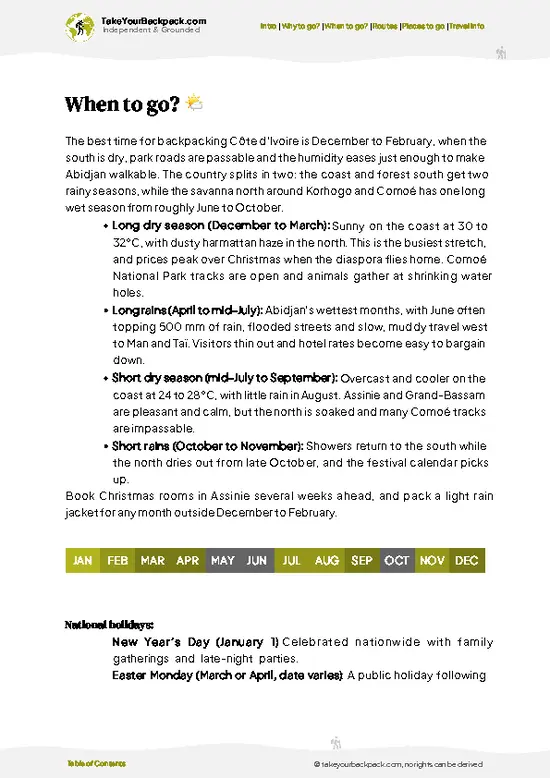
source: climatestotravel.comJANJanuary: excellent for travelingFEBFebruary: excellent for travelingMARMarch: excellent for travelingAPRApril: highly recommended for travelingMAYMay: fair for travelingJUNJune: fair for travelingJULJuly: fair for travelingAUGAugust: fair for travelingSEPSeptember: fair for travelingOCTOctober: highly recommended for travelingNOVNovember: highly recommended for travelingDECDecember: excellent for traveling
when-to-go

✈️ The backpacker research shortcutCôte d’Ivoire Travel Guide

An offline-friendly backpacking guide with optimized travel routes, ranked highlights, transport advice, and the best areas to stay.
The digital guide (337 pages) contains:
85 highlights, ranked by travel appeal
Optimized 5, 10 & 15-day travel routes
Cities, national parks, beaches, historical sites, ...
How to get around
Offline-friendly for travel without Wi-Fi
👉 Click to see all 30+ guide features

📅 Plan smarter in minutes, not weeks
Month by month travel advice
Festivals & national holidays
Budget expectations

🗺️ Go to the right places, skip the overrated ones
Honest pros & cons of destinations
Top hikes, parks & viewpoints
Lesser-known places most travelers miss
Clear “worth it vs skip it” guidance

🛏️ Travel smoothly without rookie mistakes
Best areas to stay
Transport systems explained simply
Common scams & safety advice
SIM cards, money & practical tips

🌍 Understand the country, not just visit it
Culture & traditions
52 Essential phrases & customs
Festivals worth planning around
Traveler-friendly historical context
Insights that make places more meaningful

📱 Built for real travel conditions
Fully downloadable PDF
Works completely offline
Optimized for phone use
Useful in remote areas & buses
Everything in one place
Save weeks of stressful planning
Get instant access to the full guide directly. 30-day money-back guarantee.


Sent to your inbox immediately after payment • 100% Secure Checkout
Best Backpacking Travel Advisor 2025 tourism awardBest Backpacking
Travel Advisor
2025
What others say about Take Your Backpack Guides:
⭐⭐⭐⭐⭐
Fantastic, amazing amount of information!
⭐⭐⭐⭐⭐
My goodness this is amazing, it's what I've been looking for hats off too you!
⭐⭐⭐⭐⭐
I think this is absolutely BRILLIANT
⭐⭐⭐⭐
Very complete and informative. It's still missing places, but I gotta to commend you
⭐⭐⭐⭐⭐
This is truly amazing, thank you, can't wait to explore it with my kids!
⭐⭐⭐⭐⭐
Awesome resource, thank you!
⭐⭐⭐⭐⭐
This is amazing! Can't wait to explore the ones I haven't seen
⭐⭐⭐⭐
I love this! Well done, great idea.
⭐⭐⭐⭐⭐
Thanks for taking the time to make this gem!
⭐⭐⭐⭐⭐
This might be the best website I've ever seen.
⭐⭐⭐⭐⭐
Congratulations, and thank you so much for your work; it's incredibly valuable.
⭐⭐⭐⭐
In all seriousness I think you did a great job pointing out the important spots
⭐⭐⭐⭐⭐
10/10 very good
⭐⭐⭐⭐⭐
As someone who's only just starting to visit regularly this is awesome, thank you.
⭐⭐⭐⭐
Thank you very much! I'm going to visit my dad, it's going to be very useful!
⭐⭐⭐⭐⭐
This is really cool! We'll be travelling for the first time and this definitely come in handy.
⭐⭐⭐⭐⭐
You are now our minister of culture, congratulations 👨‍💼
⭐⭐⭐⭐⭐
Just wanted to tell you that this is a pearl! Going to follow your recommendations.
⭐⭐⭐⭐⭐
This is so cool. I'll definitely be using the resource for my travels soon.
⭐⭐⭐⭐⭐
This is very impressive! Good work.
⭐⭐⭐⭐⭐
This is an amazing and informative site. Very well done!

🛏️ Where to stay?Best areas to stay in Côte d’Ivoire

In Yamoussoukro, the backpacker sweet spot is the central district around the city’s main avenues—think of it as the logistical hub where safety, social energy, and budget-friendly options intersect. This area isn’t sprawling, but it’s compact enough to walk between markets, eateries, and the iconic Basilica without wasting time or money on transport. Staying here means you’re plugged into the pulse of local life, with enough foot traffic and street vendors to feel secure after dark without the chaos of a tourist trap.

Compared to the quieter, more residential outskirts, the central district … read more 👉
In Yamoussoukro, the backpacker sweet spot is the central district around the city’s main avenues—think of it as the logistical hub where safety, social energy, and budget-friendly options intersect. This area isn’t sprawling, but it’s compact enough to walk between markets, eateries, and the iconic Basilica without wasting time or money on transport. Staying here means you’re plugged into the pulse of local life, with enough foot traffic and street vendors to feel secure after dark without the chaos of a tourist trap.

Compared to the quieter, more residential outskirts, the central district offers a clear advantage: hostels and guesthouses catering to budget travelers cluster here, creating a natural social scene. You’ll find fellow backpackers swapping tips over shared meals or planning day trips. It’s not luxury, but the comfort level is solid—clean, simple accommodations that prioritize practicality over frills.

Venture too far out, and you trade convenience for isolation and higher transport costs, which chips away at your time and budget. In Yamoussoukro, the smartest move is to base yourself where the city’s rhythm is accessible and affordable, turning your stay into a seamless blend of exploration and downtime without unnecessary sacrifices.

🚌 Getting aroundGetting around like a local

Yamoussoukro moves at its own rhythm—less a strict timetable and more a pulse you feel underfoot. The city’s flow is a blend of deliberate pauses and bursts of movement, where schedules are guidelines, not gospel. Here, time is flexible, and the dance between money and comfort plays out on dusty roads and shaded sidewalks. You’ll find that mastering transport isn’t about rigid plans but reading the subtle cues of when a shared taxi fills up or when a moto-taxi revs to life. It’s a game of timing and choice, where every option trades off speed, cost, and ease in ways that shape your experience.


  • Walking: The most straightforward and cost-free way to navigate Yamoussoukro’s core. Streets are walkable, especially around landmarks like the Basilica and the central market. Walking offers full
read more 👉
Yamoussoukro moves at its own rhythm—less a strict timetable and more a pulse you feel underfoot. The city’s flow is a blend of deliberate pauses and bursts of movement, where schedules are guidelines, not gospel. Here, time is flexible, and the dance between money and comfort plays out on dusty roads and shaded sidewalks. You’ll find that mastering transport isn’t about rigid plans but reading the subtle cues of when a shared taxi fills up or when a moto-taxi revs to life. It’s a game of timing and choice, where every option trades off speed, cost, and ease in ways that shape your experience.


  • Walking: The most straightforward and cost-free way to navigate Yamoussoukro’s core. Streets are walkable, especially around landmarks like the Basilica and the central market. Walking offers full control over your pace and route, but distances can be long and the midday sun unforgiving. Best for short hops and soaking in local life without spending a franc.


  • Shared Taxis (Taxi Collectifs): These are minibuses or cars that wait until full before departing. They run roughly from 6 a.m. to 7 p.m., with fares around 200-500 CFA francs depending on distance. They’re slower than private taxis due to multiple stops but unbeatable on price. Comfort is basic—expect crowded seats and a no-frills ride. Ideal if you’re patient and want to stretch your budget.


  • Moto-Taxis: The city’s fastest and most flexible option. Available from dawn until late evening, fares start at about 300 CFA francs for short trips. They weave through traffic and take shortcuts, cutting travel time significantly. Comfort is minimal and safety varies, so hold on tight and be ready for a bumpy ride. Perfect for urgent trips or when you want to cover ground quickly without breaking the bank.


  • Private Taxis: More comfortable and faster than shared taxis, but also pricier—expect to pay 1500-3000 CFA francs for typical city rides. They operate on demand, no fixed schedule, so you can leave when you want. Ideal if you value comfort and time over cost, especially for airport transfers or late-night travel when shared options dwindle.


  • Bicycle Rentals: A niche but growing choice for the adventurous. Renting a bike costs around 1000 CFA francs per day. It offers a balance of speed and freedom, letting you explore at your own pace without the expense of motorized transport. Roads can be rough, so it’s best for those comfortable with basic bike maintenance and ready to handle some dust.

👛 Costs (as of 14 February 2026)Money, prices, and spending tips

Backpacking in Yamoussoukro, Côte d’Ivoire, offers a clear trade-off between cost and comfort, with prices reflecting the city’s developing infrastructure and local economy. Here’s the breakdown:
  • Dorm Accommodation (High Season): Expect to pay around €8 to €12 per night. Availability tightens during festivals or holidays, pushing prices slightly higher.
  • Dorm Accommodation (Off-Season): Prices drop to about €5 to €8 per night. Fewer travelers mean better bargaining power and quieter stays.
  • Meals: Street food and local eateries dominate the scene. Budget €2 to €5 for a filling meal—think grilled fish, attiéké, or fried plantains. Western-style restaurants will cost more, around €7 to €12 per meal.
  • Local Transport: Minibuses and shared taxis are the norm. A typical ride costs between €0.30
read more 👉
Backpacking in Yamoussoukro, Côte d’Ivoire, offers a clear trade-off between cost and comfort, with prices reflecting the city’s developing infrastructure and local economy. Here’s the breakdown:
  • Dorm Accommodation (High Season): Expect to pay around €8 to €12 per night. Availability tightens during festivals or holidays, pushing prices slightly higher.
  • Dorm Accommodation (Off-Season): Prices drop to about €5 to €8 per night. Fewer travelers mean better bargaining power and quieter stays.
  • Meals: Street food and local eateries dominate the scene. Budget €2 to €5 for a filling meal—think grilled fish, attiéké, or fried plantains. Western-style restaurants will cost more, around €7 to €12 per meal.
  • Local Transport: Minibuses and shared taxis are the norm. A typical ride costs between €0.30 and €0.70, depending on distance. It’s cheap but expect crowded conditions and irregular schedules.
  • City Transport Pass: There is no formal city transport pass system. Budget travelers rely on individual fares or negotiate shared taxi rates for longer trips.
  • Basic Activities/Entry Fees: Visiting landmarks like the Basilica of Our Lady of Peace is often free or costs under €2. Museums and smaller attractions might charge €1 to €3. Guided tours, if available, can push this higher.
  • Miscellaneous Expenses: Include small costs like bottled water (€0.50), SIM cards with data (€3 to €5), and occasional snacks or tips. Budget around €2 to €4 daily for these incidentals.

In total, a backpacker in Yamoussoukro can expect to spend roughly €12 to €25 per day, depending on season and personal comfort choices. This range balances basic needs with a bit of flexibility for small splurges, making it a manageable and straightforward budget to navigate.


source: cotedivoiretourisme.ci
⚠️ Prices can change and everyone travels differently, so take this as a rough guide. Hope it helps you plan your adventure!

🚌 Day tripsShort trips worth adding

Yamoussoukro is a fantastic launchpad for day trips that blend culture, nature, and adventure. Here’s how to make the most of your time without breaking the bank.

Basilica of Our Lady of Peace
Just a short 10-minute ride from the city center, this architectural marvel is a must-see. Standing as one of the largest churches in the world, it’s a striking blend of modern design and spiritual significance. The entrance is free, but consider a small donation for a guided tour to truly appreciate its history. Early mornings are best to avoid crowds and soak in the serene atmosphere. Many first-timers overlook the surrounding gardens, which offer a peaceful retreat for reflection.
👉 Explore Basilica of Our Lady of Peace

Lake Kossou
About an hour’s drive from Yamoussoukro, Lake Kossou is a … read more 👉
Yamoussoukro is a fantastic launchpad for day trips that blend culture, nature, and adventure. Here’s how to make the most of your time without breaking the bank.

Basilica of Our Lady of Peace
Just a short 10-minute ride from the city center, this architectural marvel is a must-see. Standing as one of the largest churches in the world, it’s a striking blend of modern design and spiritual significance. The entrance is free, but consider a small donation for a guided tour to truly appreciate its history. Early mornings are best to avoid crowds and soak in the serene atmosphere. Many first-timers overlook the surrounding gardens, which offer a peaceful retreat for reflection.
👉 Explore Basilica of Our Lady of Peace

Lake Kossou
About an hour’s drive from Yamoussoukro, Lake Kossou is a stunning spot for a day of relaxation or adventure. You can rent a canoe for around $5 or simply enjoy a picnic by the water. The best time to visit is during the dry season, from November to March, when the weather is perfect for outdoor activities. A common mistake is underestimating the sun; pack sunscreen and plenty of water.


Yamoussoukro Crocodile Farm
Just 30 minutes away, this unique farm is home to hundreds of Nile crocodiles. For a small fee, you can take a guided tour and even feed the crocs—an adrenaline rush for sure! The farm is best visited in the late afternoon when the animals are most active. Many backpackers miss this quirky experience, thinking it’s just a tourist trap, but it’s genuinely engaging and educational.


Taï National Park
A bit further afield, about two hours from Yamoussoukro, Taï National Park offers a chance to see some of the last remaining primary rainforests in West Africa. Guided tours can be arranged for around $20, and it’s worth every penny for the chance to spot rare wildlife. The park is best explored in the cooler months, from December to February. First-timers often forget to bring sturdy shoes for the muddy trails, so be prepared.
👉 Explore Taï National Park

Bongouanou
Just under an hour’s drive, this small town is known for its vibrant local market and authentic Ivorian cuisine. You can sample delicious street food for just a few dollars. Visiting on a Saturday is ideal when the market is bustling with activity. Many backpackers miss the chance to interact with locals, so don’t be shy—engage with vendors and ask about their crafts.
Want to know what more Côte d’Ivoire offers?
The Côte d’Ivoire Travel Guide describes 85 highlights, from cities to national parks, from beaches to hikes

Get the Travel Guide -

🍲 FoodLocal Flavors for Backpackers

In Yamoussoukro, food is a vibrant tapestry of flavors that tells the story of Côte d’Ivoire. You can’t miss trying attieke, a fermented cassava dish that’s light and tangy, often served with grilled fish or chicken. Pair it with a side of sauce arachide, a rich peanut sauce that adds depth to any meal.

Street food is where the magic happens. Vendors line the streets, sizzling skewers of kebabs and frying up foutou, a starchy delight made from plantains or yams. The aroma wafts through the air, drawing you in. Grab a plate and eat standing up; it’s part of the experience.

For drinks, dive into the local palm wine—a sweet, fermented beverage that’s often enjoyed in a communal setting. It’s customary to share a drink, so don’t be surprised if someone offers you a taste.

Dining here is … read more 👉
In Yamoussoukro, food is a vibrant tapestry of flavors that tells the story of Côte d’Ivoire. You can’t miss trying attieke, a fermented cassava dish that’s light and tangy, often served with grilled fish or chicken. Pair it with a side of sauce arachide, a rich peanut sauce that adds depth to any meal.

Street food is where the magic happens. Vendors line the streets, sizzling skewers of kebabs and frying up foutou, a starchy delight made from plantains or yams. The aroma wafts through the air, drawing you in. Grab a plate and eat standing up; it’s part of the experience.

For drinks, dive into the local palm wine—a sweet, fermented beverage that’s often enjoyed in a communal setting. It’s customary to share a drink, so don’t be surprised if someone offers you a taste.

Dining here is casual and communal. Expect to share tables and engage in lively conversation. Remember, it’s not just about the food; it’s about the connections you make over a shared meal. Embrace the local customs, and you’ll find that every bite is a step deeper into the heart of Ivorian culture.

🛡️ SafetySafety Tips and Common Scams in Yamoussoukro

Yamoussoukro is generally safe for backpackers, but a few situational awareness tips can enhance your experience. Stick to well-lit areas at night, especially around the Basilica and main squares. Solo travelers should avoid wandering too far off the beaten path after dark; it’s not about fear, just smart navigation.

Scams are rare, but be cautious with unofficial taxi drivers. Always negotiate fares upfront or use a trusted ride-hailing app. Street vendors can be persistent, so a polite but firm “no, thank you” usually does the trick.

Keep your belongings secure, especially in crowded markets. A crossbody bag or money belt can be your best friend. Overall, embrace the vibrant atmosphere and engage with locals; they’re often friendly and helpful. By staying aware and confident, you’ll navigate … read more 👉
Yamoussoukro is generally safe for backpackers, but a few situational awareness tips can enhance your experience. Stick to well-lit areas at night, especially around the Basilica and main squares. Solo travelers should avoid wandering too far off the beaten path after dark; it’s not about fear, just smart navigation.

Scams are rare, but be cautious with unofficial taxi drivers. Always negotiate fares upfront or use a trusted ride-hailing app. Street vendors can be persistent, so a polite but firm “no, thank you” usually does the trick.

Keep your belongings secure, especially in crowded markets. A crossbody bag or money belt can be your best friend. Overall, embrace the vibrant atmosphere and engage with locals; they’re often friendly and helpful. By staying aware and confident, you’ll navigate Yamoussoukro like a pro, turning potential annoyances into opportunities for connection.

Other Ivorian cities near Yamoussoukro

Explore more nearby:

  • Toumodi—Baoulé culture, roadside eateries, transport junction| 41 km away
  • Oumé—timber industry, forest edge, small-town markets| 51 km away
  • Sinfra—coffee farms, rolling hills, local bus routes| 74 km away

👉 Discover all cities

Or checkout all Côte d’Ivoire has to offer (think cities, towns, villages, national parks, hikes, beaches, festivals)
Country photo of Côte d’Ivoire

We 💚 feedbackSumming up the experience

Yamoussoukro has a unique vibe that feels both laid-back and ambitious. The Basilica of Our Lady of Peace is a jaw-dropper, but don’t miss the local markets where you can taste real Ivorian life. The best surprise? The warmth of the locals. Just a heads-up: transport can be tricky; plan your rides ahead to avoid frustration. Embrace the spontaneity, but keep your wits about you. It’s a place that rewards curiosity and a little patience.

✍️ Help improve this page!
The information on this page is based on in-depth research, insights shared by experienced travelers, and feedback from the local travel community in Côte d’Ivoire. While every effort is made to keep the information accurate and current, conditions can change — so if you spot anything incorrect or outdated, please get in touch.


🙋‍♂️ Give feedback

👋 Meet the founderWho’s Behind Take Your Backpack?

Johan, backpacker and founder of TakeYourBackpackHi, I’m Johan (Netherlands 🇳🇱), the creator of TakeYourBackpack. Over the past decade, I’ve backpacked through 80+ countries across six continents, gaining extensive experience with independent travel, long-term trips, and overland routes.

This site is built on a combination of firsthand travel experience and carefully curated insights from other backpackers. Many guides are based on places I’ve personally visited, while others bring together tips, observations, and practical advice shared by trusted travelers I’ve met along the way.

The goal is to provide realistic, experience-driven guidance — not generic itineraries — so you can explore destinations with better context, clearer expectations, and more confidence.

Get full country guide •
Instant download • 85 highlights • Full Offline guide