×

Côte d’Ivoire🇨🇮 | citiesGuigloRiver crossing, logging trucks, market square | things to do and best time to go

Explore TandaExplore Tabou

Backpacking in Guiglo
👌 Worth visitingcity ranked #13
By Johan Kruseman 🇳🇱 | Updated June 4, 2026

Picture this: you’ve just arrived in Guiglo, deep in western Côte d’Ivoire, and you’re weighing whether to splurge on a private moto-taxi for a quick, breezy ride to the market, or save cash by cramming into a bush taxi that stops for every goat and grandmother along the way. This is the kind of trade-off that defines travel here. Guiglo sits far from the tourist circuit, a gritty, energetic crossroads where rubber plantations meet the dense Taï Forest. There’s no colonial grandeur or curated nightlife—just a bustling market, a few lively maquis (local bars), and the hum of real Ivorian life. It’s affordable, safe enough if you keep your wits, but don’t expect to bump into many fellow backpackers. Compared to the more polished Abidjan or the beachy sprawl of San Pedro, Guiglo is raw, honest, and a bit of a challenge—rewarding if you’re after authenticity, not comfort.

Discover everything you want to know in the 📖 Côte d’Ivoire Travel Guide.
Loading the map 🌍
CLICK TO FILTER
cities
towns
landmarks
national parks
hikes
beaches
attractions
festivals
regions
SHOW COUNTRY’S BESTSHOW ALL

✨ Why go?
Ranked #13 city in Côte d’Ivoire
Why visitors keep coming back

Guiglo is a strategic stop for backpackers navigating Côte d’Ivoire. It offers a basecamp value that’s hard to beat, making it easy to launch into nearby adventures. The walkability of the city means you can explore local markets and street food without hassle, soaking in the vibrant atmosphere. Hostels here are not just affordable; they foster a community vibe, perfect for meeting fellow travelers. When the sun sets, the nightlife kicks in, with lively spots that keep the energy high. Plus, Guiglo’s location makes onward travel to other destinations seamless. You’re not just passing through; you’re tapping into a local rhythm that enriches your journey. If you’re after a blend of comfort and authenticity, this city is worth your time.
Want to include Guiglo in your Côte d’Ivoire route?
Create a personalized Côte d’Ivoire itinerary that includes Guiglo and the places that fit your trip — based on your travel style, budget, and available time. Get your route in seconds.

Generate my trip

💡 HighlightsTop highlights of Guiglo

  • Grand Marché (the main market) — The beating heart of Guiglo: piles of plantain, palm oil, spices and fabrics, rowdy haggling, and an unbeatable window into daily life and local foodways. Go on a market day and watch traders arrange fresh cocoa and produce from the surrounding countryside.
  • Préfecture and colonial quarter — A short walk from the market you’ll find older administrative buildings and street patterns left from the colonial era. It’s not a museum, but the architecture and civic life tell the town’s modern history better than guidebooks.
  • Chef coutumier’s compound (traditional chief’s palace) — The seat of the Wê/Guéré traditional authorities. Visiting (with permission) gives you a look at local governance, rituals, mask traditions and oral history that still shape community
read more 👉
  • Grand Marché (the main market) — The beating heart of Guiglo: piles of plantain, palm oil, spices and fabrics, rowdy haggling, and an unbeatable window into daily life and local foodways. Go on a market day and watch traders arrange fresh cocoa and produce from the surrounding countryside.
  • Préfecture and colonial quarter — A short walk from the market you’ll find older administrative buildings and street patterns left from the colonial era. It’s not a museum, but the architecture and civic life tell the town’s modern history better than guidebooks.
  • Chef coutumier’s compound (traditional chief’s palace) — The seat of the Wê/Guéré traditional authorities. Visiting (with permission) gives you a look at local governance, rituals, mask traditions and oral history that still shape community life.
  • Grande Mosquée and neighborhood — A central place of worship and social life for many residents. Beyond the architecture, the surrounding lanes are full of cafés, food stalls and the steady rhythm of daily prayers and community interaction.
  • Artisan workshops and mask-makers’ quarter — Small family-run woodcarving and mask-making shops where you can see carvers at work and buy genuine pieces. These crafts reflect local spiritual and performance traditions and are far more authentic than souks elsewhere.
  • Cocoa and coffee buying stations — Guiglo is in the cocoa belt; visiting a purchasing station or cooperative (ask ahead) shows the crop-trading process from sacks on the scale to the regional traders — an essential part of the local economy and a very tangible rural-urban connection.
  • Marché aux bestiaux (livestock market) — Held on specific market days, this is where herders trade cattle and goats. It’s noisy, practical, and a great place to observe rural customs, negotiating styles, and transport logistics up close.
  • Stade Municipal (local football ground) — Catching a match here is one of the best ways to feel the town’s energy. Local teams draw passionate crowds; it’s cheap, loud, and a genuine community experience.
  • Gare routière (bus/taxi hub) — The transport hub is chaotic in the best possible way: minibuses, bush taxis and traders converge here. For overland travelers it’s essential for onward trips, and it’s a great spot for people-watching and picking up travel intelligence from locals.
  • Maison des Jeunes / cultural event spaces — Small performance and meeting spaces where you can catch live music, dance or local theater if there’s an event. These grassroots venues are where contemporary culture, youth creativity and tradition meet.
A few easy day trips from Guiglo: Taï National Park (forest and wildlife), the Cavally River border area, and the nearby town of Blolequin, all offer distinct landscapes and cultural stops outside the city.
Spotted a mistake or missing something? Contact us.

🏘️ NeighborhoodsKey areas and districts to know

Guiglo is a vibrant hub in Côte d’Ivoire, offering a mix of local culture and practical amenities for backpackers. Here’s how the neighborhoods stack up:

Centre Ville: This is the heart of Guiglo, where you’ll find bustling markets and local eateries. It’s walkable and lively, perfect for short stays. Costs are moderate, and you can easily access transport to other areas. Nightlife is modest but enjoyable.

Quartier Daloa: A bit quieter, this area is ideal for those seeking a more laid-back vibe. It’s slightly less touristy, making it a great spot for longer stays. Costs are lower here, and while nightlife is limited, you’ll find cozy cafes and friendly locals.

Zone Industrielle: This industrial area is less appealing for leisure but offers practical accommodation options. It’s best for … read more 👉
Guiglo is a vibrant hub in Côte d’Ivoire, offering a mix of local culture and practical amenities for backpackers. Here’s how the neighborhoods stack up:

Centre Ville: This is the heart of Guiglo, where you’ll find bustling markets and local eateries. It’s walkable and lively, perfect for short stays. Costs are moderate, and you can easily access transport to other areas. Nightlife is modest but enjoyable.

Quartier Daloa: A bit quieter, this area is ideal for those seeking a more laid-back vibe. It’s slightly less touristy, making it a great spot for longer stays. Costs are lower here, and while nightlife is limited, you’ll find cozy cafes and friendly locals.

Zone Industrielle: This industrial area is less appealing for leisure but offers practical accommodation options. It’s best for budget-conscious travelers who prioritize cost over comfort. Transport links are decent, but the vibe is more utilitarian than social.

Quartier Bolo: A hidden treasure for backpackers, this neighborhood boasts affordable guesthouses and a strong sense of community. It’s walkable, with a mix of quiet streets and local hangouts, making it suitable for both short and longer stays.

⌛️ 1 dayHow to make the most of one day

Guiglo, a vibrant hub in Côte d’Ivoire, offers a unique blend of culture and nature. Nestled between lush landscapes and the Atlantic coast, it’s a place where the rhythm of daily life unfolds in colorful markets and friendly interactions.

Start your morning at the bustling market in the heart of the city. Here, you can sip on fresh coconut water while browsing local crafts and produce. The energy is infectious, and you’ll find everything from handmade textiles to spices that tell stories of the region. After soaking in the market’s atmosphere, head to the nearby Parc National de Taï. This lesser-known gem is a short drive away and offers a chance to explore its rich biodiversity. A guided walk through the park reveals towering trees and the sounds of wildlife, a refreshing escape from urban … read more 👉
Guiglo, a vibrant hub in Côte d’Ivoire, offers a unique blend of culture and nature. Nestled between lush landscapes and the Atlantic coast, it’s a place where the rhythm of daily life unfolds in colorful markets and friendly interactions.

Start your morning at the bustling market in the heart of the city. Here, you can sip on fresh coconut water while browsing local crafts and produce. The energy is infectious, and you’ll find everything from handmade textiles to spices that tell stories of the region. After soaking in the market’s atmosphere, head to the nearby Parc National de Taï. This lesser-known gem is a short drive away and offers a chance to explore its rich biodiversity. A guided walk through the park reveals towering trees and the sounds of wildlife, a refreshing escape from urban life.

In the afternoon, return to Guiglo and visit the local art scene. Check out the Atelier de l’Artisan, where local artists showcase their work. You might even catch a live demonstration. As evening approaches, stroll through the lively streets of the Plateau neighborhood. Grab dinner at a local eatery, savoring dishes like attiéké and grilled fish, while chatting with locals who are eager to share their stories.

This day in Guiglo is not just about sights; it’s about connecting with the heart of Ivorian culture.
Turn your Guiglo visit into an Côte d’Ivoire adventure
Build a complete Côte d’Ivoire route with Guiglo, hidden gems, must-see destinations, and realistic travel times included.

Generate my trip

🌤️ When to go?Choosing the right time of year


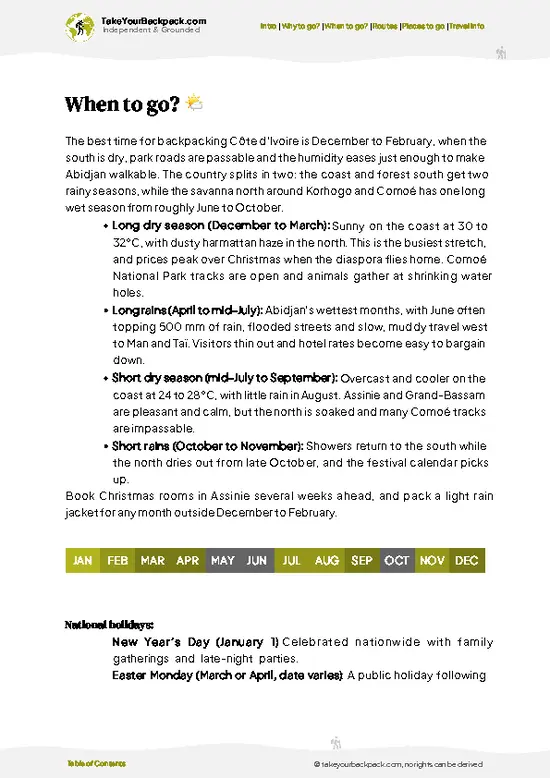
  • Weather: Guiglo’s climate swings between a wet season (May to October) and a dry season (November to April). The dry months offer less mud and fewer mosquito hassles, making trekking and exploring far more pleasant.

  • Temperature: Expect highs around 30–33°C (86–91°F) year-round, but the dry season brings slightly cooler nights, dropping to about 20°C (68°F), which is a relief after the daytime heat.

  • Daylight Hours: Daylight stays steady, roughly 12 hours daily, so your hiking and sightseeing windows won’t fluctuate much. Plan your days around early mornings and late afternoons to avoid peak heat.

  • Crowds: Tourist traffic is minimal year-round, but the dry season sees a slight uptick as travelers avoid the rain, so expect more fellow backpackers and local events then.

  • Seasonal Activities:
read more 👉

  • Weather: Guiglo’s climate swings between a wet season (May to October) and a dry season (November to April). The dry months offer less mud and fewer mosquito hassles, making trekking and exploring far more pleasant.

  • Temperature: Expect highs around 30–33°C (86–91°F) year-round, but the dry season brings slightly cooler nights, dropping to about 20°C (68°F), which is a relief after the daytime heat.

  • Daylight Hours: Daylight stays steady, roughly 12 hours daily, so your hiking and sightseeing windows won’t fluctuate much. Plan your days around early mornings and late afternoons to avoid peak heat.

  • Crowds: Tourist traffic is minimal year-round, but the dry season sees a slight uptick as travelers avoid the rain, so expect more fellow backpackers and local events then.

  • Seasonal Activities: The dry season aligns with local festivals and market days, offering richer cultural encounters. The wet season, while quieter, showcases lush landscapes but can limit access to some trails.

  • Price Fluctuations: Accommodation and transport costs dip during the wet season due to lower demand, but you trade off comfort and accessibility. The dry season commands a premium but delivers smoother logistics.


Pro-tip: Target the shoulder months of November and April to balance manageable weather, fewer crowds, and better prices—your sweet spot for smart, comfortable exploration.


source: climatestotravel.comJANJanuary: excellent for travelingFEBFebruary: excellent for travelingMARMarch: excellent for travelingAPRApril: highly recommended for travelingMAYMay: fair for travelingJUNJune: fair for travelingJULJuly: fair for travelingAUGAugust: fair for travelingSEPSeptember: fair for travelingOCTOctober: fair for travelingNOVNovember: highly recommended for travelingDECDecember: excellent for traveling
when-to-go

✈️ The backpacker research shortcutCôte d’Ivoire Travel Guide

An offline-friendly backpacking guide with optimized travel routes, ranked highlights, transport advice, and the best areas to stay.
The digital guide (337 pages) contains:
85 highlights, ranked by travel appeal
Optimized 5, 10 & 15-day travel routes
Cities, national parks, landmarks, beaches
How to get around
Offline-friendly for travel without Wi-Fi
👉 Click to see all 30+ guide features

📅 Plan smarter in minutes, not weeks
Month by month travel advice
Festivals & national holidays
Budget expectations

🗺️ Go to the right places, skip the overrated ones
Honest pros & cons of destinations
Top hikes, parks & viewpoints
Lesser-known places most travelers miss
Clear “worth it vs skip it” guidance

🛏️ Travel smoothly without rookie mistakes
Best areas to stay
Transport systems explained simply
Common scams & safety advice
SIM cards, money & practical tips

🌍 Understand the country, not just visit it
Culture & traditions
52 Essential phrases & customs
Festivals worth planning around
Traveler-friendly historical context
Insights that make places more meaningful

📱 Built for real travel conditions
Fully downloadable PDF
Works completely offline
Optimized for phone use
Useful in remote areas & buses
Everything in one place
Save weeks of stressful planning
Get instant access to your full guide. 30‑day money-back guarantee.


By proceeding you agree to our terms.
Sent to your inbox immediately after payment • 100% Secure Checkout
Best Backpacking Travel Advisor 2025 tourism awardBest Backpacking
Travel Advisor
2025
What others say about Take Your Backpack Guides:
⭐⭐⭐⭐⭐
Fantastic, amazing amount of information!
⭐⭐⭐⭐⭐
My goodness this is amazing, it's what I've been looking for hats off too you!
⭐⭐⭐⭐⭐
I think this is absolutely BRILLIANT
⭐⭐⭐⭐
Very complete and informative. It's still missing places, but I gotta to commend you
⭐⭐⭐⭐⭐
This is truly amazing, thank you, can't wait to explore it with my kids!
⭐⭐⭐⭐⭐
Awesome resource, thank you!
⭐⭐⭐⭐⭐
This is amazing! Can't wait to explore the ones I haven't seen
⭐⭐⭐⭐
I love this! Well done, great idea.
⭐⭐⭐⭐⭐
Thanks for taking the time to make this gem!
⭐⭐⭐⭐⭐
This might be the best website I've ever seen.
⭐⭐⭐⭐⭐
Congratulations, and thank you so much for your work; it's incredibly valuable.
⭐⭐⭐⭐
In all seriousness I think you did a great job pointing out the important spots
⭐⭐⭐⭐⭐
10/10 very good
⭐⭐⭐⭐⭐
As someone who's only just starting to visit regularly this is awesome, thank you.
⭐⭐⭐⭐
Thank you very much! I'm going to visit my dad, it's going to be very useful!
⭐⭐⭐⭐⭐
This is really cool! We'll be travelling for the first time and this definitely come in handy.
⭐⭐⭐⭐⭐
You are now our minister of culture, congratulations 👨‍💼
⭐⭐⭐⭐⭐
Just wanted to tell you that this is a pearl! Going to follow your recommendations.
⭐⭐⭐⭐⭐
This is so cool. I'll definitely be using the resource for my travels soon.
⭐⭐⭐⭐⭐
This is very impressive! Good work.
⭐⭐⭐⭐⭐
This is an amazing and informative site. Very well done!

🛏️ Where to stay?Choosing the right base

Guiglo’s backpacker scene is compact but clear once you know where to look. The heart of the action is the central district around the main market and bus station. This area is your best bet for safety and social energy—locals and travelers mix here, creating a lively, approachable vibe. Budget accommodations cluster nearby, mostly simple guesthouses and a handful of hostels that cater to solo travelers and those who want to connect without breaking the bank.

Compared to the quieter, more residential neighborhoods on the outskirts, staying central means you trade a bit of peace for convenience … read more 👉
Guiglo’s backpacker scene is compact but clear once you know where to look. The heart of the action is the central district around the main market and bus station. This area is your best bet for safety and social energy—locals and travelers mix here, creating a lively, approachable vibe. Budget accommodations cluster nearby, mostly simple guesthouses and a handful of hostels that cater to solo travelers and those who want to connect without breaking the bank.

Compared to the quieter, more residential neighborhoods on the outskirts, staying central means you trade a bit of peace for convenience and community. The outskirts might feel safer in theory but lack the social pulse and easy access to transport and eateries that backpackers crave. In Guiglo, proximity to the market and transport hubs isn’t just about saving time—it’s about plugging into the city’s rhythm, making every moment count without sacrificing your comfort or wallet.

🚌 Getting aroundGetting around like a local

Guiglo moves at its own rhythm—less a clockwork precision and more a pulse you feel underfoot. The city’s flow isn’t dictated by strict timetables but by a blend of local habits, market hours, and the ebb and swell of daily life. You won’t find a train or bus schedule nailed to a post, but you will find a system that works if you learn its cues. Here, time is flexible, money is often the lever for speed and comfort, and comfort itself is a relative term. Understanding these trade-offs means you’re not just getting from A to B—you’re playing the city’s game and winning.


  • Walking: The ultimate budget option and the best way to soak in Guiglo’s street life. Most places within the city center are reachable on foot in 20-40 minutes. Free, flexible, and immersive, but prepare for uneven sidewalks
read more 👉
Guiglo moves at its own rhythm—less a clockwork precision and more a pulse you feel underfoot. The city’s flow isn’t dictated by strict timetables but by a blend of local habits, market hours, and the ebb and swell of daily life. You won’t find a train or bus schedule nailed to a post, but you will find a system that works if you learn its cues. Here, time is flexible, money is often the lever for speed and comfort, and comfort itself is a relative term. Understanding these trade-offs means you’re not just getting from A to B—you’re playing the city’s game and winning.


  • Walking: The ultimate budget option and the best way to soak in Guiglo’s street life. Most places within the city center are reachable on foot in 20-40 minutes. Free, flexible, and immersive, but prepare for uneven sidewalks and the tropical heat.


  • Shared Taxis (Gbakas): These minibuses are the backbone of local transit. They run from early morning (around 6 AM) until about 8 PM. Fares are dirt cheap—usually under 500 CFA francs (~$1)—but expect cramped seating and frequent stops. Speed varies with traffic and passenger load, so it’s a trade-off between price and time.


  • Motorcycle Taxis (Zémidjans): The fastest way through Guiglo’s often congested streets. Available 24/7, prices start low but can spike after dark or during rain. Comfort is minimal—helmet optional, wind guaranteed—but you’ll slice travel time in half compared to shared taxis or walking.


  • Private Taxis: More expensive, roughly 3000-5000 CFA francs per trip, but offer door-to-door service and air conditioning if you’re lucky. They operate on demand, so no fixed schedule, making them a solid choice when time is tight and comfort matters.

👛 Costs (as of 20 February 2026)What things cost and how to budget

Backpacking in Guiglo, Côte d’Ivoire, offers a clear-cut trade-off between cost and comfort, with prices leaning toward budget-friendly but varying by season and choice of services.
  • Dorm Accommodation (High Season): Expect to pay around €8 to €12 per night. High season drives prices up due to demand, but options remain basic—think simple beds with minimal amenities.
  • Dorm Accommodation (Off-Season): Prices drop to about €5 to €8. Off-season is your chance to snag a quieter, cheaper stay, though facilities won’t get any fancier.
  • Meals: Local street food and small eateries cost roughly €2 to €5 per meal. You’re looking at hearty, filling dishes—rice, stews, and grilled meats—that keep your budget lean without sacrificing flavor.
  • Local Transport: Short rides on shared taxis or motorbike taxis
read more 👉
Backpacking in Guiglo, Côte d’Ivoire, offers a clear-cut trade-off between cost and comfort, with prices leaning toward budget-friendly but varying by season and choice of services.
  • Dorm Accommodation (High Season): Expect to pay around €8 to €12 per night. High season drives prices up due to demand, but options remain basic—think simple beds with minimal amenities.
  • Dorm Accommodation (Off-Season): Prices drop to about €5 to €8. Off-season is your chance to snag a quieter, cheaper stay, though facilities won’t get any fancier.
  • Meals: Local street food and small eateries cost roughly €2 to €5 per meal. You’re looking at hearty, filling dishes—rice, stews, and grilled meats—that keep your budget lean without sacrificing flavor.
  • Local Transport: Short rides on shared taxis or motorbike taxis typically cost between €0.50 and €1.50. It’s cheap, but expect basic vehicles and a bit of hustle in negotiating fares.
  • City Transport Pass: Guiglo doesn’t have a formal city transport pass system. Instead, daily transport expenses depend on how much you move around, so budget accordingly.
  • Basic Activities/Entry Fees: Most local attractions and markets have minimal or no entry fees, usually under €2. Cultural sites may charge a small fee, but nothing that breaks the bank.
  • Miscellaneous Expenses: Budget around €1 to €3 for things like bottled water, snacks, or small tips. These add up but stay manageable with a bit of planning.

Total daily costs for backpacking in Guiglo typically range from about €12 to €25, depending on season and your appetite for comfort versus scrappiness. This range lets you decide if you want to stretch your euros for a bit more ease or keep it lean and dive straight into the local rhythm.


source: cotedivoiretourisme.ci
⚠️ Prices can change and everyone travels differently, so take this as a rough guide. Hope it helps you plan your adventure!

🚌 Day tripsWhere to go beyond the main area

Guiglo, Côte d’Ivoire, is a strategic launchpad for day trips that pack a punch without draining your wallet or time. Here are some standout options.

Bongouanou Waterfalls
A short 45-minute ride from Guiglo, the Bongouanou Waterfalls are a refreshing escape. The sound of cascading water and the lush surroundings create a serene atmosphere perfect for a picnic. Bring a swimsuit; you’ll want to take a dip. The trip costs around 5,000 CFA for transport and a small entry fee. Avoid weekends if you can; the local crowds can turn tranquility into chaos.


Sassandra Beach
Just over an hour away, Sassandra Beach offers a blend of relaxation and local culture. The beach is less commercialized than others, allowing you to enjoy the sun without the touristy vibe. Grab a fresh seafood meal from … read more 👉
Guiglo, Côte d’Ivoire, is a strategic launchpad for day trips that pack a punch without draining your wallet or time. Here are some standout options.

Bongouanou Waterfalls
A short 45-minute ride from Guiglo, the Bongouanou Waterfalls are a refreshing escape. The sound of cascading water and the lush surroundings create a serene atmosphere perfect for a picnic. Bring a swimsuit; you’ll want to take a dip. The trip costs around 5,000 CFA for transport and a small entry fee. Avoid weekends if you can; the local crowds can turn tranquility into chaos.


Sassandra Beach
Just over an hour away, Sassandra Beach offers a blend of relaxation and local culture. The beach is less commercialized than others, allowing you to enjoy the sun without the touristy vibe. Grab a fresh seafood meal from a local vendor for about 3,000 CFA. The best time to visit is during the dry season from November to March. Don’t forget sunscreen; the sun can be relentless!


Daloa Market
If you’re keen on immersing yourself in local life, head to Daloa Market, about an hour from Guiglo. The market buzzes with energy, showcasing everything from spices to textiles. You can easily spend a few hours wandering and sampling street food for under 2,000 CFA. Weekdays are best for a less hectic experience. First-timers often miss the chance to haggle; don’t shy away from negotiating!


Mount Nimba
For the adventurous, Mount Nimba is a must-visit, located about two hours from Guiglo. The hike offers stunning views and a chance to see unique flora and fauna. Expect to pay around 10,000 CFA for transport and a guide. The dry season is ideal for hiking, but be prepared for a workout. Many underestimate the trail’s difficulty; come ready for a challenge!
Want to know what more Côte d’Ivoire offers?
The Côte d’Ivoire Travel Guide describes 85 highlights, from cities to national parks, from beaches to hikes

Get the Travel Guide -

🍲 FoodLocal Flavors for Backpackers

In Guiglo, the local cuisine is a vibrant tapestry of flavors that tells the story of its people. Dive into fufu, a starchy staple made from cassava or plantains, often paired with a rich sauce like sauce arachide (peanut sauce) or sauce gombo (okra sauce). Don’t miss out on attieke, a fermented cassava dish that’s a must-try.

Street food is where the magic happens. Vendors line the streets, serving up grilled fish and meat skewers that sizzle with spices. The markets are alive with the aroma of fresh produce and sizzling snacks, creating a social hub where locals gather.

When it comes to drinks, palm wine is a local favorite, often enjoyed in a communal setting. Remember to greet your hosts and share a toast; it’s all about connection here. Embrace the casual vibe and let the flavors of Guiglo guide your culinary adventure.

🛡️ SafetyStaying Safe: What Travelers Should Know

Guiglo is generally safe, but like any city, it has its quirks. Stay alert in crowded markets, where pickpockets might be lurking. If you’re solo, avoid wandering too far after dark; stick to well-lit areas and main streets.

Common scams include overly friendly locals offering unsolicited help, which can lead to unexpected fees. Politely decline and keep your distance. Everyday annoyances might involve aggressive taxi drivers; agree on a fare before getting in to avoid surprises.

Carry yourself confidently and engage with locals respectfully. A smile goes a long way, and being aware of your surroundings will keep your experience smooth and enjoyable.

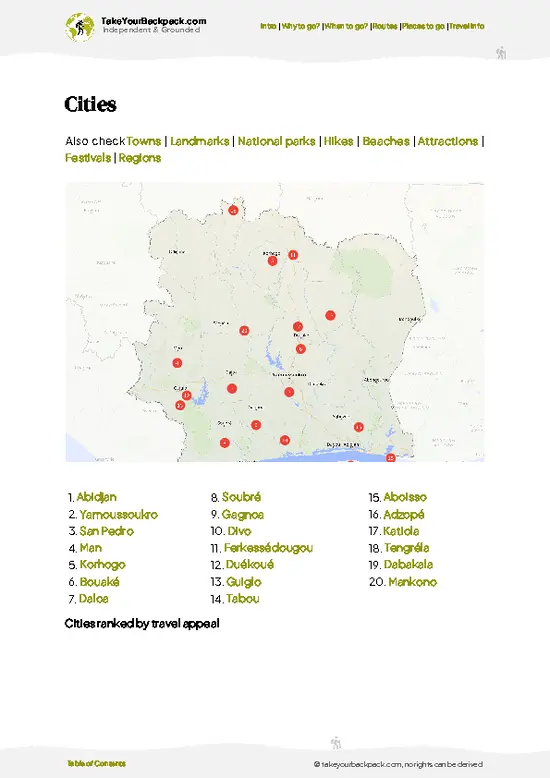
Other Ivorian cities near Guiglo

Explore more nearby:

  • Duékoué—Transit crossroads, cocoa trade, rural outskirts| 27 km away
  • Man—Mountain views, waterfalls, forest trails| 96 km away
  • Daloa—Cocoa warehouses, roadside eateries, transport hubs| 123 km away

💡 Not sure where to go next?
Create a personalized itinerary for Côte d’Ivoire including Guiglo and the places that fit your trip.

Generate my itinerary

👉 Discover all cities

Or checkout all Côte d’Ivoire has to offer (think cities, towns, villages, national parks, hikes, beaches, festivals)
Country photo of Côte d’Ivoire

We 💚 feedbackIs it worth it?

Guiglo has a laid-back vibe that feels like a secret handshake among travelers. The best surprise? The local markets bursting with flavors and colors—don’t skip the street food. Just a heads-up: the roads can be rough, so brace yourself for a bumpy ride. Embrace it; that’s where the adventure lives.

✍️ Help improve this page!
The information on this page is based on in-depth research, insights shared by experienced travelers, and feedback from the local travel community in Côte d’Ivoire. While every effort is made to keep the information accurate and current, conditions can change — so if you spot anything incorrect or outdated, please get in touch.


🙋‍♂️ Give feedback

👋 Meet the founderWho’s Behind Take Your Backpack?

Johan, backpacker and founder of TakeYourBackpackHi, I’m Johan (Netherlands 🇳🇱), the creator of TakeYourBackpack. Over the past decade, I’ve backpacked through 80+ countries across six continents, gaining extensive experience with independent travel, long-term trips, and overland routes.

This site is built on a combination of firsthand travel experience and carefully curated insights from other backpackers. Many guides are based on places I’ve personally visited, while others bring together tips, observations, and practical advice shared by trusted travelers I’ve met along the way.

The goal is to provide realistic, experience-driven guidance — not generic itineraries — so you can explore destinations with better context, clearer expectations, and more confidence.

Get full country guide •
Instant download • 85 highlights • Full Offline guide