×

Côte d’Ivoire🇨🇮 | citiesMankonoCotton and cashew fields, Worodougou market, chief’s quarter, shea butter | things to do and best time to go

Explore ToumodiExplore Tengréla

Backpacking in Mankono
👌 Worth visitingcity ranked #21
By Johan Kruseman 🇳🇱 | Updated October 22, 2026

Mankono was once a quiet cotton and cashew crossroads that few outsiders ever noticed, and the red-dust streets still feel that way, only now with motorbike taxis buzzing and a steady hum of generators. It sits in the north of Côte d’Ivoire, in the Worodougou region. It suits curious, patient travelers who like markets and village life, and it does not suit anyone chasing nightlife or polished sights. Spend your first morning at the market among spice sacks and shea butter, then walk the neighborhoods at dusk.

Discover everything you want to know in the 📖 Côte d’Ivoire Travel Guide.


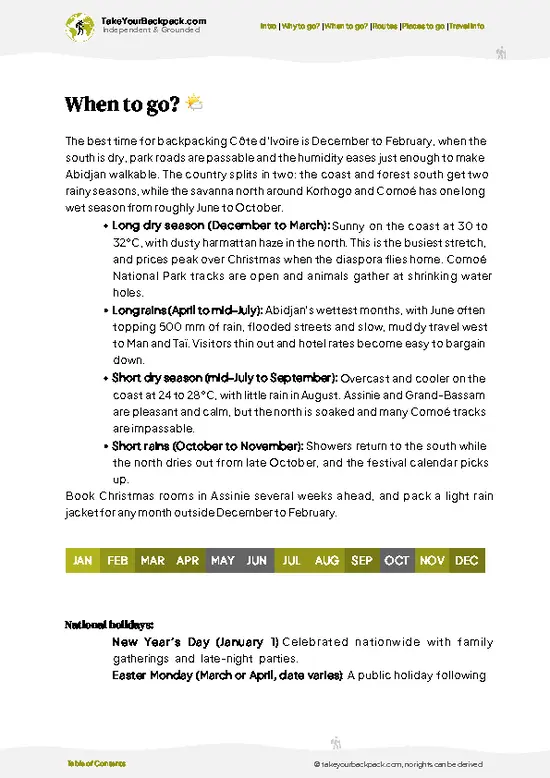
example page 0 from our offline Travel Guide for Côte d’Ivoire
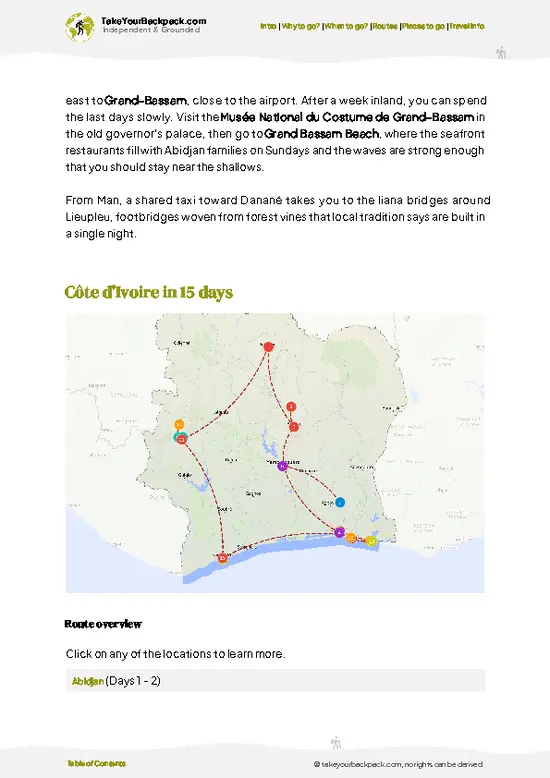
example page 1 from our offline Travel Guide for Côte d’Ivoire
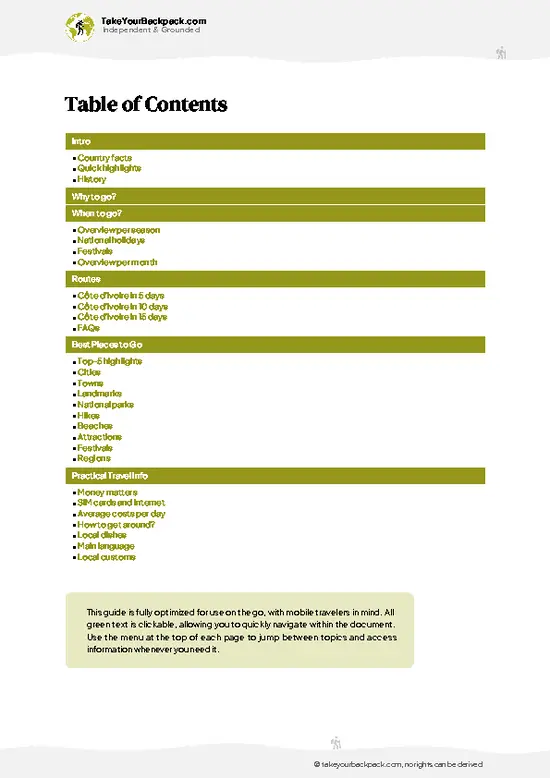
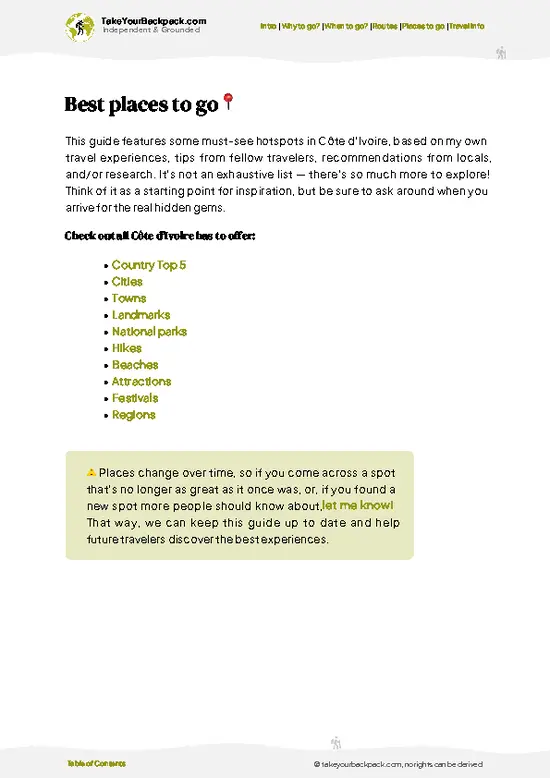
example page 2 from our offline Travel Guide for Côte d’Ivoire
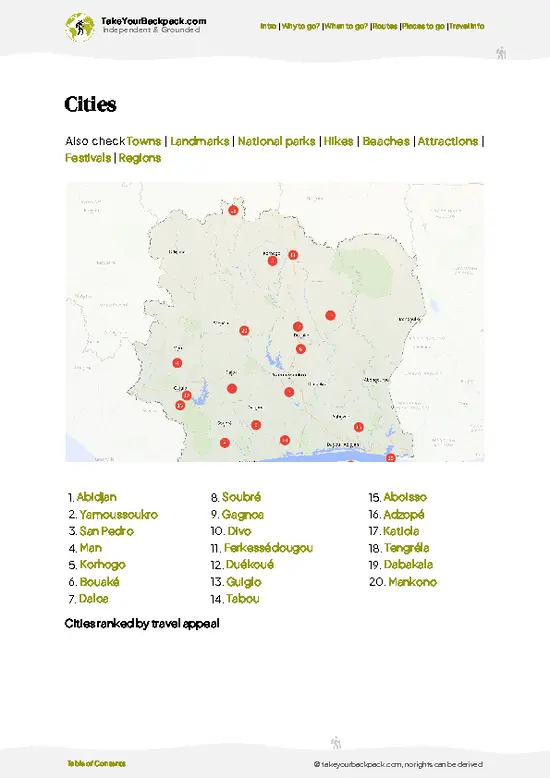
example page 3 from our offline Travel Guide for Côte d’Ivoire
example page 4 from our offline Travel Guide for Côte d’Ivoire
example page 5 from our offline Travel Guide for Côte d’Ivoire
example page 6 from our offline Travel Guide for Côte d’Ivoire
example page 7 from our offline Travel Guide for Côte d’Ivoire
Loading the map 🌍
CLICK TO FILTER
cities
towns
landmarks
national parks
hikes
beaches
attractions
festivals
regions
SHOW COUNTRY’S BESTSHOW ALL

✨ Why go?
Ranked #21 city in Côte d’Ivoire
What makes it a must-see city

Mankono works as a northern crossroads where you can see everyday Malinké and Senufo life without any tour-bus filter. Backpackers come because the town is small enough to cover on foot, the market is real rather than staged, and chatting with locals over cheap grilled meat is easy. It also breaks up the long haul between the forest south and the savanna north. Treat it as a one- or two-night stop, not a destination with a checklist of attractions.

💡 HighlightsDon't-miss highlights and experiences

  1. Mankono Central Market: The town’s core, with piles of yams, dried fish, cotton cloth, peppers and shea butter. Go in the morning when stalls are fullest. Free to wander, 1 to 2 hours.
  2. Mosque of Mankono: A prominent place of worship reflecting the town’s strong Muslim heritage. View it from outside at a respectful distance, and ask permission before photographing. Free, 15 to 30 minutes.
  3. Traditional chief’s quarter: The older neighborhood where the local chieftaincy is rooted. Greet people politely and consider a small gift (about €2 to 5) if a guide takes you in. Late afternoon is the calmest. Allow 1 hour.
  4. Cotton and cashew fields on the town edge: Walk or ride a short way out to see the crops that drive the local economy. Cashews ripen in the dry months, roughly February to April. A motorbike
… read more 👉
  1. Mankono Central Market: The town’s core, with piles of yams, dried fish, cotton cloth, peppers and shea butter. Go in the morning when stalls are fullest. Free to wander, 1 to 2 hours.
  2. Mosque of Mankono: A prominent place of worship reflecting the town’s strong Muslim heritage. View it from outside at a respectful distance, and ask permission before photographing. Free, 15 to 30 minutes.
  3. Traditional chief’s quarter: The older neighborhood where the local chieftaincy is rooted. Greet people politely and consider a small gift (about €2 to 5) if a guide takes you in. Late afternoon is the calmest. Allow 1 hour.
  4. Cotton and cashew fields on the town edge: Walk or ride a short way out to see the crops that drive the local economy. Cashews ripen in the dry months, roughly February to April. A motorbike taxi costs around €2 to 4, 2 hours.
  5. Evening street food strip: Grilled chicken, fish and attiéké served at roadside tables once the heat drops. Meals run about €1.50 to 4, 1 hour.
Mankono’s surroundings hold day-trip options such as Séguéla, Dianra and the savanna villages of the Worodougou region. The market, mosque and street walks cost nothing, which makes the free wandering the best value here.
Spotted a mistake or missing something? Contact us.

Things to do near Mankono

Ratings based on Tripadvisor reviews. When you book through this link, you support our work at no extra cost to you.

🏘️ NeighborhoodsUnderstanding the local layout

Mankono is small enough to cover on foot in an hour, and its areas differ mostly by texture rather than sights.
  • Central market and main road: The place to spend your time. Mornings bring the clatter of motorbikes, smoke from charcoal grills, piles of yams, peppers and dried fish, and vendors calling over each other. Everything is flat and walkable, but the red dust sticks to you.
  • Old quarters behind the center: Worth a slow wander for mud-brick and tin-roofed compounds, courtyards where women pound grain, and the muezzin’s call carried over the rooftops. Don’t expect signs or attractions, just daily life.
  • Outskirts and fields: Quiet, with cashew and cotton land and the hum of insects. Skip these without a motorbike ride, since distances stretch and shade is scarce.

⌛️ 1 dayHow to make the most of one day

8:00 AM: Mankono Central Market. Start while stalls are filling. Taste fresh bread and coffee, then browse spices, cloth and shea. Walk to the mosque afterward.
10:30 AM: Mosque area. Look from outside, then stroll the side lanes to see everyday courtyards and mud-brick walls.
12:30 PM: Lunch at a maquis. Order grilled fish or chicken with attiéké and rest through the hottest hours.
3:30 PM: Chief’s quarter and edge-of-town fields. Few visitors come here. Walk the older lanes, then continue to the cotton and cashew plots for open light and village views.
6:00 PM: Street food strip. Finish with skewers and a cold drink as the town cools down.

🌤️ When to go?When to go for the best experience

November to February suits Mankono best, with dry air, cooler nights near 18 to 20°C (64 to 68°F) and daytime highs of 32 to 35°C (90 to 95°F). The Harmattan wind brings hazy skies and fine dust. March to May turns hot and heavy, often above 35°C (95°F). June to October is rainy, with muddy tracks and slower road travel, though everything turns green. Crowds are never an issue and prices barely shift.
Plan any bush-road travel for the dry months.

source: climatestotravel.comJANJanuary: excellent for travelingFEBFebruary: excellent for travelingMARMarch: highly recommended for travelingAPRApril: fair for travelingMAYMay: fair for travelingJUNJune: fair for travelingJULJuly: fair for travelingAUGAugust: fair for travelingSEPSeptember: fair for travelingOCTOctober: fair for travelingNOVNovember: highly recommended for travelingDECDecember: highly recommended for traveling
when-to-go

✈️ The backpacker research shortcutCôte d’Ivoire Travel Guide

An offline-friendly backpacking guide with optimized travel routes, ranked highlights, transport advice, and the best areas to stay.
example page 0 from our offline Travel Guide for Côte d’Ivoire
example page 1 from our offline Travel Guide for Côte d’Ivoire
example page 2 from our offline Travel Guide for Côte d’Ivoire
example page 3 from our offline Travel Guide for Côte d’Ivoire
example page 4 from our offline Travel Guide for Côte d’Ivoire
example page 5 from our offline Travel Guide for Côte d’Ivoire
example page 6 from our offline Travel Guide for Côte d’Ivoire
example page 7 from our offline Travel Guide for Côte d’Ivoire
The digital guide (279 pages) contains:
✅ 64 highlights, ranked by travel appeal
✅ Optimized 5, 10 & 15-day travel routes
✅ Cities, national parks, landmarks, beaches
✅ How to get around
✅ Offline-friendly for travel without Wi-Fi
👉 Click to see all 30+ guide features

📅 Plan smarter in minutes, not weeks
✅ Month by month travel advice
✅ Festivals & national holidays
✅ Budget expectations

🗺️ Go to the right places, skip the overrated ones
✅ Honest pros & cons of destinations
✅ Top hikes, parks & viewpoints
✅ Lesser-known places most travelers miss
✅ Clear “worth it vs skip it” guidance

🛏️ Travel smoothly without rookie mistakes
✅ Best areas to stay
✅ Transport systems explained simply
✅ Common scams & safety advice
✅ SIM cards, money & practical tips

🌍 Understand the country, not just visit it
✅ Culture & traditions
✅ 52 Essential phrases & customs
✅ Festivals worth planning around
✅ Traveler-friendly historical context
✅ Insights that make places more meaningful

📱 Built for real travel conditions
✅ Fully downloadable PDF
✅ Works completely offline
✅ Optimized for phone use
✅ Useful in remote areas & buses
✅ Everything in one place
Stop searching, start planning
Get instant access to your full guide. 30‑day money-back guarantee.
+ Add another guide for just

By proceeding you agree to our terms.
Sent to your inbox immediately after payment • 100% Secure Checkout
Best Backpacking Travel Advisor 2025 tourism awardBest Backpacking
Travel Advisor
2025
What others say about Take Your Backpack Guides:
⭐⭐⭐⭐⭐
Fantastic, amazing amount of information!
⭐⭐⭐⭐⭐
My goodness this is amazing, it's what I've been looking for hats off too you!
⭐⭐⭐⭐⭐
I think this is absolutely BRILLIANT
⭐⭐⭐⭐
Very complete and informative. It's still missing places, but I gotta to commend you
⭐⭐⭐⭐⭐
This is truly amazing, thank you, can't wait to explore it with my kids!
⭐⭐⭐⭐⭐
Awesome resource, thank you!
⭐⭐⭐⭐⭐
This is amazing! Can't wait to explore the ones I haven't seen
⭐⭐⭐⭐
I love this! Well done, great idea.
⭐⭐⭐⭐⭐
Thanks for taking the time to make this gem!
⭐⭐⭐⭐⭐
This might be the best website I've ever seen.
⭐⭐⭐⭐⭐
Congratulations, and thank you so much for your work; it's incredibly valuable.
⭐⭐⭐⭐
In all seriousness I think you did a great job pointing out the important spots
⭐⭐⭐⭐⭐
10/10 very good
⭐⭐⭐⭐⭐
As someone who's only just starting to visit regularly this is awesome, thank you.
⭐⭐⭐⭐
Thank you very much! I'm going to visit my dad, it's going to be very useful!
⭐⭐⭐⭐⭐
This is really cool! We'll be travelling for the first time and this definitely come in handy.
⭐⭐⭐⭐⭐
You are now our minister of culture, congratulations 👨‍💼
⭐⭐⭐⭐⭐
Just wanted to tell you that this is a pearl! Going to follow your recommendations.
⭐⭐⭐⭐⭐
This is so cool. I'll definitely be using the resource for my travels soon.
⭐⭐⭐⭐⭐
This is very impressive! Good work.
⭐⭐⭐⭐⭐
This is an amazing and informative site. Very well done!

🛏️ Where to stay?Where staying makes the most sense

The center near the main road and market is the best area for a budget bed, since guesthouses are concentrated there and the gare routière is a short walk or a €0.50 bike ride away. Dorm beds are essentially absent, so expect cheap private rooms with a fan, usually €10 to 18 a night. Evenings are quiet, though market noise and early motorbikes start around dawn. Streets after dark are dim but calm. Quieter lodgings sit toward the edges of town, but you give up walkability and will rely on motorbike taxis.

🚌 Getting aroundGetting around like a local

Mankono is best handled on foot, with a motorbike taxi for anything beyond the center, because the town is compact and the bikes are everywhere. Roads are dusty in the dry months and slick red mud in the rains, and there is no formal public transport inside town.
  • Walking: Free, and enough for the market, mosque and old quarters. Go early or after late afternoon, since midday sun on bare roads is punishing.
  • Motorbike taxis: Roughly €0.30 to 1 for a town ride, running from dawn until about 9 pm. Agree the price first and expect a bumpy, dusty trip. Ask for a helmet, though they are not always available.
  • Shared taxis: Cars and minibuses leave from the gare routière toward Séguéla, Bouaflé and Man once full, usually €3 to 8 per seat depending on the route. Mornings are the busiest and the best time
… read more 👉
Mankono is best handled on foot, with a motorbike taxi for anything beyond the center, because the town is compact and the bikes are everywhere. Roads are dusty in the dry months and slick red mud in the rains, and there is no formal public transport inside town.
  • Walking: Free, and enough for the market, mosque and old quarters. Go early or after late afternoon, since midday sun on bare roads is punishing.
  • Motorbike taxis: Roughly €0.30 to 1 for a town ride, running from dawn until about 9 pm. Agree the price first and expect a bumpy, dusty trip. Ask for a helmet, though they are not always available.
  • Shared taxis: Cars and minibuses leave from the gare routière toward Séguéla, Bouaflé and Man once full, usually €3 to 8 per seat depending on the route. Mornings are the busiest and the best time to find a seat.
  • Intercity buses: Some coaches run toward Abidjan from the main road, around €10 to 15 for a journey of 7 to 9 hours. Buy a seat the day before when you can.

👛 Costs (as of 22 October 2026)Travel costs and budget guide for Mankono

Mankono costs about €22 a day for a backpacker, since lodging is basic and food is cheap.
CategoryBudget RangeLocal Reality
Dorm accommodation (high season)€10 to 14No dorms, so a simple private room with a fan
Dorm accommodation (off-season)€8 to 12Slightly lower, with room for bargaining
Meals€4 to 6Market plates and street grills
Local transport€1 to 2Motorbike taxis around town
City transport passNot availablePay per ride
Basic activities/entry fees€0 to 2Mostly free wandering and village visits
Miscellaneous€2 to 3Water, phone credit, snacks
Total Daily Budget€22Lean but comfortable
Eat where locals do and carry small cash, as vendors rarely have change for large notes.

source: cotedivoiretourisme.ci
⚠️ Prices can change and everyone travels differently, so take this as a rough guide. Hope it helps you plan your adventure!

🚌 Day tripsShort trips worth adding

Mankono sits in a region of savanna, rivers and villages, so day trips are rural, simple and best arranged with a motorbike or a hired car.
Séguéla:
A larger regional town to the west, reached by shared taxi in about 1.5 to 2 hours for roughly €3 to 6 each way. Go for the busy market and a wider choice of food. Travel in the morning, because afternoon returns thin out.

Villages along the Bandama and Marahoué rivers:
A motorbike driver can take you for €10 to 20 for the day, passing cashew groves and mud-brick hamlets, with fishing and farming at work. Dry season tracks are easiest, and a common mistake is setting off without enough water.

Bouaflé:
A bigger stop toward the south, about 3 to 4 hours by shared taxi at €6 to 10 each way. It is a long day, so leave at dawn and confirm the last return car.

🍲 FoodLocal Flavors for Backpackers

Mankono sits in the savanna north, where food leans on grilled meat, rice with peanut sauce and tô-style millet and maize porridge served with okra or leaf sauces, heavier than the cassava of the south. Look for cashew sold in roadside bags, and bissap and ginger juice in plastic bags from vendors. Eat at the market stalls and small maquis, where a plate costs about €1.50 to 3. Evening charcoal grills by the main road serve chicken and fish with onion and pepper, usually eaten standing or on low benches.

🛡️ SafetyStaying Safe: What Travelers Should Know

Mankono is calm and low-key, and most problems are minor. Petty theft is uncommon, but keep your phone and cash out of sight in the market crowd. After dark streets are poorly lit, so carry a torch and take a motorbike taxi rather than walking far. Solo travelers, women included, usually meet curiosity and hospitality. Agree fares before you ride, and carry small notes since change is often scarce. Roads outside town carry more risk than the streets, especially at night.

FAQTraveler FAQ

Mankono needs one to two days, since the market, old quarters and nearby villages are quickly covered. Add a day if you plan a river village ride, with motorbike hire around €10 to 20. Most travelers come as a stop between Séguéla and Bouaflé rather than a base.
Mankono is a calm town where solo backpackers usually have an easy time, with locals who are curious and welcoming. Keep valuables out of sight in the market and avoid walking long dark stretches, using a motorbike taxi at €0.30 to 1 instead. Roads outside town are the larger risk, so travel in daylight.
Mankono is known as a savanna market town in the north of the country, with a busy central market and mud-brick old quarters. It sits in a cashew and cotton farming area, and the town has a strong Muslim and Malinké influence. Shared taxis connect it with Séguéla in about 1.5 to 2 hours.
⚠️ Things can change over time, so always validate details locally before you go.

Other Ivorian cities near Mankono

Explore more nearby:

  • Katiola—pottery workshops, train station, central plateau| 121 km away
  • Daloa—Cocoa warehouses, roadside eateries, transport hubs| 133 km away
  • Bouaké—Central market, Baoulé crafts, urban bus stations| 133 km away

💡 Not sure where to go next?
Create a personalized itinerary for Côte d’Ivoire including Mankono and the places that fit your trip.

Generate my itinerary

👉 Discover all cities

Or checkout all Côte d’Ivoire has to offer (think cities, towns, villages, national parks, hikes, beaches, festivals)
Country photo of Côte d’Ivoire

We 💚 feedbackKey takeaways before you go

Many travelers arrive in Mankono expecting sights and leave after an hour. Slow down instead: greet people, sit at the market, and stay overnight. I would bring small bills and a polite phrase or two in French.

✍️ Help improve this page!
The information on this page is based on in-depth research, insights shared by experienced travelers, and feedback from the local travel community in Côte d’Ivoire. While every effort is made to keep the information accurate and current, conditions can change — so if you spot anything incorrect or outdated, please get in touch.


🙋‍♂️ Give feedback

👋 Meet the founderWho’s Behind Take Your Backpack?

Johan, backpacker and founder of TakeYourBackpackHi, I’m Johan (Netherlands 🇳🇱), the creator of TakeYourBackpack. Over the past 3 decades, I’ve backpacked through 90+ countries across six continents, gaining extensive experience with independent travel, long-term trips, and overland routes.

This site is built on a combination of firsthand travel experience and carefully curated insights from other backpackers. Many guides are based on places I’ve personally visited, while others bring together tips, observations, and practical advice shared by trusted travelers I’ve met along the way.

The goal is to provide realistic, experience-driven guidance — not generic itineraries — so you can explore destinations with better context, clearer expectations, and more confidence.