v2.webp)
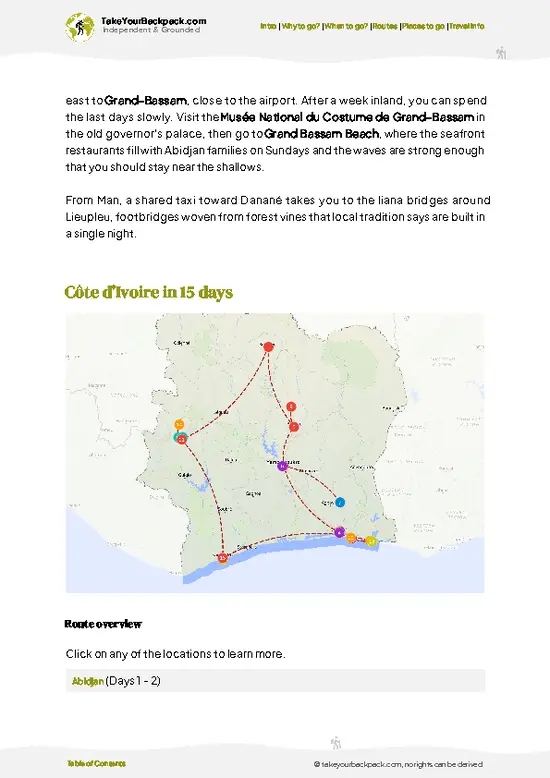
- Mont Richard-Molard (the Nimba summit) — The high point (around 1,750 m) and the whole reason hikers come: a jagged, rocky ridge with sweeping views that can include Côte d’Ivoire, Guinea and Liberia on a clear day. The trail is steep and raw, but the ridge walk feels properly wild — crampon-free alpine vibes in West Africa.
- Montane cloud forest pockets — Small, lush islands of cool, mist-soaked forest clinging to gullies and north faces. They shelter plants and insects you won’t find in the lowlands and feel like stepping into a different climate zone after a hot day on the plains.
- Nimba viviparous toad (endemic amphibian) — A truly oddball highlight: a toad that gives birth to live young and exists only on Mount Nimba. Seeing the habitat (or learning about this species) drives home how
- Mont Richard-Molard (the Nimba summit) — The high point (around 1,750 m) and the whole reason hikers come: a jagged, rocky ridge with sweeping views that can include Côte d’Ivoire, Guinea and Liberia on a clear day. The trail is steep and raw, but the ridge walk feels properly wild — crampon-free alpine vibes in West Africa.
- Montane cloud forest pockets — Small, lush islands of cool, mist-soaked forest clinging to gullies and north faces. They shelter plants and insects you won’t find in the lowlands and feel like stepping into a different climate zone after a hot day on the plains.
- Nimba viviparous toad (endemic amphibian) — A truly oddball highlight: a toad that gives birth to live young and exists only on Mount Nimba. Seeing the habitat (or learning about this species) drives home how unique and fragile the reserve’s wildlife is.
- Serpentine soils and iron-rich geology — The mountain’s metal-heavy soils produce unusual plant communities and dramatic orange-red rock faces and cliffs. The geology is visible, bold and immediately different from typical rainforest hills.
- Highland grasslands and wildflower displays — Above the tree line the slopes open into montane grasslands filled with hardy grasses and seasonal flowers. Great for walking, photographing panoramas, and watching small, ground-dwelling wildlife.
- Birdlife and primate pockets — Expect a rich mix of montane bird species and pockets of primates in the forested valleys — good for patient wildlife watching, especially at dawn when the hills wake up.
- Remote, strict-reserve feel — Access is tightly managed and the place still feels off-the-grid; that isolation is part of the appeal. It’s not a theme-park hike — you’ll come for solitude, big views, and the intact, fragile ecosystems.
Spotted a mistake or missing something? Contact us.

 Best Backpacking
.jpg) Hi, I’m Johan (Netherlands 🇳🇱), the creator of TakeYourBackpack. Over the past 3 decades, I’ve backpacked through 90+ countries across six continents, gaining extensive experience with independent travel, long-term trips, and overland routes.
Hi, I’m Johan (Netherlands 🇳🇱), the creator of TakeYourBackpack. Over the past 3 decades, I’ve backpacked through 90+ countries across six continents, gaining extensive experience with independent travel, long-term trips, and overland routes.