×

Côte d’Ivoire🇨🇮 | best national parksExplore the 9 Best national parks in Côte d’Ivoire

In Ivory Coast, national parks are more than just protected areas; they are vibrant ecosystems teeming with life and adventure. Each park offers a unique landscape, from the dense rainforests of Taï National Park to the savannahs of Comoé National Park, shaping your backpacking experience. Seasonal variations affect wildlife visibility and trail accessibility, making timing crucial. Choosing the right park influences your budget, safety, and cultural immersion. For instance, the remote trails of Mount Nimba require more planning but reward with breathtaking views and solitude. Understanding these nuances ensures your independent travel is both enriching and exhilarating.

By Johan Kruseman 🇳🇱 | Updated May 29, 2026
Explore the best hikes in Côte d’Ivoire

Why go?Why These national park Stand Out

Côte d’Ivoire’s national parks stand out for their biodiversity and unique ecosystems. The country is home to a rich variety of flora and fauna, including endangered species like the Western chimpanzee and the African forest elephant. This biodiversity is a direct result of Côte d’Ivoire’s varied climatic zones, from coastal mangroves to dense rainforests, creating habitats that are both diverse and vibrant.

However, accessibility can be a challenge. Many parks are located in remote areas, requiring significant travel time. This trade-off means that while the journey may be lengthy, it often leads to deeper, more immersive experiences. The effort to reach these parks rewards travelers with the chance to witness wildlife in their natural habitats, far from the crowds typical of more accessible … read more 👉
Côte d’Ivoire’s national parks stand out for their biodiversity and unique ecosystems. The country is home to a rich variety of flora and fauna, including endangered species like the Western chimpanzee and the African forest elephant. This biodiversity is a direct result of Côte d’Ivoire’s varied climatic zones, from coastal mangroves to dense rainforests, creating habitats that are both diverse and vibrant.

However, accessibility can be a challenge. Many parks are located in remote areas, requiring significant travel time. This trade-off means that while the journey may be lengthy, it often leads to deeper, more immersive experiences. The effort to reach these parks rewards travelers with the chance to witness wildlife in their natural habitats, far from the crowds typical of more accessible destinations.

Côte d’Ivoire’s infrastructure is improving, but it still lags behind some neighboring countries. Roads can be rough, and public transport options are limited. This can deter some travelers but also means that those who venture into the parks often find themselves in less commercialized environments, enhancing the sense of adventure.

Culturally, the parks reflect the country’s rich history and the connection between its people and the land. Understanding this context adds depth to the experience, making the effort to explore Côte d’Ivoire’s national parks not just a journey through nature, but a journey through the heart of the country itself.
Why These Made the Cut
The list of best national parks in Côte d’Ivoire is created based on landscapes, wildlife, adventure opportunities, facilities, and overall experience. If you feel a national park is missing in this list, please let us know.

When to go?Seasonal Guide to Visiting

Seasonality and National Parks in Côte d’Ivoire


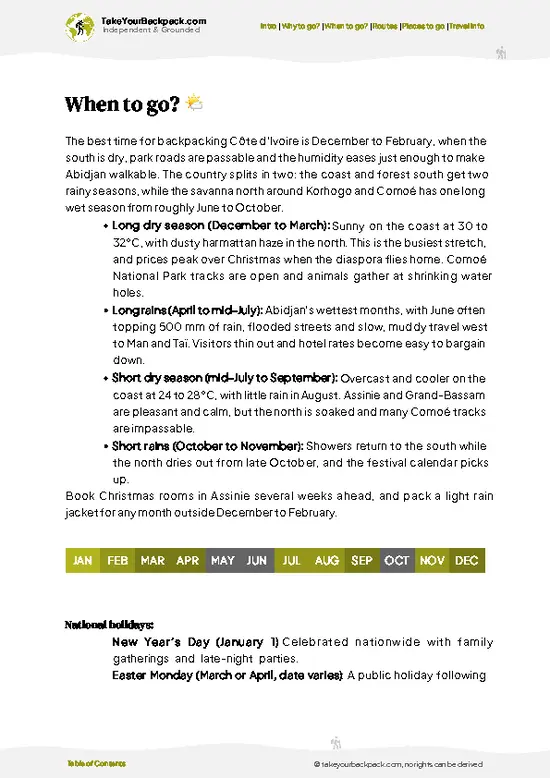
Côte d’Ivoire experiences a tropical climate, which significantly influences the conditions in its national parks. The dry season, typically from November to March, offers the best wildlife visibility. Animals congregate around water sources, making sightings more frequent. Temperatures can soar, especially in the afternoons, but the cooler mornings and evenings provide a comfortable hiking experience.

The rainy season, from April to October, brings lush landscapes and vibrant flora. However, trails can become muddy and challenging, impacting accessibility. Wildlife is still present, but sightings may be less predictable as animals disperse in search of food. Heavy rains can lead to temporary park closures, so planning around this is crucial. … read more 👉

Seasonality and National Parks in Côte d’Ivoire


Côte d’Ivoire experiences a tropical climate, which significantly influences the conditions in its national parks. The dry season, typically from November to March, offers the best wildlife visibility. Animals congregate around water sources, making sightings more frequent. Temperatures can soar, especially in the afternoons, but the cooler mornings and evenings provide a comfortable hiking experience.

The rainy season, from April to October, brings lush landscapes and vibrant flora. However, trails can become muddy and challenging, impacting accessibility. Wildlife is still present, but sightings may be less predictable as animals disperse in search of food. Heavy rains can lead to temporary park closures, so planning around this is crucial.

Shoulder seasons, particularly late October and early November, present a mixed bag. Fewer crowds and lower costs are appealing, but the weather can be unpredictable. Rainfall may linger, and trails might be slippery.

Peak periods, especially during holidays, can lead to crowded trails and diminished solitude. Balancing the desire for scenic beauty with the reality of busy parks is essential. Understanding these seasonal dynamics allows for a more rewarding experience in Côte d’Ivoire’s national parks.

national park hoppingOptimizing Your Multi-Stop Itinerary

General Routing Logic

Côte d’Ivoire’s national parks are best explored in clusters. Start in the southwest with Taï National Park, known for its dense rainforest and diverse wildlife. From there, head northeast to Comoé National Park, where savannah landscapes and riverine forests await. This route allows for a natural progression through varied ecosystems, maximizing exposure to the country’s rich biodiversity.

Time Needed per Stop

Allocate at least two to three days per park. This timeframe allows for guided treks, wildlife spotting, and soaking in the atmosphere. Rushing through will leave you with only a surface-level experience. Each park has its unique rhythm, and taking the time to adjust to the environment enhances the overall journey.

Common Planning Mistakes

One common pitfall … read more 👉

General Routing Logic

Côte d’Ivoire’s national parks are best explored in clusters. Start in the southwest with Taï National Park, known for its dense rainforest and diverse wildlife. From there, head northeast to Comoé National Park, where savannah landscapes and riverine forests await. This route allows for a natural progression through varied ecosystems, maximizing exposure to the country’s rich biodiversity.

Time Needed per Stop

Allocate at least two to three days per park. This timeframe allows for guided treks, wildlife spotting, and soaking in the atmosphere. Rushing through will leave you with only a surface-level experience. Each park has its unique rhythm, and taking the time to adjust to the environment enhances the overall journey.

Common Planning Mistakes

One common pitfall is underestimating travel times between parks. Roads can be rough, and conditions vary. Flexibility is key; allow for unexpected delays or spontaneous detours. Prioritize comfort over speed; a well-placed rest day can rejuvenate the spirit and enhance the experience.

Trade-offs and Constraints

Balancing speed with depth is crucial. Covering multiple parks in a short time may seem appealing, but it often leads to a superficial understanding of each area. Consider your budget and comfort level; some parks offer basic facilities, while others provide more luxurious options. Ultimately, the effort put into planning will yield rich rewards, both in experiences and memories.

The ListMust-Visit national parks in Côte d’Ivoire

1 Taï National Park

ancient rainforest, chimpanzee tracking, buttress-root trees

Venture into one of West Africa’s last primary forests, where rare primates and towering trees create a dense, humid world.

2 Comoé National Park

savanna-forest mosaic, river crossings, antelope herds

Travel through shifting landscapes where open grasslands blend into gallery forests, supporting diverse wildlife and seasonal river scenes.

cote-divoire-national-park-comoe-national-park
© Google |

3 Banco National Park

urban rainforest, giant mahogany, city-edge trails

Walk beneath towering trees just outside Abidjan, where dense forest and city life meet in a rare, easily accessible green space.

cote-divoire-national-park-banco-national-park
© Google |

4 Mount Nimba Strict Nature Reserve

UNESCO biosphere, grassy ridges, rare amphibians

Ascend rugged slopes to discover isolated habitats, home to species found nowhere else and panoramic views across three countries.

cote-divoire-national-park-mount-nimba-strict-nature-reserve
© Google |

5 Îles Ehotilé National Park

island cluster, sacred forests, traditional villages

Cross to a group of islands where cultural heritage and natural habitats intertwine, offering insight into local customs and wildlife.

6 Azagny National Park

coastal lagoon, mangrove swamps, manatee habitat

Navigate waterways and marshes where aquatic life flourishes, and shifting tides shape a landscape rich in bird and mammal sightings.

cote-divoire-national-park-azagny-national-park v1
© Google |

7 Mont Péko National Park

granite peaks, montane forest, endemic primates

Climb into cooler highlands where rare monkeys and unique plants thrive among rocky outcrops and misty forest slopes.

8 Sangbé National Park

rolling hills, gallery forest strips, elephant corridors

Follow undulating terrain where forest fingers reach into savanna, providing passage for large mammals and seasonal wildlife movement.

9 Marahoué National Park

wooded savanna, scattered wetlands, birdwatching

Experience a patchwork of habitats that attract migratory birds and support elusive mammals, with open vistas and quiet waterholes.

cote-divoire-national-park-marahoue-national-park v1
© Google |
Loading the map 🌍

Expert viewPro Tips for Exploring the Best

Terrain
Côte d’Ivoire’s national parks offer a rich tapestry of landscapes, from dense rainforests to rolling savannahs. Each park has its own character, shaped by the local climate and geography. For instance, Taï National Park is a UNESCO World Heritage site, where the air is thick with humidity and the scent of damp earth. The trails here are rugged, often muddy, and can test your endurance. You’ll need sturdy boots and a willingness to embrace the sweat and grime. The payoff? The chance to spot elusive species like the pygmy hippopotamus or the rare Diana monkey, moments that make the effort worthwhile.

Park Infrastructure
Infrastructure varies significantly across parks. Some, like Comoé National Park, have basic facilities, while others offer more developed amenities. Expect limited … read more 👉
Terrain
Côte d’Ivoire’s national parks offer a rich tapestry of landscapes, from dense rainforests to rolling savannahs. Each park has its own character, shaped by the local climate and geography. For instance, Taï National Park is a UNESCO World Heritage site, where the air is thick with humidity and the scent of damp earth. The trails here are rugged, often muddy, and can test your endurance. You’ll need sturdy boots and a willingness to embrace the sweat and grime. The payoff? The chance to spot elusive species like the pygmy hippopotamus or the rare Diana monkey, moments that make the effort worthwhile.

Park Infrastructure
Infrastructure varies significantly across parks. Some, like Comoé National Park, have basic facilities, while others offer more developed amenities. Expect limited signage and rough roads, especially in remote areas. This can be a double-edged sword: while it adds to the adventure, it also means you should plan for delays. If you’re short on time, prioritize parks with better access and facilities, as they allow for a more relaxed experience. However, don’t overlook the less accessible parks; the journey often leads to the most rewarding encounters with wildlife and nature.

Wildlife Activity
Wildlife activity peaks at different times of the year, influenced by seasonal changes. In the dry season, animals congregate around water sources, making sightings more frequent. Conversely, the wet season brings lush vegetation and vibrant ecosystems, but wildlife can be harder to spot. If you’re keen on seeing specific species, research their patterns. For example, birdwatchers will find a paradise in the wet season, while those hoping to see larger mammals might prefer the dry months. Balancing your timing with your wildlife interests is crucial for maximizing your experience.

Time and Trade-offs
Visiting multiple parks is tempting, but it requires careful planning. I recommend focusing on two to three parks for a week-long trip. This allows you to immerse yourself in each environment without feeling rushed. Each park has its own rhythm, and taking the time to absorb the sights and sounds can lead to unexpected discoveries. If you try to cram in too many parks, you risk missing the subtle beauty of each unique ecosystem.

Safety & Cultural Considerations
Safety is paramount. While Côte d’Ivoire is generally safe for travelers, it’s wise to stay informed about local conditions. Some areas may have restrictions or require permits, especially for guided tours. Engage with local guides; they not only enhance your experience but also provide insights into the culture and wildlife. Respect local customs and be mindful of your surroundings. This not only enriches your journey but also fosters goodwill with the communities you encounter.

Planning and Prioritizing
When planning your trip, consider your interests—whether it’s wildlife, hiking, or cultural experiences. Research each park’s unique offerings and align them with your goals. If you’re drawn to biodiversity, Taï and Comoé are must-visits. For a more cultural experience, look into parks that offer community interactions. Balancing your itinerary with a mix of adventure and relaxation will lead to a more fulfilling experience.

Côte d’Ivoire’s national parks are not just destinations; they are immersive experiences that require effort but reward you with unforgettable moments. Embrace the grit of the journey, and you’ll find the beauty waiting for you at every turn.

✈️ The backpacker research shortcutCôte d’Ivoire Travel Guide

An offline-friendly backpacking guide with optimized travel routes, ranked highlights, transport advice, and the best areas to stay.
The digital guide (337 pages) contains:
85 highlights, ranked by travel appeal
Optimized 5, 10 & 15-day travel routes
Cities, national parks, landmarks, beaches
How to get around
Offline-friendly for travel without Wi-Fi
👉 Click to see all 30+ guide features

📅 Plan smarter in minutes, not weeks
Month by month travel advice
Festivals & national holidays
Budget expectations

🗺️ Go to the right places, skip the overrated ones
Honest pros & cons of destinations
Top hikes, parks & viewpoints
Lesser-known places most travelers miss
Clear “worth it vs skip it” guidance

🛏️ Travel smoothly without rookie mistakes
Best areas to stay
Transport systems explained simply
Common scams & safety advice
SIM cards, money & practical tips

🌍 Understand the country, not just visit it
Culture & traditions
52 Essential phrases & customs
Festivals worth planning around
Traveler-friendly historical context
Insights that make places more meaningful

📱 Built for real travel conditions
Fully downloadable PDF
Works completely offline
Optimized for phone use
Useful in remote areas & buses
Everything in one place
Save weeks of stressful planning
Get instant access to your full guide. 30‑day money-back guarantee.


By proceeding you agree to our terms.
Sent to your inbox immediately after payment • 100% Secure Checkout
Best Backpacking Travel Advisor 2025 tourism awardBest Backpacking
Travel Advisor
2025
What others say about Take Your Backpack Guides:
⭐⭐⭐⭐⭐
Fantastic, amazing amount of information!
⭐⭐⭐⭐⭐
My goodness this is amazing, it's what I've been looking for hats off too you!
⭐⭐⭐⭐⭐
I think this is absolutely BRILLIANT
⭐⭐⭐⭐
Very complete and informative. It's still missing places, but I gotta to commend you
⭐⭐⭐⭐⭐
This is truly amazing, thank you, can't wait to explore it with my kids!
⭐⭐⭐⭐⭐
Awesome resource, thank you!
⭐⭐⭐⭐⭐
This is amazing! Can't wait to explore the ones I haven't seen
⭐⭐⭐⭐
I love this! Well done, great idea.
⭐⭐⭐⭐⭐
Thanks for taking the time to make this gem!
⭐⭐⭐⭐⭐
This might be the best website I've ever seen.
⭐⭐⭐⭐⭐
Congratulations, and thank you so much for your work; it's incredibly valuable.
⭐⭐⭐⭐
In all seriousness I think you did a great job pointing out the important spots
⭐⭐⭐⭐⭐
10/10 very good
⭐⭐⭐⭐⭐
As someone who's only just starting to visit regularly this is awesome, thank you.
⭐⭐⭐⭐
Thank you very much! I'm going to visit my dad, it's going to be very useful!
⭐⭐⭐⭐⭐
This is really cool! We'll be travelling for the first time and this definitely come in handy.
⭐⭐⭐⭐⭐
You are now our minister of culture, congratulations 👨‍💼
⭐⭐⭐⭐⭐
Just wanted to tell you that this is a pearl! Going to follow your recommendations.
⭐⭐⭐⭐⭐
This is so cool. I'll definitely be using the resource for my travels soon.
⭐⭐⭐⭐⭐
This is very impressive! Good work.
⭐⭐⭐⭐⭐
This is an amazing and informative site. Very well done!

🛏️ Where to stay?Where to Base Yourself

Yes — hostels and budget guesthouses are available across Côte d’Ivoire, concentrated mainly in Abidjan and in coastal towns like Grand-Bassam and San Pedro.
In Abidjan the best concentration of budget options is in Marcory (Zone 4) and Treichville for cheap stays, Plateau for central access to museums and ferry links, and Cocody for safer, quieter guesthouses that tend to cost more.
Favor Marcory/Zone 4 for nightlife and easy transport but expect noise and mixed safety, pick Treichville for lowest prices and local markets with basic facilities, use Plateau for daytime sightseeing and quieter nights, choose Cocody when safety and proximity to beaches matter at a premium, and head to Grand-Bassam … read more 👉
Yes — hostels and budget guesthouses are available across Côte d’Ivoire, concentrated mainly in Abidjan and in coastal towns like Grand-Bassam and San Pedro.
In Abidjan the best concentration of budget options is in Marcory (Zone 4) and Treichville for cheap stays, Plateau for central access to museums and ferry links, and Cocody for safer, quieter guesthouses that tend to cost more.
Favor Marcory/Zone 4 for nightlife and easy transport but expect noise and mixed safety, pick Treichville for lowest prices and local markets with basic facilities, use Plateau for daytime sightseeing and quieter nights, choose Cocody when safety and proximity to beaches matter at a premium, and head to Grand-Bassam or San Pedro for beachfront budget stays with fewer services while inland towns like Yamoussoukro and Man offer only limited budget options best suited to short visits.

If you enjoy meeting fellow travelers, consider choosing hostels with high ratings for atmosphere. On the other hand, if you prefer having your own space, a hotel might be a better option.

Côte d’IvoireExpand Your Journey

👋 Meet the founderWho’s Behind Take Your Backpack?

Johan, backpacker and founder of TakeYourBackpackHi, I’m Johan (Netherlands 🇳🇱), the creator of TakeYourBackpack. Over the past decade, I’ve backpacked through 80+ countries across six continents, gaining extensive experience with independent travel, long-term trips, and overland routes.

This site is built on a combination of firsthand travel experience and carefully curated insights from other backpackers. Many guides are based on places I’ve personally visited, while others bring together tips, observations, and practical advice shared by trusted travelers I’ve met along the way.

The goal is to provide realistic, experience-driven guidance — not generic itineraries — so you can explore destinations with better context, clearer expectations, and more confidence.

Get full country guide •
Instant download • 85 highlights • Full Offline guide