×

Côte d’Ivoire🇨🇮 | attractionsMusée Charles Bieth de Manregional artifacts, Dan masks, ethnographic displays, mountain backdrop | things to do and best time to go

Explore Musée du Costume de BouakéExplore Musée de la Musique de Côte d’Ivoire

Backpacking in Musée Charles Bieth de Man
👀 For curious travelersattraction ranked #16
By Johan Kruseman 🇳🇱 | Updated May 16, 2026

Everyone’s heard the pitch: come to Musée Charles Bieth de Man to gawk at colonial relics and snap a photo for your feed. But here’s the truth—if you’re just chasing a glossy highlight reel, you’ll miss the real pulse of this place. The museum sits in Man, western Côte d’Ivoire, a region that’s more about raw, lived-in culture than polished displays. For backpackers, the draw isn’t the size of the collection or the grandeur of the building (spoiler: it’s modest and sometimes feels more like a community center than a museum). What matters is the way the exhibits—often curated with local pride and a shoestring budget—connect you to the region’s Dan and Yacouba heritage. Yes, you’ll dodge the occasional school group and the odd tour bus, but the crowds are nothing compared to Abidjan’s big-ticket sites. Entry is cheap, but don’t expect slick English signage or air conditioning. What you get instead is a direct line to the stories and artistry that actually shape Man’s identity—no filter, no hype, just the real Côte d’Ivoire.

Discover everything you want to know in the 📖 Côte d’Ivoire Travel Guide.
Loading the map 🌍
CLICK TO FILTER
cities
towns
landmarks
national parks
hikes
beaches
attractions
festivals
regions
SHOW COUNTRY’S BESTSHOW ALL

✨ Why go?
Ranked #16 attraction in Côte d’Ivoire
Why visitors keep coming back

The Musée Charles Bieth de Man isn’t your typical tourist checkbox, and that’s exactly why backpackers carve out time for it. Yes, it’s not swarming with crowds like the big-name museums in Abidjan, but that’s part of its raw appeal. This place is a deep dive into Côte d’Ivoire’s cultural backbone, showcasing artifacts and histories that don’t get the flashy Instagram treatment but hit you with real context. It’s not just about looking at old objects; it’s about understanding the layers of identity, colonial impact, and local resilience that shaped the country. The effort to get here—often off the beaten path—is rewarded with a quiet, almost meditative experience that contrasts sharply with the usual tourist hustle. For backpackers moving through Côte d’Ivoire, this museum is a milestone, … read more 👉
The Musée Charles Bieth de Man isn’t your typical tourist checkbox, and that’s exactly why backpackers carve out time for it. Yes, it’s not swarming with crowds like the big-name museums in Abidjan, but that’s part of its raw appeal. This place is a deep dive into Côte d’Ivoire’s cultural backbone, showcasing artifacts and histories that don’t get the flashy Instagram treatment but hit you with real context. It’s not just about looking at old objects; it’s about understanding the layers of identity, colonial impact, and local resilience that shaped the country. The effort to get here—often off the beaten path—is rewarded with a quiet, almost meditative experience that contrasts sharply with the usual tourist hustle. For backpackers moving through Côte d’Ivoire, this museum is a milestone, a moment to pause and absorb the country’s soul beyond the surface. It’s a place where history isn’t sanitized or packaged but presented with all its complexity. If you want a genuine connection to Côte d’Ivoire’s past and present, the Musée Charles Bieth de Man delivers in a way that’s both humbling and eye-opening. It’s not about spectacle; it’s about substance.
Want to include Musée Charles Bieth de Man in your Côte d’Ivoire route?
Create a personalized Côte d’Ivoire itinerary that includes Musée Charles Bieth de Man and the places that fit your trip — based on your travel style, budget, and available time. Get your route in seconds.

Generate my trip

💡 HighlightsPlaces and moments you shouldn't skip

1. The Colonial-Era Architecture
Forget the Instagram filters. The building itself is a time capsule, and not the polished kind. Musée Charles Bieth de Man is housed in a colonial-era structure that’s seen the full arc of Ivorian history—crumbling plaster, sun-bleached shutters, and all. You’re not walking into a sanitized museum; you’re stepping into a living artifact. The creak of the floorboards and the thick, humid air do more to set the scene than any curated exhibit ever could. It’s a rare chance to feel the weight of history in your bones, not just your eyes.


2. The Ethnographic Collection
This is where the museum earns its stripes. The collection isn’t massive, but it’s dense with character: ceremonial masks, hand-carved stools, and everyday objects from the region’s many ethnic groups. … read more 👉
1. The Colonial-Era Architecture
Forget the Instagram filters. The building itself is a time capsule, and not the polished kind. Musée Charles Bieth de Man is housed in a colonial-era structure that’s seen the full arc of Ivorian history—crumbling plaster, sun-bleached shutters, and all. You’re not walking into a sanitized museum; you’re stepping into a living artifact. The creak of the floorboards and the thick, humid air do more to set the scene than any curated exhibit ever could. It’s a rare chance to feel the weight of history in your bones, not just your eyes.


2. The Ethnographic Collection
This is where the museum earns its stripes. The collection isn’t massive, but it’s dense with character: ceremonial masks, hand-carved stools, and everyday objects from the region’s many ethnic groups. These aren’t just relics behind glass—they’re evidence of living traditions, some of which you’ll still see in the villages outside Man. If you’re expecting a sterile, over-lit display, you’ll be surprised. The exhibits are intimate, sometimes even a little chaotic, but that’s the point. You get a sense of real, messy, ongoing culture, not a curated fantasy.


3. The Senufo Artifacts
If you know anything about West African art, you know the Senufo are the real deal. Their masks and sculptures are the kind of pieces that end up in Paris and New York, but here you see them in context. The Senufo items at Charles Bieth aren’t just beautiful—they’re loaded with meaning, from initiation rites to secret societies. The museum doesn’t spoon-feed you with slick signage, but if you take your time, you’ll catch the raw power and symbolism that make these objects world-class.


4. The Local History Room
This isn’t a place that sugarcoats the past. The local history section is blunt about colonialism, independence, and the region’s more recent struggles. You’ll see faded photographs, battered documents, and artifacts that tell the story of Man’s transformation. It’s not always pretty, but it’s honest. If you want to understand Côte d’Ivoire beyond the travel-brochure version, this room is essential.


5. The Human Element: Staff and Storytelling
Here’s the secret sauce: the people who run the place. Don’t expect polished docents or rehearsed tours. Instead, you’ll get passionate, sometimes eccentric staff who know the stories behind every object. If you’re open and curious, they’ll share anecdotes you won’t find in any guidebook—family histories, local legends, even a bit of gossip. This is where the museum comes alive. The real magic isn’t on the walls; it’s in the conversations you have if you’re willing to listen.
Spotted a mistake or missing something? Contact us.
🌤️ When to go?Weather, crowds, and seasonal trade-offs


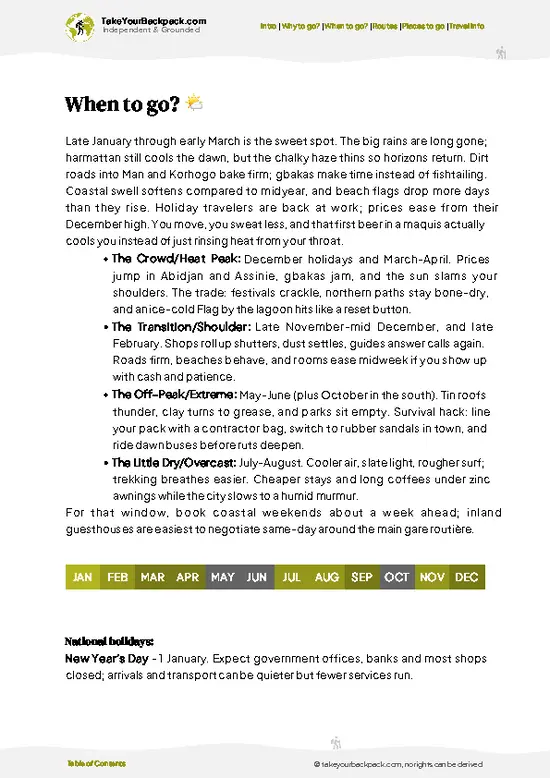
  • Topic: Weather and Temperature – The best time to visit Musée Charles Bieth de Man is during the dry season, from November to March. Temperatures hover around 25-30°C (77-86°F), making it comfortable for walking and exploring without the oppressive humidity and heavy rains that dominate April to October.

  • Topic: Daylight Hours – Daylight is fairly consistent year-round, roughly 11 to 12 hours daily. However, visiting in the dry season means clearer skies and more reliable daylight for photography and outdoor exhibits, unlike the wet season when afternoon showers can cut your day short.

  • Topic: Crowds – The museum sees fewer tourists outside the peak months of December and January, when local holidays and international visitors converge. Visiting in November or February offers a quieter
read more 👉

  • Topic: Weather and Temperature – The best time to visit Musée Charles Bieth de Man is during the dry season, from November to March. Temperatures hover around 25-30°C (77-86°F), making it comfortable for walking and exploring without the oppressive humidity and heavy rains that dominate April to October.

  • Topic: Daylight Hours – Daylight is fairly consistent year-round, roughly 11 to 12 hours daily. However, visiting in the dry season means clearer skies and more reliable daylight for photography and outdoor exhibits, unlike the wet season when afternoon showers can cut your day short.

  • Topic: Crowds – The museum sees fewer tourists outside the peak months of December and January, when local holidays and international visitors converge. Visiting in November or February offers a quieter experience, letting you absorb the exhibits without elbowing through crowds.

  • Topic: Seasonal Activities – Cultural events tied to local traditions often peak during the dry season, adding layers of context to your visit. From November to March, you might catch special exhibitions or community gatherings that bring the museum’s themes to life.

  • Topic: Price Fluctuations – Entry fees remain stable year-round, but accommodation and transport costs spike during the holiday season in December and January. Planning your visit just before or after these months can save you a significant chunk of your budget.


Pro-tip: Aim for late November or early February to dodge the rain, skip the crowds, and catch the museum when local culture is buzzing but prices haven’t peaked.


source: climatestotravel.comJANJanuary: good for travelingFEBFebruary: excellent for travelingMARMarch: excellent for travelingAPRApril: fair for travelingMAYMay: fair for travelingJUNJune: fair for travelingJULJuly: fair for travelingAUGAugust: fair for travelingSEPSeptember: fair for travelingOCTOctober: fair for travelingNOVNovember: excellent for travelingDECDecember: good for traveling
when-to-go

✈️ The backpacker research shortcutCôte d’Ivoire Travel Guide

An offline-friendly backpacking guide with optimized travel routes, ranked highlights, transport advice, and the best areas to stay.
The digital guide (337 pages) contains:
85 highlights, ranked by travel appeal
Optimized 5, 10 & 15-day travel routes
Cities, national parks, landmarks, beaches
How to get around
Offline-friendly for travel without Wi-Fi
👉 Click to see all 30+ guide features

📅 Plan smarter in minutes, not weeks
Month by month travel advice
Festivals & national holidays
Budget expectations

🗺️ Go to the right places, skip the overrated ones
Honest pros & cons of destinations
Top hikes, parks & viewpoints
Lesser-known places most travelers miss
Clear “worth it vs skip it” guidance

🛏️ Travel smoothly without rookie mistakes
Best areas to stay
Transport systems explained simply
Common scams & safety advice
SIM cards, money & practical tips

🌍 Understand the country, not just visit it
Culture & traditions
52 Essential phrases & customs
Festivals worth planning around
Traveler-friendly historical context
Insights that make places more meaningful

📱 Built for real travel conditions
Fully downloadable PDF
Works completely offline
Optimized for phone use
Useful in remote areas & buses
Everything in one place
Save weeks of stressful planning
Get instant access to your full guide. 30‑day money-back guarantee.


By proceeding you agree to our terms.
Sent to your inbox immediately after payment • 100% Secure Checkout
Best Backpacking Travel Advisor 2025 tourism awardBest Backpacking
Travel Advisor
2025
What others say about Take Your Backpack Guides:
⭐⭐⭐⭐⭐
Fantastic, amazing amount of information!
⭐⭐⭐⭐⭐
My goodness this is amazing, it's what I've been looking for hats off too you!
⭐⭐⭐⭐⭐
I think this is absolutely BRILLIANT
⭐⭐⭐⭐
Very complete and informative. It's still missing places, but I gotta to commend you
⭐⭐⭐⭐⭐
This is truly amazing, thank you, can't wait to explore it with my kids!
⭐⭐⭐⭐⭐
Awesome resource, thank you!
⭐⭐⭐⭐⭐
This is amazing! Can't wait to explore the ones I haven't seen
⭐⭐⭐⭐
I love this! Well done, great idea.
⭐⭐⭐⭐⭐
Thanks for taking the time to make this gem!
⭐⭐⭐⭐⭐
This might be the best website I've ever seen.
⭐⭐⭐⭐⭐
Congratulations, and thank you so much for your work; it's incredibly valuable.
⭐⭐⭐⭐
In all seriousness I think you did a great job pointing out the important spots
⭐⭐⭐⭐⭐
10/10 very good
⭐⭐⭐⭐⭐
As someone who's only just starting to visit regularly this is awesome, thank you.
⭐⭐⭐⭐
Thank you very much! I'm going to visit my dad, it's going to be very useful!
⭐⭐⭐⭐⭐
This is really cool! We'll be travelling for the first time and this definitely come in handy.
⭐⭐⭐⭐⭐
You are now our minister of culture, congratulations 👨‍💼
⭐⭐⭐⭐⭐
Just wanted to tell you that this is a pearl! Going to follow your recommendations.
⭐⭐⭐⭐⭐
This is so cool. I'll definitely be using the resource for my travels soon.
⭐⭐⭐⭐⭐
This is very impressive! Good work.
⭐⭐⭐⭐⭐
This is an amazing and informative site. Very well done!

🛏️ Where to stay?Where staying makes the most sense

If you’re heading to the Musée Charles Bieth de Man in Côte d’Ivoire, brace yourself: this isn’t a polished tourist hotspot with endless amenities. The crowds? They’re local, curious, and genuine—not the selfie-stick brigade. The costs? Modest, but don’t expect luxury. What you get instead is raw, authentic West African culture.

For backpackers, the best places to stay aren’t flashy or overly commercialized. Focus on the neighborhoods around Man’s town center. This area is where you’ll find a mix of guesthouses and small inns that cater to budget travelers and solo adventurers. It’s safe enough … read more 👉
If you’re heading to the Musée Charles Bieth de Man in Côte d’Ivoire, brace yourself: this isn’t a polished tourist hotspot with endless amenities. The crowds? They’re local, curious, and genuine—not the selfie-stick brigade. The costs? Modest, but don’t expect luxury. What you get instead is raw, authentic West African culture.

For backpackers, the best places to stay aren’t flashy or overly commercialized. Focus on the neighborhoods around Man’s town center. This area is where you’ll find a mix of guesthouses and small inns that cater to budget travelers and solo adventurers. It’s safe enough if you keep your wits about you, and the vibe is social without being overwhelming. You’ll meet locals and fellow travelers who are here for the real deal, not just a quick photo op.

Staying close to the town center means easy access to markets, street food stalls, and informal hangouts where you can soak up the local rhythms. It’s not about fancy bars or clubs—think open-air chats over coffee or fresh juice, and impromptu music sessions. This is where the real magic happens, away from the polished brochures. If you want to experience Côte d’Ivoire beyond the postcard, this is your base. Just pack light, stay alert, and dive in.

👛 Costs (as of 31 January 2026)Typical daily expenses

The Musée National de l'Automobile in Mulhouse, France, charges €19 for adult admission. ([musee-automobile.fr](https://www.musee-automobile.fr/en/practical-information/?utm_source=openai))

source: musee-automobile.fr
⚠️ Prices can change and everyone travels differently, so take this as a rough guide. Hope it helps you plan your adventure!

Other Ivorian attractions near Musée Charles Bieth de Man

Explore more nearby:


💡 Not sure where to go next?
Create a personalized itinerary for Côte d’Ivoire including Musée Charles Bieth de Man and the places that fit your trip.

Generate my itinerary

👉 Discover all attractions

Or checkout all Côte d’Ivoire has to offer (think cities, towns, villages, national parks, hikes, beaches, festivals)
Country photo of Côte d’Ivoire

We 💚 feedbackSumming up the experience

The Musée Charles Bieth de Man isn’t going to wow you with crowds or flashy exhibits—it’s quiet, a bit rough around the edges, and honestly, a little underfunded. But that’s exactly where its charm lies. You get a raw, unfiltered glimpse into local history and culture without the tourist gloss. The real surprise? The stories behind the artifacts, told by staff who genuinely care, make you feel like you’re stepping into a living memory, not just a display case. Just don’t expect air conditioning or polished signage—come for the soul, not the comfort.

✍️ Help improve this page!
The information on this page is based on in-depth research, insights shared by experienced travelers, and feedback from the local travel community in Côte d’Ivoire. While every effort is made to keep the information accurate and current, conditions can change — so if you spot anything incorrect or outdated, please get in touch.


🙋‍♂️ Give feedback

👋 Meet the founderWho’s Behind Take Your Backpack?

Johan, backpacker and founder of TakeYourBackpackHi, I’m Johan (Netherlands 🇳🇱), the creator of TakeYourBackpack. Over the past decade, I’ve backpacked through 80+ countries across six continents, gaining extensive experience with independent travel, long-term trips, and overland routes.

This site is built on a combination of firsthand travel experience and carefully curated insights from other backpackers. Many guides are based on places I’ve personally visited, while others bring together tips, observations, and practical advice shared by trusted travelers I’ve met along the way.

The goal is to provide realistic, experience-driven guidance — not generic itineraries — so you can explore destinations with better context, clearer expectations, and more confidence.

Get full country guide •
Instant download • 85 highlights • Full Offline guide