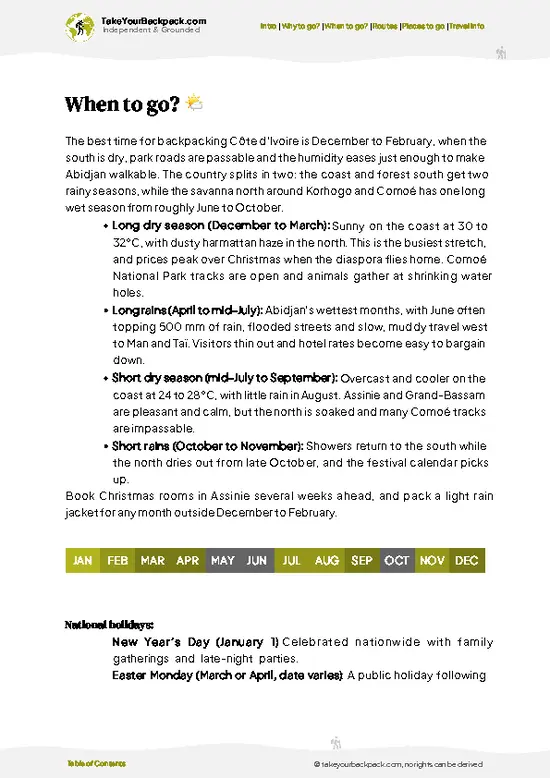
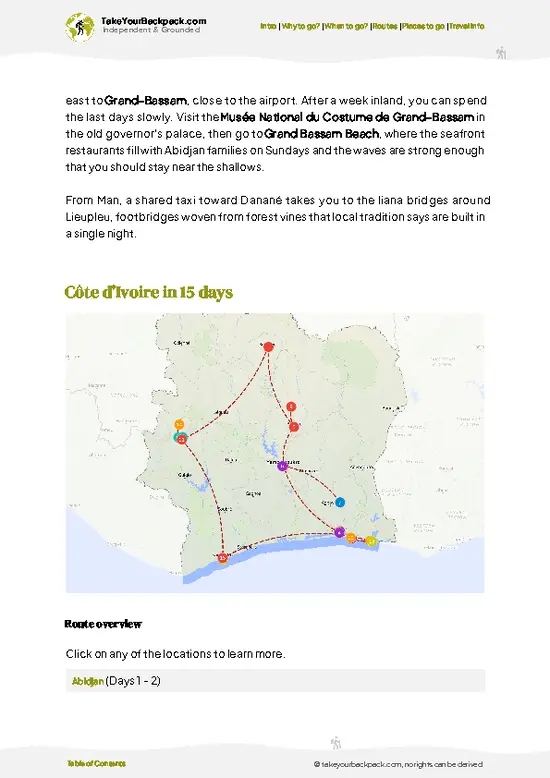
The Elephant Enclosure
Let’s get real: you’re not coming to the Zoo National d’Abidjan for a sanitized, Disney-fied safari. The elephants here are survivors—rescued from poaching and habitat loss, not bred for show. You’ll see them up close, sometimes caked in red earth, sometimes lazily flapping their ears in the shade. It’s not always pretty, but it’s honest. The rawness of their presence—massive, scarred, and still dignified—hits harder than any Instagram filter. If you want to understand Côte d’Ivoire’s relationship with its wildlife, start here.
The Chimpanzee Sanctuary
Forget the glassed-in, sterile primate houses you’ve seen elsewhere. The chimps here are a rowdy, unpredictable bunch—rescued from the bushmeat trade and illegal pet markets. You’ll hear them before you see them: hoots, … read more 👉
Let’s get real: you’re not coming to the Zoo National d’Abidjan for a sanitized, Disney-fied safari. The elephants here are survivors—rescued from poaching and habitat loss, not bred for show. You’ll see them up close, sometimes caked in red earth, sometimes lazily flapping their ears in the shade. It’s not always pretty, but it’s honest. The rawness of their presence—massive, scarred, and still dignified—hits harder than any Instagram filter. If you want to understand Côte d’Ivoire’s relationship with its wildlife, start here.
The Chimpanzee Sanctuary
Forget the glassed-in, sterile primate houses you’ve seen elsewhere. The chimps here are a rowdy, unpredictable bunch—rescued from the bushmeat trade and illegal pet markets. You’ll hear them before you see them: hoots, … read more 👉
The Elephant Enclosure
Let’s get real: you’re not coming to the Zoo National d’Abidjan for a sanitized, Disney-fied safari. The elephants here are survivors—rescued from poaching and habitat loss, not bred for show. You’ll see them up close, sometimes caked in red earth, sometimes lazily flapping their ears in the shade. It’s not always pretty, but it’s honest. The rawness of their presence—massive, scarred, and still dignified—hits harder than any Instagram filter. If you want to understand Côte d’Ivoire’s relationship with its wildlife, start here.
The Chimpanzee Sanctuary
Forget the glassed-in, sterile primate houses you’ve seen elsewhere. The chimps here are a rowdy, unpredictable bunch—rescued from the bushmeat trade and illegal pet markets. You’ll hear them before you see them: hoots, shrieks, the occasional thrown stick. It’s chaotic, sometimes uncomfortable, and absolutely riveting. Watching these animals interact—forming alliances, squabbling, showing off for visitors—reminds you that conservation isn’t a hashtag, it’s a daily grind. This is the real cost of human-wildlife conflict, and it’s impossible to ignore.
The Crocodile Ponds
Here’s where the zoo drops the pretense entirely. The crocodiles are not here to perform. They lurk, half-submerged, eyes just above the waterline, radiating a prehistoric menace. There’s no choreographed feeding show, just the slow, tense ballet of apex predators waiting for their moment. If you want a sanitized, family-friendly experience, move along. But if you want to feel the pulse of West African wildness—raw, unfiltered, and a little bit dangerous—linger here.
The Aviary
This isn’t your average “walk-through with parrots.” The aviary at Abidjan’s zoo is a riot of color and noise, with local species you won’t find in European or American collections. Hornbills, turacos, and the occasional raucous flock of weavers turn the space into a living soundscape. It’s not curated for your camera; it’s a slice of Côte d’Ivoire’s real biodiversity, loud and unapologetic. Birders will geek out, but even the casual visitor will feel the energy.
The Keeper Talks (If You’re Lucky)
This isn’t a scheduled, polished presentation. Sometimes, if you catch a keeper on a slow afternoon, you’ll get the real story—about the animals, the challenges, the heartbreak, and the small victories. These unscripted moments are worth more than any brochure. The staff are passionate, blunt, and deeply invested in the animals’ welfare. If you want to understand the soul of the place, skip the gift shop and talk to the people who keep the zoo running against the odds.
Reality Check: The Grit and the Guts
Let’s not sugarcoat it: the Zoo National d’Abidjan is not a luxury experience. Enclosures can be rough around the edges. The infrastructure is aging. But that’s exactly what gives it character. This is conservation on the front lines, not a photo op. If you want to see what wildlife protection looks like in a country still fighting for its forests and its future, this is the place. The magic isn’t in the polish—it’s in the perseverance.
Let’s get real: you’re not coming to the Zoo National d’Abidjan for a sanitized, Disney-fied safari. The elephants here are survivors—rescued from poaching and habitat loss, not bred for show. You’ll see them up close, sometimes caked in red earth, sometimes lazily flapping their ears in the shade. It’s not always pretty, but it’s honest. The rawness of their presence—massive, scarred, and still dignified—hits harder than any Instagram filter. If you want to understand Côte d’Ivoire’s relationship with its wildlife, start here.
The Chimpanzee Sanctuary
Forget the glassed-in, sterile primate houses you’ve seen elsewhere. The chimps here are a rowdy, unpredictable bunch—rescued from the bushmeat trade and illegal pet markets. You’ll hear them before you see them: hoots, shrieks, the occasional thrown stick. It’s chaotic, sometimes uncomfortable, and absolutely riveting. Watching these animals interact—forming alliances, squabbling, showing off for visitors—reminds you that conservation isn’t a hashtag, it’s a daily grind. This is the real cost of human-wildlife conflict, and it’s impossible to ignore.
The Crocodile Ponds
Here’s where the zoo drops the pretense entirely. The crocodiles are not here to perform. They lurk, half-submerged, eyes just above the waterline, radiating a prehistoric menace. There’s no choreographed feeding show, just the slow, tense ballet of apex predators waiting for their moment. If you want a sanitized, family-friendly experience, move along. But if you want to feel the pulse of West African wildness—raw, unfiltered, and a little bit dangerous—linger here.
The Aviary
This isn’t your average “walk-through with parrots.” The aviary at Abidjan’s zoo is a riot of color and noise, with local species you won’t find in European or American collections. Hornbills, turacos, and the occasional raucous flock of weavers turn the space into a living soundscape. It’s not curated for your camera; it’s a slice of Côte d’Ivoire’s real biodiversity, loud and unapologetic. Birders will geek out, but even the casual visitor will feel the energy.
The Keeper Talks (If You’re Lucky)
This isn’t a scheduled, polished presentation. Sometimes, if you catch a keeper on a slow afternoon, you’ll get the real story—about the animals, the challenges, the heartbreak, and the small victories. These unscripted moments are worth more than any brochure. The staff are passionate, blunt, and deeply invested in the animals’ welfare. If you want to understand the soul of the place, skip the gift shop and talk to the people who keep the zoo running against the odds.
Reality Check: The Grit and the Guts
Let’s not sugarcoat it: the Zoo National d’Abidjan is not a luxury experience. Enclosures can be rough around the edges. The infrastructure is aging. But that’s exactly what gives it character. This is conservation on the front lines, not a photo op. If you want to see what wildlife protection looks like in a country still fighting for its forests and its future, this is the place. The magic isn’t in the polish—it’s in the perseverance.
Spotted a mistake or missing something? Contact us.
v2.webp)


Best Backpacking
Hi, I’m Johan (Netherlands 🇳🇱), the creator of TakeYourBackpack. Over the past decade, I’ve backpacked through 80+ countries across six continents, gaining extensive experience with independent travel, long-term trips, and overland routes.