
×

Croatia🇭🇷 | national parksDinara Nature Parkkarst peaks, alpine meadows, endemic flora, border ridge | things to do and best time to go

Explore Telašćica Nature ParkExplore Baranja Wine Region

Backpacking in Dinara Nature Park
👀 For curious travelersnational park ranked #18
By Johan Kruseman 🇳🇱 | Updated October 15, 2026

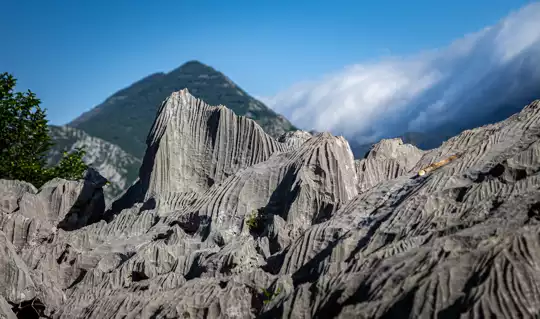
Most guides gloss over this, but here’s the truth: Dinara isn’t a lush, well-marked playground—it’s a wild, wind-battered limestone massif where trails can vanish into rock and solitude is the rule, not the exception. Dinara sits in Croatia’s rugged interior, straddling the border with Bosnia and Herzegovina, far from the Adriatic crowds. The new Dinara National Park is Croatia’s youngest, and it feels it—raw, underdeveloped, and refreshingly free of tourist infrastructure. If you’re after marked circuits and easy resupplies, this isn’t Plitvice or Paklenica. The scenery is stark and dramatic, with karst plateaus, rare wildflowers, and the occasional golden eagle overhead, but you’ll work for every view. Entrance fees are low, but so is the chance of stumbling into a cozy mountain hut—bring your own shelter or be ready for spartan conditions. I’ve hiked here and seen more sheep than people. For solitude and challenge, Dinara delivers; for comfort, look elsewhere.

Discover everything you want to know in the 📖 Croatia Travel Guide.


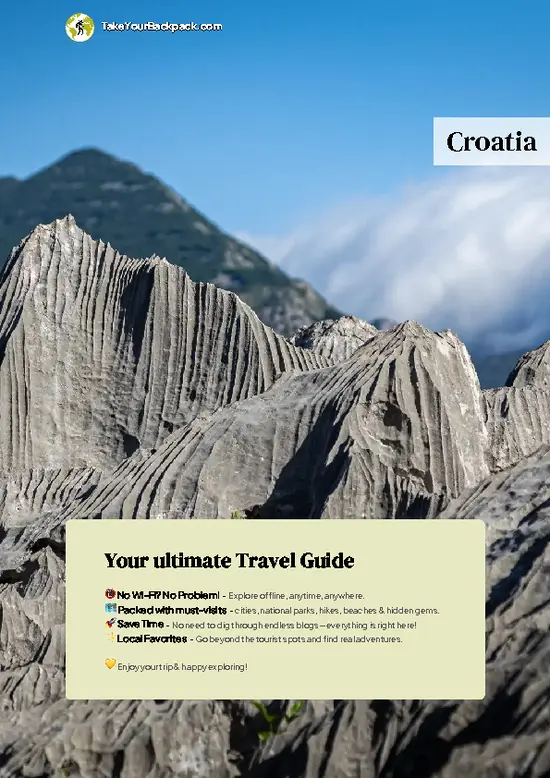
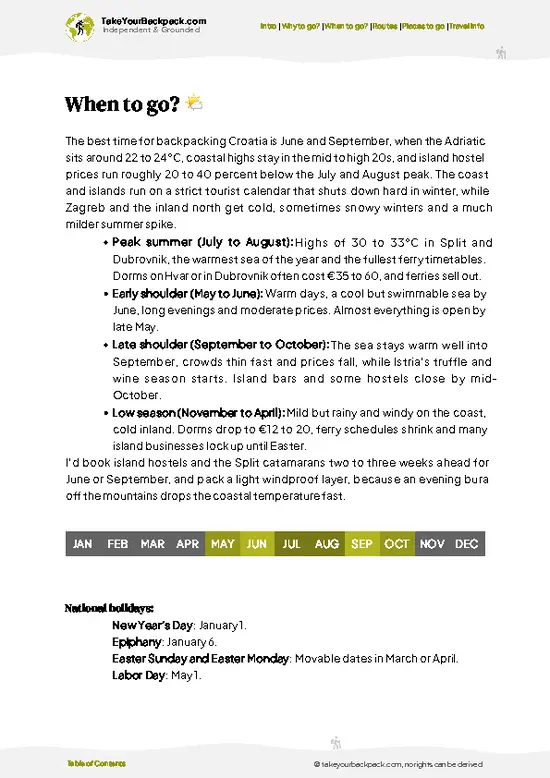
example page 0 from our offline Travel Guide for Croatia
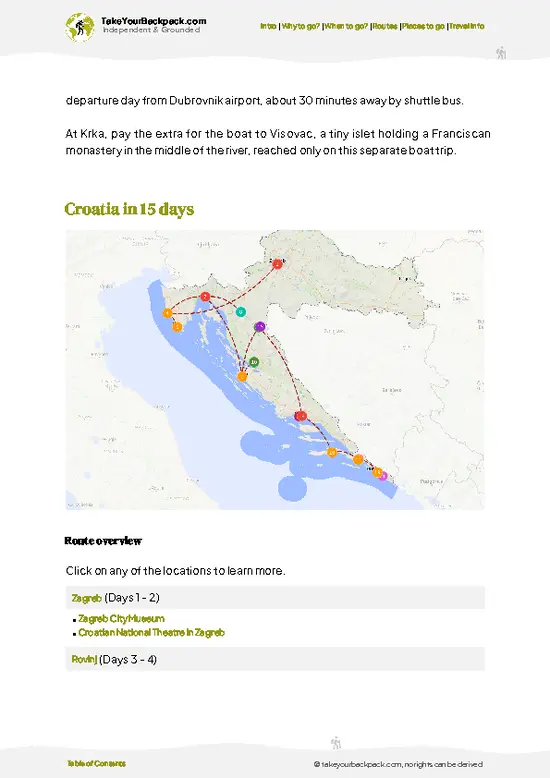
example page 1 from our offline Travel Guide for Croatia
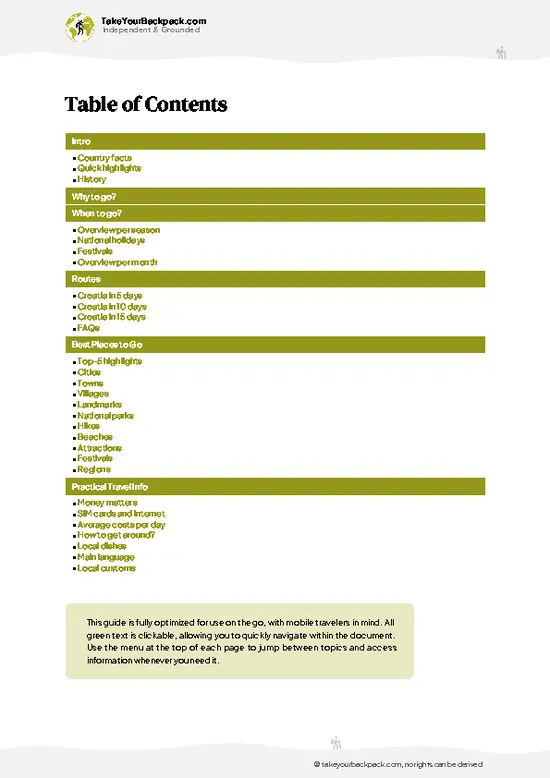
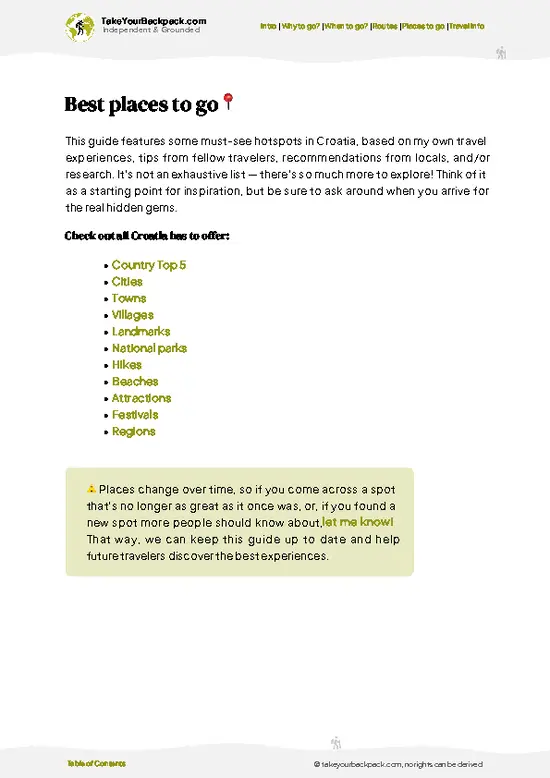
example page 2 from our offline Travel Guide for Croatia
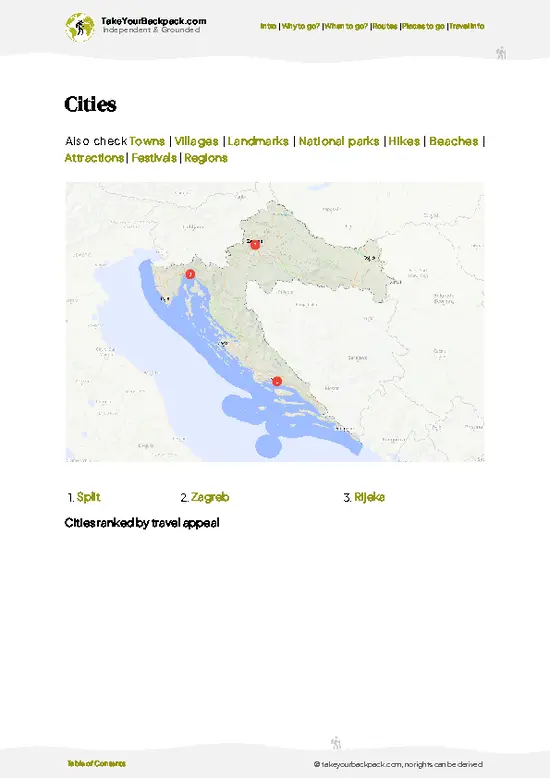
example page 3 from our offline Travel Guide for Croatia
example page 4 from our offline Travel Guide for Croatia
example page 5 from our offline Travel Guide for Croatia
example page 6 from our offline Travel Guide for Croatia
example page 7 from our offline Travel Guide for Croatia
Loading the map 🌍
CLICK TO FILTER
cities
towns
villages
landmarks
national parks
hikes
beaches
attractions
festivals
regions
SHOW COUNTRY’S BESTSHOW ALL

✨ Why go?
Ranked #18 national park in Croatia
Why visitors keep coming back

Backpackers pick Dinara National Park in Croatia because it offers a rare blend of independent exploration without the usual tourist crowd. This isn’t a place where you’re herded through on a bus or stuck in a guided group. Instead, you get to chart your own course across a landscape that’s rugged but accessible. The trail variety here is a real asset—whether you want a tough climb to the summit or a gentler hike through karst fields, Dinara delivers.

Budget travelers will appreciate the camping options and hostels nearby that keep costs low without sacrificing basic comfort. Unlike some parks where you’re forced into pricey lodges or expensive tours, Dinara lets you keep your wallet intact. It’s a self-guided traveler’s dream, especially if you’re comfortable with map reading and a bit … read more 👉
Backpackers pick Dinara National Park in Croatia because it offers a rare blend of independent exploration without the usual tourist crowd. This isn’t a place where you’re herded through on a bus or stuck in a guided group. Instead, you get to chart your own course across a landscape that’s rugged but accessible. The trail variety here is a real asset—whether you want a tough climb to the summit or a gentler hike through karst fields, Dinara delivers.

Budget travelers will appreciate the camping options and hostels nearby that keep costs low without sacrificing basic comfort. Unlike some parks where you’re forced into pricey lodges or expensive tours, Dinara lets you keep your wallet intact. It’s a self-guided traveler’s dream, especially if you’re comfortable with map reading and a bit of navigation. The park’s infrastructure supports this style, with clear signage and well-maintained paths, but it’s not overdeveloped—so you still feel like you’re out in the wild.

If you want to avoid the hidden costs of mandatory guides or inflated transport fees, Dinara is a smart pick. It’s about spending your energy on the hike, not on unnecessary extras.

💡 HighlightsDon't-miss highlights and experiences

Dinara Summit (Sinjal, 1,831 m)
The highest peak in Croatia isn’t just a number on a map—it’s a test of patience and payoff. The climb is long, exposed, and rocky, but the summit view is a full 360-degree sweep over the Dinaric Alps, the Peručko Lake, and, on a clear day, the distant shimmer of the Adriatic. The wind up here is relentless. Bring a shell, and don’t expect crowds. This is where you earn your solitude. If you only have the legs for one big push, make it this one. (Personal favorite.)


Dinara Grasslands and Endemic Flora
The limestone plateau below the summit is a botanist’s playground. In late spring and early summer, the meadows explode with wildflowers—many of them endemic to the Dinaric region. You’ll spot Dalmatian rockbell, mountain peony, and, if you’re lucky, the rare … read more 👉
Dinara Summit (Sinjal, 1,831 m)
The highest peak in Croatia isn’t just a number on a map—it’s a test of patience and payoff. The climb is long, exposed, and rocky, but the summit view is a full 360-degree sweep over the Dinaric Alps, the Peručko Lake, and, on a clear day, the distant shimmer of the Adriatic. The wind up here is relentless. Bring a shell, and don’t expect crowds. This is where you earn your solitude. If you only have the legs for one big push, make it this one. (Personal favorite.)


Dinara Grasslands and Endemic Flora
The limestone plateau below the summit is a botanist’s playground. In late spring and early summer, the meadows explode with wildflowers—many of them endemic to the Dinaric region. You’ll spot Dalmatian rockbell, mountain peony, and, if you’re lucky, the rare Dinara bellflower. The grasslands are also a crucial habitat for butterflies and insects found nowhere else in Croatia. Don’t trample off-trail; the ecosystem is fragile, and the rangers do check.


Vrlika and the Cetina River Source
Just outside the park boundary, the Cetina River bursts from a deep, turquoise karst spring known as “Izvor Cetine.” It’s a geological oddity: a vertical shaft of cold, impossibly clear water that looks like a giant’s eye. The nearby village of Vrlika is the best base for supplies and a quick espresso before or after your hike. The spring itself is a short walk from the road, but the water is icy year-round—don’t plan on a swim unless you’re part polar bear.


Dinara Ridge Trail
This is the backbone of the park—a rugged, undulating trail that follows the crest of the Dinara massif. It’s not a stroll. Expect loose rock, sudden drops, and the kind of wind that can knock your hat off. But the ridge delivers the best chance to spot chamois, golden eagles, and, if you’re patient, the elusive Balkan lynx. The sense of exposure is real, so keep your wits about you and don’t attempt it in fog or storms.


Glavaš Fortress
A medieval stone fortress perched on a rocky outcrop at the foot of Dinara. It’s not a manicured tourist site—think crumbling walls, wildflowers growing through the cracks, and zero crowds. The fortress marks the start of the classic ascent route to Sinjal, so it’s both a historical detour and a practical trailhead. The view from the ruins is a preview of the vastness you’ll face above.
Spotted a mistake or missing something? Contact us.

Things to do near Dinara Nature Park

Ratings based on Tripadvisor reviews. When you book through this link, you support our work at no extra cost to you.

🌤️ When to go?Seasonal considerations and timing

  • Weather: Dinara’s weather swings sharply. From November through March, expect cold, often wet conditions with temperatures hovering around 0°C to 5°C (32°F to 41°F). April to June offers mild, drier weather, ideal for hiking without the summer scorch.
  • Temperature: Summer months (July and August) push highs to 25°C-30°C (77°F-86°F), which can drain your energy on exposed trails. Spring and early autumn keep it cooler, around 15°C-20°C (59°F-68°F), perfect for sustained trekking.
  • Daylight Hours: Peak daylight stretches from May to August, giving you up to 15 hours to explore. Winter months cut this down to 8-9 hours, limiting your hiking window and increasing the risk of navigating in low light.
  • Crowds: July and August bring the most visitors, especially on weekends. If you want solitude,
… read more 👉
  • Weather: Dinara’s weather swings sharply. From November through March, expect cold, often wet conditions with temperatures hovering around 0°C to 5°C (32°F to 41°F). April to June offers mild, drier weather, ideal for hiking without the summer scorch.
  • Temperature: Summer months (July and August) push highs to 25°C-30°C (77°F-86°F), which can drain your energy on exposed trails. Spring and early autumn keep it cooler, around 15°C-20°C (59°F-68°F), perfect for sustained trekking.
  • Daylight Hours: Peak daylight stretches from May to August, giving you up to 15 hours to explore. Winter months cut this down to 8-9 hours, limiting your hiking window and increasing the risk of navigating in low light.
  • Crowds: July and August bring the most visitors, especially on weekends. If you want solitude, aim for late April to early June or September to October when the park is quieter but still accessible.
  • Seasonal Activities: Spring and early autumn are best for wildflower spotting and birdwatching. Winter can offer snow-covered landscapes but requires serious gear and experience. Summer is great for longer, multi-day treks but prepare for heat and sun exposure.
  • Price Fluctuations: Accommodation and local services spike in summer, especially August. Booking early is crucial. Off-season months like November through March offer lower prices but fewer open facilities.
Pro-tip: Plan your trip for late spring or early autumn to balance weather, daylight, and crowd levels—this keeps your energy up and your wallet intact for the parts of Dinara that truly deserve your focus.


source: climatestotravel.comJANJanuary: fair for travelingFEBFebruary: fair for travelingMARMarch: fair for travelingAPRApril: highly recommended for travelingMAYMay: excellent for travelingJUNJune: excellent for travelingJULJuly: good for travelingAUGAugust: good for travelingSEPSeptember: excellent for travelingOCTOctober: highly recommended for travelingNOVNovember: fair for travelingDECDecember: fair for traveling
when-to-go

✈️ The backpacker research shortcutCroatia Travel Guide

An offline-friendly backpacking guide with optimized travel routes, ranked highlights, transport advice, and the best areas to stay.
example page 0 from our offline Travel Guide for Croatia
example page 1 from our offline Travel Guide for Croatia
example page 2 from our offline Travel Guide for Croatia
example page 3 from our offline Travel Guide for Croatia
example page 4 from our offline Travel Guide for Croatia
example page 5 from our offline Travel Guide for Croatia
example page 6 from our offline Travel Guide for Croatia
example page 7 from our offline Travel Guide for Croatia
The digital guide (407 pages) contains:
✅ 109 highlights, ranked by travel appeal
✅ Optimized 5, 10 & 15-day travel routes
✅ Cities, national parks, landmarks, beaches
✅ How to get around
✅ Offline-friendly for travel without Wi-Fi
👉 Click to see all 30+ guide features

📅 Plan smarter in minutes, not weeks
✅ Month by month travel advice
✅ Festivals & national holidays
✅ Budget expectations

🗺️ Go to the right places, skip the overrated ones
✅ Honest pros & cons of destinations
✅ Top hikes, parks & viewpoints
✅ Lesser-known places most travelers miss
✅ Clear “worth it vs skip it” guidance

🛏️ Travel smoothly without rookie mistakes
✅ Best areas to stay
✅ Transport systems explained simply
✅ Common scams & safety advice
✅ SIM cards, money & practical tips

🌍 Understand the country, not just visit it
✅ Culture & traditions
✅ 52 Essential phrases & customs
✅ Festivals worth planning around
✅ Traveler-friendly historical context
✅ Insights that make places more meaningful

📱 Built for real travel conditions
✅ Fully downloadable PDF
✅ Works completely offline
✅ Optimized for phone use
✅ Useful in remote areas & buses
✅ Everything in one place
Stop searching, start planning
Get instant access to your full guide. 30‑day money-back guarantee.
+ Add another guide for just

By proceeding you agree to our terms.
Sent to your inbox immediately after payment • 100% Secure Checkout
Best Backpacking Travel Advisor 2025 tourism awardBest Backpacking
Travel Advisor
2025
What others say about Take Your Backpack Guides:
⭐⭐⭐⭐⭐
Fantastic, amazing amount of information!
⭐⭐⭐⭐⭐
My goodness this is amazing, it's what I've been looking for hats off too you!
⭐⭐⭐⭐⭐
I think this is absolutely BRILLIANT
⭐⭐⭐⭐
Very complete and informative. It's still missing places, but I gotta to commend you
⭐⭐⭐⭐⭐
This is truly amazing, thank you, can't wait to explore it with my kids!
⭐⭐⭐⭐⭐
Awesome resource, thank you!
⭐⭐⭐⭐⭐
This is amazing! Can't wait to explore the ones I haven't seen
⭐⭐⭐⭐
I love this! Well done, great idea.
⭐⭐⭐⭐⭐
Thanks for taking the time to make this gem!
⭐⭐⭐⭐⭐
This might be the best website I've ever seen.
⭐⭐⭐⭐⭐
Congratulations, and thank you so much for your work; it's incredibly valuable.
⭐⭐⭐⭐
In all seriousness I think you did a great job pointing out the important spots
⭐⭐⭐⭐⭐
10/10 very good
⭐⭐⭐⭐⭐
As someone who's only just starting to visit regularly this is awesome, thank you.
⭐⭐⭐⭐
Thank you very much! I'm going to visit my dad, it's going to be very useful!
⭐⭐⭐⭐⭐
This is really cool! We'll be travelling for the first time and this definitely come in handy.
⭐⭐⭐⭐⭐
You are now our minister of culture, congratulations 👨‍💼
⭐⭐⭐⭐⭐
Just wanted to tell you that this is a pearl! Going to follow your recommendations.
⭐⭐⭐⭐⭐
This is so cool. I'll definitely be using the resource for my travels soon.
⭐⭐⭐⭐⭐
This is very impressive! Good work.
⭐⭐⭐⭐⭐
This is an amazing and informative site. Very well done!

🛏️ Where to stay?Where staying makes the most sense

Dinara National Park in Croatia is a rugged, wild place, and that reality shapes your accommodation options. There are no hotels, hostels, or formal lodgings inside the park itself. This isn’t a theme park with visitor centers and gift shops; it’s a raw, mountainous landscape where the priority is preservation over convenience. So, if you’re expecting to roll out of bed and step onto a well-marked trail, you’ll need to adjust your expectations.

Your best bet is to base yourself in nearby towns that offer a mix of budget and mid-range options. Knin, about 20 kilometers from the park’s main entrances, … read more 👉
Dinara National Park in Croatia is a rugged, wild place, and that reality shapes your accommodation options. There are no hotels, hostels, or formal lodgings inside the park itself. This isn’t a theme park with visitor centers and gift shops; it’s a raw, mountainous landscape where the priority is preservation over convenience. So, if you’re expecting to roll out of bed and step onto a well-marked trail, you’ll need to adjust your expectations.

Your best bet is to base yourself in nearby towns that offer a mix of budget and mid-range options. Knin, about 20 kilometers from the park’s main entrances, is the most practical hub. It’s a small town but has guesthouses and private rooms that won’t break the bank. From Knin, you can arrange local transport or even hitchhike if you’re feeling adventurous, though public transit is limited and infrequent.

Another option is Drniš, roughly 30 kilometers away. It’s quieter than Knin but has a few family-run pensions and apartments. Staying here means a bit more driving but a more authentic Croatian small-town vibe.

If you want to camp, there are no official campgrounds inside Dinara National Park, and wild camping is technically prohibited. That said, some backpackers do set up discreet campsites on the fringes, but this carries risks—both from park rangers and the unpredictable mountain weather.

Bottom line: plan to stay outside the park, in Knin or Drniš, and budget extra time and transport costs to get into the park. This setup isn’t about comfort; it’s about access to a landscape that demands respect and preparation.

👛 Costs (as of 15 October 2026)What things cost and how to budget

As of the most recent estimates, the average daily cost for visiting Dinara Nature Park in Croatia ranges from €65 to €280, depending on factors such as accommodation choices, dining preferences, and activities undertaken.

source: parkovihrvatske.hr
⚠️ Prices can change and everyone travels differently, so take this as a rough guide. Hope it helps you plan your adventure!

🥾 TrailsWhere to hike in Dinara Nature Park: trails for every level

Dinara National Park in Croatia is a rugged, raw slice of the Dinaric Alps that demands respect from hikers. The terrain is a mix of steep limestone cliffs, rocky outcrops, and sparse Mediterranean vegetation, offering a stark but rewarding landscape. Wildlife is subtle but present—expect to spot chamois, eagles, and a variety of smaller mountain creatures if you’re patient and quiet. The hiking here isn’t for the casual stroller; it’s a place where your boots and legs will earn every step. Trails are generally steep and rocky, with some sections requiring sure-footedness and a head for heights. … read more 👉
Dinara National Park in Croatia is a rugged, raw slice of the Dinaric Alps that demands respect from hikers. The terrain is a mix of steep limestone cliffs, rocky outcrops, and sparse Mediterranean vegetation, offering a stark but rewarding landscape. Wildlife is subtle but present—expect to spot chamois, eagles, and a variety of smaller mountain creatures if you’re patient and quiet. The hiking here isn’t for the casual stroller; it’s a place where your boots and legs will earn every step. Trails are generally steep and rocky, with some sections requiring sure-footedness and a head for heights.

The park features a few designated trails, with the most notable being the Dinara Summit Trail. This route is the crown jewel for hikers aiming to reach the highest peak in Croatia, Sinjal (1831 meters).
  • Length: Approximately 10 kilometers one way
  • Estimated Duration: 5 to 7 hours depending on pace and conditions
  • Difficulty Level: Strenuous - steep ascents, uneven rocky paths, and some exposed sections
  • Key Features: Panoramic views over the Adriatic Sea and inland Croatia, limestone karst formations, and alpine flora
  • Terrain: Rocky, steep inclines, some loose scree, and narrow ridges

Another option is the Glavaš Trail, which is shorter and less demanding but still requires good fitness.
  • Length: Around 6 kilometers round trip
  • Estimated Duration: 2 to 3 hours
  • Difficulty Level: Moderate - some steep sections but generally well-marked
  • Key Features: Views of the Cetina River valley, diverse plant life, and occasional wildlife sightings
  • Terrain: Mixed rocky and dirt paths, moderate elevation gain

Access to Dinara National Park is not as straightforward as more popular Croatian parks. Public transport options are limited; the nearest towns with bus connections are Knin and Sinj, from where you’ll need a taxi or a private transfer to reach trailheads. This means planning ahead is essential, especially if you’re relying on public transit. The park is not crowded, which is a blessing if you want solitude, but also means fewer facilities and less immediate help if something goes wrong. There is a small entrance fee, which helps maintain the trails and preserve the fragile environment—don’t skip this, as it’s part of responsible park use.

In short, Dinara is a place that rewards preparation and respect. It’s not a casual day hike but a serious outing that offers a raw, authentic mountain experience. Pack accordingly, check weather conditions, and be ready for a workout that pays off with some of Croatia’s most commanding views.
⚠️ Hiking info can sometimes be outdated or inaccurate. Before you hit the trail, check the latest conditions with locals. If you do spot anything that's off, I'd love to hear from you, so I can update it for fellow travelers.

🛡️ SafetyScams, Hazards, and Annoyances

Dinara National Park offers a straightforward hiking experience, but don’t let that lull you into complacency. The weather can shift quickly, especially in spring and autumn, so layering is your best friend—mornings may start crisp, but afternoons can warm up sharply. The terrain is a mix of rocky paths and grassy slopes; footing can be uneven, so sturdy boots with good grip are essential. Steep sections demand steady pacing—rushing here only wastes energy and risks injury. Navigation is generally clear, but some trails are less marked, so a map or GPS is smart, especially if you stray from main routes.

Wildlife encounters are rare and usually limited to small mammals and birds. There’s no need for alarm, but respect their space and avoid feeding animals. River crossings are minimal and manageable, … read more 👉
Dinara National Park offers a straightforward hiking experience, but don’t let that lull you into complacency. The weather can shift quickly, especially in spring and autumn, so layering is your best friend—mornings may start crisp, but afternoons can warm up sharply. The terrain is a mix of rocky paths and grassy slopes; footing can be uneven, so sturdy boots with good grip are essential. Steep sections demand steady pacing—rushing here only wastes energy and risks injury. Navigation is generally clear, but some trails are less marked, so a map or GPS is smart, especially if you stray from main routes.

Wildlife encounters are rare and usually limited to small mammals and birds. There’s no need for alarm, but respect their space and avoid feeding animals. River crossings are minimal and manageable, but after heavy rain, water levels can rise quickly—check conditions before setting out. Many first-timers underestimate water needs; carry enough and refill where possible. Stick to marked trails, keep your pace steady, and you’ll preserve energy for the views that make Dinara worth the climb.

FAQCommon questions from travelers

2 to 3 days are sufficient to explore Dinara thoroughly, including hiking to the summit and visiting key viewpoints. The main trail to the peak takes about 4 to 6 hours one way. Additional time allows for relaxation and exploring nearby villages.
No, visiting Dinara without a car is challenging due to limited public transport options. The nearest town with bus connections is Sinj, but from there, local taxis or arranged transfers are necessary to reach trailheads. Renting a car is highly recommended for flexibility.
No entrance fee or permit is required to visit Dinara. It is a natural mountain area without formal park entry restrictions. However, standard hiking safety precautions and respect for private land are advised.
⚠️ Things can change over time, so always validate details locally before you go.

Other Croatian national parks near Dinara Nature Park

Explore more nearby:


💡 Not sure where to go next?
Create a personalized itinerary for Croatia including Dinara Nature Park and the places that fit your trip.

Generate my itinerary

👉 Discover all national parks

Or checkout all Croatia has to offer (think cities, towns, villages, national parks, hikes, beaches, festivals)
Country photo of Croatia

We 💚 feedbackParting advice and final tips

Dinara’s raw, rugged landscape is a rare find in Croatia—perfect if you want to escape the crowds and feel like you’re truly off the beaten path. But don’t expect easy trails or tourist comforts; the terrain demands solid boots and a good sense of direction. If you come prepared, the payoff is quiet, untouched nature that rewards patience and respect, not convenience or spectacle.

✈️ When did I visit Croatia?
I checked out Croatia twice as part of a working trip in Zagreb in 2021 and 2022.

✍️ Help improve this page!
The information on this page is based on my own backpacking experience in Croatia, supplemented with up-to-date research and feedback from other travelers. Travel details can change, so if you notice anything outdated or incomplete, feel free to let me know.


🙋‍♂️ Give feedback

👋 Meet the founderWho’s Behind Take Your Backpack?

Johan, backpacker and founder of TakeYourBackpackHi, I’m Johan (Netherlands 🇳🇱), the creator of TakeYourBackpack. Over the past 3 decades, I’ve backpacked through 90+ countries across six continents, gaining extensive experience with independent travel, long-term trips, and overland routes.

This site is built on a combination of firsthand travel experience and carefully curated insights from other backpackers. Many guides are based on places I’ve personally visited, while others bring together tips, observations, and practical advice shared by trusted travelers I’ve met along the way.

The goal is to provide realistic, experience-driven guidance — not generic itineraries — so you can explore destinations with better context, clearer expectations, and more confidence.