×

Croatia🇭🇷 | best national parksExplore the 10 Best national parks in Croatia

Croatia has eight national parks, and they split into two camps: the Dalmatian coast and islands, where limestone, sea and boat trips set the pace, and the inland karst of Lika and the Dinaric mountains, where forests, lakes and trails dominate. The coastal parks are busy, ticketed and tied to ferry or bus timetables. The inland ones are calmer and cheaper, though a car or a long bus ride helps. For independent travel, go early in the morning, since tour buses arrive around 10 or 11 a.m. and the paths empty out after 4 p.m.

By Johan Kruseman 🇳🇱 | Updated October 18, 2026
Explore the best hikes in Croatia

Why go?Key Factors That Shape the Experience

Croatia packs an unusual variety into a small country, and that is the main reason its parks are worth building a trip around. The Adriatic side is karst limestone, so water carves caves, travertine barriers, canyons and sheer cliffs, while the Mediterranean climate lets sea, islands and mountains sit within an hour or two of each other. Add a dense road network with frequent coastal buses, and reaching a park rarely needs expedition planning.

That convenience has a flip side. Croatia’s parks are managed as ticketed attractions, with set entry fees, marked boardwalks, boat shuttles and limits on swimming, camping and fires. Wild camping is banned, and you will not find the backcountry freedom of Scandinavia or the American West. Inside the parks, accommodation is scarce, so you sleep in nearby … read more 👉
Croatia packs an unusual variety into a small country, and that is the main reason its parks are worth building a trip around. The Adriatic side is karst limestone, so water carves caves, travertine barriers, canyons and sheer cliffs, while the Mediterranean climate lets sea, islands and mountains sit within an hour or two of each other. Add a dense road network with frequent coastal buses, and reaching a park rarely needs expedition planning.

That convenience has a flip side. Croatia’s parks are managed as ticketed attractions, with set entry fees, marked boardwalks, boat shuttles and limits on swimming, camping and fires. Wild camping is banned, and you will not find the backcountry freedom of Scandinavia or the American West. Inside the parks, accommodation is scarce, so you sleep in nearby towns.

Know before you choose: seasonal pricing shifts the cost sharply, with summer tickets often double the winter rate. Cash is still handy at small kiosks, though cards are widely accepted at main gates. Booking tickets online for the busiest sites avoids queues, and a good pair of grippy shoes matters more than any other gear, because wet limestone is slick.
Our Approach to Ranking
The list of best national parks in Croatia is created based on landscapes, wildlife, adventure opportunities, facilities, and overall experience. If you feel a national park is missing in this list, please let us know.

When to go?When to Plan Your Trip

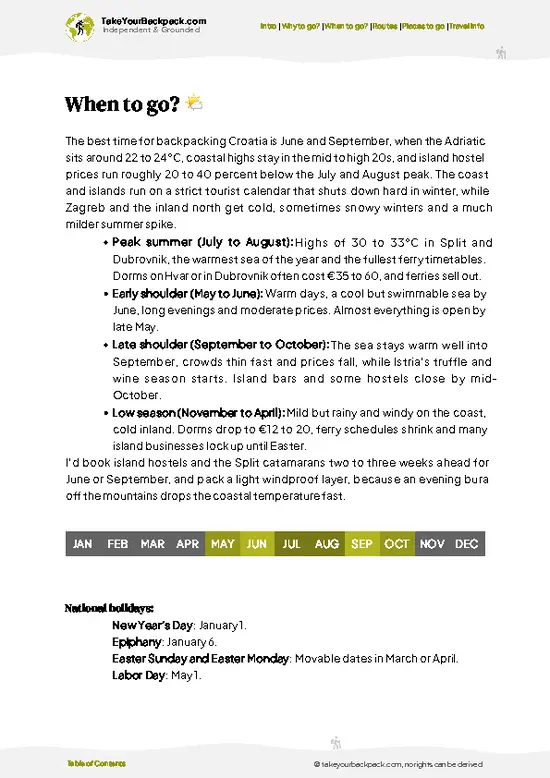
Best months and shoulder seasons: May, June and September are the best months for Croatia’s national parks, because daytime temperatures sit around 20 to 28°C, the sea is swimmable and the trails and boardwalks are far less crowded than in midsummer. Waterfalls also run strongest in spring after snowmelt and rain.

Summer and winter: July and August bring 28 to 35°C on the Dalmatian coast, with packed boardwalks and the highest ticket prices and accommodation rates, often 40 to 100 percent above shoulder season. Go at opening time or late afternoon, and keep midday for swimming or shade. Inland Lika and the mountains stay cooler, often 22 to 28°C in summer, and nights can be chilly even in August.

April and October are good value, with mild days of 14 to 22°C, but showers are frequent. Autumn … read more 👉
Best months and shoulder seasons: May, June and September are the best months for Croatia’s national parks, because daytime temperatures sit around 20 to 28°C, the sea is swimmable and the trails and boardwalks are far less crowded than in midsummer. Waterfalls also run strongest in spring after snowmelt and rain.

Summer and winter: July and August bring 28 to 35°C on the Dalmatian coast, with packed boardwalks and the highest ticket prices and accommodation rates, often 40 to 100 percent above shoulder season. Go at opening time or late afternoon, and keep midday for swimming or shade. Inland Lika and the mountains stay cooler, often 22 to 28°C in summer, and nights can be chilly even in August.

April and October are good value, with mild days of 14 to 22°C, but showers are frequent. Autumn is the wettest season on the coast, with November often seeing the heaviest rain. Some boat services and seasonal accommodation reduce or stop between November and March.

Winter suits inland parks only if you like frost and snow, with temperatures from -5 to 5°C. Cheaper tickets are a real plus, but shorter days and closed facilities limit what you can do, and paths can be icy.

national park hoppingOptimizing Your Multi-Stop Itinerary

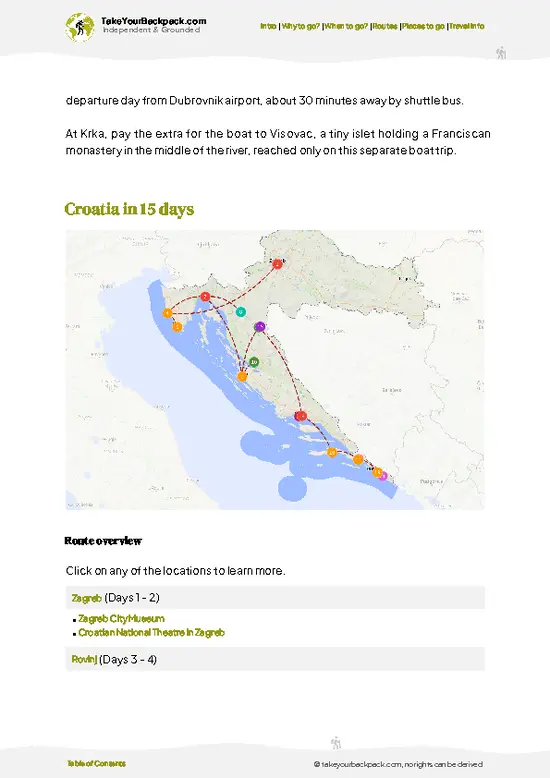
How many days and in which order: Plan 7 to 12 days for a trip linking several national parks in Croatia, which gives you about one full day per stop plus buffer for transfers. The country is long and thin, so the logic is simple: cluster the northern inland parks around Zagreb and Lika, then drop south through Zadar and Šibenik, and finish in Split, Dubrovnik or the islands.

Travel between regions typically takes 2 to 4 hours by bus or car, for example Zagreb to Zadar or Zadar to Split. Reaching the far south from Split adds around 4 to 5 hours, with a border crossing through Bosnia’s Neum corridor on the coastal road. Bring your passport and expect queues in summer.

A full day suits most parks, while island and boat-based ones need a half day just for the crossing. Building in a rest day … read more 👉
How many days and in which order: Plan 7 to 12 days for a trip linking several national parks in Croatia, which gives you about one full day per stop plus buffer for transfers. The country is long and thin, so the logic is simple: cluster the northern inland parks around Zagreb and Lika, then drop south through Zadar and Šibenik, and finish in Split, Dubrovnik or the islands.

Travel between regions typically takes 2 to 4 hours by bus or car, for example Zagreb to Zadar or Zadar to Split. Reaching the far south from Split adds around 4 to 5 hours, with a border crossing through Bosnia’s Neum corridor on the coastal road. Bring your passport and expect queues in summer.

A full day suits most parks, while island and boat-based ones need a half day just for the crossing. Building in a rest day on the coast breaks up hard walking days.

Mistakes to avoid: The common errors are cramming two parks into one day, trusting bus timetables without checking the day of the week, and arriving at midday in July. Instead, base yourself in one town per cluster, check seasonal departures in advance, and arrive early. Sunday and off-season buses thin out sharply, so a rental car or a shared transfer saves hours when you link remote stops.

The ListThe Best national parks of Croatia

1 Plitvice Lakes National Park

tiered lakes, wooden boardwalks, turquoise pools, cascading streams

Traverse a network of footbridges and forested trails linking clear lakes and waterfalls in Croatia’s most iconic inland park.

Croatia - Plitvice Lakes National Park

2 Krka National Park

travertine waterfalls, monastery island, river canyons, swimming spots

Swim beneath cascading falls, visit a centuries-old monastery, and walk wooden paths through lush river gorges and pools.

croatia-national-park-krka-national-park
© Google | Bouillet Antoine

3 Mljet National Park

saltwater lakes, pine forests, Benedictine monastery, sea caves

Kayak across tranquil lakes, walk shaded coastal paths, and visit an island monastery surrounded by dense Mediterranean woodland.

croatia-national-park-mljet-national-park
© Google | Max Donovan

4 Paklenica National Park

limestone canyons, climbing routes, mountain shelters, black pine forests

Trek or climb dramatic gorges, passing through dense pine stands and remote huts on the southern slopes of Velebit mountain.

croatia-national-park-paklenica-national-park
© Google | Martin Rimsky

5 Kornati National Park

bare islets, turquoise coves, sailing routes, dry-stone walls

Sail between stark limestone islands and anchor in quiet bays, exploring a labyrinthine seascape shaped by centuries of stonework.

6 Rt Kamenjak

rocky headland, wild coastline, snorkeling spots, panoramic cliffs

Climb rugged outcrops for sweeping sea views, discover underwater life, and find solitude along untamed stretches of limestone.

croatia-national-park-rt-kamenjak
© Google |

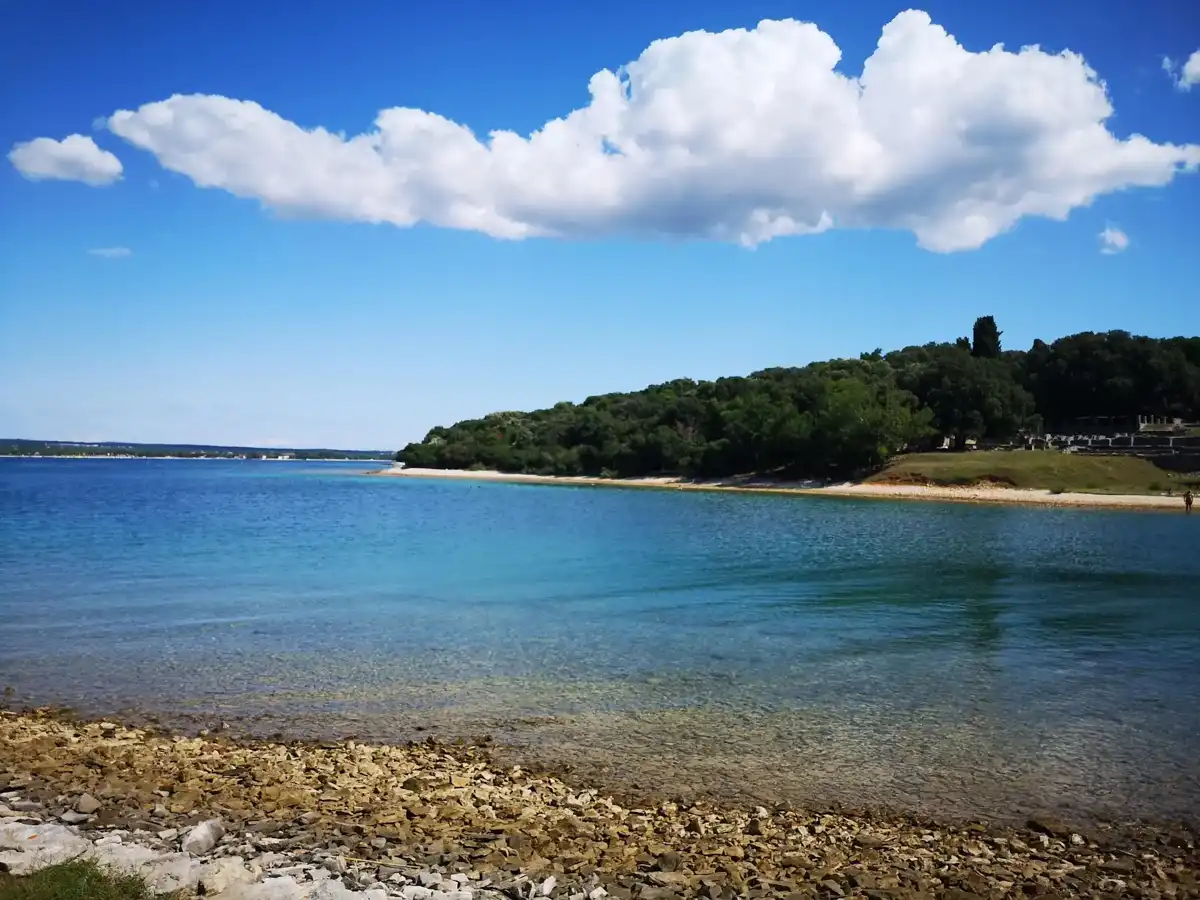
7 Brijuni National Park

island archipelago, Roman ruins, safari park, Adriatic views

Wander among ancient olive groves, archaeological sites, and free-roaming wildlife on a tranquil set of islands off the Istrian coast.

8 Kopački Rit Nature Park

wetland reserve, bird colonies, floodplain forests, river delta

Glide by boat or walk raised paths to spot herons, deer, and wild boar in one of Europe’s largest preserved marshlands.

croatia-national-park-kopacki-rit-nature-park
© Google |

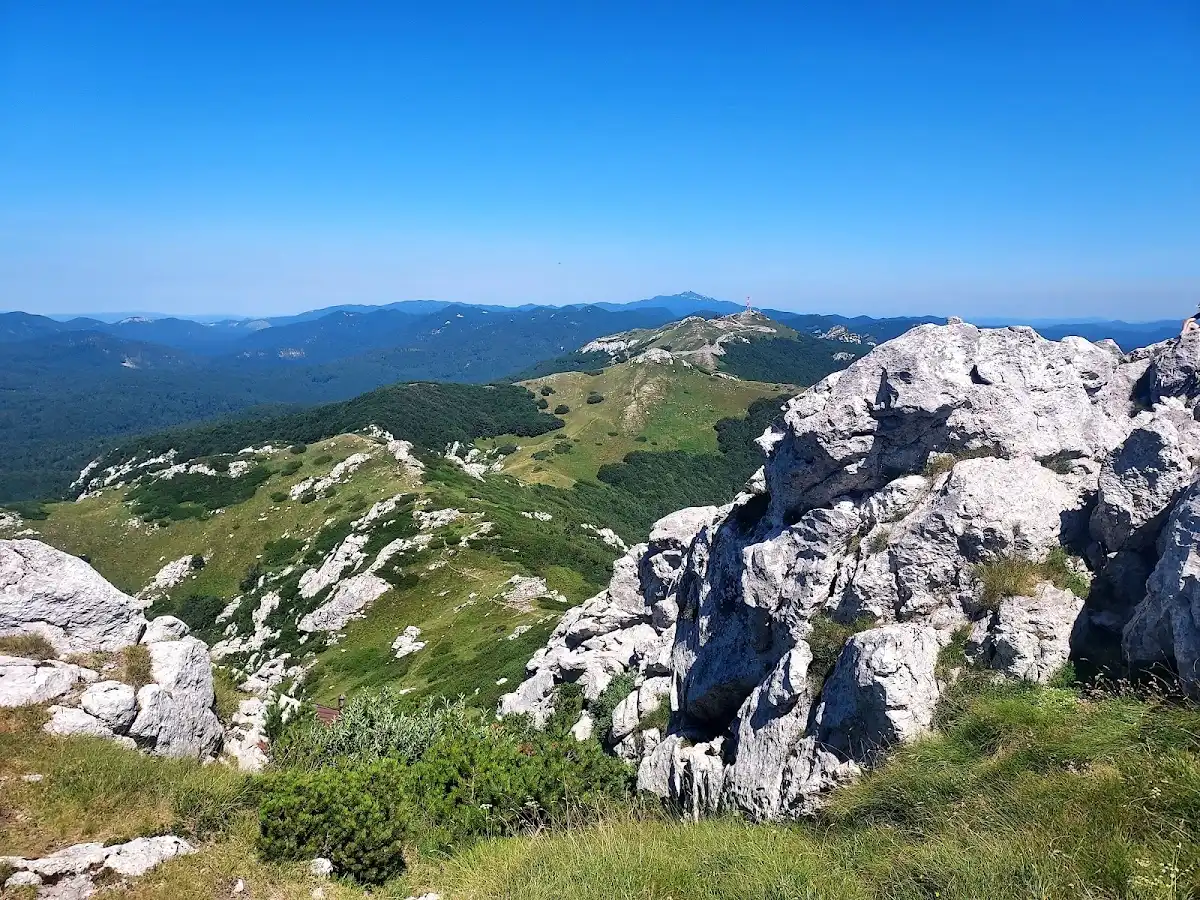
9 Sjeverni Velebit National Park

rock labyrinths, alpine grasslands, panoramic trails, botanical reserve

Follow marked routes across rocky plateaus and wildflower meadows, discovering unique plant life and sweeping mountain vistas.

croatia-national-park-sjeverni-velebit-national-park
© Google |

10 Risnjak National Park

dense spruce forests, lynx habitat, karst springs, mountain ridges

Ascend forested slopes and open ridges, encountering cool springs and the elusive wildlife of Gorski Kotar’s highlands.

croatia-national-park-risnjak-national-park
© Google |

11 Telašćica Nature Park

cliffside bays, salt lake, pine groves, Adriatic panoramas

Anchor in sheltered inlets, hike to dramatic sea cliffs, and swim in a saltwater lake surrounded by Mediterranean vegetation.

12 Lonjsko Polje Nature Park

floodplain pastures, stork villages, traditional wooden houses, oxbow lakes

Cycle or paddle through open meadows and riverside hamlets, observing migratory birds and rural life shaped by seasonal floods.

13 Vransko Lake Nature Park

freshwater lake, birdwatching towers, reed beds, cycling paths

Cycle or walk along the lakeshore, observing migratory birds and exploring quiet wetlands between the Adriatic and inland hills.

14 Medvednica Nature Park

forest trails, medieval fortress, mountain huts, city skyline views

Climb wooded slopes above Zagreb, stopping at rustic shelters and a hilltop castle for sweeping vistas over the capital.

15 Učka Nature Park

coastal ridge, chestnut forests, stone villages, summit viewpoints

Ascend forested slopes to panoramic peaks, passing through traditional hamlets and chestnut groves above the Kvarner Gulf.

16 Žumberak-Samoborsko Gorje Nature Park

remote hamlets, karst plateaus, wildflower meadows, forested ridges

Traverse quiet uplands dotted with small villages, open pastures, and forested slopes on Zagreb’s western borderlands.

17 Jankovac Forest Park

beech woods, forest streams, mountain valley, waterfalls

Follow shaded trails through dense woodland and past clear cascades in a secluded valley beneath the Papuk mountain slopes.

croatia-national-park-jankovac-forest-park
© Google |

18 Dinara Nature Park

karst peaks, alpine meadows, endemic flora, border ridge

Hike rugged limestone slopes and open grasslands, encountering rare plant species and panoramic views along Croatia’s highest mountain range.

Think you know Croatia?

Prove you’re a true local — uncover 8 lesser-known national parks in Croatia that locals tend to keep to themselves.
Loading the map 🌍

Expert viewExpert Commentary on national parks

How many parks to visit: I would advise three to four national parks on one trip. Beyond that, you spend most of your days on buses and in ticket queues, and the parks start to blur. Three to four lets you mix kinds and still have time to swim, eat and sleep.

Choosing between the kinds: If you want swimming, boats and coastal views, pick one or two of the island and sea parks and treat them as half-day or full-day outings. If you want hiking and quiet, choose inland forest, lake or mountain parks where trails are longer and the crowds thinner. First-timers do well with one famous waterfall-and-boardwalk park for the spectacle, then a quieter one to see Croatia without the tour buses. Experienced hikers should put the mountain parks first, since they offer real elevation and fewer visitors. … read more 👉
How many parks to visit: I would advise three to four national parks on one trip. Beyond that, you spend most of your days on buses and in ticket queues, and the parks start to blur. Three to four lets you mix kinds and still have time to swim, eat and sleep.

Choosing between the kinds: If you want swimming, boats and coastal views, pick one or two of the island and sea parks and treat them as half-day or full-day outings. If you want hiking and quiet, choose inland forest, lake or mountain parks where trails are longer and the crowds thinner. First-timers do well with one famous waterfall-and-boardwalk park for the spectacle, then a quieter one to see Croatia without the tour buses. Experienced hikers should put the mountain parks first, since they offer real elevation and fewer visitors.

What it costs: Plan US$60 to 110 a day in high season, roughly €55 to 100, including a dorm bed or budget room, food, local buses and park entry. In shoulder season that falls to about US$45 to 80. Entry tickets for the big parks run about €10 to 40 per person depending on season and park, with summer at the top of the range. Many parks offer reduced rates for students and children. Boat transfers to island parks add around €15 to 35 return. Guides are optional but cost roughly €30 to 100 for a group, and are worth it in mountain areas with caves or unmarked routes. Bus transfers between towns and parks usually cost €5 to 15 each way. Eat at a konoba outside the gates, where a main course runs €10 to 16, rather than at park kiosks that charge more for less.

Safety and etiquette: The main hazards are heat, wet limestone and sea conditions. Carry at least 2 liters of water in summer, wear shoes with grip, and use sun protection, since shade is rare on karst slopes. In mountain areas, afternoon storms build quickly, and the bora wind can close ferries or make exposed ridges dangerous. Check the forecast with the park office before a long hike.

In the Dinaric mountains and some border areas, landmines remain from the 1990s conflict. Stay on marked trails and heed the yellow warning signs without exception. Park rules matter: swimming is banned in some lakes and waterfalls, fires are forbidden, and drones need permission. Fines are real, and rangers do enforce them.

Croatians are relaxed about dress away from sacred sites, but modest clothing is expected when visiting a monastery or chapel inside a park. Greeting people with a simple “dobar dan” goes a long way in village shops and guesthouses, where hosts often hand out the best local advice.

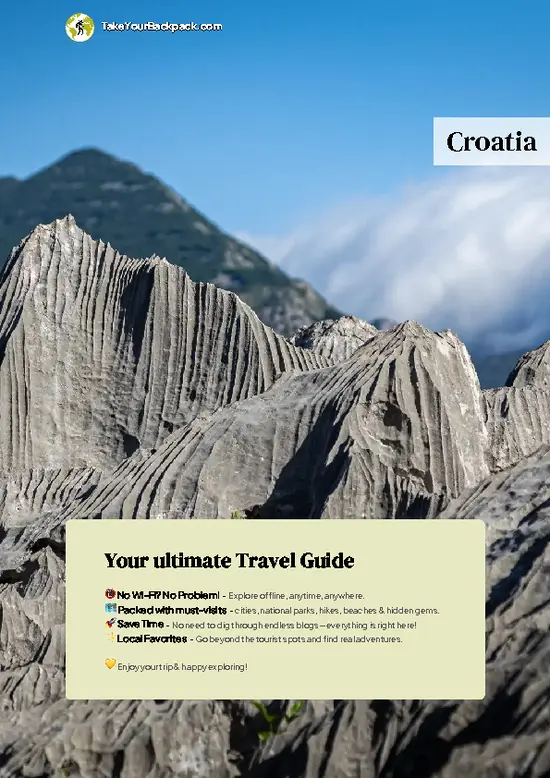
✈️ The backpacker research shortcutCroatia Travel Guide

An offline-friendly backpacking guide with optimized travel routes, ranked highlights, transport advice, and the best areas to stay.
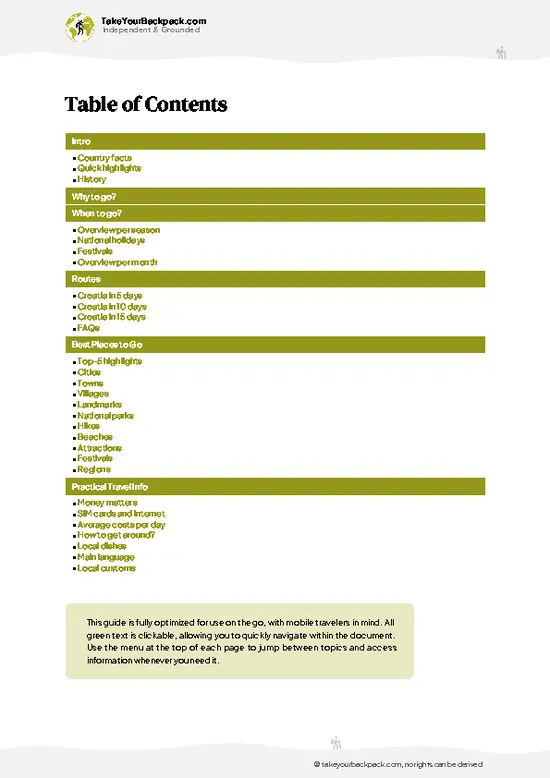
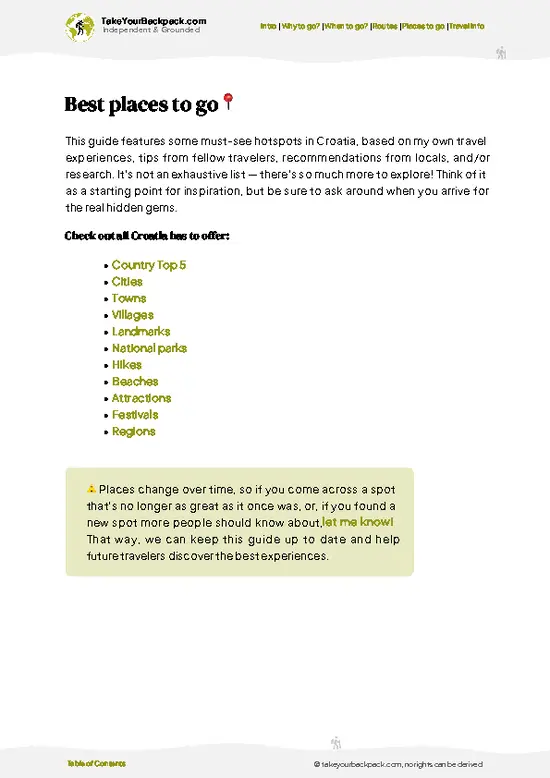
example page 0 from our offline Travel Guide for Croatia
example page 1 from our offline Travel Guide for Croatia
example page 2 from our offline Travel Guide for Croatia
example page 3 from our offline Travel Guide for Croatia
example page 4 from our offline Travel Guide for Croatia
example page 5 from our offline Travel Guide for Croatia
example page 6 from our offline Travel Guide for Croatia
example page 7 from our offline Travel Guide for Croatia
The digital guide (407 pages) contains:
✅ 109 highlights, ranked by travel appeal
✅ Optimized 5, 10 & 15-day travel routes
✅ Cities, national parks, landmarks, beaches
✅ How to get around
✅ Offline-friendly for travel without Wi-Fi
👉 Click to see all 30+ guide features

📅 Plan smarter in minutes, not weeks
✅ Month by month travel advice
✅ Festivals & national holidays
✅ Budget expectations

🗺️ Go to the right places, skip the overrated ones
✅ Honest pros & cons of destinations
✅ Top hikes, parks & viewpoints
✅ Lesser-known places most travelers miss
✅ Clear “worth it vs skip it” guidance

🛏️ Travel smoothly without rookie mistakes
✅ Best areas to stay
✅ Transport systems explained simply
✅ Common scams & safety advice
✅ SIM cards, money & practical tips

🌍 Understand the country, not just visit it
✅ Culture & traditions
✅ 52 Essential phrases & customs
✅ Festivals worth planning around
✅ Traveler-friendly historical context
✅ Insights that make places more meaningful

📱 Built for real travel conditions
✅ Fully downloadable PDF
✅ Works completely offline
✅ Optimized for phone use
✅ Useful in remote areas & buses
✅ Everything in one place
Stop searching, start planning
Get instant access to your full guide. 30‑day money-back guarantee.
+ Add another guide for just

By proceeding you agree to our terms.
Sent to your inbox immediately after payment • 100% Secure Checkout
Best Backpacking Travel Advisor 2025 tourism awardBest Backpacking
Travel Advisor
2025
What others say about Take Your Backpack Guides:
⭐⭐⭐⭐⭐
Fantastic, amazing amount of information!
⭐⭐⭐⭐⭐
My goodness this is amazing, it's what I've been looking for hats off too you!
⭐⭐⭐⭐⭐
I think this is absolutely BRILLIANT
⭐⭐⭐⭐
Very complete and informative. It's still missing places, but I gotta to commend you
⭐⭐⭐⭐⭐
This is truly amazing, thank you, can't wait to explore it with my kids!
⭐⭐⭐⭐⭐
Awesome resource, thank you!
⭐⭐⭐⭐⭐
This is amazing! Can't wait to explore the ones I haven't seen
⭐⭐⭐⭐
I love this! Well done, great idea.
⭐⭐⭐⭐⭐
Thanks for taking the time to make this gem!
⭐⭐⭐⭐⭐
This might be the best website I've ever seen.
⭐⭐⭐⭐⭐
Congratulations, and thank you so much for your work; it's incredibly valuable.
⭐⭐⭐⭐
In all seriousness I think you did a great job pointing out the important spots
⭐⭐⭐⭐⭐
10/10 very good
⭐⭐⭐⭐⭐
As someone who's only just starting to visit regularly this is awesome, thank you.
⭐⭐⭐⭐
Thank you very much! I'm going to visit my dad, it's going to be very useful!
⭐⭐⭐⭐⭐
This is really cool! We'll be travelling for the first time and this definitely come in handy.
⭐⭐⭐⭐⭐
You are now our minister of culture, congratulations 👨‍💼
⭐⭐⭐⭐⭐
Just wanted to tell you that this is a pearl! Going to follow your recommendations.
⭐⭐⭐⭐⭐
This is so cool. I'll definitely be using the resource for my travels soon.
⭐⭐⭐⭐⭐
This is very impressive! Good work.
⭐⭐⭐⭐⭐
This is an amazing and informative site. Very well done!

🛏️ Where to stay?Accommodation Highlights

Croatia has plenty of hostels and private rooms (“sobe”), with dorm beds running roughly €20 to €45 a night in peak summer and far less off-season. In Zagreb, Donji Grad puts you near the bars of Tkalčićeva and the main squares, while in Split beds inside Diocletian’s Palace sit right on the sights but come with late-night noise, and Bačvice trades that for beach access and its own club scene. Dubrovnik’s Old Town is the priciest and busiest base, so Lapad and Gruž are the quieter, cheaper picks a short bus ride from the walls, near the ferry port in Gruž’s case.

If you enjoy meeting fellow travelers, consider choosing hostels with high ratings for atmosphere. On the other hand, if you prefer … read more 👉
Croatia has plenty of hostels and private rooms (“sobe”), with dorm beds running roughly €20 to €45 a night in peak summer and far less off-season. In Zagreb, Donji Grad puts you near the bars of Tkalčićeva and the main squares, while in Split beds inside Diocletian’s Palace sit right on the sights but come with late-night noise, and Bačvice trades that for beach access and its own club scene. Dubrovnik’s Old Town is the priciest and busiest base, so Lapad and Gruž are the quieter, cheaper picks a short bus ride from the walls, near the ferry port in Gruž’s case.

If you enjoy meeting fellow travelers, consider choosing hostels with high ratings for atmosphere. On the other hand, if you prefer having your own space, a hotel might be a better option.

CroatiaSee More of Croatia

👋 Meet the founderWho’s Behind Take Your Backpack?

Johan, backpacker and founder of TakeYourBackpackHi, I’m Johan (Netherlands 🇳🇱), the creator of TakeYourBackpack. Over the past 3 decades, I’ve backpacked through 90+ countries across six continents, gaining extensive experience with independent travel, long-term trips, and overland routes.

This site is built on a combination of firsthand travel experience and carefully curated insights from other backpackers. Many guides are based on places I’ve personally visited, while others bring together tips, observations, and practical advice shared by trusted travelers I’ve met along the way.

The goal is to provide realistic, experience-driven guidance — not generic itineraries — so you can explore destinations with better context, clearer expectations, and more confidence.