×

Croatia🇭🇷 | townsZadarSea organ, Roman forum, sunset promenade | things to do and best time to go

Explore VukovarExplore Korčula

Backpacking in Zadar
🏆 Top picktown ranked #5
By Johan Kruseman 🇳🇱 | Updated October 16, 2026

Zadar is not for anyone chasing big-city chaos or Dubrovnik-level drama; the streets feel calmer, the nightlife softer, the crowds thinner. That’s exactly why backpackers still win here. You get a real Adriatic town with sea salt in the air, stone under your feet, and prices that don’t punch you in the throat. Zadar sits on Croatia’s central coast, between Rijeka and Split, a natural hinge point for moving up or down the country. The old town is compact and walkable, ringed by bus connections to islands, national parks, and beaches, so it works better as a launchpad than a long-term urban playground. Hostels are social without being rowdy, evenings lean toward beers on the promenade rather than club marathons, and it feels safer and more relaxed than Split, more practical and lived-in than postcard-perfect coastal villages.

Discover everything you want to know in the 📖 Croatia Travel Guide.


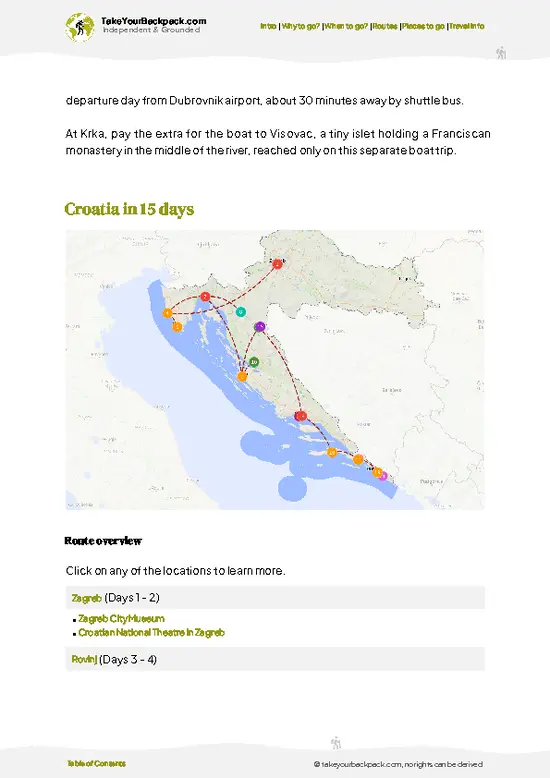
example page 0 from our offline Travel Guide for Croatia
example page 1 from our offline Travel Guide for Croatia
example page 2 from our offline Travel Guide for Croatia
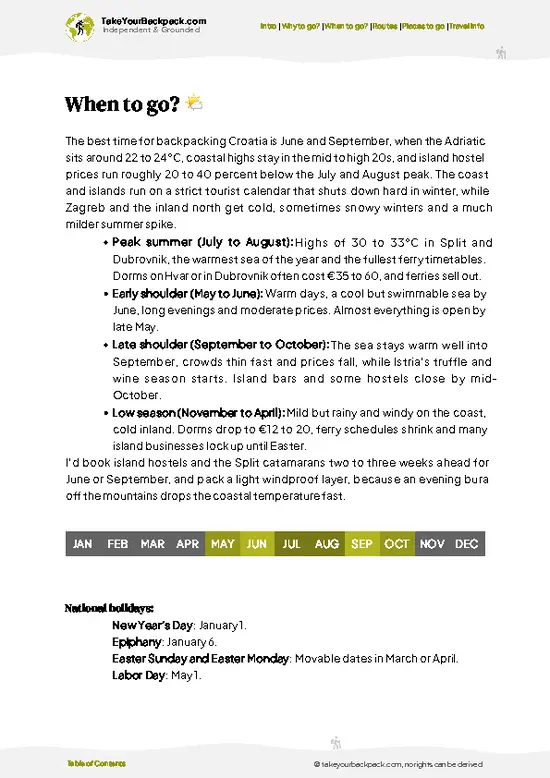
example page 3 from our offline Travel Guide for Croatia
example page 4 from our offline Travel Guide for Croatia
example page 5 from our offline Travel Guide for Croatia
example page 6 from our offline Travel Guide for Croatia
example page 7 from our offline Travel Guide for Croatia
Loading the map 🌍
CLICK TO FILTER
cities
towns
villages
landmarks
national parks
hikes
beaches
attractions
festivals
regions
SHOW COUNTRY’S BESTSHOW ALL

✨ Why go?
Ranked #5 town in Croatia
Reasons people choose to visit here

Zadar is a backpacker’s hub that strikes a balance between convenience and character. Nestled along the Adriatic, it serves as a perfect launchpad for nearby hikes in the stunning Paklenica National Park or the tranquil beaches of the Zadar archipelago. You’ll find small-scale hostels and guesthouses that foster a friendly atmosphere, making it easy to connect with fellow travelers. The walkable streets are lined with local eateries where you can savor fresh seafood and regional wines, adding flavor to your stay.

Most backpackers tend to linger here for a few days, soaking in the laid-back vibe. It’s not a party town, but rather a place for slow travelers and solo adventurers seeking a mix of culture and nature. The social scene is warm and inviting, perfect for small groups or those looking … read more 👉
Zadar is a backpacker’s hub that strikes a balance between convenience and character. Nestled along the Adriatic, it serves as a perfect launchpad for nearby hikes in the stunning Paklenica National Park or the tranquil beaches of the Zadar archipelago. You’ll find small-scale hostels and guesthouses that foster a friendly atmosphere, making it easy to connect with fellow travelers. The walkable streets are lined with local eateries where you can savor fresh seafood and regional wines, adding flavor to your stay.

Most backpackers tend to linger here for a few days, soaking in the laid-back vibe. It’s not a party town, but rather a place for slow travelers and solo adventurers seeking a mix of culture and nature. The social scene is warm and inviting, perfect for small groups or those looking to meet new friends over a shared meal. Whether you’re unwinding by the sea or exploring ancient ruins, Zadar offers a rewarding experience that feels earned, making it a worthwhile stop on your journey through Croatia.

💡 HighlightsEssential experiences to have while visiting Zadar

  • Sea Organ (Morske orgulje) — An ingenious set of underwater pipes that make music from the sea’s movement; best experienced at sunset when the tones mingle with the light and the waterfront fills with people.
  • Greeting to the Sun (Pozdrav Suncu) — A giant solar-powered glass disk that puts on a nightly light show; simple, modern, and oddly moving when you stand on the edge of the old town watching the sea lights blink back.
  • St. Donatus Church — The round 9th-century church that looks like a small amphitheatre; its raw early medieval architecture and acoustics make it a must for anyone who likes ancient stones and good photo angles over the Forum.
  • Roman Forum — The open-air remains of Roman Zadar at the town’s heart; walk among columns and carved stones and you’ll feel how the city grew
… read more 👉
  • Sea Organ (Morske orgulje) — An ingenious set of underwater pipes that make music from the sea’s movement; best experienced at sunset when the tones mingle with the light and the waterfront fills with people.
  • Greeting to the Sun (Pozdrav Suncu) — A giant solar-powered glass disk that puts on a nightly light show; simple, modern, and oddly moving when you stand on the edge of the old town watching the sea lights blink back.
  • St. Donatus Church — The round 9th-century church that looks like a small amphitheatre; its raw early medieval architecture and acoustics make it a must for anyone who likes ancient stones and good photo angles over the Forum.
  • Roman Forum — The open-air remains of Roman Zadar at the town’s heart; walk among columns and carved stones and you’ll feel how the city grew layer by layer over two millennia.
  • Cathedral of St. Anastasia (Zadar Cathedral) — A beautiful cathedral with a climbable bell tower offering panoramic views across the peninsula and islands — great for orientation and sunset photos if you don’t mind a few steps.
  • Church of St. Chrysogonus (Sv. Krševan) — A striking Romanesque church with rich sculptural detail and an important role in local history; quieter than the main cathedral but full of character and history.
  • Five Wells Square (Trg pet bunara) — A compact, slightly oddball square with five cylindrical wells, a medieval feel, and fewer tourists; a good stop to imagine everyday life in older Zadar and grab coffee without the crowds.
  • Land Gate and City Walls (Kopnena vrata) — The Venetian-era Land Gate with its reliefs and cannon-studded walls gives a real sense of the city’s defensive past; walk the walls where you can for small, rewarding viewpoints.
  • Museum of Ancient Glass (Muzej antičkog stakla) — Small but excellent: ancient glassware, live glassblowing demonstrations, and hands-on exhibits that connect you with local craft traditions in a way a guidebook can’t.
  • Archaeological Museum Zadar — A solid collection of artifacts from prehistory through the Roman period and beyond; good if you want the backstory to the stones you’ve been walking on in the Forum and streets.
Nearby day-trip highlights you can reach from Zadar include the tiny historic town of Nin (salt pans and shallow beaches), boat trips to Kornati National Park for stark island scenery, the hiking and climbing routes of Paklenica National Park, and Pag Island for its lunar landscapes and famous cheese.
Spotted a mistake or missing something? Contact us.

Things to do around Zadar

Ratings based on Tripadvisor reviews. When you book through this link, you support our work at no extra cost to you.

🏘️ NeighborhoodsHow different areas shape the experience

Zadar is a captivating blend of ancient history and vibrant coastal life, perfect for backpackers seeking both adventure and relaxation.

Old Town
This is the heart of Zadar, where cobblestone streets echo with history. You’ll find Roman ruins and medieval churches around every corner. The vibe is lively, especially at sunset when locals gather at the Sea Organ. It’s walkable, so you can easily explore on foot. Prices here can be a bit higher, but the experience is worth it. Ideal for short stays, as you can soak up the atmosphere quickly.

Bulevar
A bit more modern, Bulevar offers a laid-back atmosphere with cafes and shops. It’s quieter than Old Town, making it perfect for those who want a chill vibe. The cost is moderate, and you can find affordable accommodations. Walkability is decent, … read more 👉
Zadar is a captivating blend of ancient history and vibrant coastal life, perfect for backpackers seeking both adventure and relaxation.

Old Town
This is the heart of Zadar, where cobblestone streets echo with history. You’ll find Roman ruins and medieval churches around every corner. The vibe is lively, especially at sunset when locals gather at the Sea Organ. It’s walkable, so you can easily explore on foot. Prices here can be a bit higher, but the experience is worth it. Ideal for short stays, as you can soak up the atmosphere quickly.

Bulevar
A bit more modern, Bulevar offers a laid-back atmosphere with cafes and shops. It’s quieter than Old Town, making it perfect for those who want a chill vibe. The cost is moderate, and you can find affordable accommodations. Walkability is decent, but you might want a bike to explore further. Great for longer stays if you prefer a more local feel.

Borik
This area is known for its beaches and resorts. If you’re looking to unwind by the sea, Borik is your spot. Prices vary, with some budget-friendly hostels available. It’s less walkable than the other areas, so public transport or a bike is recommended. Ideal for longer stays, especially if you want to mix relaxation with day trips to nearby islands.

Ploče
A residential neighborhood with a local vibe, Ploče is perfect for those wanting to escape the tourist hustle. It’s affordable and offers a glimpse into everyday life in Zadar. Walkability is good, and you can easily access public transport. Best for longer stays, as you’ll feel more integrated into the community.

⌛️ 1 daySeeing the highlights in 24 hours

Zadar, Croatia, is a town where ancient history meets the vibrant pulse of modern life. Its Roman ruins stand shoulder to shoulder with contemporary art installations, creating a unique atmosphere that invites exploration. The scent of the Adriatic Sea mingles with the aroma of fresh seafood wafting from local markets, making every corner feel alive.

Start your day at the bustling Zadar Market, where the morning light dances on colorful stalls filled with fresh produce and local delicacies. Grab a flaky burek from a vendor and savor it as you stroll along the waterfront. The Sea Organ, an architectural marvel, is just a short walk away. Listen to the gentle melodies created by the waves as they push through the pipes beneath the steps. It’s a perfect moment to soak in the beauty of the sea … read more 👉
Zadar, Croatia, is a town where ancient history meets the vibrant pulse of modern life. Its Roman ruins stand shoulder to shoulder with contemporary art installations, creating a unique atmosphere that invites exploration. The scent of the Adriatic Sea mingles with the aroma of fresh seafood wafting from local markets, making every corner feel alive.

Start your day at the bustling Zadar Market, where the morning light dances on colorful stalls filled with fresh produce and local delicacies. Grab a flaky burek from a vendor and savor it as you stroll along the waterfront. The Sea Organ, an architectural marvel, is just a short walk away. Listen to the gentle melodies created by the waves as they push through the pipes beneath the steps. It’s a perfect moment to soak in the beauty of the sea while enjoying your breakfast.

In the afternoon, head to the historic Old Town. Wander through the narrow streets of the Kalelarga, where the sun filters through the ancient stone buildings, casting playful shadows. Don’t miss the Church of St. Donatus, a circular structure that dates back to the 9th century. Climb the bell tower of St. Anastasia’s Cathedral for a panoramic view of the town and the surrounding islands. For a less-traveled spot, seek out the Museum of Ancient Glass. It’s a small gem that showcases exquisite glass artifacts, providing a fascinating glimpse into the region’s history.

As evening approaches, find a cozy spot at a local konoba (tavern) in the charming neighborhood of Borik. Enjoy a plate of grilled fish paired with a glass of local wine as the sun sets, painting the sky in hues of orange and pink. This is where the day culminates, blending the flavors of Zadar with the warmth of its people. You’ll leave with a sense of connection to this remarkable town, having experienced its essence beyond the typical tourist path.

🌤️ When to go?Choosing the right time of year

  • Weather: Zadar basks in a Mediterranean climate. Late spring (May-June) offers warm, dry days around 20-25°C (68-77°F), perfect for exploring without the summer scorch. Autumn (September-October) cools slightly but stays pleasant, with occasional rain refreshing the air.
  • Temperature: Summer peaks hit 30-35°C (86-95°F), which can drain your energy during midday hikes or city strolls. Winters are mild but can dip to 5-10°C (41-50°F), less ideal for swimming but great for quieter urban wandering.
  • Daylight Hours: Long summer days stretch up to 15 hours, giving you plenty of time to soak in sunsets over the Adriatic. Spring and autumn offer a balanced 10-13 hours, enough light for both adventure and relaxation without rushing.
  • Crowds: July and August bring a surge of tourists, especially around
… read more 👉
  • Weather: Zadar basks in a Mediterranean climate. Late spring (May-June) offers warm, dry days around 20-25°C (68-77°F), perfect for exploring without the summer scorch. Autumn (September-October) cools slightly but stays pleasant, with occasional rain refreshing the air.
  • Temperature: Summer peaks hit 30-35°C (86-95°F), which can drain your energy during midday hikes or city strolls. Winters are mild but can dip to 5-10°C (41-50°F), less ideal for swimming but great for quieter urban wandering.
  • Daylight Hours: Long summer days stretch up to 15 hours, giving you plenty of time to soak in sunsets over the Adriatic. Spring and autumn offer a balanced 10-13 hours, enough light for both adventure and relaxation without rushing.
  • Crowds: July and August bring a surge of tourists, especially around the Sea Organ and Old Town, turning peaceful spots into buzzing hubs. Shoulder seasons (May-June, September) strike a sweet spot—fewer people, more local vibe.
  • Seasonal Activities: Summer is prime for swimming, sailing, and open-air festivals. Spring and autumn invite hiking and cycling with cooler temps and blooming or changing landscapes. Winter quietness reveals the city’s authentic rhythm, minus the tourist gloss.
  • Price Fluctuations: Accommodation and flights spike in high summer, sometimes doubling. Booking in shoulder seasons can save you 30-50%, letting you splurge on local seafood or a boat trip instead.
Pro-tip: Aim for late May or early September—warm enough to swim, light enough to explore, and calm enough to feel like you own the place.


source: climatestotravel.comJANJanuary: fair for travelingFEBFebruary: fair for travelingMARMarch: good for travelingAPRApril: good for travelingMAYMay: excellent for travelingJUNJune: excellent for travelingJULJuly: good for travelingAUGAugust: good for travelingSEPSeptember: excellent for travelingOCTOctober: highly recommended for travelingNOVNovember: fair for travelingDECDecember: fair for traveling
when-to-go

✈️ The backpacker research shortcutCroatia Travel Guide

An offline-friendly backpacking guide with optimized travel routes, ranked highlights, transport advice, and the best areas to stay.
example page 0 from our offline Travel Guide for Croatia
example page 1 from our offline Travel Guide for Croatia
example page 2 from our offline Travel Guide for Croatia
example page 3 from our offline Travel Guide for Croatia
example page 4 from our offline Travel Guide for Croatia
example page 5 from our offline Travel Guide for Croatia
example page 6 from our offline Travel Guide for Croatia
example page 7 from our offline Travel Guide for Croatia
The digital guide (407 pages) contains:
✅ 109 highlights, ranked by travel appeal
✅ Optimized 5, 10 & 15-day travel routes
✅ Cities, national parks, landmarks, beaches
✅ How to get around
✅ Offline-friendly for travel without Wi-Fi
👉 Click to see all 30+ guide features

📅 Plan smarter in minutes, not weeks
✅ Month by month travel advice
✅ Festivals & national holidays
✅ Budget expectations

🗺️ Go to the right places, skip the overrated ones
✅ Honest pros & cons of destinations
✅ Top hikes, parks & viewpoints
✅ Lesser-known places most travelers miss
✅ Clear “worth it vs skip it” guidance

🛏️ Travel smoothly without rookie mistakes
✅ Best areas to stay
✅ Transport systems explained simply
✅ Common scams & safety advice
✅ SIM cards, money & practical tips

🌍 Understand the country, not just visit it
✅ Culture & traditions
✅ 52 Essential phrases & customs
✅ Festivals worth planning around
✅ Traveler-friendly historical context
✅ Insights that make places more meaningful

📱 Built for real travel conditions
✅ Fully downloadable PDF
✅ Works completely offline
✅ Optimized for phone use
✅ Useful in remote areas & buses
✅ Everything in one place
Stop searching, start planning
Get instant access to your full guide. 30‑day money-back guarantee.
+ Add another guide for just

By proceeding you agree to our terms.
Sent to your inbox immediately after payment • 100% Secure Checkout
Best Backpacking Travel Advisor 2025 tourism awardBest Backpacking
Travel Advisor
2025
What others say about Take Your Backpack Guides:
⭐⭐⭐⭐⭐
Fantastic, amazing amount of information!
⭐⭐⭐⭐⭐
My goodness this is amazing, it's what I've been looking for hats off too you!
⭐⭐⭐⭐⭐
I think this is absolutely BRILLIANT
⭐⭐⭐⭐
Very complete and informative. It's still missing places, but I gotta to commend you
⭐⭐⭐⭐⭐
This is truly amazing, thank you, can't wait to explore it with my kids!
⭐⭐⭐⭐⭐
Awesome resource, thank you!
⭐⭐⭐⭐⭐
This is amazing! Can't wait to explore the ones I haven't seen
⭐⭐⭐⭐
I love this! Well done, great idea.
⭐⭐⭐⭐⭐
Thanks for taking the time to make this gem!
⭐⭐⭐⭐⭐
This might be the best website I've ever seen.
⭐⭐⭐⭐⭐
Congratulations, and thank you so much for your work; it's incredibly valuable.
⭐⭐⭐⭐
In all seriousness I think you did a great job pointing out the important spots
⭐⭐⭐⭐⭐
10/10 very good
⭐⭐⭐⭐⭐
As someone who's only just starting to visit regularly this is awesome, thank you.
⭐⭐⭐⭐
Thank you very much! I'm going to visit my dad, it's going to be very useful!
⭐⭐⭐⭐⭐
This is really cool! We'll be travelling for the first time and this definitely come in handy.
⭐⭐⭐⭐⭐
You are now our minister of culture, congratulations 👨‍💼
⭐⭐⭐⭐⭐
Just wanted to tell you that this is a pearl! Going to follow your recommendations.
⭐⭐⭐⭐⭐
This is so cool. I'll definitely be using the resource for my travels soon.
⭐⭐⭐⭐⭐
This is very impressive! Good work.
⭐⭐⭐⭐⭐
This is an amazing and informative site. Very well done!

🛏️ Where to stay?Choosing the right base

Zadar’s Old Town is the heartbeat for backpackers craving a mix of history and social buzz. The cobbled streets hum with life well into the night, thanks to the cluster of bars and cafes where solo travelers naturally strike up conversations over local craft beer or a glass of rakija. Staying here means you’re steps from the sea organ’s haunting melodies and the sun salutation’s light show—moments that feel earned after navigating the maze of narrow alleys. It’s safe, compact, and packed with budget-friendly hostels that double as social hubs, making it easy to meet fellow travelers without the … read more 👉
Zadar’s Old Town is the heartbeat for backpackers craving a mix of history and social buzz. The cobbled streets hum with life well into the night, thanks to the cluster of bars and cafes where solo travelers naturally strike up conversations over local craft beer or a glass of rakija. Staying here means you’re steps from the sea organ’s haunting melodies and the sun salutation’s light show—moments that feel earned after navigating the maze of narrow alleys. It’s safe, compact, and packed with budget-friendly hostels that double as social hubs, making it easy to meet fellow travelers without the hassle of long commutes.

Just outside the Old Town, the Borik neighborhood offers a quieter, more residential vibe with affordable hostels and easy beach access. It’s less frenetic but still friendly, perfect if you want to recharge after a day of exploring. Public transport links are reliable, so you can dip back into the Old Town’s energy whenever you want. Compared to the more spread-out or tourist-heavy areas, these two spots balance convenience, safety, and a genuine local feel—key for making your Zadar stay both smooth and memorable.

🚌 Getting aroundHow to get from A to B

Zadar moves with a rhythm that’s part Mediterranean ease, part old-world pulse. The sun casts long shadows on limestone streets that hum with the chatter of locals and the occasional clatter of a Vespa. It’s not a place where you’ll find rigid timetables etched in stone; instead, the town flows on a mix of intuition and tradition. The ferry horn, the distant church bells, and the shuffle of footsteps on cobblestones create a soundtrack that guides your pace. You’ll find that getting around here rewards patience and a willingness to blend into the local tempo rather than fight it.
  • Walking: Zadar’s compact old town is best explored on foot—no schedules, no fares, just your own pace. The limestone streets are smooth but uneven, so sturdy shoes are a must. Walking lets you catch the salty breeze
… read more 👉
Zadar moves with a rhythm that’s part Mediterranean ease, part old-world pulse. The sun casts long shadows on limestone streets that hum with the chatter of locals and the occasional clatter of a Vespa. It’s not a place where you’ll find rigid timetables etched in stone; instead, the town flows on a mix of intuition and tradition. The ferry horn, the distant church bells, and the shuffle of footsteps on cobblestones create a soundtrack that guides your pace. You’ll find that getting around here rewards patience and a willingness to blend into the local tempo rather than fight it.
  • Walking: Zadar’s compact old town is best explored on foot—no schedules, no fares, just your own pace. The limestone streets are smooth but uneven, so sturdy shoes are a must. Walking lets you catch the salty breeze off the Adriatic and the scent of pine mingling with fresh espresso from corner cafés.
  • City Bus: Operated by Liburnija, buses run from early morning (around 5:30 AM) until about 10 PM. Tickets cost roughly 10 HRK (about $1.50), bought on board or at kiosks. The buses are reliable but can get crowded during rush hours. They connect the old town with suburbs and the ferry port, making them a budget-friendly way to cover longer distances without losing the local vibe.
  • Bicycle Rentals: For a bit more speed and freedom, renting a bike is a smart move. Prices hover around 70-100 HRK per day ($10-$15). Zadar’s flat terrain and dedicated bike lanes along the waterfront make cycling a breeze. Early morning rides offer cool air and soft light, perfect for beating the midday heat and crowds.
  • Ferries and Water Taxis: The ferry port is a hub for island hopping and coastal trips. Ferries to nearby islands like Ugljan and Dugi Otok run regularly from early morning until evening, with tickets starting around 30 HRK ($4.50). Water taxis are pricier but faster and more flexible, ideal if you want to skip the schedule and catch the sunset from the water.
  • Taxi Services: Taxis are available but not the best budget option. Expect fares starting at about 25 HRK ($4) with additional charges per kilometer. They’re useful for late-night returns or when you’re hauling gear, but the town’s size means you rarely need one during the day.

👛 Costs (as of 16 October 2026)Money, prices, and spending tips

Backpacking in Zadar, Croatia, balances old-world charm with a surprisingly accessible price tag, making it a solid choice for travelers who want to stretch their euros without skimping on experience.
  • Dorm Accommodation: Expect to pay around €15-25 per night for a bed in a well-kept hostel dorm. The vibe here tends to be social but relaxed, with many hostels offering rooftop terraces where the Adriatic light softens into evening. Booking ahead in peak season is smart; otherwise, prices can spike or availability can vanish.
  • Meals: Local bakeries and markets offer fresh pastries and coffee for about €2-4, while a simple sit-down meal at a konoba (traditional tavern) runs between €7-12. Seafood dishes are a highlight but come at the upper end of that range. Street food and casual spots can
… read more 👉
Backpacking in Zadar, Croatia, balances old-world charm with a surprisingly accessible price tag, making it a solid choice for travelers who want to stretch their euros without skimping on experience.
  • Dorm Accommodation: Expect to pay around €15-25 per night for a bed in a well-kept hostel dorm. The vibe here tends to be social but relaxed, with many hostels offering rooftop terraces where the Adriatic light softens into evening. Booking ahead in peak season is smart; otherwise, prices can spike or availability can vanish.
  • Meals: Local bakeries and markets offer fresh pastries and coffee for about €2-4, while a simple sit-down meal at a konoba (traditional tavern) runs between €7-12. Seafood dishes are a highlight but come at the upper end of that range. Street food and casual spots can keep costs low without sacrificing flavor.
  • Local Transport: Zadar is compact, so walking is often your best bet to soak in the salt air and cobblestone streets. When needed, a single bus ticket costs about €1.30, making short hops affordable. Taxis are pricier but useful for late nights or quick airport runs, typically starting around €5.
  • Basic Activities/Entry Fees: Many of Zadar’s charms are free—the Roman Forum, the Sea Organ, and sunsets from the waterfront. Museums and galleries usually charge €3-6. If you want to explore nearby national parks or islands, budget extra for ferry rides and entrance fees, which can push daily costs higher but are worth every cent.
  • Miscellaneous Expenses: Think bottled water (€0.50-1), occasional coffee breaks (€1.50-3), and small souvenirs or toiletries. These add up but stay manageable if you keep an eye on your spending rhythm.

All told, a realistic daily budget for backpacking in Zadar lands between €30 and €50. This range covers the essentials without cutting corners, letting you savor the salty breeze and ancient streets without the stress of overspending.


source: numbeo.com
⚠️ Prices can change and everyone travels differently, so take this as a rough guide. Hope it helps you plan your adventure!

🚌 Day tripsWhere to go beyond the main area

Zadar is a fantastic launchpad for unforgettable day trips, blending rich history with stunning natural beauty. Here are some standout options that will elevate your Croatian adventure.

Plitvice Lakes National Park
This UNESCO World Heritage site is a must-see, with cascading lakes and vibrant turquoise waters that seem almost unreal. The journey takes about two hours by bus, costing around 100 HRK. Aim for early morning to beat the crowds and soak in the serenity. The trails can get slippery, so sturdy shoes are essential. Many first-timers underestimate how much time they’ll want to spend wandering the boardwalks—plan for a full day to truly appreciate the park’s beauty.
👉 Explore Plitvice Lakes National Park

Krka National Park
Just a short hour’s bus ride from Zadar, Krka offers stunning … read more 👉
Zadar is a fantastic launchpad for unforgettable day trips, blending rich history with stunning natural beauty. Here are some standout options that will elevate your Croatian adventure.

Plitvice Lakes National Park
This UNESCO World Heritage site is a must-see, with cascading lakes and vibrant turquoise waters that seem almost unreal. The journey takes about two hours by bus, costing around 100 HRK. Aim for early morning to beat the crowds and soak in the serenity. The trails can get slippery, so sturdy shoes are essential. Many first-timers underestimate how much time they’ll want to spend wandering the boardwalks—plan for a full day to truly appreciate the park’s beauty.
👉 Explore Plitvice Lakes National Park

Krka National Park
Just a short hour’s bus ride from Zadar, Krka offers stunning waterfalls and swimming opportunities. The entrance fee is about 200 HRK, and the best time to visit is late spring when the waterfalls are at their fullest. Don’t miss the chance to take a dip at Skradinski Buk; it’s refreshing after a hike. A common mistake is to rush through the park—take your time to explore the trails and enjoy the local flora and fauna.
👉 Explore Krka National Park

Šibenik
This charming coastal town is only an hour away by bus and is known for its medieval architecture and the stunning St. James Cathedral. You can wander the narrow streets, grab a coffee, and soak in the local vibe. Budget around 50 HRK for the bus and a few hundred for lunch and a drink. The best time to visit is during the shoulder seasons when the crowds are thinner, allowing you to appreciate the town’s character. Many backpackers overlook Šibenik, but it’s a delightful escape from the more touristy spots.


Pag Island
Famous for its unique lunar landscape and cheese, Pag is about a 45-minute drive from Zadar. The bus costs around 70 HRK. Summer is peak season, but visiting in late spring or early fall offers a quieter experience. Don’t miss the chance to sample the local cheese at a konoba (tavern) while enjoying the coastal views. A common pitfall is not planning for the island’s limited public transport—renting a bike can unlock hidden beaches and scenic spots.


Rovinj
Though a bit further at around two and a half hours by bus, Rovinj’s colorful waterfront and cobblestone streets are worth the trek. Expect to spend about 150 HRK on transport. Late afternoon is ideal for capturing the sunset over the harbor. Many backpackers miss out on the local seafood—try a small eatery for an authentic taste. The key is to arrive early enough to explore before the evening rush.
👉 Explore Rovinj

🛡️ SafetyStaying Safe: What Travelers Should Know

Zadar is generally safe, but like any place, a little awareness goes a long way. Stick to well-lit areas at night, especially around the waterfront and the old town. The cobblestone streets can be charming, but they can also trip you up if you’re not paying attention.

Solo travelers should feel comfortable, but keep your belongings close, especially in crowded spots like the bustling market or near popular attractions. A common annoyance is the occasional street performer who might get a bit too persistent. A polite “no, thank you” usually does the trick.

Watch out for overly friendly locals offering unsolicited help; they might expect a tip. When dining, check your bill carefully—tourist traps sometimes add extra charges. Overall, Zadar’s beauty is worth the minor bumps along the way; … read more 👉
Zadar is generally safe, but like any place, a little awareness goes a long way. Stick to well-lit areas at night, especially around the waterfront and the old town. The cobblestone streets can be charming, but they can also trip you up if you’re not paying attention.

Solo travelers should feel comfortable, but keep your belongings close, especially in crowded spots like the bustling market or near popular attractions. A common annoyance is the occasional street performer who might get a bit too persistent. A polite “no, thank you” usually does the trick.

Watch out for overly friendly locals offering unsolicited help; they might expect a tip. When dining, check your bill carefully—tourist traps sometimes add extra charges. Overall, Zadar’s beauty is worth the minor bumps along the way; just stay aware, and you’ll unlock its charm without a hitch.

FAQCommon questions from travelers

Yes, Zadar is worth visiting for its unique blend of Roman and Venetian ruins, vibrant waterfront, and the famous Sea Organ and Sun Salutation installations. It offers a more authentic and less touristy experience compared to bigger Croatian cities. The old town is compact and walkable, making it ideal for exploration.
2 to 3 days are sufficient to explore Zadar thoroughly. This allows time to visit the historical sites, enjoy the local cuisine, and take a short trip to nearby attractions like the Kornati National Park or Plitvice Lakes. Staying longer is only necessary if you plan to use Zadar as a base for day trips.
Yes, Zadar can be visited as a day trip from Split or Šibenik. It is about 1.5 to 2 hours by bus or car from these cities, making it feasible for a day visit. However, a day trip limits the time to explore the city fully and enjoy its atmosphere.
⚠️ Things can change over time, so always validate details locally before you go.

Other Croatian towns near Zadar

Explore more nearby:

  • Pag—Salt pans, lace workshops, lunar landscapes| 39 km away
  • Sibenik—Stone stairways, cathedral dome, island archipelago| 68 km away
  • Knin—Hilltop fortress, mountain backdrop, railway junction| 78 km away

💡 Not sure where to go next?
Create a personalized itinerary for Croatia including Zadar and the places that fit your trip.

Generate my itinerary

👉 Discover all towns

Or checkout all Croatia has to offer (think cities, towns, villages, national parks, hikes, beaches, festivals)
Country photo of Croatia

We 💚 feedbackKey takeaways before you go

Zadar’s sunsets are a symphony of colors, painting the sky as you sip local wine by the sea. It’s a moment that feels like a secret shared with the universe. But don’t overlook the crowds, especially in summer. They can turn the serene waterfront into a bustling thoroughfare. Embrace the chaos, though; it adds character. Just plan your quiet moments wisely, and you’ll find your slice of peace amid the vibrant energy.

✈️ When did I visit Croatia?
I checked out Croatia twice as part of a working trip in Zagreb in 2021 and 2022.

✍️ Help improve this page!
The information on this page is based on my own backpacking experience in Croatia, supplemented with up-to-date research and feedback from other travelers. Travel details can change, so if you notice anything outdated or incomplete, feel free to let me know.


🙋‍♂️ Give feedback

👋 Meet the founderWho’s Behind Take Your Backpack?

Johan, backpacker and founder of TakeYourBackpackHi, I’m Johan (Netherlands 🇳🇱), the creator of TakeYourBackpack. Over the past 3 decades, I’ve backpacked through 90+ countries across six continents, gaining extensive experience with independent travel, long-term trips, and overland routes.

This site is built on a combination of firsthand travel experience and carefully curated insights from other backpackers. Many guides are based on places I’ve personally visited, while others bring together tips, observations, and practical advice shared by trusted travelers I’ve met along the way.

The goal is to provide realistic, experience-driven guidance — not generic itineraries — so you can explore destinations with better context, clearer expectations, and more confidence.