×

Croatia🇭🇷 | best townsExplore the 10 Best towns in Croatia

Croatia’s towns split cleanly by coastline and interior, and that split decides your trip. Dalmatia in the south has walled stone towns, ferries to the islands and the highest prices, with July and August crowds to match. Istria in the northwest trades that for hilltop villages, Italian-tinged food and easy driving. The Adriatic islands feel slower but cost more per bed. Inland, Slavonia and the Zagorje hills are cheap, quiet and barely touched by backpacking traffic. For independent travel, buses are frequent along the coast and thin elsewhere. Arrive early in the morning, before the day-trip boats land, and you get the lanes to yourself.

By Johan Kruseman 🇳🇱 | Updated October 18, 2026
Explore the best villages in Croatia

Why go?Key Factors That Shape the Experience

Croatia is unusually good for towns because of its shape and its history. A coastline of roughly 1,800 kilometers on the mainland, plus more than 1,000 islands, gave Roman, Venetian, Habsburg and Ottoman-border powers reasons to build and fortify small harbors and hill settlements. The result is a country where compact stone centers sit a short walk from the water, and old cores are often car-free, so a day on foot is easy.

The Mediterranean climate on the coast means long, dry summers and mild winters, while the interior is continental, with colder winters and warmer, thunderstorm-prone summers. That climate difference shapes what each town feels like and when it is alive.

Know before you choose: tourism is intensely seasonal. From June to September, popular coastal towns fill with cruise … read more 👉
Croatia is unusually good for towns because of its shape and its history. A coastline of roughly 1,800 kilometers on the mainland, plus more than 1,000 islands, gave Roman, Venetian, Habsburg and Ottoman-border powers reasons to build and fortify small harbors and hill settlements. The result is a country where compact stone centers sit a short walk from the water, and old cores are often car-free, so a day on foot is easy.

The Mediterranean climate on the coast means long, dry summers and mild winters, while the interior is continental, with colder winters and warmer, thunderstorm-prone summers. That climate difference shapes what each town feels like and when it is alive.

Know before you choose: tourism is intensely seasonal. From June to September, popular coastal towns fill with cruise passengers and ferry traffic, and prices roughly double compared with spring. Outside the season, many island restaurants, boat lines and guesthouses close, and ferries run on reduced timetables. Cards are widely accepted, but small konobas and market stalls often prefer cash. Croatia uses the euro. Inland towns offer lower prices and fewer visitors, but public transport is slower and less frequent, so a bit of patience, or a rental car for a day, helps. Public beaches are mostly pebble or rock, so water shoes are worth packing.
Behind the Scenes of Selection
The list of best towns in Croatia is created based on charm, local culture, atmosphere, hidden gems, and visitor appeal. If you feel a town is missing in this list, please let us know.

When to go?When to Plan Your Trip

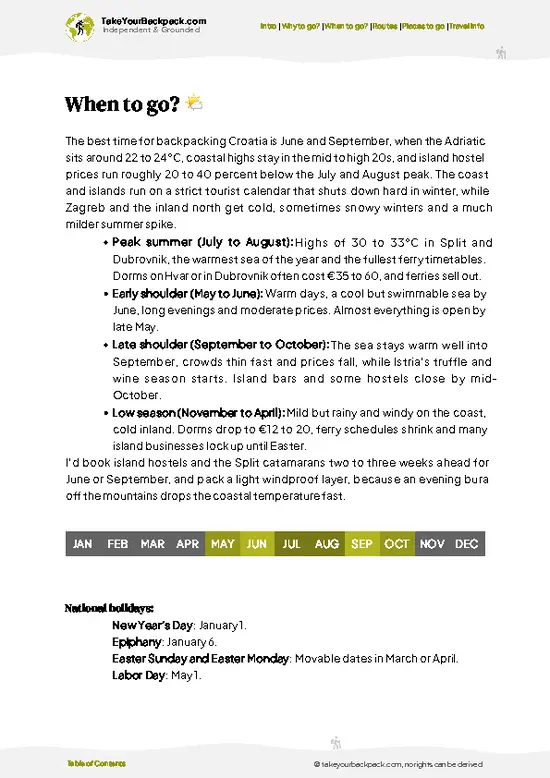
Best months for towns in Croatia: The best months are May, June and September, when coastal days sit around 22 to 28°C, the sea is swimmable from about late May, and prices are well below peak. Rain is light on the coast in these months, though showers do come through.
Peak season and its pressure points: July and August bring 28 to 35°C along the Dalmatian coast, packed ferries and accommodation that often costs 50 to 100 percent more than in spring. If you must travel then, book beds and island ferries weeks ahead, and do your sightseeing before 9 a.m. or after 6 p.m., when the day-trippers leave and the stone cools down.
Shoulder and low seasons: April and October are quieter and cheaper, with highs of 15 to 22°C, but the sea is cold and some seasonal businesses are still closed or already … read more 👉
Best months for towns in Croatia: The best months are May, June and September, when coastal days sit around 22 to 28°C, the sea is swimmable from about late May, and prices are well below peak. Rain is light on the coast in these months, though showers do come through.
Peak season and its pressure points: July and August bring 28 to 35°C along the Dalmatian coast, packed ferries and accommodation that often costs 50 to 100 percent more than in spring. If you must travel then, book beds and island ferries weeks ahead, and do your sightseeing before 9 a.m. or after 6 p.m., when the day-trippers leave and the stone cools down.
Shoulder and low seasons: April and October are quieter and cheaper, with highs of 15 to 22°C, but the sea is cold and some seasonal businesses are still closed or already shut. October is also the wetter end of the year on the coast, and the bora wind can cancel ferries in winter and early spring.
Regional differences: From November to March, the coast is mild at 5 to 13°C with plenty of rain, yet many island towns go very quiet. Inland towns around Zagreb and Slavonia are colder, often near or below freezing, but they stay open year round and shine at Advent markets in December.

town hoppingOptimizing Your Multi-Stop Itinerary

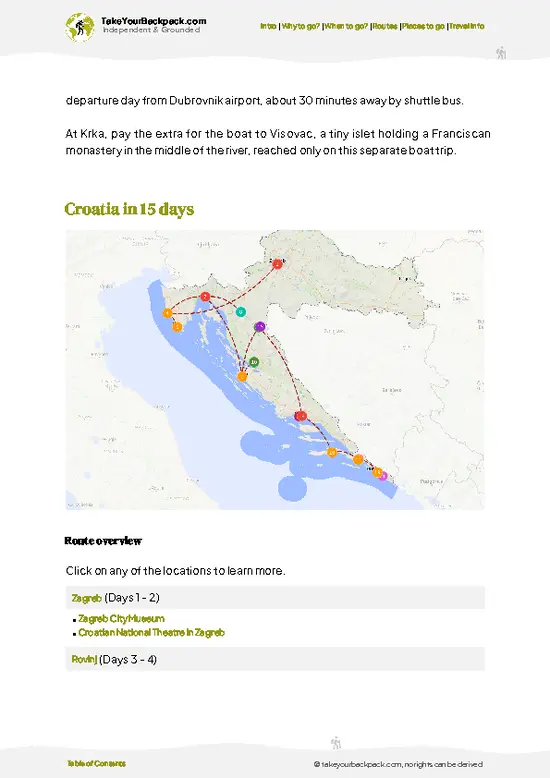
How long a multi-town trip needs: A trip linking several towns in Croatia works best with 10 to 14 days, and 7 days is the minimum if you stick to one coastal region. Croatia is long and thin, so distances mislead: Zagreb to Dubrovnik is about 10 to 11 hours by road or bus.
Which regions cluster together: Group by region rather than by wish list. Istria and the Kvarner coast pair well in the north, central Dalmatia (the Zadar to Split stretch) forms a second cluster, and southern Dalmatia around Dubrovnik is a third. Zagreb is the usual air and rail entry point, and Split and Dubrovnik also have busy airports. Travel one way, north to south or the reverse, and fly open-jaw to avoid backtracking.
Pacing and transport: Give each stop one to three nights; one night is rushed if you arrive in the … read more 👉
How long a multi-town trip needs: A trip linking several towns in Croatia works best with 10 to 14 days, and 7 days is the minimum if you stick to one coastal region. Croatia is long and thin, so distances mislead: Zagreb to Dubrovnik is about 10 to 11 hours by road or bus.
Which regions cluster together: Group by region rather than by wish list. Istria and the Kvarner coast pair well in the north, central Dalmatia (the Zadar to Split stretch) forms a second cluster, and southern Dalmatia around Dubrovnik is a third. Zagreb is the usual air and rail entry point, and Split and Dubrovnik also have busy airports. Travel one way, north to south or the reverse, and fly open-jaw to avoid backtracking.
Pacing and transport: Give each stop one to three nights; one night is rushed if you arrive in the afternoon. Buses between coastal hubs usually take 1.5 to 4 hours, and are the backbone of independent travel. Ferries to islands take 1 to 2.5 hours from Split, and fewer run outside summer. Check timetables the day before.
Planning mistakes: The classic error is squeezing Zagreb and Dubrovnik into one weekend. Another is stacking island hops without ferry slack. Pad one buffer day per week, and book the Dubrovnik bus early in peak months. Skip a rental car in the walled old centers; park outside and walk.

The ListThe Best towns of Croatia

1 Dubrovnik

Stone ramparts, Adriatic panoramas, UNESCO old city

Walk atop ancient walls, descend marble alleys, and watch the sea meet centuries-old architecture in a city shaped by maritime history.

croatia-city-dubrovnik
© Google |

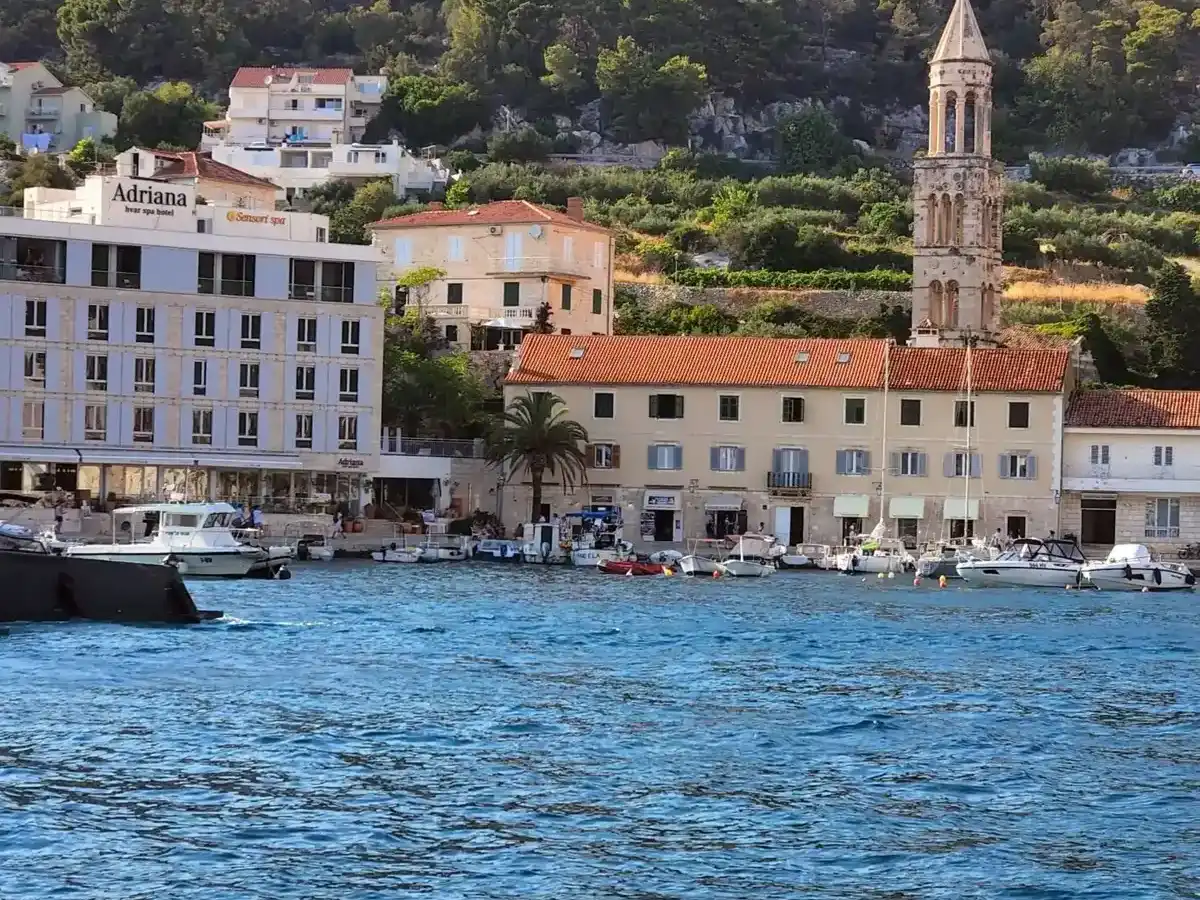
2 Hvar

Harbor promenade, lavender fields, Renaissance square

Relax on sunlit terraces, explore hillside fortresses, and discover a blend of Venetian heritage and island landscapes.

croatia-city-hvar
© Google | Subhash Chandra

3 Korčula

Walled peninsula, stone alleys, island vineyards

Wander spiral streets, sample local white wines, and watch sunsets from a medieval town surrounded by blue water.

4 Rovinj

Peninsula old town, fishing harbor, pastel facades

Climb cobbled lanes to hilltop churches and watch boats return as the sun sets over a tightly clustered waterfront.

5 Zadar

Sea organ, Roman forum, sunset promenade

Listen to experimental seafront music, explore layered ruins, and watch the sky change from a lively coastal walkway.

6 Pula

Roman amphitheater, shipyards, market halls

Stand inside ancient ruins, browse bustling markets, and observe daily life in a working port city with layered history.

croatia-city-pula
© Google |

7 Trogir

Island core, Romanesque portal, palm-lined quay

Cross stone bridges to a compact town where medieval architecture meets lively waterfront life and narrow passageways.

croatia-city-trogir
© Google | Around The World

8 Poreč

Roman mosaics, seaside promenade, basilica complex

Admire early Christian art, follow ancient street grids, and enjoy a coastline dotted with coves and pine woods.

croatia-city-porec
© Google | Randolfo Santos

9 Pag

Salt pans, lace workshops, lunar landscapes

Walk through stark terrain, learn traditional crafts, and taste distinctive cheeses in a town shaped by salt and wind.

croatia-city-pag
© Google |

10 Omiš

River canyon, pirate fort, pebble beaches

Paddle through dramatic gorges, hike to fortress ruins, and swim where the Cetina River meets the Adriatic.

croatia-city-omis
© Google | Pavel Kreuz

11 Varaždin

Baroque palaces, music festivals, floral promenades

Attend open-air concerts, admire ornate facades, and stroll through manicured parks in a city with a strong artistic tradition.

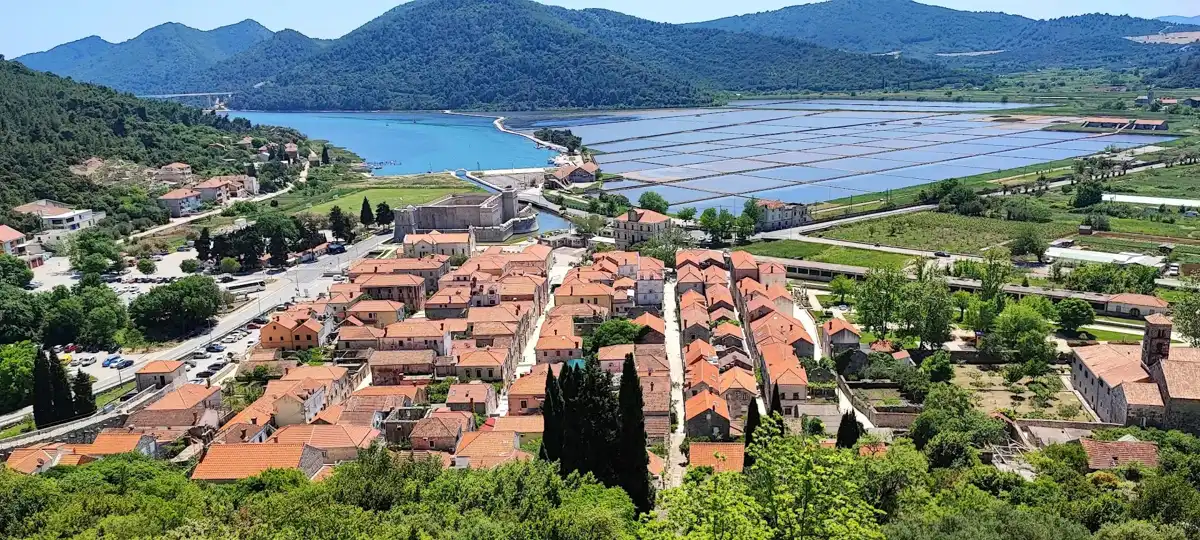
12 Ston

Defensive walls, oyster farms, salt flats

Walk the longest stone fortifications in Europe and sample fresh shellfish in a town defined by its strategic and culinary roles.

croatia-city-ston
© Google | Marija Marija

13 Osijek

Baroque citadel, riverside promenade, urban parks

Stroll along the Drava, explore Austro-Hungarian quarters, and experience a city balancing green spaces with lively squares.

croatia-city-osijek
© Google |

14 Samobor

Baroque square, forested hills, pastry shops

Sample kremšnita in local cafés, hike wooded trails, and explore a town known for weekend escapes from Zagreb.

15 Buzet

Hilltop views, truffle markets, medieval streets

Sample local truffle dishes and wander narrow lanes in a quiet town overlooking the Mirna valley and Istrian countryside.

16 Ilok

Danube terraces, wine cellars, fortress remains

Taste regional wines in centuries-old vaults and follow riverside trails through a town marked by borderland history.

17 Karlovac

Four rivers, star-shaped fort, leafy parks

Cycle along riverbanks, cross historic bridges, and experience a city designed for defense and shaped by waterways.

18 Senj

Wind-battered coast, Nehaj Fortress, Velebit foothills

Face strong bora winds, visit a fortress with sweeping views, and experience a town shaped by its exposed coastal setting.

19 Sinj

Alka tournament, pilgrimage church, Cetina plain

Attend traditional equestrian events, visit a revered Marian shrine, and explore a town rooted in inland customs.

20 Vukovar

War memorials, Danube docks, riverside promenades

Reflect at memorial sites, walk along the river, and observe a city rebuilt after conflict on the eastern frontier.

21 Vinkovci

Prehistoric sites, riverbank walks, annual folklore

Trace ancient settlements, join local festivals, and experience a town where the Bosut River shapes daily rhythms.

22 Knin

Hilltop fortress, mountain backdrop, railway junction

Climb to panoramic ruins and trace the town’s strategic role at the crossroads of Dalmatia and inland Croatia.

Think you know Croatia?

Prove you’re a true local — uncover 12 lesser-known towns in Croatia that locals tend to keep to themselves.
Loading the map 🌍

Expert viewExpert Commentary on towns

How many towns to visit: I advise four to six towns on a two-week trip, and three or four on a week. That pace gives you two or three nights each, enough to see the old center early in the morning and late in the evening, and to take one boat or hill day. Packing in eight or nine means most of your time is spent at bus stations, and Croatia’s distances are longer than the map suggests.
Choosing between kinds of towns: For a first trip, mix one walled Dalmatian stone town, one island town and one inland or Istrian hill town. If you love swimming and nightlife, lean toward Dalmatia, accepting the crowds. If you want cheaper food, quiet lanes and wine, lean toward Istria and the interior. If you are on a tight budget, favor the mainland over the islands, where beds and groceries cost more.
What … read more 👉
How many towns to visit: I advise four to six towns on a two-week trip, and three or four on a week. That pace gives you two or three nights each, enough to see the old center early in the morning and late in the evening, and to take one boat or hill day. Packing in eight or nine means most of your time is spent at bus stations, and Croatia’s distances are longer than the map suggests.
Choosing between kinds of towns: For a first trip, mix one walled Dalmatian stone town, one island town and one inland or Istrian hill town. If you love swimming and nightlife, lean toward Dalmatia, accepting the crowds. If you want cheaper food, quiet lanes and wine, lean toward Istria and the interior. If you are on a tight budget, favor the mainland over the islands, where beds and groceries cost more.
What it costs: Expect €45 to 75 a day in shoulder season and €70 to 120 in July and August on a backpacker’s plan. Hostel dorm beds run roughly €20 to 40 in spring and €35 to 60 in peak summer. Private rooms (“sobe”) are often €40 to 80 for two out of season. A bakery burek or sandwich is €2 to 4, a konoba main course €12 to 22, and a coffee €1.50 to 2.50. Entry to a town’s city walls or main museums is typically €5 to 40 depending on the town, with Dubrovnik’s walls at the top of that range. Local buses are €1.50 to 3 in towns, intercity buses €8 to 25 per leg, and island ferries roughly €5 to 15 for foot passengers. Tourist tax is a few euros a night and is usually added at the end.
What to watch out for: Croatia is very safe for solo travelers, including women, and violent crime against tourists is rare. The main risks are pickpocketing in crowded old towns and ferry queues, sunburn, and sea urchins on rocky shores. Swim only in marked, supervised areas when the wind is up, and carry water shoes. Some old towns still have unexploded mines in rural areas near former front lines, so stay on marked paths when hiking inland.
Cultural notes: Greet shopkeepers with “dobar dan,” and a little effort goes a long way. Tipping about 10 percent in restaurants is common but not required. Cover your shoulders in churches, and keep voices low in residential lanes, as many old centers are still lived in. Sundays shut most shops outside tourist areas, so buy supplies on Saturday. Your best value is the shoulder season: the same stone lanes, half the crowd, and prices that make the trip comfortable.

✈️ The backpacker research shortcutCroatia Travel Guide

An offline-friendly backpacking guide with optimized travel routes, ranked highlights, transport advice, and the best areas to stay.
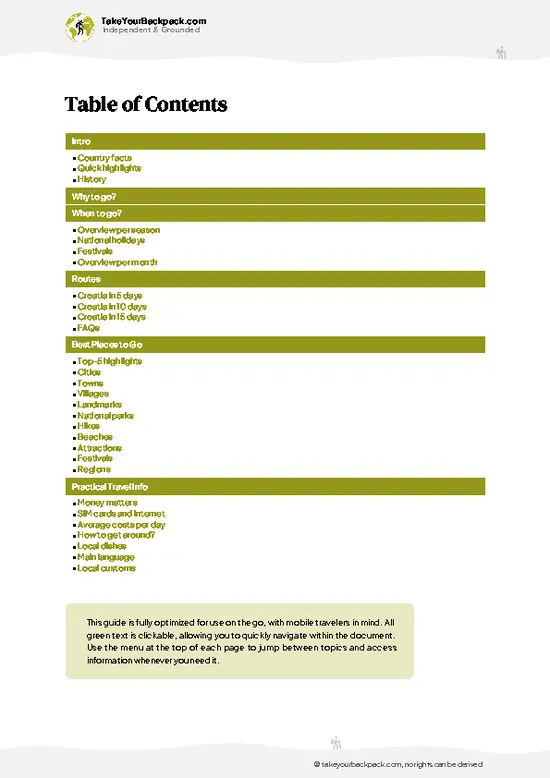
example page 0 from our offline Travel Guide for Croatia
example page 1 from our offline Travel Guide for Croatia
example page 2 from our offline Travel Guide for Croatia
example page 3 from our offline Travel Guide for Croatia
example page 4 from our offline Travel Guide for Croatia
example page 5 from our offline Travel Guide for Croatia
example page 6 from our offline Travel Guide for Croatia
example page 7 from our offline Travel Guide for Croatia
The digital guide (407 pages) contains:
✅ 109 highlights, ranked by travel appeal
✅ Optimized 5, 10 & 15-day travel routes
✅ Cities, national parks, landmarks, beaches
✅ How to get around
✅ Offline-friendly for travel without Wi-Fi
👉 Click to see all 30+ guide features

📅 Plan smarter in minutes, not weeks
✅ Month by month travel advice
✅ Festivals & national holidays
✅ Budget expectations

🗺️ Go to the right places, skip the overrated ones
✅ Honest pros & cons of destinations
✅ Top hikes, parks & viewpoints
✅ Lesser-known places most travelers miss
✅ Clear “worth it vs skip it” guidance

🛏️ Travel smoothly without rookie mistakes
✅ Best areas to stay
✅ Transport systems explained simply
✅ Common scams & safety advice
✅ SIM cards, money & practical tips

🌍 Understand the country, not just visit it
✅ Culture & traditions
✅ 52 Essential phrases & customs
✅ Festivals worth planning around
✅ Traveler-friendly historical context
✅ Insights that make places more meaningful

📱 Built for real travel conditions
✅ Fully downloadable PDF
✅ Works completely offline
✅ Optimized for phone use
✅ Useful in remote areas & buses
✅ Everything in one place
Stop searching, start planning
Get instant access to your full guide. 30‑day money-back guarantee.
+ Add another guide for just

By proceeding you agree to our terms.
Sent to your inbox immediately after payment • 100% Secure Checkout
Best Backpacking Travel Advisor 2025 tourism awardBest Backpacking
Travel Advisor
2025
What others say about Take Your Backpack Guides:
⭐⭐⭐⭐⭐
Fantastic, amazing amount of information!
⭐⭐⭐⭐⭐
My goodness this is amazing, it's what I've been looking for hats off too you!
⭐⭐⭐⭐⭐
I think this is absolutely BRILLIANT
⭐⭐⭐⭐
Very complete and informative. It's still missing places, but I gotta to commend you
⭐⭐⭐⭐⭐
This is truly amazing, thank you, can't wait to explore it with my kids!
⭐⭐⭐⭐⭐
Awesome resource, thank you!
⭐⭐⭐⭐⭐
This is amazing! Can't wait to explore the ones I haven't seen
⭐⭐⭐⭐
I love this! Well done, great idea.
⭐⭐⭐⭐⭐
Thanks for taking the time to make this gem!
⭐⭐⭐⭐⭐
This might be the best website I've ever seen.
⭐⭐⭐⭐⭐
Congratulations, and thank you so much for your work; it's incredibly valuable.
⭐⭐⭐⭐
In all seriousness I think you did a great job pointing out the important spots
⭐⭐⭐⭐⭐
10/10 very good
⭐⭐⭐⭐⭐
As someone who's only just starting to visit regularly this is awesome, thank you.
⭐⭐⭐⭐
Thank you very much! I'm going to visit my dad, it's going to be very useful!
⭐⭐⭐⭐⭐
This is really cool! We'll be travelling for the first time and this definitely come in handy.
⭐⭐⭐⭐⭐
You are now our minister of culture, congratulations 👨‍💼
⭐⭐⭐⭐⭐
Just wanted to tell you that this is a pearl! Going to follow your recommendations.
⭐⭐⭐⭐⭐
This is so cool. I'll definitely be using the resource for my travels soon.
⭐⭐⭐⭐⭐
This is very impressive! Good work.
⭐⭐⭐⭐⭐
This is an amazing and informative site. Very well done!

🛏️ Where to stay?Best Places to Stay in Croatia

Croatia has plenty of hostels and private rooms (“sobe”), with dorm beds running roughly €20 to €45 a night in peak summer and far less off-season. In Zagreb, Donji Grad puts you near the bars of Tkalčićeva and the main squares, while in Split beds inside Diocletian’s Palace sit right on the sights but come with late-night noise, and Bačvice trades that for beach access and its own club scene. Dubrovnik’s Old Town is the priciest and busiest base, so Lapad and Gruž are the quieter, cheaper picks a short bus ride from the walls, near the ferry port in Gruž’s case.

If you enjoy meeting fellow travelers, consider choosing hostels with high ratings for atmosphere. On the other hand, if you prefer … read more 👉
Croatia has plenty of hostels and private rooms (“sobe”), with dorm beds running roughly €20 to €45 a night in peak summer and far less off-season. In Zagreb, Donji Grad puts you near the bars of Tkalčićeva and the main squares, while in Split beds inside Diocletian’s Palace sit right on the sights but come with late-night noise, and Bačvice trades that for beach access and its own club scene. Dubrovnik’s Old Town is the priciest and busiest base, so Lapad and Gruž are the quieter, cheaper picks a short bus ride from the walls, near the ferry port in Gruž’s case.

If you enjoy meeting fellow travelers, consider choosing hostels with high ratings for atmosphere. On the other hand, if you prefer having your own space, a hotel might be a better option.

CroatiaExplore Croatia

👋 Meet the founderWho’s Behind Take Your Backpack?

Johan, backpacker and founder of TakeYourBackpackHi, I’m Johan (Netherlands 🇳🇱), the creator of TakeYourBackpack. Over the past 3 decades, I’ve backpacked through 90+ countries across six continents, gaining extensive experience with independent travel, long-term trips, and overland routes.

This site is built on a combination of firsthand travel experience and carefully curated insights from other backpackers. Many guides are based on places I’ve personally visited, while others bring together tips, observations, and practical advice shared by trusted travelers I’ve met along the way.

The goal is to provide realistic, experience-driven guidance — not generic itineraries — so you can explore destinations with better context, clearer expectations, and more confidence.