×

Cuba🇨🇺 | hikesPico Turquinohighest peak, dense jungle, summit shelter | things to do and best time to go

Explore Viñales ValleyExplore Cuchillas del Toa

Backpacking in Pico Turquino
🏆 Top pickhike ranked #1
By Johan Kruseman 🇳🇱 | Updated September 4, 2026

Most people hear “Cuba’s highest peak” and picture a casual jungle stroll; Pico Turquino is not that. It’s a sweaty, root-grabbing grind through dense Sierra Maestra forest in southeastern Cuba, inland from Santiago de Cuba and Bayamo. The trail hits you with steep, muddy sections, slippery rocks, and humidity that feels like a wet towel over your face, but the payoff is a cloud-brushed summit, views over a wrinkled sea of green ridges, and on clear days a faint line of Caribbean blue. It’s usually a full-day push or overnight, longer and tougher than nearby day hikes like El Yunque de Baracoa or the shorter Sierra Maestra mirador trails. Public transport to the trailheads (La Plata or Las Cuevas) is awkward and slow; you often stitch together trucks, shared taxis, and patience. Still, when you slam that first lukewarm post-hike beer in a dusty village, it feels absolutely earned.

Discover everything you want to know in the 📖 Cuba Travel Guide.
Best time to go: November - April
Duration: 2 days
Distance: 17 kilometers
Total ascent: 1,974 meters


Get your Cuba guide
121 ranked highlights, routes & tips, works offline (450 pages)
Loading the map 🌍
CLICK TO FILTER
cities
towns
villages
landmarks
national parks
hikes
beaches
attractions
festivals
regions
SHOW COUNTRY’S BESTSHOW ALL

✨ Why go?
Ranked #1 hike in Cuba
What sets this place apart

Backpackers flock to Pico Turquino for a taste of Cuba’s wild heart. The scenery-to-effort ratio is unbeatable. You’re not just hiking; you’re diving into lush jungles, where the air is thick with the scent of damp earth and the calls of exotic birds echo around you. The trail demands sweat, but every step rewards you with breathtaking views that stretch across the Sierra Maestra.

Getting there is a breeze. Public transport access is straightforward, with buses and shared taxis whisking you from Santiago de Cuba to the trailhead. It’s a low-cost adventure, too—perfect for those on a budget. You can choose your distance, whether you want a quick day hike or a multi-day trek, making it flexible for any itinerary.

As you ascend, the burn in your legs transforms into exhilaration. The summit … read more 👉
Backpackers flock to Pico Turquino for a taste of Cuba’s wild heart. The scenery-to-effort ratio is unbeatable. You’re not just hiking; you’re diving into lush jungles, where the air is thick with the scent of damp earth and the calls of exotic birds echo around you. The trail demands sweat, but every step rewards you with breathtaking views that stretch across the Sierra Maestra.

Getting there is a breeze. Public transport access is straightforward, with buses and shared taxis whisking you from Santiago de Cuba to the trailhead. It’s a low-cost adventure, too—perfect for those on a budget. You can choose your distance, whether you want a quick day hike or a multi-day trek, making it flexible for any itinerary.

As you ascend, the burn in your legs transforms into exhilaration. The summit reveals a panorama that makes every ounce of effort worthwhile. After the climb, nothing beats that first cold beer at a local spot, celebrating the journey with fellow adventurers. Pico Turquino isn’t just a hike; it’s a rite of passage that seamlessly fits into your broader Cuban backpacking route.
Want to include Pico Turquino in your Cuba route?
Create a personalized Cuba itinerary that includes Pico Turquino and the places that fit your trip — based on your travel style, budget, and available time. Get your route in seconds.

Generate my trip

💡 HighlightsWhat this place is best known for

  1. Pico Turquino summit (1,974 m) — The main reason you came: the highest point in Cuba and the whole Caribbean. The view is a slow reveal of serrated ridgelines, cloud seas and, on very clear days, hints of both north and south coasts; sunrise from here is unforgettable (personal favorite).
  2. Cloud forest & mossy ridgelines — The trail climbs from tropical lowland into a cool, dripping montane forest full of epiphytes, ferns and old pines. The atmosphere—moss-draped trunks, low clouds and that earthy smell—feels more like a temperate hike than a Caribbean beach day.
  3. Endemic birds and wildlife — Quiet sections of the trail reward you with tocororos (Cuba’s national bird), hummingbirds and other endemics. Birdsong and the occasional rustle of small mammals give the hike a real “wild Cuba” vibe
read more 👉
  1. Pico Turquino summit (1,974 m) — The main reason you came: the highest point in Cuba and the whole Caribbean. The view is a slow reveal of serrated ridgelines, cloud seas and, on very clear days, hints of both north and south coasts; sunrise from here is unforgettable (personal favorite).
  2. Cloud forest & mossy ridgelines — The trail climbs from tropical lowland into a cool, dripping montane forest full of epiphytes, ferns and old pines. The atmosphere—moss-draped trunks, low clouds and that earthy smell—feels more like a temperate hike than a Caribbean beach day.
  3. Endemic birds and wildlife — Quiet sections of the trail reward you with tocororos (Cuba’s national bird), hummingbirds and other endemics. Birdsong and the occasional rustle of small mammals give the hike a real “wild Cuba” vibe that you won’t get on busier trails.
  4. Streams, little waterfalls & natural pools — Several clear mountain streams cross the route, with small cascades and pools perfect for a sweaty hiker pause. Those wet, rooty crossings and granite slabs make the day more interesting than a simple uphill slog.
  5. Revolutionary-era trails & campesino culture — The mountain is threaded with historical routes used by 20th-century guerrillas; you’ll pass humble mountain camps and meet local guides or farmers who share stories and simple mountain cuisine. The human history woven into the landscape gives the hike extra depth compared with purely scenic treks.
Spotted a mistake or missing something? Contact us.

🌤️ When to go?Choosing the right time of year


  • Weather: The dry season from November to April is your best bet. Trails stay firm, and rain won’t turn your boots into mud magnets. The wet season (May to October) brings heavy showers, slippery paths, and a higher chance of flash floods.

  • Temperature: Expect daytime highs around 24-28°C (75-82°F) during the dry months—perfect for pushing uphill without overheating. Nights can dip to 12-15°C (54-59°F), so pack layers for the summit chill.

  • Daylight Hours: Around 11 to 12 hours of daylight in the dry season gives you ample time to tackle the 8-10 hour hike without rushing. Shorter days in the wet season mean less margin for error on tricky terrain.

  • Crowds: Peak season (December to March) draws more hikers, especially on weekends. For solitude, aim for shoulder months like November or
read more 👉

  • Weather: The dry season from November to April is your best bet. Trails stay firm, and rain won’t turn your boots into mud magnets. The wet season (May to October) brings heavy showers, slippery paths, and a higher chance of flash floods.

  • Temperature: Expect daytime highs around 24-28°C (75-82°F) during the dry months—perfect for pushing uphill without overheating. Nights can dip to 12-15°C (54-59°F), so pack layers for the summit chill.

  • Daylight Hours: Around 11 to 12 hours of daylight in the dry season gives you ample time to tackle the 8-10 hour hike without rushing. Shorter days in the wet season mean less margin for error on tricky terrain.

  • Crowds: Peak season (December to March) draws more hikers, especially on weekends. For solitude, aim for shoulder months like November or April when the weather is still solid but the trail thins out.

  • Seasonal Activities: Late November to early April aligns with local festivals and cultural events in nearby towns, adding a vibrant layer to your trip if you time it right.

  • Price Fluctuations: Tourist season hikes come with higher guide fees and accommodation costs. Booking in the shoulder months can save you cash without sacrificing trail conditions.


Pro-tip: Start your hike early in the dry season to catch the sunrise from the summit—there’s nothing like that first light breaking over Cuba’s wildest peak to make every step worth it.


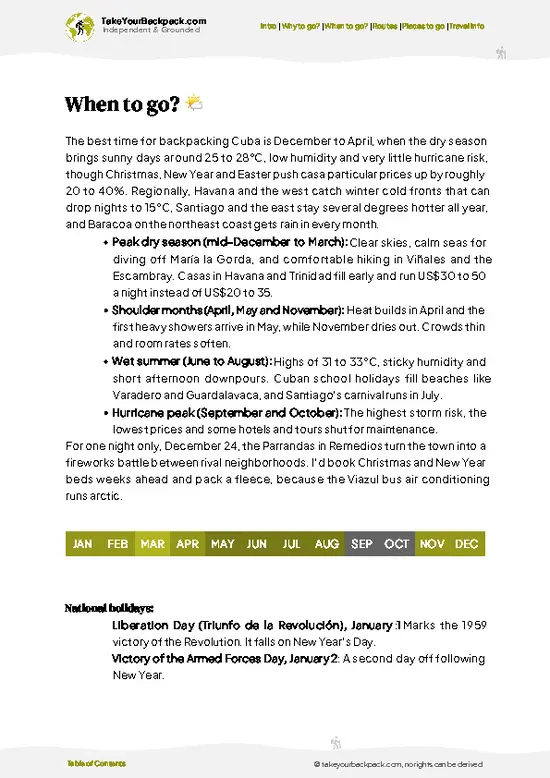
source: climatestotravel.comJANJanuary: excellent for travelingFEBFebruary: excellent for travelingMARMarch: excellent for travelingAPRApril: highly recommended for travelingMAYMay: fair for travelingJUNJune: fair for travelingJULJuly: fair for travelingAUGAugust: fair for travelingSEPSeptember: fair for travelingOCTOctober: fair for travelingNOVNovember: highly recommended for travelingDECDecember: excellent for traveling
cuba-hike-pico-turquino
© Google |

✈️ The backpacker research shortcutCuba Travel Guide

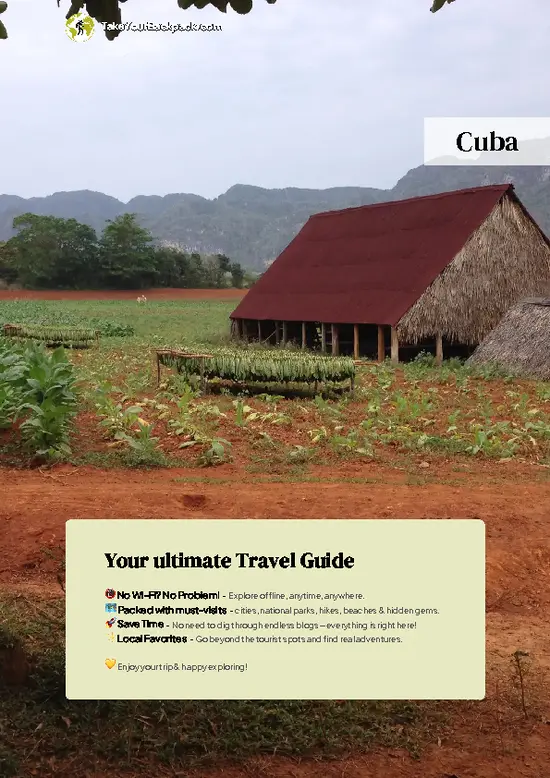
An offline-friendly backpacking guide with optimized travel routes, ranked highlights, transport advice, and the best areas to stay.
example page 0 from our offline Travel Guide for Cuba
example page 1 from our offline Travel Guide for Cuba
example page 2 from our offline Travel Guide for Cuba
example page 3 from our offline Travel Guide for Cuba
example page 4 from our offline Travel Guide for Cuba
example page 5 from our offline Travel Guide for Cuba
example page 6 from our offline Travel Guide for Cuba
example page 7 from our offline Travel Guide for Cuba
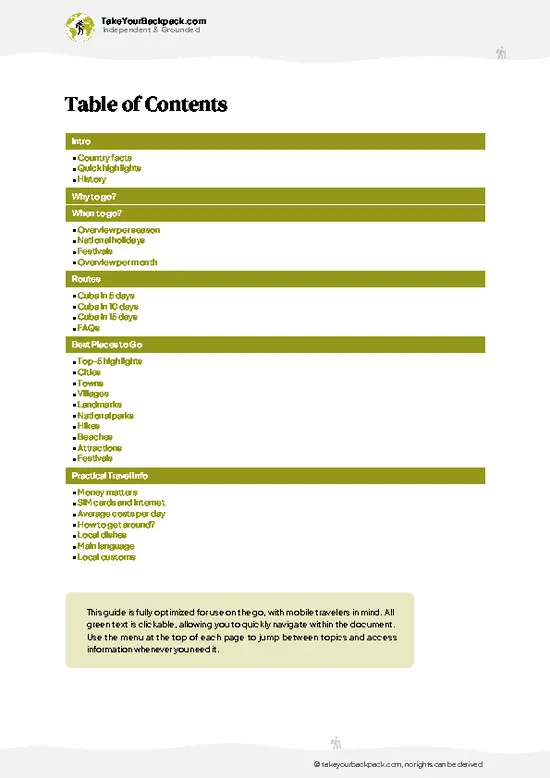
The digital guide (450 pages) contains:
121 highlights, ranked by travel appeal
Optimized 5, 10 & 15-day travel routes
Cities, national parks, landmarks, beaches
How to get around
Offline-friendly for travel without Wi-Fi
👉 Click to see all 30+ guide features

📅 Plan smarter in minutes, not weeks
Month by month travel advice
Festivals & national holidays
Budget expectations

🗺️ Go to the right places, skip the overrated ones
Honest pros & cons of destinations
Top hikes, parks & viewpoints
Lesser-known places most travelers miss
Clear “worth it vs skip it” guidance

🛏️ Travel smoothly without rookie mistakes
Best areas to stay
Transport systems explained simply
Common scams & safety advice
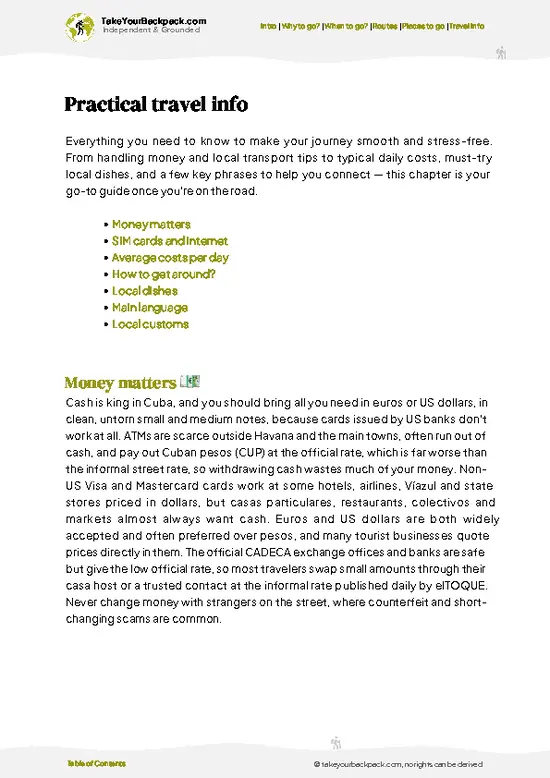
SIM cards, money & practical tips

🌍 Understand the country, not just visit it
Culture & traditions
52 Essential phrases & customs
Festivals worth planning around
Traveler-friendly historical context
Insights that make places more meaningful

📱 Built for real travel conditions
Fully downloadable PDF
Works completely offline
Optimized for phone use
Useful in remote areas & buses
Everything in one place
Save weeks of stressful planning
Get instant access to your full guide. 30‑day money-back guarantee.
+ Add another guide for just US$7.80

By proceeding you agree to our terms.
Sent to your inbox immediately after payment • 100% Secure Checkout
Best Backpacking Travel Advisor 2025 tourism awardBest Backpacking
Travel Advisor
2025
What others say about Take Your Backpack Guides:
⭐⭐⭐⭐⭐
Fantastic, amazing amount of information!
⭐⭐⭐⭐⭐
My goodness this is amazing, it's what I've been looking for hats off too you!
⭐⭐⭐⭐⭐
I think this is absolutely BRILLIANT
⭐⭐⭐⭐
Very complete and informative. It's still missing places, but I gotta to commend you
⭐⭐⭐⭐⭐
This is truly amazing, thank you, can't wait to explore it with my kids!
⭐⭐⭐⭐⭐
Awesome resource, thank you!
⭐⭐⭐⭐⭐
This is amazing! Can't wait to explore the ones I haven't seen
⭐⭐⭐⭐
I love this! Well done, great idea.
⭐⭐⭐⭐⭐
Thanks for taking the time to make this gem!
⭐⭐⭐⭐⭐
This might be the best website I've ever seen.
⭐⭐⭐⭐⭐
Congratulations, and thank you so much for your work; it's incredibly valuable.
⭐⭐⭐⭐
In all seriousness I think you did a great job pointing out the important spots
⭐⭐⭐⭐⭐
10/10 very good
⭐⭐⭐⭐⭐
As someone who's only just starting to visit regularly this is awesome, thank you.
⭐⭐⭐⭐
Thank you very much! I'm going to visit my dad, it's going to be very useful!
⭐⭐⭐⭐⭐
This is really cool! We'll be travelling for the first time and this definitely come in handy.
⭐⭐⭐⭐⭐
You are now our minister of culture, congratulations 👨‍💼
⭐⭐⭐⭐⭐
Just wanted to tell you that this is a pearl! Going to follow your recommendations.
⭐⭐⭐⭐⭐
This is so cool. I'll definitely be using the resource for my travels soon.
⭐⭐⭐⭐⭐
This is very impressive! Good work.
⭐⭐⭐⭐⭐
This is an amazing and informative site. Very well done!

🛏️ Where to stay?Where staying makes the most sense

If you enjoy meeting fellow travelers, consider choosing hostels with high ratings for atmosphere. On the other hand, if you prefer having your own space, a hotel might be a better option.

🥾 Hike detailsEverything you need to know before hiking Pico Turquino

Total Distance: The Pico Turquino trail covers about 18 kilometers (11 miles) one way, leading you to the summit of Cuba’s highest peak.

Estimated Duration: Expect to spend around 6 to 8 hours hiking up, depending on your pace and how often you stop to soak in the views or catch your breath. The descent usually takes about 4 to 6 hours.

Difficulty Level: This trail is considered challenging. The steep inclines and varying terrain can be tough, especially for those not accustomed to hiking at altitude.

Starting Point: The trek begins in the small town of La Melba. To get there, take a bus or … read more 👉
Total Distance: The Pico Turquino trail covers about 18 kilometers (11 miles) one way, leading you to the summit of Cuba’s highest peak.

Estimated Duration: Expect to spend around 6 to 8 hours hiking up, depending on your pace and how often you stop to soak in the views or catch your breath. The descent usually takes about 4 to 6 hours.

Difficulty Level: This trail is considered challenging. The steep inclines and varying terrain can be tough, especially for those not accustomed to hiking at altitude.

Starting Point: The trek begins in the small town of La Melba. To get there, take a bus or shared taxi from Santiago de Cuba, which is about 1.5 to 2 hours away. From La Melba, it’s a short walk to the trailhead.

Major Landmarks Along the Route:
  • La Melba: The quaint starting point with a few local shops for last-minute supplies.
  • Casa de la Naturaleza: A rest stop where you can grab some food and water before heading up.
  • Pico Turquino Summit: The highlight of the hike, offering breathtaking panoramic views of the surrounding mountains and valleys.

Type of Terrain and Scenery: The trail features a mix of rocky paths, steep inclines, and some sections of mud. You’ll traverse through lush forests, with occasional clearings that reveal stunning vistas. The higher you climb, the more dramatic the scenery becomes, with rugged peaks and deep valleys.

Typical Vegetation and Wildlife:
  • Vegetation: Expect to see dense tropical forests, with ferns, orchids, and various hardwood trees. As you ascend, the vegetation shifts to more alpine species.
  • Wildlife: Keep an eye out for endemic birds like the Cuban Trogon and the Zorzal, as well as small mammals and reptiles that inhabit the area.

Pack plenty of water, snacks, and a camera—you’ll want to capture those views! And don’t forget to leave no trace; this beautiful area deserves to be preserved for future hikers.
⚠️ Hiking info can sometimes be outdated or inaccurate. Before you hit the trail, check the latest conditions with locals. If you do spot anything that's off, I'd love to hear from you, so I can update it for fellow travelers.

🛡️ SafetySafety Tips and Common Scams in Pico Turquino

Pico Turquino offers a rewarding challenge, but it’s not without its quirks. The weather can shift on a dime. One moment you’re basking in sunshine, the next, clouds roll in, bringing rain and cooler temps. Dress in layers and pack a lightweight rain jacket.

The trail is steep and rocky, demanding focus. Footing can be tricky, especially on the descent. Take your time; rushing can lead to slips. Navigation is straightforward, but keep an eye on trail markers.

Wildlife is part of the experience. You might spot a curious bird or a lizard darting across your path. Respect their space; don’t feed them.

Many first-timers underestimate the altitude. As you climb, the air thins, so pace yourself. Hydration is key—carry enough water, especially on warmer days.

Timing matters, too. Start early … read more 👉
Pico Turquino offers a rewarding challenge, but it’s not without its quirks. The weather can shift on a dime. One moment you’re basking in sunshine, the next, clouds roll in, bringing rain and cooler temps. Dress in layers and pack a lightweight rain jacket.

The trail is steep and rocky, demanding focus. Footing can be tricky, especially on the descent. Take your time; rushing can lead to slips. Navigation is straightforward, but keep an eye on trail markers.

Wildlife is part of the experience. You might spot a curious bird or a lizard darting across your path. Respect their space; don’t feed them.

Many first-timers underestimate the altitude. As you climb, the air thins, so pace yourself. Hydration is key—carry enough water, especially on warmer days.

Timing matters, too. Start early to avoid afternoon storms and enjoy the summit views. The effort pays off when you finally stand atop Cuba’s highest peak, soaking in the vast landscape. That moment is pure magic.

FAQFrequently asked questions about Pico Turquino

The Pico Turquino hike typically takes 2 to 3 days to complete, depending on your pace and starting point. The most common route covers about 18 kilometers round trip. Most hikers camp overnight near the summit or at designated campsites along the trail.
The hike is considered moderately difficult due to steep sections, uneven terrain, and tropical climate conditions. Elevation gain is around 1,974 meters, which can be challenging for those not acclimated to hiking in humid, mountainous environments. Proper fitness and preparation are recommended.
Yes, you need a guide and a permit to hike Pico Turquino. Guides are mandatory and can be arranged through local tour operators or the park authorities, with permit fees generally included in the guide cost. This regulation helps protect the natural environment and ensures safety on the trail.
⚠️ Things can change over time, so always validate details locally before you go.

Other Cuban hikes near Pico Turquino

Explore more nearby:

  • Sierra Maestra—revolutionary history, rugged ridges, cloud forest| 26 km away
  • Loma de la Cruz—hilltop stairs, city overlook, urban access| 117 km away
  • Cuchillas del Toa—remote rainforest, endemic flora, river crossings| 228 km away

💡 Not sure where to go next?
Create a personalized itinerary for Cuba including Pico Turquino and the places that fit your trip.

Generate my itinerary

👉 Discover all hikes

Or checkout all Cuba has to offer (think cities, towns, villages, national parks, hikes, beaches, festivals)
Country photo of Cuba

We 💚 feedbackWhat to keep in mind

Pico Turquino is a beast of a hike, but the payoff? Standing at Cuba’s highest point, you’re rewarded with a sweeping view that makes every drop of sweat worth it. Just know, the trail can be relentless—steep and rocky, it demands respect. Bring your grit, and you’ll earn that first cold beer at the finish. It’s a challenge, but the thrill of conquering it is what makes it unforgettable.

✈️ When did I visit Cuba?
As part of my 1.5 year travel around the world trip, I visited Cuba for 6 weeks in February, March 2016, being extremely lucky that that coincided with the free concert of The Rolling Stones.

✍️ Help improve this page!
The information on this page is based on my own backpacking experience in Cuba, supplemented with up-to-date research and feedback from other travelers. Travel details can change, so if you notice anything outdated or incomplete, feel free to let me know.


🙋‍♂️ Give feedback

👋 Meet the founderWho’s Behind Take Your Backpack?

Johan, backpacker and founder of TakeYourBackpackHi, I’m Johan (Netherlands 🇳🇱), the creator of TakeYourBackpack. Over the past decade, I’ve backpacked through 80+ countries across six continents, gaining extensive experience with independent travel, long-term trips, and overland routes.

This site is built on a combination of firsthand travel experience and carefully curated insights from other backpackers. Many guides are based on places I’ve personally visited, while others bring together tips, observations, and practical advice shared by trusted travelers I’ve met along the way.

The goal is to provide realistic, experience-driven guidance — not generic itineraries — so you can explore destinations with better context, clearer expectations, and more confidence.

Get full Cuba guide •
Instant download • 121 highlights • Full Offline guide